The emergency archaeological intervention promoted by Cantonal Archaeology on Zürcherstrasse Street in Windisch (in the Swiss canton of Aargau) has concluded within the expected timeframe, according to sources from the institution in mid-July. The excavation team, composed of around twenty specialists, worked for eleven months on an area of approximately 4,000 square meters—the future site […]
O app de leitura Instapaper foi atualizado hoje para a sua versão 10.0 com uma série de novidades — incluindo uma interface repaginada e adaptada ao Liquid Glass (e outras mudanças de design em grande parte do app), bem como novos recursos e melhorias de desempenho.
O Menu de Seções, por exemplo, agora pode mostrar as Contagens de seção em todos os lugares, bem como permite ordenar pastas e etiquetas por nome, ordem de adição ou contagem. Também há melhorias na exibição e suporte completo ao Liquid Glass no iPad.
Quando falamos na Lista de Artigos, ela foi redesenhada com um novo modo Condensado, opções de tipografia e uma nova ação de deslize para mover artigos para o topo. Ela também cria automaticamente listas de reprodução a partir da lista de artigos completa.
Por fim, o Leitor agora conta com quatro novas fontes de leitura (Literata, New York, Open Sans e Atkinson Hyperlegible), bem como permite escolher o que é aberto ao se tocar em um artigo (a Vista de Artigo, a Vista Web, o navegador integrado ou o padrão).
Também contando agora com um widget para ver os artigos lidos no momento ou os salvos recentemente, o Instapaper é grátis para baixar na App Store, mas para usá-lo por completo é necessária uma assinatura Premium, que sai por R$10/mês ou R$100/ano.
Abrindo a última semana de julho com a nossa seleção de promoções na App Store, para esta segunda-feira!
O destaque do dia é o jogo Klocki, do desenvolvedor Maciej Targoni — o mesmo criador do sucesso HOOK.
Sua meta é conectar, de forma uniforme, diferentes tipos de linhas em diversas fases, bastando tocar em um bloco e depois no outro para movê-los. A coisa parece simples nas primeiras fases, mas, quando as figuras se tornam 3D, tudo fica bem mais desafiador!
Confira um vídeo:
Não há tempo, não há limite. O objetivo é relaxar e completar cada uma das fases. A trilha sonora fica por conta de Wojciech Wasiak.
Não perca mais tempo, aproveite esse desconto agora!
Abaixo outros jogos/apps que, juntos, somam mais de R$130 em descontos:
Jogos
Jogo de corrida.
Jogo da franquia LEGO.
Jogo de estratégia.
Aplicativos
Escaneie e defina as palavras.
Utilitário para metadados.
Utilitário para sua biblioteca musical.
Aproveite as ofertas e até amanhã! Vale lembrar que as ofertas são sempre por tempo limitado, então é bom correr. 🦖
Uma das coisas mais chatas ao usar lançadores de apps no iOS é o redirecionamento que acontece antes de um software ser aberto na maioria deles — o que faz com que o usuário veja brevemente o launcher aparecer na tela antes do app que quer verdadeiramente usar.
De acordo com o MacStories, o app Lock Launcher, um dos mais populares do gênero para iOS, resolveu esse problema. Agora, ao tocar no ícone de um app por ele, a abertura do software é direta — bem, pelo menos visivelmente não é possível ver o lançador intermediando o processo.
Outra novidade muito bacana que chegou ao software recentemente foi o suporte aos aos widgets do tamanho extra grande — o que permite ao app ocupar uma página na Tela de Início do iOS quase que por completo, tal como a grade de apps nativa.
Embora (como o seu próprio nome já indica) o app tenha sido desenvolvido com o foco principal em abrir apps direto da Tela Bloqueada, colocá-lo como um widget na Tela de Início é uma opção bem interessante para quem quer uma experiência ainda mais personalizada.
O Lock Launcher pode ser baixado gratuitamente na App Store, mas para usá-lo por completo é necessário aderir ao plano Pro, que pode ser adquirido por uma compra única de R$60, bem como assinado por R$8/mês ou R$40/ano.
Anthropic and OpenAI are clashing with the rest of the tech industry over whether “open-source” models from China should be freely available or restricted.
MacBook Neo helped Apple move against the global PC market in the second quarter of 2026, delivering double-digit Mac shipment growth while most leading computer manufacturers sold fewer units than a year earlier.
Preliminary data from IDC estimates that Apple shipped 6.7 million Macs during the quarter, up 10.1% from 6.1 million in Q2 2025. Its worldwide market share rose from 8.5% to 9.9%, placing the company within a fraction of the 10% threshold.
The rest of the industry moved in the opposite direction. Global shipments fell 4.9% year over year to 68.2 million units, ending nine consecutive quarters of growth. A separate Omdia estimate placed the decline at 3.6% and Apple growth at 15.9%, but both research groups identified the same pattern: the Mac gained ground while established Windows PC vendors contracted or remained flat.
IDC directly connected the Apple increase with the arrival of its lowest-priced notebook. MacBook Neo began shipping in March, giving the model its first complete quarter of retail availability between April and June.
MacBook Neo Drives Mac Shipment Growth
MacBook Neo entered the market as an alternative for buyers previously priced out of the Mac lineup.
The 13-inch notebook launched at $599 with an A18 Pro chip, 8GB of unified memory, a Liquid Retina display and up to 16 hours of video playback. It also brought macOS, Apple Intelligence and integration with the iPhone ecosystem into a price range commonly occupied by mainstream Windows laptops and Chromebooks.
That positioning attracted students, families and first-time Mac customers who did not need the performance or display technology of a MacBook Air or MacBook Pro. The four-color aluminum design also gave the entry model a more recognizable identity than the older Mac notebooks that frequently remained on sale through discounts.
IDC had already identified the computer as an unusual source of strength when it revised its notebook forecast earlier in 2026. Demand exceeded initial expectations in several markets, and reported inventory shortages appeared shortly after the March launch.
The effect became much more visible in Q2. MacBook Neo was available for the entire three-month period, allowing Apple to increase production, expand retail distribution and serve customers who could not obtain the computer during its first weeks.
The entry model also widened the Mac lineup without replacing the MacBook Air. Buyers seeking more memory, faster ports, longer wireless web use or additional external-display support could continue moving toward the M5-powered Air, while the less expensive machine handled education, office work, web browsing and communication.
That separation allowed Apple to reach lower price points without reducing the value of its premium notebooks.
Image Credit: Apple Inc.
Lenovo, HP and Dell Lose Shipments
Apple remained the fourth-largest traditional PC vendor, but its performance contrasted sharply with the companies above it.
Lenovo retained first place with 16.6 million units and 24.4% market share. Its shipments declined 2.1% from the previous year.
HP experienced the steepest drop among the top five, falling 9% to 13 million units. Dell shipped 9.3 million computers, representing a 5% decline. Asus remained nearly flat at 5 million units, up only 0.2%.
Manufacturers outside the five largest brands collectively suffered a 10.5% contraction, indicating that weaker demand and component inflation placed even more pressure on smaller companies.
The figures measure shipments into distribution channels or directly to end users, not confirmed retail purchases by individual consumers. A manufacturer can therefore record shipment growth while some inventory remains unsold in stores or warehouses.
MacBook Neo demand appears to have been strong enough to support Apple production increases rather than simply filling channels. The company reportedly doubled its annual production target after the initial response, although later quarters will reveal how much of Q2 reflected lasting demand rather than launch-period enthusiasm.
Apple also benefits from operating at a scale that provides leverage with memory, storage and semiconductor suppliers. Smaller PC brands face greater difficulty securing components at competitive prices when shortages intensify.
Memory Costs Reverse the PC Recovery
The Q2 contraction arrived after manufacturers and commercial customers accelerated purchases during late 2025 and early 2026.
Buyers expected memory and storage prices to rise, encouraging some businesses to replace computers earlier than planned. Vendors also increased inventories while components remained available.
That activity supported nine quarters of market growth but borrowed demand from later periods. Once the early purchases were completed, the industry faced a more difficult combination of expensive components, cautious consumers and elevated retail prices.
The memory shortage is closely connected to the AI infrastructure boom. Chipmakers are dedicating more production capacity to high-bandwidth memory used by data center accelerators, limiting the supply of conventional DRAM needed for personal computers.
IDC expects little relief before the end of 2027 or early 2028. The research company forecasts an 11.3% decline in worldwide PC shipments across 2026, with the fourth quarter potentially falling 20% from the previous year.
Computer revenue may not decline at the same pace. Manufacturers have raised prices faster than shipments have fallen, allowing them to collect more money from fewer units.
That strategy creates another problem. Retailers and distributors can become trapped with expensive inventory if customers refuse the new prices, forcing promotions or production reductions later.
MacBook Neo initially softened that pressure by giving Apple a new product near the bottom of the notebook market. Its original $599 price made the Mac competitive with midrange Windows machines at the moment many rivals were becoming more expensive.
Image Credit: Freepik
The Price Increase Creates the Next Test
The strongest Q2 MacBook Neo shipments were recorded while most customers could still buy the computer at its introductory price.
Apple raised the U.S. starting price to $699 in late June as memory and storage costs affected the Mac and iPad lineups. The education price remained at $599, preserving the original offer for eligible students and educators.
A $100 increase changes the comparison with discounted Windows notebooks and places the entry model closer to older MacBook Air configurations available through third-party retailers.
Apple must now determine whether the appeal came primarily from the low launch price or from the combination of macOS, battery life, design and iPhone integration.
The company remains better positioned than many rivals to absorb supply disruption, negotiate long-term component agreements and promote several notebooks at different prices. MacBook Neo also uses an iPhone-class A18 Pro processor rather than an M-series chip, providing another way to manage silicon costs and production capacity.
IDC expects the full PC market to deteriorate during the second half of 2026. Apple will enter that period with almost 10% worldwide share, but the September quarter will be the first to measure MacBook Neo demand almost entirely at the higher $699 retail price.
“Fim do monopólio da Apple.” “iPhone liberado no Brasil.” “Mudança histórica.” As manchetes das últimas semanas não economizaram no tamanho. Do outro lado, o que o usuário recebeu de fato foi uma opção nova e discreta nos Ajustes do iPhone — e, se você não for atrás dela, sua vida com o aparelho seguirá exatamente igual. Aposto que vai seguir…
Recapitulando rapidamente: em 18 de junho, com o iOS 26.5, a Apple oficializou a abertura do iOS no Brasil, cumprindo o acordo assinado com o Conselho Administrativo de Defesa Econômica (Cade) em dezembro de 2025 — desfecho de uma investigação que começou lá em 2022, com uma denúncia do Mercado Livre. Lojas alternativas de apps agora são permitidas — a AltStore PAL chegou no mesmo dia —, desenvolvedores podem usar meios de pagamento próprios e incluir links para compras fora do app. O acordo vale por três anos, sob supervisão do Cade, com multas de até R$150 milhões se a Apple descumprir. Nós mostramos como tudo funciona em um vídeo.
Até aqui, a notícia. Agora, a leitura que ninguém fez direito. Passei mais de 20 anos construindo aplicativos que viveram sob as regras da App Store (apps de banco, varejo, montadora, etc.) e, quando li os termos do acordo com olhos de gerente de produto, a conclusão foi rápida: a Apple não abriu a porta. Ela redesenhou o funil.
Siga o dinheiro: ele continua indo para Cupertino
O detalhe que as manchetes de “fim do monopólio” esquecem de contar: a Apple criou uma estrutura de taxas em que ela recebe em praticamente qualquer caminho que o desenvolvedor escolher. Vale comparar os cenários:
Onde o app vive e como cobra
Como cobra
Quanto a Apple leva
App Store
Pagamento pelo sistema da Apple
De 10% a 21% + 5% de processamento
App Store
Pagamento por sistema próprio dentro do app
De 10% a 21%
App Store
Link para compra externa
15% (10% para quem se qualifica)
Loja alternativa
Pagamento próprio
5% sobre bens digitais
Olhe a última linha com calma. Um app que sair da App Store, for distribuído por uma loja concorrente e processar o pagamento por conta própria (ou seja, um cenário em que nenhuma infraestrutura de venda da Apple aparece) ainda deve 5% de cada transação de bens digitais para a Apple. É a chamada “comissão de tecnologia essencial”, e ela viaja junto com o app para onde ele for.
Agora, pense com a cabeça de um desenvolvedor. Os apps gratuitos (WhatsApp, Nubank, iFood e a imensa maioria dos que você usa) não pagam nada de comissão hoje. Se migrarem para uma loja alternativa, passam a pagar 5% sobre qualquer venda digital que façam. Migrar significa criar um custo que não existia. E são justamente esses apps gigantes que dariam tração a uma loja concorrente. Ou seja: o desenho das taxas torna a mudança irracional exatamente para quem faria a diferença. Isso não é acaso; é arquitetura de incentivos, e das bem-feitas.
A porta existe, mas tem um cadeado de US$1 milhão
Tem mais um filtro, ainda menos comentado. Para operar uma loja alternativa no Brasil, a empresa precisa apresentar uma carta de crédito de US$1 milhão emitida por uma instituição financeira com nota BBB ou superior — ou, alternativamente, ter dois anos contínuos no programa de desenvolvedores da Apple com mais de 1 milhão de instalações anuais no mundo. Na prática, isso deixa de fora todo mundo, menos gigantes bem capitalizadas: a Epic Games (que já prometeu trazer sua loja “nos próximos meses”), talvez o próprio Mercado Livre (que, ironicamente, foi quem começou essa briga) e pouquíssimos outros.
Sem várias lojas competindo de verdade, não há pressão de preço. E sem pressão de preço, o usuário não tem motivo para mudar de comportamento. O ciclo se fecha sozinho.
A Europa já fez esse filme, e o final não anima
Nada disso é especulação minha; é o roteiro que a União Europeia vem rodando desde março de 2024, quando a Lei dos Mercados Digitais (Digital Markets Act, ou DMA), obrigou a Apple a uma abertura muito parecida — e que serviu de modelo para o acordo brasileiro. Dois anos depois, o balanço europeu é magro: as lojas alternativas seguem como nicho, a Setapp Mobile (da MacPaw, empresa séria, com catálogo bom) fechou as portas em fevereiro citando “a complexidade excessiva dos termos comerciais da Apple” e a Comissão Europeia precisou multar a Apple em 500€ milhões por continuar dificultando que desenvolvedores direcionassem usuários para compras mais baratas. A Apple recorre da multa até hoje.
O Cade, vale dizer, aprendeu algo com isso: o acordo brasileiro exige que os avisos da Apple sobre lojas e pagamentos de terceiros sejam “neutros e objetivos”, sem telas de fricção empurrando o usuário de volta para o caminho de Cupertino. É um detalhe regulatório esperto. Mas o incentivo econômico de fundo (a taxa que persegue o desenvolvedor aonde quer que ele vá) é o mesmo da Europa. E foi ele que esvaziou a festa por lá.
Onde as coisas podem mudar de verdade
Para ser justo, nem tudo é fumaça. Duas frentes me parecem promissoras — e nenhuma delas envolve você trocar de loja.
A primeira são as assinaturas. Um serviço que lhe leva para pagar no site, na faixa de 10% a 15% de comissão em vez dos até 26% de antes, tem margem real para repassar desconto — se quiser.
A segunda é o pagamento dentro do próprio app: agora, nada impede um jogo ou serviço de oferecer checkout com Pix, com taxas de processamento muito menores que as do cartão internacional embutido no sistema da Apple.
Repare, porém, no que essas duas frentes têm em comum: dependem de o desenvolvedor escolher repassar a economia. A Apple, aliás, avisou que não cuida de reembolso nem de gestão de assinatura de nada comprado fora do sistema dela — mais um empurrãozinho para que tudo fique como está.
O jardim ganhou um portão; o pedágio continua o mesmo
No fim das contas, o acordo com o Cade é real, tem dentes (R$150 milhões deles) e coloca o Brasil num clube seleto — só União Europeia, Japão e Coreia do Sul forçaram abertura parecida. Como precedente regulatório, é enorme. Como mudança no seu dia a dia, é quase nada: o botão novo nos Ajustes vai continuar intocado na imensa maioria dos iPhones brasileiros, os apps vão continuar vindo da App Store e os preços vão continuar os mesmos.
A Apple declarou que, com as novas regras, desenvolvedores pagarão “o mesmo ou menos” do que antes. Curiosamente, é a frase mais honesta de toda essa história — porque o objetivo do desenho inteiro é exatamente esse: que tudo mude o suficiente para satisfazer o regulador, e pouco o bastante para não mudar nada.
Un internaute a découvert qu’un satellite de télécommunication Starlink de SpaceX est passé devant un satellite d’imagerie de la surface Terre pendant qu’il survolait le Texas. L’image a été retrouvée sur Google Earth. Que nous dit cet événement pas si anodin que cela ?
Nesta sexta-feira, confira e aproveite a nossa seleção de promoções na App Store!
O Pawell é um aplicativo voltado ao bem-estar e à rotina de pets, oferecendo uma experiência simples e acessível para tutores que querem organizar cuidados diários.
A proposta do nosso destaque do dia é reunir, em um só lugar, informações como alimentação, passeios, vacinas e consultas veterinárias, criando uma espécie de agenda personalizada para cada animal, em uma interface limpa e intuitiva — que facilita o uso mesmo para quem não está acostumado com apps de gerenciamento.
O ponto negativo fica por conta da limitação de idiomas (só inglês). Registre hábitos e tenha as informações de seu pet na palma da mão! 🦮🐈
Abaixo outros jogos/apps que, juntos, somam mais de R$90 em descontos:
Jogos
Jogo de estratégia.
Corrida aquática.
Xadrez.
Puzzles.
Aplicativos
Utilitário para golfe.
Canais digitais.
Guia do céu.
Aproveite as ofertas e tenha um excelente final de semana! Vale lembrar que as ofertas são sempre por tempo limitado, então é bom correr. 🏎️
A new NYT Strands puzzle appears at midnight each day for your time zone – which means that some people are always playing 'today's game' while others are playing 'yesterday's'. If you're looking for Friday's puzzle instead then click here: NYT Strands hints and answers for Friday, July 24 (game #873).
Strands is the NYT's latest word game after the likes of Wordle, Spelling Bee and Connections – and it's great fun. It can be difficult, though, so read on for my Strands hints.
Want more word-based fun? Then check out my NYT Connections today and Quordle today pages for hints and answers for those games, and Marc's Wordle today page for the original viral word game.
SPOILER WARNING: Information about NYT Strands today is below, so don't read on if you don't want to know the answers.
NYT Strands today (game #874) - hint #1 - today's theme
What is the theme of today's NYT Strands?
• Today's NYT Strands theme is… Frocks and smocks
NYT Strands today (game #874) - hint #2 - clue words
Play any of these words to unlock the in-game hints system.
WORM
RINK
RIDE
PAIN
MUTE
LUMP
NYT Strands today (game #874) - hint #3 - spangram letters
How many letters are in today's spangram?
• Spangram has 13 letters
NYT Strands today (game #874) - hint #4 - spangram position
What are two sides of the board that today's spangram touches?
• First side: top, 3rd column
• Last side: bottom, 5th column
Right, the answers are below, so DO NOT SCROLL ANY FURTHER IF YOU DON'T WANT TO SEE THEM.
NYT Strands today (game #874) - the answers
(Image credit: New York Times)
The answers to today's Strands, game #874, are…
GOWN
TUNIC
PINAFORE
KIMONO
DIRNDL
MUUMUU
SPANGRAM: YOUWEARITWELL
My rating: Hard
My score: 1 hint
THis was a game that started off easy and ended baffling.
After collecting the obvious pieces of clothing in GOWN, TUNIC, and PINAFORE, what remained on the board was a letter soup with no obvious words at all. After piecing together the spangram I did see KIMONO, but then drew a blank.
I needed a hint to get DIRNDL — the name for an Alpine dress — which left me MUUMUU, another garment I had not previously heard of but now know, thanks to Wikipedia, is a loose dress of Hawaiian origin.
Yesterday's NYT Strands answers (Friday, July 24, game #873)
EXTRA
SURPLUS
EXCESS
LEFTOVER
SPARE
UNUSED
SPANGRAM: ANDTHENSOME
What is NYT Strands?
Strands is the NYT's not-so-new-any-more word game, following Wordle and Connections. It's now a fully fledged member of the NYT's games stable that has been running for a year and which can be played on the NYT Games site on desktop or mobile.
I've got a full guide to how to play NYT Strands, complete with tips for solving it, so check that out if you're struggling to beat it each day.
A new Quordle puzzle appears at midnight each day for your time zone – which means that some people are always playing 'today's game' while others are playing 'yesterday's'. If you're looking for Friday's puzzle instead then click here: Quordle hints and answers for Friday, July 24 (game #1642).
Quordle was one of the original Wordle alternatives and is still going strong now more than 1,500 games later. It offers a genuine challenge, though, so read on if you need some Quordle hints today — or scroll down further for the answers.
Enjoy playing word games? You can also check out my NYT Connections today and NYT Strands today pages for hints and answers for those puzzles, while Marc's Wordle today column covers the original viral word game.
SPOILER WARNING: Information about Quordle today is below, so don't read on if you don't want to know the answers.
Quordle today (game #1643) — hint #1 — Vowels
How many different vowels are in Quordle today?
• The number of different vowels in Quordle today is 4*.
* Note that by vowel we mean the five standard vowels (A, E, I, O, U), not Y (which is sometimes counted as a vowel too).
Quordle today (game #1643) — hint #2 — repeated letters
Do any of today's Quordle answers contain repeated letters?
• The number of Quordle answers containing a repeated letter today is 1.
Quordle today (game #1643) — hint #3 — uncommon letters
Do the letters Q, Z, X or J appear in Quordle today?
• No. None of Q, Z, X or J appear among today's Quordle answers.
What letters do today's Quordle answers start with?
• S
• S
• B
• G
Right, the answers are below, so DO NOT SCROLL ANY FURTHER IF YOU DON'T WANT TO SEE THEM.
Quordle today (game #1643) — the answers
(Image credit: Merriam-Webster)
The answers to today's Quordle, game #1643, are…
SALON
SHEEN
BURST
GOURD
A nice and easy game (for me at least) to start the weekend.
My starter words paid huge dividends, giving me two straightforward anagrams to solve and making significant headstarts with SALON and GOURD. Happy days.
Daily Sequence today (game #1643) — the answers
(Image credit: Merriam-Webster)
The answers to today's Quordle Daily Sequence, game #1643, are…
Money has evolved into far more than the cash in your wallet or your bank account. And at TechCrunch Disrupt 2026, we’re devoting an entire stage to that progression.
This to me is proof that Apple leadership is suffering from cognitive dissonance over their slide into advertising. They’re conflating cause and effect. The Apple brand stands for high-quality superior user experiences because the devices and software Apple makes traditionally deliver high-quality superior user experiences. The work Apple ships is what makes the brand what it is. But now they’re stricken with the mindset that it’s the Apple brand that makes something a high-quality superior experience.
[…]
If you refuse to admit that the ads make these services worse, you also can’t admit that there’s a reason to offer an ad-free experience. So the thinking is something like “Apple always focuses on the user experience, and never deliberately makes the user experience worse. Therefore, if an Apple service shows ads, those ads are high quality and don’t detract from the quality of the product or the experience of using it. Therefore, there’s no reason to offer users a paid ad-free tier, because there’s no reason to want to avoid Apple’s ads.”
What a brand stands for can change over time. It’s eventually determined by the products, not the mantras.
“It just works.”
“A thousand no’s for every yes.”
“What happens on your iPhone, stays on your iPhone.”
I feel bad admitting it, because some of my friends are betting on iAd revenue to feed their family, but I’m just not on board with Apple running an advertising network. I don’t want to see ads in my apps, and I don’t want Apple to ever lose even a little of what it means to be a product-driven company.
The whole thing is funny because at a fundamental level we all just know in our bones that Apple never even considered putting “Intel Inside” stickers on Macs.
[…]
Apple still treats its hardware with that level of respect. With reverence. iPhones don’t even say “iPhone” on the hardware. No model or serial numbers. No small print. Just an Apple logo on the back.
[…]
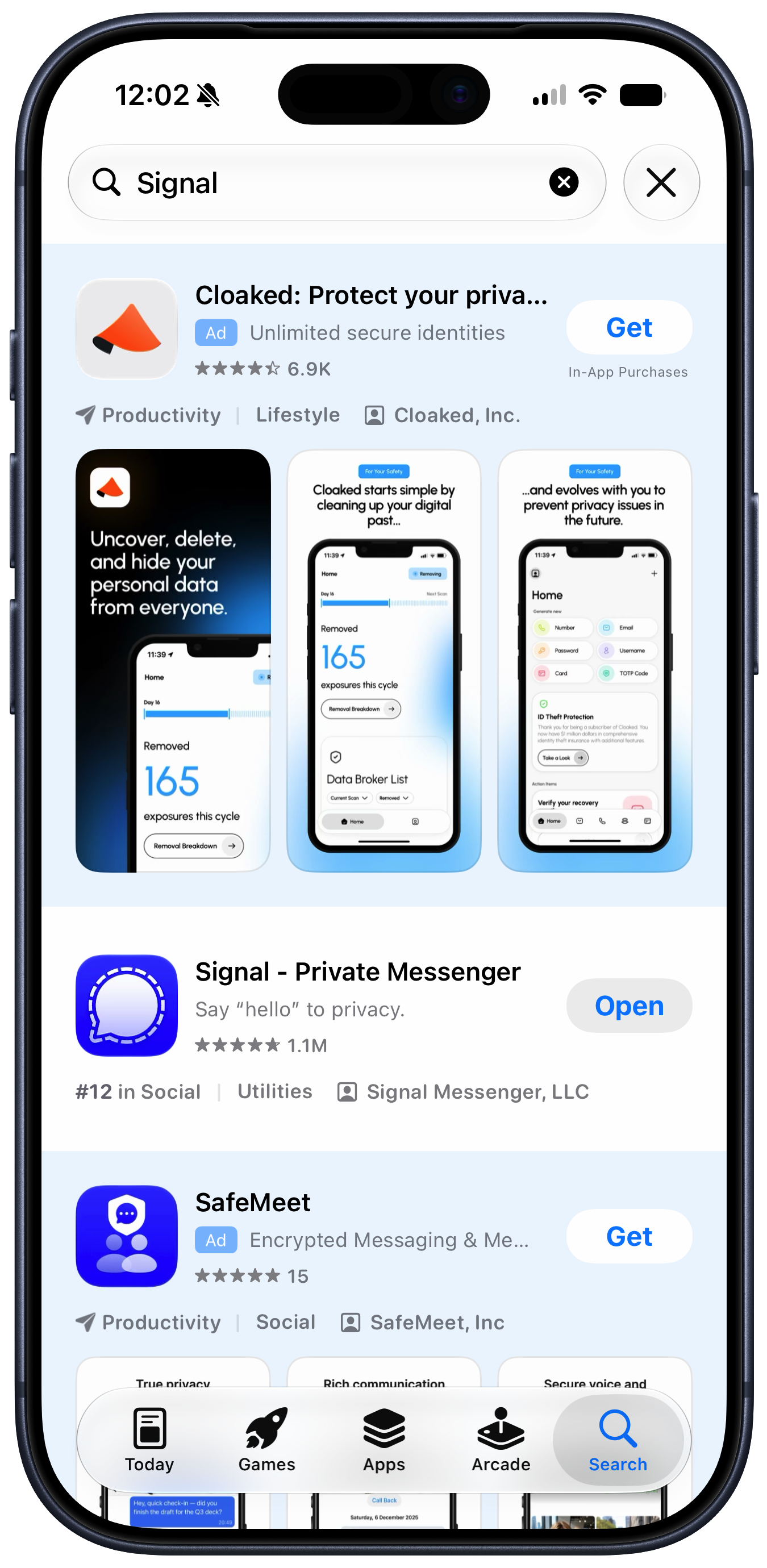
Putting themselves in customers’ shoes today, how many ads do Apple’s executives want stuck in the results when they search for an app in the App Store? We know the honest answer. But the answer evidenced by the actual App Store is “Two really big ones, including one in the first spot.”
While Apple can spin adding ads to Apple Maps as a revolutionary new way for businesses to be discovered, it’s telling that its initial announcement was hidden inside a press release about an entirely different product, and introduced as “Enhanced Discoverability in Apple Maps.” Those choices show that this isn’t something Apple is actually proud of—and that the people in charge of communicating and explaining Apple’s decisions to the world are at odds with those who are making the decisions about expanding revenue.
[…]
To this day, you’re confronted with an ad for Creator Studio every time you create a new document in those apps, and their default toolbars contain buttons that won’t work unless you subscribe to the bundle. As a result, Apple has essentially turned its free productivity suite—software that was designed to enhance the inherent value of Apple’s products—into a freemium package with upsell to a creative professional subscription bundle that’s irrelevant (and a terrible value!) for most of its existing users.
[…]
There are many more examples. Using notifications to promote subscriptions and badging the Settings app to push AppleCare plans are among the ways Apple has chosen to intervene in the user experience to drive revenue. I’m actually not opposed to the idea that Apple should communicate opportunities for its customers to get more out of their devices—but it should be careful not to cross the line into actively annoying those customers. If someone doesn’t want to see what you offer, you need to accept that and go away—not keep needling them. Apple often falls on the wrong side of that line.
[…]
It makes me wonder if the people making these decisions at Apple have lost track of the Apple brand and what it stands for.
What Snell’s column makes clear is that the incremental revenue Apple is gaining from putting shitty ads in its software comes at a price. They’re withdrawals from Apple’s brand equity. And I would argue that the value they’re detracting from the brand far out-values the dollar amount they’d padding to Apple’s bottom line.
[…]
If your competitors’ stores all smell like dogshit, don’t aim to have the store that smells the least like shit. Aim to have a store that smells pristine. “Our stores only carry a vague whiff of dogshit” is not insanely great.
The people haven’t changed, but Apple has. Strong leaders inevitably shape the personality — the spirit — of organizations over time. Apple in 2011 was peak Steve Jobs Apple. Apple in 2026 is peak Tim Cook Apple. But it was Cook who popularized the “you’re not the customer, you’re the product” argument against “free with ads” online services. But that was in 2014.
“Slippery slope” is a perfect term. But I wanted to add something here. In my experience, in the realm of UI, there is no middle notch. I’ve seen it time and time again… the moment you open the door to One, Infinity starts exerting its pull[…]
I HATE, HATE, HATE having ads pop up when I’m trying to do something else. It’s bad enough on Web sites where at least they have the excuse of having to make money some how but it rises to intolerable when they put them up on a device I’ve already paid for.
The annoyance is reason enough to dislike Apple’s ads but for me the worst thing is that they’re corrupting and inevitably lead to the user being replaced by the advertiser as the customer.
The acquisition brings Poke’s conversational style and interaction model to Cognition’s coding agent Devin, reflecting a growing belief that how AI assistants interact with users is as important as the models powering them.
AI tools have democratized the opportunity to build, shortening the timelines of success and enabling more young people to start successful companies without stepping foot inside a Big Tech company.

 Login