Discover the cosmos! Each day a different image or photograph of our fascinating universe is featured, along with a brief explanation written by a professional astronomer.
M83: The Southern Pinwheel
Explanation: Beautiful and bright spiral galaxy M83 lies some twelve million light-years away, near the southeastern tip of the very long constellation Hydra. Prominent spiral arms traced by dark dust lanes and blue star clusters lend this galaxy its popular name, the Southern Pinwheel. Still, reddish star forming regions that dot this cosmic pinwheel’s spiral arms have suggested another nickname, the Thousand-Ruby Galaxy. A mere 40,000 light-years across, smaller than the Milky Way, M83 is a member of a group of galaxies that includes active galaxy Centaurus A. In fact, the core of M83 itself is bright at x-ray energies, showing a high concentration of neutron stars and black holes left from an intense burst of star formation. This sharp, groundbased telescopic view also features foreground Milky Way stars and distant background galaxies.
The curving, parallel mountain ridges of the Sierra Madre Oriental are an eye-catching feature of northeastern Mexico’s landscape. The spot where these folds nestle up against Mexico’s second-largest metropolitan area captured the attention of an astronaut aboard the International Space Station, who took this photo on August 26, 2026.
Monterrey, the capital of the state of Nuevo León, is an industrial hub supporting heavy industries such as ironworks and steelworks, as well as manufacturing facilities for goods ranging from textiles to processed foods to glass and plastics. The metropolitan area is home to 5.3 million people, according to the 2020 census. And while the city has seen overall population growth since 1990, the number of people living within 5 kilometers (3 miles) of the city center has declined, researchers have found—a trajectory shared with many of Mexico’s metropolitan areas.
In Monterrey’s case, urban expansion runs up against some unforgiving terrain. Along the city’s southern edge, layers of limestone, deposited in the late Mesozoic era and then folded between about 80 and 50 million years ago, form the Sierra Madre Oriental. Over millions of years, weaker rock layers have eroded away, leaving behind the distinct ridgelines that bound Monterrey today.
The Río Santa Catarina carves through the mountains and onto the semiarid floodplain where the city lies. Because of the dry environment, the river carries little to no water for much of the time. But its channel is crucial for collecting runoff from summer rains and serves as an important natural area for plant and animal life within the city.
The river runs through Monterrey’s urban core and between several island-like protrusions of folded rock. One of these is the Sierra Las Mitras, a state nature reserve established in 2000. The mountain ridge rises approximately 1,500 meters (4,900 feet) over the city and provides a haven for wildlife. As conditions become cooler and wetter with higher elevations, vegetation turns from cacti and thorny shrubs on lower rocky slopes to oak and pine forests higher on the ridge. Cerro de la Silla (Mount Silla or Saddle Hill) is another prominent feature of the landscape, contrasting with the built environment.
Near the city’s border with the Sierra Madre Oriental sits Universidad de Monterrey, a host venue for the NASA Space Apps Challenge. This annual hackathon will take place in November 2026 in person and virtually at sites around the world. Participating teams use NASA and partner agency data to tackle challenges in fields such as software development, astrophysics, space exploration, and agriculture.
Astronaut photograph ISS075-E-70481 was acquired on August 26, 2026, with a Nikon Z9 digital camera using a focal length of 400 millimeters. It is provided by the ISS Crew Earth Observations Facility and the Earth Science and Remote Sensing Unit at NASA Johnson Space Center. The image was taken by a member of the Expedition 75 crew. The image has been cropped and enhanced to improve contrast, and lens artifacts have been removed. The International Space Station Program supports the laboratory as part of the ISS National Lab to help astronauts take pictures of Earth that will be of the greatest value to scientists and the public, and to make those images freely available on the internet. Additional images taken by astronauts and cosmonauts can be viewed at the NASA/JSC Gateway to Astronaut Photography of Earth. Story by Lindsey Doermann.
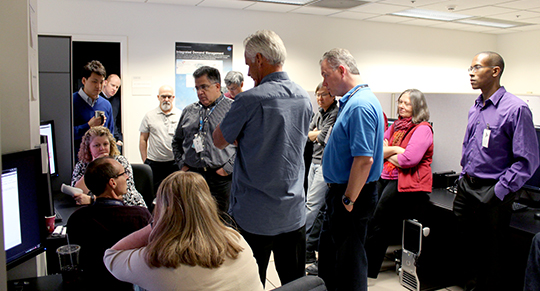
AOL researchers recently led development of the Integrated Demand Management concept for operational integration of two of the FAA’s NextGen decision support systems to improve capacity-constrained arrival operations in the National Airspace System (NAS). The AOL’s HITL simulation platform was used to engage stakeholders in the development and evaluation of new methods and procedures for using Traffic Flow Management System (TFMS) initiatives to strategically precondition traffic for the more tactical Time-Based Flow Management (TBFM) system (FAA TBFM overview video). This preconditioning was shown in a series of realistic HITLs to improve the efficiency and predictability of TBFM operations and provide airline operators more control over individual flight outcomes when weather- or traffic-related congestion affected operations.
Air Traffic Controllers taking part in an Integrated Demand Management (IDM) research simulation in the Airspace Operations Laboratory (AOL) at NASA Ames Research Center.
Credit – NASA
Why IDM?
FMS and TBFM represent two powerful NextGen automation systems used to address demand/capacity imbalances in the NAS. Recent enhancements to TBFM that extend its geographic and temporal range have introduced some overlap with TFMS functionality, raising the question of which system to use in some situations. TFMS features such as its collaborative decision making framework and new Collaborative Trajectory Options Program (CTOP) (FAA CTOP overview video) and Trajectory Option Set (TOS) capabilities, however, are absent from TBFM. Integrated Demand Management (IDM) proposes that often the best solution can be found by leveraging the complementary features of both systems, developing coordinated strategic (TFMS) + tactical (TBFM) flow management interventions as needed.
IDM Concept
IDM uses a strategic Traffic Management Initiative (TMI), such as CTOP, to adjust the rate and/or geographic distribution across arrival flows of the traffic inbound to a high-demand, TBFM-managed airport. This TFMS intervention preconditions the traffic before it reaches the TBFM planning horizon. This results in a more workable problem for TBFM, which can then tactically fine-tune the demand to deliver a well-managed, orderly feed to the destination airport. Coordinated use of these two flow management capabilities is intended to improve system performance in terms of:
Equity of ground delay assignment, avoiding excessive ground delay for TBFM-scheduled departures, without penalizing longer flights;
Throughput, by distributing traffic to maximize use of available capacity;
Predictability for operators, providing advance notice about the impact on individual flights;
Increased flexibility, by supporting operator mitigation strategies such as slot swapping and trajectory options;
Efficiency of flight operations, by improving access to user-preferred routes, using ground delay more effectively, and reducing airborne delay.
Traffic Flow Management System (TFMS) Deployment Team and representatives from MITRE Corp and MIT Lincoln Labs participate in IDM demonstration in the AOL
Credit – NASA
Research Products
The AOL’s IDM research was a stakeholder-centered, laboratory-based development process that provided the following products to the FAA.
An IDM Concept and Procedures document and IDM Concept Overview slides that describe its context of use and the operational procedures for planning, coordination and execution of IDM operations in today’s NAS.
A description of CTOP User Interface Enhancements that were developed in the course of IDM HITL evaluations and demonstrations. While some of these were designed to support IDM-specific tasks, most were improvements that stakeholders found valuable for CTOP in general.
A description of the IDM Flow Balancing Algorithm (FBA). The FBA was an algorithm that traffic managers could use to support design of an IDM CTOP that improved the distribution of inbound traffic across multiple arrival flows.
An IDM Annotated Bibliography that provided an overview of the research publications conducted or supported by NASA under IDM, including links to all of the NASA-produced publications.
The High Density Vertiplex (HDV) subproject is responsible for the development and evaluation of a reference automation architecture that addresses scalable and efficient aircraft operations, flight and airspace management procedures, and vertiport operations in high density vertiplex environments.
HDV is a sub-project of the Advanced Air Mobility (AAM) project under the Integrated Aviation Systems Program (IASP).
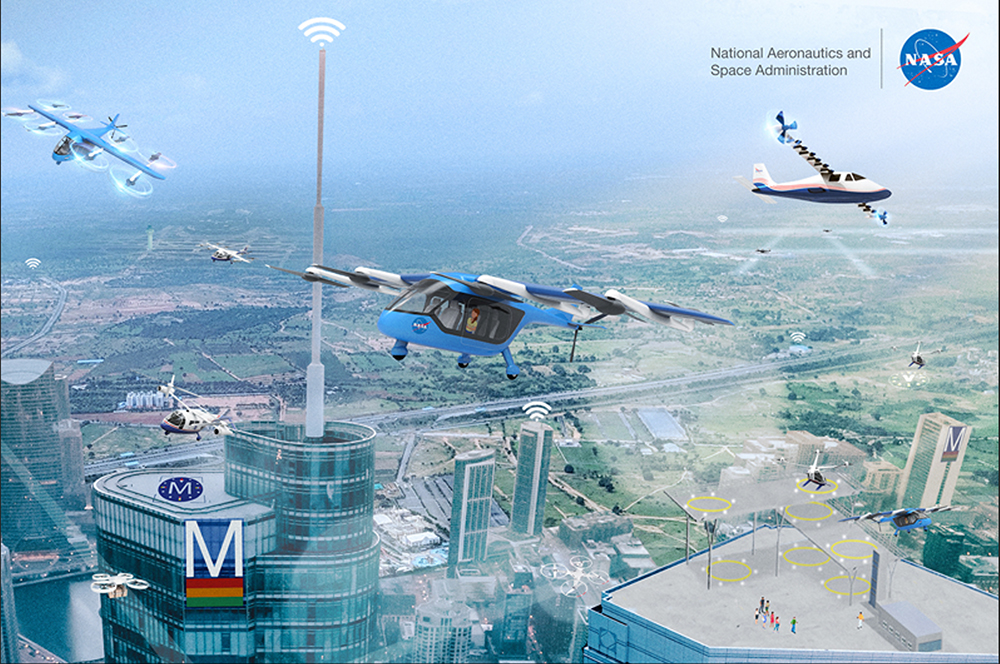
What is a Vertiplex?
A Vertiplex is a geographic area that includes multiple vertiports whose arrival and departure operations are highly interdependent.
Artists conception of High Density Vertiplex (HDV) operations in an urban environment.
Credit – NASA
Purpose and Research Approach
The purpose of this research is to design concepts, procedures, and technologies focused on Urban Air Mobility (UAM) operations in a vertiplex environment. The HDV approach will be to gradually build-up complexity in the operational environment through a series of tests. Testing will be performed subscale using small Unmanned Aerial Systems (sUAS) as surrogates for UAM aircraft. Testing cycles will start out fully simulated, then culminate in live flight tests with small UAS at Langley Research Center. Results from each testing cycle will be used to support subsequent risk assessments. The overall goal is to create a representative UAM system to mitigate risk for future research and development.
Concepts Being Explored
Aircraft-airspace-vertiport automation technology must be integrated and matured to support three main use cases: (1) automated landing, (2) automated merging and spacing, and (3) automated contingency decision making.
NASA researchers participating in a High Density Vertiplex (HDV) study in the Airspace Operations Laboratory (AOL).
Credit – NASA
Role of the AOL in HDV
During simulations and flights tests, the Airspace Operations Laboratory (AOL) and the Autonomous Vehicle Applications Laboratory (AVAL) will serve as the base of operations for Airspace Systems Integration (ASI), which integrates systems and software from Unmanned Aerial Systems (UAS) Traffic Management (UTM) to support HDV concepts. Some of the outcomes of this work include prototype airspace management automation technology and human factors evaluation. Joining the AOL in the HDV flight testing efforts are the Autonomous Vehicle Applications Laboratory (AVAL) from the NASA Ames’ Human Systems Integration Division, and the Air Traffic Operations Laboratory (ATOL) from Langley Research Center.
The Exoplanet Technology group in the Astrophysics Division at NASA Ames is dedicated to advancing direct imaging technologies, including the ultimate goal of imaging Earth-like exoplanets and searching them for signs of life.
Technology enabling exoplanet imaging in binary stars systems.
NASA Ames leads and supports the hardware working group for the Roman Coronagraph Participation Program, which enables international teams to develop capabilities beyond the instrument’s baseline modes
State of the art test beds, vacuum chambers, and labs.
These facilities enable researchers to validate new instruments, algorithms, and wavefront-control techniques before they are deployed on space missions.
A deeper characterization of exoplanets and their host stars.
Combining theoretical research and observations to support NASA missions and enhance their scientific return. Developing models and analysis techniques to interpret observations from missions such as Kepler, TESS, Hubble, and Webb.
Developing innovative small mission concepts, such as ACESat, to demonstrate new technologies and explore compelling exoplanet science opportunities. These concepts help mature mission architectures and technologies while providing a pathway to address high-priority science goals with cost-effective, focused missions.
In conjunction with NASA Langley Research Center, NASA’s Airspace Operations Lab explored issues and ideas for allocating separation assurance functions to meet the future air transportation needs. A separation assurance system primarily performs the functions necessary to ensure that aircraft remain safely separated from other traffic. Such a system is also simultaneously concerned with the avoidance of severe weather, the conformance of flights to a variety of operational constraints, and the overall expeditious flow of traffic from origin to destination.
In the current system, air traffic services provide these functions. However even with the current level of operations, this can result in excessive controller workload, limited capacity and, often, inefficient operations. With an expected increase in traffic, these weaknesses can be exacerbated. New automation in the air, on the ground and/or the cloud, and powerful new communication technologies have enabled different ways to allocate trajectory management and separation assurance functions.
NASA’s functional allocation research successfully identified the strengths and weakness of different allocations of separation assurance functions amongst the wide variety of agents participating in the air traffic operation. This research helped provide a roadmap to ensure that fundamental research is pointed towards an efficient final state. The future system has helped handle growing travel in a safe, efficient, and sustainable manner.
The Republic of Djibouti will sign the Artemis Accords during a ceremony at 11 a.m. EDT, Monday, Sept. 14, at NASA Headquarters in Washington, becoming the 72nd country signatory.
NASA Deputy Administrator Matt Anderson will host Ambassador of Djibouti to the United States Mohamed Siad Douale for the ceremony, together with U.S. State Department Assistant Secretary for African Affairs Frank Garcia.
In 2020, during the first Trump Administration, the United States, led by NASA and the State Department, joined with seven other founding nations to establish the Artemis Accords, responding to the growing interest in lunar activities by both governments and private companies.
The accords introduced the first set of practical principles aimed at enhancing the safety, transparency, and coordination of civil space exploration on the Moon, Mars, and beyond.
President Donald Trump presents an executive order establishing the United States Space Academy during an event to award the Congressional Space Medal of Honor to the Artemis II crew as Michael Kratsios, director of the Office of Science and Technology Policy, left; Kevin Hassett, director of the National Economic Council, third from left; and NASA Administrator Jared Isaacman, right, applaud, Friday, Aug. 28, 2026, at NASA’s Johnson Space Center in Houston.
Credit: NASA/John Kraus
Less than two weeks after an Executive Order was signed to create the first United States Space Academy, NASA-led work is in full swing to make the academy a reality and shape the future of America’s aerospace workforce and leadership.
NASA Administrator Jared Isaacman chaired the first Presidential Commission on the United States Space Academy meeting on Sept. 9. Following that meeting, NASA published a Request for Information Thursday seeking input from governors or their designees interested in hosting and sponsoring the up-and-coming academy in their state.
“Our first Commission meeting made clear how much talent and commitment we have behind President Trump’s vision for the U.S. Space Academy,” said NASA Administrator Jared Isaacman. “I’m grateful to our partners across government for getting right to work. Now, with the RFI underway, states across the country have an opportunity to help us shape a legacy institution built for America’s future in space.”
Isaacman and Deputy Administrator Matt Anderson welcomed key commission members from multiple agencies and organizations to NASA Headquarters in Washington for a collaborative Commission discussion. Participants included U.S. Secretary of War Pete Hegseth, Director of the National Economic Council Kevin Hassett, Secretary of the United States Air Force Troy Meink, and U.S. Chief Technology Officer Ethan Klein, representing Director of Office and Technology Policy Michael Kratsios, along with representatives from the U.S. Office of Management and Budget, the National Security Council, and the White House.
During the meeting, commission members began working through the structure and priorities of the proposed U.S. Space Academy, including its governance, curriculum, service commitments, partnerships, and implementation.
“The location of the U.S. Space Academy is foundational to its success,” said Anderson. “We’re asking states to bring their strongest vision — the infrastructure, the partnerships, and the community that can compete with the elite options this caliber of student will have and match the boundless ambition of our future space leaders.”
The commission’s 120-day mandate to develop recommendations for President Trump on how to establish the academy and build the technical talent and leadership pipeline needed to support America’s long-term goals in space began when the President signed the Executive Order on Aug. 28.
Responses to the RFI will help inform the commission’s path forward to selecting a location for the institution and are due by 6 p.m. EDT on Monday, Oct. 26. An ambitious timeline is outlined in the request, calling for a groundbreaking no later than 2027, temporarily hosting the first 300 students in 2028, and a permanent location in operation by 2031.
Each state is allowed one submission to the Announcement via its governor’s designee. In addition to details about resources available to support the academy, input sought on the potential campus includes:
Location information
Site readiness
Environmental and regulatory considerations
Proximity and supporting ecosystems
A fact sheet on the U.S. Space Academy is available on The White House website.
NASA’s Life-Saving Technology Where Cell Signals Can’t Go
Rescued after more than four hours in the water, Easton Barrett (center, red shorts) and his friend were picked up by the U.S. Coast Guard thanks to a personal locator beacon (PLB). The devise sends a distress signal to satellites that are relayed back to Earth, launching a rescue operation.
Credits: Easton Barrett
Memorial Day weekend 2024 started with a blue sky and a mild three- to four-foot chop in the water off the Gulf Coast of Mississippi — a perfect day for a fishing competition. A team of five was about 40 miles offshore checking their sonar, and 30 seconds later the boat was gone. They were in the water struggling to pull on life jackets and grab the coolers as they bobbed up. When a boat sinks, survivors can be virtually invisible amid the vast expanse of water.
When their fishing trip went wrong, Easton Barrett had the only mobile phone and no cell service. He recorded a brief farewell, planning to put his phone in a cooler in hopes someone would find it.
Another team member activated a personal locator beacon (PLB) that had been stowed at the last minute, which sent a distress signal to the Search and Rescue Satellite-Aided Tracking (SARSAT) technology carried by multiple satellites in Earth orbit. In the SARSAT system, developed partly by NASA, an emergency signal containing the transmitter’s location is directed to the nearest available ground station.
406 megahertz is the wavelength dedicated for PLB distress signals. On the annual 406 Day, Easton Barrett posts videos and messages on his social media accounts to help raise awareness about essential survival gear.
Credit: ACR
A mission control center then alerts rescue coordination centers to mobilize search and rescue crews. For Barrett and his crew, that was a Florida Coast Guard boat.
“Ever since, I have tried to teach others about safety on the water and in the outdoors by using a PLB,” said Barrett. “If that will save one life, it’s worth the effort.”
A beacon like the one that saved his crew, a registered ResQLink PLB developed by ACR Electronics Inc. of Fort Lauderdale, Florida, also notifies the device owner’s emergency contact, indicating a distress call was activated. All emergency beacons must meet the same requirements to ensure they work when needed. Every rugged, buoyant, handheld devices have a five- to 10-year battery life.
SARSAT began operations in 1982, becoming an international collaboration in 1985. The flight and ground technologies used globally were originally developed at NASA’s Goddard Space Flight Center in Greenbelt, Maryland. Now there are 62 satellites in the program and 45 nations contributing services, from operating ground stations to providing rescue crews. More than 63,000 lives have been saved.
Turning on a ResQLink View PLB from ACR Electronics will automatically “ping” orbiting satellites that send location and GPS information
to the nearest search and rescue station. Whether on land or water, the appropriate resources will be dispatched to help anyone in distress
anywhere in the world.
Credit: ACR
SARSAT by the Numbers
The Search and Rescue Satellite-Aided Tracking system developed over several decades by NASA and other government agencies saves lives on land or at sea.
1982 — the start of U.S. operations
1985 — the start of international operations
62 operational satellites
45 nations contributing services
63,000+ lives saved
One rescue in 2024 demonstrates how it all comes together.
40 miles off the Mississippi Gulf Coast
5-person team participating in a fishing competition
30 seconds for a boat to sink
200 pounds of bait dumped to make a cooler buoyant
3 close encounters with wildlife, likely sharks and eels
4 hours in the water
1 personal locator beacon
1 Coast Guard rescue boat
5 lives saved
“If it has anything to do with NASA, it’s got to be awesome.”
The Langley Research Center National Advisory Committee for Aeronautics (NACA) and National Aeronautics and Space Administration (NASA) Hall of Honor was conceived by members of the Langley Alumni Association and the NASA Langley Research Center as a mechanism to pay tribute to individuals who built exemplary careers at Langley, persevered against the status quo when required and achieved revolutionary scientific understanding and technological progress on the frontiers of the aerospace sciences.
The Hall of Honor formally recognizes those persons whose contributions have had the most sustained and far-reaching influence on the leadership, direction, mission and capabilities of the NACA Langley Memorial Aeronautical Laboratory and NASA Langley Research Center and/or whose work at Langley enabled unprecedented and fundamental advancements in either a scientific or engineering field and made significant contributions to the United States’ aerospace industry for commercial and military aircraft and/or spacecraft.
In 1958, Mary W. Jackson became NASA’s first black female engineer. She was inducted into the Hall of Honor in 2017.
History
NASA Langley Unveils 2022 Hall of Honor
Famed Hidden Figure Christine Darden was one of 17 members of the 2022 class of inductees to take their rightful place in the Langley Research Center NACA and NASA Hall of Honor – the third such ceremony to take place.
How 2 US, European Satellites Are Studying Hurricanes During El Niño
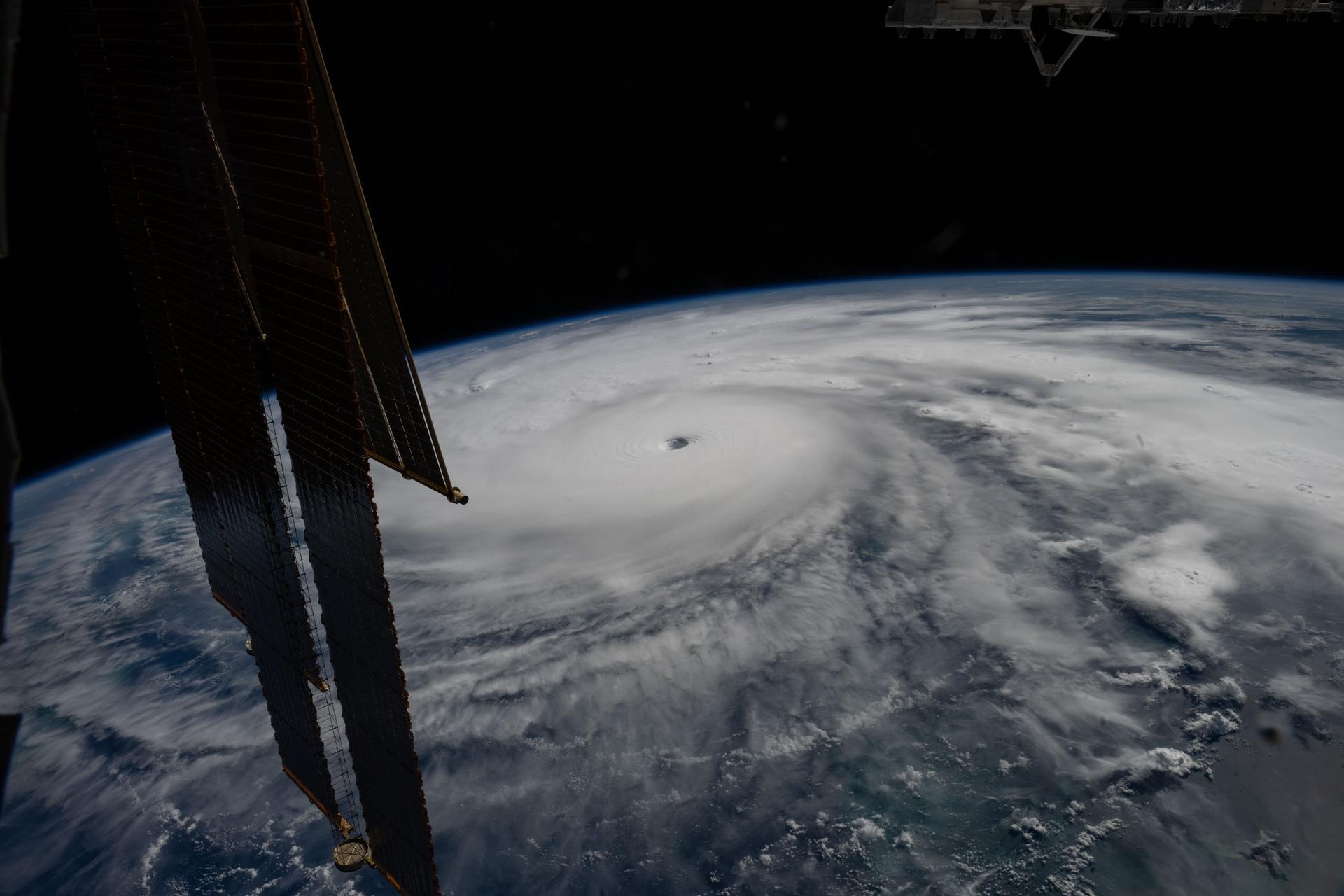
Hurricane Melissa is seen 50 miles south of Jamaica in this photograph taken from the International Space Station on Oct. 28, 2025.
NASA
Last November, NASA and its European partners launched the Sentinel-6B satellite to improve hurricane forecasts, help protect infrastructure, and benefit commercial industries, including shipping. The satellite now is flying 30 seconds behind its predecessor, Sentinel-6 Michael Freilich. Both satellites are providing precise sea level height measurements during what oceanographers expect to be a historic El Niño, a naturally occurring oceanic phenomenon in which warmer-than-usual Pacific waters shift global weather patterns.
The two satellites make up the Copernicus Sentinel-6/Jason-CS (Continuity of Service) mission, the latest in a series of ocean-observing radar altimetry missions that have been monitoring Earth’s changing seas continuously since the early 1990s.
The data each satellite is collecting will not only allow scientists to better understand this year’s El Niño but will also help them create more accurate hurricane predictions.
“This El Niño was a late-bloomer,” said Josh Willis, Sentinel-6B’s project scientist at NASA’s Jet Propulsion Laboratory in Southern California. “It didn’t kick off until the middle of the year and is just now reaching a strength similar to what we’ve seen in the satellite record during significant El Niños in 1997 and 2015. We expect it to be big, and it’s already having big impacts.”
El Niños generally scramble weather patterns tied to rainfall and storms, including hurricanes. They also redistribute heat in the ocean, which affects sea level. Normally, Earth’s warmest ocean waters sit along the equator in the western Pacific. During El Niño, weakened winds, which usually blow westward along the equator, result in heat spreading east toward South America. The change in ocean heat shifts hurricane activity from the Atlantic to the Pacific Ocean.
Predicting hurricane strength
On July 15, Sentinel-6B began delivering low-latency data to scientists that could be used for weather predictions. That data will take some time to work its way into the research models on which meteorologists and climate scientists rely, but when it does, those improved models could save lives.
Data from Sentinel-6 satellite missions feeds into hurricane tracking algorithms used by federal and state agencies. Those predictions can activate disaster response efforts, mobilizing resources ranging from sandbag placement to National Guard activation. They also can lead to evacuation orders that require quick but well-informed decisions about logistics at a local level. More severe events may require engaging larger organizations, such as the Federal Emergency Management Agency.
A tropical storm can take a week or more to become a hurricane and make its way to a coastline, but a hurricane can rapidly intensify in the 48 hours prior to landfall, leaving planners little time to prepare.
“Hurricanes have been known to speed up quickly at the last moment, so the window in which to decide what to do is short,” said Deirdre Byrne, an oceanographer and altimetry expert with the National Oceanic and Atmospheric Administration (NOAA). “The goal is to forecast how much and how rapidly intensification will happen so that officials can make the right calls.”
Each Sentinel-6 satellite measures ocean height, as well as the size of waves and marine wind speed, using a radar altimeter, which bounces thousands of radar pulses a second off the crests and troughs of waves. Ocean height varies from place to place and provides insight into the ocean’s heat content, since warm water expands. That, in turn, helps forecast how fast hurricanes will grow.
Among the measurements Sentinel-6 is gathering, Byrne is most anticipating the ocean height data, which she plans to begin incorporating into the current Satellite Ocean Heat Content Suite algorithm by the end of the year.
“In terms of data quality, the Sentinel-6 missions are unparalleled,” Byrne said.
Together, the missions are also extending a precise dataset deep into its fourth decade. This record of sea level observations traces back to the TOPEX/Poseidon mission, which launched in 1992, and continues through to the present day with Sentinel-6 Michael Freilich. Sentinel-6B will take over for its predecessor as the reference satellite for global sea level measurements later this year.
“The key is consistency, measuring the same way, every time,” said Severine Fournier, Sentinel-6B deputy project scientist, JPL. “That’s what lets us predict hurricanes, and, in turn, protect coastal communities and infrastructure.”
More about Sentinel-6B
Sentinel-6 Michael Freilich, named after a former director of NASA’s Earth Science Division, is one of two satellites that compose the Copernicus Sentinel-6/Jason-CS mission.
Sentinel-6/Jason-CS, a part of the European Union’s Earth observation program called Copernicus, was jointly developed by ESA (European Space Agency), EUMETSAT (European Organisation for the Exploitation of Meteorological Satellites), NASA, and NOAA, with funding support from the European Commission and technical support on performance from the French space agency CNES (Centre National d’Études Spatiales). Spacecraft monitoring and control, as well as the processing of all the altimeter science data, is carried out by EUMETSAT on behalf of the European Union’s Copernicus Programme, with the support of all partner agencies.
NASA JPL, a division of Caltech in Pasadena, contributed three science instruments for each Sentinel-6 satellite: the Advanced Microwave Radiometer, the GNSS-RO, and the Laser Retroreflector Array. NASA also contributed launch services, ground systems supporting operation of the agency’s science instruments, the science data processors for two of these instruments, and support for the United States members of the international Ocean Surface Topography Science Team.
Henry Helgeson serves as the associate administrator for the Office of Communications at NASA Headquarters in Washington. In this capacity, he leads global communications strategy, public engagement, branding, media relations, and digital enterprise projects across all NASA centers. As a senior advisor to the administrator and other executive leadership, he directs all aspects of internal and external communications, maximizing the broadest potential reach to highlight NASA’s work in human spaceflight, science, and research and technology.
Helgeson is a proven business leader who has founded and operated several businesses, bringing more than 25 years of strategic leadership, risk management, procurement, contract negotiation, and more to the role. Previous key positions include founder and CEO at Spectre Capital; CEO at BlueSnap; president of Integrated Solutions at TSYS, and founder and CEO at Cayan.
By leveraging best practices from the private sector and success in executing complex projects, Helgeson will drive operational communications excellence in alignment with Ignition and other agency initiatives.
In addition to multiple board and advisory roles, Helgeson is the recipient of numerous industry awards and is a frequent speaker at events like SXSW. He also is a licensed private pilot with more than 3,000 flight hours.
Helgeson holds a bachelor’s degree in finance from Marist University.
Show | Grades 6-12+ In this 2013 interview, Dr. Ernie Hildner reflects on his extensive career in solar physics, which includes serving as the Chief of the Solar Physics branch at NASA’s Marshall Space Flight Center and spending 19 years as the Director of NOAA’s Space Environment Center (now the Space Weather Prediction Center). He discusses the scientific discoveries, technological advancements, and administrative milestones that transformed space weather from a niche research area into a vital operational service. Dr. Hildner’s early research focused on solar prominences, but his involvement as an experiment scientist on the Skylab coronagraph in the 1970s was a major turning point. By using a disk to block the sun’s direct light (creating an artificial eclipse in space), the Skylab team was the first to directly observe and verify Coronal Mass Ejections (CMEs). Skylab’s X-ray telescopes also revealed “coronal holes” for the first time. Hildner describes these as areas where the sun’s magnetic field lines open straight out into space (comparing it to the “part in your hair”). Instead of trapping the hot solar atmosphere, these open fields act like “fire hoses,” rapidly streaming material into space and causing geomagnetic storms on Earth days later. Prior to Skylab, NOAA’s daily solar flare and storm predictions were highly crude. Skylab’s well-funded operations led to a worldwide network of observatories that monitored the Sun in real time, drastically improving space weather forecasting and fundamentally shifting NASA’s culture regarding mission planning. Hildner highlights that space weather becomes crucial for astronaut safety. While Earth’s magnetic field protects low-earth orbit, lunar and future Mars missions require deep understanding of solar radiation hazards. He names several technological and scientific milestones. He also stresses that organizing the scientific community was just as important as the research itself. Dr. Hildner concludes by emphasizing the mutually beneficial, tight-knit relationship between NASA (research and data tracking), the NSF (funding and research), and NOAA (daily operations and forecasting), which ultimately provides tangible, protective benefits to society and taxpayers.
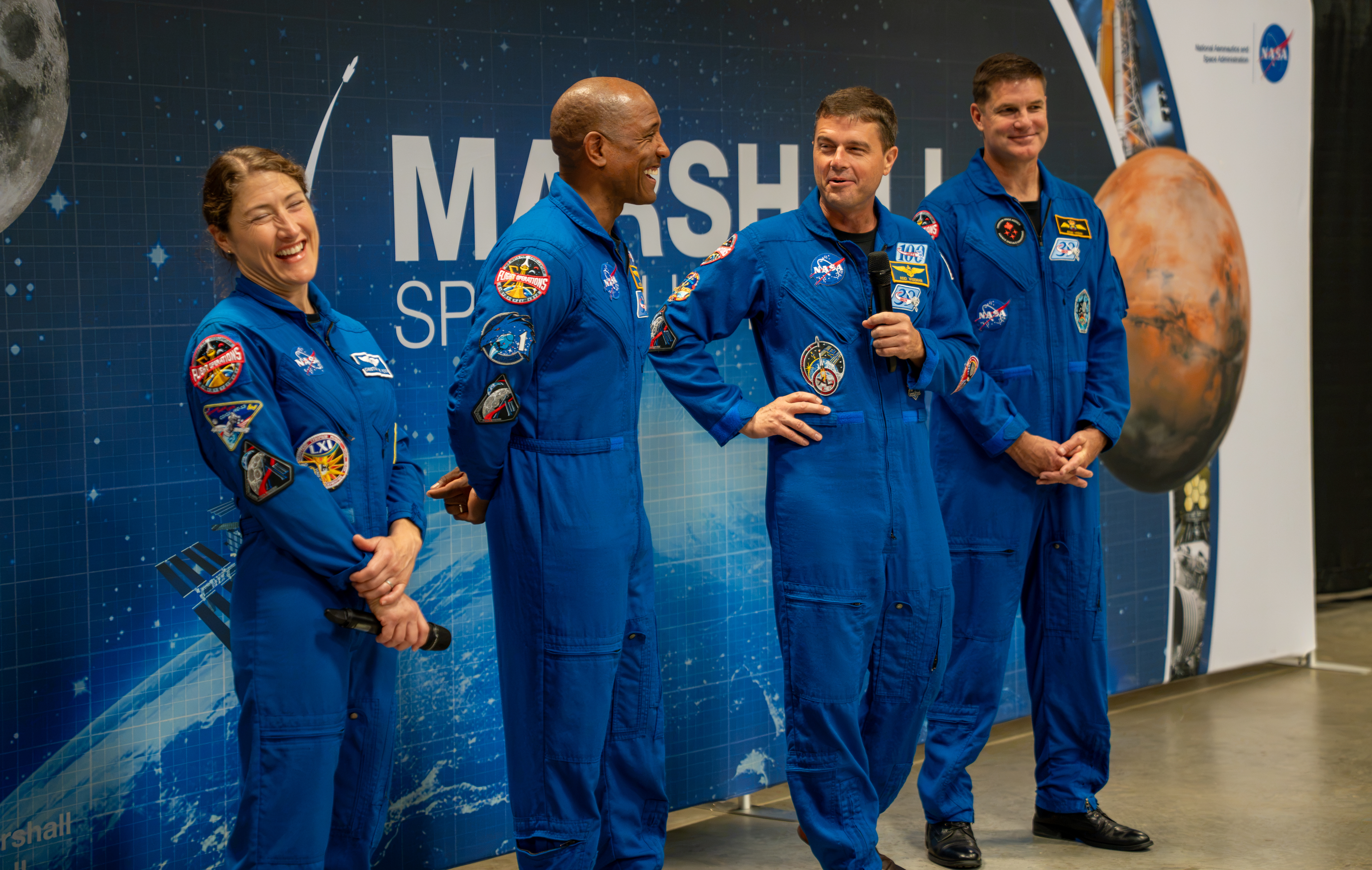
The crew of NASA’s Artemis II mission – NASA astronauts Christina Koch, Victor Glover, and Reid Wiseman and CSA (Canadian Space Agency) astronaut Jeremy Hansen – visited Huntsville, Alabama, Sept. 1, 2026, where they met with the NASA workforce at NASA’s Marshall Space Flight Center. The event gave the crew an opportunity to share firsthand experiences from their mission, reflect on their time in space, and connect with the workforce that supported the mission through an engaging question-and-answer session.
Show | Grades 6-12+ | In this December 2012 interview, Dr. David Hathaway, a solar astronomer at NASA’s Marshall Space Flight Center, discusses his career trajectory into solar physics and outlines what he considers the most significant historical milestones in space weather research. Dr. Hathaway initially wanted to study stellar structure, evolution, and stellar interiors. During graduate school, he realized the difficulty of modeling convective heat transport in stars. Guided by mentors, he recognized that our Sun — a “star in our backyard” — offered the perfect, observable model for stellar convection. His specific focus on space weather began when his supervisor, Dr. John Davis, challenged him to predict the Sunspot cycle. Hathaway developed successful prediction methods and, because of his knack for public speaking, frequently interacted with reporters. This required him to deeply educate himself on the historical and technological impacts of space weather.
Dr. Delia Santiago-Materese wants things to get complex
From terrestrial animals to experiments in microgravity and Martian clouds, this NASA program scientist’s career path links diverse challenges. Today, she supports a mission to Saturn’s moon Titan, a world teeming with organic molecules that could hold valuable clues about the origin of life.
When novelty is your hobby, you already have a large part of the recipe for a career full of challenges. That is why Dr. Delia Santiago-Materese describes her path within NASA as “meandering.” Her diverse roles have taken her to low Earth orbit, to the clouds of Mars, and to the surroundings of Jupiter. Now, they are also bringing her closer to the surface of Titan, an intriguing moon of Saturn. Woven together by her exploring spirit and a perennial curiosity, all these experiences have one point in common: life.
Today, Santiago-Materese is part of the Planetary Science Division at NASA Headquarters in Washington. The main decoration in her office is a model of Jupiter, larger than a basketball, resting next to a scale model of the spacecraft exploring it, Juno. Small black and red pins with the inscription “Dragonfly” rest in the center of a round table. Several framed diplomas cover a wall. From here, Santiago-Materese does “a little bit of everything” on any given workday as a program scientist for the Juno and Dragonfly missions, and for the Discovery program, which features a portfolio of several missions in our cosmic neighborhood.
This medley of roles is no coincidence. Santiago-Materese describes herself as someone who does not pursue a single goal, but rather diverse interests that she discovers along the way. “I am always looking for something new to add to my experiences,” she says, “because I think I also get bored easily.”
Santiago-Materese holds her model of Jupiter, just outside her office. As a program scientist for Juno—a mission studying this planet—for Dragonfly, and for the Discovery program, she guides these projects by promoting leadership based on kindness and respect: “Every person brings something unique.”
NASA/Noelia González
The daughter of a military family, Santiago-Materese was born in Spain by coincidence. Her roots are actually on another continent: her mother is Mexican-American and her father is Puerto Rican. From her time in Spain, she only keeps some baby photos; she lived part of her life in Texas and then in California, which she considers her home—despite having spent her childhood summers in San Sebastián, Puerto Rico. It was in the Golden State where she first imagined herself as a veterinarian and decided to study Biological Sciences. And it was during her studies at Stanford University, “just around the corner” from NASA’s Ames Research Center in California’s Silicon Valley, that Santiago-Materese discovered astrobiology.
This elective course brought her closer to a discipline that, to some extent, was in its infancy. Today, NASA’s Astrobiology Program investigates life in the universe on many levels: how it began, how it evolved here on Earth, and where it might exist elsewhere. And that was how Santiago-Materese realized that biology and space were not two isolated things, she recounts.
Rodents, Insects, and Martian Clouds
After finishing her studies, Santiago-Materese completed a one-year internship at the San Francisco Zoo. But the unknown that astrobiology presents continued to intrigue her, so she went back to one of her professors to inquire more about it. She asked around and found someone at Lockheed Martin, a company that often contracts with NASA on space projects. They were looking for people for a new project studying the nutrition of the food bars for rodents traveling to space aboard the space shuttle.
Santiago-Materese has applied that formula ever since: identifying what truly interests her and finding the right person to ask questions. If people “don’t know what you’re interested in, they can’t help you,” she explains. After experience with the Space Shuttle Program, including managing databases for science payloads aboard the space shuttle, she went on to work with the International Space Station, which was then beginning its legacy of over 25 years in Earth orbit. She supported the development of biological experiments in microgravity, this time with fruit flies. But Santiago-Materese wanted to keep moving farther from Earth and investigate future space destinations.
This curiosity led her to the Martian sky. As part of her graduate studies at the University of California, Santa Cruz, Santiago-Materese investigated the Martian atmosphere, focusing on ice in the clouds and the development of climate models for the Red Planet. She earned her master’s degree and would later return to complete her doctorate under the NASA Pathways program, which is one of the agency’s primary early-career hiring pathways. She would defend her thesis six months after giving birth to her first daughter (one of the achievements she is most proud of, she says). That is why, although she loves the “weird” planets of the outer solar system, she is “more of a Mars person,” by training.
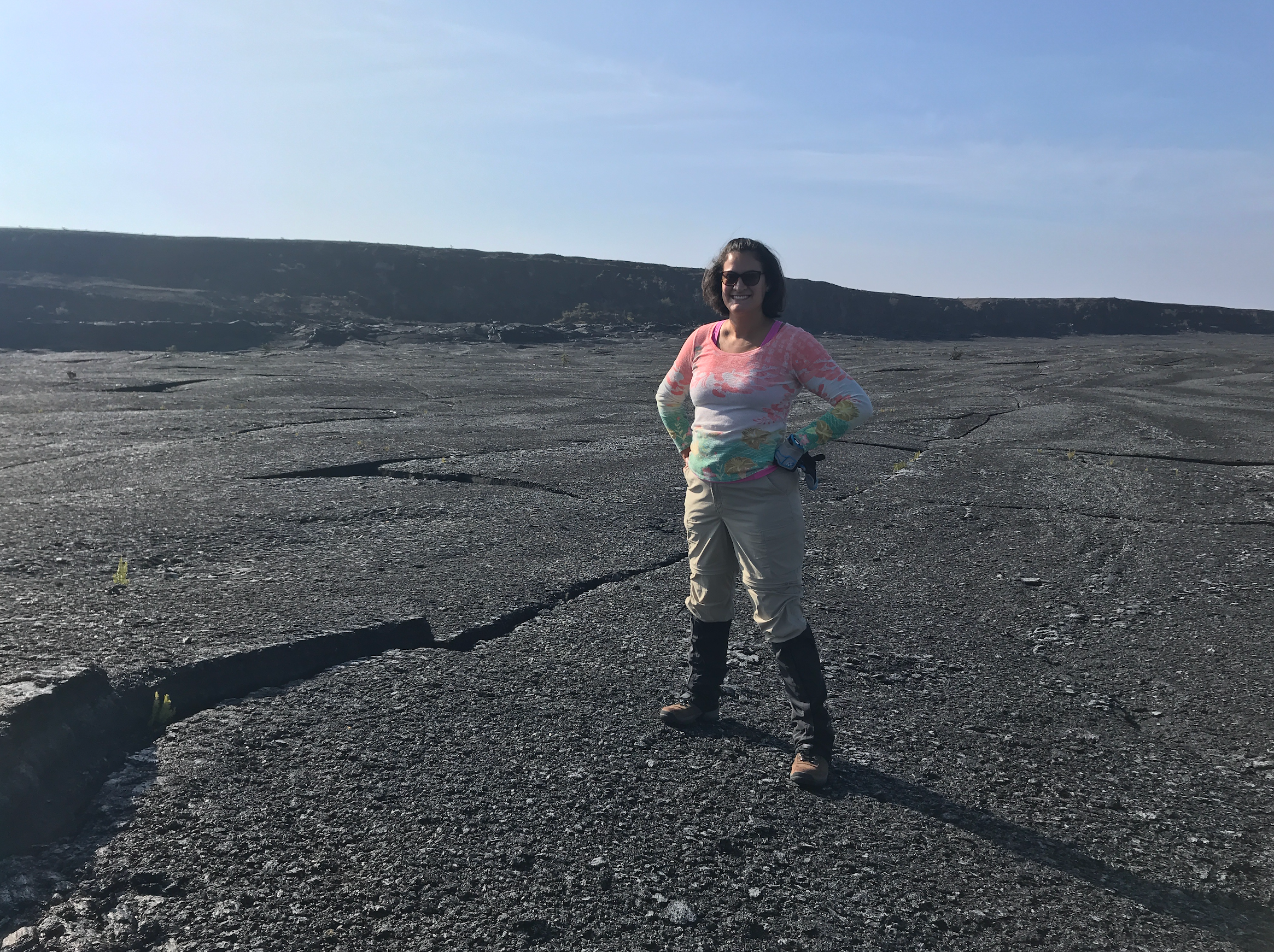
During her NASA career, Santiago-Materese traveled to Hawaii to investigate a planetary analog, a type of terrestrial environment that has very similar characteristics to those we might find on other worlds.
Image credit: Delia Santiago-Materese
At NASA Ames, Santiago-Materese held various roles, ranging from social media and open science to lunar sciences. She then became a program officer for the Solar System Workings program in the Planetary Science Division at NASA Headquarters as part of a detail, or temporary assignment. And then, she took off for Maryland along with her family.
Enabling Science
Santiago-Materese sums up her current role as a program scientist as the “science liaison” between NASA Headquarters and a mission. “When you do program scientist work, you might not be specialized or an expert in the exact science, but you need to be able to understand it and talk about it, to understand its importance,” she explains. “In general, we are supporting other people so they can do science.” In this endeavor, being someone who “gets more energy from working with people” is useful… and necessary: “You are having conversations all day long” with colleagues from different disciplines— from science and engineering to finance.
The Juno mission, in orbit around Jupiter since 2016, and Dragonfly, which is scheduled to launch no earlier than July 2028, are part of NASA’s New Frontiers program. Santiago-Materese also oversees the array of missions in the Discovery program, which includes ongoing science missions like Psyche and Lucy—heading to different asteroids—and future missions to Venus.
For Santiago-Materese, sharing her unconventional path can be valuable for students and youth in general, especially those who are unsure of what they want to do. “Your dream job,” she says, “you might not know it exists, or maybe it doesn’t exist today.” Beyond that, this zigzagging path has led her to accumulate experiences and relationships with different people, which she treasures even as she sets off for her next destination.
An Alien World
About two years out from Dragonfly’s launch, it is no surprise that this robotic mission takes up much of Santiago-Materese’s time. “Dragonfly feels like a combination of all my different experiences over time,” she reflects. And it signifies, to some extent, a return to her roots: it is an astrobiology mission. Although not designed to detect life, Dragonfly will investigate prebiotic chemistry: the chemical processes that could have led to the emergence of life on Earth.
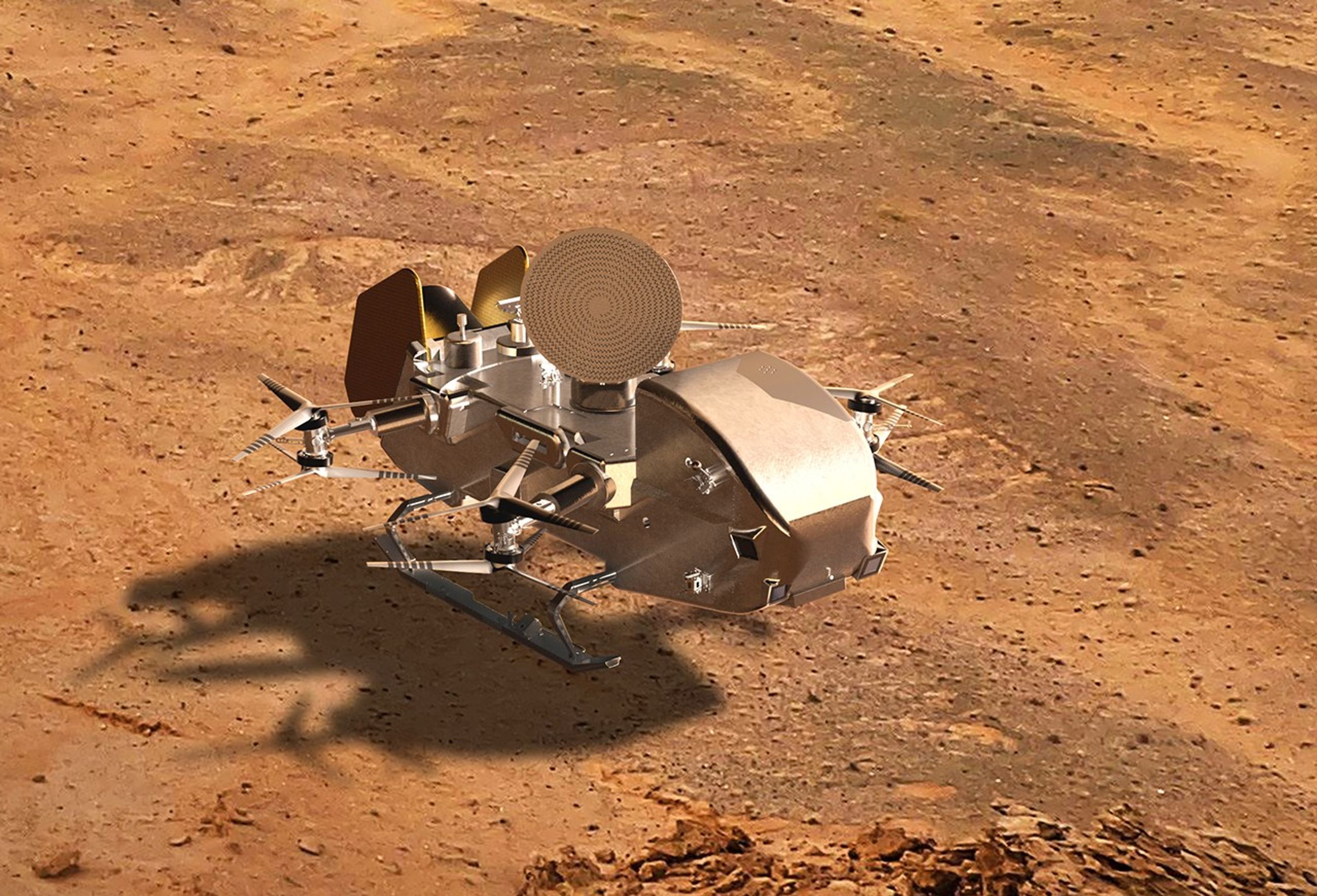
Digital concept of NASA’s Dragonfly lander on the surface of Saturn’s moon Titan.
NASA/Johns Hopkins APL/Steve Gribben
Dragonfly will embark on a journey of about six years to the surface of Titan. The spacecraft will carry an array of science instruments and will be the first NASA science mission to explore another world by flying from location to location. This car-sized rotorcraft will touch down at various geological sites of interest to analyze the moon’s composition and its habitability potential.
When it arrives at Titan, it will encounter a landscape that is strange and familiar at the same time: it could be a window into Earth’s remote past. This frozen world has a thick atmosphere and clouds drifting across the sky; dunes, lakes, rivers, canyons and mountains. Titan even has a process equivalent to our water cycle. However, on Titan, it is not water that flows but hydrocarbons, primarily methane and ethane. “It’s a more methane-based chemistry, so it is very alien, and that is what I really love about Titan,” says Santiago-Materese. And on this moon, organic molecules abound.
These molecules contain carbon and are used by all known forms of life. They are fundamental to understanding the origin of life, as they can be produced by both biological and non-biological processes. On Titan, these organic molecules fall to the surface and form dense deposits over its bedrock of water ice. Scientists believe that the complex chemistry precursor to life could be triggered there if provided with a little liquid water, such as that generated by an asteroid impact.
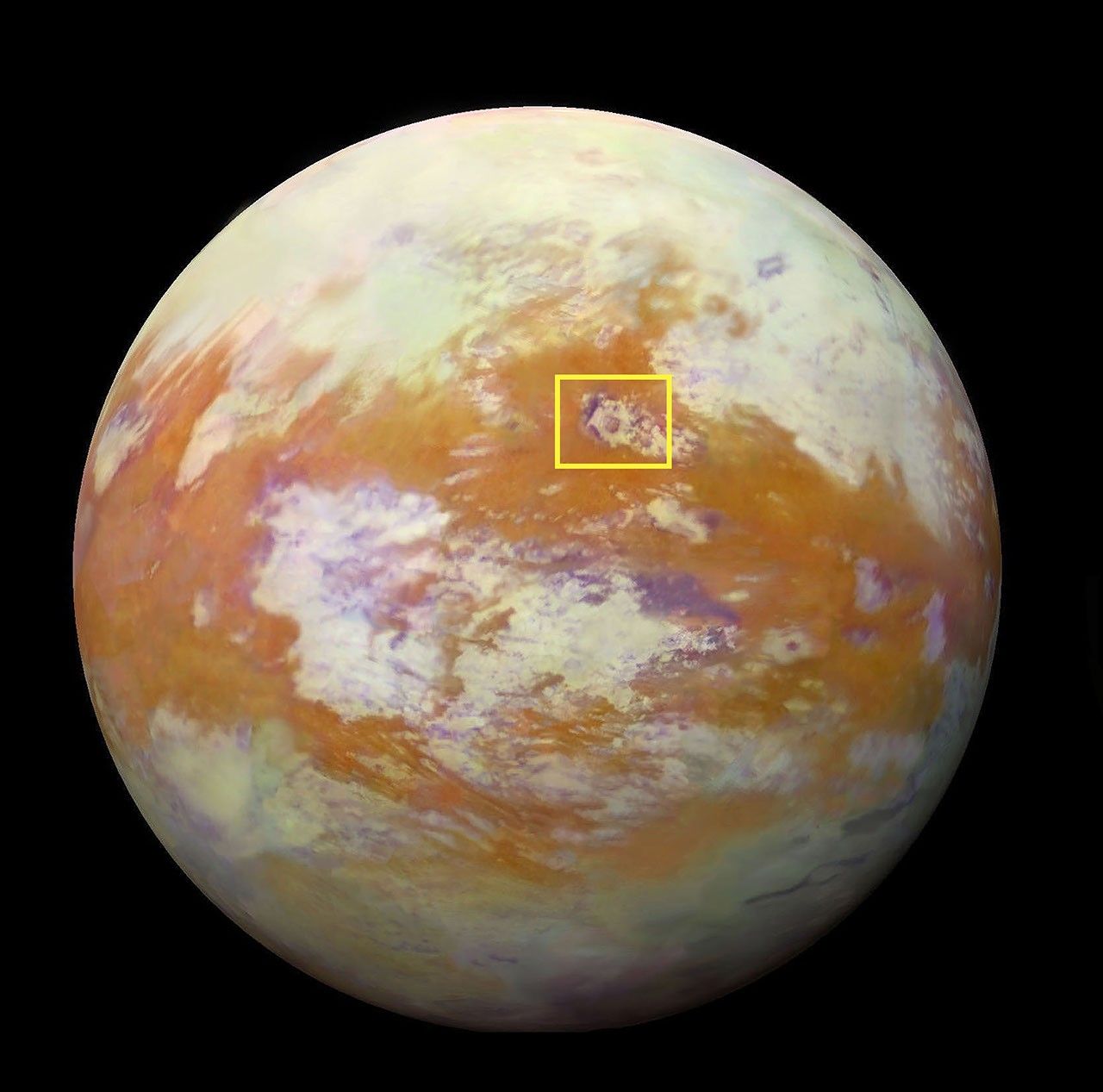
Selk Crater, an 80-kilometer (50-mile) diameter impact site highlighted in this infrared image of Titan, is a key destination for Dragonfly. The rotorcraft will touch down near Selk and explore various sites, analyzing the surface chemistry to investigate the frozen remains of what could have been prebiotic chemistry in development.
NASA/JPL-Caltech/University of Nantes/University of Arizona
Santiago-Materese is especially excited about what the Dragonfly Mass Spectrometer (DraMS) instrument will help discover. DraMS, designed and built at NASA’s Goddard Space Flight Center in Greenbelt, Maryland, will analyze samples from Titan’s surface. “The more complex things get, the more interesting things happen,” she says. “So I’m curious: just how complex do the molecules get? Will we find any interesting patterns?”
But in science, every time you ask a question, a new one arises. Dragonfly will try to answer several of them. “When you have a planet with complex chemistry but not life, what happens? What is there before life?” the program scientist wonders.
Titan, a valuable natural laboratory, “is going to completely change our understanding of what another world can be like,” she anticipates. In addition to what the scientific community expects to discover thanks to Dragonfly, Santiago-Materese is interested in the potential unexpected findings. “There are very defined science goals, but a lot of it is exploratory work,” she explains. “It is kind of nice to know that there is a big range [of possibilities], that we could be very surprised.”
By Noelia González, NASA’s Goddard Space Flight Center, Greenbelt, Maryland
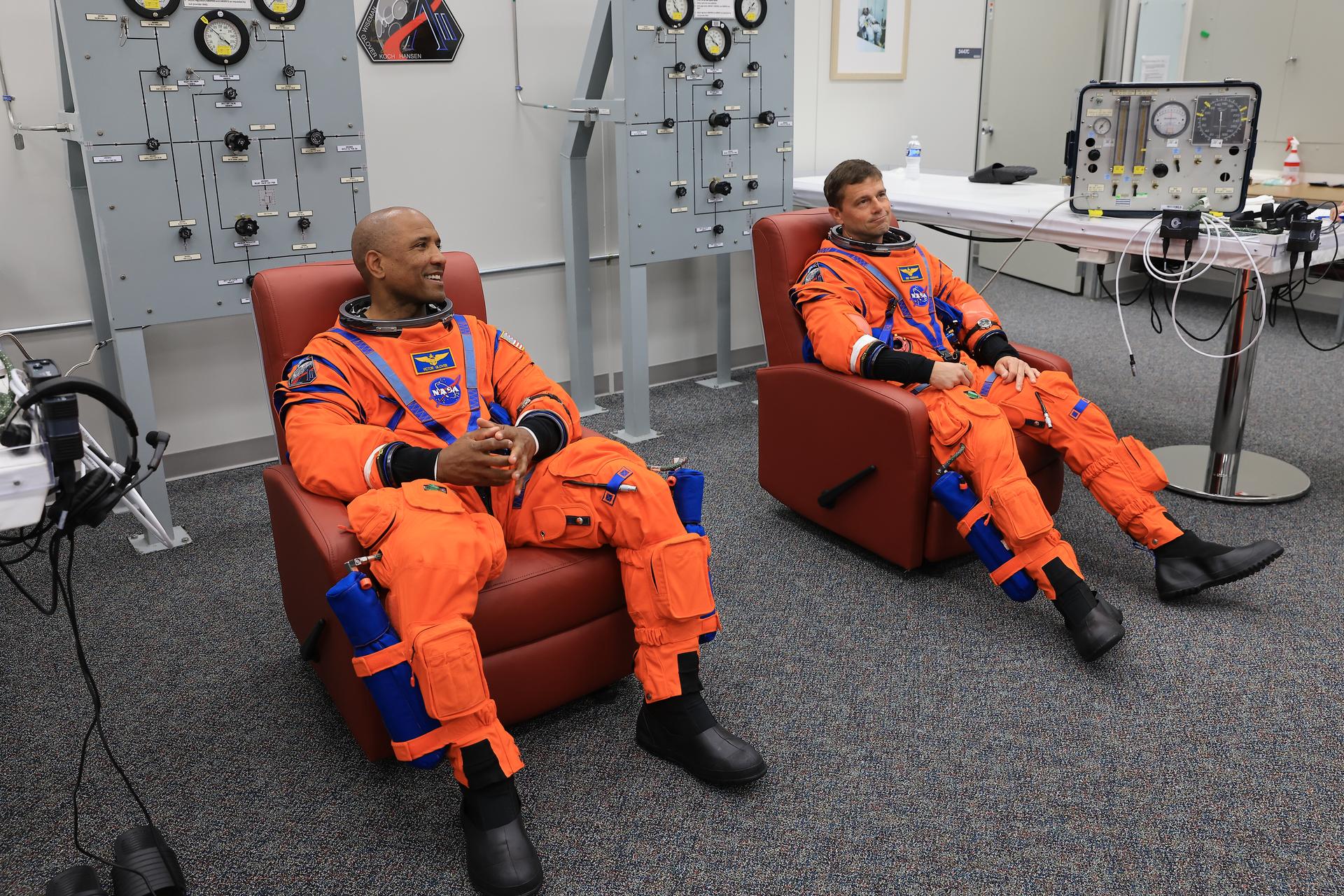
From left, NASA astronauts Victor Glover, Artemis II pilot, and Reid Wiseman, Artemis II commander, conduct leak checks on their spacesuits inside the crew suit-up room in the Neil A. Armstrong Operations and Checkout Building at the agency’s Kennedy Space Center in Florida on Wednesday, April 1, 2026, ahead of the Artemis II test flight.
Credit: NASA/Kim Shiflett
Following their landmark Artemis II mission earlier this year, distinguished NASA astronauts Victor Glover and Reid Wiseman are transitioning in September to emeritus status at the agency’s Johnson Space Center in Houston.
In an emeritus role, individuals with a high degree of technical and professional knowledge can continue to support the agency by donating their time to train and mentor the current workforce. This allows the agency to maintain access to top talent in a specialized consultant role, while simultaneously providing the individual with the flexibility to pursue other opportunities.
“I’ve had the privilege of knowing Reid and Victor for years, and both exemplify the leadership, character, and commitment that define NASA at its best.” said NASA Administrator Jared Isaacman. “Reid commanded Artemis II after previously spending 165 days aboard the International Space Station, while Victor brought his experience as a naval aviator, test pilot, and Crew-1 astronaut to his role as pilot. Together, they took on one of the most challenging missions in human spaceflight and helped return America to the lunar environment. As Reid and Victor transition to emeritus status, I’m grateful they will continue sharing what they learned with our astronauts, flight controllers, and engineers as we prepare for Artemis III in 2027 and the missions that follow.”
Glover will support aerospace, leadership, and public service efforts as he transitions within and outside of NASA. He’s committed to transferring his knowledge of Orion and its spacecraft systems, among other expertise, to future Artemis missions.
“As I grow into this new role, NASA and spaceflight remain a meaningful part of my journey of service,” said Glover. “I’m excited to keep uplifting my friends and cheering them on as they reach for the Moon. Together, we’ll keep pushing boundaries and inspiring the next giant leap.”
Wiseman is set to share his spaceflight experience with colleagues ahead of the agency’s Artemis III mission in low Earth orbit to test rendezvous and docking capabilities between Orion and commercial human landing systems.
“There is no better place to work, and there are no better people to work with, than those in this agency,” said Wiseman. “NASA gave me tremendous responsibility, supported me through two space missions, and my time as chief astronaut, and was always there for my family when we needed it most. I’m thrilled to continue serving future missions and programs through the emeritus program.”
“Reid and Victor’s commitment to exploration, steady leadership, and service to our astronaut corps and our nation have made a lasting impact,” said Vanessa Wyche, director of NASA’s Johnson Space Center in Houston. “Throughout their careers, they have each brought excellence, humility, and purpose to every role they have held at NASA. Their contributions have helped advance our mission and inspire those around them, leaving a legacy that will continue to shape the future of human spaceflight. We are immeasurably grateful for all they have given to NASA and are glad that this is not the end of their journey with the agency.”
“Reid and Victor are trusted teammates whose professionalism, calm leadership, and unwavering commitment to NASA have strengthened our office and inspired everyone around them,” said Scott Tingle, chief of the Astronaut Office at Johnson. “As they transition into their emeritus roles, they leave a legacy of operational excellence that will continue shaping the astronaut corps for years to come. We’re grateful that they will still be part of our community, sharing their experience and insight as they begin this next chapter.”
Among their many accomplishments at NASA, as Artemis II crew members, Glover and Wiseman were two of the four astronauts to first launch on top NASA’s SLS (Space Launch System) rocket aboard the Orion spacecraft for a mission around the Moon. Following a 10-day mission with crewmates NASA astronaut Christina Koch and CSA (Canadian Space Agency) astronaut Jeremy Hansen, they safely splashed down on April 10 as the first humans to travel to lunar orbit in more than 50 years, ultimately flying farther in space than anyone had before.
Support and knowledge transfer from both Glover and Wiseman is critical for the upcoming Artemis III mission as NASA prepares to return American astronauts to the lunar surface on the Artemis IV mission in 2028.
NASA’s Physics of the Cosmos Program, in collaboration with the Physics of the Cosmos Program Analysis Group Executive Committee, is pleased to announce the Third Early Career Workshop. Participants will benefit from engaging interactive sessions covering essential topics including grant opportunities, navigating data archives, and effective strategies for career advancement.
22-24 September 2026 1:00pm-4:00pm ET / 10:00am-1:00pm PT
Community
Physics of the Cosmos
Type
Workshop
Physics of the Cosmos
Inspiring the Next Generation of Astrophysicists
The workshop will be held on September 22 – 24, 2026, from 1:00PM to 4:00PM Eastern Time and will be fully virtual.
This workshop aims to provide early career scientists with valuable insights into the groundbreaking research conducted within the Physics of the Cosmos Program, demonstrate essential tools and resources available to them, and address their questions and concerns.
Physics of the Cosmos Third Early Career Workshop Poster
This third workshop will discuss three topics—Science, Missions, and Career Development— and will also showcase the importance of collaborations.
This workshop is tailored for graduate students, postdoctoral researchers, and early-career scientists looking to enhance their professional trajectory in astrophysics.
Workshop Schedule
The workshop will include a tutorial on the NASA Astrophysics Data System (ADS) Science Explorer (SciX), talks on upcoming missions including the Compton Spectrometer and Imager (COSI) and the Ultraviolet Explorer (UVEX), updates on NASA programs for students and postdocs, a CV writing mini-workshop, presentations by your fellow early career researchers on exciting science and technology development projects, and much more!
The full program will be coming soon.
Downloads
Physics of the Cosmos Third Early Career Workshop Poster

 Login