The Langley Research Center National Advisory Committee for Aeronautics (NACA) and National Aeronautics and Space Administration (NASA) Hall of Honor was conceived by members of the Langley Alumni Association and the NASA Langley Research Center as a mechanism to pay tribute to individuals who built exemplary careers at Langley, persevered against the status quo when required and achieved revolutionary scientific understanding and technological progress on the frontiers of the aerospace sciences.
The Hall of Honor formally recognizes those persons whose contributions have had the most sustained and far-reaching influence on the leadership, direction, mission and capabilities of the NACA Langley Memorial Aeronautical Laboratory and NASA Langley Research Center and/or whose work at Langley enabled unprecedented and fundamental advancements in either a scientific or engineering field and made significant contributions to the United States’ aerospace industry for commercial and military aircraft and/or spacecraft.
In 1958, Mary W. Jackson became NASA’s first black female engineer. She was inducted into the Hall of Honor in 2017.
History
NASA Langley Unveils 2022 Hall of Honor
Famed Hidden Figure Christine Darden was one of 17 members of the 2022 class of inductees to take their rightful place in the Langley Research Center NACA and NASA Hall of Honor – the third such ceremony to take place.
Sprouted from seeds that journeyed around the Moon aboard Apollo 14 in February 1971, “Moon Trees” planted across the United States endure as living reminders of Apollo-era lunar exploration.
In 2022, a new generation of tree seeds flew around the Moon on NASA’s Artemis I mission as part of a national STEM Engagement and conservation education initiative.
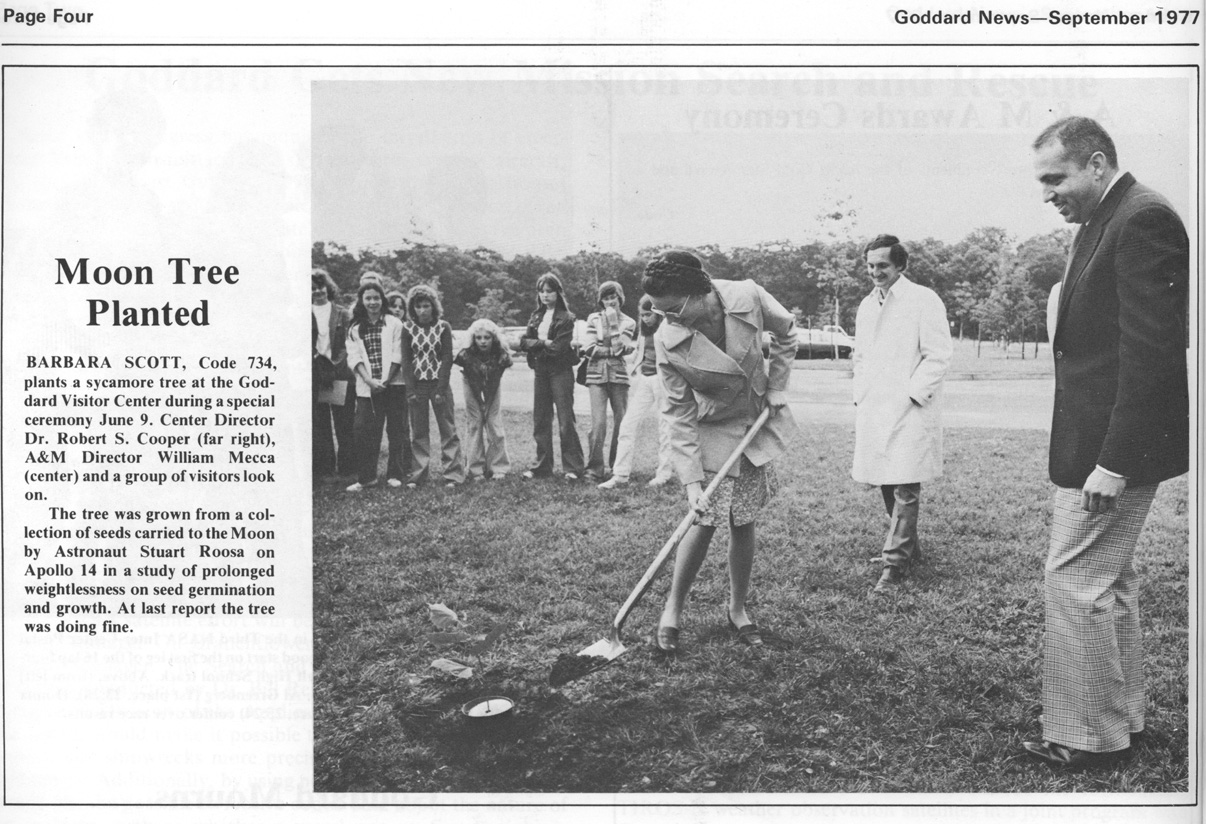
The “Moon Tree” in front of the Visitor Center at NASA’s Goddard Space Flight Center in Greenbelt, Md. This sycamore was planted at the visitor center on June 9, 1977, and grew from a seed carried to the Moon aboard Apollo 14.
NASA/Pat Izzo
Apollo 14 Moon Trees
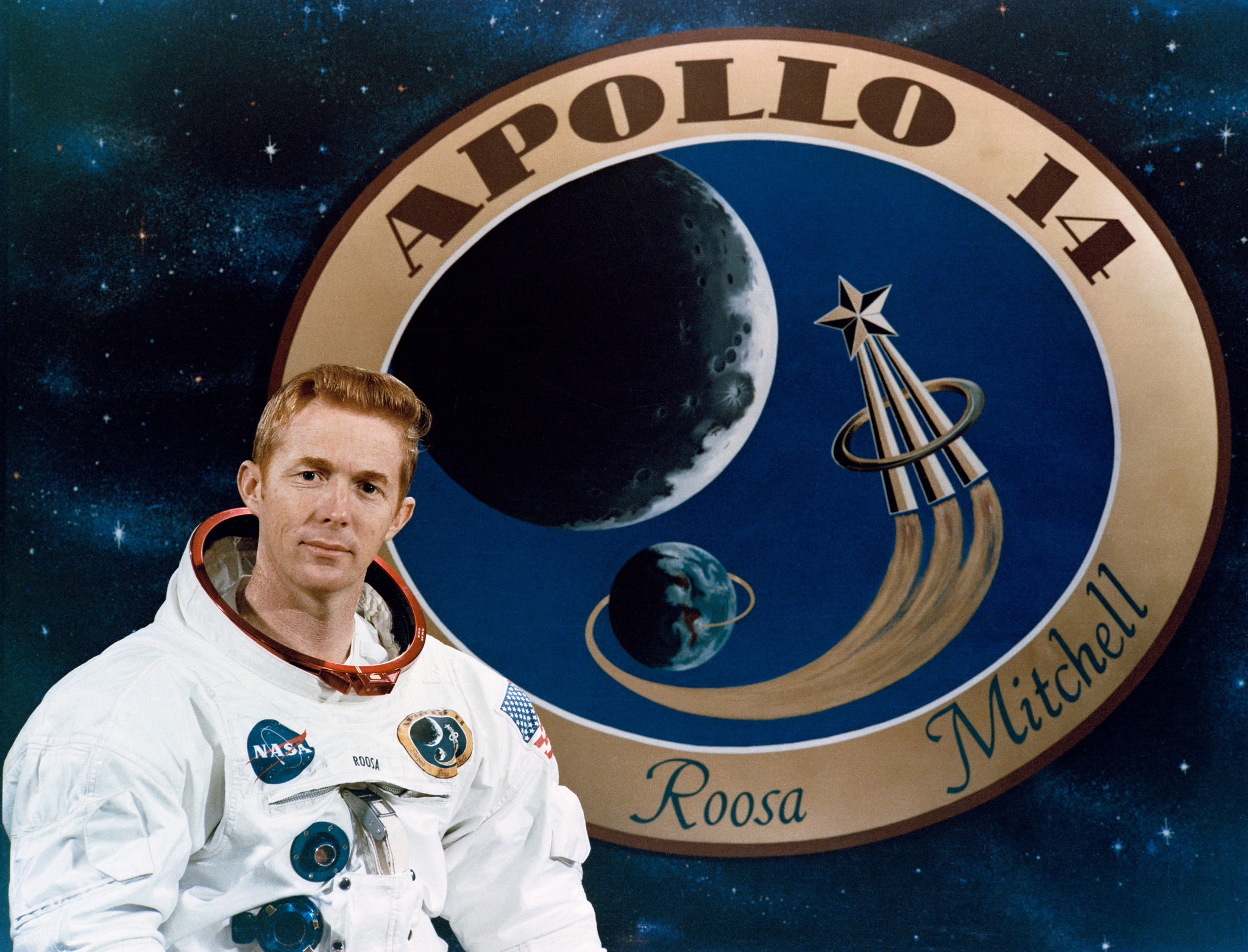
Apollo 14 launched in the late afternoon of January 31, 1971 on what was to be our third trip to the lunar surface. Five days later Alan Shepard and Edgar Mitchell walked on the Moon while Stuart Roosa, a former U.S. Forest Service (USFS) smoke jumper, orbited above in the command module. Packed in small containers in Roosa’s personal kit were hundreds of tree seeds, part of a joint NASA/USFS project. Upon return to Earth, the seeds were germinated by the Forest Service. Known as the Apollo “Moon Trees”, the resulting seedlings were planted throughout the United States (often as part of the nation’s bicentennial in 1976) and the world. They stand as a tribute to astronaut Roosa and the Apollo program.
Astronaut Stuart A. Roosa was the command module pilot of the Apollo 14 lunar landing mission. In 1971 hundreds of tree seeds were packed in his personal kit as part of a joint NASA/USFS project.
NASA
The project began after Roosa was chosen for the Apollo 14 mission. Ed Cliff, Chief of the Forest Service, knew of Stuart Roosa from his days as a smokejumper and contacted him about bringing seeds into space. Stan Krugman of the Forest Service was put in charge of the project and selected the seeds for the experiment. Seeds were chosen from five different types of trees: loblolly pine, sycamore, sweetgum, redwood, and Douglas fir. The seeds were classified and sorted, and sealed in small plastic bags that were stored in a metal canister. Control seeds were kept on Earth for later comparison. Roosa carried possibly 2,000 or more seeds in the canister in his personal kit, a small canvas pouch that stayed with him as he orbited the Moon in the command module “Kitty Hawk” in February, 1971. Unfortunately, the seed bags burst open during the decontamination procedures after their return to Earth, and the seeds were scattered about the chamber and exposed to vacuum, and it was thought they might not be viable.
Stan Krugman collected the seeds and an attempt at germinating some of the seeds was made in Houston. Somewhat surprisingly, it proved successful and the seeds started growing, but they did not survive long because the facilities there were inadequate. A year later the remaining seeds were sent to the southern Forest Service station in Gulfport, Mississippi (sycamore, loblolly pine, and sweetgum) and to the western station in Placerville, California (redwood and Douglas fir) to attempt germination. Many of the seeds, and later cuttings, were successful and grew into viable seedlings. Some of these were planted with their Earth-bound counterparts as controls, (as might be expected, after over forty years there is no discernable difference) but most were given away in 1975 and 1976 to many state forestry organizations to be planted as part of the nation’s bicentennial celebration. These trees were southern and western species, so not all states received trees. A loblolly pine was planted at the White House, and trees were planted in Brazil, Switzerland, and presented to the Emperor of Japan, among others. Trees have also been planted in Washington Square in Philadelphia, at Valley Forge, in the International Forest of Friendship, and at various universities and NASA centers, reportedly in 40 different states.
Clipping from the September 1977 edition of Goddard Space Flight Center’s newsletter Goddard News.
NASA
Stuart Roosa was born on August 16, 1933, in Durango, Colorado. He worked for the Forest Service in the early 1950’s as a smoke jumper fighting fires and later joined the Air Force and became a test pilot. He was one of 19 people selected for the astronaut class of 1966 and was part of the astronaut support crew for Apollo 9. Following Apollo 14, Roosa was backup command module pilot for Apollo 16 and 17. He then worked on the Space Shuttle program until his retirement as a Colonel in the Air Force in 1976, the time when many of his trees were being planted. Roosa passed away in December 1994.
The Moon Trees continue to flourish, a living monument to our first visits to the Moon and a fitting memorial to Stuart Roosa. Believed locations of some of the original Moon Trees are listed below, but no list was ever kept nor any systematic tracking made of the disposition of all the trees. This list of Moon Trees was initiated by Dr. David R. Williams, retired curator at NASA’s National Space Science Data Center, after receiving a request for more information from Joan Goble, a third grade teacher in Indiana in 1996. Since then, dozens of people have contributed with information about other Moon Trees.
If you know of a Moon Tree not listed here or have a update to the status of one of those listed, please send a message to marie.j.henderson@nasa.gov.
Apollo Moon Tree Locations
City and State
Location
Type of Tree
Planting Date
Birmingham, Alabama
Birmingham Botanical Gardens
Sycamore
25 February 1976
Montgomery, Alabama
State Capitol
Loblolly Pine
19 April 1976
Troy, Alabama
Pioneer Museum of Alabama
Loblolly Pine
5 August 1976
Tuscumbia, Alabama
Ivy Green
Loblolly Pine
19 October 1976
Tuskegee, Alabama
VA Medical Center
Loblolly Pine
1976
Tucson Arizona
University of Arizona
Sycamore
30 April 1976
Ft. Smith, Arkansas
Sebastian County Courthouse
Loblolly Pine
15 March 1976
Washington, Arkansas
Old Washington Historic State Park
Loblolly Pine
15 March 1976
Arcata, California
Humboldt State University
3 Redwoods
1976
Berkeley, California
Tilden Nature Area
2 Redwoods
26 July 1976
Lockeford, California
Lockeford Plant Materials Center
Redwood
1979
Monterey, California
Friendly Plaza
Redwood
27 July 1976
Sacramento, California
Capitol Park
Redwood
April 1976
San Luis Obispo, California
Mission Plaza
Redwood
30 July 1976
Gainesville, Florida
University of Florida
Sycamore
c. 1977
Keystone Heights, Florida
Keystone Heights Library
Sycamore
1984
Perry, Florida
Forest Capital State Park
Loblolly Pine
29 April 1978
Tallahassee, Florida
Cascades Park
Sycamore
Tallahassee, Florida
Doyle Conner Building
Loblolly Pine
1976
Athens, Georgia
Clarke County Planning Dept.
Loblolly Pine
May 1976
Macon, Georgia
Georgia Forestry Center
Loblolly Pine
22 March 1976
Waycross, Georgia
Okefenokee RESA
Loblolly Pine
Boise, Idaho
Lowell Elementary School
Loblolly Pine
1977
Cannelton, Indiana
Camp Koch Girl Scout Camp
Sycamore
1976
Indianapolis, Indiana
Indiana Statehouse
Sycamore
9 April 1976
Lincoln City, Indiana
Lincoln State Park
Sycamore
1 May 1976
Atchison, Kansas
International Forest of Friendship
Sycamore
24 July 1976
Elmer, Louisiana
Palustris Experimental Forest
Loblolly Pine
April 1976
Bethesda, Maryland
Society of American Foresters
Loblolly Pine
30 September 1975
Greenbelt, Maryland
Goddard Space Flight Center
Sycamore
9 June 1977
Holliston, Massachusetts
Holliston Police Station
Sycamore
1982
Niles, Michigan
Fernwood Botanical Gardens
Sycamore
23 April 1976
Biloxi, Mississippi
Private Residence
Sycamore
1974-75
Starkville, Mississippi
Mississippi State University
Sycamore
1975
Wiggins, Mississippi
Camp Iti Kana
Sycamore
April/May 1974
DeSoto, Missouri
Walther Park
Sycamore
Santa Fe, New Mexico
State Capitol Building
Douglas Fir
22 July 1976
Silver City, New Mexico
Gough Park
Sycamore
15 August 1976
Asheville, North Carolina
Botanical Gardens at Asheville
Sycamore
19 March 1976
Clyde, North Carolina
Haywood Community College
Sycamore
1976
Pisgah National Forest, North Carolina
Cradle of Forestry
Sycamore
18 October 1976
Jefferson County, Ohio
Friendship Park
Sycamore
29 July 1976
Corvallis Oregon
Oregon State University
Douglas Fir
Spring, 1976
Eugene Oregon
University of Oregon
Douglas Fir
1976
Roseburg, Oregon
U.S. Veteran’s Hospital
Douglas Fir
3 May 1976
Salem, Oregon
State Capitol Building
Douglas Fir
30 April 1976
Salem, Oregon
Private Residence
2 Douglas Firs
1973
Coudersport, Pennsylvania
Coudersport Area Recreational Park
Sycamore
Late 1970’s
Dillsburg, Pennsylvania
Dillsburg Elementary School
Sycamore
29 April 1983
Ebensburg, Pennsylvania
Cambria County Courthouse
Sycamore
29 June 1976
Hollidaysburg, Pennsylvania
Highland Hall
Sycamore
5 May 1976
King of Prussia, Pennsylvania
Lockheed Martin
Sycamore
30 June 1976
Newtown/Langhorne, Pennsylvania
Core Creek Park
Sycamore
30 April 1976
Topton, Pennsylvania
Topton Mini Museum
Sycamore
20 June 1976
Knoxville, Tennessee
University of Tennessee
Loblolly Pine
April 1976
Sewanee, Tennessee
University of the South
Sycamore
April 1976
Westlake, Texas
Private Residence
Sycamore
1978
Draper, Utah
Lone Peak Conservation Center
Sycamore
1976
Bracey, Virginia
River Ridge Campground
Sycamore
Unknown
Doswell, Virginia
Kings Dominion Amusement Park
Sycamore
1976?
Hampton, Virginia
Patrick Elementary School
Sycamore
30 April 1976
Loudoun County, Virginia
Scott Jenkins Memorial Park
Sweetgum
September 1978
Olympia, Washington
State Capitol Building
Douglas Fir
April 1976
City and Country
Location
Type of Tree
Planting Date
Brasilia, Brazil
IBAMA Institute
Sweetgum
14 January 1980
Cambara do Sul, Brazil
Praça Central São José
Redwood
26 September 1982
Rio Grande do Sul, Brazil
Santa Rosa
Redwood
18 August 1981
Chavaniac, France
Chateau Lafayette
Sycamore status unknown
1976
City and State
Location
Type of Tree
Planting Date
San Francisco, California
Strybing Arboretum
Coast Redwood status unknown
22 July 1976
Savannah, Georgia
Unknown
Sycamore status unknown
Unknown
Pocatello, Idaho
Idaho State University
Douglas Fir status unknown
18 May 1976
Springfield, Illinois
State Capitol
Sycamore status unknown
29 April 1976
Des Moines, Iowa
State Capitol
Sycamore ? status unknown
30 April 1976
Baton Rouge, Louisiana
Governor’s Mansion
2 Loblolly Pines status unknown
16 January 1976
Annapolis, Maryland
Tawes Garden
Sycamore status unknown
Unknown
Cleveland, Mississippi
Delta State University
Status Unknown
1976
Hattiesburg, Mississippi
University of Southern Mississippi?
Status Unknown
1976
Missoula, Montana
University of Montana
Douglas Fir Status Unknown
17 July 1976
Nebraska City, Nebraska
National Arbor Day Center
Status Unknown
24 April 1976?
Monmouth County, New Jersey
Monmouth County Courthouse
Sycamore Status Unknown
Albany, New York
Empire State Plaza
Sycamore status unknown
1977?
Brooklyn, New York
Fulton Ferry
Sycamore status unknown
June 1976?
Buffalo, New York
Delaware Park Lake
Sycamore status unknown
25 May 1977?
Rome, New York
Fort Stanwix
Sycamore status unknown
1976?
Elkton, Oregon
D.L. Phipps State Forest Nursery
Douglas Fir status unknown
Portland, Oregon
Western Forestry Center
Douglas Fir Status Unknown
25 May 1976
Emporium, Pennsylvania
Cameron County Courthouse
Sycamore Status Unknown
15 May 1976
Portersville, Pennsylvania
Moraine State Park
Sycamore status unknown
4 August 1977
City and State
Location
Type of Tree
Planting Date
Auburn University, Alabama
G.W. Andrews Forestry Sciences Lab
Loblolly Pine†, Sycamore†
22 October 1976
Huntsville, Alabama
U.S. Space and Rocket Center
5 Sycamores†, 2 Pines†
29 October 1976
Flagstaff, Arizona
Flagstaff Jr. High School
Douglas Fir†
30 April 1976
Little Rock, Arkansas
Forestry Commission Headquarters
Loblolly Pine†
15 March 1976
Monticello, Arkansas
University of Arkansas at Monticello
Loblolly Pine†
15 March 1976
El Dorado Hills, California
St. Stephen’s Lutheran Church
Redwood†
1976
San Dimas, California
Technology & Development Center
Giant Sequoia?†
29 March 1977
Cape Canaveral, Florida
Kennedy Space Center
Sycamore†
25 June 1976
Gainesville, Florida
University of Florida
2 Loblolly Pines†
c. 1977
Boise, Idaho
State Capitol
Douglas fir†
7 May 1976
Moscow, Idaho
University of Idaho
Sycamore†
Tell City, Indiana
Forest Service Office
2 Sweetgums†
1976
New Orleans, Louisiana
New Orleans River Walk
Loblolly Pine†
June 1983
New Orleans, Louisiana
NASA Michoud Assembly Facility
Loblolly Pine (2?)†
July 1976
North Pembroke, Massachusetts
Historical Society
Sycamore†
April 1976
Jackson, Michigan
Dahlem Environmental Education Center
Sycamore†
22 April 1976
Lansing, Michigan
State Capitol
Sycamore†
22 April 1976
Wyoming, Michigan
Wyoming Police Station
Sycamore†
23 April 1976
Waynesboro, Mississippi
Forestry Commission Nursery
Sycamore†
Alamogordo, New Mexico
International Space Hall of Fame
Sycamore†
5 October 1976
Albuquerque, New Mexico
Civic Plaza
Douglas Fir†
7 April 1976
Capitan, New Mexico
Smokey Bear State Park
Sycamore†
15 May 1976
Athens, Ohio
District 4 Headquarters
Sycamore†
20 July 1976
Columbus, Ohio
City Nursery
Sycamore†
1976
Illinois Valley, Oregon
Siskiyou Smoke Jumpers Base
Douglas Fir†
Portland, Oregon
World Forestry Center
Douglas Fir†
Philadelphia, Pennsylvania
Washington Square
Sycamore†
6 May 1975
Elizabethton, Tennessee
Sycamore Shoals State Park
Sycamore†
April 1976
Tullahoma, Tennessee
Arnold Air Force Base
Loblolly Pine†
April 1976
College Station, Texas
Brazos County Arboretum
Sycamore†
21 March 1976
Salt Lake City, Utah
State Capitol Building
Douglas Fir†
Doswell, Virginia
Kings Dominion Amusement Park
Sycamore†
1976?
Washington, D.C.
White House
Loblolly Pine†
19 January 1977
Princeton, West Virginia
Forestry Sciences Lab
Sycamore†
18 October 1975
† Trees no longer alive
Featured Story
Moon Trees Stand as Living Testaments to First Voyages to Moon
The craters, mountains, and plains of the Moon stretched beneath the Apollo 14 Command and Service Module Kitty Hawk in…
Second-generation trees, either grown from seeds of mature Moon Trees or from cuttings, are also growing around the world and continue to be planted today. In memory of her father, Stuart Roosa’s daughter, Rosemary Roosa, has continued the legacy of the original Apollo 14 Moon Trees through promoting planting second-generation Moon Trees around the world.
City and State
Location
Type of Tree
Planting Date
Enterprise, Alabama
Private Residence
Sycamore
15 February 2002
Enterprise, Alabama
Private Residence
Sycamore
15 March 2003
Huntsville, Alabama
Marshall Space Flight Center
Sycamore
22 April 1996
Lancaster, California
Lancaster Performing Arts Center
Sycamore
23 September 2009
Blue Lake, California
Ultra Powers Co.
Redwood
Lake Arrowhead, California
MSAS Astronomy Village
Sycamore
May 1999
Mountain View, California
Private Residence
Redwood
January, 1998
Tampa, Florida
Museum of Science and Industry
Sycamore
16 November 1996
Hartwell, Georgia
Madora Garden Club
4 Sycamores
Spring, 2006
Boise, Idaho
National Interagency Fire Center
Sycamore
Spring, 2002
Libertyville, Illinois
Adler Park School
Sycamore
1 October 1997
Indianapolis, Indiana
Greenbriar Elementary School
Sycamore
22 April 1999
Storm Lake, Iowa
Living Heritage Tree Museum
Sycamore
Louisville, Kentucky
Louisville Zoo
Sycamore
Stevensville, Maryland
Private Residence
Sycamore
Circa 1997
Battle Creek, Michigan
Private Residence
Sycamore
May, 1998
Buchanan, Michigan
Private Residence
Sycamore
1996
Wyoming, Michigan
Wyoming Police Station
Sycamore†
23 April 1976
Unionville, Missouri
Historic Tree Museum
Sycamore
November, 1988
Wayne, New Jersey
Cyanamid Company
Sycamore
Somers, New York
Lasdon Park and Arboretum
Sycamore
Greensboro, North Carolina
Guilford College
Sycamore
Spring, 1995
Rowan County, North Carolina
Sloan Park
Sycamore
Canal Winchester, Ohio
Private Residence
Sycamore
August, 1996
Fairfield, Ohio
Paper Products Company
Sycamore
13 July 2016
Cave Junction, Oregon
Siskiyou Smoke Jumpers Base
Douglas Fir
6 October 2012
Hockley, Texas
Private Residence
Sycamore
15 April 2002
Arlington, Virginia
Arlington National Cemetery
Sycamore
9 February 2005
Flamstead, England
Private Residence?
Sycamore
Summer, 2008
Tradate, Italy
Tradate Astronomical Observatory
Loblolly Pine
12 October 2011
Lucern, Switzerland
Swiss Museum of Transport
Sycamore
8 October 2011
† Trees no longer alive
If you are seeking detailed information about the Moon trees listed here, contact marie.j.henderson@nasa.gov.
Artemis Moon Trees
A new generation of Moon Tree seeds traveled into lunar orbit aboard the Artemis I spacecraft in 2022. These Artemis Moon Tree seedlings have found homes with schools, museums, libraries, universities, and community organizations across the contiguous United States.
In a nod to the legacy of Apollo 14, and a celebration of the future of space exploration with NASA’s Artemis Program, a “New generation” of Moon Tree seeds traveled into lunar orbit aboard the Orion spacecraft. The seeds travelled thousands of miles beyond the Moon spending about 4 weeks in space before returning to Earth.
Through NASA’s Office of STEM Engagement (OSTEM) and NASA’s Artifact Module, museums, universities, federal agencies, including NASA Field Centers, and K–12 serving organizations were invited to apply for ownership of a Moon Tree seedling. Recipient distribution schedule aligned to four planting cycles: Spring 2024, Fall 2024, Spring 2025, and Fall 2025.
Artemis I Moon Tree Stewards
Artemis I Moon Tree seedlings found new homes with schools, museums, libraries, universities, and community organizations across the United States. An open call to NASA’s Artifacts Module in Fall, 2023 welcomed over 1000 organization submissions, which were reviewed and ranked by a joint USDA Forest Service and NASA panel.

 Login