UK-Based Rockstar Games North Workers Formally Announce Union
Read more of this story at Slashdot.
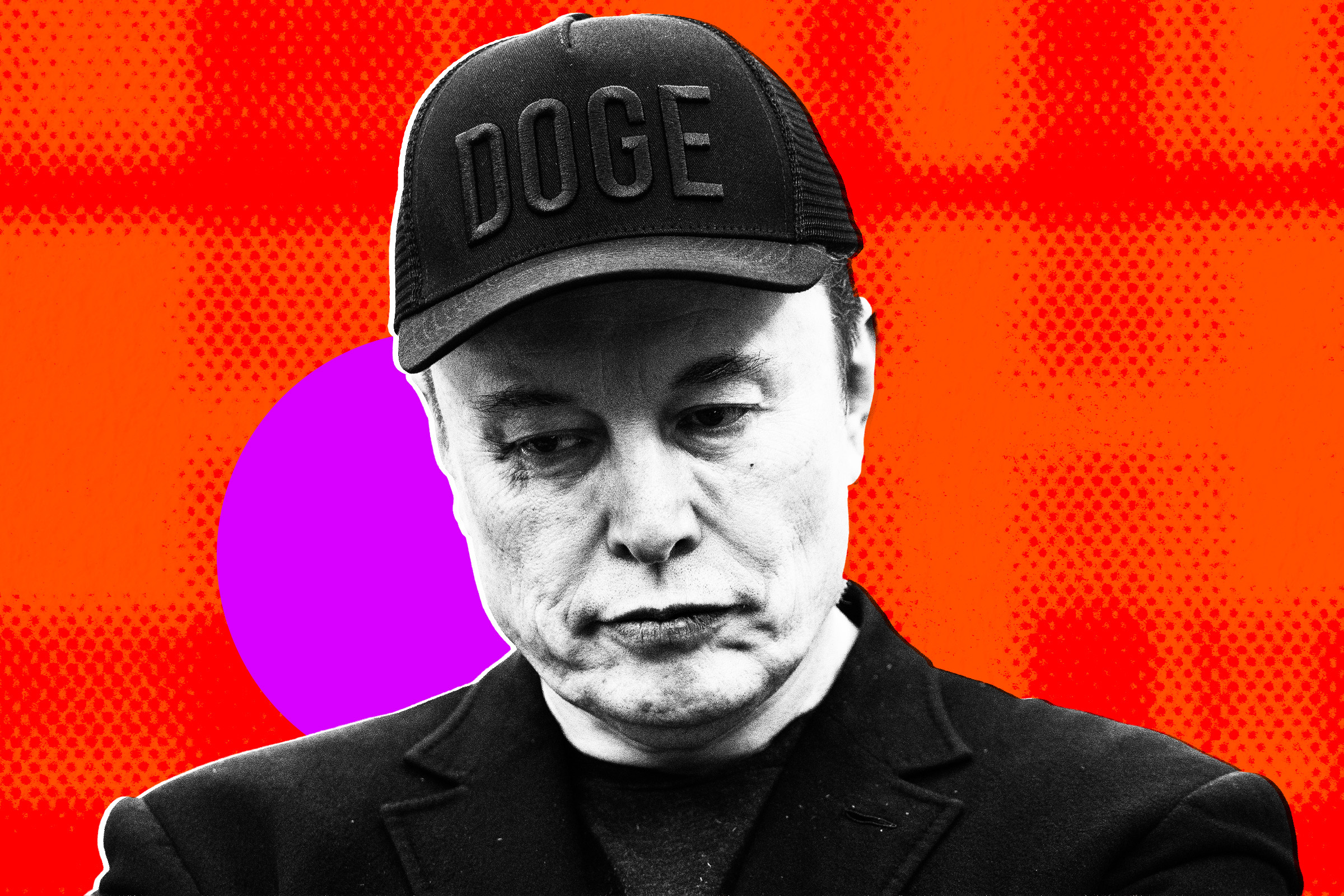
It turns out not even the people building Tesla’s self-driving tech trust Elon Musk’s extravagant claims about the company’s autonomous vehicles.
New reporting by Reuters interviewed nine former data labelers and a former self-driving engineer about their take on Tesla’s Full Self-Driving mode. The results were overwhelmingly negative, with seven of the data specialists admitting they wouldn’t ride in a Tesla in FSD.
“We have all seen it fail,” one Tesla insider told Reuters. “Definitely don’t trust Elon on this,” the self-driving engineer concurred, referencing Musks’ declaration that the the vehicles are ready for “safe unsupervised” rides.
One erstwhile worker told the publication they wouldn’t ride in a Tesla robotaxi “if you f**king paid me.”
At least five data labelers, whose job was to comb through hours of FSD footage to train the vehicle’s software to avoid past mistakes, told Reuters they routinely saw clips of Teslas driving above the speed limit, an issue which engineers and managers treated like a low-priority compared to edge-case issues.
Those glowing recommendations come amidst concerns that Tesla’s FSD mode may never be truly safe enough for public roads.
In recent months, Tesla operating on FSD move have driven riders into lakes, off bridges, and even into the path of oncoming trains — and those are just the incidents that get media exposure. Given these insiders’ direct access to terabytes’ worth of proprietary FSD footage, we’re inclined to take their word on it.
More on Tesla: Man Drives Cybertruck Into Lake to Test Elon Musk’s “Boat” Claims, and It Went About as Well as You’d Guess
The post Tesla Insiders Admit Self-Driving Is a Complete Disaster appeared first on Futurism.

Longtime Cybertruck watchers might remember a peculiar day back before the brutalist pickup was even released, when Tesla CEO Elon Musk randomly tweeted that the vehicle would function as a rudimentary flotation device.
“It will even float for a while,” he wrote at the time.
It wasn’t a one-off claim. Musk later boasted that the vehicle would be able to “traverse at least 100m [330 feet] of water as a boat.”
“Mostly just need to upgrade cabin door seals,” he claimed, writing at another point that the “Cybertruck will be waterproof enough to serve briefly as a boat, so it can cross rivers, lakes and even seas that aren’t too choppy.”
The Cybertruck finally did make it to market, where it’s suffered a seemingly endless parade of recalls, embarrassing incidents, and dismal sales figures.
Unsurprisingly, all Musk’s bluster about the truck serving as a makeshift schooner turned out to be flimflam. In fact, it quickly emerged that just getting wet in a car wash could brick the thing.
To muddy the waters further, the company ended up adding what it calls “Wade Mode” to the vehicles, which sets the truck’s ride height to the highest level, ostensibly so it can ford creeks and streams.
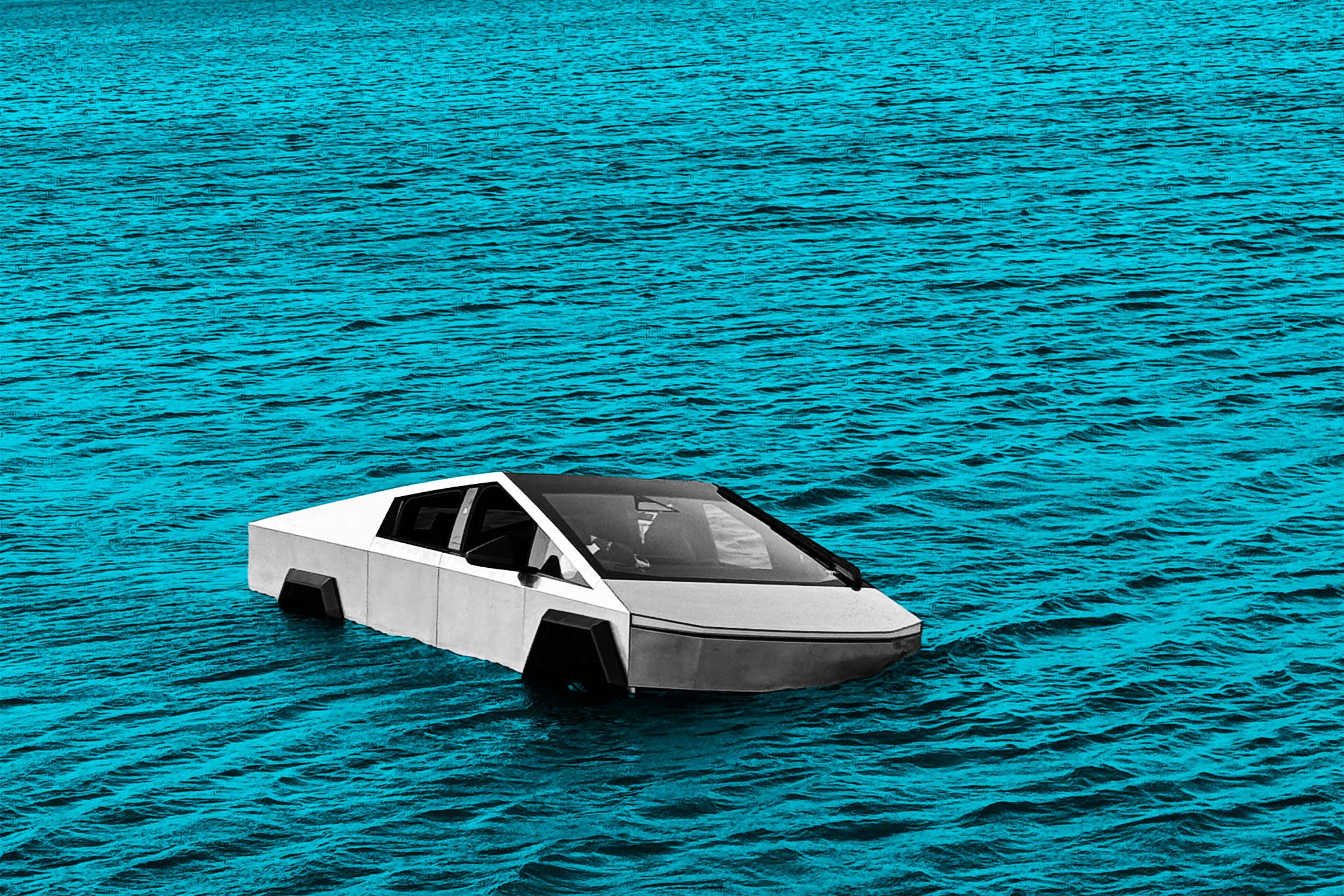
All that mixed messaging clearly got jumbled for a Texas man, though, who activated Wade Mode and drove his Cybertruck into a lake. Unsurprisingly, things didn’t go well for him.
“Yesterday, [Grapevine Police Department] and [Grapevine Fire Department] were dispatched to Grapevine Lake, where a Tesla Cybertruck was stranded in the water,” police in Grapevine, Texas, wrote on X-formerly-Twitter. “The driver drove into the lake to use the ‘Wade Mode’ feature when the vehicle became disabled.”
Not only is the man’s vehicle swamped — as the cops showed in an amazing attached photo — but he’s in legal trouble as well.
“The passengers abandoned the vehicle and the driver was arrested,” they wrote.
More on the Cybertruck: Cybertruck Recalled to Keep Its Wheels From Flying Off While Driving
The post Man Drives Cybertruck Into Lake to Test Elon Musk’s “Boat” Claims, and It Went About as Well as You’d Guess appeared first on Futurism.

Elon Musk has just pulled back the curtain on the biggest public stock offering in history, and the numbers are ghastly.
SpaceX, which is expected to go public on Nasdaq in June, just released the first round of financial summaries all companies are required to share when they’re about to sell stock to the public for the first time. The documents reveal Musk is targeting a raise of at least $80 billion — for a proposed valuation of $1.75 trillion — which would immediately make the rocket company one of the top 10 most valuable conglomerates in the US, Axios calculated.
With that kind of valuation in mind, one might expect SpaceX to be massively profitable going into its debut — but that’d be dead wrong.
According to the financial statement, the company lost $4.9 billion in 2025, even though it brought in around $18.7 billion in revenue. It’s not like that situation is about to turn around in time for the IPO, either: over the first three months of 2026, SpaceX posted further net losses of $4.3 billion.
As analyst Scott Melker pointed out, SpaceX wants investors to believe the company will someday make 93 times what it currently makes in a year. To understand why that’s absolutely nuts, just peep the numbers from the previous IPO record holder, Saudi Aramco, the state oil company of Saudi Arabia.
Commonly understood to be the most profitable corporation on Earth, Aramco went public in 2019. When it did, investors accepted a valuation about 6 times more than what Aramco made in yearly sales, raising $26 billion for a valuation of $1.7 trillion, as one analyst noted. SpaceX is asking for about 15 times more than that.
“Bro, have you seen inflation lately? Ketamine is expensive!” one stock analyst razzed on X-formerly-Twitter (that platform, by the way, has all but imploded under Musk’s leadership, with revenue down around 59 percent compared to 2021, the year before he took over).
To justify its wild revenue ambitions, SpaceX estimates its total addressable market — the maximum money it could make if everything goes perfectly — at $28.5 trillion. Of that, nearly 80 percent is attributed to the imaginary landscape of “enterprise applications,” which the document describes as a buffet of various Earth-shattering AI tools that have yet to be built, including one agentic AI platform called “Macrohard.”
Put it all together, and the numbers only work if you put your faith in unprecedented earnings from technology that doesn’t even exist, in a market as infinite and uncharted as outer space itself.
More on investments: It Seems a Lot Like Trump Accidentally Invested $1 Million in a Conveyor Belt Sushi Restaurant Thinking It Was an AI Hardware Company
The post SpaceX Stock May Actually Be a Horrendous Investment appeared first on Futurism.

Most of the Steam Deck imitators on the market right now use AMD silicon, specifically the Ryzen Z-series chips. These are the same chips AMD makes for regular laptops, but with different power settings better suited to a compact handheld system. There are handhelds based on Intel silicon (MSI’s Claw is the main one), but Intel hasn’t yet tried making silicon marketed specifically for that purpose.
Today, the company is throwing its hat in the ring with two Intel Arc G-series processors, which will allow gaming handhelds to leverage the company's genuinely quite good Arc B-series integrated GPUs. Intel says that several Arc G-series handhelds will arrive "starting in June 2026, with broader availability throughout the year." These systems will include a new MSI Claw model, a Predator Atlas 8 from Acer, and a device from OneXPlayer.
Intel normally uses its "Arc" branding for integrated and dedicated GPUs, but in this case, the "Arc" brand encompasses the entire chip, including the CPU, GPU, NPU, and other components.


© Intel
Valve's Steam Deck handheld has been largely unavailable to buy since mid-February, a victim of the RAM and storage shortages that have been driving up prices for most consumer tech since the fall of 2025. The good news is that the Deck is back in stock on Valve's site and ready to ship in three to five days; the bad news is that it appears to have returned because somebody wished for it on a monkey's paw.
The 512GB version of the OLED Steam Deck now sells for a whopping $789, $240 more than its previous $549 price. The 1TB version (which also includes an anti-glare screen coating, a slightly nicer case, and an "exclusive startup movie and keyboard theme") will now run you $949, a $300 increase from its old $649 price. The old $399 base model with 256GB of storage and the older LCD screen has been discontinued, though this had been announced well before these price increases took effect.
These prices are particularly hard to swallow for a nearly 3-year-old revision of an over-4-year-old handheld PC. If there's a saving grace for Valve, it's that most competing handhelds from the likes of Asus and Lenovo are also pushing or exceeding that $1,000 mark. Of the Deck's major competitors, only the $600 Asus ROG Xbox Ally (and its AMD Ryzen Z2 A processor, which is very similar to the Deck's semi-custom AMD chip) is significantly cheaper than the Steam Deck.


© Valve
SpaceX has won a lucrative contract to provide the US military with a means of distributing space-based sensing and targeting data, forming the "backbone" of a rearchitected network after separate Pentagon initiatives stalled, officials announced Tuesday.
Space Systems Command, the Space Force's primary procurement and acquisition center, announced the $2.29 billion firm-fixed-price agreement, confirming long-simmering reports that the Pentagon was likely to tap SpaceX for a new communications network in low-Earth orbit. SpaceX's selection for the Space Data Network (SDN) Backbone contract "accelerates the delivery of a resilient, high-speed communications network in space," Space Systems Command said in a statement.
The network will be based on technology originally developed for SpaceX's Starlink global Internet constellation. SpaceX already builds and launches specially designed satellites, called Starshield, for military applications. The SDN Backbone network in low-Earth orbit (LEO) will presumably use the Starshield platform.


© US Space Force/Gwendolyn Kurzen
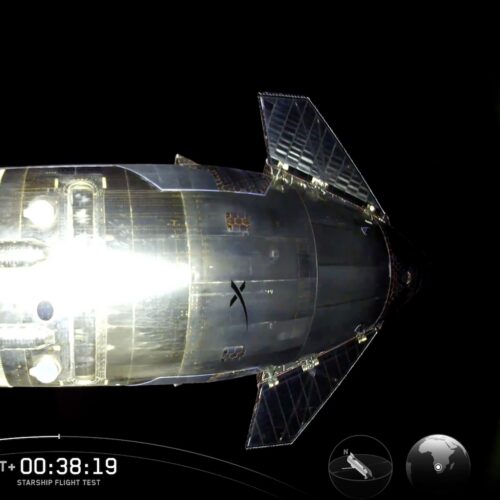
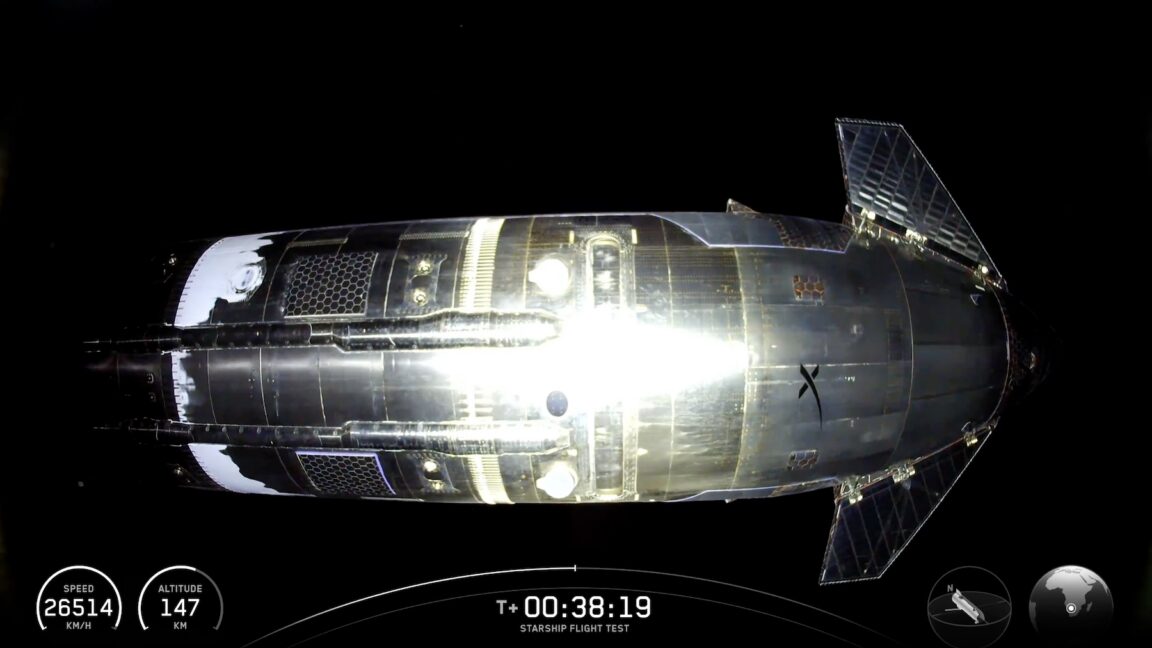
SpaceX launched the first test flight of its upgraded Starship rocket and Super Heavy booster Friday, with mostly positive results.
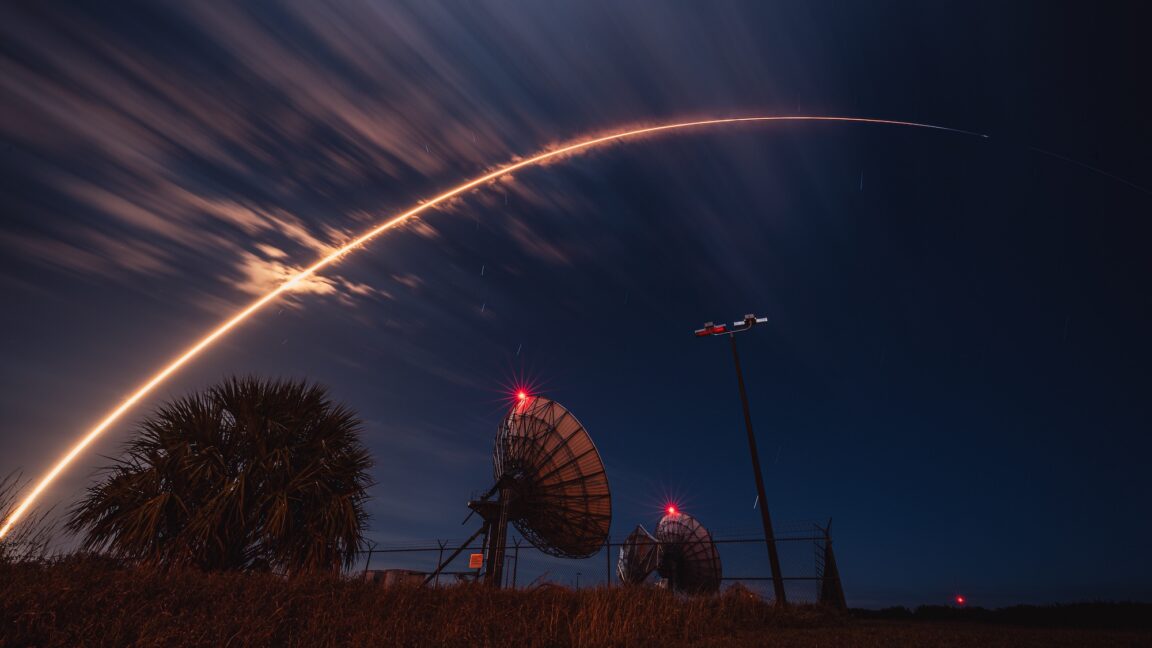
The powerful rocket, propelled by 33 methane-fueled main engines, climbed away from SpaceX's Starbase launch facility in South Texas at 5:30 pm CDT (6:30 pm EDT; 22:30 UTC) Friday. Within a few seconds, the 408-foot-tall (124-meter) rocket, the largest ever built, cleared the launch tower and turned onto an eastward heading over the Gulf of Mexico.
Starship splashed down on target in the Indian Ocean a little more than an hour later to conclude the first flight of the latest version of SpaceX's stainless-steel mega-rocket. Starship V3 fared better on its debut than the first flights of Starship V1 and V2 in 2023 and 2025. Both past versions of Starship broke apart during launch on their inaugural flights.


© SpaceX
SpaceX has won a lucrative contract to provide the US military with a means of distributing space-based sensing and targeting data, forming the "backbone" of a rearchitected network after separate Pentagon initiatives stalled, officials announced Tuesday.
Space Systems Command, the Space Force's primary procurement and acquisition center, announced the $2.29 billion firm-fixed-price agreement, confirming long-simmering reports that the Pentagon was likely to tap SpaceX for a new communications network in low-Earth orbit. SpaceX's selection for the Space Data Network (SDN) Backbone contract "accelerates the delivery of a resilient, high-speed communications network in space," Space Systems Command said in a statement.
The network will be based on technology originally developed for SpaceX's Starlink global Internet constellation. SpaceX already builds and launches specially designed satellites, called Starshield, for military applications. The SDN Backbone network in low-Earth orbit (LEO) will presumably use the Starshield platform.


© US Space Force/Gwendolyn Kurzen
SpaceX launched the first test flight of its upgraded Starship rocket and Super Heavy booster Friday, with mostly positive results.
The powerful rocket, propelled by 33 methane-fueled main engines, climbed away from SpaceX's Starbase launch facility in South Texas at 5:30 pm CDT (6:30 pm EDT; 22:30 UTC) Friday. Within a few seconds, the 408-foot-tall (124-meter) rocket, the largest ever built, cleared the launch tower and turned onto an eastward heading over the Gulf of Mexico.
Starship splashed down on target in the Indian Ocean a little more than an hour later to conclude the first flight of the latest version of SpaceX's stainless-steel mega-rocket. Starship V3 fared better on its debut than the first flights of Starship V1 and V2 in 2023 and 2025. Both past versions of Starship broke apart during launch on their inaugural flights.


© SpaceX

© Loren Elliott for The New York Times
This is The Stepback, a weekly newsletter breaking down one essential story from the tech world. For more news about gadgets and smartphones, follow Dominic Preston. The Stepback arrives in our subscribers' inboxes at 8AM ET. Opt in for The Stepback here.
In 2023, the European Union agreed on two landmark pieces of legislation mandating how portable tech products with batteries must be designed, aiming to improve longevity, repairability, and recyclability. Commission Regulation (EU) 2023/1670 came into force last year and applies specifically to smartphones and tablets, while Regulation (EU) 2023/1542 takes effect next year …
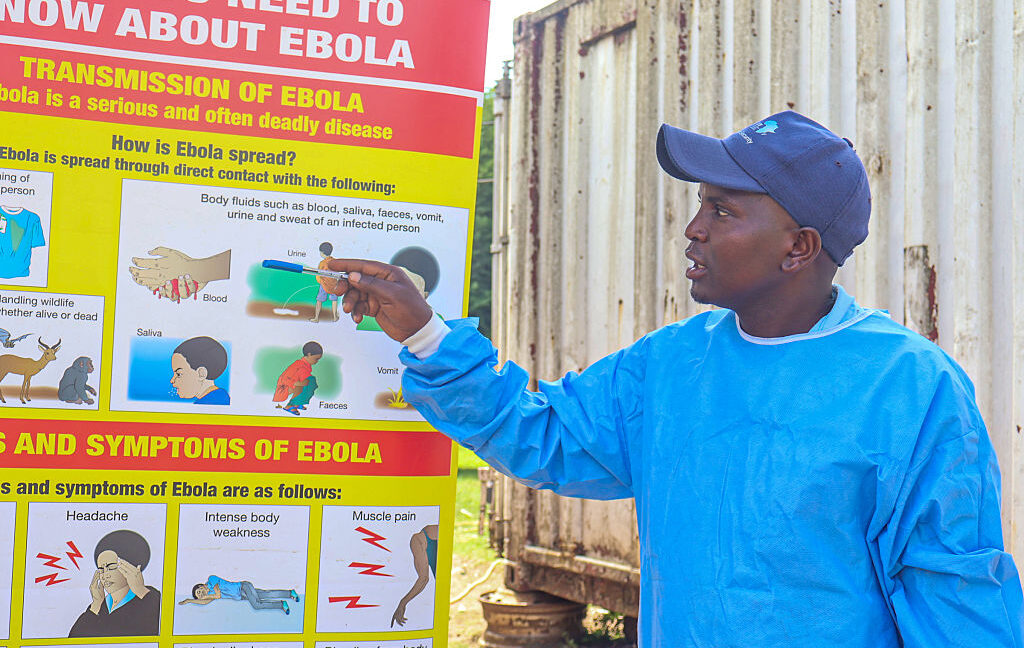
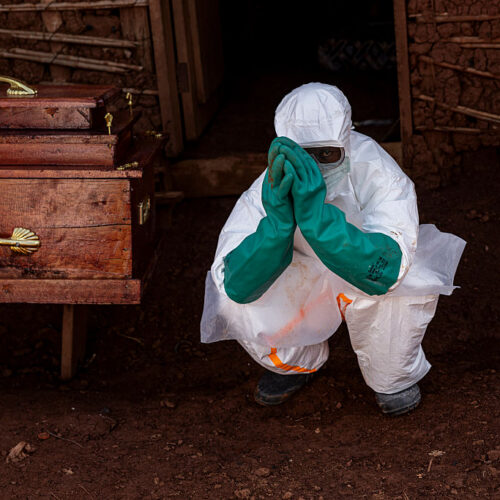
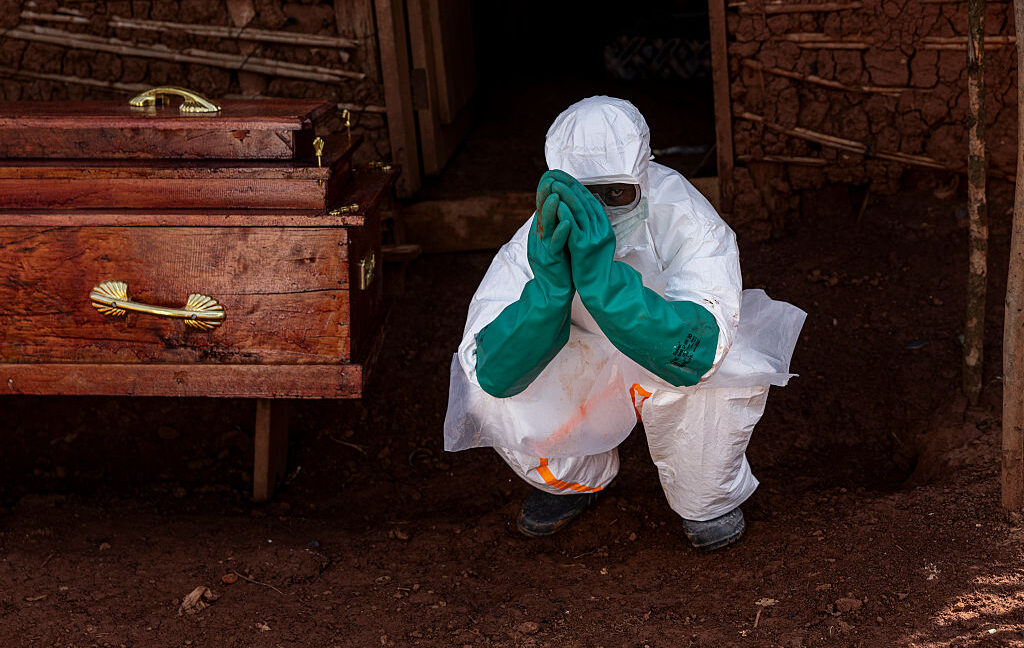
The Trump administration is refusing to repatriate Americans exposed to Ebola amid the outbreak still raging in the Democratic Republic of the Congo. But the plan to send US citizens to Kenya has hit a snag, and officials are still scrambling to find other countries that might take them.
Earlier this week, it was revealed that the administration had devised a plan to establish a makeshift quarantine and treatment facility in Kenya—instead of bringing its citizens home for high-quality care at specialized facilities built for this purpose. According to the initial plans, the US facility would be in Laikipia, about 120 miles north of Nairobi, where the US has an air base. Initially, the plan was to set up a 50-bed quarantine facility that was expected to be operational today, May 29. Then, in a second state, officials would set up isolation and biocontainment units to house Americans infected with the virus.
But after a series of events on Thursday and Friday, that plan has now been stalled. The Katiba Institute, which advocates for Kenyans' constitutional rights, filed the petition on Thursday to challenge the establishment of the quarantine and treatment facility.


© Getty | Nicholas Kajoba
The Trump administration is refusing to repatriate Americans exposed to Ebola amid the outbreak still raging in the Democratic Republic of the Congo. But the plan to send US citizens to Kenya has hit a snag, and officials are still scrambling to find other countries that might take them.
Earlier this week, it was revealed that the administration had devised a plan to establish a makeshift quarantine and treatment facility in Kenya—instead of bringing its citizens home for high-quality care at specialized facilities built for this purpose. According to the initial plans, the US facility would be in Laikipia, about 120 miles north of Nairobi, where the US has an air base. Initially, the plan was to set up a 50-bed quarantine facility that was expected to be operational today, May 29. Then, in a second state, officials would set up isolation and biocontainment units to house Americans infected with the virus.
But after a series of events on Thursday and Friday, that plan has now been stalled. The Katiba Institute, which advocates for Kenyans' constitutional rights, filed the petition on Thursday to challenge the establishment of the quarantine and treatment facility.


© Getty | Nicholas Kajoba
For years, anti-vaccine Health Secretary Robert F. Kennedy Jr. and his zealous followers have downplayed measles as "just a rash" and falsely claimed that "Measles outbreaks have been fabricated to create fear."
In 2021, when Kennedy wrote those words, the US recorded just 49 measles cases. Yearly case counts have generally been low since 2000, when the US declared measles eliminated thanks to a decades-long vaccination campaign. But with the rise of Kennedy and his ilk in the past few decades, that public health triumph is being undone. Vaccination rates have slipped, and large, multistate outbreaks of vaccine-preventable diseases have inevitably come roaring back. Now it's becoming painfully clear once again how wrong Kennedy and his cohorts are about infectious diseases and vaccines.
In a study published yesterday in the Morbidity and Mortality Weekly Report, state and federal researchers provided a detailed postmortem of last year's massive multi-state measles outbreak that mushroomed out of West Texas. The data reveals a disease that's far from just a rash, with about 20 percent of people—mostly younger children—being hospitalized.


© Getty | Povorozniuk Liudmyla
For years, anti-vaccine Health Secretary Robert F. Kennedy Jr. and his zealous followers have downplayed measles as "just a rash" and falsely claimed that "Measles outbreaks have been fabricated to create fear."
In 2021, when Kennedy wrote those words, the US recorded just 49 measles cases. Yearly case counts have generally been low since 2000, when the US declared measles eliminated thanks to a decades-long vaccination campaign. But with the rise of Kennedy and his ilk in the past few decades, that public health triumph is being undone. Vaccination rates have slipped, and large, multistate outbreaks of vaccine-preventable diseases have inevitably come roaring back. Now it's becoming painfully clear once again how wrong Kennedy and his cohorts are about infectious diseases and vaccines.
In a study published yesterday in the Morbidity and Mortality Weekly Report, state and federal researchers provided a detailed postmortem of last year's massive multi-state measles outbreak that mushroomed out of West Texas. The data reveals a disease that's far from just a rash, with about 20 percent of people—mostly younger children—being hospitalized.


© Getty | Povorozniuk Liudmyla

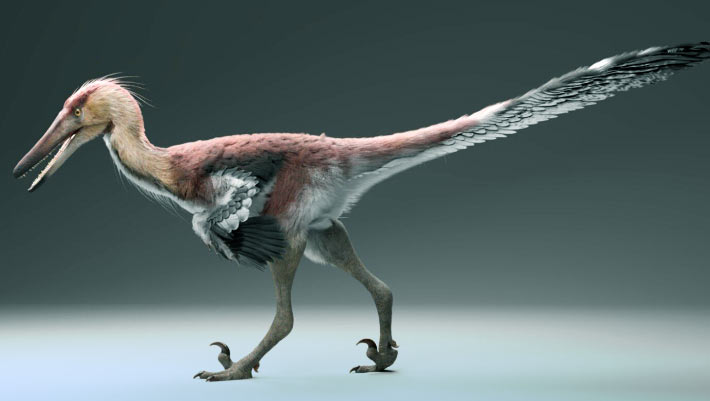
Paleontologists in Argentina have identified a previously unknown species of unenlagiid dinosaur that stalked freshwater wetlands during the Late Cretaceous epoch, adding to evidence that some dinosaurs specialized in catching fish.
The post New Dinosaur Species from Argentina May Have Specialized in Catching Fish appeared first on Sci.News: Breaking Science News.
As the world struggles to contain the rapidly growing Ebola outbreak in the Democratic Republic of the Congo’s Ituri Province, a vital network of research centers has been unable to help on the ground. The reason: The Trump administration slashed its funding last year, in part due to conspiracy theories about the origins of COVID-19.
Established in 2020 by the National Institutes of Health, the Centers for Research in Emerging Infectious Diseases (CREID) Network was conducting research into viruses that emerge from wildlife and spill over to people, including the family of viruses that Ebola belongs to. The network operated 10 sites around the world where these types of disease outbreaks are likely to occur, including in Central and East Africa. (The network was also researching hantavirus, a disease that saw a recent rare outbreak on a cruise ship.)
NIH provided CREID with approximately $82 million in funding over five years, and its funding was up for renewal in 2025. But last June, the centers received a stop-work order stating that their research had been deemed “unsafe for Americans and not a good use of taxpayer funding,” and that the agency’s priorities no longer supported the network.


© Michel Lunanga / Stringer
As the world struggles to contain the rapidly growing Ebola outbreak in the Democratic Republic of the Congo’s Ituri Province, a vital network of research centers has been unable to help on the ground. The reason: The Trump administration slashed its funding last year, in part due to conspiracy theories about the origins of COVID-19.
Established in 2020 by the National Institutes of Health, the Centers for Research in Emerging Infectious Diseases (CREID) Network was conducting research into viruses that emerge from wildlife and spill over to people, including the family of viruses that Ebola belongs to. The network operated 10 sites around the world where these types of disease outbreaks are likely to occur, including in Central and East Africa. (The network was also researching hantavirus, a disease that saw a recent rare outbreak on a cruise ship.)
NIH provided CREID with approximately $82 million in funding over five years, and its funding was up for renewal in 2025. But last June, the centers received a stop-work order stating that their research had been deemed “unsafe for Americans and not a good use of taxpayer funding,” and that the agency’s priorities no longer supported the network.


© Michel Lunanga / Stringer