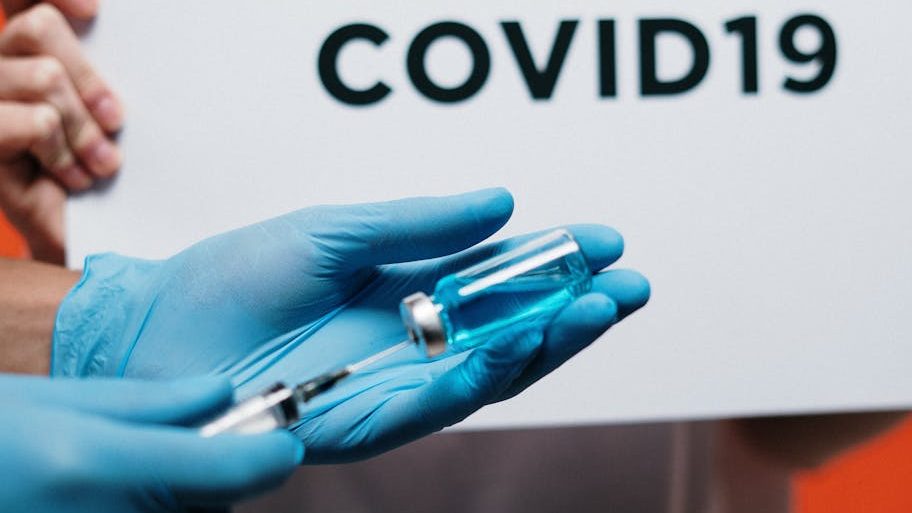
At the launch of "Make Europe Healthy Again," researcher Panagis Polykretis highlighted a critical issue with mRNA vaccines, asserting that they enable an immune attack on the body’s own cells, leading to severe adverse effects like myocarditis. He called for accountability and urgent safety studies amid rising health crises linked to the vaccines.
Australian scientists have developed a home-grown mRNA vaccine for Foot and Mouth disease (FMD) in livestock, part of a $20 million research project. While the vaccine promises rapid development, concerns about its safety and effects on meat consumers persist. Current pork supply lacks mRNA vaccine treatment, but future integration raises alarms.
My background in experimental physics has led me to critically think about the darkness in human nature and its linkage to global depopulation through vaccines. I question the safety and efficacy of vaccines as recent studies show. There is no such thing as a good vaccine.
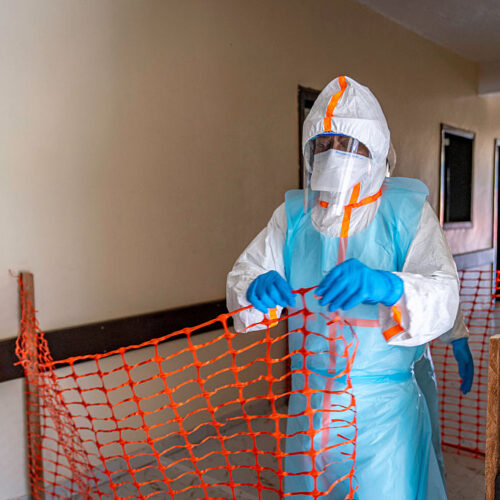
The global health organization Coalition for Epidemic Preparedness Innovations (CEPI) announced Monday that it will "urgently accelerate development" of three vaccine candidates against Bundibugyo ebolavirus (BDBV), pledging a little over $60 million in the effort to extinguish an outbreak currently raging out of control in the Democratic Republic of the Congo.
Under the plans, CEPI has committed up to $50 million to US-based Moderna for preclinical development and Phase 1 clinical testing of its mRNA-based BDBV vaccine candidate. The funding will simultaneously allow the company to ramp up manufacturing capabilities and ready large-scale Phase 2/3 trials in the event the vaccine makes it through early testing. The vaccine will use Moderna's mRNA vaccine platform that allowed for rapid development of a COVID-19 vaccine during the pandemic.
"[W]e believe our mRNA platform can play an important role in responding rapidly to emerging infectious disease threats," Moderna CEO Stéphane Bancel said in a statement Monday. " We will move with urgency and scientific rigor to support the response and help bring a potential vaccine closer to the communities that need it most."
The global health organization Coalition for Epidemic Preparedness Innovations (CEPI) announced Monday that it will "urgently accelerate development" of three vaccine candidates against Bundibugyo ebolavirus (BDBV), pledging a little over $60 million in the effort to extinguish an outbreak currently raging out of control in the Democratic Republic of the Congo.
Under the plans, CEPI has committed up to $50 million to US-based Moderna for preclinical development and Phase 1 clinical testing of its mRNA-based BDBV vaccine candidate. The funding will simultaneously allow the company to ramp up manufacturing capabilities and ready large-scale Phase 2/3 trials in the event the vaccine makes it through early testing. The vaccine will use Moderna's mRNA vaccine platform that allowed for rapid development of a COVID-19 vaccine during the pandemic.
"[W]e believe our mRNA platform can play an important role in responding rapidly to emerging infectious disease threats," Moderna CEO Stéphane Bancel said in a statement Monday. " We will move with urgency and scientific rigor to support the response and help bring a potential vaccine closer to the communities that need it most."
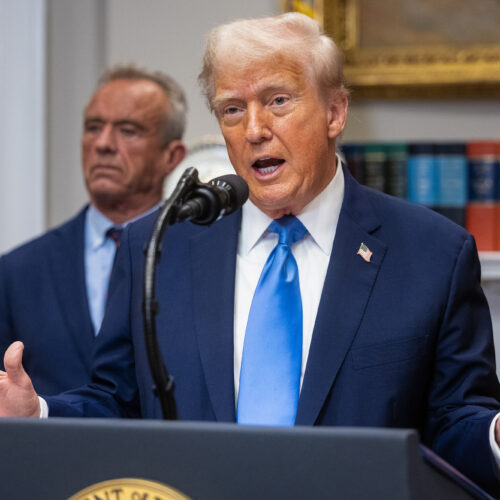
The American Medical Association came out swinging this weekend at an executive order President Trump signed Friday that reaffirms intentions to model US childhood vaccine recommendations after those of Denmark—a country with universal healthcare, less diversity, and a population about the size of Maryland's.
“There is no credible scientific evidence to support," such a change, AMA President Bobby Mukkamala said in a statement. The current vaccine schedule "is built on decades of rigorous research and real-world data, and it is designed to protect children in the US when they are most vulnerable based on our nation’s disease burden," he said.
The plan to align federal childhood vaccine recommendations with Denmark's was first revealed by anti-vaccine Health Secretary Robert F. Kennedy Jr. in January. The overhaul would see the total number of recommended immunizations drop from 17 to 11, walking back recommendations for shots against rotavirus, COVID-19, influenza, meningococcal disease, hepatitis A, and hepatitis B. It stemmed from a December executive order by Trump to align US vaccine recommendations with the "best practices from peer, developed countries."
The American Medical Association came out swinging this weekend at an executive order President Trump signed Friday that reaffirms intentions to model US childhood vaccine recommendations after those of Denmark—a country with universal healthcare, less diversity, and a population about the size of Maryland's.
“There is no credible scientific evidence to support," such a change, AMA President Bobby Mukkamala said in a statement. The current vaccine schedule "is built on decades of rigorous research and real-world data, and it is designed to protect children in the US when they are most vulnerable based on our nation’s disease burden," he said.
The plan to align federal childhood vaccine recommendations with Denmark's was first revealed by anti-vaccine Health Secretary Robert F. Kennedy Jr. in January. The overhaul would see the total number of recommended immunizations drop from 17 to 11, walking back recommendations for shots against rotavirus, COVID-19, influenza, meningococcal disease, hepatitis A, and hepatitis B. It stemmed from a December executive order by Trump to align US vaccine recommendations with the "best practices from peer, developed countries."
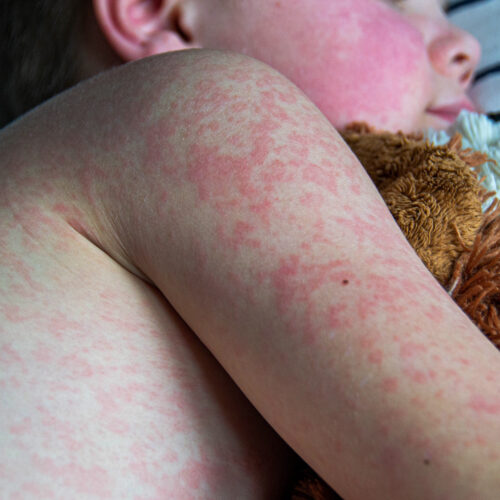
For years, anti-vaccine Health Secretary Robert F. Kennedy Jr. and his zealous followers have downplayed measles as "just a rash" and falsely claimed that "Measles outbreaks have been fabricated to create fear."
In 2021, when Kennedy wrote those words, the US recorded just 49 measles cases. Yearly case counts have generally been low since 2000, when the US declared measles eliminated thanks to a decades-long vaccination campaign. But with the rise of Kennedy and his ilk in the past few decades, that public health triumph is being undone. Vaccination rates have slipped, and large, multistate outbreaks of vaccine-preventable diseases have inevitably come roaring back. Now it's becoming painfully clear once again how wrong Kennedy and his cohorts are about infectious diseases and vaccines.
In a study published yesterday in the Morbidity and Mortality Weekly Report, state and federal researchers provided a detailed postmortem of last year's massive multi-state measles outbreak that mushroomed out of West Texas. The data reveals a disease that's far from just a rash, with about 20 percent of people—mostly younger children—being hospitalized.
For years, anti-vaccine Health Secretary Robert F. Kennedy Jr. and his zealous followers have downplayed measles as "just a rash" and falsely claimed that "Measles outbreaks have been fabricated to create fear."
In 2021, when Kennedy wrote those words, the US recorded just 49 measles cases. Yearly case counts have generally been low since 2000, when the US declared measles eliminated thanks to a decades-long vaccination campaign. But with the rise of Kennedy and his ilk in the past few decades, that public health triumph is being undone. Vaccination rates have slipped, and large, multistate outbreaks of vaccine-preventable diseases have inevitably come roaring back. Now it's becoming painfully clear once again how wrong Kennedy and his cohorts are about infectious diseases and vaccines.
In a study published yesterday in the Morbidity and Mortality Weekly Report, state and federal researchers provided a detailed postmortem of last year's massive multi-state measles outbreak that mushroomed out of West Texas. The data reveals a disease that's far from just a rash, with about 20 percent of people—mostly younger children—being hospitalized.

 Login
Login