Normal view

The IKEA effect in the age of AI

3 June 2026 at 19:00

I have a drawer at home full of leather offcuts I cannot bring myself to throw away. They are scraps, most of them, the edges trimmed off wallets and card holders I made by hand back when I was teaching myself leathercraft and slowly turning it into a small side business. Objectively they are waste. To me they are the evidence of something. I worked for those scraps, and that work changed how I see them.

If you have ever kept a wonky mug a child made, or refused to bin a piece of furniture you built badly, you already know the feeling I am describing.

And there is a name for it.

A quick note before I go further. I am not a psychologist or a neuroscientist, just a writer who makes things and reads widely. What follows is reflection on a handful of studies, most of them observational or small, not advice about how you should work or think.

The IKEA effect is the tendency to place a disproportionately high value on things you helped make. It was named and documented by Michael Norton, Daniel Mochon and Dan Ariely in a 2012 paper with the lovely title “The IKEA Effect: When Labor Leads to Love”. Across four studies using IKEA boxes, origami and Lego, people consistently rated their own clumsy creations as “similar in value to experts’ creations”. 

The number that tends to get repeated comes from the first experiment in the paper. Builders bid an average of $0.78 for the plain storage boxes they had assembled themselves, while non-builders bid an average of $0.48 for the identical pre-built box, a premium of roughly 63 percent. 

The authors are blunt about it. They write that “labor alone can be sufficient to induce greater liking for the fruits of one’s labor: even constructing a standardized bureau, an arduous, solitary task, can lead people to overvalue their (often poorly constructed) creations”. Note the “can.” This is a tendency, not a law.

And there is one important catch, and it matters for where I am going. The effect only showed up when the labor succeeded. When people failed to finish, or built something and then took it apart, the extra value vanished. Effort that goes nowhere does not buy attachment. Completed effort does.

Now sit that next to the thing reshaping how a lot of us work. Generative AI is, broadly, a labor remover. It takes much of the cognitive grind out of writing, coding, summarising, drafting. Or at least it’s supposed to. The output arrives, often decent, and the effort that used to produce it simply did not happen.

If the IKEA effect is right that we love what we labor over, the obvious question is what we feel about what we did not labor over at all.

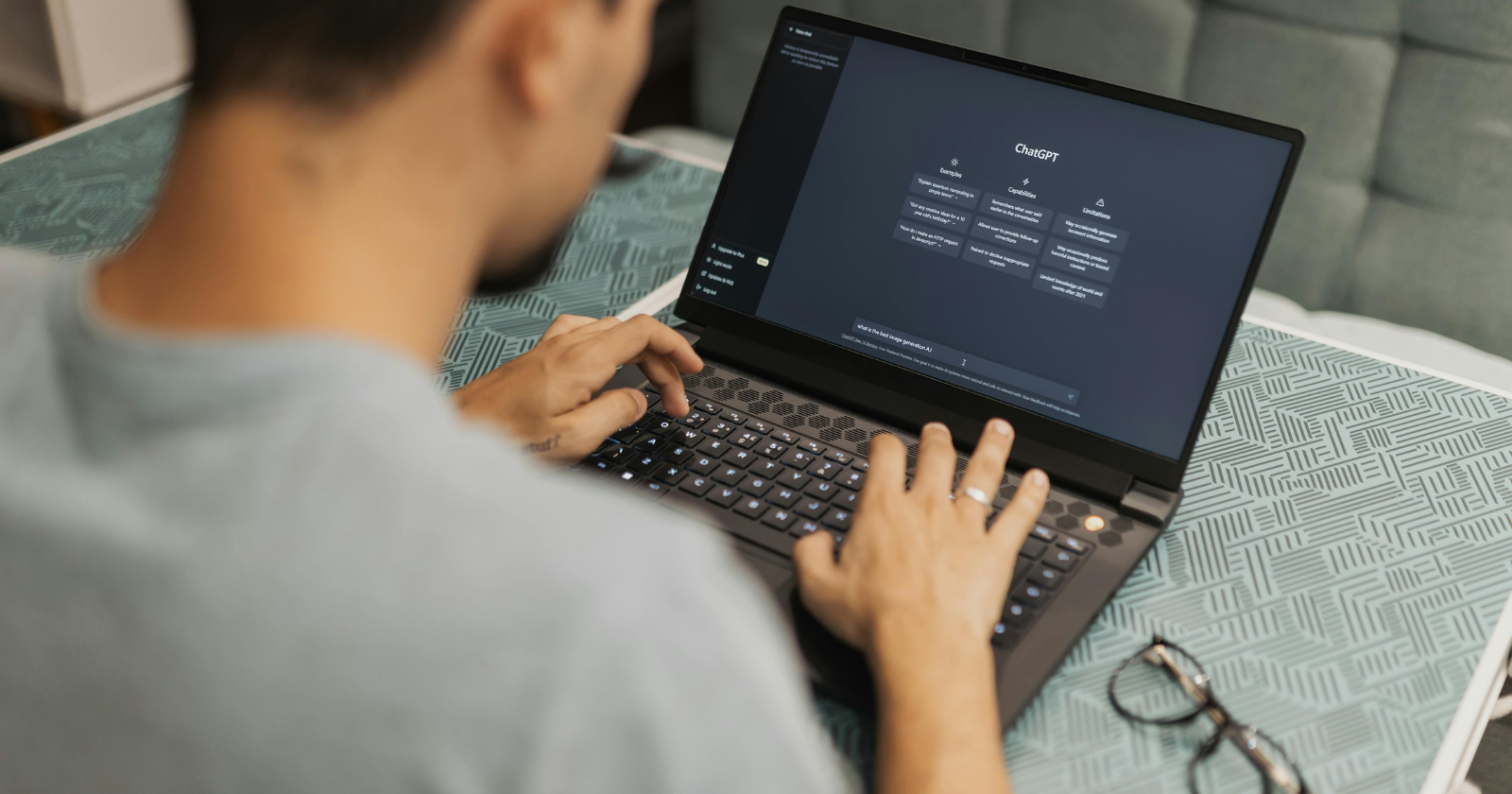
A 2025 study looked at this. In “Your Brain on ChatGPT”, researchers had 54 people write essays using an LLM, a search engine, or nothing but their own heads, while measuring brain activity. The people who leaned on the LLM reported the lowest sense of ownership over what they had written, and showed the weakest brain connectivity of the three groups. Many of them struggled to quote back the essay they had just produced.

And this seems to show up on the other side too: not just in how creators feel about AI-assisted work, but in how audiences judge it. In a 2023 study, “Humans versus AI: whether and why we prefer human-created compared to AI-created artwork”, researchers found that people tended to prefer artworks they believed were human-made over artworks they believed were AI-made. Part of that preference came down to the qualities people associated with human creation: intention, emotion, effort, and a sense that someone was actually behind the work.

That matters because the Ikea effect is not really about furniture. It is about ownership. We do not only value the finished object. We value the effort we believe went into it. And when that effort feels absent — whether we are the maker or the audience — something in the value seems to drop.

I notice this in my own days. I use AI for parts of my writing work: the research, the lookup, the first-pass structuring, the awkward sentence I cannot quite untangle. But the pieces I feel most attached to are still the ones where I had to wrestle with the idea myself. The ones where I got annoyed, deleted half of it, walked away, came back, and finally found the line I was looking for.

The other risk here is not just that AI-made things feel less ours. It is that the effort we skip might have been doing something for us beyond producing the object.

A 2025 study by Michael Gerlich found a significant negative correlation between frequent AI use and critical thinking. This one study so but put beside the IKEA finding about failed labor and a pattern suggests itself. The value, in both the products study and our own heads, seems to live in the completed effort, not the finished result. Skip the effort and you may keep the result while losing what the effort was quietly building.

I do not buy the idea that AI is something to refuse. I use it. It is genuinely useful. What the leather drawer and the writing work both tell me is that the value was never really in the object. It was in the doing.

So the practical move, for me at least, is not to do everything the hard way out of nostalgia. It is to be deliberate about which labor I keep. Let the machine carry the parts that are pure friction with no learning in them. Hold onto the parts where the effort is the point, where struggling through is what builds the skill or the judgment or the sense that the thing is mine.

The post The IKEA effect in the age of AI appeared first on Space Daily.

Overarming America: Game theory explores how fear and social pressure drive gun purchases

3 June 2026 at 19:00
A Dartmouth College study is the first to map the interplay of personal choice and social networks that has led to the United States being one of the world's most heavily armed countries, with 120 firearms for every 100 people. The researchers describe in Science Advances how individual incentives to buy firearms can lead to a phenomenon they call "overarming." In an overarmed society, the collective cost of firearm ownership outweighs the individual benefits of possessing a gun.

Consistency, not complexity, is the key to teaching robots dexterity, new research suggests

3 June 2026 at 19:00
Teaching robots to manipulate objects with humanlike dexterity has long been one of robotics' toughest challenges. Tasks such as rotating an object in-hand or coordinating two robot arms to maneuver a bulky item require constant changes in contact, grip, and motion, skills that are difficult both to program and to demonstrate through human teleoperation.

Abortion restrictions associated with lower female medical school applicant numbers

3 June 2026 at 19:00
States with restrictive abortion policies saw slower growth in the proportion of female medical school applicants following the 2022 reversal of Roe v. Wade, according to a new study published in the open-access journal PLOS Global Public Health by Amrit Kirpalani of Western University, Canada, and colleagues.

Abortion restrictions associated with lower female medical school applicant numbers

States with restrictive abortion policies saw slower growth in the proportion of female medical school applicants following the 2022 reversal of Roe v. Wade, according to a new study published in the open-access journal PLOS Global Public Health by Amrit Kirpalani of Western University, Canada, and colleagues.

Half-ton early bovines roamed 4-million-year-old grasslands in Europe

The first large-sized bovines grew to up to half a ton 4 million years ago in the European Early Pliocene, an early step toward our modern diversity of large-bodied buffalo and cattle, according to a study published June 3, 2026, in the open access journal PLOS One by Leonardo Sorbelli of the Leibniz Institute for Evolution and Biodiversity Science, Germany, and colleagues.

Egypt fossils show modern ocean fish rose rapidly after dinosaur extinction

The extinction that ended the Age of Dinosaurs is best known for clearing the way for the Age of Mammals on land. Scientists have long suspected that the same catastrophe also transformed life in the seas, opening ecological space for the rise of modern marine fish faunas. Yet the timing and geography of that transition have remained uncertain because of the sparse fossil record.

Traditional, patriarchal Japanese terms for husband and wife may now be perceived as neutral

3 June 2026 at 19:00
A new study suggests that, for modern Japanese speakers, two traditional, patriarchal words for "husband" ("shujin," literally meaning "master") and "wife" ("kanai," "inside-the-house") may be losing their original meanings, though men in the study evaluated both traditional and neutral words for "husband" more positively than words for "wife."

Traditional, patriarchal Japanese terms for husband and wife may now be perceived as neutral

A new study suggests that, for modern Japanese speakers, two traditional, patriarchal words for "husband" ("shujin," literally meaning "master") and "wife" ("kanai," "inside-the-house") may be losing their original meanings, though men in the study evaluated both traditional and neutral words for "husband" more positively than words for "wife."

Printed manga may give the brain a storytelling advantage

3 June 2026 at 19:00
A new study by researchers at the University of Tokyo explores whether reading manga on paper or on a tablet changes how the brain understands and remembers stories. Participants first read the opening half of a two-part manga story either on paper or on a tablet. Later, while inside an MRI scanner, they read the second half through LCD goggles and answered questions about the story.

Printed manga may give the brain a storytelling advantage

A new study by researchers at the University of Tokyo explores whether reading manga on paper or on a tablet changes how the brain understands and remembers stories. Participants first read the opening half of a two-part manga story either on paper or on a tablet. Later, while inside an MRI scanner, they read the second half through LCD goggles and answered questions about the story.

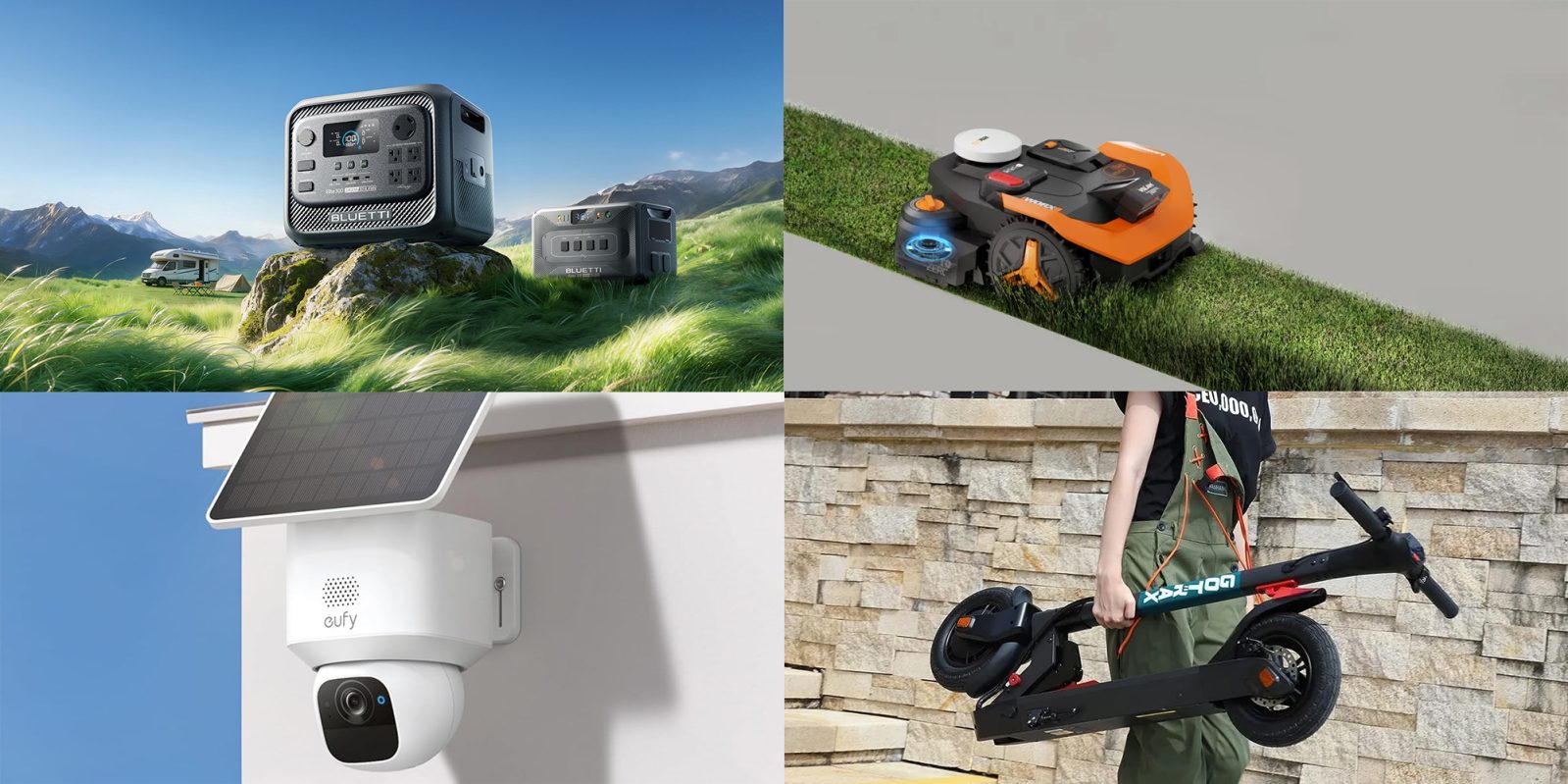
Bluetti sale offers 3,014Wh Elite 300 power station with 350W solar panel + FREE 128Wh Elite 10 Mini for $1,567, Worx robot mowers, more

3 June 2026 at 19:00

Our midweek Green Deals are being led by the latest Bluetti RV Season Sale that benefits from two of our bonus exclusive savings for even better deals, with offers like the 3,014Wh Elite 300 Portable Power Station getting a 350W solar panel and a FREE 128Wh Elite 10 Mini station for $1,567, among many others starting from $284. Right behind it, we spotted up to $700 discounts on the three Worx Landroid Vision Cloud Robot Lawn Mowers starting from a new $850 low, as well as Anker’s eufy E30 Wireless Outdoor Solar Security Camera at its $100 low, the Gotrax XR Elite Max Electric Scooter hitting a new $303 low – plus, deals on a multi-battery Greenworks bundle and an EGO electric hedge trimmer kit. We also have all the hangover deals collected down at the bottom of the page, like yesterday’s exclusive Anker SOLIX S2000 Power Station launch deals, the new low hitting EGO’s comprehensive Z6 Zero Turn Riding Mower bundle, and more.

Head below for other New Green Deals we’ve found today and, of course, Electrek’s best EV buying and leasing deals. Also, check out the new Electrek Tesla Shop for the best deals on Tesla accessories.

more…

The best Qi2 batteries for iPhone and Pixel

3 June 2026 at 19:00

Compact power banks have gotten a lot faster in the past year — and it’s not just their USB-C charging speeds that have received a boost. The newest Qi2.2-certified models can wirelessly charge an iPhone 16 or later at up to 25W. Combine that with their ability to magnetically snap on via MagSafe, and you’ve got yourself an essential add-on that’s easy to take on the go.

Qi2 is a magnetic wireless charging standard that’s based on Apple’s MagSafe tech, so almost all modern iPhones support it. While the latest iPhones offer the fastest charging rates, older models (dating back to the iPhone 12) support 15W Qi2 charging speeds, which is still suitably quick. (The iPhone 17E also maxes out at 15W, and the 16E doesn’t have wireless charging at all.)

On the other hand, Android phones are a mixed bag, with very few models supporting Qi2, let alone Qi2.2. Google’s Pixel 10, 10 Pro, and 10 Pro Fold support Qi2 charging at up to 15W; the 10 Pro XL supports Qi 2.2 at up to 25W. Samsung’s Galaxy 26 lineup is “Qi2 Ready,” which means they can use Qi2 chargers at up to 15W if they have a magnet case. And that’s pretty much it.

We know you want the best, whichever phone you have. Some of you may be willing to pay a lot for it, while others may simply want the best possible model for the least amount of money. Of the seven we tested — which vary in features, design, and charging speed — we landed on two picks that should satisfy most people’s needs. 

The Qi2.2 battery with the fastest wireless charging speeds

Dimensions: 2.6 x 4 x 0.6 inches, 196 grams / Wireless charging speed: Qi2.2 25W, Qi2 15W / Wired charging speed: Advertised as 45W, but a bit slower / Passthrough charging: Yes / Ports: One USB-C port / Built-in cable: Yes, non-removable / Advertised battery capacity: 10,000mAh, 36Wh

The Baseus PicoGo AM52 is about as no-frills as power banks come, both in design and features. The all-black battery pack has a sleek aluminum case, with soft-touch silicone on the magnetic side to prevent it from scratching your phone while charging. It can charge devices via Qi2.2 and USB-C simultaneously, but using both requires you to press the power button (and there’s a steep speed penalty as it splits the power).

The AM52 consistently offered the fastest wireless charging speeds of any power bank I tested, and it’s often the most affordable of the bunch. It wirelessly charged an iPhone 17 Pro Max to 65 percent in one hour and the Pixel 10 Pro XL to 50 percent, which is on par with the slightly pricier Sharge Icemag 3. The Iniu SnapGo Air slightly outperformed the AM52 in some wireless tests, but lagged behind in others. Baseus’s model lacks a built-in display — meaning you can’t see the remaining charge — but two of the four LED indicators were still full after an hour of wireless charging, indicating it still had some juice left.

I tested the version with a built-in USB-C cable, which usually retails for $64 at Amazon if you’re a Prime member ($4 more than the cordless version). Sometimes, it drops to $40 or so with a coupon, and in terms of wired charging speeds, it was also among the fastest of the seven batteries I tested. It charged both the iPhone and Pixel to about 90 percent capacity within an hour, though it’s not necessarily hard to find a battery that supports fast wired charging.

iPhone 17 Pro MaxiPhone 17 Pro MaxGoogle Pixel 10 Pro XLGoogle Pixel 10 Pro XL
After one hour of wireless chargingAfter one hour of wired USB-C chargingAfter one hour of wireless chargingAfter one hour of wired USB-C charging
Baseus PicoGo AM5265 percent89 percent50 percent90 percent
Sharge Icemag 364 percent85 percent49 percent70 percent
Iniu SnapGo Air60 percent89 percent34 percent88 percent

The Baseus AM52 advertises a top speed of 45W via USB-C, though it didn’t reach those speeds with any of the devices I tested. It topped out at about 38W while connected to the iPhone 17 Pro Max and 33W while attached to the Pixel 10 Pro XL, both of which advertise higher wired speeds (the Iniu SnapGo Air topped out at 39W). The Baseus also topped out at 39.1W while plugged into my M2 MacBook Air, which isn’t far from its advertised rating, while the Iniu reached 43W. In other words, get the Iniu if you value fast wired speeds and the Baseus if you want fast wireless charging.

The other Qi2.2 batteries I tested

  • Sharge’s Icemag 3 (39.1Wh) is the coolest battery of the seven that I tested, and it delivers great wireless and wired charging speeds (25W and 30W, respectively). No issues here, but it usually costs a fair amount more than the Baseus or Iniu model.
  • Iniu’s SnapGo Air (39.2Wh) came close to being our top pick thanks to its fast wired charging, relatively low price, and LED display that shows remaining charge. But its wireless charging performance was inconsistent.

The Qi2 battery with the most power for the least money

iWalk PowerHybrid magnetic charger

Where to Buy:

Dimensions: 2.6 x 5.8 x 0.8 inches, 215 grams / Wireless charging speed: Qi2 15W / Wired charging speed: 30W / Passthrough charging support: Yes / Ports: One USB-C port / Built-in cable: Yes, removable / Advertised battery capacity: 10,000mAh, 38.5Wh

I wasn’t expecting one of the best-performing batteries to be the least expensive model I called in. The iWalk PowerHybrid is a 15W Qi2 charger that’s bulkier than our top pick, and honestly, pretty cheap-looking. But I can’t argue with its charging speeds, or the fact that it’s commonly available for about $35 — half the typical cost of the Baseus AM52. The PowerHybrid also includes a USB-C cable fashioned into a lanyard; however, this one is fully detachable, unlike Baseus’s.

The iWalk charged the iPhone 17 Pro Max to 55 percent in an hour via Qi2 wireless charging. It performed similarly to our Qi2.2 pick while charging the Pixel 10 Pro XL, too, delivering 46 percent of the phone’s total charge in an hour (with 59 percent of the power bank’s battery remaining). Yes, that’s slower than the AM52, but ask yourself: Is a 10 percent speed boost worth nearly twice the price? No judgment if your answer is yes, but those shaking their heads are my kind of people.

iPhone 17 Pro MaxiPhone 17 Pro MaxGoogle Pixel 10 Pro XLGoogle Pixel 10 Pro XL
After one hour of wireless chargingAfter one hour of wired USB-C chargingAfter one hour of wireless chargingAfter one hour of wired USB-C charging
iWalk Power Hybrid battery ($50)55 percent90 percent46 percent85 percent
Anker MagGo Power Bank ($90)57 percent86 percent46 percent72 percent
Aulumu M10 battery ($90)58 percent90 percent12 percent84 percent
Statik SmartCharge Gen 2 ($70)25 percent32 percent18 percent36 percent

The PowerHybrid’s wired charging speeds were in line with other models I tested, allowing me to take the iPhone 17 Pro Max and the Pixel 10 Pro XL to 90 percent and 85 percent in an hour, respectively. It also didn’t have any issues reaching its peak 30W charging speeds across multiple devices, which, again, was the case with the AM52.

The iWalk battery has a pretty big quirk, however: It doesn’t automatically turn on when you place a device on its magnetic surface. For Qi2 charging to work, its display (which shows the remaining charge) must be illuminated, which requires you to either press the power button or charge something via its USB-C port. It’s not a big deal, but it might be annoying to some.

The other Qi2 batteries I tested

  • The Anker MagGo Power Bank (38.5Wh) is hefty and deluxe, with a durable kickstand and a slick display that shows remaining charge and time to charge. But it’s slow considering its high $90 price, managing 15W Qi2 and 27W USB-C charging.
  • No other battery I tested looks as quirky and futuristic as Aulumu’s M10 (36Wh). It supports Apple Watch charging, plus USB-C charging and Qi2 15W speeds, but it’s costly at $90 and delivers inconsistent wireless charging speeds.
  • Statik’s SmartCharge Gen 2 (38.5Wh) delivers what a lot of people are likely looking for: a power bank that can plug directly into an outlet, with two built-in USB-C cables, a few ports, not to mention Apple Watch charging. It’s cool and not terribly expensive at $70, but it’s very slow to charge devices.

Photography by Cameron Faulkner / The Verge

A note on efficiency and capacity

Battery packs are convenient, but slower and less efficient than wired power adapters. All the batteries I tested claim 10,000mAh capacity. Milli-Ampere-hours, unlike Watt-hours, depend on battery voltage, so they can be misleading. For example, the Anker MagGo 10K battery I tested is advertised as having 10,000mAh capacity at 3.85V, or 38.5Wh total energy. The Baseus battery I tested is advertised as having 10,000mAh capacity. Fine print on its label reveals that its actual rating is 5,000mAh at 7.2V, or 36Wh. That doesn’t mean it can deliver only half the energy of the Anker; it’s actually only a little bit less. The Watt-hours are what to look for. And none of that has anything to do with the output voltage from the Qi2 charger, anyway.

Wireless charging is also much less efficient than wired. Qi2 is the least bad, but still loses about a quarter of the battery’s energy compared to charging over USB-C. If you want to squeeze the most charge out of your battery, it’s wired all the way. And finally, claimed charging speeds are typically measured in ideal lab conditions; in my tests, charging speeds were rarely as fast as advertised.

❌