Normal view

The best Qi2 batteries for iPhone and Pixel

3 June 2026 at 19:00

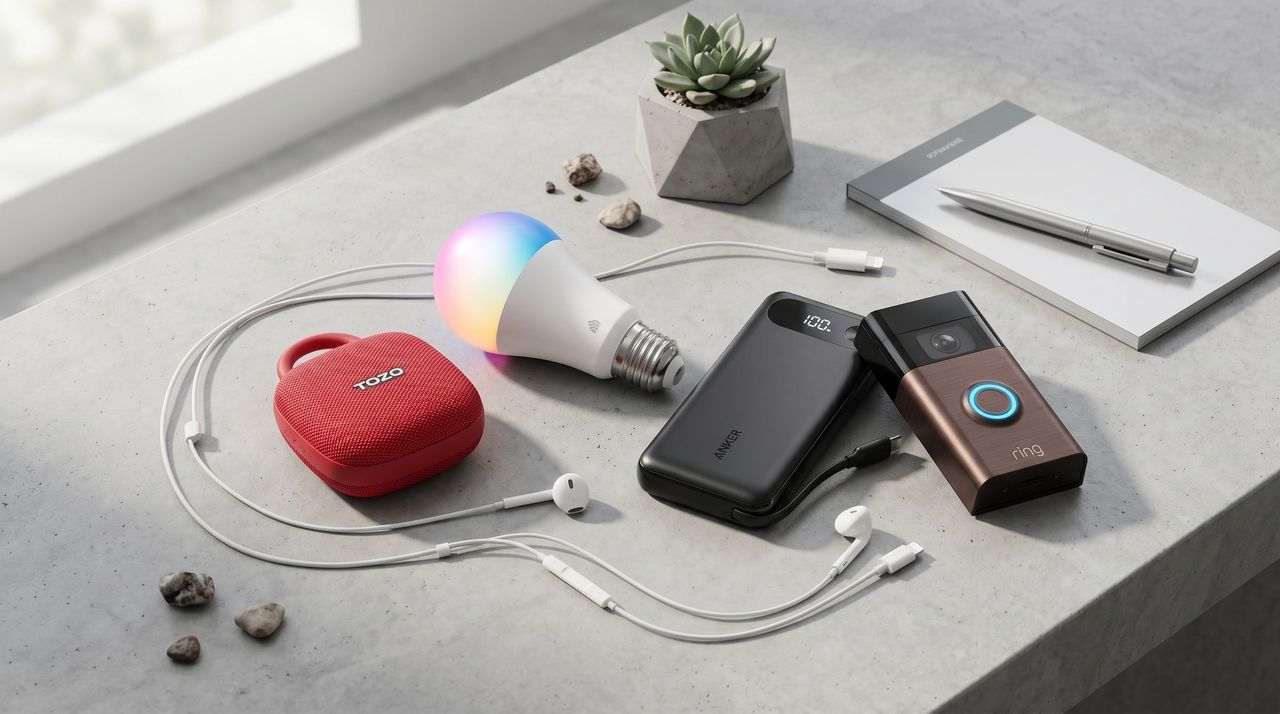
Compact power banks have gotten a lot faster in the past year — and it’s not just their USB-C charging speeds that have received a boost. The newest Qi2.2-certified models can wirelessly charge an iPhone 16 or later at up to 25W. Combine that with their ability to magnetically snap on via MagSafe, and you’ve got yourself an essential add-on that’s easy to take on the go.

Qi2 is a magnetic wireless charging standard that’s based on Apple’s MagSafe tech, so almost all modern iPhones support it. While the latest iPhones offer the fastest charging rates, older models (dating back to the iPhone 12) support 15W Qi2 charging speeds, which is still suitably quick. (The iPhone 17E also maxes out at 15W, and the 16E doesn’t have wireless charging at all.)

On the other hand, Android phones are a mixed bag, with very few models supporting Qi2, let alone Qi2.2. Google’s Pixel 10, 10 Pro, and 10 Pro Fold support Qi2 charging at up to 15W; the 10 Pro XL supports Qi 2.2 at up to 25W. Samsung’s Galaxy 26 lineup is “Qi2 Ready,” which means they can use Qi2 chargers at up to 15W if they have a magnet case. And that’s pretty much it.

We know you want the best, whichever phone you have. Some of you may be willing to pay a lot for it, while others may simply want the best possible model for the least amount of money. Of the seven we tested — which vary in features, design, and charging speed — we landed on two picks that should satisfy most people’s needs. 

The Qi2.2 battery with the fastest wireless charging speeds

Dimensions: 2.6 x 4 x 0.6 inches, 196 grams / Wireless charging speed: Qi2.2 25W, Qi2 15W / Wired charging speed: Advertised as 45W, but a bit slower / Passthrough charging: Yes / Ports: One USB-C port / Built-in cable: Yes, non-removable / Advertised battery capacity: 10,000mAh, 36Wh

The Baseus PicoGo AM52 is about as no-frills as power banks come, both in design and features. The all-black battery pack has a sleek aluminum case, with soft-touch silicone on the magnetic side to prevent it from scratching your phone while charging. It can charge devices via Qi2.2 and USB-C simultaneously, but using both requires you to press the power button (and there’s a steep speed penalty as it splits the power).

The AM52 consistently offered the fastest wireless charging speeds of any power bank I tested, and it’s often the most affordable of the bunch. It wirelessly charged an iPhone 17 Pro Max to 65 percent in one hour and the Pixel 10 Pro XL to 50 percent, which is on par with the slightly pricier Sharge Icemag 3. The Iniu SnapGo Air slightly outperformed the AM52 in some wireless tests, but lagged behind in others. Baseus’s model lacks a built-in display — meaning you can’t see the remaining charge — but two of the four LED indicators were still full after an hour of wireless charging, indicating it still had some juice left.

I tested the version with a built-in USB-C cable, which usually retails for $64 at Amazon if you’re a Prime member ($4 more than the cordless version). Sometimes, it drops to $40 or so with a coupon, and in terms of wired charging speeds, it was also among the fastest of the seven batteries I tested. It charged both the iPhone and Pixel to about 90 percent capacity within an hour, though it’s not necessarily hard to find a battery that supports fast wired charging.

iPhone 17 Pro MaxiPhone 17 Pro MaxGoogle Pixel 10 Pro XLGoogle Pixel 10 Pro XL
After one hour of wireless chargingAfter one hour of wired USB-C chargingAfter one hour of wireless chargingAfter one hour of wired USB-C charging
Baseus PicoGo AM5265 percent89 percent50 percent90 percent
Sharge Icemag 364 percent85 percent49 percent70 percent
Iniu SnapGo Air60 percent89 percent34 percent88 percent

The Baseus AM52 advertises a top speed of 45W via USB-C, though it didn’t reach those speeds with any of the devices I tested. It topped out at about 38W while connected to the iPhone 17 Pro Max and 33W while attached to the Pixel 10 Pro XL, both of which advertise higher wired speeds (the Iniu SnapGo Air topped out at 39W). The Baseus also topped out at 39.1W while plugged into my M2 MacBook Air, which isn’t far from its advertised rating, while the Iniu reached 43W. In other words, get the Iniu if you value fast wired speeds and the Baseus if you want fast wireless charging.

The other Qi2.2 batteries I tested

  • Sharge’s Icemag 3 (39.1Wh) is the coolest battery of the seven that I tested, and it delivers great wireless and wired charging speeds (25W and 30W, respectively). No issues here, but it usually costs a fair amount more than the Baseus or Iniu model.
  • Iniu’s SnapGo Air (39.2Wh) came close to being our top pick thanks to its fast wired charging, relatively low price, and LED display that shows remaining charge. But its wireless charging performance was inconsistent.

The Qi2 battery with the most power for the least money

iWalk PowerHybrid magnetic charger

Where to Buy:

Dimensions: 2.6 x 5.8 x 0.8 inches, 215 grams / Wireless charging speed: Qi2 15W / Wired charging speed: 30W / Passthrough charging support: Yes / Ports: One USB-C port / Built-in cable: Yes, removable / Advertised battery capacity: 10,000mAh, 38.5Wh

I wasn’t expecting one of the best-performing batteries to be the least expensive model I called in. The iWalk PowerHybrid is a 15W Qi2 charger that’s bulkier than our top pick, and honestly, pretty cheap-looking. But I can’t argue with its charging speeds, or the fact that it’s commonly available for about $35 — half the typical cost of the Baseus AM52. The PowerHybrid also includes a USB-C cable fashioned into a lanyard; however, this one is fully detachable, unlike Baseus’s.

The iWalk charged the iPhone 17 Pro Max to 55 percent in an hour via Qi2 wireless charging. It performed similarly to our Qi2.2 pick while charging the Pixel 10 Pro XL, too, delivering 46 percent of the phone’s total charge in an hour (with 59 percent of the power bank’s battery remaining). Yes, that’s slower than the AM52, but ask yourself: Is a 10 percent speed boost worth nearly twice the price? No judgment if your answer is yes, but those shaking their heads are my kind of people.

iPhone 17 Pro MaxiPhone 17 Pro MaxGoogle Pixel 10 Pro XLGoogle Pixel 10 Pro XL
After one hour of wireless chargingAfter one hour of wired USB-C chargingAfter one hour of wireless chargingAfter one hour of wired USB-C charging
iWalk Power Hybrid battery ($50)55 percent90 percent46 percent85 percent
Anker MagGo Power Bank ($90)57 percent86 percent46 percent72 percent
Aulumu M10 battery ($90)58 percent90 percent12 percent84 percent
Statik SmartCharge Gen 2 ($70)25 percent32 percent18 percent36 percent

The PowerHybrid’s wired charging speeds were in line with other models I tested, allowing me to take the iPhone 17 Pro Max and the Pixel 10 Pro XL to 90 percent and 85 percent in an hour, respectively. It also didn’t have any issues reaching its peak 30W charging speeds across multiple devices, which, again, was the case with the AM52.

The iWalk battery has a pretty big quirk, however: It doesn’t automatically turn on when you place a device on its magnetic surface. For Qi2 charging to work, its display (which shows the remaining charge) must be illuminated, which requires you to either press the power button or charge something via its USB-C port. It’s not a big deal, but it might be annoying to some.

The other Qi2 batteries I tested

  • The Anker MagGo Power Bank (38.5Wh) is hefty and deluxe, with a durable kickstand and a slick display that shows remaining charge and time to charge. But it’s slow considering its high $90 price, managing 15W Qi2 and 27W USB-C charging.
  • No other battery I tested looks as quirky and futuristic as Aulumu’s M10 (36Wh). It supports Apple Watch charging, plus USB-C charging and Qi2 15W speeds, but it’s costly at $90 and delivers inconsistent wireless charging speeds.
  • Statik’s SmartCharge Gen 2 (38.5Wh) delivers what a lot of people are likely looking for: a power bank that can plug directly into an outlet, with two built-in USB-C cables, a few ports, not to mention Apple Watch charging. It’s cool and not terribly expensive at $70, but it’s very slow to charge devices.

Photography by Cameron Faulkner / The Verge

A note on efficiency and capacity

Battery packs are convenient, but slower and less efficient than wired power adapters. All the batteries I tested claim 10,000mAh capacity. Milli-Ampere-hours, unlike Watt-hours, depend on battery voltage, so they can be misleading. For example, the Anker MagGo 10K battery I tested is advertised as having 10,000mAh capacity at 3.85V, or 38.5Wh total energy. The Baseus battery I tested is advertised as having 10,000mAh capacity. Fine print on its label reveals that its actual rating is 5,000mAh at 7.2V, or 36Wh. That doesn’t mean it can deliver only half the energy of the Anker; it’s actually only a little bit less. The Watt-hours are what to look for. And none of that has anything to do with the output voltage from the Qi2 charger, anyway.

Wireless charging is also much less efficient than wired. Qi2 is the least bad, but still loses about a quarter of the battery’s energy compared to charging over USB-C. If you want to squeeze the most charge out of your battery, it’s wired all the way. And finally, claimed charging speeds are typically measured in ideal lab conditions; in my tests, charging speeds were rarely as fast as advertised.


New social features further Plex’s evolution from media server business

3 June 2026 at 18:35

Plex is adding new social features to the platform.

As of today, users can make and share "personalized lists on Plex of any movie, show or episode," the company said in an announcement. Later this year, users will be able to import lists from other streaming services and react to other people's lists.

This month, Plex will also launch a community forum that will allow people to "post and comment directly on any movie, show, season, or episode." Later this year, Plex will introduce "Match Scores" based on a viewer's history and past ratings to predict how much they'll like a show or movie, Plex said.

Read full article

Comments

© Plex

Amazon’s search bar will invent AI-generated products you can’t buy

3 June 2026 at 17:07
An image showing AI-generated Amazon results

Amazon's updated search bar will now show you AI-generated images of products as you describe them. For now, the in-app feature only surfaces AI images of clothing and home goods, allowing you to tap on the image that best matches what you're looking for and search for similar-looking items.

In a blog post, Amazon positions the feature as a way to help you search for items if you can't remember the name of a specific texture or style, like describing a "shirt with a draped collar" if you can't think of "cowl neck." The feature seems like it might come in handy in these kinds of scenarios, but it doesn't really add much if you're just searc …

Read the full story at The Verge.

Why Some Cancers Turn Deadly: Researchers Uncover a Hidden Trigger

3 June 2026 at 16:26
Cancer Cell Spread Abnormal GrowthA closer look at cancer cells with extra chromosomes uncovered surprising traits linked to faster-growing, more dangerous tumors, pointing to potential new indicators of disease severity. Cancer cells are notorious for breaking the rules of biology. One of the most dramatic violations occurs when a cell suddenly doubles its entire genetic library, creating a chromosome-packed [...]

“A Holy Grail of Integrated Photonics”: EPFL Researchers Reveal Tiny-Yet-Powerful Ultrafast Laser on a Chip

3 June 2026 at 16:11


Researchers from the Swiss Federal Institute of Technology (EPFL) have announced the first ultrafast laser delivering 1.05 nanojoules of energy in extremely short pulses as short as 147 femtoseconds integrated onto a photonic chip.

The research team behind the accomplishment said that successfully scaling down ultrafast lasers of this magnitude from large tabletop models to microchip integration could enable extremely advanced sensing technologies, improve medical imaging, and potentially enable next-generation atomic clocks for yet-to-be-developed communication and navigation applications.

Ultrafast Lasers on a Microchip Scale Have Remained an Elusive Photonics ‘Holy Grail’

In a statement announcing the breakthrough, team leader and EPFL Professor Tobias J. Kippenberg explained that ultrafast lasers emit extremely short pulses of light energy lasting only a few hundred femtoseconds, which are quadrillionths of a second. Although the development of this category of lasers has enabled ultraprecise micromachining, atomic clocks, and advanced eye surgery, the team notes that the “bulky” technology has been limited to optical laser tables.

On the other end of the spectrum, engineers have built extremely small photonic chips that channel light in a similar way to how traditional microprocessors channel electricity to perform calculations. Some photonic chip designs are already widely used in the communications industry. However, integrating the ultrafast laser technology at the power levels demonstrated by the research team into a smaller chip has remained particularly elusive.

“For more than twenty years, a high-pulse-energy femtosecond laser on chip was widely regarded as a holy grail of integrated photonics,” Professor Kippenberg explained.

“Overlooked, Surprisingly Elegant Technology” Could Enable Futuristic Technologies

To find the nexus between size, speed, and power that could enable a true high-energy, ultrafast laser on a chip, the EPFL team opted to turn away from traditional laser designs and instead took advantage of what they termed a “largely overlooked” design: a Mamyshev oscillator.

Unlike some designs, this oscillator uses a nonlinear waveguide placed between the two optical filters in the laser cavity, each of which allows a different color of the spectrum to pass through. When a strong light pulse travels through the installed waveguide, the beam broadens into a wider range of colors.

ultrafast laser on a chip
EPFL’s chip-based ultrafast laser operating in the laboratory test setup. The device produces extremely short laser pulses directly on a photonic chip. Image Credit: Zheru Qiu/EPFL.

The team notes that this effect allows part of the light pulse to pass through both filters and remain in circulation. However, they also note that “weak light” does not broaden enough when impacting the waveguide and is ‘rejected.’

Zheru Qiu, a co-lead author of the paper, said that beyond speed and power, their chip has commercial potential due to its material simplicity.

“This design is especially attractive because it does not require any component that is difficult to make on this erbium-doped silicon nitride chip,” Qiu explained.

Another advantage to the team’s design is its resistance to nonlinear interaction. Put simply, when waveguides squeeze light into tiny spaces, that same light interacts strongly with itself.

The resulting nonlinear interactions can degrade the performance of traditional photonic chip designs. However, Qiu said that a laser with a Mamyshev oscillator is “well suited to the tight confinement of light in photonic chips.”

“Our result shows that it is not only possible, but that it can be achieved with a surprisingly elegant architecture that the integrated-photonics community had overlooked,” Qiu explained of their revolutionary architecture. 

Integrated Chips Could Replace Large, Expensive Laboratory Lasers

When discussing the versatility of their ultrafast laser on a chip, the researchers noted that the prototype’s 42-cm-long laser cavity can be folded down to a size smaller than a matchhead. For comparison, they noted that 42 centimeters is “far smaller than optical fiber-based lasers.”

For potential commercial applications, the team said their chips can be manufactured “at-scale,” with an excess of 1,000 individual laser cavities per chip. Although currently in the demonstration phase, the team suggested that a fully realized commercial-grade ultrafast laser-on-a-chip could provide engineers with a critical microengineering tool they have lacked.

“With kilowatt-level peak powers, the chip can drive demanding applications that have long depended on large, expensive laboratory lasers,” says Qiu.

The researchers suggested their chip could impact several technologies, such as advanced sensing and medical imaging, and potentially pave the way for futuristic technologies based on ultraprecise atomic clocks.

The study “High-pulse-energy integrated mode-locked laser using a Mamyshev oscillator” was published in Nature.

Christopher Plain is a Science Fiction and Fantasy novelist and Head Science Writer at The Debrief. Follow and connect with him on X, learn about his books at plainfiction.com, or email him directly at christopher@thedebrief.org.

Supernatural isn’t dead after all

3 June 2026 at 16:00
DeeDee Henry works out using VR at her home in Ventura, California. | Photo by Maggie Shannon / The Verge

A few months ago, Meta effectively handed Supernatural, a popular VR fitness game on the Meta Quest, a death sentence. As part of overarching VR layoffs, the company announced the game would no longer get any new content, enraging its tightly knit, devoted community. Now it looks like Supernatural is getting a second chance. Today, Meta announced in a community post that the game is being spun off into an independent company later this year.

The new entity will be called Supernatural Health, and will launch as a separate app on the Meta Horizon Store. While Meta did not comment on who would be the CEO of Supernatural Health, Meta spokespers …

Read the full story at The Verge.

Dreame’s L20 Ultra robovac is an unbeatable deal for $280

3 June 2026 at 15:53
Dreame L20 Ultra against a yellow background.
Dreame’s L20 Ultra robot vacuum can clean itself. | Image: The Verge

The Dreame L20 Ultra isn’t the company’s newest model, but it’s still a great robovac / mop hybrid that offers strong performance while requiring very little day-to-day maintenance thanks to its included trash bin and AI obstacle avoidance. Verge readers can get for its best-ever price right now. Originally $1,400 when it launched in 2023, it’s down to $279 from Wellbots with code L20VERGE.

What makes the L20 Ultra so great at this price is that it can do a lot on its own — so much more than other robovacs at this price point. The included base station automatically empties the vacuum’s dustbin, washes and dries the mop pads, and refills the robot’s water tank between cleaning sessions. The L20 Ultra also offers reliable AI-powered obstacle avoidance and can quickly map your home’s layout, meaning you don’t need to babysit it as it cleans. Thanks to its large dust bin, you can ignore it for up to 75 days without having to empty it yourself. 

The robovac does a good job of cleaning up carpets and hardwood floors alike, thanks to its 7,000Pa of suction power. What’s more, its dual oscillating mop pads extend when needed to clean along baseboards and in corners. It can lift the mop pads over carpets, or return to its base station to have them removed.

Of course, being a three-year-old robot vacuum, it lacks some of the upgrades found on newer models. For example, the $1,349.99 ($150 off) Dreame X60currently one of our favorite robovacs — offers a whopping 35,000Pa of suction, two rubber brushes, and a motorized swing arm that can climb over taller thresholds between rooms. Even without them, the L20 Ultra still offers a lot of premium features that aren’t typically offered at this price.

window.HYPE_DESK_CONFIG = { productImageUrl: "https://platform.theverge.com/wp-content/uploads/sites/2/2026/06/corsairddr5.jpg", productImageAlt: "Corsair DDR5 Memory", productTitle: "Corsair DDR5 Memory", shortDescription: "The upgrade your PC has been waiting for.", longDescription: "If your computer has been feeling sluggish lately, your memory might be the culprit. Whether you are gaming, editing, or just someone who has too many browser tabs open at once Corsair’s DDR5 RAM is one of the easiest ways to get noticeably more out of a machine you already own. Faster load times, smoother multitasking, less waiting around while your computer catches up with you. Use code MEMORY15 for 15% off through June 15.", purchaseUrl: "https://go.corsair.com/c/482924/490888/8513?subId1=VergeHypedesk&subId2=Corsair&subId3=Article2&u=https%3A%2F%2Fwww.corsair.com%2Fus%2Fen%2Fc%2Fmemory&partnerpropertyid=7032191", purchaseLinkText: "Get The Deal At Corsair" };

Three more ways to save

  • Through July 16th at 2:59AM ET, Prime members who are new to Audible can get three months of Audible Standard for free, a savings of roughly $27 compared to paying the regular $8.99 monthly price. The plan gives you one credit to purchase a new audiobook each month from Audible’s vast library, which includes bestsellers and classics, and they’re yours to keep forever, even if you end the subscription. You’ll be renewed at the regular $8.99 per month price unless you cancel at the end of the promotional period.
  • Woot is selling the last-gen Bose Soundlink Flex portable Bluetooth speaker in refurbished condition for $69.99 with a one-year Bose warranty. That’s $80 less than its original retail price. The portable Bluetooth speaker isn’t all that different from the newer model, and can deliver surprisingly expansive sound quality for its size. It also boasts a rugged IP67-rated design for dust and water resistance, and it lasts up to 12 hours on a single charge. Its controls aren’t the most intuitive we’ve used, and it lacks support for higher-res AAC and aptX codecs, but we think those flaws are easy to overlook at this price.
  • You can buy two Ring Cam Indoor cameras for $49.98 (normally $99.98), making the second camera free, at Amazon. The wired 1080p cameras sport physical privacy covers that turn off audio and video recording. They also include an adjustable mount, a built-in siren, color night vision, and two-way talk. If you subscribe to a Ring Protect Plan, which starts at $4.99 a month per device, you’ll get notifications for people, packages, and vehicles, as well as access to recorded video history.

Microsoft and OpenAI broke up — now they’re ready to fight

3 June 2026 at 15:04
Satya Nadella on a graphic background of the red, blue, green, and yellow.

At Microsoft's annual Build conference on Tuesday, the company announced a slew of new or expanded AI initiatives, including a super app, in-house reasoning models, a cybersecurity tool, and OpenClaw-esque AI agents. All this news added up to a clear message: Microsoft is positioned to be one of the biggest players in AI, and it's finally acting like it.

For years, Microsoft's AI business leaned hard on its early and exclusive partnership with OpenAI. But the drama-filled marriage slowly devolved into a situationship, and the pair effectively separated in late April (though Microsoft is still OpenAI's primary cloud partner - for now). This …

Read the full story at The Verge.

Feature: Wirtgen Group paves the way for autonomous road building

3 June 2026 at 14:51

Wirtgen Group is actively developing automated road construction vehicles as stepping stones for full autonomy using some of the same technology stack as parent company John Deere.

During a recent demonstration of its roadbuilding machinery at the company’s North American headquarters in the US state of Tennessee, company executives outlined the benefits of its specialised heavy machinery for road building.

Demand for roads and infrastructure keeps rising while contractors juggle labour shortages, climbing material costs, tighter project timelines and shorter paving seasons.

In the US alone, the construction industry is expected to need nearly 700,000 additional workers by 2031 just to keep pace with demand.

About 40% of the four million miles of roadways across the US are currently rated in poor or mediocre condition.

“As we talked with our customers, we learned a few things about some of their business challenges, which is simply to do more with less,” said Craig Lamarque, VP and head of digital products at Wirtgen America. “Every day our customers are responsible to ensure the safety of every person on absolutely every job site”.

“And they have to do that with increasingly less skilled and less experienced personnel.”

Lamarque explained customers must complete a greater number of projects on tighter timelines to stay profitable while coping with issues with materials, sustainability pressures, labour shortages, and the need to stay on budget and on schedule.

Wirtgen Group responded by introducing digital tools to help address those challenges.

He said Wirtgen’s digital strategy centres on three pillars: connected support to maximize uptime, job site intelligence to expose inefficiencies and improve decision-making, and smart automation to boost machine performance.

Those capabilities are embedded across its road construction equipment lineup and are supported by hardware and software in collaboration with John Deere.

A legacy built on family names

The Wirtgen Group was a privately held German company before it was acquired by John Deere in 2017.

Earlier in its history, the Wirtgen Group bought asphalt paving company Vogele (in 1996) ahead of purchasing soil and asphalt compaction company Hamm three years later. Vogele was established in 1836, one year prior to John Deere.

Kleemann was acquired in 2006, which expanded Wirtgen’s reach into mineral processing with mobile crushing and screening plants.

The Wirtgen Group bought a 70% stake in Benninghoven in 2014, adding asphalt mixing plants to the ecosystem and enabling Wirtgen to offer the entire cycle of road construction equipment from mixing and paving to milling and recycling.

Wirtgen America was established in 1984 and now includes 300 employees across the Tennessee campus.

“Every one of those names of the brands is a family name, much the same as Deere,” said Wirtgen America president and CEO Jim McEvoy. “From that standpoint, we have a long legacy of being early in these markets, being leaders in these markets and being very innovative in these product spaces.”

Here’s a look at three of the roadbuilding machines and technologies showcased in Tennessee across asphalt milling, paving and compaction.

Wirtgen milling machine
The milling machine removes old asphalt or concrete surfaces while using automation and digital guidance technologies to improve precision, efficiency and performance tracking. It is designed for high-output work on freeways, highways, airports and other major infrastructure projects.

The W210XF is equipped with a 2.5 metre-wide cutter drum which removes asphalt and concrete prior to loading the material into a truck. It uses automation and digital guidance technologies across eight cameras to improve precision, efficiency and machine performance tracking.

“Simple diagnostics, intuitive instructions on the display and backup components built into the machine make it easy to keep going,” Lamarque said.

WPT Milling documents job and machine data for billing and emissions tracking. Smart Level Pro is a fully integrated differential milling system which scans the surface about to be milled.

The process begins with a high-speed survey scan of the existing road surface, either by the customer or a third-party surveyor, without closing the road. The resulting digital model is then georeferenced and logged using GNSS.

After scanning, the road profile is refined to meet specifications, then uploaded to the John Deere Operations Centre and Work Planner, where cutting depths can be checked in advance which saves time compared with milling first and verifying later.

Utilising two John Deere StarFire receivers connected by cellular service, Lamarque said the mill goes to work, “precisely milling the design depth and slope, leaving the best possible surface”.

StarFire GNSS Guidance is Deere’s satellite technology which helps machines maintain highly accurate positioning, alignment and paving guidance throughout the roadbuilding process.

Mill Assist is an automated system on the milling machine that uses real-time machine data to optimise performance, improve efficiency, and reduce fuel consumption and emissions.

Vogele asphalt paver
The asphalt pavers are packed with highly specialised automation, levelling and material handling technologies.

Smart Pave is an advanced digital control and automation system developed by Vogele for its asphalt road pavers. AutoTrac technology helps the paver hold its direction of travel and paving width with precision.  

RoadScan is Vogele’s proprietary, non-contact thermal imaging and temperature measurement system mounted directly to the asphalt paver.

Hamm asphalt roller
The double-drum asphalt roller machine compacts fresh asphalt to the target density required for long term durability, using real-time density monitoring and intelligent compaction technology to hit the mark.

It focuses on preventing over-compaction, maximising operator efficiency and providing proof of compaction quality to contractors, state and federal authorities.

The roller uses a combination of vibration and oscillation to compact material to the desired density. Smart Compact Pro and Track Assist help road crews compact more efficiently, cost-effectively and safely while also meeting intelligent compaction specifications.

Intelligent compaction is data collection of the roller using GPS compact mapping, temperature sensors which map and report asphalt surface temperature and an accelerometer sensor that reports stiffness.

From automation to autonomy
Jason Ambroson, VP and managing director of Wirtgen International, explained running the same technologies, connectivity and data sensors across the various roadbuilding machines enables customers to be more productive using fewer employees and fewer resources.

“We are moving from automation to autonomy,” he said.

That trajectory of connecting machines, data and operators into a single intelligent system was what the Tennessee demonstration was ultimately built to show.

The post Feature: Wirtgen Group paves the way for autonomous road building appeared first on Mobile World Live.

A first look at Microsoft’s Surface Laptop Ultra and Surface Dev Box

3 June 2026 at 14:22
The Surface Laptop Ultra.

Microsoft has two new Surface devices arriving later this year, both powered by Nvidia's RTX Spark chips. I got a chance to take a closer look at both the Surface Laptop Ultra and Surface RTX Spark Dev Box at Microsoft's Build conference this week, and while both have the same chip inside, they're utilizing Nvidia's RTX Spark in different ways.

The Surface Laptop Ultra looks and feels very much like a 16-inch MacBook Pro. There are no transforming hinges, detachable displays, or any other tricks - this is a clamshell laptop built with performance in mind. Microsoft has opted for a 15-inch mini LED panel, which operates at up to 2,000 nits o …

Read the full story at The Verge.

Turbo-charging battery research with AI: An ambitious vision

3 June 2026 at 14:20
Scientists envision batteries will play a central role in improving the security and cost-effectiveness of America's energy systems. But achieving this requires solving numerous technical challenges, such as designing high-performance batteries, battery materials and understanding how batteries degrade. This is no easy task.

❌