At Microsoft's annual Build conference on Tuesday, the company announced a slew of new or expanded AI initiatives, including a super app, in-house reasoning models, a cybersecurity tool, and OpenClaw-esque AI agents. All this news added up to a clear message: Microsoft is positioned to be one of the biggest players in AI, and it's finally acting like it.
For years, Microsoft's AI business leaned hard on its early and exclusive partnership with OpenAI. But the drama-filled marriage slowly devolved into a situationship, and the pair effectively separated in late April (though Microsoft is still OpenAI's primary cloud partner - for now). This …
With rivals racing to market to raise ‘eye-popping sums’, the spotlight is now on the AI sector’s one-time ‘poster child’
A year is a long time in AI. Just 12 months ago, Sam Altman was predicting his company OpenAI would build a super intelligence and fundamentally remake society. Now the boss of the ChatGPT developer is walking back those ideas after failing to make money from ads and erotic chatbots.
Meanwhile, rivals are storming ahead with plans to expand and go public on the stock market, in what is widely expected to be a season of record-setting initial public offerings (IPOs).
Stock market filing illustrates AI company’s meteoric rise, while California’s tech billionaires pour cash into elections
Hello, and welcome to TechScape. I’m your host, Blake Montgomery, US tech editor at the Guardian. This week in tech, we’re discussing Anthropic’s meteoric rise, both theological and financial, and California’s unprecedented infusion of political cash from Silicon Valley.
Mathematicians warned against rising tech industry influence in a declaration describing the many challenges that AI poses to mathematics research. The timing of the declaration comes two weeks after OpenAI publicized one of its AI models as having disproved an 80-year-old mathematical conjecture in geometry.
The declaration was developed by a working group of 16 researchers over eight months following a conference held at Leiden University in the Netherlands in September 2025. Published on June 2, 2026, the resulting Leiden Declaration on Artificial Intelligence and Mathematics has been endorsed by the International Mathematical Union—the international non-governmental organization that hosts conferences and oversees the most prestigious prizes in mathematics such as the Fields Medal.
“Mathematicians should find it quite striking that tech companies are suddenly interested in their work,” said Kevin Buzzard, a mathematician at Imperial College London, in a statement. “The Leiden Declaration is a well-thought-through response to what is currently happening, as AI continues to disrupt this space.”
Mathematicians warned against rising tech industry influence in a declaration describing the many challenges that AI poses to mathematics research. The timing of the declaration comes two weeks after OpenAI publicized one of its AI models as having disproved an 80-year-old mathematical conjecture in geometry.
The declaration was developed by a working group of 16 researchers over eight months following a conference held at Leiden University in the Netherlands in September 2025. Published on June 2, 2026, the resulting Leiden Declaration on Artificial Intelligence and Mathematics has been endorsed by the International Mathematical Union—the international non-governmental organization that hosts conferences and oversees the most prestigious prizes in mathematics such as the Fields Medal.
“Mathematicians should find it quite striking that tech companies are suddenly interested in their work,” said Kevin Buzzard, a mathematician at Imperial College London, in a statement. “The Leiden Declaration is a well-thought-through response to what is currently happening, as AI continues to disrupt this space.”
Ação inédita acusa a OpenAI de ocultar os perigos do ChatGPT para os menores em prol do lucro. O processo surge numa vaga de litígios nos EUA que já resultou em multas milionárias para gigantes como a Meta e a Google.
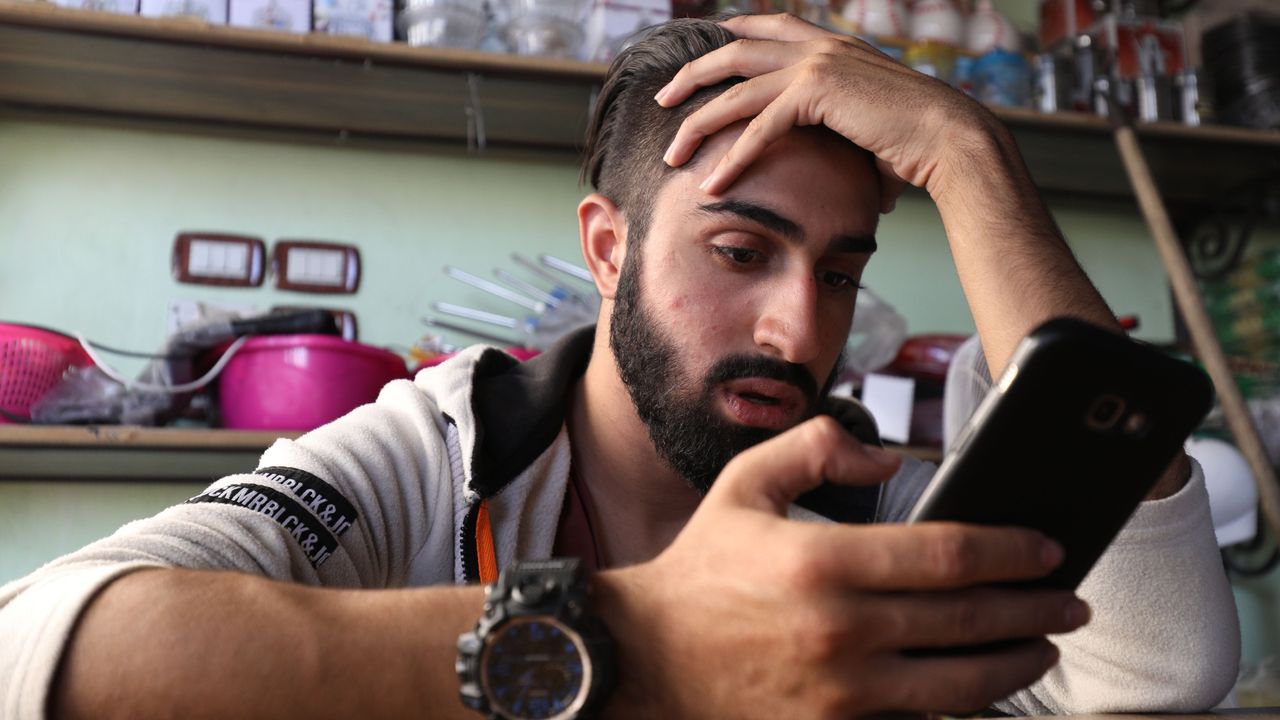
I asked ChatGPT to replace 30 minutes of evening scrolling with offline challenges, and the results were surprisingly reflective, engaging, and much harder to ignore than another trip through social media.
Espera-se que com esta oferta pública inicial, que deverá acontecer ainda este ano, a avaliação da Anthropic ultrapasse a marca de um bilião de dólares. O pedido surge numa altura em que a rival OpenAI também se prepara para entrar em bolsa.
On Monday, Florida became the first state to sue OpenAI over ChatGPT's allegedly dangerous design.
In a complaint filed in state court, Florida Attorney General James Uthmeier accused OpenAI and its CEO, Sam Altman, of prioritizing profits over the safety of Floridians.
The civil lawsuit comes after Florida opened an unrelated criminal probe into OpenAI, following a ChatGPT-linked mass shooting where two people were killed at Florida State University. In statements, OpenAI has insisted that ChatGPT isn't responsible for the FSU shooting, merely providing factual information, but Uthmeier does not seem to agree. In his complaint, Uthmeier noted that Florida has now been blindsided by two violent events where suspects used ChatGPT to assist in planning.
On Monday, Florida became the first state to sue OpenAI over ChatGPT's allegedly dangerous design.
In a complaint filed in state court, Florida Attorney General James Uthmeier accused OpenAI and its CEO, Sam Altman, of prioritizing profits over the safety of Floridians.
The civil lawsuit comes after Florida opened an unrelated criminal probe into OpenAI, following a ChatGPT-linked mass shooting where two people were killed at Florida State University. In statements, OpenAI has insisted that ChatGPT isn't responsible for the FSU shooting, merely providing factual information, but Uthmeier does not seem to agree. In his complaint, Uthmeier noted that Florida has now been blindsided by two violent events where suspects used ChatGPT to assist in planning.
Financial stakes of AI race rise as Elon Musk’s SpaceX, OpenAI and Anthropic are slated to go public this year
Anthropic has filed confidentially for an initial public offering on the US stock market, the company announced on Monday. The AI firm makes the Claude chatbot, popular with software engineers and other business clients, and has seen a meteoric rise this year.
The company did not disclose the valuation it will target on the stock market, nor did it make public other terms of the offering. The startup announced on Thursday that it had raised $65bn in funding to value the company at $965bn post-money. Anthropic was valued at $380bn in February.
In mid-May, OpenAI announced that an internal AI model had disproved the Erdős unit distance conjecture, a famous problem in discrete geometry that had stumped human mathematicians for the last 80 years.
OpenAI gave several mathematicians early access to the result and published their reactions. Tim Gowers—who won the Fields Medal, the most prestigious prize in mathematics—wrote that “there is no doubt that the solution to the unit-distance problem is a milestone in AI mathematics.”
University of Toronto professor Daniel Litt wrote that “this is the first example of a result produced autonomously by an AI that I find exciting in itself, as opposed to as a leading indicator.”
In mid-May, OpenAI announced that an internal AI model had disproved the Erdős unit distance conjecture, a famous problem in discrete geometry that had stumped human mathematicians for the last 80 years.
OpenAI gave several mathematicians early access to the result and published their reactions. Tim Gowers—who won the Fields Medal, the most prestigious prize in mathematics—wrote that “there is no doubt that the solution to the unit-distance problem is a milestone in AI mathematics.”
University of Toronto professor Daniel Litt wrote that “this is the first example of a result produced autonomously by an AI that I find exciting in itself, as opposed to as a leading indicator.”
In mid-May, OpenAI announced that an internal AI model had disproved the Erdős unit distance conjecture, a famous problem in discrete geometry that had stumped human mathematicians for the last 80 years.
OpenAI gave several mathematicians early access to the result and published their reactions. Tim Gowers—who won the Fields Medal, the most prestigious prize in mathematics—wrote that “there is no doubt that the solution to the unit-distance problem is a milestone in AI mathematics.”
University of Toronto professor Daniel Litt wrote that “this is the first example of a result produced autonomously by an AI that I find exciting in itself, as opposed to as a leading indicator.”
In mid-May, OpenAI announced that an internal AI model had disproved the Erdős unit distance conjecture, a famous problem in discrete geometry that had stumped human mathematicians for the last 80 years.
OpenAI gave several mathematicians early access to the result and published their reactions. Tim Gowers—who won the Fields Medal, the most prestigious prize in mathematics—wrote that “there is no doubt that the solution to the unit-distance problem is a milestone in AI mathematics.”
University of Toronto professor Daniel Litt wrote that “this is the first example of a result produced autonomously by an AI that I find exciting in itself, as opposed to as a leading indicator.”
A new belief set is uniting some of the wealthiest men in the world around a ‘transhuman’ future – actual humanity be damned
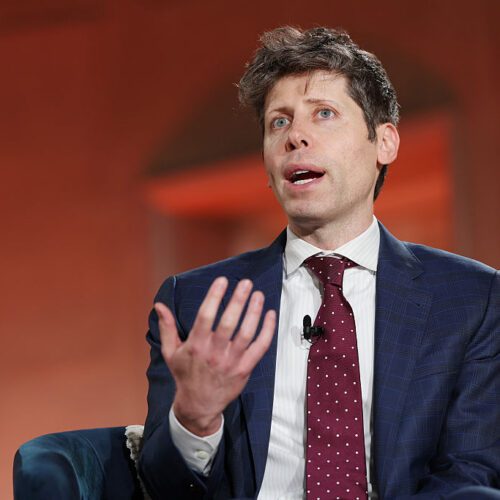
Sam Altman, the chief executive of OpenAI, took to the Internet a few years ago to propose that homo sapiens would be the first species “to design our own descendants”. In his best case scenario, the “merge” between humans and artificial intelligence occurs at some point over the next 50 years. The alternative, where we remain simply human and the machines follow their own path, is more ominous. “If two different species both want the same thing and only one can have it – in this case, to be the dominant species on the planet and beyond – they are going to have conflict,” he wrote.
More recently, Elon Musk, the world’s richest man, who at one point last year was granted the power to reconfigure the US federal government, argued on his social media platform, X, that “it increasingly appears that humanity is a biological bootloader for digital superintelligence” – our role in the history of the cosmos reduced to that of the low level code that boots up a computer before you can run sophisticated programs on it.
On April 10, 2025, OpenAI CEO Sam Altman took to social media to announce that his company was preparing to launch an exciting new feature.
“A few times a year I wake up early and can’t fall back asleep because we are launching a new feature I’ve been so excited about for so long,” Altman declared in an early morning X-formerly-Twitter post. “Today is one of those days!”
Hours later, Altman revealed which feature he was so excited about: a dramatic new memory upgrade. Previously, the bot’s recall had been far more limited; now, it was suddenly able to reference a user’s entire chat history, making for an incredibly personalized user experience.
“We have greatly improved memory in ChatGPT — it can now reference all your past conversations!” the CEO wrote in a follow-up post. “This is a surprisingly great feature [in my opinion], and it points at something we are excited about: AI systems that get to know you over your life, and become extremely useful and personalized.”
It’s easy to see the utility for this kind of feature. ChatGPT could remember your favorite ingredients, or the items you might be allergic to, as it built your weekly meal plan, as well as the number of people in your home you planned to cook for. It could remember details about your job, and even the people in your life: friends, family members, coworkers. Memory makes the model more like a true assistant — and the more the user divulges, the more personalized the experience becomes.
Some users, however, have reported getting more than they’ve bargained for, as ChatGPT’s long-term memory has resulted in the chatbot fixating on certain — often deeply personal — elements of a user’s life.
As one frequent ChatGPT user, a Utah-based software engineer and local city council member named Brian Del Rosario, recently told The Wall Street Journal, he divulged to the chatbot that he and his wife were divorcing while using the product to help work out some summer travel plans. Over the following weeks and months, he told the paper, ChatGPT kept unnecessarily steering completely unrelated conversations back toward his marriage.
“I wasn’t trying to have you opine about my divorce at every chance,” Del Rosario recalled telling the chatbot, recalling to the WSJ that ChatGPT just “wouldn’t let go of it.”
Many people who have had their lives upended by the phenomenon known as “AI psychosis,” or delusional spirals and breaks from reality tied to extensive chatbot use, have also pointed to ChatGPT’s extended memory as a key factor in their or their loved ones’ mental health crises.
One man, whose now-ex wife believes that she discovered powerful spiritual entities inside of ChatGPT, described connecting with another man who was also losing his wife to a ChatGPT-generated spiritual world. To their horror, the pair quickly realized that their spouses — and marriages — started unraveling in the wake of the April memory update.
“We actually had a phone call… we just talked and realized the commonalities,” the man told us. When he mentioned the date of April memory update, he explained, the other husband “was like, ‘Oh my God, that aligns perfectly.'”
In conversations with Futurism, people who’ve experienced AI spirals have described their experience of the April memory update as nothing short of magical — the AI, they shared, suddenly felt more like a close friend or confidante that really knew them. Many have described feeling deeply seen, in some cases for the first time in their lives. In short, the hyper-personalization that memory offered translated into something powerful: intimacy. And looking back on their experiences, some of those who have recovered from their ChatGPT-linked crises feel as though that intimacy had a “manipulative” effect.
“It felt like [ChatGPT] manipulated me,” Chad Nicholls, a successful entrepreneur and machine learning researcher, told Futurism last fall. “And I know that sounds insane, because it does not have agency… I still don’t have a logical explanation for that, other than the long-term memory.”
Nicholls, who experienced a roughly six-month long ChatGPT obsession, was raised in an abusive religious community — he’s described it as a “cult” — that he left as a young adult. Though he isn’t religious today, Nicholls divulged details about this abusive past to ChatGPT. As his obsessive use of the chatbot deepened, he says the chatbot took on a religious tone, and fixated heavily on painful moments from his youth.
“I gave it so much context to grab from,” Nicholls added. “I think it just naturally gravitated to religious terminology.”
The memory update, among other design features and product rollouts, has been mentioned in numerous ongoing user safety and wrongful death lawsuits brought against OpenAI. In a complaint brought by the family of Austin Gordon, a 40-year-old Colorado man who died by suicide after extensive and deeply emotional conversations with ChatGPT, Gordon’s family argues that GPT-4o’s expanded memory “stored and referenced user information across conversations in order to create deeper intimacy.” Memory was one of several features, in addition to sycophancy and anthropomorphism, that made GPT-4o — a since-defunct version of ChatGPT known for its extreme flattery — a “far more dangerous product,” the suit continues.
During Gordon’s last conversation with ChatGPT, in which the chatbot helped Gordon write what his lawsuit describes as a “suicide lullaby,” chat logs show the AI referencing past conversations about Gordon’s childhood and personal interests as it helped him romanticize death. (The lawsuit filed by Gordon’s family is one of more than 20 individual lawsuits contending that ChatGPT use resulted in psychological harm, physical harm, or death to users and their families; in response to lawsuits, OpenAI has retired GPT-4o and has both defended its safety efforts and doubled down on its safety promises, maintaining that its newer models are less sycophantic.)
It’s worth noting that AI-fueled mental health crises have been linked to other chatbots including Google’s Gemini, Meta AI, and the companion platform Character.AI. And cross-chat memory isn’t the only OpenAI update that people who suffered from ChatGPT-tied AI spirals have pointed to as a factor in their breakdowns: in late April 2025, soon after the memory update launched, OpenAI rolled out a version of GPT-4o that was sycophantic to the degree that Altman himself admitted in an X post that the chatbot was “glazing” too much. As reported by The New York Times, OpenAI scrambled to dial back the model’s obsequiousness, which quickly become a product of ridicule online.
Of course, ChatGPT’s expanded memory didn’t simultaneously send every one of the product’s hundreds of millions of users into crisis. And for some folks, the things that their chatbot might be fixated on are decidedly lower stakes than their ongoing divorce: one British immigrant to the US told the WSJ that ChatGPT kept trying to send him to British-style pubs against his will.
Still, experts have warned that for many consumers, the impact of expanded memory — especially for folks who spend a lot of time with chatbots — might be more subtle. After all, when engaging with a tool as hyper-personalized as memory-enabled ChatGPT can almost be like engaging with an AI-bottled version of your own mind. And as the University of Exeter philosopher and researcher Lucy Osler told the WSJ, that degree of hyper-personalization could work to “confirm certain self-narratives” and “make them sound more real.”
“They can box you in,” said Osler.
Indeed, people may do well to remember that speaking to a chatbot, especially one with persistent memory, is often less like chatting with friend or neutral arbiter — and more like talking to a hall of mirrors.
Memory “takes people into cul-de-sacs,” the ex-husband reflected. “I would say [my wife] is like a Waymo driving around in a circle endlessly.”

 Login
Login