With rivals racing to market to raise ‘eye-popping sums’, the spotlight is now on the AI sector’s one-time ‘poster child’
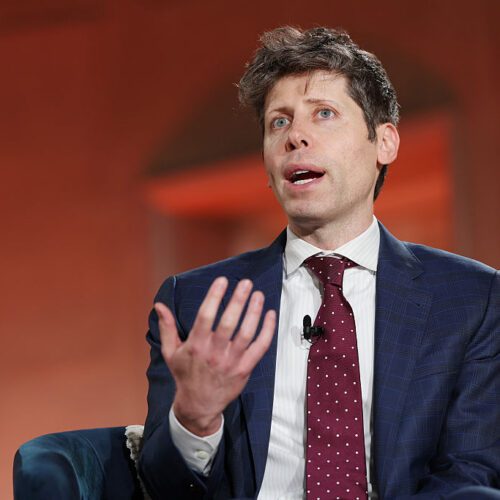
A year is a long time in AI. Just 12 months ago, Sam Altman was predicting his company OpenAI would build a super intelligence and fundamentally remake society. Now the boss of the ChatGPT developer is walking back those ideas after failing to make money from ads and erotic chatbots.
Meanwhile, rivals are storming ahead with plans to expand and go public on the stock market, in what is widely expected to be a season of record-setting initial public offerings (IPOs).
Stock market filing illustrates AI company’s meteoric rise, while California’s tech billionaires pour cash into elections
Hello, and welcome to TechScape. I’m your host, Blake Montgomery, US tech editor at the Guardian. This week in tech, we’re discussing Anthropic’s meteoric rise, both theological and financial, and California’s unprecedented infusion of political cash from Silicon Valley.
Os sistemas de IA agêntica já executam actos jurídicos autónomos em nome dos utilizadores. Os tribunais ainda não decidiram quem responde quando correm mal, avisa Tony de Almeida da Costa Branco.
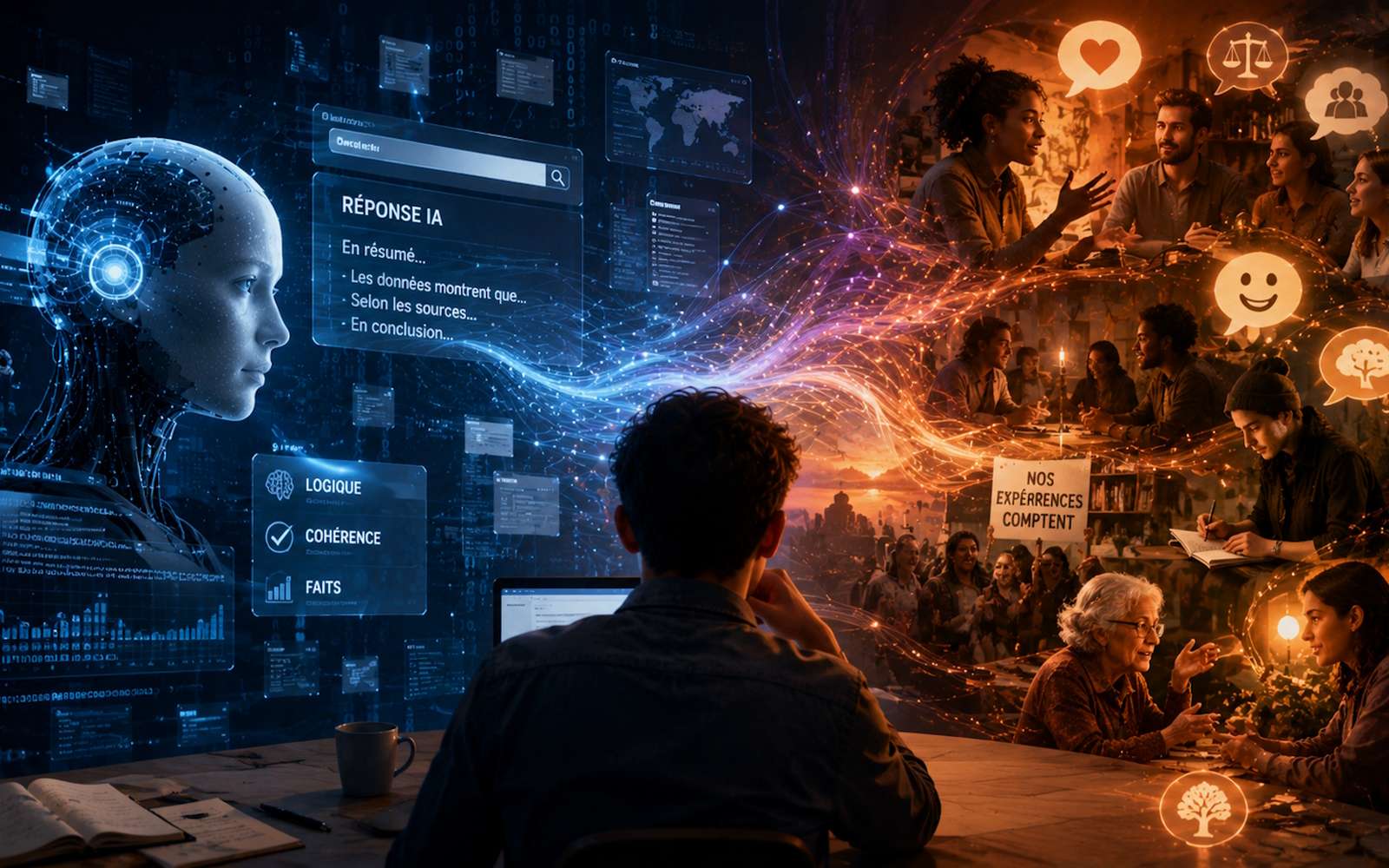
Le Web classique est-il en train de se déshumaniser à cause de l’emprise des IA ? Des chercheurs américains ont étudié cette question et leurs conclusions sont plutôt inquiétantes.
Dreams can seem to occur at random, from everyday scenarios to unpredictable, surreal experiences. Now, a new study shows that our personal traits as well as real-life events and experiences actually shape what we dream about, creating patterns in our subconscious.
The study, published in Communications Psychology, analyzed thousands of dream and waking experience reports collected over four years. The researchers used natural languageprocessing tools to quantify the structure of dreams. They found that personal traits like how often someone daydreams, their attitudes about dreams, and their sleep quality all influence dream content. Major shared life events, such as the COVID-19 pandemic, also impacted what people dreamed about.
“Our findings show that dreams are not just a reflection of past experiences, but a dynamic process shaped by who we are and what we live through,” said Valentina Elce, researcher at the IMT School for Advanced Studies Lucca and lead author of the study.
Four Years of Dream Reports
The main dataset included 207 adults aged 18 to 70 who kept a dream diary for two weeks. Each morning, they wrote down everything they remembered from the night’s sleep. Once a day, at a random time, they also recorded what they had been thinking about in the previous 15 minutes. This created a set of waking experience reports to compare with their dream reports.
In addition to the daily records, the researchers collected detailed information about each participant’s sleep habits, cognitive skills, personality, and psychological traits. By the end, they had gathered 1,687 dream reports and 2,843 waking reports from the main group, plus 351 dream reports from 80 people during the first COVID-19 lockdown in Italy in spring 2020.
Dreams Reorganize Reality
When researchers compared participants’ reported dream experiences with situations they reported experiencing while awake, they noticed that dreams don’t simply replay scenarios from our daily lives. Instead, dreams seem to mix familiar places like workplaces, hospitals, and schools into new scenes that blend memories with imagination. Compared to reported waking experiences, the reported dreams tended to focus more on visual details, feature more characters, and make less logical sense. They were also less self-focused and less driven by conscious thinking.
These dream transformations weren’t the same for everyone. Participants who spent more time daydreaming during the day tended to have dreams that jumped rapidly from one scene to another. Those who placed more importance on dreams described them as more vivid and immersive. Sleep quality also played a role: participants who slept poorly showed different patterns in dream content when compared with those who slept better.
Pandemic Influenced Dreams
The lockdown dataset gave researchers a unique opportunity to see how a major external stressor, such as a pandemic, could affect dreams across an entire population.
Dreams recorded during the strict lockdown period were more emotionally intense and mentioned restrictions and limitations more often than dreams from later years. As people adjusted to the new situation, these differences faded. The results suggest that dreams reflect both our personal psychology and the social conditions we share.
AI as a Tool for Studying Consciousness
The team used three large language models, LLaMA 3, ChatGPT-4, and ChatGPT-4 Turbo, to rate dream reports on 16 different features, such as mood, excitement, strangeness, social content, spatial details, and freedom of movement. They combined the scores from the three models and checked them against human ratings. The results showed that these language processing tools could analyze the structure of dream reports as reliably as trained human evaluators. This finding could have uses that extend far beyond this study.
“By combining large-scale data with computational methods, we were able to uncover patterns in dream content that were previously difficult to detect,” Elce said. “This opens new possibilities for studying consciousness, memory, and mental health in a scalable and reproducible way.”
Austin Burgess is a writer and researcher with a background in sales, marketing, and data analytics. He holds an MBA, a Bachelor of Science in Business Administration, and a data analytics certification. His work focuses on breaking scientific developments, with an emphasis on emerging biology, cognitive neuroscience, and archaeological discoveries.
I asked ChatGPT to replace 30 minutes of evening scrolling with offline challenges, and the results were surprisingly reflective, engaging, and much harder to ignore than another trip through social media.
On Monday, Florida became the first state to sue OpenAI over ChatGPT's allegedly dangerous design.
In a complaint filed in state court, Florida Attorney General James Uthmeier accused OpenAI and its CEO, Sam Altman, of prioritizing profits over the safety of Floridians.
The civil lawsuit comes after Florida opened an unrelated criminal probe into OpenAI, following a ChatGPT-linked mass shooting where two people were killed at Florida State University. In statements, OpenAI has insisted that ChatGPT isn't responsible for the FSU shooting, merely providing factual information, but Uthmeier does not seem to agree. In his complaint, Uthmeier noted that Florida has now been blindsided by two violent events where suspects used ChatGPT to assist in planning.
On Monday, Florida became the first state to sue OpenAI over ChatGPT's allegedly dangerous design.
In a complaint filed in state court, Florida Attorney General James Uthmeier accused OpenAI and its CEO, Sam Altman, of prioritizing profits over the safety of Floridians.
The civil lawsuit comes after Florida opened an unrelated criminal probe into OpenAI, following a ChatGPT-linked mass shooting where two people were killed at Florida State University. In statements, OpenAI has insisted that ChatGPT isn't responsible for the FSU shooting, merely providing factual information, but Uthmeier does not seem to agree. In his complaint, Uthmeier noted that Florida has now been blindsided by two violent events where suspects used ChatGPT to assist in planning.
The state became the first to sue the ChatGPT maker over claims that its technology posed a risk to children and that the company had failed to warn the public of dangers.
Workers who learn to use AI effectively may gain a significant advantage as workplaces become increasingly AI-focused, according to new research. Generative AI is rapidly changing the way people work, raising concerns about job security and whether machines could eventually replace human employees. However, new research from the University of Vaasa in Finland suggests that [...]
 Login
Login