Researchers from the University of Cambridge have created a new DNA sequencing method called Chem-map, which can detect where and how small molecule drugs interact with the targeted genome. The method enables researchers to conduct in situ mapping of small molecule-genome interactions with unprecedented precision. Chem-map was used in the study to determine the direct […]
Dentists, as well as periodontists, use several handheld oral surgical instruments. One such commonly used instrument includes dental chisels. This instrument has a unique design for splitting the tooth when it has any fracture. Likewise, the instrument consists of a beveled cutting edge on either side to assist the dentist while doing a complicated surgery. […]
A biotech startup called Bexorg is doing something that sounds like it was ripped straight from the pages of a cyberpunk novel — or from the script of “RoboCop,” for that matter.
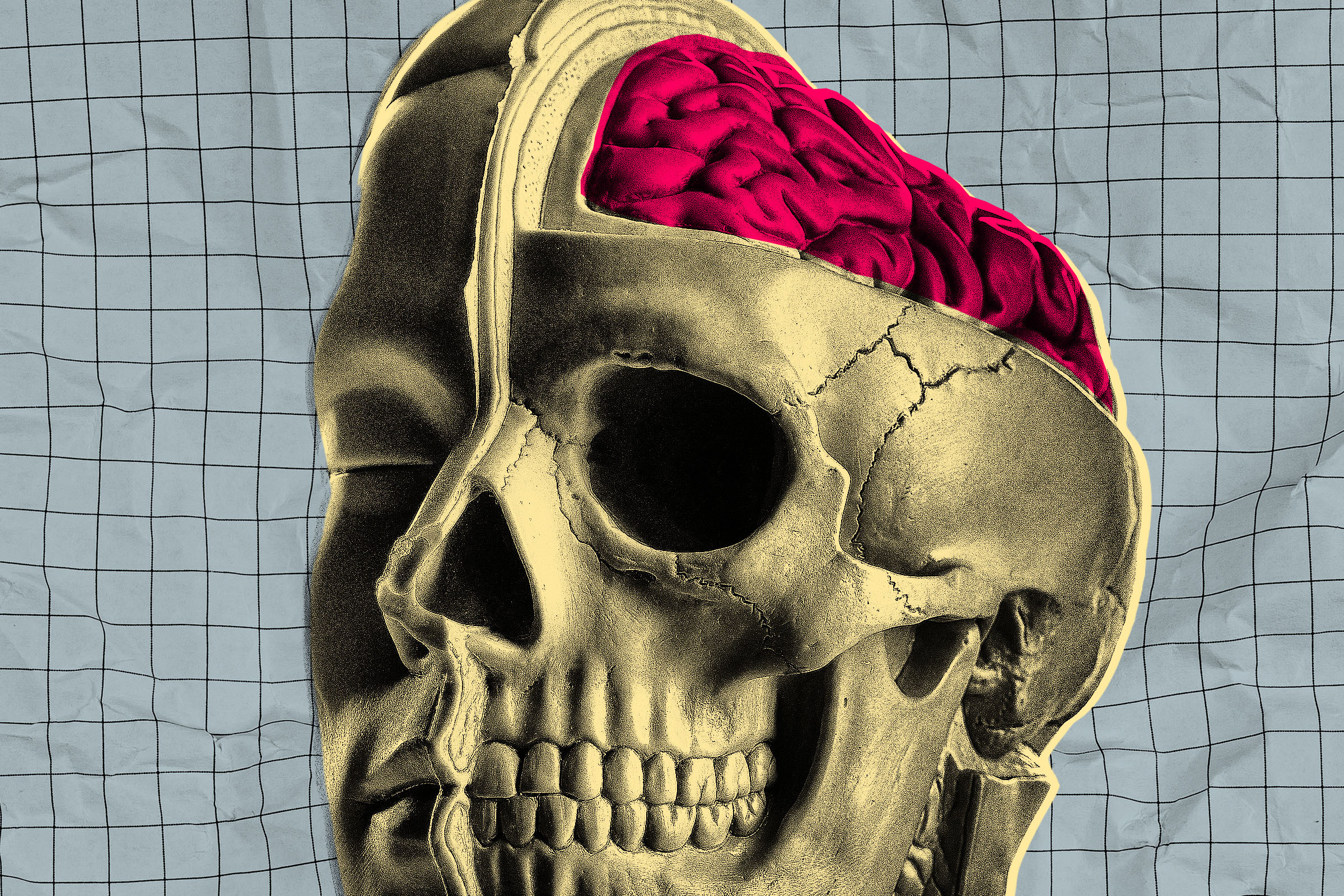
The company is extracting human brains just hours after their owners died and then hooking them up to specialized life support machines, Science reports. While the masses of pink mush no longer host electrical activity, most of their key functions remain intact, allowing scientists to test experimental drugs, such as potential treatments for Alzheimer’s disease, like never before.
You’d hope that the disembodied cerebrums are most assuredly dead. But according to the reporting, an extracted brain hooked up to one of Bexorg’s proprietary life support machines, BrainEX, “hovers between life and death.” There’s no spark of consciousness, and yet the brains are kept running on an artificial lung, kidney oxygenate, blood, and other fluids.
Perhaps you can put this ambiguity down to the startup being deliberately enigmatic to provoke attention. Or maybe it’s a reflection of how the distinction between life and death is uncomfortably blurry.
But you can put those doubts out of your very-much embodied mind, assures Brendan Parent, one of Bexorg’s six ethicists. The extracted brains are almost devoid of the coordinated neural firing necessary for minimal consciousness, he told Science. To prevent the eerie implausibility that some the brains produce electrical activity, the brains are also dosed with anesthetic propofol. Of course, that such a measure has to be taken in the first place may actually be less assuring and more unsettling.
Ethics aside — not a statement that should be made lightly — the scientific possibilities that these extracted brains afford may well hold promise. Bexorg CEO Zvonimir Vrselja said that the brains come with decades of environmental exposures, histories of drug treatments, and other factors that make them a more realistic testing medium for drugs. “You get cells that have been there for 60 to 80 years,” Vrselja told Science.
Bruna Bellaver, who studies neurodegeneration at the University of Pittsburgh, was also effusive.
“It’s a huge step up from mouse models,” she told Science.
Today, its human brains aren’t kept running in perpetuity. After 24 hours, they’re sliced into hundreds of pieces so they can be analyzed by scientists. The company plans to use a robotic arm to slice up to 1,600 brains per year.
Though Bexorg hasn’t itself published any papers on its work with human brains, other companies have already been eagerly experimenting with them. The pharmaceutical firm Biohaven has used 130 of its brains to test drugs, according to Science, including a potential treatment for Parkinson’s disease, and plans to launch a clinical trial for another drug using data it gathered from those experiments.
Therapy is predicated on trust. You can’t be honest and vulnerable, and share how you’re really feeling, if you don’t believe in the embodied-concerned-frown sitting in the armchair across from you.
So you can understand why one woman, 31-year-old Molly Quinn, was taken aback when her trusted therapist suddenly whipped out an AI model to start recording their private conversations, NPR reports.
“She wasn’t taking notes like she usually did,” Quinn recalled realizing halfway through one session. “The iPad was just propped up.”
Where were her words being processed and stored? Will they one day become training data? It’s not something you have to ask yourself when your therapist jots stuff down on a clipboard. But those questions were now racing through Quinn’s head, leaving her uneasy.
“The more I thought about it, the more I just started getting more and more sick to my stomach,” she told NPR. “This person who I’m supposed to be able to trust with some very private and very intense emotions had just completely disregarded something I said I was not comfortable with. I felt completely violated.”
Though her therapist offered to stop using the AI tool, Quinn cut her off and found another one.
“The trust was gone,” she told NPR.
Like doctors, therapists across the country are adopting AI tools for notetaking and generating transcripts. AI companies offering these services frame it as a way of cutting down on the drudgery of paperwork and other administrative tasks, freeing up more time to focus on patients — a permutation of a common AI industry refrain: let us do the tedious stuff for you.
The reliability of AI tools remains fairly dodgy, though, and even setting aside questions of hallucinations creeping into clinical notes — which is something we’re already seeing happen — it’s not clear whether patients are even comfortable with the tech yet. In a YouGov survey cited by NPR, only 11 percent of Americans said they would be open to using AI in mental health care. An even slimmer eight percent said they would trust AI being used this way, while 40 percent said they don’t trust the technology at all.
“Even the presence of AI changes the therapeutic experience,” Marisa Cohen, a couples and sex therapist in New York, told NPR. “Clients know or feel like something else is listening to them. That awareness can subtly alter their disclosure.”
“When you introduce something that’s being stored electronically, it raises additional questions about trust and safety,” Cohen added. “It’s essentially a third party.”
Tal Salman, the CEO a popular AI scribe tool for therapists called Berries, insists that conversation recordings are deleted immediately and that transcripts are stored on HIPAA compliant servers in the US. Even if this is true, if AI companies’ tools are to ever have a place in private mental health settings, they need the trust of patients — and that’s something the AI industry clearly hasn’t earned yet. Quinn fears that AI-recorded conversations could one day be exposed by hackers.
“We’re going to see breaches,” she told NPR. “Maybe not tomorrow, maybe not next week. But in a few years? I think we’re going to see them. And I don’t want my therapy session to be part of that.”
Dust storms are becoming increasingly common sights throughout much of the US, fueled by hot and arid conditions brought about by global warming. While there are the ever-present dusters in states like Arizona, those living in regions like the Midwest and Pacific Northwest are now learning what it means to be swallowed by these great walls of sand and dirt.
These dust storms are dangerous enough on their own, leading to spikes in emergency room visits and disrupting agricultural economies. But according to writing climate scientist Bill McGuire in the BBC‘s Science Focus, dust storms are now becoming vectors for massive clouds of fungal spores, an event he calls “fungal storms.”
Far-out as that may sound, McGuire writes that fungus and bacteria traveling along with dust particles has been strongly correlated with outbreaks of bacterial meningitis across the Sahel region of Africa. In the continental US, they’re becoming increasingly tied to outbreaks of Valley Fever, a lung infection caused by the spores from the fungus Coccidioides.
One 2017 research paper published in Geophysical Research Letters noted that incidents of Valley Fever ballooned by over 800 percent from 2000 to 2011. In two geographical areas with high concentrations of the infection, dust storms where “found to better correlated with the disease than any other known controlling factor.”
Though some have argued the term “fungal storm” is more media hyperbole than a well-defined scientific phenomenon, further research has noted “abundant evidence” pointing to dust storms as a vector for pathogens like Valley Fever.
Whatever you call it, it’s clear the dangers of dust storms are growing right before our eyes.
As secretary general of the World Meteorological Organization Celeste Saulo told McGuire, “sand and dust storms do not just mean dirty windows and hazy skies. They harm the health and quality of life of millions of people and cost many millions of dollars through disruption to air and ground transport, on agriculture and on solar energy production.”
Parents say their kids are going ballistic when they take their iPads away from them, leaving them unsure of what normal behavior might be — and whether there’s something sinister going on with their child’s connection to the devices.
Rachel, a mother of two, tried limiting her son Jonah’s screen time by warning him that he had put down his iPad to leave for a birthday party at 11 AM. Despite the repeated warnings the day before and several reminders before the hour mark, when it came time to leave, Jonah had a meltdown.
“He just left his body,” the mother told The Cut of her son, who hurled the electronics and started screaming: “You said I had until 11! It’s not 11 yet! You’re always doing this!”
Jonah followed her around the house, distraught, until finally collapsing on the kitchen floor and refusing to move.
“I remember standing there thinking, I don’t know this person,” she recalled. “I genuinely did not recognize him.”
Thirty minutes later, he tied his shoes, got in the car, and acted like nothing had happened.
“That’s the part that really messes with you,” Rachel says. “How fast they come back.”
Think that’s bad? Hear what Nora had told The Cut about her 13-year-old son when she asked to check his phone settings: he accused Nora of ruining his life, before dropping a grenade in conversation.
“You make me want to kill myself,” he lashed out.
And while getting dinner last month at an Italian restaurant, Rachel told the outlet that she allowed her daughter Maya to watch YouTube Kids on the phone. When it was time too leave, she took the phone back. Maya went rigid, screamed, and hid under the table.
What’s going on here? Are these the kind of extreme tantrums that kids are prone to throw no matter the toy they’re being deprived of? Is everyone a bad parent, or at least not handling this the right way? Or are apps and the devices they run on uniquely addictive, somehow impacting a child’s development in novel and frightening ways?
The research into this area is still emerging, as are the generation of children raised on YouTube Shorts, Roblox, and other mobile games. That’s to say that we’re still a long way from grasping the long-term cognitive effects of being a so-called “iPad kid.” And the latest Silicon Valley horror, AI chatbots, are an even bigger question mark.
What evidence we do have, however, is alarming. The Cut cites a recent University of Washington study that found that 22 percent of parents’ attempts to cut down screen time sparked a negative reaction from kids under five. And in another study from Brigham Young University, 93 percent of parents reported that their toddlers would sometimes whine or throw tantrums when “transitioning away from media.”
Experts are mixed on whether the devices are provoking some newly negative response.
“We frequently hear from parents who say, ‘When I ask my child to get off technology, they get very mad at me.’ That is true of almost anything that children find reinforcing,” Dave Anderson, a senior psychologist at the Child Mind Institute in New York City, told The Cut.
Anderson was skeptical of using the word addiction to describe what’s fueling iPad rages, noting that withdrawal symptoms of actual addiction don’t disappear within minutes. Kid’s minds just aren’t developed enough to handle having their favorite toy taken away from them, she said.
Stanford psychiatrist Anna Lembke, however, hasn’t hesitated to invoke the specter of addiction, calling screen devices a “digital drug” in an interview with Oprah. And Sarah Coyne, a professor of human development at Brigham Young, seemed to consider equating post-iPad rages to tantrums related to other pleasures outrageous.
“I’m not sure how many children are struggling to function because their parents tell them to be done with their ice cream,” she told The Cut, adding that she’s seen addiction-like behavior in kids using devices as young as two years old.
If describing these patterns as signs of outright addictive behavior goes too far, there’s certainly there is a lot of evidence painting screen time’s cognitive effects. One study found that the more babies and toddlers looked at screens each day, the more likely they were to miss key development goals, including fine motor skills and social skills.
The effects are no less worrying in older children. A study that followed tweens over four years found that increased screen time was a reliable predictor of ADHD diagnoses. Beyond iPad rages and worrying cognitive trends, there are other behaviors that illustrate the impact of device usage on children. In a survey of UK preschool school teachers, the teachers on average estimated that a third of their pupils didn’t know how to correctly use books — as in they literally couldn’t figure out that they had to turn the page. Instead, some reportedly tried to swipe or tap them.
It’s no secret that many of the world’s top CEOs are obsessed with AI. By pursuing lofty goals of complete AI automation, these executives have created one of the largest financial bubbles in recent memory while transforming the job market into a barren wasteland, with little to show for their efforts so far.
As the top tech companies have yet to find a way to turn AI into a profitable venture, those decisions to go all-in on AI are looking increasingly delusional. According to Aaron Levie, CEO and founder of the massive cloud computing company Box, there’s a simple explanation for it: many of his colleagues are suffering from AI psychosis.
“CEOs are uniquely prone to AI psychosis because they’re sufficiently distant from the last mile of work that still has to happen to generate most value with AI,” Levie wrote on X-formerly-Twitter. Translation: AI-happy CEOs are out of touch with the rank-and-file workers tasked with making their AI ambitions come to life.
As an example, Levie offers cases in which corporate executives say “look I made this awesome product prototype” with an AI chatbot. “Yes but you didn’t have to review the code before it went into production and fix a bunch of issues,” he retorts.
Whether “AI psychosis” is the best metaphor for this concept is up for debate. Arguably the most common definition of AI psychosis is that it’s a phenomenon where extreme interactions with AI triggers or amplifies delusions or paranoia, sometimes already existing and sometimes seemingly newly cooked up with the AI. The symptoms can be extreme, with AI chatbots convincing victims that they’re communing with God-like entities, or have singlehandedly uncovered a grave threat to humankind.
There are indeed some executives who seem to fit the bill. Last year, Futurism reported that colleagues of Geoff Lewis, managing partner of the multi-billion dollar investment firm Bedrock, were concerned that he was suffering from a break with reality after spending too much time with ChatGPT (ironically, Bedrock was an early investor in OpenAI.) In that case, Lewis had claimed to be mapping an incomprehensible “non-governmental system” that was designed to disrupt his life.
That said, there’s a major gap between an exec believing they’re targeted by a vast conspiratorial network and an exec buying into AI hype. The phenomenon Levie is identifying might better fall under “organizational blindness,” a known phenomenon where leaders of a company find themselves disconnected from the reality of work on the ground. Coupled with a ravenous hunger for profit, this kind of tunnel vision seems to be exactly what we’re seeing in companies around theglobe.
In today’s world, many executives and managers operate at an abstract level, working via spreadsheets, emails and Zoom meetings. This is different from concrete labor, meaning the specific, friction-heavy tasks that workers perform, like writing code or wiring server racks. When a board-room full of executives loses sight of this tangible labor — by failing to consider the kinds of tasks AI chatbots are actually good at, for example — it can certainly create a break from material reality, though one driven by social factors rather than psychological.
In other words, there are two possibilities: either the world’s CEOs are losing their minds, or they’re just succumbing to the latest manifestation of capitalism run amok. Occam’s razor probably suggests the latter.
How much should we sleep each night? It’s the age-old question that makes almost nobody happy, since most of us know at the back of our chronically shut-eye deprived minds that we don’t get enough of it.
But on the flip-side, new research suggests there’s such a thing as excessive sleep, too. In a study published in the journal Nature, scientists narrowed down a “sweet spot” of between 6.4 and 7.8 hours of sleep per night. Sleep durations that fall too much on either side of that, the study found, were associated with accelerated aging.
This cuts against the traditional wisdom that everyone should get around eight hours of sleep per night, and it also notably contrasts with some studies that found that less than seven hours of sleep per night is associated with a higher risk of negative health outcomes like high blood pressure and heart disease.
“Too little sleep is bad and too much sleep is bad,” Mark Lachs, co-chief of the Division of Geriatrics and Palliative Medicine at Weill Cornell Medicine and New York-Presbyterian Hospital, who wasn’t involved in the study, told the Washington Post. “It is a Goldilocks kind of phenomenon.”
The optimal amount of sleep is highly dependent on the individual, with some needing as few as six hours, and others as much as nine. A rare few — less than one percent of the population — thrive off of just four hours of sleep per night with no health consequences; scientists are still trying to understand why, with current research focusing on a mutation in a gene that modulates the production of orexin, a hormone that regulates sleep. (Whatever the cause, we’re envious.)
In this latest work, the researchers analyzed biomedical data on 500,000 volunteers collected from another long-term study, the UK Biobank, with the goal of developing a biological aging clock for the body’s organs. They examined data including self-reported sleep durations, MRI images of organs, and blood plasma and metabolomics data.
“The hypothesis is that different organs, even within the same person, age at different rates,” lead author Junhao Wen, an assistant professor of radiology at Columbia University, told WaPo.
Their analysis found a U-shaped pattern between sleep and biological age gaps, with smaller deviations from the sweet spot associated with less aging, and larger deviations with more.
Both sides of the U were intriguing. Less than six hours of sleep was associated with increased risk of disease and all-cause mortality, which is lower than the typical seven hours of sleep that other studies have set as the minimum. And on the other side, these negative effects were also associated with more than eight hours of sleep.
There are limitations to the study. The UK Biobank data set skews mostly toward people of White European ancestry. And the researchers say there’s more of a direct link with the effect of short sleep, because they can’t rule out that a worse biological aging clock, or essentially poorer health, could be partially causing longer sleep instead of vice versa, as when someone who’s sick or depressed may need to sleep longer than someone who’s healthy.
Chances are that you need to get a little more sleep, but, according to these findings, probably not as much as you think.
“I would treat this as guidance,” Wen told WaPo. “The key point is consistent sleep time, around 6 to 8 hours per day. We know that’s going to do good for your overall health.”
For years now, organizers of a controversial sporting event called the Enhanced Games have been promising to push the limits of human athleticism by allowing participants to use whatever performance enhancing drugs they want.
The event, backed by Silicon Valley billionaire Peter Thiel and fellow billionaire biohacker Christian Angermayer, was meant to prove a highly contentious point: that regimens of stimulants, growth hormones, and peptides — many of which can be bought directly through the event’s website, naturally — can unlock previously unattainable levels of human performance and beat world records in the process.
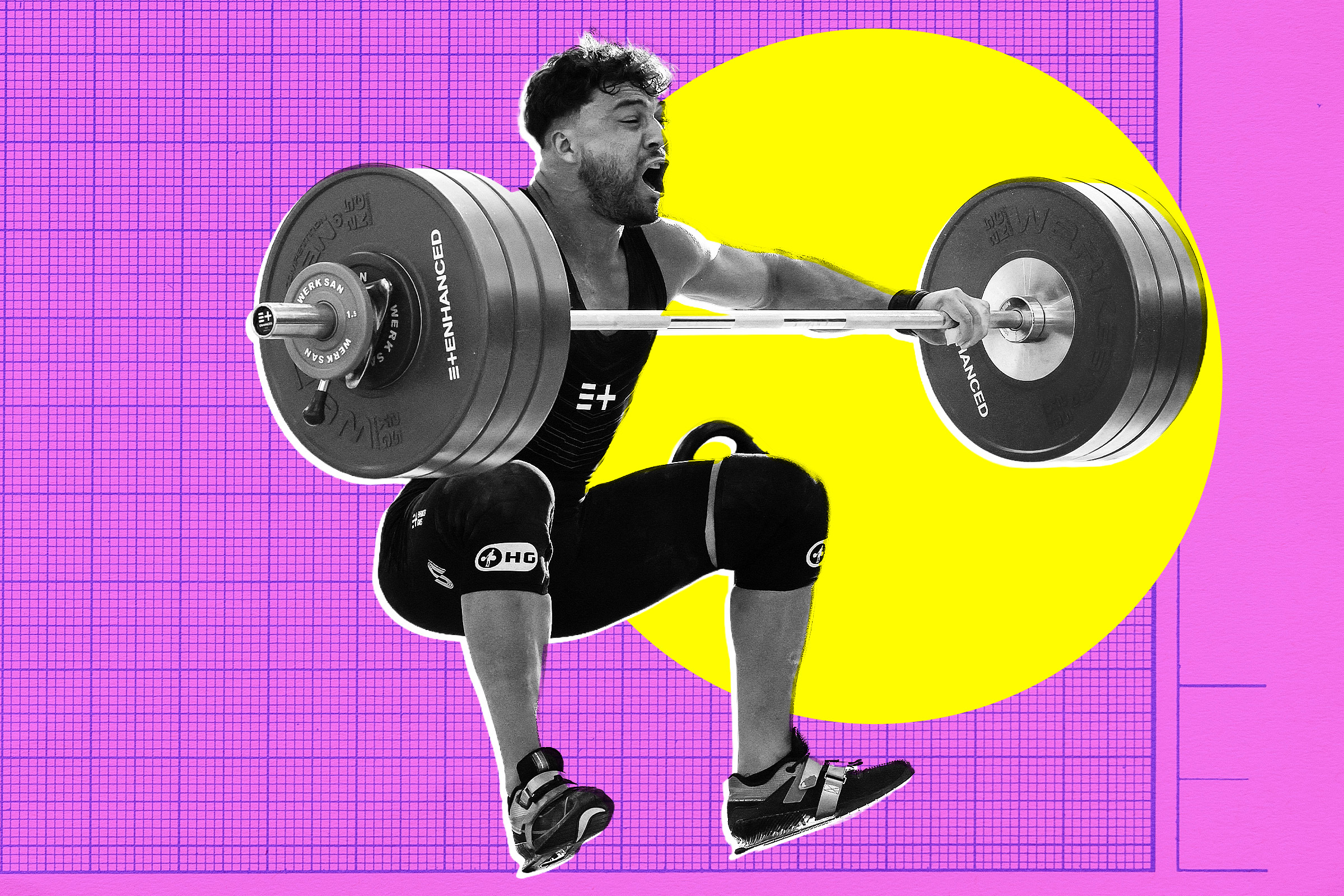
Unfortunately for them, the spectacle didn’t go according to plan. The event, which took place over the weekend, saw dozens of athletes go head to head in a number of Olympic disciplines with the hope of proving that synthetically enhancing their bodies would allow them to swim and sprint faster, not to mention lift heavier weights.
But instead, as The Guardian reports, three of the event’s winners weren’t actually taking any banned substances at all — a hilarious development that put a major dent into the organizers’ boisterous marketing.
However, there was one widely-disputed claim of a world record, which won’t be recognized by international sporting bodies. Greek athlete Kristian Gkolomeev beat Australian swimmer Cameron McEvoy’s 50 meter freestyle record by a mere 0.07 seconds, covering the distance in just 20.81 seconds. And even that claim is a bit muddy: while Gkolomeev was using several banned substances, he was also relying on a special swimming suit that was banned in professional sports over a decade ago.
Organizers were seemingly desperate to run a victory lap in their efforts to paint the event as the “Olympics of the future.”
“We have arrived in mainstream culture,” said Enhanced Games CEO Maximilian Martin in a statement. “We are here to stay. We have changed the world tonight.”
“With the power of enhancements we can prove we are the best we can ever think of and you are living proof of that,” he added while addressing an audience of influencers and biotech investors.
Other athletes were far less impressed. McEvoy, who broke the 50 meter freestyle swimming world record in March, shot back following Gkolomeev’s performance.
“Seriously?! That’s all you got!” a meme he posted to Instagram following the event reads.
Meanwhile, Icelandic strongman Thor Bjornsson, of “Game of Thrones” fame, failed to beat his own deadlifting record of 1124 pounds, further putting a damper on the event.
In short, the Enhanced Games had embarrassingly little to show in terms of pushing the envelope with the use of potentially dangerous and highly controversial performance enhancing drugs. If anything, the event appears to have had the opposite of the intended effect.
“The whole pitch was that drugs would shatter the limits of clean sport,” one user tweeted. “Instead they proved the gap between juiced and clean is now seven hundredths of a second — in a suit banned 17 years ago.”
“The only thing they actually proved was how good the clean athletes already are,” the user added.
Longtime Cybertruck watchers might remember a peculiar day back before the brutalist pickup was even released, when Tesla CEO Elon Musk randomly tweeted that the vehicle would function as a rudimentary flotation device.
“It will even float for a while,” he wrote at the time.
It wasn’t a one-off claim. Musk later boasted that the vehicle would be able to “traverse at least 100m [330 feet] of water as a boat.”
“Mostly just need to upgrade cabin door seals,” he claimed, writing at another point that the “Cybertruck will be waterproof enough to serve briefly as a boat, so it can cross rivers, lakes and even seas that aren’t too choppy.”
Unsurprisingly, all Musk’s bluster about the truck serving as a makeshift schooner turned out to be flimflam. In fact, it quickly emerged that just getting wet in a car wash could brick the thing.
To muddy the waters further, the company ended up adding what it calls “Wade Mode” to the vehicles, which sets the truck’s ride height to the highest level, ostensibly so it can ford creeks and streams.
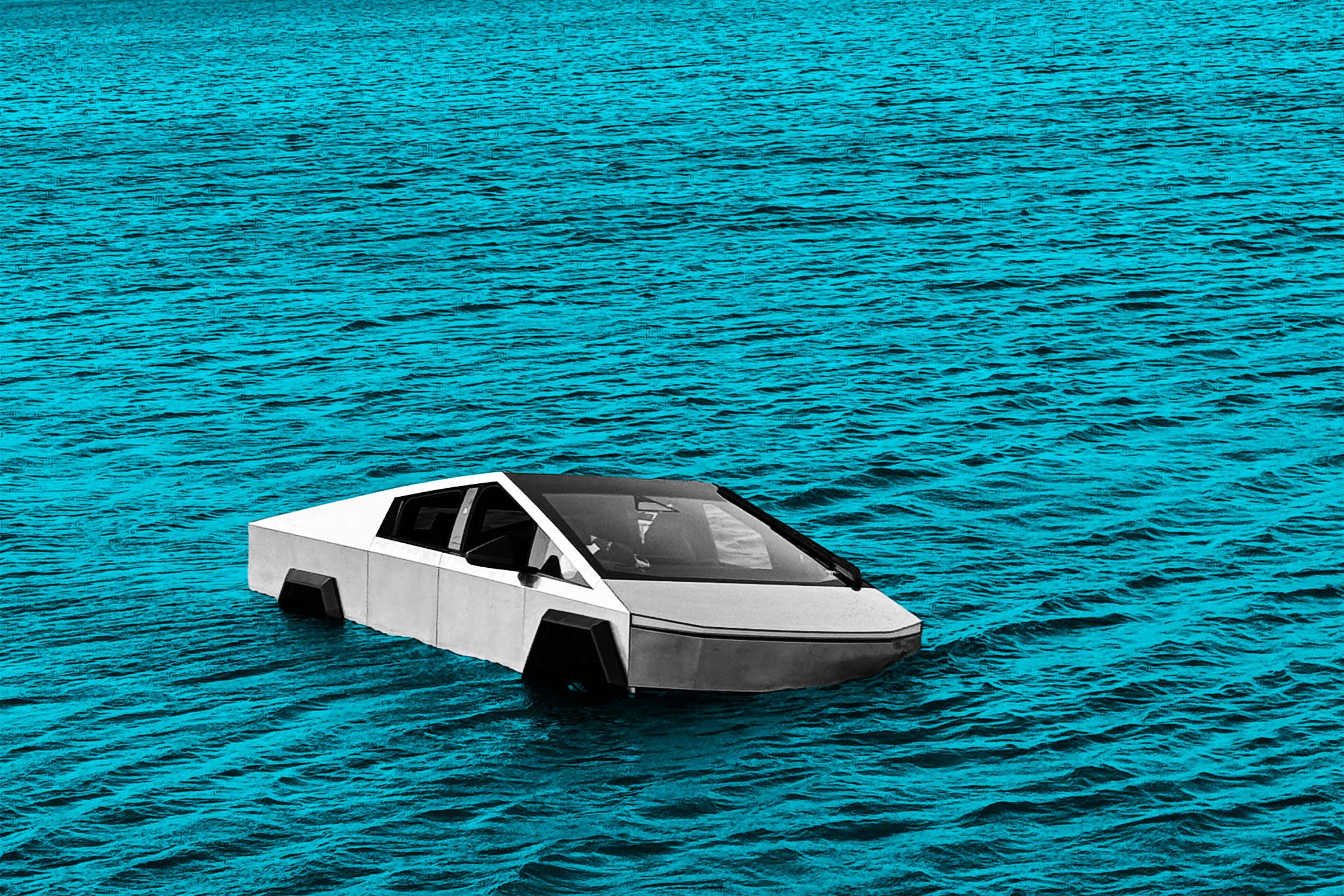
All that mixed messaging clearly got jumbled for a Texas man, though, who activated Wade Mode and drove his Cybertruck into a lake. Unsurprisingly, things didn’t go well for him.
“Yesterday, [Grapevine Police Department] and [Grapevine Fire Department] were dispatched to Grapevine Lake, where a Tesla Cybertruck was stranded in the water,” police in Grapevine, Texas, wrote on X-formerly-Twitter. “The driver drove into the lake to use the ‘Wade Mode’ feature when the vehicle became disabled.”
Not only is the man’s vehicle swamped — as the cops showed in an amazing attached photo — but he’s in legal trouble as well.
“The passengers abandoned the vehicle and the driver was arrested,” they wrote.
Andes hantavirus causes deadly lung failure, but its method of attack differs from other respiratory illnesses. The details might inform future treatments.
PHOENIX, Ariz. — Nervous? One day soon, relief might be just a chew away.
For years, research has been showing that chemicals found in passionflower plants can help fight anxiety. Two teens have now created a chewing gum that can release those chemicals.
Zackary Nizker (left) and Sara Hoti (right), both 16, developed a medicinal chewing gum. It aims to help people struggling with anxiety. K.G. Carpenter
“Gum is very popular among high schoolers,” says Zackary Nizker, 16. This junior at McIntosh High School in Peachtree City, Ga., hopes this habit will make gum an easy way for teens to deal with anxiety. And there are many who face this. “In the U.S.,” Zackary says, “a third of all adolescents and young adults suffer from a form of anxiety.”
But teens aren’t the only ones who could use some relief. Zackary’s grandmother struggles with nervousness, which he says “got really severe last year.” The drugs she got prescribed help, he says, though their side effects can be “very severe.” In his grandma’s case, “she could hardly walk or stand. It was a very scary situation.”
Flavonoids are antioxidant chemicals made by many plants. The plants use them to fight tissue damage from oxidation. Many herbal remedies contain these compounds, too, notes Sara Hoti, Zackary’s classmate. Chamomile, used in some teas, is one flavonoid-loaded herb. But for their study, she and Zackary used an extract of a plant that grows wild in their hometown: passionflower (Passiflora incarnata).
Their work earned these teens a spot as finalists here at the 2026 Regeneron International Science & Engineering Fair, or ISEF. It’s a program created and run by Society for Science (which also publishes this magazine). As fourth place winners in the Translational Medical Science division, Sara and Zackary took home $600. They were among 1,725 students — from 65 nations or territories — competing at the 76th annual ISEF. Participants this year shared nearly $7 million in prizes.
Flower-powered relief
“Chewing gum, by itself, is already known to reduce anxiety,” says Zackary. But a host of studies going back decades shows that passionflower flavonoids reduce anxiety. They do this, he explains, by increasing brain levels of a signaling compound known as GABA. (That’s short for gamma-aminobutyric acid.) “It slows down neuron firing in your brain,” Zackary says. That slowdown, he says, seems to calm an anxious brain.
By combining herbal remedies with rhythmic chewing, he says, their new gum could become “a more effective treatment.” But to test whether chewing gum would release any flavonoids in it, they needed to run some tests.
To start, they cooked up some bubble gum. It included a gum base, powdered sugar, various other sweeteners — and, of course, passionflower extract.
Chew on this
The finished chewing gum was molded into a strip, then cut and wrapped in parchment paper and foil. The gum contains all ingredients — including melted gum base, softeners, sweeteners and flavonoids. After drying, sugar was coated on the outside of the gum.
S. Hoti and Z. Nizker
The teens had hoped to make that extract. After all, Sara says, in her hometown, passionflowers are everywhere. But the pair did their experiment during the winter, when the flowers were “all gone — out of season.” So they ended up having to buy the extract.
Afterward, they tested their prototype gum — and struggled, Zackary recalls. Why? “We’re not allowed to just give people some random gum we made and say, ‘Here, chew this, let’s see if it works.’” Instead, they had to do tests “outside of the body.”
Watch the teens, fourth-place winners in their division, describe the mechanism by which their new chewing gum formulation should help people who are feeling nervous or anxious.
Double bubble testing
The pair conducted two tests. The first examined whether each quantity of gum contained the same dose of passionflower extract. So they analyzed slices of the gum under a microscope. Using computer software, they could calculate the share of the flavonoid particles in view. Here, Sara says, “you want your value to be below 15. We actually got a value of 8.4, which was perfect.” (In these tests, Zackary adds, the “values” do not come with a unit.)
A second test, called the Shinoda test, measured how well flavonoids in their gum resist breakdown. If they broke down, the likelihood they’d prove helpful against anxiety could fall apart, too. So the young scientists exposed their gum to various conditions and then used this color-changing test to check whether the flavonoids had held up.
This test is usually done with liquids. Their gum was a solid. So learning how to Shinoda test their gum proved a “really long process,” Sara says.
To mimic the work of saliva, they cut their gum into pieces and soaked them in alcohol for three hours. And nothing happened. The flavonoids never left the gum.
To use the gum you’d chew it, they realized, an action which could release the flavonoids. But “since we couldn’t chew it ourselves,” Zackary says, “we broke the gum into pieces with our hands. That simulates chewing.” They also extended their soak time to three days.
This time, “we got this bright orange coloration change,” says Sara. That showed that the gum’s flavonoids had been released but not broken down — even after exposure to hydrochloric acid and other harsh conditions.
In the future, the teens want to find ways to market their gum and test in people its ability to relieve anxiety.
“Medicated chewing gum is not a new thing,” says Sara. Energy-boosting gums, which release a stimulant, already exist. Smoking-cessation gum contains nicotine. And you can buy passionflower teas. But “nowhere on the market is there a gum for anxiety,” says Sara.
She hopes their recipe could help anyone who feels a bout of nervousness coming on. Maybe you’re “going into an interview or a presentation,” she says. “You can just [chew] this and you know, chill out.”
 Login
Login