Normal view

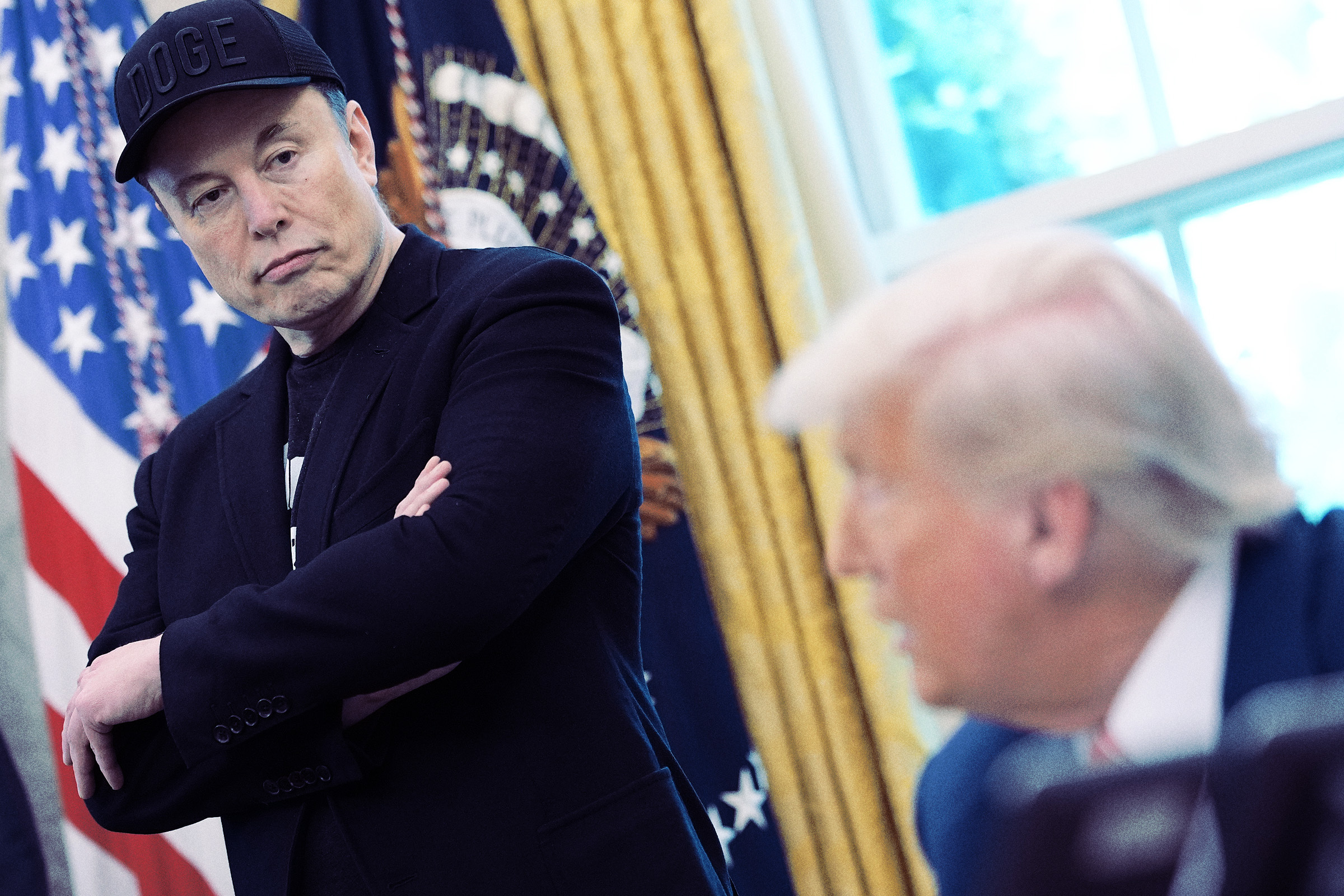
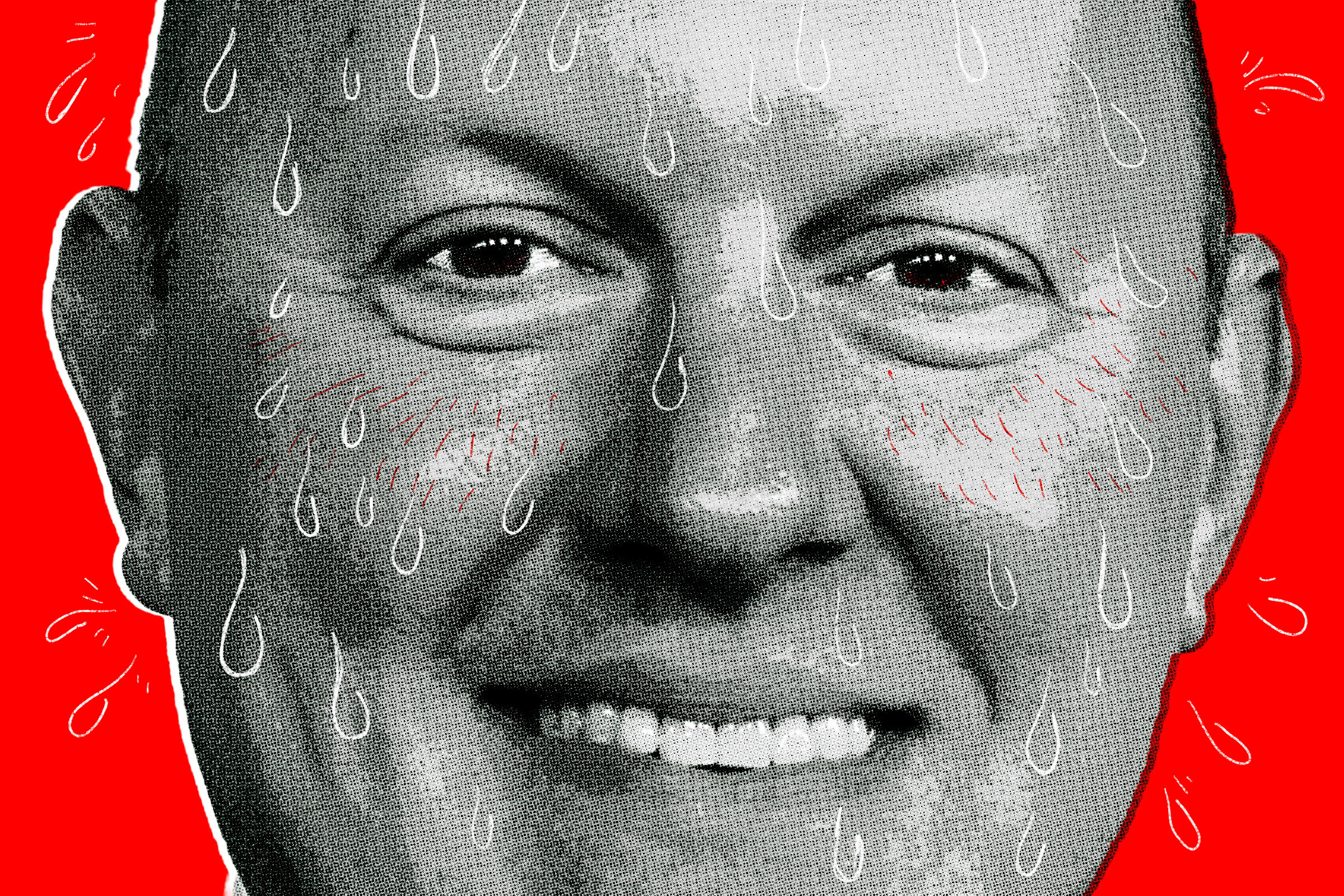
Elon Musk Says He Only Got Involved in Politics Because He Couldn’t Deal With Having a Transgender Child

2 June 2026 at 17:08

Dismantling the federal government. Building a “MechaHitler” AI. Waging a war on Woke. Donating nearly $300 million to get Donald Trump reelected as president. What caused Elon Musk, once a liberal hero, to go down this path?

According to Musk: his estranged daughter, Vivian Wilson.

Doing what he does best — compulsively doomscrolling his own social media site, X — Musk responded to a fan’s post claiming he wouldn’t be the based, Nazi saluting hero that he is today if it weren’t for his daughter’s transition.

“We should never forget that if not for Vivian, Elon Musk never would have gotten involved, never would have purchased Twitter, Kamala Harris would be President and the Left-wing would have total instrumental control over the construction of Skynet,” the poster claimed.

“True,” Musk replied.

Musk might be being a little facetious here, but there’s no denying that he has a weird and unhealthy obsession with Wilson, who publicly came out as transgender in 2022, and her gender identity. He has tirelessly repeated the line that the “woke mind virus killed my son,” and claims that this is why they’re estranged — actually, she disowned him — and not because he regularly misgenders her or says she’s suffering a “tragic mental illness.”

Of course, Wilson’s perspective is pretty different. In interviews, she’s described Musk — who has 14 known children with at least four different  women — as an absent and “cruel” father who would constantly demean her for being feminine, including yelling at her for having a high-pitched voice.

In spite of that, Wilson says that Musk signed the paperwork giving parental consent for her to start the medical interventions to begin her gender transition. It seems totally out of character for him today, but it wasn’t that long ago, we should remind you, that Musk was proudly boasting about how LGBTQ friendly his company Tesla was, even telling bigots, “Don’t buy our car if that’s a problem.” Encapsulating his political about-face, Musk now claims that he was “tricked” into approving Wilson’s gender treatments.

All that being said, Wilson finds ascribing Musk’s villainous turn to her transition somewhat insulting, and implied that his reactionary sympathies were always there.

“It’s such a convenient narrative, that the reason he turned right is because I’m a f**king tr**ny, and that’s just not the case. That’s not what that does to people,” she said in a 2025 interview with Teen Vogue.

“Him going further on the right, and I’m going to use the word ‘further’ — make sure you put ‘further’ in there — is not because of me,” she added. “That’s insane.”

More on industrialists: Trump Shovels $4 Billion Directly to Elon Musk, Who Spent a Fortune Getting Him Elected

The post Elon Musk Says He Only Got Involved in Politics Because He Couldn’t Deal With Having a Transgender Child appeared first on Futurism.


AI Billionaires Are Starting to Get Scared

2 June 2026 at 15:01

As it turns out, telling the world’s workers to prepare for a dystopia rife with poverty and alienation isn’t the smartest way to market your exciting new tech.

As data centers are shut down by angry mobs and AI surveillance cameras are ripped from their poles, the world’s tech billionaires and CEOs are waking up to the reality that the masses are, broadly speaking, not on board with their plan to automate the world with AI. It isn’t necessarily that working people want to stay shackled to the wage-based employment system, but that folks need those jobs to have any hope of eating, seeing a doctor, and sleeping with a roof over their heads.

Instead of the tone-deaf hype we once heard about AI’s potential, these rich and powerful figures are now moderating their messaging, calling for policy measures to help workers weather the AI storm — or perhaps head off a violent revolt led by the many who lost their jobs.

For example, Amazon executive chairman Jeff Bezos — whose net worth would take the average US worker 3.8 million years to earn on their own — recently shared his new belief that the bottom 50 percent of US earners should pay no federal income tax.

“You could double the taxes I pay and it’s not going to help that teacher in Queens,” he said, painting the federal income tax as the main hurdle for working-class families (though he’s started paying his share in recent years, Bezos paid $0 in federal income tax in 2007 and 2011, when he was already a multibillionaire.)

Elon Musk, meanwhile, has floated the idea of “universal high income,” a play on the well-known concept of universal basic income, where a government issues cost-of-living checks to the broader population (from what we can tell, the only difference is that Musk’s version would be driven by humanoid robots creating radical economic abundance).

OpenAI CEO Sam Altman has similar ideas, like a “universal basic compute” where everybody’s income corresponds to a share of his company’s revenue — which would also conveniently make ChatGPT the most important AI chatbot on the planet.

There’s also another option that none of them seem to be pushing: if AI is as disruptive as they say, there’s always the option to pull the plug. That they won’t even consider this choice suggests that their appeals to the toiling masses aren’t in good faith — which at this point should be obvious to just about everyone.

More on AI billionaires: New Website Detects Apocalypse If Billionaire Jets Start Fleeing en Masse

The post AI Billionaires Are Starting to Get Scared appeared first on Futurism.

Trump Shovels $4 Billion Directly to Elon Musk, Who Spent a Fortune Getting Him Elected

1 June 2026 at 22:32

Elon Musk spent just shy of $300 million supporting Donald Trump’s reelection in late 2024 — a full-throated financial commitment that appears to be paying off in a big way.

Musk’s space company SpaceX, in particular, has massively benefited from the duo’s on-and-off-again relationship, scoring billion-dollar deals with the government.

Most recently, Reuters reports, SpaceX was awarded a $4.16 billion contract with the US Space Force to develop detection satellites that can track and target airborne threats. Just days earlier, the military arm awarded the company a separate contract, worth $2.29 billion, to build a military communications network in low-Earth orbit to support ground-based operations.

Besides the impossible-to-overlook role of Trump and Musk’s cozy relationship, the timing of the announcement will raise plenty of eyebrows. SpaceX is expected to go public soon at a valuation of north of $1.75 trillion, a blockbuster IPO that could directly benefit from a government partner signing a flashy contract.

The latest threat detection contract is part of the Trump administration’s so-called Golden Dome missile defense system. While plenty of fundamental questions remain over its design, the network could cost well over $1 trillion to build out, according to experts, which would be far than the White House has estimated.

The threat detection satellite contract, called the Space-Based Advanced Moving Target Indicator, will see SpaceX develop what Reuters likens to an “interconnected system-of-systems” that collects and analyzes data from a host of different sources, from space-based sensors, to secure communication links.

Zooming out, cushy government contracts have long played a key role in the flourishing and very survival of Musk’s space venture. According to an analysis by the Washington Post last year, SpaceX had received $38 billion in government contracts, loans, subsidies, and tax credits, as of February 2025.

Given their budding relationship and the latest multibillion-dollar contracts, that number has already grown substantially — and will very likely continue to grow, especially as SpaceX looks to go public.

The company is also set to play a key role in the Trump administration’s efforts to return astronauts to the surface of the Moon, and was awarded a $2.9 billion contract in 2021 to build the requisite lunar lander.

More on SpaceX: SpaceX Announces Plans to Put Billionaire on First Rocket to Mars

The post Trump Shovels $4 Billion Directly to Elon Musk, Who Spent a Fortune Getting Him Elected appeared first on Futurism.

Woman Accuses Biohacker Bryan Johnson of Hypocrisy to His Face

30 May 2026 at 11:45

As ultra-wealthy CEOs go, there’s always been something different about Bryan Johnson. Unlike the Elon Musks or Peter Thiels of the world, his pie-in-the-sky antics pose a much greater threat to himself than to the rest of society. As a man obsessed with hacking his body in order to live forever, Johnson often gets filed away as a self-absorbed aristocrat rather than a crooked plutocrat (well, except for the abandoning-his-fiancée-when-she-got-breast-cancer thing.)

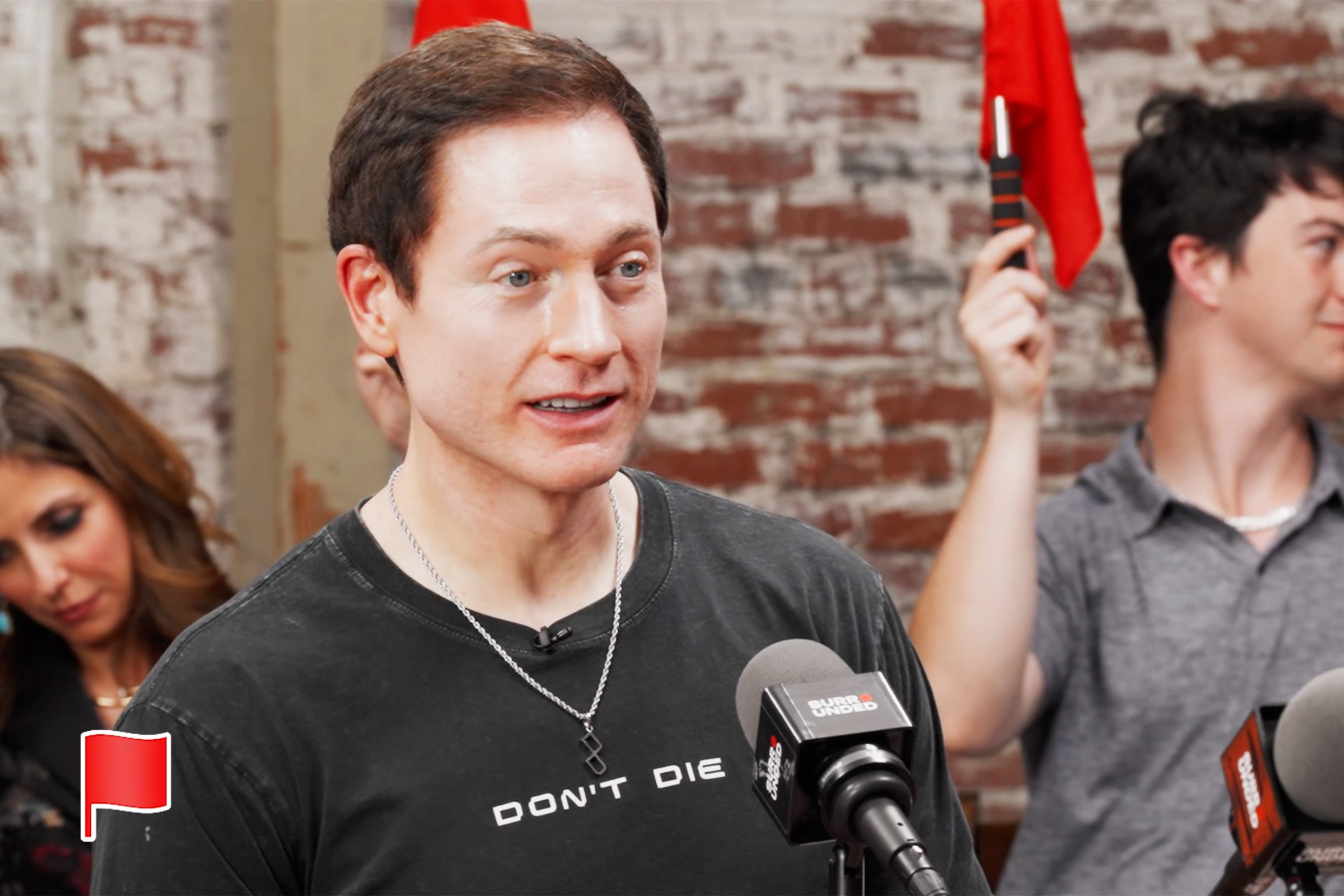
Yet with a net worth in the nine-digit range, Johnson — who was an early investor in Futurism, though his involvement ended years ago —didn’t exactly get ahead by sharing, a fact one woman was keen to call him out on during a meeting on Surrounded, a debate show hosted by Jubilee Media.

During the face-off between Johnson and an unnamed skeptic, the biohacker argued that “ending death” should be humanity’s main priority.

“I think that a lot of people would change their opinion and want to exist [forever] if the conditions of society were not so brutal,” Johnson said, referring to the fact that most people don’t take his ideas on longevity seriously. “It’s not fair.”

The skeptic immediately hits back with a burning question: “what have you done to change those brutal conditions in society?”

“You’re a person who has literally hundreds of millions of dollars and you spend $2 million every year trying to look younger,” she continued. “And honestly, you look your age.”

The contrarian’s slam is as gutsy as it is compelling: with an estimated net worth around $400 million, Johnson’s vast fortune could easily be spent allaying the worst excesses of poverty, a leading cause of death in the United States and around the world.

What does he spend his riches on instead? A squad of private medical staff to measure his “biomarkers,” a constant battery of blood tests, ultrasound, and MRIs, and bizarre longevity experiments like his hyperbaric office pod. That in mind, the skeptic has a point: what’s the use of living forever if you only live for yourself?

More on biohackers: They Held a New Olympics Where Athletes Can Take as Many Drugs and Steroids as They Want, and the Funniest Possible Thing Happened

The post Woman Accuses Biohacker Bryan Johnson of Hypocrisy to His Face appeared first on Futurism.

Tesla Insiders Admit Self-Driving Is a Complete Disaster

29 May 2026 at 21:10

It turns out not even the people building Tesla’s self-driving tech trust Elon Musk’s extravagant claims about the company’s autonomous vehicles.

New reporting by Reuters interviewed nine former data labelers and a former self-driving engineer about their take on Tesla’s Full Self-Driving mode. The results were overwhelmingly negative, with seven of the data specialists admitting they wouldn’t ride in a Tesla in FSD.

“We have all seen it fail,” one Tesla insider told Reuters. “Definitely don’t trust Elon on this,” the self-driving engineer concurred, referencing Musks’ declaration that the the vehicles are ready for “safe unsupervised” rides.

One erstwhile worker told the publication they wouldn’t ride in a Tesla robotaxi “if you f**king paid me.”

At least five data labelers, whose job was to comb through hours of FSD footage to train the vehicle’s software to avoid past mistakes, told Reuters they routinely saw clips of Teslas driving above the speed limit, an issue which engineers and managers treated like a low-priority compared to edge-case issues.

Those glowing recommendations come amidst concerns that Tesla’s FSD mode may never be truly safe enough for public roads.

In recent months, Tesla operating on FSD move have driven riders into lakes, off bridges, and even into the path of oncoming trains — and those are just the incidents that get media exposure. Given these insiders’ direct access to terabytes’ worth of proprietary FSD footage, we’re inclined to take their word on it.

More on Tesla: Man Drives Cybertruck Into Lake to Test Elon Musk’s “Boat” Claims, and It Went About as Well as You’d Guess

The post Tesla Insiders Admit Self-Driving Is a Complete Disaster appeared first on Futurism.

CEO Receives Violent Threats After Kicking Off AI Layoffs

28 May 2026 at 21:09

As the Australian software firm WiseTech lays off thousands of employees in a pivot to AI, its CEO Zubin Appoo has become the target of violent threats, the company says.

Richard White, WiseTech’s founder, revealed the news in an email to the company’s staff on Sunday, the Financial Review reported

White said the company had already been facing “several serious and deeply concerning incidents involving personal attacks.” 

But “in the past week, this escalated into a handwritten threat of violence made against our CEO, Zubin Appoo, containing personal information and offensive comments directed at members of his family,” White wrote in the email to staff, per the Financial Review.

Security was ramped up at the company’s Sydney office “because of the serious nature of the threat,” he added, and the threat was reported to police.

The threats come after a dragged out layoff-saga at WiseTech which has left employees frustrated and confused. In February, the company stunned the rank and file by announcing that it was firing 2,000 staff, or about a third of its entire workforce. But who was getting the axe was unclear, leaving employees in agonizing suspense. For months, they waited to hear if they were part of the cuts, but never got clarification.

The agony was amplified Monday, when staff received messages in the morning saying their role was “impacted,” before getting another communication two hours later asking for their personal email address for further communication, according to the Financial Review. Except this was followed by another twist, when the emails were deleted from employee inboxes by WiseTech’s IT administrator, and succeeded by a similar email that gave only a fifteen minute deadline to submit information.

Rubbing salt in the wound, the one thing WiseTech leadership was sure to communicate was their love for AI. Appoo told investors that he was expecting “further efficiency gains” over time as AI capabilities improved. And White, even more blithely, boasted that AI agents could complete training in mere minutes that would take humans weeks.

“It doesn’t take much effort to convince people, in the end, that they’re stupid to be paying $100 for labour when you can pay $2 for the AI,” White said at an investment conference earlier this month, per the Financial Review.

Harbingering the new paradigm, White also revealed an “AI agent credo” for the company, stating: “Capacity is no longer constrained by people or time.”

With job cuts looming and AI being waved in their faces, morale at WiseTech has plummeted.

“People are being told to keep delivering as usual, while also helping roll out the AI tools that are supposedly meant to replace them,” one employee told The Guardian earlier this month. “All of this while everyone’s left waiting to find out if they’re in the 50 percent.”

The alleged threat illustrates how tensions around AI layoffs are running high across myriad industries. Earlier this month, Standard Chartered CEO Bill Winters sparked a storm of controversy after calling the employees he planned to replace with AI “lower-value human capital,” forcing him to not only issue an internal memo clarifying his remarks but, after that apparently didn’t go over well, even make a public apology.

More on AI: Finance Bros Tremble in Fear That They Could Be Replaced by AI Too

The post CEO Receives Violent Threats After Kicking Off AI Layoffs appeared first on Futurism.

New Website Detects Apocalypse If Billionaire Jets Start Fleeing en Masse

27 May 2026 at 22:38

Billionaires aren’t like us. They get special tax breaks to protect their fortunes, operate private intelligence rings, and increasingly have direct lines to the White House, if they’re not there already.

Given their increasing hold on the levers of political power, in other words, it’s likely that the world’s richest would get advance news of a civilization-threatening event. Kyle McDonald, a programmer and artist from Los Angeles, has developed a new jet tracker with exactly that dynamic in mind. Called the Apocalypse Early Warning System, the vibecoded website is meant to warn of impending doom based on how many private jets are in the air at any one time.

The mechanics are complicated, but the concept itself is rather simple: is the number of private jets in the air unusual for a given time? If so, it could indicate that the ultra rich have advanced knowledge of a world-ending emergency, and are scrambling for their private compounds while they still can.

Basically, the AEWS is designed to map private aircraft signals from around the world, which it then compares against typical numbers. Based on the difference, it assigns a score between 1 and 5, with 1 being completely normal, and 5 signalling that the level of private jet activity is higher than it’s been over the previous year.

McDonald caveats that the score is not a guarantee of apocalypse, but “should be read alongside other public signals.” A level 5 can be triggered by holidays or major political events, for example, so it’s important to view the data in context.

Still, McDonald told Business Insider, the tool has already mapped some surprising trends. For example, the AEWS’ highest spike so far came on April 6, the day when Iran launched a massive offensive barrage on US and Israeli targets in retaliation for earlier attacks.

“That freaked me out,” McDonald wrote. “I remember thinking, ‘oh my God, it’s real.'”

The programmer-activist has also worked on a few other public-information tools that have helped reveal useful facts hidden under piles of noisy data. One app he worked on with friends, meant to track the Los Angeles Police Department’s infamously aggressive helicopters, helped uncover the fact that the agency was frequently disabling or manipulating their transponder signals to avoid detection by the public.

How useful the information will actually be if disaster strikes is anyone’s guess. In the meantime, it’ll be fascinating to see whether the programmer identifies more trends in the flight data as regional wars and climate disasters continue roiling the globe.

More on billionaires: Marc Andreessen Sputters Incomprehensibly at Question About How AI Will Actually Benefit Humankind

The post New Website Detects Apocalypse If Billionaire Jets Start Fleeing en Masse appeared first on Futurism.

Man Drives Cybertruck Into Lake to Test Elon Musk’s “Boat” Claims, and It Went About as Well as You’d Guess

23 May 2026 at 14:45

Longtime Cybertruck watchers might remember a peculiar day back before the brutalist pickup was even released, when Tesla CEO Elon Musk randomly tweeted that the vehicle would function as a rudimentary flotation device.

“It will even float for a while,” he wrote at the time.

It wasn’t a one-off claim. Musk later boasted that the vehicle would be able to “traverse at least 100m [330 feet] of water as a boat.”

“Mostly just need to upgrade cabin door seals,” he claimed, writing at another point that the “Cybertruck will be waterproof enough to serve briefly as a boat, so it can cross rivers, lakes and even seas that aren’t too choppy.”

The Cybertruck finally did make it to market, where it’s suffered a seemingly endless parade of recalls, embarrassing incidents, and dismal sales figures.

Unsurprisingly, all Musk’s bluster about the truck serving as a makeshift schooner turned out to be flimflam. In fact, it quickly emerged that just getting wet in a car wash could brick the thing.

To muddy the waters further, the company ended up adding what it calls “Wade Mode” to the vehicles, which sets the truck’s ride height to the highest level, ostensibly so it can ford creeks and streams.

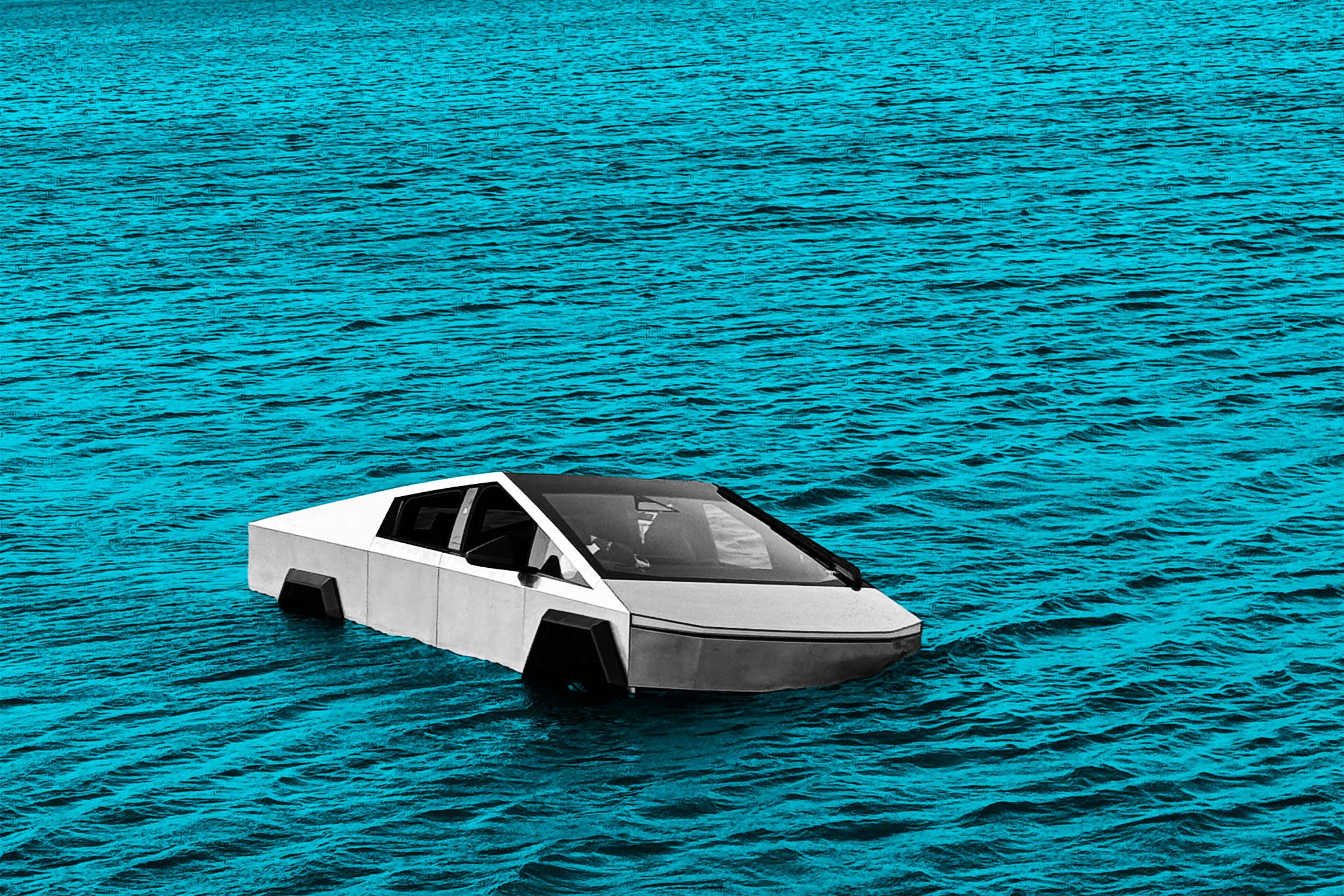
All that mixed messaging clearly got jumbled for a Texas man, though, who activated Wade Mode and drove his Cybertruck into a lake. Unsurprisingly, things didn’t go well for him.

“Yesterday, [Grapevine Police Department] and [Grapevine Fire Department] were dispatched to Grapevine Lake, where a Tesla Cybertruck was stranded in the water,” police in Grapevine, Texas, wrote on X-formerly-Twitter. “The driver drove into the lake to use the ‘Wade Mode’ feature when the vehicle became disabled.”

Not only is the man’s vehicle swamped — as the cops showed in an amazing attached photo — but he’s in legal trouble as well.

“The passengers abandoned the vehicle and the driver was arrested,” they wrote.

More on the Cybertruck: Cybertruck Recalled to Keep Its Wheels From Flying Off While Driving

The post Man Drives Cybertruck Into Lake to Test Elon Musk’s “Boat” Claims, and It Went About as Well as You’d Guess appeared first on Futurism.

Marc Andreessen Sputters Incomprehensibly at Question About How AI Will Actually Benefit Humankind

22 May 2026 at 20:04

There’s plenty of hype to go around about AI. It’s going to revolutionize this and automate that. But how, exactly? It’s a question that’s become increasingly pressing as governments and investors bet increasingly massive gobs of cash on its power to change the world.

Unfortunately, even AI’s move devoted acolytes are struggling to articulate how AI is actually going to help humanity.

Case in point, on a recent podcast appearance with Joe Rogan flagged by the Verge, the billionaire AI evangelist Marc Andreessen — who’s invested billions into AI development through his venture capital firm — struggled when asked to articulate AI’s benefits.

The conversation began, ironically enough, with Andreessen asserting that tech executives have done a terrible job explaining what makes AI so important.

“So, you’re saying that the people running AI have done a terrible job of selling AI,” Rogan said. “So sell it.”

“Yes — oh, sell it, I mean, look, so it, it is, alright — I mean, alright I’m gonna give you the deepest of all pitches, I’m gonna give you the, the — okay,” Andreessen stammered right out of the gate. “So, uh, Isaac Newton spent 20 years looking for this key to what he called ‘alchemy.’ Uhm, and the idea of alchemy was to transmute something that was very common into something that was very rare.”

Andreessen goes on like this for the next minute, trying explain that Newton wanted to turn lead into gold, seemingly trying to draw a parallel to the tech industry’s drive to turn sand — silicon — into thought.

“In any event, you may know that he never — we have never figured out how to do that,” Andreessen continued. “And gold is still rare and valuable, so, imagine a form of alchemy that turns sand into thought. Pause on that for a moment.”

It’s barely comprehensible, to put it charitably. At any rate, Andreessen immediately abandons the alchemy analogy to explain that AI is actually good because stuff like lawsuits, medical problems, and work is just too hard for humans to think about on their own.

“We’re always all bumping up on these limitations on thought, like just how smart can we be, how many things can we know about, and so AI quite literally is that: it’s thought at scale, for everybody, in perpetuity,” he insists. Nevermind that AI compute is incredibly expensive — it certainly won’t be free “for everybody” for much longer — it also isn’t even close to performing human-level thought. Keep in mind, these are basically massive predictive algorithms: a more accurate phrase would be “data at scale.”

Having made his grand point, Andreessen continues with an appeal to humanity: “I guess I see this with my 11-year old right now, like everybody who grows up now is going to have AI.” Of course, that’s a self-reinforcing argument, a cop-out which doesn’t explain why it’s important to have “thought at scale,” or why thought is currently insufficient at its current, human-sized scale.

The fact that one of AI’s loudest and richest devotees can barely articulate why he thinks the technology is important should be a telling sign, especially as productive returns on the tech remain far out of reach.

Commenters posting under clips of the interview were unimpressed. “Before AI, if I didn’t know something I would just google it,” one TikTok user wrote. “AI gets to the answer faster but it’s only correct half the time. How is that revolutionary?”

More on AI and humanity: Man Behind Simulation Hypothesis Warns That Extinction of Humanity Is a Risk We Have to Take

The post Marc Andreessen Sputters Incomprehensibly at Question About How AI Will Actually Benefit Humankind appeared first on Futurism.

SpaceX Stock May Actually Be a Horrendous Investment

22 May 2026 at 14:10

Elon Musk has just pulled back the curtain on the biggest public stock offering in history, and the numbers are ghastly.

SpaceX, which is expected to go public on Nasdaq in June, just released the first round of financial summaries all companies are required to share when they’re about to sell stock to the public for the first time. The documents reveal Musk is targeting a raise of at least $80 billion — for a proposed valuation of $1.75 trillion — which would immediately make the rocket company one of the top 10 most valuable conglomerates in the US, Axios calculated.

With that kind of valuation in mind, one might expect SpaceX to be massively profitable going into its debut — but that’d be dead wrong.

According to the financial statement, the company lost $4.9 billion in 2025, even though it brought in around $18.7 billion in revenue. It’s not like that situation is about to turn around in time for the IPO, either: over the first three months of 2026, SpaceX posted further net losses of $4.3 billion.

As analyst Scott Melker pointed out, SpaceX wants investors to believe the company will someday make 93 times what it currently makes in a year. To understand why that’s absolutely nuts, just peep the numbers from the previous IPO record holder, Saudi Aramco, the state oil company of Saudi Arabia.

Commonly understood to be the most profitable corporation on Earth, Aramco went public in 2019. When it did, investors accepted a valuation about 6 times more than what Aramco made in yearly sales, raising $26 billion for a valuation of $1.7 trillion, as one analyst noted. SpaceX is asking for about 15 times more than that.

“Bro, have you seen inflation lately? Ketamine is expensive!” one stock analyst razzed on X-formerly-Twitter (that platform, by the way, has all but imploded under Musk’s leadership, with revenue down around 59 percent compared to 2021, the year before he took over).

To justify its wild revenue ambitions, SpaceX estimates its total addressable market — the maximum money it could make if everything goes perfectly — at $28.5 trillion. Of that, nearly 80 percent is attributed to the imaginary landscape of “enterprise applications,” which the document describes as a buffet of various Earth-shattering AI tools that have yet to be built, including one agentic AI platform called “Macrohard.”

Put it all together, and the numbers only work if you put your faith in unprecedented earnings from technology that doesn’t even exist, in a market as infinite and uncharted as outer space itself.

More on investments: It Seems a Lot Like Trump Accidentally Invested $1 Million in a Conveyor Belt Sushi Restaurant Thinking It Was an AI Hardware Company

The post SpaceX Stock May Actually Be a Horrendous Investment appeared first on Futurism.

❌