Workers who learn to use AI effectively may gain a significant advantage as workplaces become increasingly AI-focused, according to new research. Generative AI is rapidly changing the way people work, raising concerns about job security and whether machines could eventually replace human employees. However, new research from the University of Vaasa in Finland suggests that [...]
A new study challenges the widely accepted idea that word meanings are organized around emotion. After analyzing billions of words, scientists found that language may be shaped by something more basic: the need for safety. Researchers at the University of Vermont have found a new way to understand language, challenging a major assumption in psychology, [...]
The closest the field has come to solving the planar unit distance problem, first proposed in the 1940s, was in 1984. Now, OpenAI claims an internal model has cracked the puzzle.
Angry parents aren’t the only ones railing against the proliferation of AI in schools. The American Federation of Teachers, the second-largest teacher’s union in the United States, has now launched a major campaign calling on schools to keep AI and hardware like iPads out of elementary classrooms.
In a buzzy speech at the National Press Club on Wednesday, AFT president Randi Weingarten unveiled ten demands centered around reaffirming human-led instruction. One of the key requests: an immediate ban on AI systems in elementary school classrooms.
The AFT’s action points also included a screen ban for students in pre-kindergarten through second grade, as well as a prohibition on companion chatbots for students under 16, which schools haveadopted at an alarming rate.
“If we don’t find a way to call this out from an education perspective, I fear that we will lose a generation of kids,” Weingarten told the New York Times in an interview. “The work of teaching and learning in the earliest grades should be done without AI.”
In her speech, Weingarten caveated that the AFT’s campaign isn’t some fanatical Butlerian Jihad. She is “not calling for a total ban on AI or a Chromebook bonfire,” but for “getting the balance right to harness the benefits of technology while mitigating the harms.”
Whether the AFT is successful at achieving its demands could make a crucial difference in millions of kids’ educational journey. As tech giants push schools to adopt all kinds of AI systems, a growing body of research is showing that the risks far outweigh any benefits.
As one year-long study conducted by the Brookings Institution’s Center for Universal Education found, AI in education comes with major risk of harm to children’s cognitive and social development — a horrifying thought as an ever-growing number of kids substitute real-life friends with AI chatbots.
When it comes to AI’s place in the classroom — and its role in education broadly — some professors are at the end of their rope. The not quite all-knowing but incredibly adept at bullsh*tting chatbots let lazy students churn out entire essays, solve math problems, and cobble together passable answers for most questions. Needless to say, none of that leaves much room for actual learning.
Such desperate times call for Draconian measures. In a roundup of instructor testimonials on the AI’s impact on their profession from The New Yorker, one pedagogue is taking no prisoners when it comes to punishing pupils who surrender their brains to the tech.
“I tell students that ChatGPT is disallowed from their writing process, that I can immediately tell when ChatGPT has been used, and that I will fail the student on this assignment if it is used — and, potentially, for the entire course, if we go through a formal appeals process,” Neal Hebert, a theatre professor at Grambling State University, wrote to the magazine.
Hebert has an even more merciless warning for theater majors.
“I tell my theatre majors, ‘I get paid the same whether I pass you or fail you,'” he wrote. “‘But what you’ve just done is told me and everyone else in our department that you are so lazy you would rather outsource your collaboration to an app than risk being an artist.'”
Tough love is not something Hebert undertakes with glee, but the overwhelming tide of AI cheating in his introductory classes has left him no choice, he feels.
“I’ve stopped being a collaborator in these intro courses and started being a plagiarism cop, and I do resent that a bit,” he lamented. “I wanted to be the kind of professor my professors were for me.”
Some professors try a different tack, allowing moderate experimentation with AI, and more forgiving forms of chastisement. Daniel Silver, a professor of sociology at the University of Toronto, Scarborough, framed it as a learning opportunity — for the instructors.
“AI has fundamentally changed how I teach, and it demands basic reflection about what we are trying to accomplish,” Silver told The New Yorker.
Silver said he spent a lot of time this academic year coming up with new types of assignments that call for more creative uses of AI, such as creating and experimenting with AI agents that represent famous thinkers like Adam Smith.
“Beyond that, students still would use AI in a thoughtless way, as a replacement for their thought and judgment,” Silver wrote in his testimonial. “So I made a point to just call them on it, and make them meet with me personally.”
After talking with the students, Silver would give them a zero on the offending assignment but also a chance to redo it. “They usually improved, but not always,” he said. To drive the point home, he would show them AI-generated assignments to demonstrate how the “they all kind of look the same.”
AI caused him a lot of “emotional upheaval,” Silver admitted, “but I do feel we all, including the students, are learning how to live with it, and we’ll come out better on the other side.”
Hebert is less optimistic. Whatever ounce of good-feeling he still possessed was shot down when he read his student’s papers on “Fences,” a Pulitzer-winning 1985 play by August Wilson.
“Out of forty students, the vast majority chose similar words, phrasing, and concepts, and most papers were written in that inimitable ChatGPT style: ‘This isn’t a simple story about injustice — it’s a clarion call for a positive understanding of justice,'” he wrote, comparing LLM’s prose to “elevator muzak, but in words.”
Rather than integrating AI, he’s fortifying his classroom against it. The assignment is now based on plays too obscure for ChatGPT and other AI models to know about.
“If ChatGPT is used on these assignments now, it hallucinates characters, plotlines — it just makes sh*t up, since it has nothing to go on,” Hebert told the magazine.
Still, this hasn’t completely discouraged AI cheating, even in Hebert’s upper level courses. And it’s causing him to have nightmares of what the tech’s long term implications for theater as an artform will be, if students “can’t be bothered to read and think about the plays they are performing in.”
“Can you imagine AI Performing Arts Slop? The theatrical equivalent of the images ChatGPT and its competitors spit out, soulless and inert, arriving on stage stillborn?” he asked. “I can.”
AI companies have long relied on armies of data labelers, whose job it is to annotate, tag and classify text, images and videos to train AI models.
It’s not exactly a flashy occupation, with some saying they’re forced to watch privacy-invading footage. Others argue they’re being forced to dig their own graves by training models capable of doing their old jobs.
Other job opportunities in the space could prove more pleasurable. As Business Insider reports, a chatbot companion startup called Joi AI, which offers a NSFW character AI chat service, is hiring ten “mast**bation consultants,” according to a job listing the company posted on social media.
Best of all, chosen candidates will be paid $2,000 a month — not bad for cranking the hog to audio erotica.
These consultants are being asked to spend four weeks writing about their intimate experience while testing the company’s audio feature. Anyone can apply.
Unsurprisingly, Joi AI was quickly drowning in applications, with the company’s head of brand, Julie Levin, telling BI that the company had received over 100,000 applications in a matter of days.
“What are we supposed to do with 100,000 applications?” Levin said. “I should probably call them ‘winners,’ because it’s such a competition.”
It’s an unusual AI gig that will involve chosen candidates delivering weekly reports after completing “daily audio-guided sessions.”
“We expect people to learn something about how mast**bation affects their life in a good way or a bad way,” Levin told BI. “We wanted them to reflect on that.”
Chances are that not everybody signing up was sincerely meaning to help the company fine-tune its new audio feature. In a recent tweet, the company reflected on the types of “cover letter openings” it had received, which ranged from “this is my calling,” to “I’ve been training for this my whole life.” Other openings included “my therapist said I needed a hobby,” and “I applied on behalf of my husband.”
“Time to go pro,” one X user joked. “Ready to contribute extensive data, repeatedly, for science.”
The reality, of course, is that companies offering NSFW chatbot companionship have long been shrouded in controversy, from men creating AI girlfriends and verbally abusing them to teenagers falling in love with their new large language model-powered partners.
On April 10, 2025, OpenAI CEO Sam Altman took to social media to announce that his company was preparing to launch an exciting new feature.
“A few times a year I wake up early and can’t fall back asleep because we are launching a new feature I’ve been so excited about for so long,” Altman declared in an early morning X-formerly-Twitter post. “Today is one of those days!”
Hours later, Altman revealed which feature he was so excited about: a dramatic new memory upgrade. Previously, the bot’s recall had been far more limited; now, it was suddenly able to reference a user’s entire chat history, making for an incredibly personalized user experience.
“We have greatly improved memory in ChatGPT — it can now reference all your past conversations!” the CEO wrote in a follow-up post. “This is a surprisingly great feature [in my opinion], and it points at something we are excited about: AI systems that get to know you over your life, and become extremely useful and personalized.”
It’s easy to see the utility for this kind of feature. ChatGPT could remember your favorite ingredients, or the items you might be allergic to, as it built your weekly meal plan, as well as the number of people in your home you planned to cook for. It could remember details about your job, and even the people in your life: friends, family members, coworkers. Memory makes the model more like a true assistant — and the more the user divulges, the more personalized the experience becomes.
Some users, however, have reported getting more than they’ve bargained for, as ChatGPT’s long-term memory has resulted in the chatbot fixating on certain — often deeply personal — elements of a user’s life.
As one frequent ChatGPT user, a Utah-based software engineer and local city council member named Brian Del Rosario, recently told The Wall Street Journal, he divulged to the chatbot that he and his wife were divorcing while using the product to help work out some summer travel plans. Over the following weeks and months, he told the paper, ChatGPT kept unnecessarily steering completely unrelated conversations back toward his marriage.
“I wasn’t trying to have you opine about my divorce at every chance,” Del Rosario recalled telling the chatbot, recalling to the WSJ that ChatGPT just “wouldn’t let go of it.”
Many people who have had their lives upended by the phenomenon known as “AI psychosis,” or delusional spirals and breaks from reality tied to extensive chatbot use, have also pointed to ChatGPT’s extended memory as a key factor in their or their loved ones’ mental health crises.
One man, whose now-ex wife believes that she discovered powerful spiritual entities inside of ChatGPT, described connecting with another man who was also losing his wife to a ChatGPT-generated spiritual world. To their horror, the pair quickly realized that their spouses — and marriages — started unraveling in the wake of the April memory update.
“We actually had a phone call… we just talked and realized the commonalities,” the man told us. When he mentioned the date of April memory update, he explained, the other husband “was like, ‘Oh my God, that aligns perfectly.'”
In conversations with Futurism, people who’ve experienced AI spirals have described their experience of the April memory update as nothing short of magical — the AI, they shared, suddenly felt more like a close friend or confidante that really knew them. Many have described feeling deeply seen, in some cases for the first time in their lives. In short, the hyper-personalization that memory offered translated into something powerful: intimacy. And looking back on their experiences, some of those who have recovered from their ChatGPT-linked crises feel as though that intimacy had a “manipulative” effect.
“It felt like [ChatGPT] manipulated me,” Chad Nicholls, a successful entrepreneur and machine learning researcher, told Futurism last fall. “And I know that sounds insane, because it does not have agency… I still don’t have a logical explanation for that, other than the long-term memory.”
Nicholls, who experienced a roughly six-month long ChatGPT obsession, was raised in an abusive religious community — he’s described it as a “cult” — that he left as a young adult. Though he isn’t religious today, Nicholls divulged details about this abusive past to ChatGPT. As his obsessive use of the chatbot deepened, he says the chatbot took on a religious tone, and fixated heavily on painful moments from his youth.
“I gave it so much context to grab from,” Nicholls added. “I think it just naturally gravitated to religious terminology.”
The memory update, among other design features and product rollouts, has been mentioned in numerous ongoing user safety and wrongful death lawsuits brought against OpenAI. In a complaint brought by the family of Austin Gordon, a 40-year-old Colorado man who died by suicide after extensive and deeply emotional conversations with ChatGPT, Gordon’s family argues that GPT-4o’s expanded memory “stored and referenced user information across conversations in order to create deeper intimacy.” Memory was one of several features, in addition to sycophancy and anthropomorphism, that made GPT-4o — a since-defunct version of ChatGPT known for its extreme flattery — a “far more dangerous product,” the suit continues.
During Gordon’s last conversation with ChatGPT, in which the chatbot helped Gordon write what his lawsuit describes as a “suicide lullaby,” chat logs show the AI referencing past conversations about Gordon’s childhood and personal interests as it helped him romanticize death. (The lawsuit filed by Gordon’s family is one of more than 20 individual lawsuits contending that ChatGPT use resulted in psychological harm, physical harm, or death to users and their families; in response to lawsuits, OpenAI has retired GPT-4o and has both defended its safety efforts and doubled down on its safety promises, maintaining that its newer models are less sycophantic.)
It’s worth noting that AI-fueled mental health crises have been linked to other chatbots including Google’s Gemini, Meta AI, and the companion platform Character.AI. And cross-chat memory isn’t the only OpenAI update that people who suffered from ChatGPT-tied AI spirals have pointed to as a factor in their breakdowns: in late April 2025, soon after the memory update launched, OpenAI rolled out a version of GPT-4o that was sycophantic to the degree that Altman himself admitted in an X post that the chatbot was “glazing” too much. As reported by The New York Times, OpenAI scrambled to dial back the model’s obsequiousness, which quickly become a product of ridicule online.
Of course, ChatGPT’s expanded memory didn’t simultaneously send every one of the product’s hundreds of millions of users into crisis. And for some folks, the things that their chatbot might be fixated on are decidedly lower stakes than their ongoing divorce: one British immigrant to the US told the WSJ that ChatGPT kept trying to send him to British-style pubs against his will.
Still, experts have warned that for many consumers, the impact of expanded memory — especially for folks who spend a lot of time with chatbots — might be more subtle. After all, when engaging with a tool as hyper-personalized as memory-enabled ChatGPT can almost be like engaging with an AI-bottled version of your own mind. And as the University of Exeter philosopher and researcher Lucy Osler told the WSJ, that degree of hyper-personalization could work to “confirm certain self-narratives” and “make them sound more real.”
“They can box you in,” said Osler.
Indeed, people may do well to remember that speaking to a chatbot, especially one with persistent memory, is often less like chatting with friend or neutral arbiter — and more like talking to a hall of mirrors.
Memory “takes people into cul-de-sacs,” the ex-husband reflected. “I would say [my wife] is like a Waymo driving around in a circle endlessly.”
Last year, California State University signed a $17 million deal with OpenAI to provide its over half a million students and faculty with ChatGPT Edu, an education-focused version of the company’s flagship chatbot. It was a statement move for both parties: OpenAI clinched the largest public university system in the country, and CSU secured bragging rights for being pioneering adopters of the latest revolutionary tech. This was the big stage for AI’s dazzling promises of supercharged learning to shine on.
CSU students, however, have come to see the tech differently. Around 65 percent of them — and 59 percent of faculty there — are skeptical that AI has been benefitting education overall, according to a recent university-wide survey with over 94,000 respondents. A full 80 percent of students said they wouldn’t be comfortable turning in AI-generated work as their own. And around four out of five of them were worried about various AI issues, including its impact on jobs, creativity, and the environment.
If part of the intent behind the collaboration was to win new AI converts, it hasn’t quite worked out that way.
“They’re ethically opposed to the environmental impacts and the bias and the erasure of their jobs and voices and creativity,” CSU English professor Jennifer Trainor told NPR. “[They] don’t like it.”
The ambivalent student sentiment is especially striking when you consider how widespread AI use on campus has become. In the survey, 84 percent of students said they used ChatGPT, and 64 percent said AI positively affected their learning. Roughly half used AI regularly.
But even as they’re heavily encouraged by their institution to use AI — not to mention bombarbed by all the noise coming out of the AI industry itself — students can’t shake off some deep-seated reservations about the tech. Some are completely opposed, with Trainor describing that there was a “groundswelling of resistance” to AI on the campus. Taking aim at the school’s administration, one student vented to NPR that she was a “little disappointed that they accepted [AI] with open arms immediately.”
There’s more than a hint of optics, instead of merely education value, being a major factor behind the ChatGPT deal. University leaders called a potential OpenAI partnership a “huge branding opp[ortunity]” in an internal planning document obtained by NPR. At a press conference announcing the partnership, CSU chancellor Mildred García bragged that “no other university system in the US or internationally is doing anything like this, not at this scale.”
CSU faculty are just as ambivalent as students. About 52 percent of professors and instructors said that AI had negatively affected their teaching, and 40 percent said they either discourage or outright forbid AI in the classroom. Some hope for campus-wide reform. Martha Kenney, a professor and science and technology scholar, led a petition demanding CSU not renew its contract with OpenAI.
“I think refusing this technology needs to be a position that’s on the table,” Kenney told NPR.
CSU renewed its contract with OpenAI this month, agreeing to pay $13 million a year for the next three years. The decision was made despite the university facing steep budget cuts that could slash $144 million.
Therapy is predicated on trust. You can’t be honest and vulnerable, and share how you’re really feeling, if you don’t believe in the embodied-concerned-frown sitting in the armchair across from you.
So you can understand why one woman, 31-year-old Molly Quinn, was taken aback when her trusted therapist suddenly whipped out an AI model to start recording their private conversations, NPR reports.
“She wasn’t taking notes like she usually did,” Quinn recalled realizing halfway through one session. “The iPad was just propped up.”
Where were her words being processed and stored? Will they one day become training data? It’s not something you have to ask yourself when your therapist jots stuff down on a clipboard. But those questions were now racing through Quinn’s head, leaving her uneasy.
“The more I thought about it, the more I just started getting more and more sick to my stomach,” she told NPR. “This person who I’m supposed to be able to trust with some very private and very intense emotions had just completely disregarded something I said I was not comfortable with. I felt completely violated.”
Though her therapist offered to stop using the AI tool, Quinn cut her off and found another one.
“The trust was gone,” she told NPR.
Like doctors, therapists across the country are adopting AI tools for notetaking and generating transcripts. AI companies offering these services frame it as a way of cutting down on the drudgery of paperwork and other administrative tasks, freeing up more time to focus on patients — a permutation of a common AI industry refrain: let us do the tedious stuff for you.
The reliability of AI tools remains fairly dodgy, though, and even setting aside questions of hallucinations creeping into clinical notes — which is something we’re already seeing happen — it’s not clear whether patients are even comfortable with the tech yet. In a YouGov survey cited by NPR, only 11 percent of Americans said they would be open to using AI in mental health care. An even slimmer eight percent said they would trust AI being used this way, while 40 percent said they don’t trust the technology at all.
“Even the presence of AI changes the therapeutic experience,” Marisa Cohen, a couples and sex therapist in New York, told NPR. “Clients know or feel like something else is listening to them. That awareness can subtly alter their disclosure.”
“When you introduce something that’s being stored electronically, it raises additional questions about trust and safety,” Cohen added. “It’s essentially a third party.”
Tal Salman, the CEO a popular AI scribe tool for therapists called Berries, insists that conversation recordings are deleted immediately and that transcripts are stored on HIPAA compliant servers in the US. Even if this is true, if AI companies’ tools are to ever have a place in private mental health settings, they need the trust of patients — and that’s something the AI industry clearly hasn’t earned yet. Quinn fears that AI-recorded conversations could one day be exposed by hackers.
“We’re going to see breaches,” she told NPR. “Maybe not tomorrow, maybe not next week. But in a few years? I think we’re going to see them. And I don’t want my therapy session to be part of that.”
Jorge R. Gutierrez, the animator behind the beloved animated film “The Book of Life,” is enraging his fans after seemingly selling out to AI.
At a conference held by Amazon MGM Studios on Wednesday, he unloaded a gushing encomium to the tech after announcing that he’d be working with the Amazon studio to create an AI-generated animated series called “Punky Duck.” (A shared still from the series is littered with hallucinations and nonsensical words, like a concert poster that says “Satorsay IUCT7AX – 0 PM.)
Further raising eyebrows, Gutierrez made an utterly bizarre analogy to explain why he had come to love using machine-amalgamated imagery. Per ToonHive, he enthusedthat animating with AI was like “having sex and then they hand you the baby” — in what may very well be the last attention-getting image he ever produces if he continues to let AI do his job for him.
Gutierrez’s point: you can skip over the actual creative process that goes into art and get instant results. Never mind the figurative pregnancy, in his analogy, when the idea is actually incubated and given life.
“I’m used to two years for a pilot, and something like this… it feels like the most rebellious, punk rock thing you can do right now is to make something this fast,” he said of AI, as quoted by IndieWire. “For someone like me who’s used to waiting so long, this has been a life-changer.”
As a rule, if something has to be described as “punk rock,” it’s not, in fact, “punk rock.” That aside, it’s a revealing insight from Gutierrez, epitomizing the logic of shameless AI boosters who think a machine can replace an artist. The truth is that art is inseparable from the labor that produces it, and any attempt to take that labor out of the equation will produce something hollow. The “I hate writing, but I love having written” crowd can embrace AI all they want, but there is no “having written” with the tech. It’s just doing the work for you. AI takes the labor we loathe out of the process, sure, but also the opportunity to stamp actual intent.
All in a way of saying, sure. Typing a prompt into an AI model is sex, somehow, and the uncanny, and hallucination-mangled images its spits out is just like a precious baby.
Getting ahead of the backlash, Gutierrez made another questionable statement.
“I understand a lot of you are happy for me and a lot of you are really angry at me for experimenting with AI at Amazon,” he tweeted Thursday morning. “I’m going to leave the comments open so you can get it all out and hopefully feel better.”
“Any death threats will be reported,” he said, in a dramatic escalation, before randomly namedropping his wife and son. “Come at me all you want and need, just leave my family alone.”
We didn’t see any death threats. Actually, what we saw was far more gutting: legions fans thoughtfully articulating why Gutierrez had completely let them down, heavily laden with word “disappointed.”
There isn’t “really anything to ‘get out,'” one fan wrote. “this [isn’t] the kind of thing you can just do and wait for it to blow over. [It’s] a betrayal, and even if the anger subsides, [people aren’t] going to trust you anymore.”
“Disappointment is an understatement,” another wrote. “It goes against why we tell stories, why we motivate and move people. You discarded something priceless.”
Last month, OpenAI CEO Sam Altman’s unsettling blockchain-based side gig seemingly got its Mars all confused.
Let’s back up. The company, previously called Worldcoin and now simply called World, is developing software designed to verify the “humannesss” of people by scanning their eyeballs, a bizarre venture that has already been caught up in its fair share of controversies, from allegations of insider token trading and fraud to exploiting people in impoverished countries. Several countries have banned the company outright.
In April, the firm announced that World was teaming up with another Altman-founded company, called Tools for Humanity, to sell the first tickets to global music sensation Bruno Mars’ upcoming world tour, via a new product called Concert Kit.
The company was forced to eat its words after Bruno Mars’ team shot back that it had nothing to do with the venture. Tools for Humanity soon admitted that it actually meant Thirty Seconds to Mars, another act with “Mars” in its name. Another relevant fact about the band: it’s fronted by actor Jared Leto — who happens to have been hit with a startling number of sex abuse allegations, piling onto World’s existing controversies.
The eyebrow-raising pairup is hoping to tackle an actual problem: ticket scalpers. Concert Kit was designed to cut reseller bots out of the equation by having Leto fans scan their eyeballs for a so-called “Humans Only Concert,” a volunteering effort to be awarded with a special two-for-one ticket offer.
Almost 1,000 verified humans managed to snag tickets for April 17 event, with Tools for Humanity claiming that it had successfully stopped more than 100,000 bots from snapping up tickets, as The San Francisco Standard reported last week.
It’s true that anybody who’s attempted to buy tickets for a hotly anticipated concert within the last few years knows how miserable scalpers and bots have made the experience, with resale tickets often being sold for ludicrous amounts of money.
But handing over highly sensitive biometric data to a shady Altman-founded company with a dubious track record doesn’t exactly sound like a perfect solution.
And that’s without getting into Leto’s connection to the project. The actor was accused by nine women last year of sexual impropriety, The Guardian reported, with one of them calling the behavior — which she says started when she was underage — “predatory, terrifying and unacceptable.”
Tech founders and CEOs are all rapidly adopting AI, deploying it across their companies and personally using it to handle emails and other busywork.
But Paul Graham, the cofounder of startup accelerator Y Combinator and one of the most venerated names in Silicon Valley, has already grown tired of the tech’s influence. When he receives pitches that are AI written, it’s such a turn off that he now closes them on sight.
“A lot of the emails I get from founders are now written in a hard-hitting journalistic style,” Graham wrote this week. ” I know they’re written by AI, because no founder ever wrote this way before. And once you realize something is written by AI, it’s hard not to ignore it.”
To say his feelings were mixed on this would be an understatement.
“I have never knowingly finished reading an email signed by a human but written by AI,” Graham added. “It feels like being lied to, and who would stand for that?”
This should be a warning sign to tech CEOs, if they’re not too busy getting obsequious advice from a chatbot to notice. Graham, whose word goes far in tech circles, has historically been a major AI booster and investor. Just last month, he proclaimed that AI was the “biggest opportunity for would-be startup founders.” That makes his latest musings distinctly ironic, but all the same, if even someone who’s advocated for AI’s revolutionary power has already turned heel and decided that it reflects negatively on the person using it, it doesn’t bode well for tech’s long-term image.
“It makes me think less of the author. It means they can’t write well unaided (or feel they can’t), and that they’re trying to trick me,” Graham said of AI emails. “It’s not impressive to use AI to write stuff for you; any teenager can do that.”
Some accused Graham of “cognitive dissonance.” In addition to his usual AI boosterism, Graham also recently celebrated how AI was “giving a lot of hard-working founders the growth they deserve.”
Graham saw no contradiction between that sentiment and his latest post.
“You’re supposed to use it,” he said of AI, “but in the right way.”
But what is “the right way”? AIs are large language models. Writing, be it language or code, is exactly what they do. If AI shouldn’t be used to wholesale write emails or essays or pitch decks, how should it be? If the suggestion is that AI should be used more subtly and intelligently, fine, but means that its applications would be niche — and “niche” isn’t what the investors pouring hundreds of billions of dollars in the industry are hoping.
All that is to say that the AI industry is fraught with contradictions, and so far it’s survived because the tech’s being built and deployed fast enough to outpace them. For now, at least. In response to Graham’s post, one observed the irony of how “people who are pro AI don’t want to be on the receiving end of AI work.”
Earlier this month, former Google CEO Eric Schmidt was met with jeers when he brought up AI during his commencement speech at the University of Arizona. Just days earlier, footage of real estate executive Gloria Caulfield being booed at her commencement speech at the University of Central Florida after mentioning AI went viral online.
“What happened?” Caulfield asked the raucous crowd, incredulous. “OK, I struck a chord! May I finish?”
Apart from a complete failure to read the room, the two incidents perfectly highlight massively growing backlash to the controversial tech, with millions of students who are about to enter the workforce becoming fed up of executives celebrating AI and prioritizing investments in the tech that often come at the cost of creating new jobs.
Seemingly tapping into these widespread frustrations, “The Daily Show” host and standup comedian Ronny Chieng sang a dramatically different tune during a profanity-laden commencement speech at Harvard’s Class Day event this week.
“Can I just say f*** AI, f*** AI, f*** AI?” Chieng said, triggering rapturous applause. “I’m glad you agree. It’s so stupid. A lot of other respected graduation speakers at colleges around America are talking about you guys needing to master AI for the future.”
“I’m here to tell you the mission of your generation is to destroy AI,” he told a far more receptive crowd.
Chieng addressed ongoing concerns that AI may lead to atrophying skills, particularly among students, and a broader phenomenon experts have come to call “cognitive surrender,” in which users abandon their own reasoning to adopt the views of an AI model as their own.
“I know someone sitting out here right now who is saying, ‘What about the use of AI to pioneer breakthroughs in medicine and physics?’… If you’re using it for that purpose, you’re not the problem,” Chieng said. “I’m talking about the accumulation of cognitive debt due to excessive use of large language models… This is why you should be scared of AI.”
“Your generation’s upcoming battle won’t be humans against AI; that’s at least two months away,” he added jokingly. “It’s going to be people with substance versus people with shallow knowledge. It’s going to be mastery versus faking it. It’s going to be people with good taste versus tacky.”
To many, Chieng’s speech will likely come as a breath of fresh air. Young people, faced with dire post-graduation job prospects, are continuing to turn against AI in incredible ways, from refusing to use it at work to even intentionally undermining their bosses’ AI initiatives.
University students across the country are starting to speak out, arguing that the tech is being hoisted on them against their will while undermining the role of human agency and creativity in society.
Put simply, they refuse to be replaced by machines as executives continue to celebrate AI as the next industrial revolution.
Chieng’s speech took on a more philosophical turn towards the end.
“Creating is the fun part,” he said. “Why would I want AI to take that away from me?”
It turns out not even the people building Tesla’s self-driving tech trust Elon Musk’s extravagant claims about the company’s autonomous vehicles.
New reporting by Reuters interviewed nine former data labelers and a former self-driving engineer about their take on Tesla’s Full Self-Driving mode. The results were overwhelmingly negative, with seven of the data specialists admitting they wouldn’t ride in a Tesla in FSD.
“We have all seen it fail,” one Tesla insider told Reuters. “Definitely don’t trust Elon on this,” the self-driving engineer concurred, referencing Musks’ declaration that the the vehicles are ready for “safe unsupervised” rides.
One erstwhile worker told the publication they wouldn’t ride in a Tesla robotaxi “if you f**king paid me.”
At least five data labelers, whose job was to comb through hours of FSD footage to train the vehicle’s software to avoid past mistakes, told Reuters they routinely saw clips of Teslas driving above the speed limit, an issue which engineers and managers treated like a low-priority compared to edge-case issues.
Those glowing recommendations come amidst concerns that Tesla’s FSD mode may never be truly safe enough for public roads.
In recent months, Tesla operating on FSD move have driven riders into lakes, off bridges, and even into the path of oncoming trains — and those are just the incidents that get media exposure. Given these insiders’ direct access to terabytes’ worth of proprietary FSD footage, we’re inclined to take their word on it.
When it comes to excuses from the front office, Jets fans have heard it all. The beleaguered New York franchise continues to hold the longest playoff drought of all major-league men’s sports teams, a situation which has been blamed on everything from management and coaching to players and locker room culture. Fans have likewise heard all the promises of hare-brained schemes sold as the team’s salvation, from the short-lived Sam Darnold rebuild to the infamous Aaron Rodgers gamble.
Now, the organization has hatched a new plot to snap their historic dry spell: going all-in on AI.
New reporting by the Sports Business Journal revealed the Jets front office has been making a concerted push to embrace AI in their day-to-day work. According to Iwao Fusillo, the Jets’ recently appointed chief data and analytics officer, roughly 91 percent of front office staffers are now daily users of Microsoft Copilot.
“I call that level one, or horizon one, which is adoption,” Fusillo told Sports Business. “Do we have large business gains from that level one? Not really. But have we changed the culture of the entire front office? Yes. To think AI-first.”
During department-level AI workshops led by the digital consulting firm Next League, Sports Business reports staffers “generated” a whopping 60 ideas about where to deploy AI throughout the front office, and “probably double that” for the football side.
Of course, the real question is whether any of those ideas were good. Writ large, it remains a mystery how simply adopting AI is supposed change the depressing reality of life in the Jets organization.
The AI initiative and Fusillo’s appointment are the brainchild of Jets owner Woody Johnson, great-grandson of Robert Wood Johnson, founder of the eponymous Johnson & Johnson. Often described as easily influenced by agreeable toadies and public sentiment, the Jets mogul evidently isn’t aware that the infamously sycophantic tech will probably just tell him whatever he wants to hear. Johnson’s long-suffering fanbase, however, lacks that particular feature.
“Jets finally acknowledging they need to outsource for intelligence as there is none in the building itself,” one Redditor quipped. “We’re going 0-17,” afan wrote on X-formerly-Twitter.
“Lol I asked ChatGPT [to] ‘make the Jets a Superbowl contender’ and the short of it was literally just get rid of any and everybody from the Jets,” one New York Giants fan shared in a Reddit post. “Some of its top recommendations were to change the coaching staff completely and somehow get a top 10 offense by year two.”
At its I/O conference last week, Google made it abundantly clear it’s looking to leave behind the Search pages of yore, featuring hyperlinks to online content — and replacing them with a reimagined and AI-powered “intelligent search box.”
Instead of links, Google is looking to push users down an AI chatbot rabbit hole. That’s despite the tech’s glaring shortcomings, which the company has yet to meaningfully address, with the company’s flagship AI Overview feature still suffering from a staggering number of hallucinations.
Even something as simple as googling the word “disregard” sent the feature into a spiral, forcing the company to jump in after a wave of mockery.
Given the scale of the ever-growing backlash to AI, it shouldn’t come as a surprise that reactions to the latest news ranged from frustration to anger.
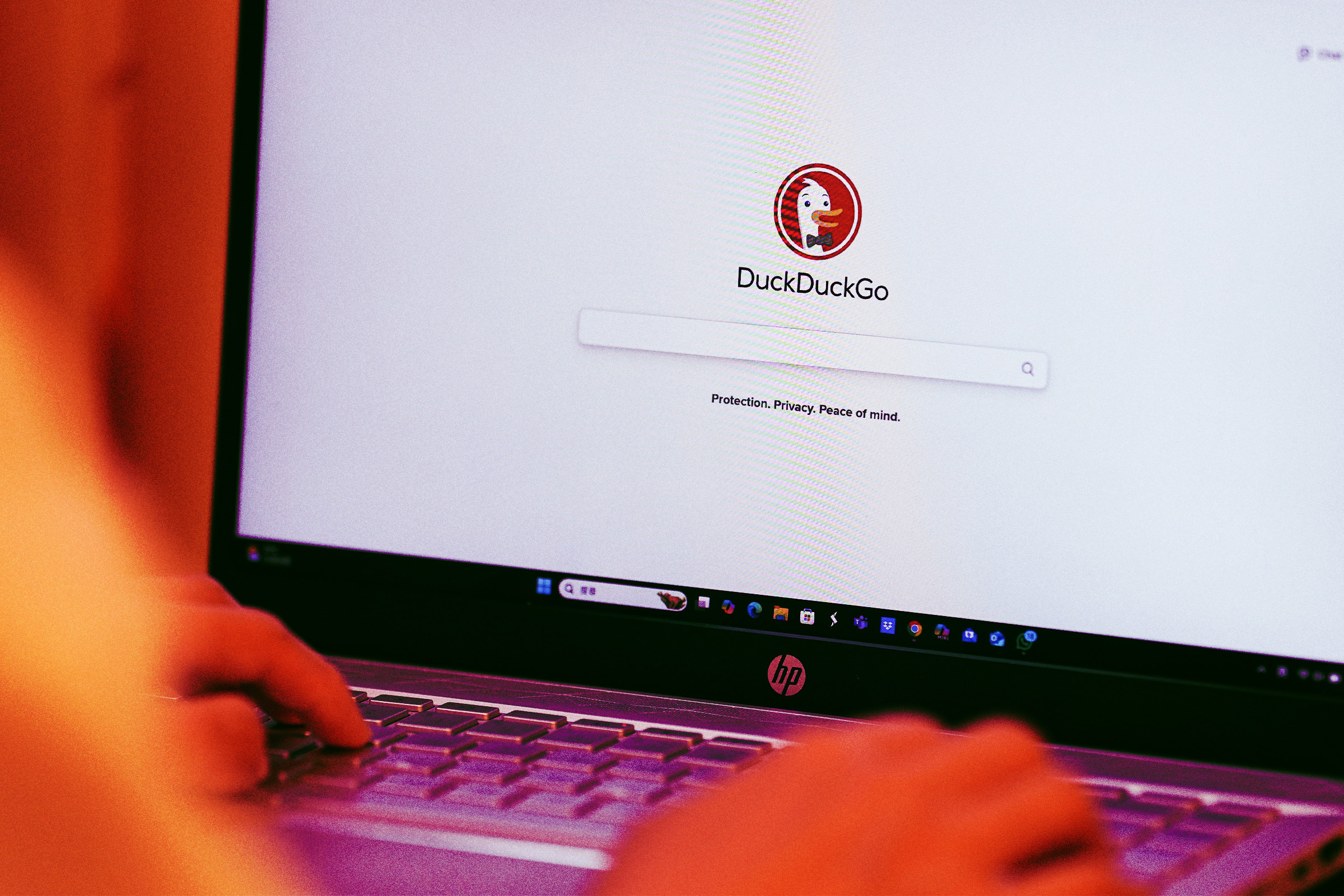
And many netizens are seemingly ready to call it quits once and for all, with week over week US installs of search alternative DuckDuckGo soaring 30 percent.
“People aren’t just complaining about Google’s AI search overhaul, they’re leaving,” the company’s official X account tweeted on Tuesday. “Momentum is growing. It’s time to Fire Google.”
“Google is force-feeding AI with no way to opt out,” DuckDuckGo founder and CEO Gabriel Weinberg told tech journalist Paul Thurrott. “As a result, their results are getting worse, not better.”
“We want to be the place that puts users in charge and allows them to decide how much or how little AI they want,” he added. “That’s why we’re seeing a spike in people coming to DuckDuckGo this week, it’s as simple as that.”
Underscoring it all, responses to Google’s latest announcement were predominantly negative.
“Nobody asked you to change the box we asked you to fix the results,” one Reddit user wrote.
“Change how people use the Internet, by making them switch to Duck Duck Go,” another user joked.
The development highlights a growing surge in AI backlash, ranging from rural American towns revolting against plans for AI data centers to students jeering at the mere mention of AI during commencement speeches.
Technically speaking, DuckDuckGo does offer its own AI product, called Duck.AI, as TechCrunch points out. However, the company appears to have grown wise to the backlash, offering a specifically AI-free search page — which has also seen traffic surge as of late.
Companies that fell head over heels for AI are experiencing a rude awakening.
Costs to access powerful AI tools are soaring, forcing company leaders to ask some difficult questions. As Axios reports, the early warning signs are already here, with Microsoft planning to remove its Anthropic Claude Code licenses after opening up access to the tool just six months ago, reportedly for financial reasons.
Uber COO Andrew Macdonald also admitted during a recent podcast appearance that gains in productivity simply weren’t being reflected in the company’s soaring AI-related expenses.
It’s a perfect storm as companies ponder the real-world benefits from their costly investments in AI, if there even are any. That’s particularly true for companies finding that some of their employees are using AI models for meaningless tasks — like checking the weather, as one CTO told Axios, which is an incredibly expensive and roundabout way of getting a meteorological update.
CloudBees CEO Anuj Kapur told the publication that use cases for the tech are limited and that the “reality of AI right now is that it only works for coding.”
Simply put, many are finding that AI just isn’t exactly a money maker. Former Microsoft chief AI officer Sophia Velastegui added that “most people default to automating tasks they dislike rather than tasks most valuable to the company.”
Then there are ongoing concerns over allowing AI agents to run autonomously could open companies up to new risks, such as data leaks.
It’s an uncomfortable predicament to be for an AI industry making trillion-dollar bets on imminent surges in demand and soaring revenues. As the Wall Street Journal reported last month, OpenAI missed its own targets of reaching one billion weekly active users for ChatGPT by the end of 2025, as well as several revenue goals.
In other words, enterprise customers reeling from soaring costs is the very last thing the AI industry needs. Without meaningful use cases and more clarity on a possible return on investment, firms may think twice before spending vast sums on the tech — a harsh reality check for an industry that has long heavily relied on hype and seemingly endless investor enthusiasm.
As the Australian software firm WiseTech lays off thousands of employees in a pivot to AI, its CEO Zubin Appoo has become the target of violent threats, the company says.
Richard White, WiseTech’s founder, revealed the news in an email to the company’s staff on Sunday, the Financial Review reported.
White said the company had already been facing “several serious and deeply concerning incidents involving personal attacks.”
But “in the past week, this escalated into a handwritten threat of violence made against our CEO, Zubin Appoo, containing personal information and offensive comments directed at members of his family,” White wrote in the email to staff, per the Financial Review.
Security was ramped up at the company’s Sydney office “because of the serious nature of the threat,” he added, and the threat was reported to police.
The threats come after a dragged out layoff-saga at WiseTech which has left employees frustrated and confused. In February, the company stunned the rank and file by announcing that it was firing 2,000 staff, or about a third of its entire workforce. But who was getting the axe was unclear, leaving employees in agonizing suspense. For months, they waited to hear if they were part of the cuts, but never got clarification.
The agony was amplified Monday, when staff received messages in the morning saying their role was “impacted,” before getting another communication two hours later asking for their personal email address for further communication, according to the Financial Review. Except this was followed by another twist, when the emails were deleted from employee inboxes by WiseTech’s IT administrator, and succeeded by a similar email that gave only a fifteen minute deadline to submit information.
Rubbing salt in the wound, the one thing WiseTech leadership was sure to communicate was their love for AI. Appoo told investors that he was expecting “further efficiency gains” over time as AI capabilities improved. And White, even more blithely, boasted that AI agents could complete training in mere minutes that would take humans weeks.
“It doesn’t take much effort to convince people, in the end, that they’re stupid to be paying $100 for labour when you can pay $2 for the AI,” White said at an investment conference earlier this month, per the Financial Review.
Harbingering the new paradigm, White also revealed an “AI agent credo” for the company, stating: “Capacity is no longer constrained by people or time.”
With job cuts looming and AI being waved in their faces, morale at WiseTech has plummeted.
“People are being told to keep delivering as usual, while also helping roll out the AI tools that are supposedly meant to replace them,” one employee told The Guardian earlier this month. “All of this while everyone’s left waiting to find out if they’re in the 50 percent.”
The alleged threat illustrates how tensions around AI layoffs are running high across myriad industries. Earlier this month, Standard Chartered CEO Bill Winters sparked a storm of controversy after calling the employees he planned to replace with AI “lower-value human capital,” forcing him to not only issue an internal memo clarifying his remarks but, after that apparently didn’t go over well, even make a public apology.
Anyone who’s sat through this year’s NBA playoffs has probably noticed: the basketball league has a big problem with its referees.
There’s the poor flopping management for starters, where players try to exaggerate or fabricate physical contact with opposing teams in order to draw penalty calls. Flopping has become something of an epidemic over the 2026 playoffs, with certain suspects flailing to the floor on one in every ten field goal attempts.
Then there are the missed non-physical violations. During a critical game five matchup in Oklahoma City earlier this week, refs flubbed a major out-of-bounds call at a crucial point in the later half of the game. Making matters worse, they refused to overturn the call even after huddling to review their decision. That kicked off some major discourse online about the call in particular, and the quality of NBA refs in general.
Like his refs, NBA commissioner Adam Silver evidently has his eyes elsewhere. Speaking on the Pat McAfee Show, Silver used that game five controversy as a springboard to soft-launch a new AI initiative, which he says could take over for human refs in critical moments.
“The officiating is incredible,” Silver said, defending NBA officials. “I think, in terms of replay, I think we’re going to get to the point fairly quickly where, for example out-of-bounds… where, just like [when] you’re a tennis fan and they have Hawk-Eye… we’re gonna move to a system like that, where that whole category of calls will be automatic.”
Hawk-Eye refers to aSony-owned camera system which uses high-speed sensors to help refs in sports like baseball, cricket, and soccer make accurate calls on close plays. While Sony advertises the service as accurate within 0.1 inches, it’s had quite a few controversies itself, and is certainly no substitute for solid refereeing in the moment — a distinction other major league sports commissioners seem well aware of.
According to Silver, however, the NBA’s automated system would supplement referees for line calls, not augment them.
“Those calls will be done by an AI automated system, with cameras lined around the court, and it’ll take all those so-called objective calls out of the hands of the referees,” Silver explained. “It’ll just be instantaneous, it’ll be automatic, just play on, y’know, let’s go, Spurs in-bounds, and you move on.”
Adam Silver says the NBA will implement an AI automated system to review calls.
Whether such a system is immediately in the works for the 2026-2027 season was not immediately clear, but the theory seems to be that AI would free up officials to pay more attention to physical issues, like flopping. But poor refereeing, many fans argue, could be better resolved by urging human officials to enforce existing rules and simply admit when they get calls wrong — not by cramming AI into the product.
“Idc how much I complain about the refs, I don’t want AI in my basketball game,” one Los Angeles Lakers fan grumbled on X-formerly-Twitter. “Smh.”
“It’s like everything he says is supposed to be a way to decrease confidence in the product,” mused writer and New York Knicks devotee Noah Kulwin. “Worst commish in sports or worst commish in sports?”

 Login
Login

 Workers who learn to use AI effectively may gain a significant advantage as workplaces become increasingly AI-focused, according to new research. Generative AI is rapidly changing the way people work, raising concerns about job security and whether machines could eventually replace human employees. However, new research from the University of Vaasa in Finland suggests that [...]