
❌

Reading view

Homo antecessor Had Surprisingly Modern Skull, New Fossils Suggest
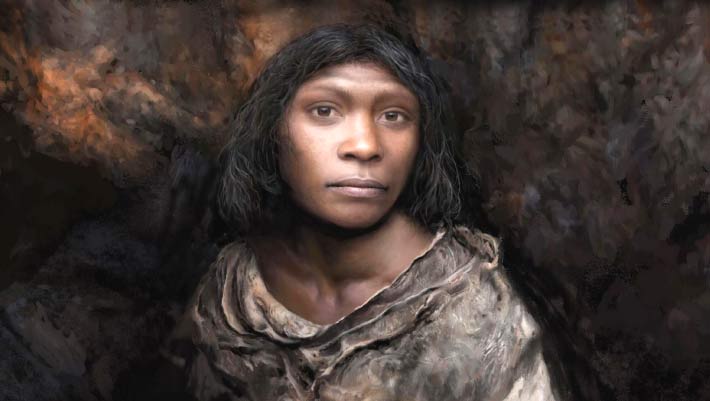
An artist’s rendering of a Homo antecessor individual known as the Girl of Gran Dolina. Image credit: Tom BjΓΆrklund.

A new analysis of three skull fragments unearthed at the Gran Dolina cave site in Spain indicates that Homo antecessor had bone thickness closer to that of Neanderthals and modern people than to more archaic hominins.

The post Homo antecessor Had Surprisingly Modern Skull, New Fossils Suggest appeared first on Sci.News: Breaking Science News.
  •  

Webb Captures Stunning Infrared View of Eskimo Nebula

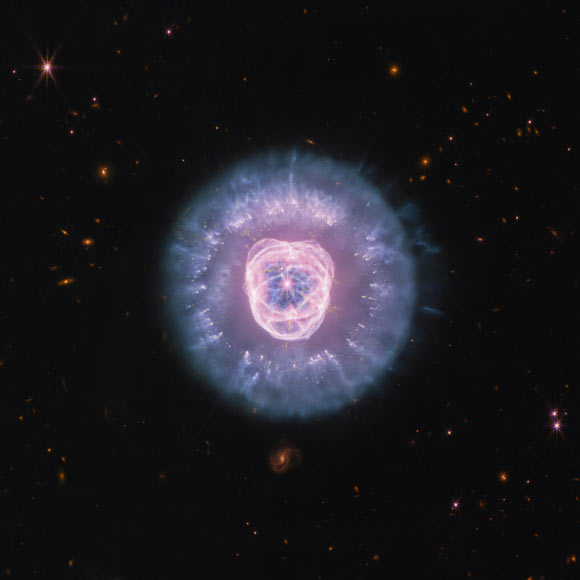
This Webb/NIRCam/MIRI image shows the Eskimo Nebula, a bipolar planetary nebula some 4,200 light-years away in the constellation of Gemini. Image credit: NASA / ESA / CSA / Webb / STScI / Alyssa Pagan, STScI.

New infrared observations of the Eskimo Nebula, a bipolar double-shell planetary nebula in the constellation of Gemini, reveal clumps of dust, ionized gas and expanding shells surrounding a central star.

The post Webb Captures Stunning Infrared View of Eskimo Nebula appeared first on Sci.News: Breaking Science News.
  •  

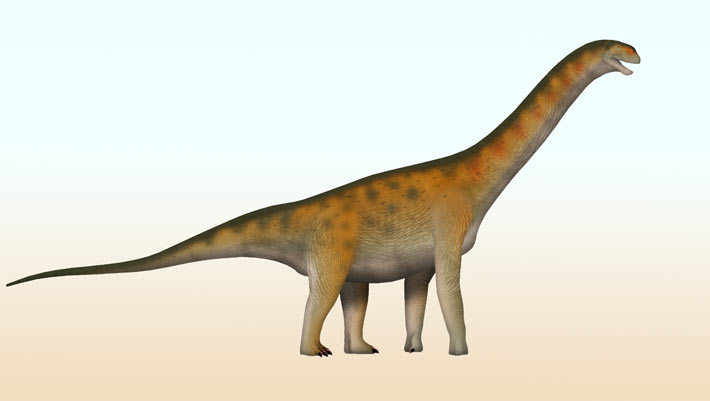
Why Were There No Tiny Non-Avian Dinosaurs? Mammals May Have Been to Blame

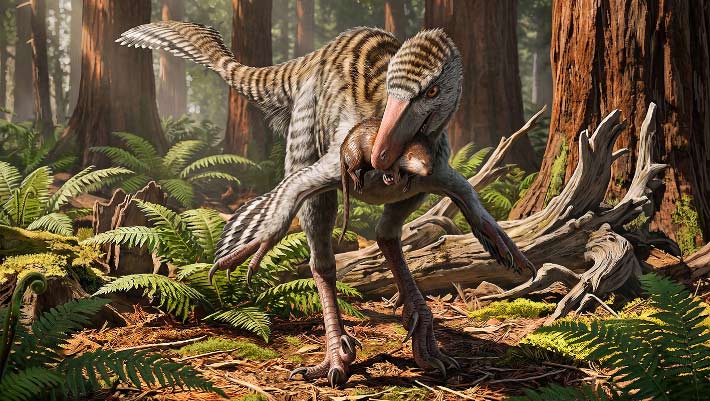
Torvosaurus gurneyi. Image credit: Β© Sergey Krasovskiy.

Dinosaurs evolved into some of the largest animals ever to walk the Earth, but a new mathematical model suggests that early mammals may have crowded them out of the ecological niches reserved for the smallest creatures.

The post Why Were There No Tiny Non-Avian Dinosaurs? Mammals May Have Been to Blame appeared first on Sci.News: Breaking Science News.

  •  

Webb Finds Stellar β€˜Treasure Chest’ in Carina Nebula

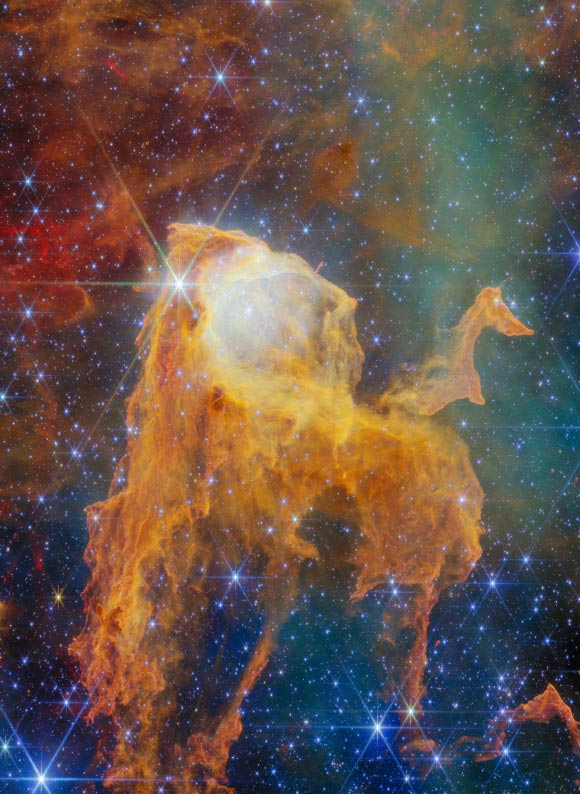
This Webb image shows the Treasure Chest, a cometary globule located within the famous Carina Nebula. Image credit: NASA / ESA / CSA / Webb / M. Reiter / M.H. Γ–zsaraΓ§.

A stunning new image from the NASA/ESA/CSA James Webb Space Telescope reveals a comet-shaped cloud in the Carina Nebula hiding a cluster of about 70 young stars, including a rare giant of O-type nearly 19 times as massive as the Sun.

The post Webb Finds Stellar β€˜Treasure Chest’ in Carina Nebula appeared first on Sci.News: Breaking Science News.
  •  

Liquid Nitrogen May Have Flowed on Pluto’s Surface in Recent Past

This Pluto mosaic was made from New Horizons LORRI images taken on July 14, 2015, from a distance of 49,700 miles (80,000 km). This view is projected from a point 1,118 miles (1,800 km) above Pluto’s equator, looking northeast over the dark, cratered Cthulhu Regio toward the bright, smooth expanse of icy plains called Sputnik Planum. Pluto’s North Pole is off the image to the left. This mosaic was produced with panchromatic images from the New Horizons LORRI camera, with color overlaid from the Ralph color mapper onboard New Horizons. Image credit: S.A. Stern et al.

Planetary researchers analyzing images from NASA’s New Horizons spacecraft have found evidence that liquid nitrogen may still be seeping up from beneath the dwarf planet’s giant glacier, Sputnik Planitia, marking the first suggested case of recently flowing liquid on Pluto’s surface.

The post Liquid Nitrogen May Have Flowed on Pluto’s Surface in Recent Past appeared first on Sci.News: Breaking Science News.

  •  

Neanderthal Gene Still Shapes Muscle and Jaws in Some Living Humans

Velazquez-Arcelay et al. found that genetic material from Neanderthal ancestors may have contributed to the propensity of some people today to be early risers, the sort of people who are more comfortable getting up and going to bed earlier. Image credit: Holger Neumann / Neanderthal Museum.

Neanderthals vanished roughly 42,000 years ago, but a piece of their biology appears to be quietly at work in some people today, according to a new study led by scientists from the Max Planck Institute for Evolutionary Anthropology.

The post Neanderthal Gene Still Shapes Muscle and Jaws in Some Living Humans appeared first on Sci.News: Breaking Science News.
  •  

Inouye Solar Telescope Discovers Hidden Plasma Vortices on Sun

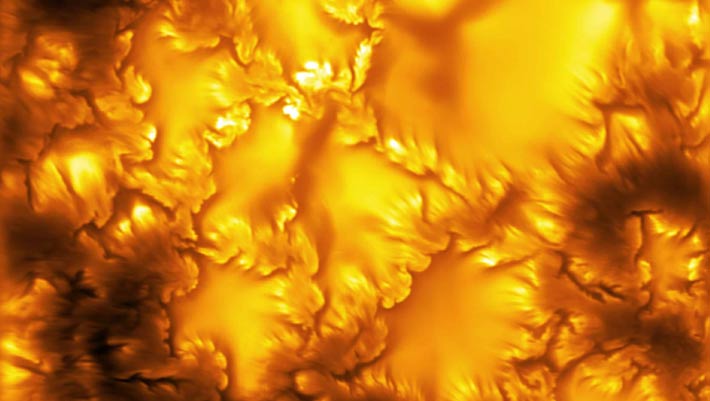
The highest-resolution image of the Sun’s surface (photosphere) ever captured, taken at 416 nm by the Inouye Solar Telescope; it reveals deformed boundaries of magnetic elements and ultra-fine scale stripes, both associated with Kelvin-Helmholtz instability. Image credit: NSF / NSO / AURA / MPS.

Astronomers using the 4-m Daniel K. Inouye Solar Telescope in Hawaii have detected tiny plasma vortices on the Sun’s surface (photosphere) for the first time, revealing a long-suspected process that could transport energy into the million-degree corona.

The post Inouye Solar Telescope Discovers Hidden Plasma Vortices on Sun appeared first on Sci.News: Breaking Science News.

  •  

Study Points to Sugar, Not Just Meat, as Fuel for Human Brain Evolution

Paranthropus boisei. Image credit: Β© Roman Yevseyev.

A team of researchers from the University of Sydney and the University of Glasgow argues that dietary sugars, not animal foods, may have played the decisive role in the expansion of the human brain over the past 4 million years, as hominin brain size grew nearly fivefold, from about 300 grams in early relatives like […]

The post Study Points to Sugar, Not Just Meat, as Fuel for Human Brain Evolution appeared first on Sci.News: Breaking Science News.

  •  

Dodo Had Surprisingly Keen Sense of Smell and Owl-Like Vision, New Study Reveals

The dodo (Raphus cucullatus) by Frederick William Frohawk, 1905.

New research led by University of Lethbridge scientists offers the most detailed look yet at how the dodo (Raphus cucullatus) -- the flightless bird driven to extinction by the 1600s -- actually perceived its world, suggesting the β€˜stupid bird’ had a far more complex sensory life than its reputation implies.

The post Dodo Had Surprisingly Keen Sense of Smell and Owl-Like Vision, New Study Reveals appeared first on Sci.News: Breaking Science News.
  •  

La Brea Tar Pits Yield New Species of Ice Age Toad

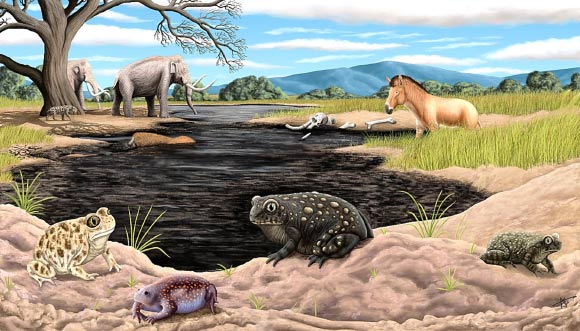
Reconstruction of Spea labreae (center and right) in La Brea Tar Pits compared with Spea hammondii (left), the species currently present in the area, and the presence of the Mexican burrowing toad (bottom). Image credit: Arturo DΓ‘valos.

Paleontologists studying the La Brea Tar Pits, one of the world’s richest Ice Age fossil sites, have identified a previously unknown species of spadefoot toad that lived in what is now California during the latest Ice Age.

The post La Brea Tar Pits Yield New Species of Ice Age Toad appeared first on Sci.News: Breaking Science News.
  •  

Scientists Add Unlikely New Member to World’s Carnivorous Plants

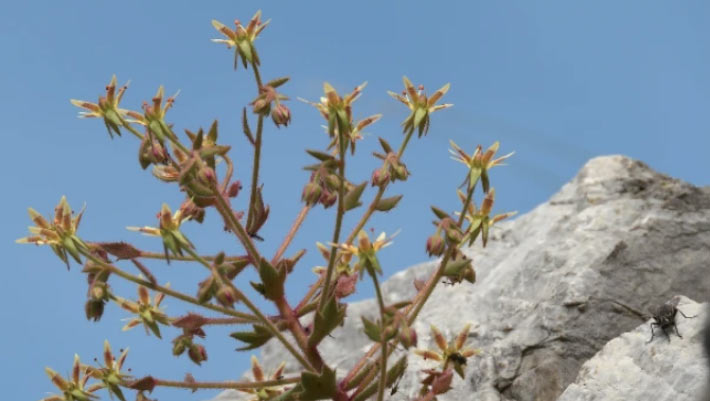
Morphology of Saxifraga candelabrum. Image credit: Zhang et al., doi: 10.1038/s41467-026-75288-y.

More than 150 years after Charles Darwin first wondered whether certain sticky-leaved Saxifraga plants might be secretly carnivorous, Kunming Institute of Botany researcher Tao Deng and colleagues say they have finally confirmed it.

The post Scientists Add Unlikely New Member to World’s Carnivorous Plants appeared first on Sci.News: Breaking Science News.
  •  

Tiny New Primate Species Emerges from 50-Million-Year-Old Wyoming Sandstone

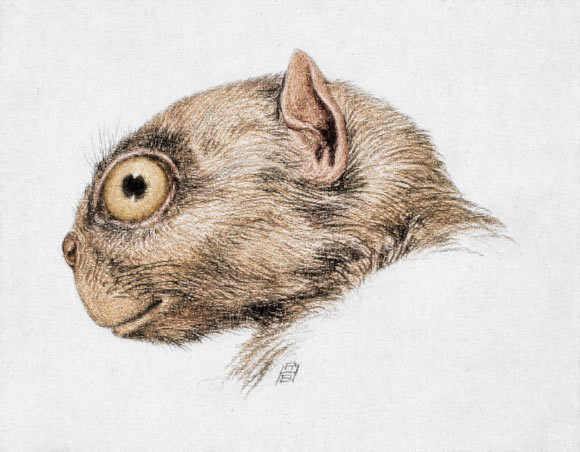
Tetonius homunculus (colorized) by R. Bruce Horsfall from W.B. Scott’s History of Land Mammals in the Western Hemisphere.

Paleontologists working in southern Wyoming have identified a previously unknown species of omomyid primate, adding a new chapter to the story of one of the best-studied fossil lineages in North America.

The post Tiny New Primate Species Emerges from 50-Million-Year-Old Wyoming Sandstone appeared first on Sci.News: Breaking Science News.
  •  

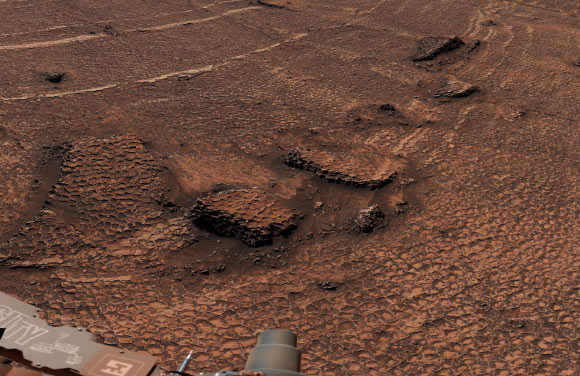
Curiosity Finds Massive Field of Honeycomb-Shaped Fractures on Mars

The polygon fractures discovered by Curiosity in Gale crater, Mars. Image credit: NASA / JPL-Caltech / MSSS.

NASA’s Curiosity rover has stumbled on the largest patch of polygon-shaped ground fractures it has ever seen on Mars, a discovery that could reveal more about the planet’s watery past.

The post Curiosity Finds Massive Field of Honeycomb-Shaped Fractures on Mars appeared first on Sci.News: Breaking Science News.
  •  

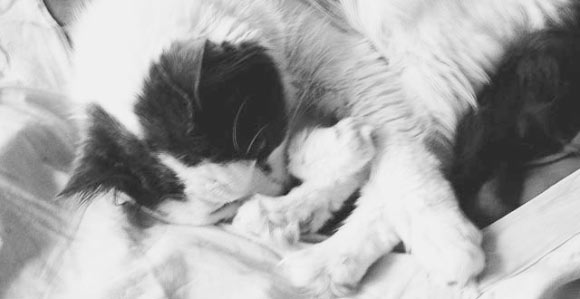
Moving Cat Indoors is Easier than Owners Expect: Study

The owner experiences of transitioning cats indoors suggest that, for most owners and cats, a transition to indoor cat management is manageable and worthwhile. Image credit: Natali Anderson.

Moving a free-roaming cat indoors for good is a decision many owners approach with dread: guilt over confining a former outdoor explorer, worry about litter boxes and scratched furniture, and doubts about whether the cat will ever adjust.

The post Moving Cat Indoors is Easier than Owners Expect: Study appeared first on Sci.News: Breaking Science News.
  •  
  •  

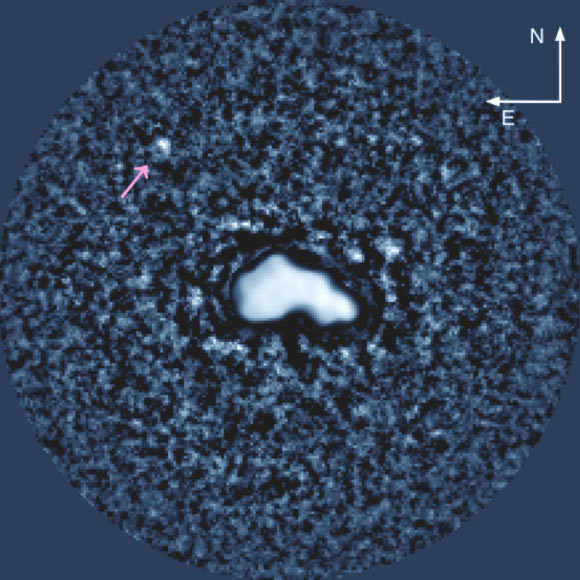
Astronomers Discover First-Ever Three-Lobed Asteroid

This image of the Nysa system was captured on February 15, 2026. Image credit: Minker et al., arXiv: 2607.25786.

High-resolution images from ESO’s Very Large Telescope and the Large Binocular Telescope reveal that the E-type asteroid (44) Nysa may be unlike any other world in the Solar System, with three connected lobes and a newly discovered satellite that could help explain how the bizarre object formed.

The post Astronomers Discover First-Ever Three-Lobed Asteroid appeared first on Sci.News: Breaking Science News.
  •  

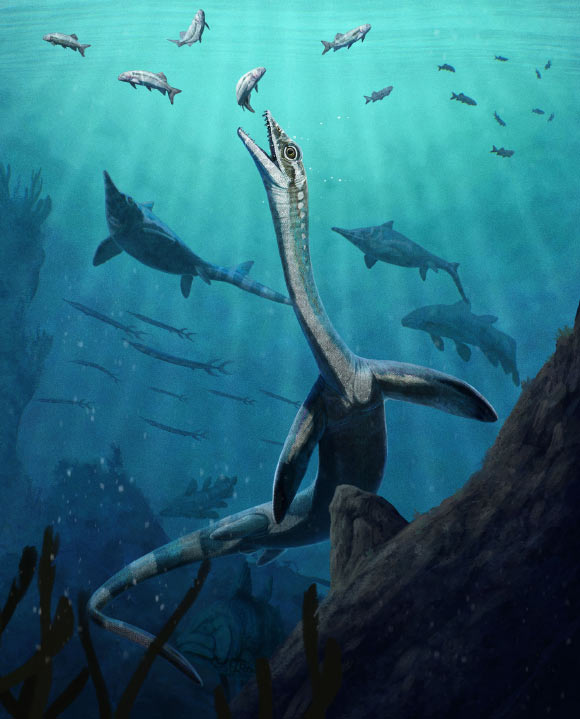
244-Million-Year-Old Fossil Preserves Earliest Reptilian Digestive System

Life reconstruction of Austronaga minuta. Image credit: Gabriel Ugueto.

An exquisitely preserved specimen of Austronaga minuta, a small, long-necked marine reptile from the Triassic of China, contains a fossilized stomach, liver and intestines, offering paleontologists their oldest detailed glimpse yet of how early reptiles digested food.

The post 244-Million-Year-Old Fossil Preserves Earliest Reptilian Digestive System appeared first on Sci.News: Breaking Science News.
  •  

Pluto’s Thin Atmosphere May Be Starting to Shrink

According to NASA scientists, complex chemical compounds called tholins give Pluto a distinctive blue haze. Image credit: NASA / Johns Hopkins University Applied Physics Laboratory / Southwest Research Institute.

Pluto’s tenuous atmosphere appears to have begun contracting after years of holding steady, according to a new study published in the Planetary Science Journal.

The post Pluto’s Thin Atmosphere May Be Starting to Shrink appeared first on Sci.News: Breaking Science News.

  •  

Scientists Propose New Strategy in Fight against High Blood Pressure

Potassium-rich foods include fruits, vegetables, legumes and dairy. Image credit: Jasmine Lin.

In a perspective paper published in The American Journal of Clinical Nutrition, a team of researchers and health experts calls for a β€˜paradigm shift’ in how public health agencies address hypertension.

The post Scientists Propose New Strategy in Fight against High Blood Pressure appeared first on Sci.News: Breaking Science News.

  •  
❌