The MacVoices Live! panel dives deep into Apple’s across-the-board price increases, weighing rising RAM, storage, inflation, shareholder obligations, and product value. Chuck Joiner, David Ginsburg, Brian Flanigan-Arthurs, Ben Roethig, Eric Bolden, Marty Jencius, Jeff Gamet, Norbert Frassa, Jim Rea, and Web Bixby debate whether higher prices are a short-term reset or the new normal, how buyers may react, why the MacBook Neo increase stings, and whether refurbished or education pricing may become more important.
At NAB in Las Vegas, Alex Mavlios of Epidemic Sound explains how the company licenses music by acquiring full rights from artists, then offering secure usage across podcasts, video, social media, broadcast, and film. He addresses copyright risks, monetized content, artist royalties, pricing from creator plans to enterprise licenses, and why perpetual licensing helps creators avoid future rights disputes.
The MacVoices Live! panel examines Spotify adopting Apple-backed video podcast technology, Instagram’s disappearing posts and why anyone would want them, and Microsoft expanding Copilot everywhere, whether it is a good idea or not. Chuck Joiner, David Ginsburg, Jeff Gamet, Guy Serle, Web Bixby, Eric Bolden, Marty Jencius, and Jim Rea also look at the risks of putting AI mini data centers in homes, and Plex’s major lifetime Pass price hike.
The MacVoices Live! panel discuss privacy, AI, and digital trust, comparing Meta’s Instagram encryption rollback with Apple’s RCS encryption in Messages. Chuck Joiner, David Ginsburg, Eric Bolden, Brian Flanigan-Arthurs, Marty Jencius, and Jeff Gamet also examine an AI lawsuit involving a chatbot posing as a doctor, plus AI customer service, Apple Wallet, and user trust in technology.
Conforme visto pelo 9to5Mac, a receita gerada por apps que não são jogos bateu um recorde de US$24,4 bilhões, com um crescimento expressivo de 14,6% em relação ao mesmo período do ano passado. Em termos absolutos, foram 25,5 bilhões de downloads no segundo trimestre.
Por outro lado, os jogos apresentaram uma queda de 5,9% em relação ao trimestre anterior, ficando abaixo dos US$20 bilhões pela primeira vez nos últimos nove trimestres — o que pode representar um indício de crise para o setor, pelo menos no mercado mobile.
Quanto aos mercados com o maior número de downloads de apps, o Brasil segue na terceira colocação com 2,43 bilhões de softwares baixados — uma queda de 2%. O país está atrás apenas da Índia (com 6,66 bilhões de downloads) e dos Estados Unidos (com 3,08 bilhões).
A pesquisa também apresentou os gêneros de jogos que mais se destacaram, com a IA generativa liderando esse recorte graças um aumento de 108% ao ano. Segundo os dados, 60% dessa categoria é representada pelo ChatGPT, que cresceu nada menos que 82% ao ano.
O app da OpenAI, inclusive, foi o mais baixado do mundo nos últimos três meses, sendo seguido pelo TikTok e pelo Instagram.
O TikTok também esteve na lista dos que mais geraram receita, ocupando a primeira colocação à frente do ChatGPT e do Google One.
Announcement of Opportunity Astrophysics Explorers Program 2026 Small Explorer (SMEX) Amended Text Released
10 August 2026
The National Aeronautics and Space Administration (NASA) Science Mission Directorate (SMD) announces the release of Amendment #1 to the Announcement of Opportunity (AO) to solicit Principal Investigator (PI)-led space science investigations for the Small Explorer (SMEX) opportunity under the Astrophysics Explorers Program on the NASA Solicitation and Proposal Integrated Review and Evaluation System (NSPIRES). To find the full amended AO text and a copy of Amendment #1 visit https://nspires.nasaprs.com/, and select “Solicitations” at the top of the page, and on the next page in the search box, input the number “NNH26ZDA011O” or use the direct short URL https://go.nasa.gov/APSMEX26. In the event of any lapse in NASA operations, please visit NSPIRES for further information.
Changes within the AO text are noted by using bold for new text and strikethrough for deleted text. The proposal due date, September 9, 2026, remains unchanged. For a summary of the changes made to the AO, locate the Amendment #1 document on the right side of the AO landing page on NSPIRES. Additionally, the official Question and Answers (Q&A) document has been updated on the Science Office for Mission Assessments (SOMA) web site at https://explorers.larc.nasa.gov/APSMEX26/SMEX.
All new questions or comments about the Astrophysics SMEX 2026 AO shall be addressed via email to Dan Moses, APSMEX26 Lead Program Scientist, dan.moses@nasa.gov; Hannah Jang-Condell, APSMEX26 Deputy Program Scientist, hannah.jang-condell@nasa.gov; and Omar Torres, Lead Acquisition Manager for the 2026 Astrophysics SMEX AO, SOMA omar.torres@nasa.gov using subject line “APSMEX26” to be properly routed. The Q&A period for the SMEX 2026 AO ends 14 days before the proposal due date.
Any costs incurred in preparing a submission in response to this notice or the full APSMEX26 AO are solely the responsibility of the submitter.
NASA Science
NSPIRES
NASA Solicitation and Proposal Integrated Review and Evaluation System
Com uma queda de 10% no segundo trimestre do ano, o mercado dos tablets recuou pela primeira vez em vários anos, num período que por norma tem muita procura para o regresso às aulas.
O analista Edison Lee, da firma de investimentos Jefferies, jogou hoje um balde de água fria sobre as expectativas de um modelo comemorativo do “iPhone 20”, citando o cancelamento do projeto desse dispositivo.
Conforme repercutido pelo Barron’s, Lee indica que o projeto foi cancelado devido ao “baixo rendimento de produção”. Não é possível afirmar, porém, se o analista acredita que o especulado redesenho foi cancelado ou apenas alguns aspectos dele.
Embora a Jefferies já tenha considerado plausível o lançamento de um iPhone feito inteiramente de vidro, Lee acredita que o desenvolvimento foi interrompido. Segundo o analista, verificações na cadeia de suprimentos sugerem que o projeto foi cancelado devido ao baixo rendimento de produção.
Fato é que, devido a essa previsão, a Jefferies rebaixou a recomendação das ações da Apple [$AAPL] de “manutenção” para um possível “desempenho abaixo da média”. Isso porque o modelo comemorativo deveria contribuir para uma maior participação das variantes Pro e Pro Max nas vendas, que oferecem margens de lucro maiores.
O analista cita, ainda, indícios de que o próspero iPhone dobrável — o “iPhone Ultra” — terá um preço mais elevado do que o esperado, de modo que ele poderá ser a única alavanca para a Apple aumentar seus preços médios de venda e suas margens de lucro.
No entanto, devido aos custos mais elevados de componentes de memória, a empresa prevê que o preço inicial do futuro modelo dobrável será de US$2.100, chegando a US$3.100 para a versão com 2TB de armazenamento.
Ainda em termos de memória, a firma de investimento também aponta para um aumento da memória DRAM 1Dynamic random access memory, ou memória dinâmica de acesso aleatório. exclusivamente no “iPhone 19 Pro Max”, que deverá ter 16GB — o que, segundo a análise, sinaliza um progresso no desenvolvimento da Apple Intelligence. Contudo, caso os preços das memórias continuem subindo até 2027, a empresa afirma que a Apple poderá descartar totalmente essa atualização.
De acordo com a firma, o custo de fabricação do “iPhone 18 Pro” de 256GB — ou seja, o modelo mais em conta dessa linha — ficará cerca de 38% maior em relação ao seu antecessor direto, tornando reajustes de preço do lado dos consumidores “inevitáveis”. Ela, no entanto, abre possibilidade de a Apple sacrificar um pouco da sua margem de lucro para estancar parte do impacto desses aumentos.
Isso, como não podia deixar de ser, tem a ver com a crise no mercado de DRAM 1Dynamic random access memory, ou memória dinâmica de acesso aleatório., que fez os chips de memória passarem a representar, no terceiro trimestre de 2026, aproximadamente 34% do valor total do smartphone, em contraste com os 10% de um ano atrás. O prognóstico para os iPhones de 2027 também não é muito animador, já que é esperado que esse número passe de 40% ainda na primeira metade do ano que vem.
Antes dessa crise, os componentes mais caros de um iPhone eram, com sobras, o processador e a tela. Caso a participação da memória no custo de fabricação realmente passe dos 40%, isso fará com que a fatia desses outros componentes caia para abaixo de 10% mesmo sem uma redução nos seus preços, tamanha é a pressão no mercado de DRAM atualmente.
Divulgação/TrendForce
Essa estratégia de sacrificar parte da margem de lucro, como lembrado pela TrendForce, foi empregada pela Apple nos últimos lançamentos de MacBooks — que, mesmo assim, sofreram aumentos expressivos recentemente. A firma de pesquisa também não exclui a possibilidade de a empresa aumentar os preços de modelos mais antigos de iPhones junto do lançamento dos novos aparelhos, o que serviria para compensar parcialmente o aumento dos custos de memória.
É, são tempos sombrios no mundo da tecnologia…
iPhone 17 Pro Max
Cores: prateado, laranja-cósmico ou azul-intenso Armazenamento: 256GB, 512GB, 1TB ou 2TB
NOTA DE TRANSPARÊNCIA: O MacMagazine recebe uma pequena comissão sobre vendas concluídas por meio de links deste post, mas você, como consumidor, não paga nada mais pelos produtos/serviços usando os nossos links de afiliado.
Se você acompanha os stories das contas que segue no Instagram, já deve conhecer o botão de reação, representado por um coração. Com ele, é possível reagir a uma postagem sem precisar escrever um comentário — como se estivesse curtindo o conteúdo do story.
Caso assine o Instagram Plus, você pode enviar supercorações (Super Hearts), que deixam os stories dos seus amigos mais especiais, com animações de corações vibrantes que explodem na tela.
Com o app aberto, abra uma publicação dos stories (no topo da aba do seu feed). Ou, se preferir, localize um perfil e abra a bolinha para ver esses posts.
Mantenha o ícone de coração pressionado para ver a animação de supercoração na tela.
Com a disponibilização do Instagram Plus, é possível tirar proveito de alguns recursos extras na rede social da Meta.
Um deles é a possibilidade de alterar o ícone do aplicativo, que aparece na Tela de Início do seu iPhone ou iPad. Dentre as opções disponíveis, está o ícone original do Instagram!
Micron used to produce some of the best RAM available to mainstream users through its Crucial brand. Despite the company's exit from the consumer market through its now-defunct Crucial brand, Micron had pledged to continue honoring warranties on existing Crucial products. A recent case on Reddit, however, highlights ongoing challenges with Micron's warranty process, where it reportedly offered a customer a ludicrouspayout for an RMA. Only after further communication did Micron provide an improved offer. Another user also chimed in with a similar story about an SSD return with Micron. We have reached out to Micron for comment.
Redditor Key_Tailor6948, who shared the email exchange with Tom's Hardware, recently shared their RMA experience with Micron's warranty process after encountering a failing memory module from a 48GB (2x24GB) DDR5 memory kit. While the Redditor did not specify the exact model of the memory kit, Crucial used to sell two such kits in this capacity: the Crucial Pro DDR5-6000 C48 and the Crucial Pro DDR5-5600 C46. The last known pricing for the memory kits was $489.99 and $459.99, respectively, during the memory shortage.
According to the Redditor, Micron allegedly said in an email that the company is no longer offering replacement products for warranty claims. Instead, Micron purportedly stated it would provide a refund based on the original purchase price, including taxes where applicable. However, the proposed refund amount was $241.86.
The major issue at hand is that the reimbursement Micron offered was based on the cost of the 48GB memory kit purchased before the recent memory shortage and the resulting price hikes. Nowadays, the most affordable 48GB DDR5 memory kit available on the market, such as a DDR5-6400 C32 one, which is faster than Micron’s discontinued offerings, starts at a staggering $649.99. The refund Micron proposed amounts to just 37% of the current market value for a somewhat comparable product. The Redditor's math about being 17% of market value and estimating similar-capacity memory kits going for “roughly $1,400" is a bit off based on verifiable pricing, but the proposed payment was still well short of current market value.
Beyond the disappointment over the low reimbursement, the Redditor expressed frustration that they had to send back the entire 48GB memory kit, even though only one of the two modules was faulty. This meant parting with a memory module that was still fully functional. Unfortunately, this is a common industry practice. Most manufacturers require the return of the full memory kit for warranty claims. It is exceedingly rare for companies to allow returns or replacements of only a single memory module from a multi-module kit, regardless of whether the other module is working perfectly. (EDIT 8/11/2026 : Micron's warranty states that it will either replace a product under warranty or refund the current market value of the product or the amount of the original purchase cost, whichever is lower. Therefore, Micron's offer is within the bounds of its warranty.)
The Redditor was also not happy about covering the shipping costs to return the defective memory module. This is another policy that varies widely among brands: some manufacturers cover all shipping fees, others split the cost, so you cannot really single out Micron in that aspect.
It would seem that Micron subsequently offered a more favorable resolution. The company agreed to send the user three Crucial Pro DDR5-6400 C32 16GB (CP16G64C32U5B) memory modules as a replacement. This solution matches the original capacity of 48GB and also delivers better performance than the user's original memory kit. The user accepted the offer.
Meanwhile, Crucial SSD owners are seemingly experiencing similar RMA practices from Micron. A Reddit user named LeanaIsTheBest highlighted in the same thread that Micron is allegedly refusing to provide direct replacements for a failing 4TB SSD. Instead, the company ostensibly offered a gift card equivalent to the original purchase price of the 4TB SSD as compensation. However, the company provided an alternate option to receive the same amount in cash through PayPal or Venmo, with the condition that the user pays the 6% transaction fee.
Micron wound down its consumer business back in December 2025. It is reasonable to think the chipmaker has reshaped its manufacturing factories to cater to more profitable markets, such as data centers and the AI sector. Micron probably is not maintaining inventory or production lines for consumer products, so direct replacements are unlikely. For a company that reported revenue of $41.46 billion in its last earnings call, it isn't a great look for Micron to not reimburse the replacement cost for loyal customers who have purchased its Crucial products.
The best RAM on the market generally utilizes integrated circuits (ICs) from industry giants such as SK hynix, Samsung, or Micron. Recently, however, Chinese chipmaker ChangXin Memory Technologies (CXMT) has emerged as a strong competitor amid the ongoing global memory shortage. In Colorful's latest overclocking exhibition, CXMT's ICs achieved speeds up to DDR5-8800 on AMD's X870E platform, keeping pace with the best overclocking ICs, such as SK hynix's A-die and M-die.
Many often regard CXMT as an underdog in the memory industry, particularly when compared to the "Big Three." Founded only a decade ago, the ambitious Chinese chipmaker eventually became China's largest domestic memory manufacturer and is now the fourth-largest memory maker globally.
The recent memory shortage has accelerated CXMT’s rise to fame. The chipmaker has been silently gaining ground in the memory market. Its momentum has been especially evident in the DDR5 segment despite the company having only unveiled its first DDR5 ICs in November 2025. Many top Chinese memory brands, including Asgard, Colorful, Gloway, and KingBank, are widely using CXMT ICs, and even Corsair has done so to a certain extent.
Colorful showed off an incredible overclock with its iGame Shadow II DDR5-6000 C34 memory kits, pushing both the 32GB (2x16GB) and 48GB (2x24GB) configurations far beyond their rated speeds. These kits reached DDR5-8812 and DDR5-8817, respectively, on Colorful's iGame X870E Vulcan W OC motherboard. Unfortunately, the screenshots provided by Colorful were too blurry to discern detailed specifications such as memory timings or DRAM voltage. For context, some high-end DDR5-8800 memory kits typically operate at timings around 42-55-55-140 with a voltage of 1.45V.
colorful igame shadow ii 16x2 kit (cxmt 2gb dies) reached 8800mhz mt100% on colorful igame x870e vulcan w oc (2dimm).reaching 8800 for 16x2 is very impressive and much harder to achieve compared to 24x2. based on the pattern we see with hynix dies, for example in z890 qvl, you… https://t.co/XzcS7SaJjV pic.twitter.com/g4aaQ3Q9SgAugust 6, 2026
The noteworthy aspect is that Colorful achieved the overclocking feat on 16GB memory modules. Most, if not all, DDR5-8600 and faster memory kits currently on the market come with 24GB memory modules. The reason is that many use SK hynix’s 24Gb (3GB) M-die ICs, produced on the chipmaker's advanced 1a-nm (~14nm) process node with Extreme Ultraviolet (EUV) lithography. These M-die ICs are the go-to choice for memory vendors thanks to their superior density, power efficiency, and ability to scale to higher frequencies.
In comparison, CXMT’s accomplishments are notable when considering the technological challenges. Due to U.S. export restrictions on China, CXMT does not have access to cutting-edge EUV equipment, so its 16nm node, which it uses for DDR5 ICs, leverages Deep Ultraviolet (DUV) machines instead. CXMT’s 16nm process is roughly in the same alley as the 1z nm (~14–15nm) nodes previously used by the Big Three, so CXMT is easily a few years behind the top-tier process nodes.
The reality is that CXMT will have to make do with what it has. The chipmaker is already developing a 1a-nm node but on DUV. It is far from prime time, though.
In addition to seeing CXMT ICs in mainstream memory kits, companies such as HP, Asus, and Acer have already started selling consumer devices, such as laptops or desktops with CXMT memory. Even Apple reportedly wants to buy memory chips from CXMT.
CXMT recently went public via IPO and saw its stock price skyrocket by 466%, raising over $8.6 billion. Without access to EUV machinery, CXMT will focus primarily on memory production and is rapidly building factories across China. The ambitious Chinese chipmaker hopes to steal 30% of the market share from the Big Three by 2030. It is just a matter of time before we start seeing CXMT ICs in all the prominent consumer memory brands.
Software performance expert, scientist, and GitHub developer Daniel Lemire compared historical computer memory prices and showed that decades of falling prices were undone in just a matter of months because of the massive demand for HBM. According to his X post, this event is a historical anomaly, and he cannot think of an instance where technology hardware prices reverted to levels from decades before.
On a historical basis, computer memory has been falling at an exponential rate for decades. But we just undid about 20 years of progress. RAM on a per unit basis is about as expensive as it was in 2007.To my knowledge, it is an historical anomaly. I cannot recall a similar… pic.twitter.com/UH6LgZ1fc4August 5, 2026
“RAM on a per unit basis is about as expensive as it was in 2007,” Lemire said. He also added, “I do not think anyone can predict what will happen, but I am guessing that we either find a way to build AI systems without so much memory, or we find really clever ways to make much more memory much faster.”
We also checked third-party data compiled and maintained by David Shim for theStanford DAM Project. The latest price for DDR5 memory sits between $13.28 and $11.41 per GB — the last time RAM hit this price was in 2008, when the price for DDR2 hovered by $15 and 11.00 per GB. These are based on nominal USD values, though. If we take 2024 inflation into account, the current amount for DD5 is between $12.74 and $10.94 per GB, which was last achieved in 2011, when DDR3 prices were at $11.85 per GB.
Technological advances, especially in manufacturing and miniaturization, meant that tech became cheaper over time. This has been true ever sincethe first general-purpose digital computer was created 80 years ago. ENIAC cost the government $400,000 in 1946, meaning it would probably cost around $6,850,297.44 today. However, its computing power equaled roughly 5,000 additions per second — by comparison, one of the cheapest smartphones you can get today, theMoto G Play, is on sale for $99.99. This smartphone is powered by a Snapdragon 680 processor with AI performance of 3.3 TOPS — that is 3.3 trillion operations per second. We can’t really compare the ENIAC to a modern processor, but it at least shows us the scale by which technology has advanced, and prices have dropped.
The massive increase in memory prices in recent times wasn’t caused by technological regression or a bottleneck in supply — instead, it’s themassive demand for HBM driven by the AI race. “The memory output is increasing by around 20% per year. Now, normally, that would be fantastically fast and amazing for any large, mature industry, but ask yourself, ‘Is the demand increasing by 20% a year?” Elon Musk said during the last SpaceX earnings call. “No, the demand is increasing by 200% a year, maybe higher.”
Other experts and industry leaders agree with Musk. The chairman of the SK Group, the holding company that owns memory chip manufacturer SK hynix, said thatRAM prices are “abnormally high,” and that the industry must take steps to increase supply and lower prices. Even RAM that uses chips from Chinese manufacturer CXMT, which some people look to as a cheaper alternative,generally tracked the prices of modules that use chips from the big three (Micron, Samsung, and SK hynix).
Aside from computers, other industries are already being affected by the shortage, includinggraphics cards,smartphones, gaming consoles, and evenautomobiles. We do not know how long the current memory crisis will last, but the situation is unsustainable and “something has to give.” The scary thing is that nobody knows what would happen if and when that time comes.
Ruling comes as part of second phase of landmark trial that found social media company enabled harm against users
A New Mexico court has ordered Meta, the parent company of Facebook, to pay $567m into a fund aimed at redressing adverse mental health impacts from the social media giant’s platforms.
The Thursday ruling comes as a part of the second phase of a landmark trial the social media giant lost in March. At the time, a jury found that the company knowingly harmed children’s mental health and concealed what it knew about child sexual exploitation on its platforms, and imposed the maximum penalty: a $375m fine.
In a striking reversal of traditional supply-chain dynamics, China’s ChangXin Memory Technologies (CXMT) has rebuffed Apple’s requests for lower prices on mobile DRAM, according to industry reports. The move underscores a severe shortage in general-purpose memory chips and hands greater negotiation leverage to South Korea’s Samsung Electronics and SK Hynix.
Apple had been exploring CXMT as a potential new supplier of LPDDR5X and other mobile DRAM for upcoming iPhones and smart devices, aiming to ease manufacturing cost pressures amid soaring memory prices. Sources indicate the iPhone maker sought further price reductions during negotiations. CXMT refused, instead holding firm at levels matching or even exceeding those charged by Samsung and SK Hynix.
The Chinese manufacturer’s bold stance stems from robust domestic demand. Companies such as Huawei and Xiaomi have locked in large volumes of CXMT’s DRAM through high-priced, long-term contracts. This push for supply-chain self-reliance has been intensified by ongoing U.S. semiconductor restrictions on China. With strong local orders secured, CXMT has little incentive to accommodate Apple’s stricter quality requirements or discount demands.
The episode highlights a broader market shift. Major memory producers have redirected significant wafer capacity toward high-bandwidth memory (HBM) to meet surging demand from AI servers and accelerators. This has sharply reduced output of conventional DRAM products like DDR5 and LPDDR5X, triggering a pronounced shortage—sometimes called “memflation” — and rapid price increases across the sector.Big tech firms that once used Chinese low-cost alternatives as leverage in annual pricing talks with primary suppliers now find that strategy ineffective. The low-cost “bypass” route has effectively closed, transferring pricing power from device makers to memory manufacturers.
For Samsung and SK Hynix, the developments create a favorable cycle. CXMT’s absorption of substantial Chinese commodity DRAM demand relieves the Korean firms of pressure to supply lower-margin general-purpose chips. They can instead prioritize higher-value AI memory products, including HBM4, LPCAMM2, and enterprise SSDs. Industry observers note that this positions the Korean companies with stronger control over global pricing in negotiations with major customers in the second half of the year.
One semiconductor industry source described the situation as unusual: CXMT is effectively supporting a floor under general DRAM prices while Samsung and SK Hynix consolidate leadership in premium AI memory. As a result, the Korean firms’ operating margins and market influence are expected to strengthen further.
Earlier this year, Apple had lobbied the U.S. government for clearer approval to source from CXMT, which appears on a Pentagon list of companies with alleged Chinese military ties. Memory cost pressures had already prompted Apple to raise prices on some Mac and iPad models. The latest reports suggest any potential deal with CXMT would not deliver the hoped-for cost savings.
MacDailyNews Take: The memory shortage is widely expected to persist well into 2027 and possibly beyond, as new fab capacity takes years to come online and AI-related demand continues to outpace supply growth. In this environment, the balance of power in the DRAM market has tilted decisively toward suppliers, particularly those focused on advanced, high-margin products.
Please help support MacDailyNews — and enjoy subscriber-only articles, comments, chat, and more — by subscribing to our Substack: macdailynews.substack.com. Thank you!
As NASA sets its sights on long-term exploration of the Moon and Mars, the agency is increasing the cadence of its Artemis missions. Helping bring these plans to fruition is Tom Percy, manager of systems engineering and integration for NASA’s Human Landing System Program.
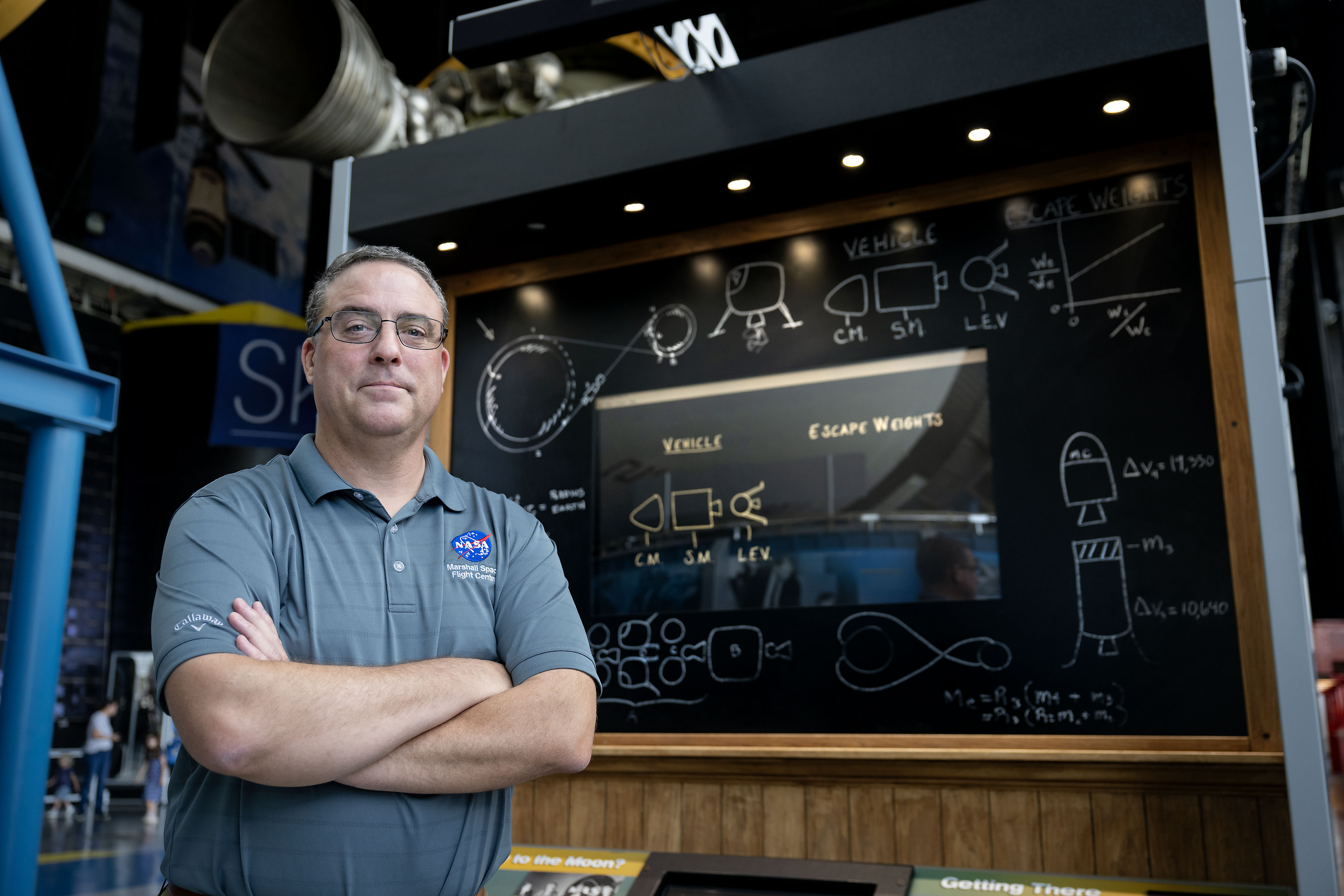
Tom Percy, manager of systems engineering and integration for NASA’s Human Landing Systems Program, stands in front of an Apollo Program lander exhibit at the U.S. Space and Rocket Center in Huntsville near NASA’s Marshall Space Flight Center.
NASA/Charles Beason
Percy serves as a focal point in working with providers SpaceX and Blue Origin to accelerate and streamline systems designs, manufacturing, testing, and certification. He ensures the crewed landers that SpaceX and Blue Origin are developing for Artemis are designed, built, tested, and will operate with other NASA exploration assets safely and effectively.
“You might say that all human landing system integration work lands on my desk. And with the rest of my talented, hard-working systems engineering and integration team, we’re working to make it all happen,” Percy said.
A native of North Easton, Massachusetts, Percy earned a bachelor’s degree in mechanical engineering from the Rochester Institute of Technology in Rochester, New York, where he first got hands-on experience working on designs that could be applied to NASA’s sustainable lunar architecture.
“As an undergrad, I served as president of the Rochester Institute of Technology’s chapter of the American Society of Mechanical Engineers. To get some real-world engineering experience, we decided to participate in the Great Moonbuggy Race,” Percy said. “Now called the Human Exploration Rover Challenge, the competition is held annually at NASA’s Marshall Space Flight Center in Huntsville, Alabama.
“At the time, I had never heard of Marshall Space Flight Center,” said Percy. “But our student team designed and built a rover and traveled to Huntsville for the race. That’s when I learned about some of the projects in Marshall’s diverse portfolio that the center works for NASA. And that’s when I began planning to make my way to NASA Marshall for my career.”
Percy chose to move south and earn a master’s degree in aerospace engineering from the Georgia Institute of Technology in Atlanta. His research in the advanced propulsion lab and courses in space systems design culminated in a spacecraft design course and the chance to work directly with engineers at Marshall.
Since landing at Marshall in 2003, Percy has been involved in evaluating transportation architecture options for human deep space exploration, including missions to land astronauts on the Moon and Mars. He also has expertise in space transportation, including advanced propulsion technology development; trajectory analysis; and spacecraft and mission concept development. Percy earned a doctorate in aerospace systems engineering from the University of Alabama in Huntsville.
The range of experience comes together in his current role as manager of human landing systems engineering and integration.
“The world watched the amazing success of Artemis II. NASA and our commercial providers are looking forward to flying again soon and executing increasingly complex Artemis missions,” Percy said.
Through the Artemis program, NASA will send astronauts on increasingly complex missions to explore more of the Moon for scientific discovery, economic benefits, establish an enduring human presence on the lunar surface, and to build on our foundation for the first crewed missions to Mars.

 Login