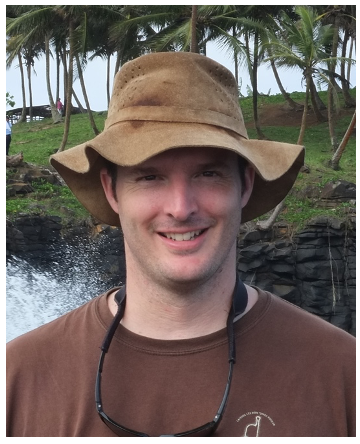
Cynthia Null: The knowledge of how human cognition systems work and how they’re evolved has led to a lot of misconceptions and oversimplifications in human performance. And miscalibration of how humans contribute to the system and system performance can be problematic. And so, it’s important that you actually understand how humans do what they do, so you can actually support their work.
Host Andres Almeida: That’s Dr. Cynthia Null, talking about a scientific discipline important to mission success. It’s called human factors, and it’s about how people interact with the systems they design, build, and operate. As the NASA Technical Fellow for Human Factors, Dr. Null provides technical leadership and expertise on how human capabilities and performance are considered across the agency. Let’s dive in on this episode of Small Steps, Giant Leaps.
[Intro music]
Welcome to Small Steps, Giant Leaps, the podcast from NASA’s Academy of Program/Project & Engineering Leadership, or APPEL. I’m your host, Andres Almeida. I’m talking with Dr. Cynthia Null, who’s joining us from NASA’s Ames Research Center in Silicon Valley.
Hi, Cynthia, thanks for joining us.
Cynthia Null: Well, great to be here.
Host: Can you tell us a bit more about your role and what you do at NASA?
Null: Yes, I’m the technical fellow for human factors at the NASA Engineering and Safety Center. The NASA Engineering and Safety Center was formed after the Columbia accident to create a ready team that’s independent of programs and projects and has deep expertise.
And what we deliver is robust understanding of risk and possible risk mitigations for mission safety and success for any project or program mission across all of NASA.
There are 21 different disciplines that have a Technical Fellow. And my job as a Technical Fellow, is to have insight into how human factors is used or not used across all missions, not just human spaceflight, but aeronautics, science missions, technology developments, whatever.
Now, we don’t get involved in everything because we, we’re a limited size group, and we’re in workplaces where we can influence risk and mission success. So, part of my job is just general insight.
Because what comes to the NESC are questions or issues or concerns that approach might be wrong, if a question comes in that might have human factors needs, then I would find someone with the right expertise to be on that team.
Sometimes, the questions are just generally human factors questions at which point I would lead the team, but sometimes it’s a, it’s a software development project. But there’s [a] piece of it that human factors would have some influence in.
Or, for example, we’ve looked at parachutes, and part of the problems with parachutes are actually just making them, not just designing them. And so, the making them, of course, is all done by hand. And so, we might do a human factors investigation of the processes and procedures, and those kind of things related to manufacturing, for example.
Host: You’re talking about parachutes for spacecraft landing on other worlds, yeah?
Null: Yes, spacecraft. Well, or landing back here. Orion comes down on a spacecraft. Dragon comes down on a chute. Or, yeah, it could be chutes for Mars or some other place we’ve landed, and so you want those things to work. They usually have some sort of redundancy, but not always.
It’s really critical that you have all aspects of it, so you can go through all your materials and sizing and all that other kind of stuff, but if there’s a problem with manufacturing, then that could be change your risk posture. Then it wouldn’t come up in your analysis, but it could come up in flight. So, that would be a place where we could help.
And we might just decide that actually it’s a brilliant process, and they’re doing everything they can to control it, or we might have recommendations.
Host: Can you give a straightforward explanation of what human factors entails?
Null: I’ll try!
[Laughter]
So, to start with, human factors is a scientific discipline. It’s based on the understanding of human capability as well as the interactions amidst humans and all other elements of the system and mission.
So, work our discipline is based on actually started with the understanding of human sensory systems and the development of quantitative methods to describe them.
This work was actually done by some very famous physicists in the 19th century, people you’ve probably heard of or studied. Hermann von Holtz [and] Ernst Mach are two of those people who actually not only did amazing discoveries related to physics, but also developed methodologies to understand eyes, ears. They discovered the vestibular system, which helps with balance. Those techniques that they developed to do quantitative descriptions are still used today, and they’ve been modified to deal with perception, not just sensation, and also how we think.
So, human factors enhances mission safety, efficiency, success, and all those kind of things by developing requirements, tools, processes, and procedures to make the humans in the system successful.
The knowledge of how human cognition systems work and how they’re evolved has led to a lot of misconceptions and oversimplifications in human performance. And miscalibration of how humans contribute to the system and system performance can be problematic. And so, it’s important that you actually understand how humans do what they do, so you can actually support their work.
Host: Is it important for human factors to be considered early in mission development? Is that something that you feel strongly about?
Null: Very strongly. So, the thing is, when you’re, when you’re conceiving a mission, you’re also conceiving what humans will do and what they won’t do. And so, you can early on decide that you’re going to have a fully autonomous mission, and you can, and you can design it without the considering having human crew. And whether it’s crew on the ground or crew in space, that’s a decision you can make.
But when you then can’t actually make everything work without real-time human decision-making, then you sort of have to step back and start all over again to figure out what their roles are really going to be.
So, defining the human role and understanding what that role is and what you need to support that role is really critical.
Host: Was human factors, as a discipline, shaped by lessons learned?
Null: Well, yeah, it might look like that, but people were doing human factors and doing proactive human factors starting as early as World War II.
So, one of the big problems in World War II, and it may have been problems before that, but I guess probably with communication systems and all these other kind of things, maybe it was less apparent. But a big problem for, for in World War II was just keeping planes in the air, keeping them and repairing them when they came back, and so maintenance became a huge issue.
And one of the problems with maintenance can be: Have you actually designed for maintainability? So, if you can’t access the part of the engine you need to repair, then you have to actually take the engine off. If you have to take the engine off, okay, that plane is going to be in the repair area much longer than if you can repair it in place. And so, access becomes a very, very important thing.
So, in the very, just after World War II, the field of human factors hadn’t been named yet, but people who had been involved in solving problems in World War II for the military came from major universities on the East Coast: Harvard, Penn, probably Yale, a few others, and those people were then contracted to the government to develop guidance on how to do designs for future mission systems. And right in those design books, right in the lectures about those designs, they started with, “We need to design for the mission from the beginning.”
So, the first book that was a guidance book on how to write human factors, the first chapter is called “The System.” The first bullet, it just says you have you, all of our contractors as well as the – this is written this, is written in the early ‘50s – all of our contractors, as well as all of our in-house designers, believe that you have to do designs starting at the system level.
So, the notion of systems engineering is written, is the first paragraph in this human factors book. And paragraph 1.1 is entitled “The Human in the System” and how you have to work on designing for all the roles the human is going to have in the system, which could be engineer, like design engineer. It could be manufacturing. It could be maintenance. It could be operations. It could be the crew member, right? It could be anyone, right?
And all of those people are valuable assets to the mission, and they all need to be counted for. And you have to make sure that they have the information they need, the tools that they need, and that they have everything else that they need, like access, for example. And so, all of those things were actually talked about from the beginning in human factors.
Now, that doesn’t necessarily mean that’s the role we had in every system design once we said that’s what we needed. But it has been the mantra of human factors from the beginning that you actually had to think about the design, and that when we weren’t patching stuff that people forgot about that we were actually actively working on design.
And in the early ’50s, people were asking questions, all sorts of questions at all sorts of different levels about how you should do human factors. So, one of the simple, simple questions is, if you need somebody to respond to something really quickly, like hit the off button, or hit the escape button, or something like that. And the question was, how big does the button have to be so you can find it and hit it quickly?
And what they decided was that there was a tradeoff between speed and accuracy, and there was also a tradeoff between size and distance. So, if the button was far away, it had to be much bigger because you’re just sort of trying to hit it with your hand. And so, if it’s small, then you can’t get to it.
And so, there’s actually a law called Fitts’s Law, named after a military human factors person from the, this is early ‘50s, where he actually described an equation: If the button’s close, like on your armrest, then it doesn’t have to be very big. But if it’s going to be out in front of you on the on the front displays on say an airplane or wherever, then it has to be big enough that you can just jam your hand in some direction and you won’t miss it.
Now, we also said, “But if you don’t put a cover on it, they could accidentally bump into it.” And so, the other thing we said is, “Important things like aborts should have a cover on them so you don’t elbow into them accidentally because you don’t really want to do that unless it’s intended.” So, what you have to be going for if it’s far away, [it] has to be big, but it also has to be protected from just being bumped into accidentally.
Host: You just made me think of an everyday example. I go to a gym where there’s a treadmill that has an emergency stop button in the center. And I’m moving my arms and I frequently hit it. It’s a large red button. I frequently hit it and I stop.
Null: Exactly. So, what we would do in safety critical systems is we would put a cover on that. Or we might have, you know, you have to hit it twice, or you have to do something so that it takes two actions instead of one.
But yes, I’ve been on those treadmills, and I do realize that it, yeah, it’s easy to hit them off. But it’s also good to have that there because if you are actually falling, you really do want that off instead of being thrown to the back.
[Laughter]
And usually in a gym, those treadmills, the rows between them are not that far. You could hit your head on the one behind you if you’re not careful. So, it’s good that it’s there, but you’re right. If it’s too easy to hit, that’s a problem. And so, those are actually how human factors thinks about everything, okay? And so, so that’s the, that’s sort of the problem.
But people then say, “Oh, I can think like a human factors person. I’m a human.” So, there are lots of misconceptions about how humans actually work.
Host: I bet there are. What are some?
Null: Well, so, one of them is that humans are maybe sort of bad at sort of probability or understanding risk or making decisions that are involved like that.
And so, a long time ago, people interested in this topic actually did some research, and their subjects were either novices or actually experts in the field, and one of the studies was done with medical decision-making.
And they gave a scenario, and half of the people got a scenario that was about a particular treatment for a disease, and it described this treatment, and then it said the survival rate was 90 percent.
For another treatment, they described this treatment (entirely different treatment) and they described it in terms of its mortality rate, as opposed to its survival rate. And they said its mortality rate was 10 percent. And so, they asked both novices and doctors, “Would you prefer treatment A or treatment B?” Now, notice that 90% survival and 10% mortality are actually the same risk.
Host: Right.
Null: But almost everyone picked the survival, and this was seen as being emotional, sort of, tagging, right? That you were having emotional response instead of a perceptual response.
So, some people who actually know a little bit more about how the brain works decided to redo the experiment, and the only thing they changed was how they represented the survival rate and the mortality rate. And in the new experiment, they said that nine out of 10 people would survive in the first, and one out of 10 people would die in the second.
And the bias towards survive, the survival metric went away, so that it wasn’t actually in the main, the emotional tagging. It was actually that humans are actually better at frequency than probability. So, let’s just think about this.
I have a favorite meal that I like to have on Sundays at my house, and it’s fresh fish. And you don’t want to buy that several days in advance. And so, when I’m running errands on Sunday, I try to drive by a grocery store or a place where I’ve been before that I think the fish might be good, and buy some fish on my way home. So, it’s been, it’s been properly chilled until I get it to my kitchen and then I can cook it.
So, over time, I’ve noticed that there are stores when I go into I often don’t have fish, so maybe once I’ve gotten fish there, and another place I’ve gotten fish, like, five or six times in a row. It appears that people think that way, as opposed to saying, “Oh, the probability I get fish from this market is…” and so that since we live our lives more like on frequency basis and not on, on collecting all the data and running a probability theory, it might be more natural for us to understand things presented in the way that we run our lives (in frequency, as opposed to changing into probability).
Now, that doesn’t mean you can’t get people to be sophisticated about both the same representation of the facts. But if you’re just asking for a quick response or you’re doing a quick analysis, it may be actually better to present data as frequency data than as probabilistic data because that’s sort of a capability we have that we’ve had probably since the Serengeti.
[Laughter]
Because knowing where predators were or food was (one to avoid and one to find) would have been very, very important, and you probably weren’t thinking of it as a risk probability, but more of an experience that would be that way. And so, I think that gives you a little bit of an example of how it’s completely counterintuitive to expect that someone would interpret 90% and nine out of 10 as different, right?
But actually, it takes less training to get people to do it without with, with having it as a frequency than it would be having it as a probability. And so, if you’re trying to have safe, reliable, quick, resilient performance, then it’s important to match human capability. And we always don’t understand what our capability is.
Host: Right.
That’s the end of part 1 of our interview with Cynthia Null, NASA Technical Fellow for Human Factors. Stay tuned for part 2 of where Cynthia will detail more of the myths and misconceptions of how the human brain works.
For a transcript and to hear all other episodes, visit nasa.gov/podcasts. While you’re there, check out our other podcasts like Houston, We Have a Podcast, Curious Universe, and Universo curioso de la NASA. As always, thanks for listening.
Outro: Three. Two. One. This is an official NASA podcast.
The post Episode 182: Human Factors: Designing Systems with People in Mind – Part 1 of 2 appeared first on NASA Science.

 Login