
Reading view

When Food Runs Short, This Single-Celled Organism Turns into Giant Cannibal to Survive
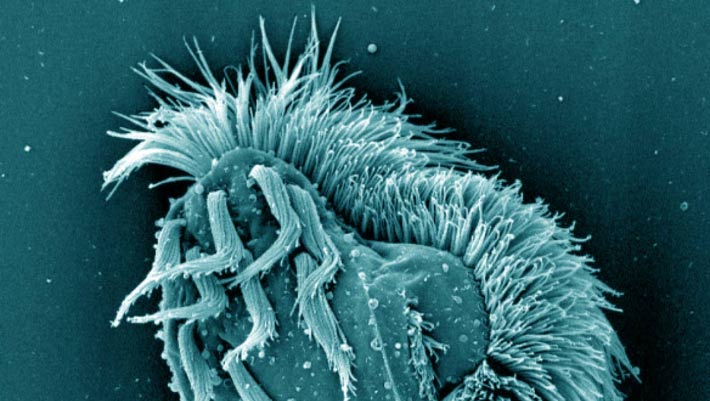
Euplotes gigatrox. Image credit: Ben Larson & Samuel Lord.

Euplotes gigatrox, a new species of ciliate collected from a seawater filtration system on the Caribbean Island of Curaçao, can transform into a cannibalistic ‘supergiant,’ raising new questions about the complexity of life at the microscopic scale.

The post When Food Runs Short, This Single-Celled Organism Turns into Giant Cannibal to Survive appeared first on Sci.News: Breaking Science News.

  •  

Meteorite Found in Africa Preserves Evidence of Long-Lost Massive Protoplanet

This is an artist impression of the protoplanetary disk around HD 107146. Image credit: A. Angelich / NRAO / AUI / NSF.

The Northwest Africa (NWA) 12774, an angrite meteorite discovered in the Sahara Desert, likely in Mauritania, appears to be a fragment of a vanished protoplanet, offering the strongest evidence yet that a large planetary body formed and was later destroyed during the Solar System’s chaotic infancy.

The post Meteorite Found in Africa Preserves Evidence of Long-Lost Massive Protoplanet appeared first on Sci.News: Breaking Science News.
  •  

Ancient Oceans Began Losing Oxygen Millions of Years before End-Triassic Mass Extinction

Early Earth. Image credit: Peter Sawyer / Smithsonian Institution.

Chemical traces preserved in ancient rocks indicate that marine environments were deteriorating long before the catastrophe that wiped out vast numbers of species at the end of the Triassic period, around 201 million years ago.

The post Ancient Oceans Began Losing Oxygen Millions of Years before End-Triassic Mass Extinction appeared first on Sci.News: Breaking Science News.
  •  

Astronomers Detect Clearest Signs Yet of Magnetic Fields on Extrasolar Planets

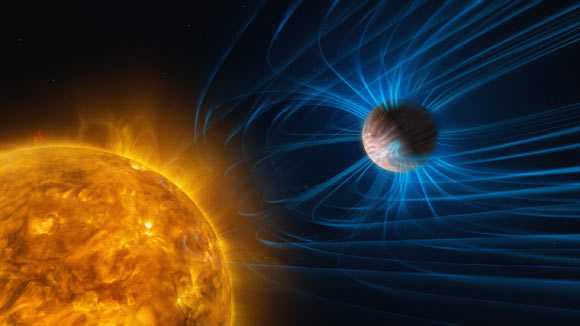
This illustration shows magnetic activity in an ultra-hot Jupiter. Image credit: ESO / M. Kornmesser / L. Calçada.

By tracking fierce winds racing through the atmospheres of seven ultra-hot Jupiters, astronomers have uncovered the strongest evidence yet that magnetic fields shape weather on worlds beyond our Solar System.

The post Astronomers Detect Clearest Signs Yet of Magnetic Fields on Extrasolar Planets appeared first on Sci.News: Breaking Science News.
  •  

Paleontologists Identify New Hyaenodont Species in Pakistan

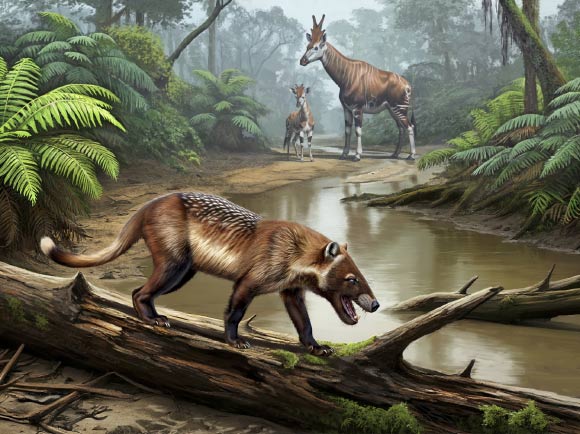
Metapterodon anari. Image credit: Steven Jasinski / SergeyAtrox1.

Paleontologists have recovered the fossilized remains of three hyaenodont species, including one previously unknown to science, from Miocene sediments in Pakistan.

The post Paleontologists Identify New Hyaenodont Species in Pakistan appeared first on Sci.News: Breaking Science News.
  •  

490-Million-Year-Old Arthropod Fossil Fills Puzzling Gap in Fossil Record

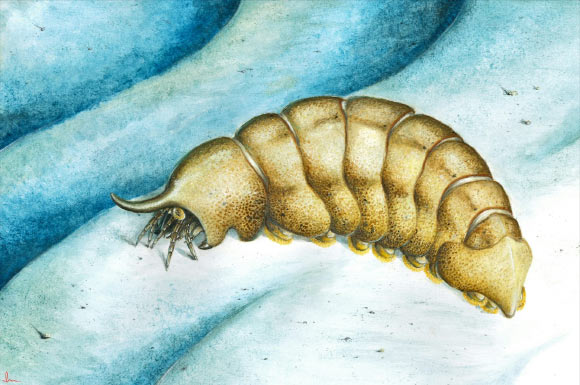
Life reconstruction of Magnicornaspis garwoodi. Image credit: Thomas Turner.

A new species of corcoraniid arthropod that lived during the Furongian epoch, between 497 and 487 million years ago, has been identified from an exceptionally preserved specimen found near Québec, Canada.

The post 490-Million-Year-Old Arthropod Fossil Fills Puzzling Gap in Fossil Record appeared first on Sci.News: Breaking Science News.
  •  

New Dinosaur Species from Argentina May Have Specialized in Catching Fish

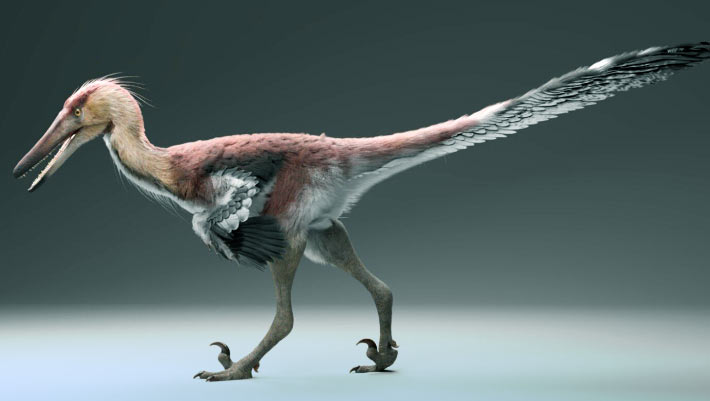
Life reconstruction of Kank australis. Image credit: Gabriel Díaz Yantén.

Paleontologists in Argentina have identified a previously unknown species of unenlagiid dinosaur that stalked freshwater wetlands during the Late Cretaceous epoch, adding to evidence that some dinosaurs specialized in catching fish.

The post New Dinosaur Species from Argentina May Have Specialized in Catching Fish appeared first on Sci.News: Breaking Science News.

  •  

Webb Spots Supermassive Black Hole Older Than Its Home Galaxy

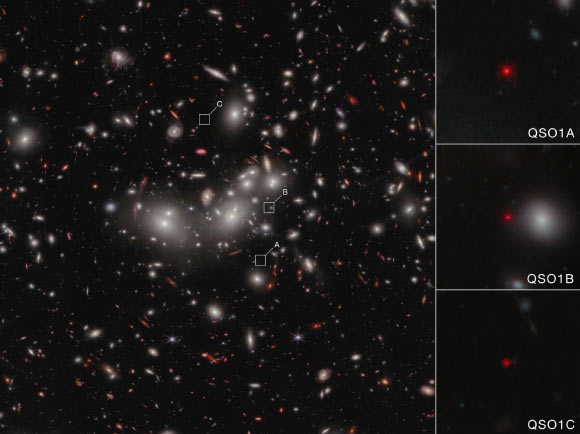
This Webb/NIRCam image shows the little red dot Abell2744-QSO1, magnified and triply imaged by galaxy cluster Abell 2744. Image credit: NASA / ESA / CSA / Lukas Furtak, Ben-Gurion University / Alyssa Pagan, STScI.

Astronomers using the NASA/ESA/CSA James Webb Space Telescope have found an enormous black hole in the early Universe that appears to predate its own host galaxy, raising fresh questions about how the cosmos’ first supermassive monsters were born.

The post Webb Spots Supermassive Black Hole Older Than Its Home Galaxy appeared first on Sci.News: Breaking Science News.

  •  

Fungi Bloomed Twice around End-Cretaceous Mass Extinction

The end-Cretaceous mass extinction was marked by both the Chicxulub asteroid impact and the ongoing eruptions of the Deccan Traps volcanoes.

By studying fungal microfossils in 66-million-year-old rock samples from the Denver Basin in Colorado, Johns Hopkins University microbiologists have confirmed that the dinosaur-killing asteroid impact triggered a worldwide fungal takeover, and uncovered a second, previously unknown ecological crisis just before it.

The post Fungi Bloomed Twice around End-Cretaceous Mass Extinction appeared first on Sci.News: Breaking Science News.
  •  

Is Dark Energy Unnecessary? Mathematicians Challenge Standard Cosmological Model of Universe

This artist’s impression shows the evolution of the Universe beginning with the Big Bang on the left followed by the appearance of the Cosmic Microwave Background. The formation of the first stars ends the cosmic dark ages, followed by the formation of galaxies. Image credit: M. Weiss / Harvard-Smithsonian Center for Astrophysics.

Mathematicians from University College London and the University of California, Davis, have published a mathematical proof that the Universe’s accelerating expansion can be explained without dark energy, dealing a serious blow to the Lambda-cold dark matter model.

The post Is Dark Energy Unnecessary? Mathematicians Challenge Standard Cosmological Model of Universe appeared first on Sci.News: Breaking Science News.
  •  

Cretaceous Bird from China Had Pair of Tail Feathers Twice as Long as Its Body

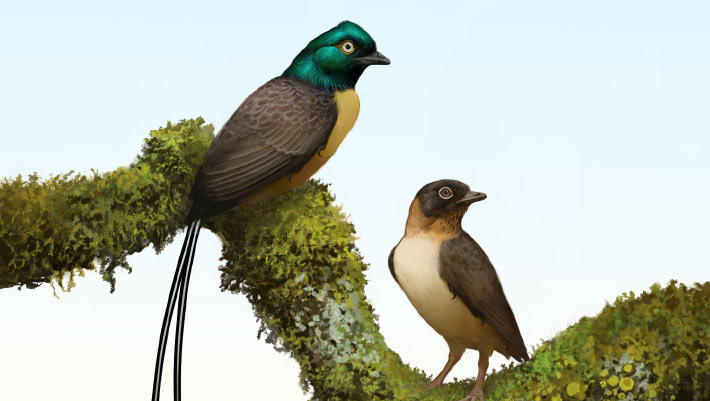
Plumadraco bankoorum is a new bohaiornithid enantiornithine bird with a pair of exceptionally long rectrices. Image credit: Ville Sinkkonen.

Named Plumadraco bankoorum, the newly-described species of enantiornithine bird lived in what is now northeastern China during the Cretaceous period, roughly 121 million years ago.

The post Cretaceous Bird from China Had Pair of Tail Feathers Twice as Long as Its Body appeared first on Sci.News: Breaking Science News.
  •  

Study: Early Complex Life Forms Were Bottom-Dwellers

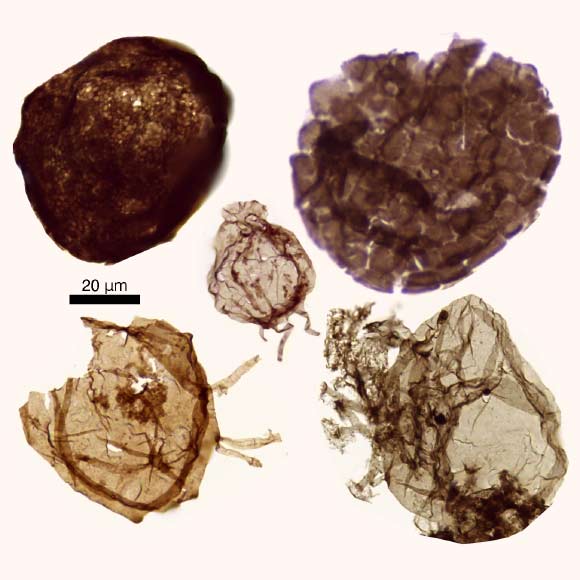
Fossil eukaryotes from Northern Territory, Australia. Image credit: Lechte et al., doi: 10.1038/s41586-026-10533-4.

Analyzing 1.75-billion-year-old microfossils from ancient Australian seabeds, paleontologists say ancient eukaryotes -- the ancestors of every plant, animal and fungus -- huddled in oxygenated seafloor patches for over a billion years before breaking free into open water.

The post Study: Early Complex Life Forms Were Bottom-Dwellers appeared first on Sci.News: Breaking Science News.

  •  

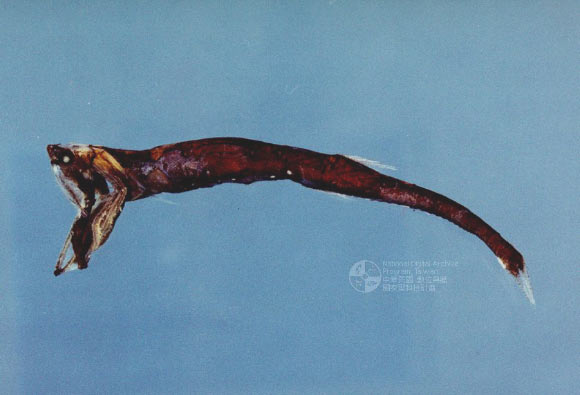
Bioluminescent Deep-Sea Fish Use Crystal ‘Prisms’ to Recycle Their Own Glow

Sigmops gracilis. Image credit: Wu Quancheng / Fisheries Research Institute, Council of Agriculture, Taiwan.

A marine biologist studying the photophores of a bioluminescent fish species found needle-shaped guanine crystals that scatter and redirect light instead of merely reflecting it, a discovery that could inspire more efficient biomedical and optical devices.

The post Bioluminescent Deep-Sea Fish Use Crystal ‘Prisms’ to Recycle Their Own Glow appeared first on Sci.News: Breaking Science News.
  •  

Tomato-Soy Drink May Help Fight Chronic Inflammation in Adults with Obesity

Tomato-soy juice contains high levels of lycopene and soy isoflavones.

In a small clinical trial, researchers at the Ohio State University found that a tomato juice rich in lycopene and soy isoflavones lowered several proteins linked to chronic inflammation, raising hopes for food-based therapies.

The post Tomato-Soy Drink May Help Fight Chronic Inflammation in Adults with Obesity appeared first on Sci.News: Breaking Science News.

  •  

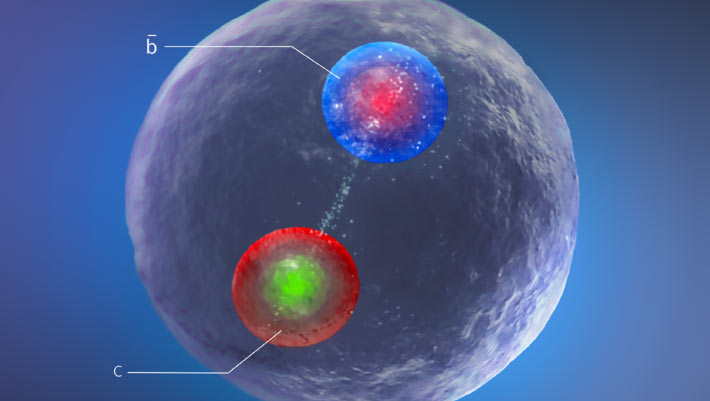
CERN Physicists Observe New Exotic Particle

An artist’s impression of the Bc*+ meson. Image credit: Daniel Dominguez / CERN.

Physicists with the ATLAS Collaboration at CERN’s Large Hadron Collider (LHC) have observed the Bc*+ meson, an excited version of the Bc+ meson -- both consist of a charm quark and a bottom antiquark.

The post CERN Physicists Observe New Exotic Particle appeared first on Sci.News: Breaking Science News.
  •  

Cows Can Recognize Familiar Human Faces, New Study Finds

Amichaud et al. found that cows not only recognize human faces, but can connect them with familiar voices. Image credit: NeiFo.

New research led by scientists from the French National Institute for Agriculture, Food, and Environment (INRAE) suggests cows (Bos taurus taurus) can distinguish between known and unknown people, and even match a familiar voice to the correct face.

The post Cows Can Recognize Familiar Human Faces, New Study Finds appeared first on Sci.News: Breaking Science News.

  •  

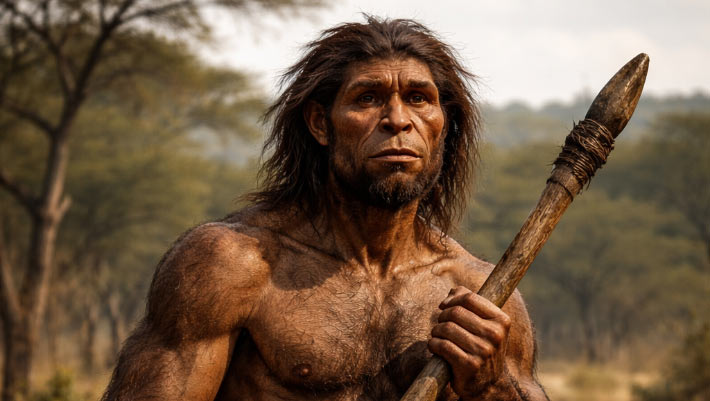
Upright Walking and Larger Brains May Explain Why 90% of Humans Favor Their Right Hand

Reconstruction of Homo erectus.

New research from the University of Oxford and the University of Reading suggests bipedalism and expanding brain size helped drive the overwhelming dominance of right-handedness in humans.

The post Upright Walking and Larger Brains May Explain Why 90% of Humans Favor Their Right Hand appeared first on Sci.News: Breaking Science News.

  •  
❌