Normal view

Increasing Hail Threat Raises Risks for Winter Crops in Transit

3 June 2026 at 15:52

Hailstorms, notorious for their sudden onset and localized devastation, have long been a bane to agriculture, capable of erasing months of hard work in mere minutes. They exhibit a stark spatial patchiness, sometimes devastating crops in one field and leaving the adjacent one untouched. A groundbreaking study published recently in Nature Climate Change by scientists from UNSW Sydney provides new insights into how the geography and seasonality of hail hazards are evolving in response to global warming, with significant implications for global food security and agricultural risk management.

The core finding of the study is striking: as the planet’s climate warms, the atmospheric conditions conducive to hail formation are not simply increasing or decreasing uniformly but are shifting latitudinally. Specifically, regions that are relatively cooler, such as southeastern Australia and New Zealand, along with parts of northern North America and Europe, are projected to experience an uptick in hail-prone atmospheric conditions. This contrasts with many warmer subtropical and mid-latitude zones—including substantial parts of Australia, India, China, and Africa—where hail risk may decline, albeit with considerable uncertainties.

Lead author Dr. Tim Raupach of the UNSW Institute of Climate Risk and Response describes this phenomenon as a poleward migration of hail hazard frequency. Model projections under scenarios of 2°C and 3°C global temperature rise reveal that hail risk is not just moving towards cooler latitudes but also shifting temporally toward cooler seasons such as winter. This seasonal shift implies that agricultural regions growing winter crops could face heightened hail threats even if summer hail incidents decrease.

The study’s approach to assessing hail risk is innovative and necessary given the complex nature of hailstorms. Direct modeling of hailstone formation and impact remains an enormous challenge due to the brief lifespan, small spatial scale, and meteorological complexity of hail events. Instead, the researchers employed multiple atmospheric proxies indicative of hail-prone conditions—such as updraft intensity and freezing-level heights—drawing on three distinct methodologies to robustly capture the underlying physical processes.

These proxies, however, do not always present a unified picture. Divergences, especially notable in tropical zones, illustrate how global warming simultaneously amplifies and suppresses different aspects of hailstorm formation. For example, warmer atmospheres inject more convective energy into storms, intensifying updrafts that can support larger hailstone development. Conversely, elevated freezing levels in warmer air mean hailstones are more likely to melt before hitting the ground, resulting in fewer reported hail events despite intense storm activity. This “atmospheric tug of war” complicates predictions and underscores persistent uncertainties in future hail hazard modeling.

Despite the potential decline in overall hailstorm frequency in some regions and seasons, the study emphasizes a troubling trend: storms that do produce hail in a warmer world may unleash larger, more destructive hailstones due to the enhanced storm dynamics. This possibility raises acute concerns for agricultural sectors where even sporadic hail impacts can cause catastrophic yield losses and economic disruption.

The research expands beyond meteorology to link these changing hail hazards with the phenology of agriculture. By examining 26 globally significant crop types, the study quantifies projected changes in crop exposure to hail-prone conditions during their growing seasons. This integration reveals that crops cultivated during cooler seasons—particularly winter cereals like wheat in southeastern Australia—may confront increasing hail risks. This poses a formidable challenge since hail damage during key developmental stages can irreversibly impair crop productivity.

Southeastern Australia emerges as a regional hotspot for rising hail hazard. Data trends from both historical records and future climate projections concur that this broad arc, stretching from Tasmania through Melbourne toward Sydney, faces increasing frequency and intensity of hail-favorable atmospheric conditions. Given Australia’s pivotal role as a global wheat exporter, these findings have profound implications for food security and commodity markets.

The nuances of the findings pose formidable challenges for farmers, insurers, and policymakers trying to navigate this evolving risk landscape. Unlike gradual climate stressors such as drought or heatwaves, hail damage often manifests abruptly and unevenly, complicating risk assessments and insurance underwriting. The poleward and seasonal shifts may also unsettle existing assumptions about climate adaptation in agriculture. As warming enables poleward migration of crop zones, new agricultural frontiers might be exposed to emerging hail threats, potentially negating some anticipated benefits of climate-driven range expansion.

Dr. Raupach underscores that despite complexities and lingering uncertainties, the overarching message is clear: hail hazard is not static under climate change but is migrating poleward and manifesting more prominently in cooler seasons. This insight provides a critical framework for more targeted climate resilience planning and resource allocation in agriculture and disaster risk reduction.

Supporting this research is QBE Insurance, through their research and development head, Dr. Joanna Aldridge, who highlights the importance of expanding the scientific evidence base for hail risk. Such knowledge is instrumental to enabling better risk modeling, disaster preparedness, and strategic decision-making not only within farming communities but also in related sectors like insurance and emergency management.

Historically overshadowed by other agricultural climate risks such as drought and bushfires, hail’s destructive potential has often been underestimated. However, this study sends a clarion call regarding hail’s immediate threat to crop yields, especially in the context of shifting climatic and atmospheric dynamics. The convergence of these shifting hazards could potentially erode some of the gains projected for certain agricultural regions under moderate warming scenarios.

Looking ahead, the study motivates further research into fine-scale hail risk modeling and improved observational networks tailored to hail phenomena. Such advancements would strengthen predictive capabilities and help better prepare vulnerable farming systems for the vagaries of a changing climate.

In sum, while the warming Earth reconfigures many patterns of extreme weather, the shifting landscape of hail risk stands out as a critical yet underappreciated aspect of climate change’s impact on agriculture. This emerging understanding equips scientists, policymakers, and the agricultural sector with vital knowledge to anticipate and mitigate one of nature’s swiftest and most damaging storms.


Subject of Research:
Shifting patterns of hail hazard and their projected impacts on crop hail risk under global warming scenarios.

Article Title:
Shifting hail hazard under global warming and effects on crop hail risk

News Publication Date:
3-Jun-2026

Web References:
https://www.nature.com/articles/s41558-026-02660-7

References:
Raupach, T., Sherwood, S., et al. (2026). Shifting hail hazard under global warming and effects on crop hail risk. Nature Climate Change. DOI: 10.1038/s41558-026-02660-7

Keywords:
Climate change, hailstorms, agriculture, crop risk, meteorology, storm dynamics, extreme weather, convective updrafts, freezing-level height, southeastern Australia, poleward climate shifts, climate adaptation

Addressing the Shortage of Addiction Medicine Specialists: A Call to Action

3 June 2026 at 04:50

Australia is confronting an escalating crisis in addiction, with approximately one in thirty individuals meeting the diagnostic criteria for substance use disorders. Despite this alarming prevalence, addiction medicine remains an obscured and underdeveloped specialty within the medical profession, with only about 300 practitioners dedicated to this field nationwide. This discrepancy between growing societal need and limited workforce capacity has caught the attention of researchers at Flinders University, who are advocating for systemic changes to expand the addiction medicine workforce through enhanced training pathways, early exposure, and increased awareness.

New research spearheaded by Flinders University reveals that the root cause of the shortage of addiction medicine specialists is not a lack of interest but rather a pervasive lack of awareness surrounding the specialty itself. Their qualitative study, recently published in BMC Medical Education, underscores that many medical professionals only stumble upon addiction medicine serendipitously during their medical rotations or professional conversations, significantly hampering the recruitment process and workforce growth. This structural invisibility within medical training perpetuates the workforce bottleneck, even as the demand for specialized addiction care continues its upward trajectory.

Currently, Australia’s addiction medicine workforce consists of 245 fully qualified specialists and 68 trainees, numbers dwarfed by the 3.3% of the national population grappling with substance use disorders. This workforce is not only inadequate in size but also aging, with an average age of 62 among specialists, signaling imminent retirements that will further deplete this already sparse pool. Consequently, these demographic trends compound the urgency for intervention to ensure the sustainability and future capacity of addiction medicine healthcare services.

The Flinders research team conducted in-depth interviews with 22 addiction medicine fellows and trainees across Australia and New Zealand, aiming to elucidate what motivates clinicians to pursue this specialty and identify impediments that deter potential candidates. Their findings reveal that while many practitioners find addiction medicine work intrinsically meaningful and impactful, institutional barriers—such as protracted training durations and financial disadvantages related to lower trainee remuneration—impede the field’s expansion, discouraging many potential entrants.

Senior author Dr. Kirrilly Thompson, affiliated with Flinders’ National Centre for Education and Training on Addiction (NCETA), articulated the critical gap between the soaring need for addiction treatment and the limited workforce supply. She describes addiction medicine as “one of medicine’s best-kept secrets,” emphasizing that the specialty’s rewarding impact is often unknown to early-career doctors. Dr. Thompson advocates for systematic educational reforms to introduce addiction medicine earlier in medical curricula, thereby facilitating informed career choices and fast-tracking trainee recruitment to meet urgent healthcare demands.

The research highlights that the current reliance on incidental exposure to addiction medicine—through chance placements or informal peer counsel—is unsystematic and insufficient. Lead researcher Yusra Tawfic, conducting the study as part of her MD program, observed that early clinical and experiential exposure to this specialty during medical training could dramatically increase interest and recruitment. “You cannot pursue a career in a field if you don’t know it exists,” Tawfic states, underscoring the necessity for medical schools to embed addiction medicine into their core clinical teaching and offer hands-on experiences to students and junior doctors.

Conjoint Professor Adrian Dunlop, a co-author and practicing addiction medicine specialist based at the University of Newcastle, further reinforces the argument by reflecting on positive trainee feedback regarding skill development in diverse clinical settings, including hospitals and community care. He stresses that without a sufficient number of specialists, equitable access to high-quality addiction treatment across urban and rural Australia remains unattainable, undermining public health outcomes and perpetuating systemic health disparities.

The Flinders team calls for several practical measures to address workforce shortages, including the expansion of clinical placements specifically focused on addiction medicine, clearer and more accessible career pathways, and financial support mechanisms to mitigate income loss during training phases. These initiatives aim to lower the barriers that disproportionately affect prospective trainees and to stimulate rapid workforce growth commensurate with community needs.

This research also sheds light on the broader implications for healthcare systems worldwide, as addiction medicine is fundamentally interdisciplinary, integrating pharmacological, psychological, and social interventions. Developing a robust addiction medicine workforce is essential not only for treating individual patients but also for mitigating the widespread social and economic burdens of substance use disorders. The findings encourage policymakers and educational institutions to recognize addiction medicine’s pivotal role in public health planning and resource allocation.

By revealing the stealth nature of addiction medicine’s appeal and the structural challenges that inhibit its recognition, this study provides a compelling roadmap for transforming addiction medicine from an obscure niche into a mainstream, rewarding specialty. The dedication to enhancing workforce capacity is positioned as a keystone in tackling the burgeoning addiction crisis, ensuring that compassionate, evidence-based care is accessible to all Australians who need it.

In conclusion, the new qualitative insights from the Flinders study underscore a critical need to destigmatize and promote addiction medicine as a viable, fulfilling medical career. Early educational integration, strengthened support infrastructure, and a strategic focus on recruitment and retention could collectively reverse the current workforce deficits. Addressing these challenges is imperative not only for healthcare professionals but also for the millions of Australians striving toward recovery, highlighting addiction medicine’s vital place within the future of medicine.

Subject of Research: People
Article Title: “Probably one of medicine’s best kept secrets”: Preliminary qualitative insights into motivations and concerns regarding addiction medicine specialisation in Australasia
News Publication Date: 26-May-2026
Web References: https://link.springer.com/article/10.1186/s12909-026-09480-5
References: Tawfic Y, Bartram A, Bowden J, Dunlop A, Thompson K. “Probably one of medicine’s best kept secrets”: Preliminary qualitative insights into motivations and concerns regarding addiction medicine specialisation in Australasia. BMC Medical Education. 2026. DOI: 10.1186/s12909-026-09480-5
Image Credits: Created by Yusra Tawfic, Flinders University

Keywords: Addiction medicine, workforce shortage, substance use disorders, medical training, specialist recruitment, Australia, healthcare workforce, addiction treatment, clinical training pathways, medical education, workforce aging, addiction medicine awareness

Australian Totalitarian “Hate Speech” Law | Criticism of Israel is Now Illegal

22 January 2026 at 09:16
The new Australian "hate speech" legislation criminalizes criticism of Israel or Jewish identity, potentially labeling such discourse as harassment. Attorney-General Michelle Rowland confirmed that if Jewish Australians feel intimidated, related actions could be prosecuted. Critics warn this undermines democracy and enables totalitarian practices by silencing political opposition.

The Dangers of Australia’s New “Hate Speech” Legislation

21 January 2026 at 02:10
Australia's hate speech laws are under debate after passing the House of Representatives. Critics argue the definition of hate speech is subjective, potentially threatening free speech. Concerns arise over the bill’s ability to target legitimate political discourse while seemingly failing to address extremism comprehensively. A crucial Senate vote is pending.

Scientists Thought This Species Was Extinct for Decades—A Chance Photograph in Remote Australia Just Proved Otherwise

27 May 2026 at 13:00

Researchers say that a discovery in remote northern Australia has revealed that a species thought to have been driven to extinction more than half a century ago has been rediscovered in the wild.

The discovery was made possible by a chance photograph uploaded to the citizen science platform iNaturalist, which came to the attention of researchers.

Now, scientists have confirmed that Ptilotus senarius, a delicate shrub that grows in some of the outback’s most sparsely populated regions and possesses a distinctive purple-pink flower, has been rediscovered in rugged terrain near the Gulf of Carpentaria in Queensland.

The species hasn’t been documented by naturalists in the wild since 1967 and was long thought to have gone extinct.

An Australian Shrub Springs Back from Extinction

The remarkable discovery initially surfaced when Aaron Bean, a professional horticulturalist, noticed the plant while working as part of a bird banding operation in a rugged portion of Australia’s northern outback. Intrigued by the colorful flower, Bean took photographs, which he later uploaded to iNaturalist, a popular website and app that allows users around the world to map and share observations of biodiversity.

Sometime later, Bean’s images on the platform eventually came to the attention of Anthony Bean, a botanist at the Queensland Herbarium who, ironically, shares the last name of the horticulturalist who made the initial discovery.

Ptilotus senarius
Ptilotus senarius, seen growing in one of northern Australia’s most remote regions (Image Credit: Aaron Bean/inaturalist.org/observations/288434421).

Their common name was perhaps only one of the many serendipitous circumstances related to the discovery, since the original images finding their way through millions of observations shared on the platform and coming to the attention of a Queensland Herbarium botanist was remarkable enough—add to that the fact that, in another surprising twist, Anthony Bean had formally described Ptilotus senarius himself roughly a decade earlier.

“It was very serendipitous,” said Thomas Mesaglio of the UNSW School of Biological, Earth and Environmental Sciences, who penned a recent paper documenting the discovery that appeared in the Australian Journal of Botany.

“Aaron Bean is an avid iNaturalist user who opportunistically took some photos of a few plants that were interesting on the property,” Mesaglio noted. Following the imagery that Bean obtained and its coming to the attention of the broader botanical community, researchers were dispatched to the property where the photos were captured, and, with the assistance of the landowners, the collection and confirmation of a specimen proved beyond any doubt that Ptilotus senarius survives.

A Breakthrough for Citizen Science

The rediscovery of Ptilotus senarius is not only a remarkable event for conservation efforts; it also highlights the growing importance of citizen science in biodiversity research.

With the availability of platforms like iNaturalist, members of the public with little more than a keen interest in the natural world can contribute valuable observations that often help advance science in meaningful ways.

In cases like this one, it can even lead to rediscoveries of species thought extinct or, in some instances, to the identification of entirely new species.

Thanks to such discoveries, several programs, including New South Wales’ Land Libraries initiative, have begun ramping up efforts to encourage landowners to document species on their properties and contribute observations to citizen science databases.

Among the most important pieces of information that citizen scientists can contribute are multiple photographs from various angles whenever possible. With regard to plants, being able to identify bark, stems, leaves, and other key features, as well as the surrounding habitat, can greatly help with accurate species identification.

Additional information that can assist with such identifications includes photos of soil conditions, nearby vegetation, scents the vegetation may produce, and information about local pollinators.

“The more information you can provide and the more context you can provide, the more potential uses that record will have in the future,” Mesaglio said.

Mesaglio’s paper, co-authored with Anthony R. Bean and Aaron Bean, is titled “Rediscovery of a presumed extinct plant species, Ptilotus senarius (Amaranthaceae), through iNaturalist,” and appeared in the Australian Journal of Botany.

Micah Hanks is the Editor-in-Chief and Co-Founder of The Debrief. A longtime reporter on science, defense, and technology with a focus on space and astronomy, he can be reached at micah@thedebrief.org. Follow him on X @MicahHanks, and at micahhanks.com.

BHP defies its own climate strategy to spend hundreds of millions on polluting diesel trucks in Pilbara

Exclusive: Mining giant says technology is not yet advanced enough to run a fully electrified fleet but experts say it is hooked on federal fuel tax credits

BHP has continued to spend hundreds of millions of dollars buying diesel trucks in the Pilbara despite internal documents suggesting it would increase emissions and be “misaligned” with its decarbonisation goals.

The mining giant is Australia’s biggest consumer of diesel and trucks are its biggest single source of diesel emissions. Replacing the fleet with battery-electric trucks is considered a critical step in the multinational’s efforts to decarbonise.

Continue reading...

© Composite: Guardian

© Composite: Guardian

© Composite: Guardian

Study: Early Complex Life Forms Were Bottom-Dwellers

27 May 2026 at 21:54
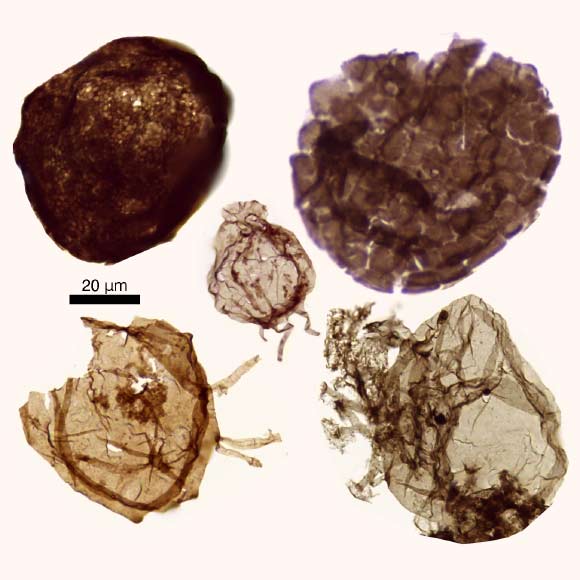
Fossil eukaryotes from Northern Territory, Australia. Image credit: Lechte et al., doi: 10.1038/s41586-026-10533-4.

Analyzing 1.75-billion-year-old microfossils from ancient Australian seabeds, paleontologists say ancient eukaryotes -- the ancestors of every plant, animal and fungus -- huddled in oxygenated seafloor patches for over a billion years before breaking free into open water.

The post Study: Early Complex Life Forms Were Bottom-Dwellers appeared first on Sci.News: Breaking Science News.

The BHP files: World’s biggest miner BHP backtracks on climate action with key projects put on ice, leaked documents reveal

Exclusive: Cache of internal documents leaked to the Guardian and the ABC’s Four Corners show multinational has war-gamed ways to massively delay decarbonisation

The world’s biggest miner has halted or delayed projects to cut vast amounts of emissions and has quietly war-gamed options to push major climate investments in its Western Australian iron ore operations into the next two decades, internal documents show.

An exclusive investigation based on documents leaked to the Guardian and the ABC’s Four Corners can reveal that BHP, one of Australia’s biggest historic emitters, has dumped plans for a facility that could have significantly reduced emissions and has put on ice renewable projects designed to power its iron ore operations in the vast, resource-rich Pilbara region.

Continue reading...

© Illustration: Guardian Design

© Illustration: Guardian Design

© Illustration: Guardian Design

‘Ocean with David Attenborough’ – masterpiece and call to action

8 June 2025 at 21:13

Wake-up call, and a call to arms The spectacular feature-length documentary ‘Ocean with David Attenborough’ is his very first partnership with National Geographic, now showing on Disney+ channel in Australia. With the great...

The post ‘Ocean with David Attenborough’ – masterpiece and call to action first appeared on Science Illustrated.

❌