Login
Login
Predicting Space Weather Is Possible—Could We Also Stop It?
The weather on Earth can get pretty messy sometimes. But in space, it can be wild—and the effects can be far-reaching.
Solar flares, giant explosions on the sun, can send out streams of energy that block radio communications and fry satellite electronics. Geomagnetic storms, caused by variations in solar wind, can mess with GPS signals and spark current surges on Earth that overload power grids.
The impact of space weather isn’t limited to temporarily losing electricity or digging out dusty paper maps for directions when satellite navigation systems fail. Every electronic financial transaction in the world, for instance, relies on time stamps sent by satellite systems. And, in May 2024, a solar storm threw out GPS systems used to accurately guide tractors in planting and harvesting crops, hobbling food production for days and costing US farmers $500 million.
Although satellites can be built with tougher shields or have their orbits adjusted, those are just Band-Aids; there’s currently little we can do to protect ourselves from space storms.
Boston University researcher Brian Walsh has an idea for how to change that. He’s been testing the theoretical feasibility of a system of spacecraft that could fire chemical elements to the edge of Earth’s magnetic field, temporarily fortifying our defenses and deflecting potentially damaging space weather. In simulations, Walsh and researchers from the University of Michigan found the system could cut the intensity of a major geomagnetic storm in half. The findings were published in the journal Space Weather.
“Since humans have been in space, we’ve been trying to predict what’s going to happen in the space environment,” says Walsh, a BU College of Engineering associate professor of mechanical engineering. “But we came up with a model that could flip the paradigm. It’s like people in a village who see a river flooding—maybe they can predict when that will happen, but probably what’s even better is if they could build a storm wall. That’s what we’re proposing here.”
Bouncing Storms Past the Earth
Walsh says his idea for a weather wall in space was inspired by a natural phenomenon: material peeling off the Earth’s atmosphere and floating to the edge of our planet’s protective bubble, the magnetosphere, to bolster it. “I thought, maybe you could turn [that process] up, increase the intensity of it,” he says.
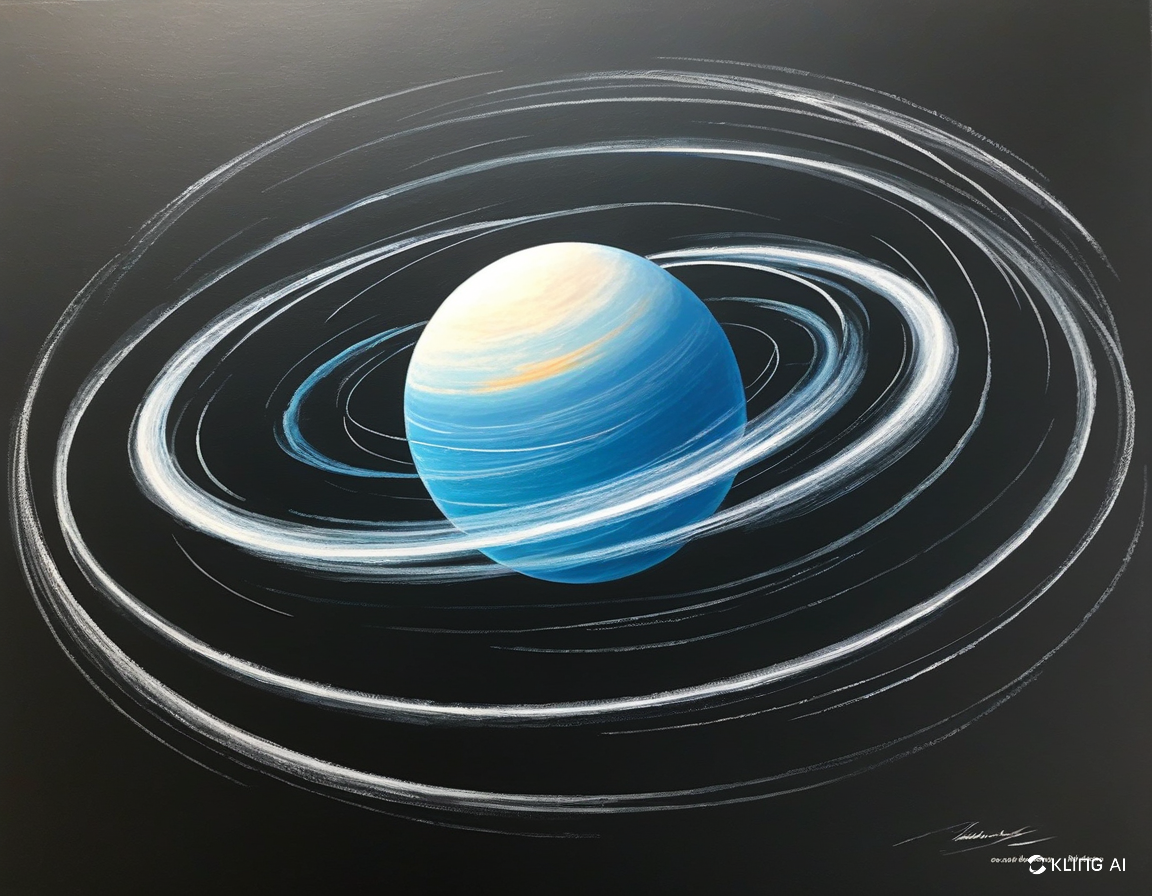
His proposed system, named StormWall, would start with the launch of six spacecraft into a geosynchronous orbit matching the Earth’s own rotation. Each craft would be fitted with a canister loaded with what the researchers call a mass-loading material. When released, the material—an alkaline chemical element like barium or lithium—would photoionize, a process that induces an electrical charge, seeding the atmosphere with plasma.
In their simulations, Walsh and his colleagues found that this plasma would disrupt the flow of energy between any solar storm and the magnetosphere—and that would be enough to bounce the space weather around and past our planet.
Not Science Fiction
Walsh admits a weather wall in space sounds a little like science fiction, but says it’s within our reach.
“When you apply some really serious physics to it, it does work. And the amount of mass we need, the launch capacities—it’s all within our capabilities,” he says. “People have always thought, ‘space is huge, the sun is massive, we just have to sit here and take whatever it gives us.’ But what we found is that we can impact it.”
One of the biggest barriers to implementation is cost. Launching six spacecraft, together carrying the equivalent of about a dozen oil trucks–worth of material, wouldn’t be cheap. And once the payload is fired out and photoionizes, the system would be dead and couldn’t be replenished—it’s one and done. But with private companies investing billions in space infrastructure—and even contemplating data centers in orbit—Walsh says the math on cost-benefit ratios could soon favor his proposed approach. In their paper, Walsh and his colleagues point out that a massive once-in-a-century geomagnetic storm—the last one was in 1859—would cause devastating damage in space and on Earth, with power grid costs alone topping $2.4 trillion.
He’s confident the team can bring down the StormWall costs too. Next on their agenda is studying ways to half the material used, simulating a pulsed release of materials to extend the system’s lifespan, and examining potentially more efficient orbits. They also want to dig deeper into the chemistry involved to nail down the best elements to use.
And although space junk is a major issue in Earth’s lower atmosphere, Walsh says any materials they pump into its higher reaches would quickly be carried out of the system after they’ve done their job. “The material drifts out on these natural highways, it leaves the system—the magnetosphere flushes the material out within six or so hours.”
Geoengineering Space
As the head of BU’s Space Physics & Technology Lab, much of Walsh’s broader research is focused on observing and better understanding the space environment around Earth; he and his team were recently part of a mission that sent a telescope to the moon to image our magnetic shield. Although the StormWall project is loosely connected to that wider work, Walsh says it’s a bit of an outlier. “This is quite different than what anyone is doing right now—I don’t know of anyone proposing to geoengineer space.”
Should the idea literally take off, he says that, unlike some space missions that might reap rewards for the few, this one would benefit us all.
“If you built it, if it was deployed, it would help all people on the planet,” says Walsh. “You couldn’t make it in a way that helped only one country, one group of satellites.”
Journal
Space Weather
Method of Research
Computational simulation/modeling
Subject of Research
Not applicable
Article Title
Terrestrial Space Weather Protection Through Human-Produced Mass-Loading
Article Publication Date
2-Jun-2026
COI Statement
The authors declare no conflicts of interest relevant to this study.
Jennifer Rosenberg
Boston University
jennr@bu.edu
- Journal
- Space Weather
- Funder
- U.S. National Science Foundation
- DOI
- 10.1029/2025SW004846
bu içeriği en az 2000 kelime olacak şekilde ve alt başlıklar ve madde içermiyecek şekilde ünlü bir science magazine için İngilizce olarak yeniden yaz. Teknik açıklamalar içersin ve viral olacak şekilde İngilizce yaz. Haber dışında başka bir şey içermesin. Haber içerisinde en az 12 paragraf ve her bir paragrafta da en az 50 kelime olsun. Cevapta sadece haber olsun. Ayrıca haberi yazdıktan sonra içerikten yararlanarak aşağıdaki başlıkların bilgisi var ise haberin altında doldur. Eğer yoksa bilgisi ilgili kısmı yazma.:
Subject of Research:
Article Title:
News Publication Date:
Web References:
References:
Image Credits: