Reading view

Why cats prefer silver vine to catnip and other May highlights

It’s a regrettable reality that there is never enough time to cover all the interesting scientific stories we come across. So every month, we highlight a handful of the best stories that nearly slipped through the cracks. May's list includes the discovery of a possible prehistoric mining site in the Pyrenees; a new species of tiny blue octopus; why cats seem to prefer silver vine to catnip; and why political polarization might behave like a phase transition, among other noteworthy stories.

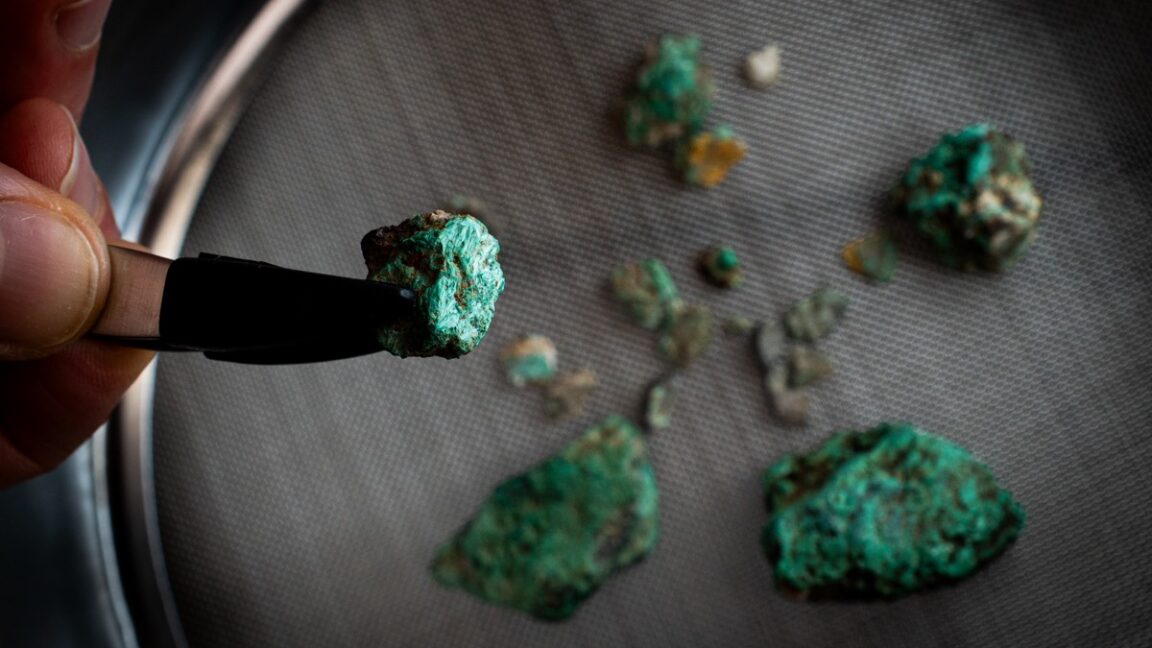
Prehistoric mining in the Pyrenees

Archaeological excavation works at Cova 338 Credit: IPHES-CERCA

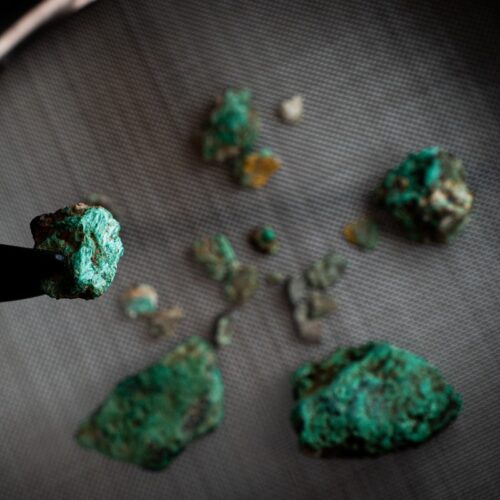
High in the eastern Pyrenees is a prehistoric cave, excavated between 2021 and 2023. Based on analysis of artifacts uncovered at the site, a team of Spanish archaeologists believes this may have served as an ancient copper smelting spot, with far more frequent occupation by humans than previously thought. The researchers described these preliminary findings in a paper published in the journal Frontiers in Environmental Archaeology.
Read full article

Comments

© Maria D. Guillén / IPHES-CERCA

  •  

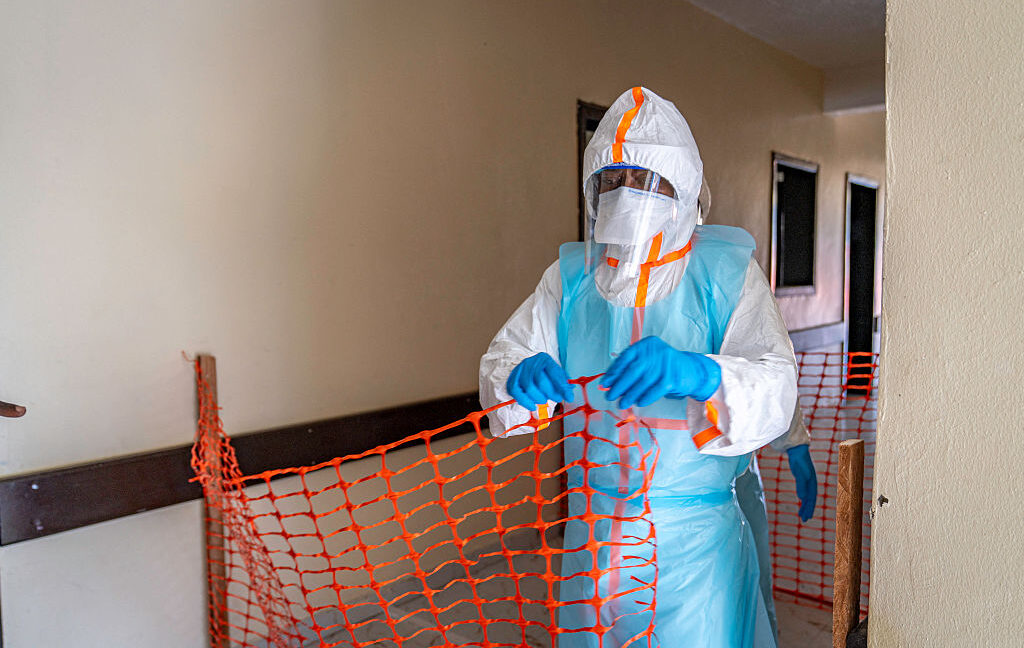
Moderna gets $50 million to develop mRNA Ebola vaccine against Bundibugyo

The global health organization Coalition for Epidemic Preparedness Innovations (CEPI) announced Monday that it will "urgently accelerate development" of three vaccine candidates against Bundibugyo ebolavirus (BDBV), pledging a little over $60 million in the effort to extinguish an outbreak currently raging out of control in the Democratic Republic of the Congo.

Under the plans, CEPI has committed up to $50 million to US-based Moderna for preclinical development and Phase 1 clinical testing of its mRNA-based BDBV vaccine candidate. The funding will simultaneously allow the company to ramp up manufacturing capabilities and ready large-scale Phase 2/3 trials in the event the vaccine makes it through early testing. The vaccine will use Moderna's mRNA vaccine platform that allowed for rapid development of a COVID-19 vaccine during the pandemic.

"[W]e believe our mRNA platform can play an important role in responding rapidly to emerging infectious disease threats," Moderna CEO Stéphane Bancel said in a statement Monday. " We will move with urgency and scientific rigor to support the response and help bring a potential vaccine closer to the communities that need it most."

Read full article

Comments

© Getty | GLODY MURHABAZI

  •  

Hackers duped Meta AI support chatbot to steal celebrity Instagram accounts

Meta’s AI support chatbot proved unusually helpful to hackers looking to steal and resell notable Instagram accounts—the hackers simply asking the bot to change the accounts’ associated email addresses while using VPN to mask their true locations.

Videos featuring the “shockingly easy” exploit have been circulating among Telegram groups for hackers and security researchers, according to 404 Media. The exploit allowed hackers to take over and flip valuable Instagram accounts worth hundreds of thousands of dollars on the gray market before Meta implemented an emergency patch on May 29. The Barack Obama White House account and the Chief Master Sergeant of Space Force’s account also posted pro-Iranian images and messages while they were temporarily compromised.

Attackers simply had to use a VPN to approximately match their location to the target Instagram account’s region, begin a password reset process, and then ask Meta’s AI support chatbot to change the email address associated with the account, according to 404 Media. It’s a very straightforward prompt injection attack.

Read full article

Comments

© Marcin Golba/NurPhoto via Getty Images

  •  

Microsoft's Surface Laptop Ultra looks like its first true MacBook Pro competitor

Dell, Asus, Lenovo, HP, MSI, Acer, and Gigabyte are among the PC makers that are designing systems around Nvidia's RTX Spark, Nvidia's new Arm-based chip for Windows PCs. But the flagship RTX Spark PC may be from the same company that makes Windows: the new Microsoft Surface Laptop Ultra is a high-end RTX Spark system that will offer up to 128GB of unified memory for "creators, developers, and AI builders."

Microsoft says the Laptop Ultra will be available "later this year" but didn't discuss any specific pricing or configuration options.

The Laptop Ultra will slot in above the regular Qualcomm Snapdragon-based Surface Laptops in Microsoft's lineup. Microsoft has made high-end Surface devices with more powerful CPUs and GPUs before, but to date, they've also come with convertible designs that may have limited their appeal. The first was the old Surface Book, with its fully detachable screen and bendy-straw hinge that didn't close all the way; the second was the Surface Laptop Studio, with its chunky design and sliding screen. The Laptop Ultra is Microsoft's first attempt to follow the MacBook Pro formula: it's like the other Surface Laptops, just with more power.

Read full article

Comments

© Microsoft

  •  

Dozens of Red Hat packages backdoored through its official NPM channel

Official Red Hat NPM accounts have been compromised and used to push a malicious worm that spreads from machine to machine, where it pilfers sensitive credentials in hopes of stealing yet more confidential data, researchers said.

The supply-chain attack began Monday and remained active at the time this post went live, according to researchers at security firm Aikido. It’s the result of the threat actor responsible for the hack taking control of @redhat-cloud-services, a legitimate channel in the npm repository that’s reserved for official Red Hat packages. As such, the channel is widely trusted by developers who rely on Red Hat cloud services.

The vicious cycle of today’s supply-chain attacks

It’s unclear precisely how the threat actor took control of the namespace, but it almost certainly involved the compromise of credentials required to access it, possibly through a previous supply-chain attack. More than 30 packages seem to be affected.

Read full article

Comments

© istanbulimage via Getty

  •  

New Trump vaccine order based on "no credible scientific evidence," doctors say

The American Medical Association came out swinging this weekend at an executive order President Trump signed Friday that reaffirms intentions to model US childhood vaccine recommendations after those of Denmark—a country with universal healthcare, less diversity, and a population about the size of Maryland's.

“There is no credible scientific evidence to support," such a change, AMA President Bobby Mukkamala said in a statement. The current vaccine schedule "is built on decades of rigorous research and real-world data, and it is designed to protect children in the US when they are most vulnerable based on our nation’s disease burden," he said.

The plan to align federal childhood vaccine recommendations with Denmark's was first revealed by anti-vaccine Health Secretary Robert F. Kennedy Jr. in January. The overhaul would see the total number of recommended immunizations drop from 17 to 11, walking back recommendations for shots against rotavirus, COVID-19, influenza, meningococcal disease, hepatitis A, and hepatitis B. It stemmed from a December executive order by Trump to align US vaccine recommendations with the "best practices from peer, developed countries."

Read full article

Comments

© Getty | Francis Chung

  •  

Florida sues OpenAI, Sam Altman after multiple ChatGPT-linked murders

On Monday, Florida became the first state to sue OpenAI over ChatGPT's allegedly dangerous design.

In a complaint filed in state court, Florida Attorney General James Uthmeier accused OpenAI and its CEO, Sam Altman, of prioritizing profits over the safety of Floridians.

The civil lawsuit comes after Florida opened an unrelated criminal probe into OpenAI, following a ChatGPT-linked mass shooting where two people were killed at Florida State University. In statements, OpenAI has insisted that ChatGPT isn't responsible for the FSU shooting, merely providing factual information, but Uthmeier does not seem to agree. In his complaint, Uthmeier noted that Florida has now been blindsided by two violent events where suspects used ChatGPT to assist in planning.

Read full article

Comments

© Anna Moneymaker / Staff | Getty Images News

  •  

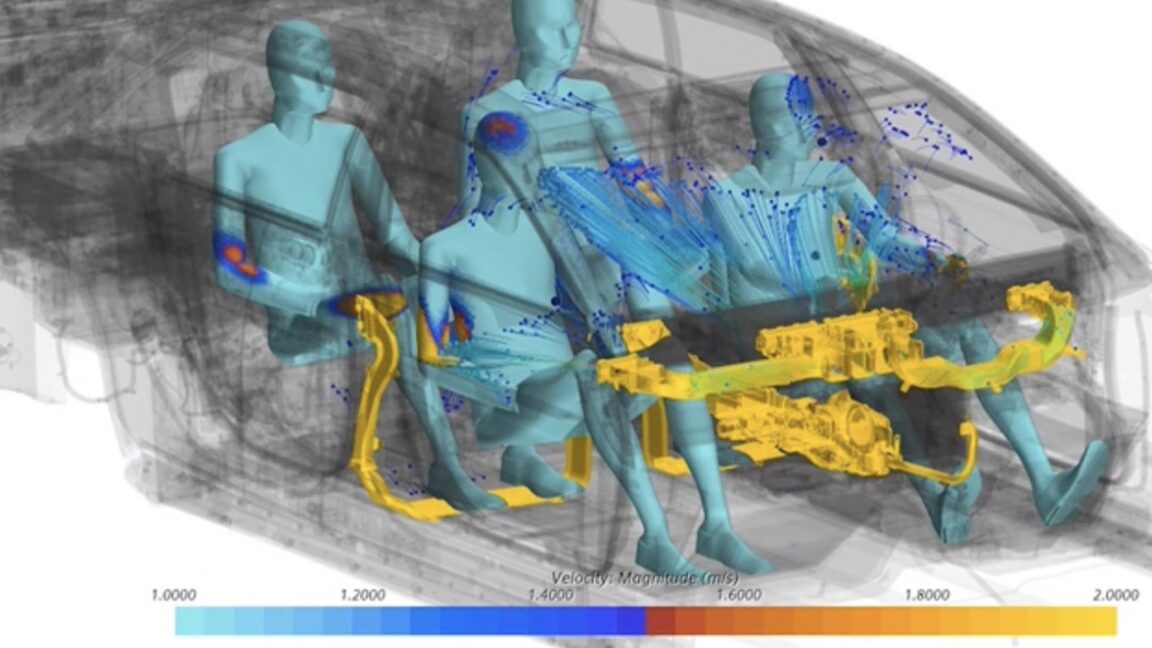
From 15 hours to one minute: How AI/ML is speeding up GM's development

When we met Sterling Anderson in 2024, he was the chief product officer of Aurora, the self-driving startup he cofounded in 2016 after several years at Tesla. Just over a year ago, though, Anderson decamped from the startup world for something a little more established, taking over as chief product officer at General Motors, the nation's largest automaker. Since then, he's had a good view of how GM is entering what he calls the third epoch of engineering and design.

"There was a time when humans looked at birds and were like, 'OK, those wings seem to work pretty well. Let's go and design something that looks like them.'" Anderson said, describing the first age of engineering. "And they just kind of iterated their way to something that was marginally feasible."

The first few hundred years of inventing "was this era of highly empirical iterative design development and engineering," he said. "And by that I mean humans largely started with what we know or had seen, built prototypes of something that kind of looked like it and maybe tweaked some things, hoping to make it perform better, tested it, iterated, and kind of went through this slow guess-and-check process until we got to something that marginally worked."

Read full article

Comments

© General Motors

  •  

Allegedly trashing Airbnbs to test robots puts startup in legal trouble

A San Francisco robotics startup is being taken to court by an Airbnb host who claims the company’s “robotic prototype testing” caused extensive damage to his home.

In the lawsuit filed on May 26, 2026, Sean Donovan is seeking more than $12,000 in damages from the Bay Area startup The Bot Company. The court case was first reported by SFGate, which also interviewed Donovan about the unprecedented mess he encountered after the startup’s employees supposedly rented his former childhood home through Airbnb.

The first clue that the guests were not typical tech startup employees needing a temporary crash pad came when Donovan was taking care of the trash during the guests’ stay. He told SFGate about seeing “bundles of wires” throughout the house and a robot he described as a 6-foot-tall “Roomba with treads” that also resembled the cybernetic Borg from the Star Trek universe.

Read full article

Comments

© Malte Mueller | Getty Images

  •  

AMD extends Socket AM5 support through at least 2029; AM4 refuses to die

One of the benefits of building an AMD PC is that the company has historically supported its processor sockets for longer than Intel does, allowing the same motherboard (and RAM kit, if you want) to power your PC through multiple CPU upgrades. Today at Computex, AMD announced chips for the current AM5 socket and the improbably-still-around AM4 socket that will help extend their lives a little further, a nod to just how expensive it has become to build a new PC or perform a major upgrade these days.

The first of these announcements is something we knew about already: the relaunch of 2022's Ryzen 7 5800X3D, the first of AMD's commercially available 3D V-Cache processors. Dubbed a "10th Anniversary Edition" in reference to how long Socket AM4 has been around, the re-released chip is slower than regular 8-core Ryzen 5000-series CPUs in general productivity tasks but comes with 64MB of extra L3 cache that disproportionately benefits games. If you're trying to use a high-end GPU with an AM4 motherboard, it could help keep your CPU from being a performance bottleneck. The 5800X3D (re-)releases on June 25 for a suggested retail price of $349, which is less than it currently costs to buy secondhand.

As for the current AM5 socket, AMD officially announced that it was extending its support to at least 2029—it was originally planned to last until 2025, then until "2027+," so that means between two and four years of additional support, depending on how you're counting.

Read full article

Comments

© Andrew Cunningham

  •  

ROG Xbox Ally X20 adds OLED screen, control upgrades

When the Steam Deck OLED launched three years ago, we were glad to see that the new, more brilliant screen fixed the biggest flaw of Valve's original handheld hardware. So we're unsurprisingly excited about today's announcement that Asus is preparing a new, OLED-equipped ROG Xbox Ally X20 for the coming holiday season. Still, it's a bit worrying that Asus is positioning the new upgrade as a niche collector's item rather than its new handheld gaming standard.

The X20 expands the 7-inch screen found on last year's ROG Xbox Ally line to 7.4 inches, matching the display on the Steam Deck OLED and approaching the 7.9-inch screen on the Switch 2. The 1080p HDR panel also increases the maximum brightness from 500 nits on original Xbox Ally models to a full 1400 and adds some new anti-glare coating that should help when playing in direct sunlight. The X20's 120 Hz display now supports Dolby Vision HDR colors and FreeSync Premium Pro to help smooth frame rates while still providing a larger color gamut.

On the control front, the X20 introduces magnetic TMR thumbsticks, replacing the carbon-film potentiometers that made the original Xbox Ally more prone to stick drift and physical wear. A new D-pad on the X20 also introduces a neat little lift-and-twist design that can transform it from a four-direction cross to a more circular eight-direction pad, similar to the convertible D-pad found on some now-classic Xbox 360 controllers.

Read full article

Comments

© Asus

  •  

Nvidia RTX Spark comes to Windows PCs with Arm CPU, RTX GPU, and unified memory

These days, Nvidia primarily sells AI data center products, and its traditional consumer devices feel like more of a side project. But the company occasionally still releases something designed for consumers. After a couple of years of rumors, Nvidia has announced an Arm-based chip designed to power Windows PCs. Dubbed RTX Spark, the new chip combines a 20-core Nvidia Grace CPU co-developed with MediaTek, up to 6,144 Blackwell-based GPU cores (the same architecture as the RTX 50-series GPUs), and support for up to 128GB of unified LPDDR5x memory.

Nvidia and its partners offered nothing about expected pricing, but both "slim Windows laptops with all-day battery life and premium displays" and "compact desktop PCs" are slated to be "available this fall" from partners including Asus, Dell, HP, Lenovo, Microsoft, MSI, Acer, and Gigabyte.

This isn't Nvidia's first chip for Windows PCs; earlier chips in the Tegra series powered several of the short-lived Windows RT tablets. But Tegra chips largely stopped appearing in consumer devices following the Tegra X1 in the late 2010s (variants power the original Nintendo Switch and the apparently unkillable Nvidia Shield TV box). Modern Arm-based PCs in the Windows 10 and Windows 11 eras have all used processors from Qualcomm.

Read full article

Comments

© Nvidia

  •  

Intel: Our upcoming AI chip will be cheaper, run cooler than Nvidia, AMD options

Intel plans to ship an AI chip by the end of this year that uses cheaper memory and cooling technology than rival offerings from Nvidia and AMD, as the US chipmaker seeks to capitalize on a sharp turnaround in its fortunes.

Kevork Kechichian, who leads Intel’s data center group, told the FT that the company is “starting with the basics” as it tries to challenge its rivals in the booming market for semiconductors that power AI.

Its new “Crescent Island” graphics processing unit is designed to speed up “inference” tasks, the stage when a user makes their request, rather than the training of models, an area where Nvidia’s processors are dominant.

Read full article

Comments

  •  

An OpenAI model solved a famous math problem that stumped humans for 80 years

In mid-May, OpenAI announced that an internal AI model had disproved the Erdős unit distance conjecture, a famous problem in discrete geometry that had stumped human mathematicians for the last 80 years.

OpenAI gave several mathematicians early access to the result and published their reactionsTim Gowers—who won the Fields Medal, the most prestigious prize in mathematics—wrote that “there is no doubt that the solution to the unit-distance problem is a milestone in AI mathematics.”

University of Toronto professor Daniel Litt wrote that “this is the first example of a result produced autonomously by an AI that I find exciting in itself, as opposed to as a leading indicator.”

Read full article

Comments

© Getty Images

  •  

On its 40th anniversary, we reassess 1986's SpaceCamp

Forty years ago, the future seemed just around the corner—and the vehicle that was going to take us there was NASA's Space Shuttle. Originally envisioned as part of a larger integrated space transportation system, the shuttle was billed as a fully reusable vehicle, totally unlike the one-and-done capsules of the fading Apollo era, capable of making monthly (and perhaps even weekly) ferry flights to low Earth orbit.

The shuttle, it was hoped, would transform human space flight from extraordinary to mundane. Brands like Coke and Pepsi were quick to hop aboard and expand the Cola Wars into space, and there were even plans to blast Sesame Street's Big Bird into orbit.

The loss of Challenger in January 1986—carrying educator Christa McAuliffe, who would have been the first private citizen in space—put the kibosh on all of that. The shuttle, while fantastically advanced, would never be the vehicle to help humankind slip all of our surly bonds, so to speak. Even operating at its most frantic peak in 1985 just before Challenger's loss, the shuttle hardware managed a maximum of nine flights in one calendar year; for most of the 1990s, it performed at five or six flights per year. Civilians in space—to say nothing of Big Bird—would have to wait.

Read full article

Comments

© 20th Century Fox

  •  

They call it stupid hot for a reason: Heat muddles animal brains

On a blazing hot day in South Africa, female southern pied babblers can’t think straight. The medium-sized black-and-white birds are trying to get at tasty mealworms behind a see-through barrier. On cooler days, the birds can quickly figure out that all they have to do is go around the small wall of plastic. But when the mercury goes up, the birds just keep stubbornly pecking at the barrier.

That experiment is part of a growing body of research showing that animals get their minds muddled during heat waves. When it’s hot outside, birds struggle to learn, dogs bite more often, goat-like chamois pick fights. This is bad news not just for those who get on Fido’s toasted nerves. If the animals can’t stay alert enough to find food or avoid predators, their chances of survival go downhill, says Amanda Ridley, a behavioral ecologist at the University of Western Australia who coauthored the pied babbler study.

With climate change making heat waves more common, such cognitive impairments across the animal kingdom could ripple through entire ecosystems, putting already fragile species at greater risk. If pollinators forget which flowers to visit, crops and wild plants may fail. If birds can’t find food as easily, their young may not survive. And on a warming planet, a sharp mind is particularly vital. “A changing climate means that your ability to behaviorally adapt is even more important,” Ridley says.

Read full article

Comments

© NurPhoto / Contributor

  •  

Grifters, cynics, and true believers: The family tree of vaccine opponents

Stanley Plotkin, 93, was instrumental in developing a number of vaccines over the course of his career. He recently said that he’s “beginning to regret having lived so long—because we’re going downhill.” How could we possibly have gotten here?

Maybe we’ve always been here. It turns out that the anti-vaccine arguments currently flooding the Internet have been around for as long as vaccines have. In his new book A Pox on Fools, Thomas Levenson breaks them down into three categories, as made clear in the book’s subtitle: “The True Believers, Grifters, and Cynics Who Convinced Us to Reject Vaccines.” The accusations these people levy against vaccines can just as easily be used to categorize the arguments themselves: They are wrong, they are bad, and they are intolerable.

Wrong

As Levenson tells it, in the early 18th century, a couple of forward-thinking Westerners learned about inoculations against smallpox from Ottoman women and an enslaved African. At that point, infectious disease was by far the leading cause of death, as it had been forever. In the 19th century, roughly 40 percent of babies died of infection before they turned 5.

Read full article

Comments

© Penguin Randomhouse

  •  

Environmentalists turn out in force to oppose Trump coal ash rollbacks

At a virtual public comment hearing hosted by the US Environmental Protection Agency on Thursday, a long line of environmental advocates voiced strong opposition to proposed new regulations weakening requirements that utilities must follow in cleaning up toxic coal ash residue at hundreds of sites across the country at which coal was burned to produce electricity.

“The Trump administration has jeopardized the nation’s drinking water supplies as a favor to polluters,” Lisa Evans, senior counsel at Earthjustice and a former EPA attorney, said in a statement. “It’s just not right.”

The Trump administration announced in April that it would repeal a rule put in place in 2024 by the Biden administration’s EPA that required utilities to monitor coal ash sites at inactive coal plants. The Trump EPA also said it would loosen requirements for protecting groundwater near those sites. Now the Trump administration wants to rely on states for coal ash monitoring and enforcement and enable them to bypass national standards in some cases.

Read full article

Comments

© Lee Hedgepeth/Inside Climate News

  •  

Proposed new US funding rules: We can cancel any grant at any time

Last August, the Trump administration issued an executive order intended to fundamentally alter how grant funding is handled by the US government. Under the system that had made the US a scientific superpower, peer reviewers rated the scientific quality and feasibility of grant applications, and subject-matter experts within the funding agencies used these ratings to determine which grants got funded. Under the proposed rules, political appointees would have the final say, and they were specifically instructed not to "routinely defer" to peer reviewers.

In the interim, the administration has lost many court cases because it turns out that issuing executive orders doesn't circumvent legal requirements, and the orders can be vacated if they lack strong justification. To avoid that same fate, the Office of Management and Budget (OMB) has decided to merge the executive order with other administration priorities and send it through the formal federal rulemaking process.

The result is a horror show for US science research. Not only is peer review made a secondary consideration, but the new rules would allow any federal agency to cancel any grant at any time based on the vague assertion that it isn't in the "national interest." The document would also ban any grants on a number of culture war topics, limit international collaborations, and block spending on things like publishing papers and attending conferences.

Read full article

Comments

© Getty | Al Drago

  •  

Kenyan court blocks Trump admin from dumping Ebola-exposed Americans there

The Trump administration is refusing to repatriate Americans exposed to Ebola amid the outbreak still raging in the Democratic Republic of the Congo. But the plan to send US citizens to Kenya has hit a snag, and officials are still scrambling to find other countries that might take them.

Earlier this week, it was revealed that the administration had devised a plan to establish a makeshift quarantine and treatment facility in Kenya—instead of bringing its citizens home for high-quality care at specialized facilities built for this purpose. According to the initial plans, the US facility would be in Laikipia, about 120 miles north of Nairobi, where the US has an air base. Initially, the plan was to set up a 50-bed quarantine facility that was expected to be operational today, May 29. Then, in a second state, officials would set up isolation and biocontainment units to house Americans infected with the virus.

But after a series of events on Thursday and Friday, that plan has now been stalled. The Katiba Institute, which advocates for Kenyans' constitutional rights, filed the petition on Thursday to challenge the establishment of the quarantine and treatment facility.

Read full article

Comments

© Getty | Nicholas Kajoba

  •  
❌