Normal view

SpaceX, China set for busy launch week

1 June 2026 at 22:35

What’s launching this week Early this morning, Monday, June 1, the state owned China Aerospace Science and Technology Corporation (CASC) successfully completed the maiden flight of the reusable Long March 12B — a two-stage, 236-foot (72-meter) rocket powered by nine liquid oxygen and kerosene engines with a 44,000-pound (20,000 kilogram) payload capacity. The mission launchedContinue reading "SpaceX, China set for busy launch week"

The post SpaceX, China set for busy launch week appeared first on Astronomy Magazine.

New Trump vaccine order based on "no credible scientific evidence," doctors say

1 June 2026 at 20:07

The American Medical Association came out swinging this weekend at an executive order President Trump signed Friday that reaffirms intentions to model US childhood vaccine recommendations after those of Denmark—a country with universal healthcare, less diversity, and a population about the size of Maryland's.

“There is no credible scientific evidence to support," such a change, AMA President Bobby Mukkamala said in a statement. The current vaccine schedule "is built on decades of rigorous research and real-world data, and it is designed to protect children in the US when they are most vulnerable based on our nation’s disease burden," he said.

The plan to align federal childhood vaccine recommendations with Denmark's was first revealed by anti-vaccine Health Secretary Robert F. Kennedy Jr. in January. The overhaul would see the total number of recommended immunizations drop from 17 to 11, walking back recommendations for shots against rotavirus, COVID-19, influenza, meningococcal disease, hepatitis A, and hepatitis B. It stemmed from a December executive order by Trump to align US vaccine recommendations with the "best practices from peer, developed countries."

Read full article

Comments

© Getty | Francis Chung

New Trump vaccine order based on "no credible scientific evidence," doctors say

1 June 2026 at 20:07

The American Medical Association came out swinging this weekend at an executive order President Trump signed Friday that reaffirms intentions to model US childhood vaccine recommendations after those of Denmark—a country with universal healthcare, less diversity, and a population about the size of Maryland's.

“There is no credible scientific evidence to support," such a change, AMA President Bobby Mukkamala said in a statement. The current vaccine schedule "is built on decades of rigorous research and real-world data, and it is designed to protect children in the US when they are most vulnerable based on our nation’s disease burden," he said.

The plan to align federal childhood vaccine recommendations with Denmark's was first revealed by anti-vaccine Health Secretary Robert F. Kennedy Jr. in January. The overhaul would see the total number of recommended immunizations drop from 17 to 11, walking back recommendations for shots against rotavirus, COVID-19, influenza, meningococcal disease, hepatitis A, and hepatitis B. It stemmed from a December executive order by Trump to align US vaccine recommendations with the "best practices from peer, developed countries."

Read full article

Comments

© Getty | Francis Chung

Anthropic confidentially files for initial public offering on US stock market

Financial stakes of AI race rise as Elon Musk’s SpaceX, OpenAI and Anthropic are slated to go public this year

Anthropic has filed confidentially for an initial public offering on the US stock market, the company announced on Monday. The AI firm makes the Claude chatbot, popular with software engineers and other business clients, and has seen a meteoric rise this year.

The company did not disclose the valuation it will target on the stock market, nor did it make public other terms of the offering. The startup announced on Thursday that it had raised $65bn in funding to value the company at $965bn post-money. Anthropic was valued at $380bn in February.

Continue reading...

© Photograph: Ruhani Kaur/Bloomberg via Getty Images

© Photograph: Ruhani Kaur/Bloomberg via Getty Images

© Photograph: Ruhani Kaur/Bloomberg via Getty Images

Dell Rivals Apple's MacBook Neo With $699 Touchscreen XPS 13 Laptop

By: BeauHD
1 June 2026 at 17:00
Dell has introduced a redesigned $699 XPS 13 aimed squarely at Apple's budget MacBook Neo, offering a premium aluminum design, touch display, backlit keyboard, Wi-Fi 7, 512GB of base storage, and various other configuration options. Dell's machine costs more than Apple's entry model but tries to justify the difference with lighter weight, better display specs, and upgrade paths Apple doesn't offer. "The XPS 13 begins at $699 -- students can purchase it for $599 -- while the MacBook Neo costs $599 and drops to $499 for education buyers," notes Bloomberg. From the report: Dell's product allows for more configuration, with up to 32GB of memory compared with the Neo's nonupgradeable 8GB of unified memory. Its display can also produce a wider spectrum of colors and supports refresh rates up to 120 hertz, while Apple reserves its best screens for the pricier MacBook Pro line. The inclusion of a backlit keyboard should allow for easier typing in dark conditions. Dell has also tossed in other nice-to-have upgrades over the Neo like more robust Wi-Fi 7 wireless networking. As for battery life, Dell is touting "up to 17 hours of streaming" versus a comparable 16 hours on the Neo. Still, the XPS comes with compromises of its own: Unlike the Neo, there's no built-in headphone jack, which means owners will need to rely on its quad-speaker audio system, use Bluetooth earbuds or plug a headphone adapter into one of the two USB-C ports. You can learn more via Dell.com.

Read more of this story at Slashdot.

Nvidia RTX Spark comes to Windows PCs with Arm CPU, RTX GPU, and unified memory

1 June 2026 at 15:47

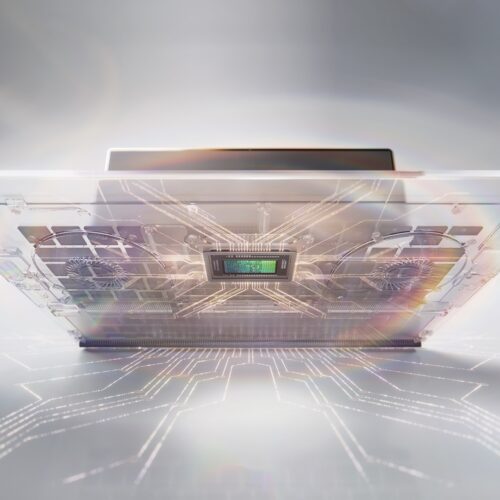
These days, Nvidia primarily sells AI data center products, and its traditional consumer devices feel like more of a side project. But the company occasionally still releases something designed for consumers. After a couple of years of rumors, Nvidia has announced an Arm-based chip designed to power Windows PCs. Dubbed RTX Spark, the new chip combines a 20-core Nvidia Grace CPU co-developed with MediaTek, up to 6,144 Blackwell-based GPU cores (the same architecture as the RTX 50-series GPUs), and support for up to 128GB of unified LPDDR5x memory.

Nvidia and its partners offered nothing about expected pricing, but both "slim Windows laptops with all-day battery life and premium displays" and "compact desktop PCs" are slated to be "available this fall" from partners including Asus, Dell, HP, Lenovo, Microsoft, MSI, Acer, and Gigabyte.

This isn't Nvidia's first chip for Windows PCs; earlier chips in the Tegra series powered several of the short-lived Windows RT tablets. But Tegra chips largely stopped appearing in consumer devices following the Tegra X1 in the late 2010s (variants power the original Nintendo Switch and the apparently unkillable Nvidia Shield TV box). Modern Arm-based PCs in the Windows 10 and Windows 11 eras have all used processors from Qualcomm.

Read full article

Comments

© Nvidia

Nvidia RTX Spark comes to Windows PCs with Arm CPU, RTX GPU, and unified memory

1 June 2026 at 15:47

These days, Nvidia primarily sells AI data center products, and its traditional consumer devices feel like more of a side project. But the company occasionally still releases something designed for consumers. After a couple of years of rumors, Nvidia has announced an Arm-based chip designed to power Windows PCs. Dubbed RTX Spark, the new chip combines a 20-core Nvidia Grace CPU co-developed with MediaTek, up to 6,144 Blackwell-based GPU cores (the same architecture as the RTX 50-series GPUs), and support for up to 128GB of unified LPDDR5x memory.

Nvidia and its partners offered nothing about expected pricing, but both "slim Windows laptops with all-day battery life and premium displays" and "compact desktop PCs" are slated to be "available this fall" from partners including Asus, Dell, HP, Lenovo, Microsoft, MSI, Acer, and Gigabyte.

This isn't Nvidia's first chip for Windows PCs; earlier chips in the Tegra series powered several of the short-lived Windows RT tablets. But Tegra chips largely stopped appearing in consumer devices following the Tegra X1 in the late 2010s (variants power the original Nintendo Switch and the apparently unkillable Nvidia Shield TV box). Modern Arm-based PCs in the Windows 10 and Windows 11 eras have all used processors from Qualcomm.

Read full article

Comments

© Nvidia

SoftBank topples Toyota to become Japan’s top company

1 June 2026 at 16:49

SoftBank Group overtook Toyota Motor as Japan’s most valuable company, as AI gains propelled the technology group ahead of the country’s largest automaker.

SoftBank shares rose 14% in Tokyo trading on Monday, taking its market value above JPY48 trillion ($306 billion), past Toyota’s nearly JPY46 trillion.

Bloomberg noted the shift marks the first time in more than two decades SoftBank moved ahead of Toyota on market value including treasury shares. According to the publication, SoftBank last briefly held the position during Japan’s internet bubble in 2000.

The move caps a sharp run for SoftBank, with its shares up more than 90% this year. Toyota has moved the other way, falling more than 10% as automakers face rising fuel costs and the expensive shift to electric vehicles and software-led platforms.

Meanwhile, SoftBank’s gains have been buoyed by ambitious bets on OpenAI; the company has committed close to $65 billion to OpenAI to date, giving it a projected stake of about 13% by October.

Earlier this year, OpenAI and SoftBank also jointly invested $1 billion in US digital infrastructure company SB Energy, which will build and operate a 1.2GW data centre for OpenAI in Texas. The trio are working to develop a new model for data centre builds, tied to the broader $500 billion US-led Stargate initiative focussed on AI and energy infrastructure.

SoftBank also announced an investment of up to €75 billion in AI data centre infrastructure in France earlier today (1 June), adding it will work with SB Energy and other strategic partners to deliver the projects.

Kazuhiro Sasaki, head of research at Phillip Securities Japan, told Bloomberg: “This epoch-making event symbolises the AI boom.”

Meanwhile, Tomo Kinoshita, global market strategist at Invesco Asset Management Japan, told the publication SoftBank had “concentrated its management resources on AI-related businesses” and “successfully ridden the broader global tech rally”.

For Toyota, higher oil prices linked to conflict in the Middle East also added to pressure on global auto demand, he noted.

“Over the longer term, AI-related companies are likely to command higher valuations,” Kinoshita added.

The post SoftBank topples Toyota to become Japan’s top company appeared first on Mobile World Live.

Nvidia RTX Spark comes to Windows PCs with Arm CPU, RTX GPU, and unified memory

1 June 2026 at 15:47

These days, Nvidia primarily sells AI data center products, and its traditional consumer devices feel like more of a side project. But the company occasionally still releases something designed for consumers. After a couple of years of rumors, Nvidia has announced an Arm-based chip designed to power Windows PCs. Dubbed RTX Spark, the new chip combines a 20-core Nvidia Grace CPU co-developed with MediaTek, up to 6,144 Blackwell-based GPU cores (the same architecture as the RTX 50-series GPUs), and support for up to 128GB of unified LPDDR5x memory.

Nvidia and its partners offered nothing about expected pricing, but both "slim Windows laptops with all-day battery life and premium displays" and "compact desktop PCs" are slated to be "available this fall" from partners including Asus, Dell, HP, Lenovo, Microsoft, MSI, Acer, and Gigabyte.

This isn't Nvidia's first chip for Windows PCs; earlier chips in the Tegra series powered several of the short-lived Windows RT tablets. But Tegra chips largely stopped appearing in consumer devices following the Tegra X1 in the late 2010s (variants power the original Nintendo Switch and the apparently unkillable Nvidia Shield TV box). Modern Arm-based PCs in the Windows 10 and Windows 11 eras have all used processors from Qualcomm.

Read full article

Comments

© Nvidia

Nvidia RTX Spark comes to Windows PCs with Arm CPU, RTX GPU, and unified memory

1 June 2026 at 15:47

These days, Nvidia primarily sells AI data center products, and its traditional consumer devices feel like more of a side project. But the company occasionally still releases something designed for consumers. After a couple of years of rumors, Nvidia has announced an Arm-based chip designed to power Windows PCs. Dubbed RTX Spark, the new chip combines a 20-core Nvidia Grace CPU co-developed with MediaTek, up to 6,144 Blackwell-based GPU cores (the same architecture as the RTX 50-series GPUs), and support for up to 128GB of unified LPDDR5x memory.

Nvidia and its partners offered nothing about expected pricing, but both "slim Windows laptops with all-day battery life and premium displays" and "compact desktop PCs" are slated to be "available this fall" from partners including Asus, Dell, HP, Lenovo, Microsoft, MSI, Acer, and Gigabyte.

This isn't Nvidia's first chip for Windows PCs; earlier chips in the Tegra series powered several of the short-lived Windows RT tablets. But Tegra chips largely stopped appearing in consumer devices following the Tegra X1 in the late 2010s (variants power the original Nintendo Switch and the apparently unkillable Nvidia Shield TV box). Modern Arm-based PCs in the Windows 10 and Windows 11 eras have all used processors from Qualcomm.

Read full article

Comments

© Nvidia

❌