Normal view

Why cats prefer silver vine to catnip and other May highlights

It’s a regrettable reality that there is never enough time to cover all the interesting scientific stories we come across. So every month, we highlight a handful of the best stories that nearly slipped through the cracks. May's list includes the discovery of a possible prehistoric mining site in the Pyrenees; a new species of tiny blue octopus; why cats seem to prefer silver vine to catnip; and why political polarization might behave like a phase transition, among other noteworthy stories.

Prehistoric mining in the Pyrenees

Archaeological excavation works at Cova 338 Credit: IPHES-CERCA

High in the eastern Pyrenees is a prehistoric cave, excavated between 2021 and 2023. Based on analysis of artifacts uncovered at the site, a team of Spanish archaeologists believes this may have served as an ancient copper smelting spot, with far more frequent occupation by humans than previously thought. The researchers described these preliminary findings in a paper published in the journal Frontiers in Environmental Archaeology.

Read full article

Comments

© Maria D. Guillén / IPHES-CERCA

Why cats prefer silver vine to catnip and other May highlights

It’s a regrettable reality that there is never enough time to cover all the interesting scientific stories we come across. So every month, we highlight a handful of the best stories that nearly slipped through the cracks. May's list includes the discovery of a possible prehistoric mining site in the Pyrenees; a new species of tiny blue octopus; why cats seem to prefer silver vine to catnip; and why political polarization might behave like a phase transition, among other noteworthy stories.

Prehistoric mining in the Pyrenees

Archaeological excavation works at Cova 338 Credit: IPHES-CERCA

High in the eastern Pyrenees is a prehistoric cave, excavated between 2021 and 2023. Based on analysis of artifacts uncovered at the site, a team of Spanish archaeologists believes this may have served as an ancient copper smelting spot, with far more frequent occupation by humans than previously thought. The researchers described these preliminary findings in a paper published in the journal Frontiers in Environmental Archaeology.

Read full article

Comments

© Maria D. Guillén / IPHES-CERCA

Why cats prefer silver vine to catnip and other May highlights

1 June 2026 at 22:38

It’s a regrettable reality that there is never enough time to cover all the interesting scientific stories we come across. So every month, we highlight a handful of the best stories that nearly slipped through the cracks. May's list includes the discovery of a possible prehistoric mining site in the Pyrenees; a new species of tiny blue octopus; why cats seem to prefer silver vine to catnip; and why political polarization might behave like a phase transition, among other noteworthy stories.

Prehistoric mining in the Pyrenees

Archaeological excavation works at Cova 338 Credit: IPHES-CERCA

High in the eastern Pyrenees is a prehistoric cave, excavated between 2021 and 2023. Based on analysis of artifacts uncovered at the site, a team of Spanish archaeologists believes this may have served as an ancient copper smelting spot, with far more frequent occupation by humans than previously thought. The researchers described these preliminary findings in a paper published in the journal Frontiers in Environmental Archaeology.

Read full article

Comments

© Maria D. Guillén / IPHES-CERCA

New 7-Dimensional Theory May Finally Solve the Black Hole Information Paradox

Astronomy Black Hole Astrophysics ConceptA new theoretical study suggests that black holes may never completely disappear, potentially offering a way to resolve the long-standing black hole information paradox. One of the biggest unsolved problems in modern physics, known as the “black hole information paradox,” may finally have a compelling solution. The proposed answer could also help explain where the [...]

What does the term ‘supersonic’ mean in astronomy?

1 June 2026 at 15:00

Occasionally I see references in Astronomy to the speed of something as “supersonic.” I’m having trouble reconciling this term with velocities typically found among astronomical objects. Wouldn’t “relativistic” be closer to the truth? Anything close to sonic speeds in Earth’s atmosphere wouldn’t cover much distance in outer space. Peter IanchiouTucson, Arizona One would certainly thinkContinue reading "What does the term ‘supersonic’ mean in astronomy?"

The post What does the term ‘supersonic’ mean in astronomy? appeared first on Astronomy Magazine.

Inside the technologies powering tomorrow’s grids

1 June 2026 at 11:17

High‑voltage transmission systems are a key part of power grids, transporting electricity from where it is generated to where it is used. Electricity is moved at high voltage and low current to reduce losses and improve efficiency. These systems are essential for grid stability, integrating renewable energy, and enabling long‑distance power transfer. There are two main high‑voltage direct current (HVDC) technologies: line‑commutated converters (LCC) and voltage‑source converters (VSC). LCCs are an older technology that use high‑power semiconductor switches called thyristors and are suited to very large power transfers. VSCs are a newer technology that use insulated‑gate bipolar transistors (IGBTs), allowing faster control of power flow, better stability, and more compact converter stations.

In this study, the researchers interviewed thirteen leading experts to understand which HVDC technology is likely to dominate in the future, how semiconductor devices may evolve, and what cost or supply issues might arise. The experts agreed that thyristors used in LCCs are a mature technology with limited room for improvement, and that demand for LCC systems is declining in North America and Europe, though they will remain important in regions requiring very high‑capacity transmission such as China and India. In contrast, IGBTs used in VSC systems are expected to continue improving, particularly in reliability, packaging, and voltage capability, reflecting the growing use of VSCs in Europe and North America. Some experts even suggested that VSC converter stations may now be comparable in cost to, or cheaper than, LCC stations, and that further improvements in IGBT cost and performance could reduce VSC system costs further.

There was debate about whether silicon‑carbide (SiC) MOSFETs could eventually replace IGBTs in VSC systems. While SiC devices offer advantages in high‑frequency applications, they currently cannot handle the very high currents required for HVDC, and challenges remain in packaging and long‑term reliability. Experts also noted that although global demand for power electronics is rising, this is unlikely to constrain HVDC development; instead, shortages of other components, particularly high‑voltage transformers, may pose greater risks. Overall, this research clarifies which power‑electronic technologies are poised to shape the next generation of HVDC systems and highlights why future grids are expected to rely increasingly on VSC converters and advanced semiconductor devices.

Read the full article

Expert views of power electronics in the future high voltage power system

Spyridon Pavlidis et al 2026 Prog. Energy 8 015003

Do you want to learn more about this topic?

Application of reinforcement learning in planning and operation of new power system towards carbon peaking and neutrality Fangyuan Sun et al. (2023)

The post Inside the technologies powering tomorrow’s grids appeared first on Physics World.

From equations to nuclear medicine: Keamogetswe Ramonaheng on building medical physics in Africa

1 June 2026 at 11:00

For Keamogetswe Ramonaheng, physics was never just about equations – it was about clarity. “From a young age, I was attracted to mathematics and science as a way of understanding complex phenomena through a structured approach,” she says. “Physics was the area that spoke to me the most because it is the foundation for the fundamental principles that govern the natural world.”

Ramonaheng is head of medical physics and radiobiology at the Nuclear Medicine Research Infrastructure (NuMeRI) in Pretoria, South Africa, where she applies the principles of radiation science to treat cancer. NuMeRI, which opened in 2024, is the first research facility in Africa dedicated to nuclear medicine. It’s a joint venture between the Steve Biko Academic Hospital, the University of Pretoria, iThemba Laboratories for Accelerator-Based Sciences and the Nuclear Energy Corporation of South Africa.

Ramonaheng’s academic journey began at the University of the Free State (UFS), where she completed her undergraduate and honours studies before starting an internship at Universitas Academic Hospital in Bloemfontein. There she saw how a rigorous physics training can lead to tangible, clinical benefits. “The ability to comprehend and harness the interaction between radiation and matter in the human body demonstrated the power and relevance of scientific inquiry,” she recalls.

In many ways, nuclear medicine found me

Keamogetswe Ramonaheng

Thanks to a fellowship from the International Atomic Energy Agency (IAEA), Ramonaheng completed a clinical placement at Royal North Shore Hospital in Sydney, Australia. She later continued her postgraduate studies at UFS, becoming the first Black South African woman to earn a PhD in medical physics for nuclear medicine. “In many ways, nuclear medicine found me,” says Ramonaheng, who is grateful to the encouragement of various senior staff members who saw her potential and guided her into the field.

Multifaceted role

Following a spell as an independent medical physicist and manager at Universitas Academic Hospital and lecturer at UFS, Ramonaheng joined NuMeRI in 2024 and the University of Pretoria. Along with the team of scientists she leads, Ramonaheng oversees the safe and effective use of ionizing radiation at NuMeRI used to treat and diagnose disease in a safe and effective manner.

It’s a varied role, which stretches from providing patient-focused clinical services to carrying out applied research. “We integrate research with operations,” says Ramonaheng. “That requires careful planning and rigorous quality assurance, ensuring that innovation does not compromise safety.”

Among her duties, Ramonaheng carries out dosimetry calculations for innovative radiopharmaceuticals, works on new forms of quantitative imaging, and helps to develop novel radionuclide therapies, including using alpha particles to treat cancer. She also uses gamma-ray cameras equipped with highly sensitive cadmium-zinc-telluride detectors, which allow radiopharmaceuticals to be quantified and imaged more precisely.

Ramonaheng is particularly interested in “theranostics” – a form of “precision medicine” that combines therapy with diagnostics. It involves giving a patient a tumour-targeting molecule labelled with a radionuclide. This allows the tumour to be visualized using techniques such as positron emission tomography (PET) or single-photon emission computerized tomography (SPECT). The same molecule – or one similar to it – is then used to deliver a therapeutic radionuclide directly to the tumour.

Daily challenges

For Ramonaheng, a typical day is fast-paced. Mornings often begin with her overseeing radiation-safety protocols and ensuring that radiation imaging and counting equipment are working as well as possible, such that they meet quality assurance standards. Through the day, Ramonaheng also oversees all operational medical-physics activities and carries out her duties as chair of NuMeRI’s radiation protection committee.

As the day progresses, she might find herself reviewing clinical theranostics dosimetry workflows to carrying out patient-specific dose calculations or evaluating quantitative imaging metrics from SPECT/CT and PET/CT systems. Other tasks include reviewing research protocols for cancer theranostics, mentoring postgraduate students at the University of Pretoria, and examining clinical trials.

Innovation accelerates when silos are dismantled

Keamogetswe Ramonaheng

Ramonaheng works in a highly interdisciplinary environment, collaborating with radiographers, nurses, radiochemists, radiopharmacists, medical physicists and clinicians to address live issues in real time. “Innovation accelerates when silos are dismantled,” she says.

The work is not without its challenges. Funding for postgraduate training is a persistent concern. Clinical physics is also a highly specialized field, which means it can be hard to recruit people with the right skills, who might be drawn to better-paid industry jobs. In addition, NuMeRI is an operationally complex mix of advanced imaging systems, radiopharmaceuticals and clinical regulations, which requires good project-management and planning skills.

But Ramonaheng, who recently won two awards at the 8th Theranostics World Congress in Cape Town, feels the benefits outweigh the challenges. “It is very fulfilling to see the translation of research into clinical application,” she says. Just as gratifying, she adds, is watching her students move from their studies to publications and clinical applications. “You see the entire process of scientific advancement.”

A more promising future

Looking ahead, Ramonaheng envisages a growing use of artificial intelligence (AI) in her work. She also collaborates with national and international partners to automate workflows and enhance efficiency, precision and patient-centred care. Another ambition for Ramonaheng is to further strengthen NuMeRI as an Africa-wide hub for research, clinical service and training – a vision reinforced by the IAEA recently naming NuMeRI as one of 18 global “anchor centres” for its work in radiotherapy and medical imaging.

Ramonaheng believes medical physics will grow rapidly in Africa over the next 10 years, fuelled by an expansion of theranostics and precision medicine. Her hope is to guide this growth through mentorship and leadership, ensuring that Africa develops its own talent pool of medical physicists who can address the continent’s unique healthcare needs.

Africa suffers, for example, from limited access to advanced imaging and targeted therapies. Ramonaheng’s aim is to optimize personalized and precision medicine for cancer patients, ultimately improving treatment outcomes and quality of life. Eventually, she hopes, medical physics will be recognized as a profession across the continent. “We are building not only research outputs but human capital.”

Leadership is not only about the creation of paths, but the creation of paths where there were no paths previously.

Keamogetswe Ramonaheng

Being a pioneer in the field has required resilience on her part. “Competence must be coupled with confidence,” says Ramonaheng, who has had to learn the unwritten rules of a world dominated by men. As a mentor, her guiding principle is the African concept of motho ke motho ka batho babang – a person is a person only through others. “Leadership is not only about the creation of paths,” she says, “but the creation of paths where there were no paths previously.”

Her message to young physicists – particularly women and those from other underrepresented groups – is clear. “Medical physics is a dynamic and impactful field at the intersection of physics, medicine and technology,” she says. “ It allows you to see the direct translation of science to patients.” Medical physics requires resilience, curiosity and commitment, but for Ramonaheng its beauty is that equations don’t stay on paper – they become a tool for healing.

The post From equations to nuclear medicine: Keamogetswe Ramonaheng on building medical physics in Africa appeared first on Physics World.

Scientists Discover Two Strange Dead Stars That Defy Astronomical Expectations

White Dwarf Dead Star Superdense CoreResearchers say the isolated white dwarfs Gandalf and Moon-Sized define a new class of stellar remnant because they share five traits, including X-ray emission. Across the immense scale of the Universe, a single unusual object can prompt astronomers to look for others like it, sometimes leading to the recognition of an entirely new class of [...]

Scientists Find a Smarter Way To Measure the Universe Using Exploding Stars

30 May 2026 at 23:14
Supernova Explosion Galaxy CenterA new method could improve cosmology research by analyzing supernovae together with the galaxies that host them. An international collaboration led by scientists at the Institute of Cosmos Sciences of the University of Barcelona (ICCUB) has created a new approach that may sharpen what researchers can learn about how the Universe expands and what dark [...]

Breakthrough Technique Reveals Atomic Secrets of Record-Breaking Superconductors

Artistic Representation of the Interior of a Diamond Anvil CellScientists have achieved a first in studying lanthanum superhydrides, a class of materials that could help unlock superconductivity at much higher temperatures. The dream of transmitting electricity without energy loss has driven decades of superconductivity research. Some of the most promising candidates yet are superhydrides, hydrogen-rich materials that, under immense pressures, have exhibited superconducting behavior [...]

Scientists Spot What Appears to Be a Ring-Shaped “Planet Factory” Deep Out in Space

31 May 2026 at 16:15

Astronomers have spotted a “planet factory” in space that could explain the origins of bizarre meteorites scattered across the Earth.

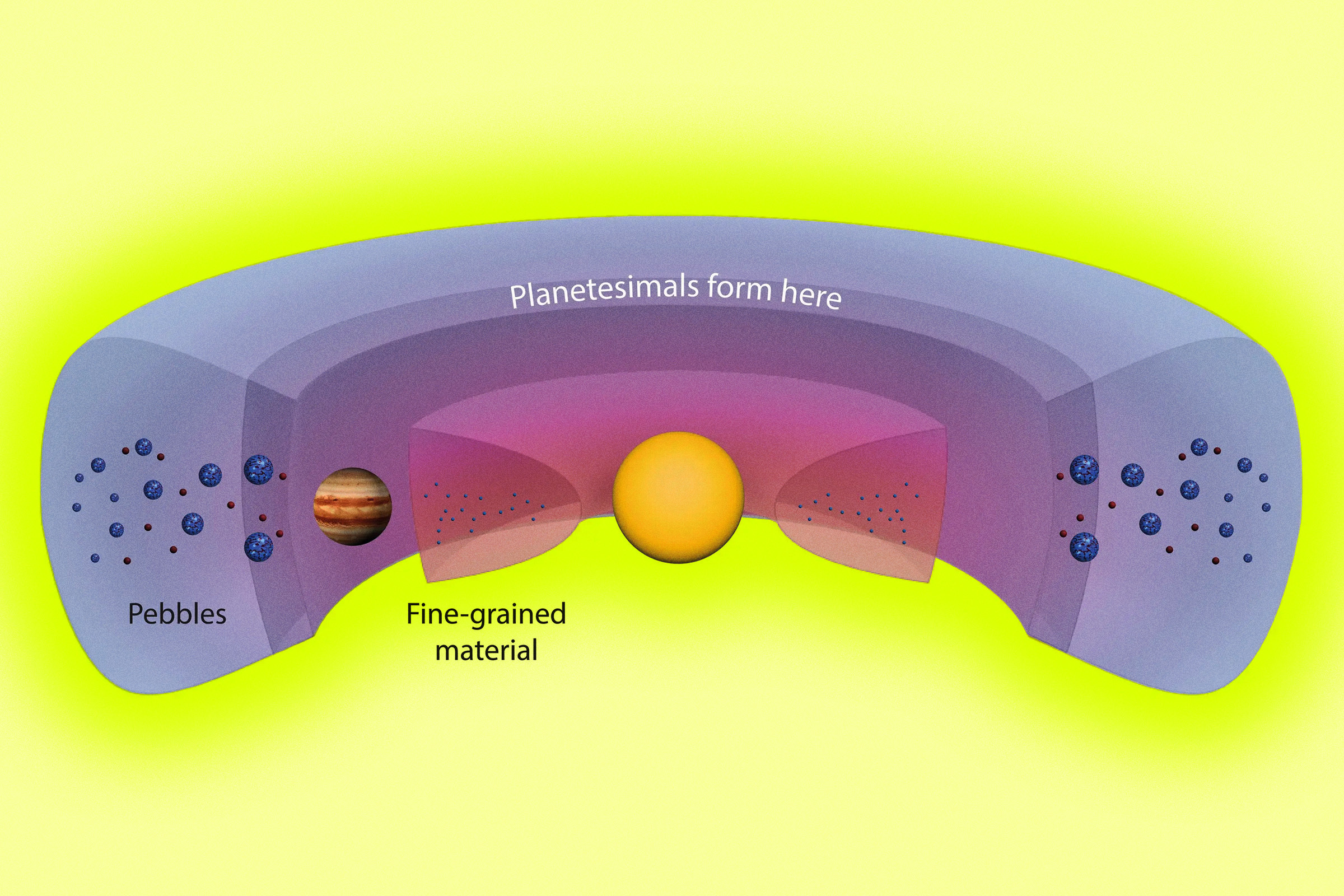
Lurking beyond Jupiter’s orbit, the ring-shaped region is packed with gas and dust that may have allowed it to serve as a breeding ground for so-called planetesimals, mile-length solid masses that can become the building blocks planets, when the solar system was in its infancy.

But that’s not all. In computer simulations described in a new study published in The Astrophysical Journals, the team found that the region also produced planetesimals of different compositions, perhaps making it one of the most influential planet-forming regions in our star’s domain.

“Different types of planetesimals apparently formed in the same region of the early dust and gas disk, only at different times. The region just outside Jupiter’s orbit offered excellent conditions for this,” study coauthor Joanna Drążkowska, an astrophysicist at the Max Planck Institute for Solar System Research, said in a statement about the work.

The mystery stems from a class of planetesimals called carbonaceous chondrites that formed around two to four million years after the solar system first came together. Though most planetesimals are thought to have been ejected as the solar system matured, traces of these survive as meteorite fragments that frequently bombard our planet, and it’s the rarer and unusually carbon heavy ones — our aforementioned chondrites — that prove most intriguing. They’re composed of distinct dust grains, but the proportion of these grains varies dramatically over time, with one generation made of notably crumbly grains, and others sturdier grains. What region could’ve formed such a medley of planetesimals in a short window was unknown.

A so-called “dust trap” just beyond Jupiter provides a tidy explanation, the researchers found. When the Sun was young, it was encircled by a huge disk of material in which the planets eventually formed. When Jupiter came along with its incredible mass, it sucked up most of the planet-forming material around its orbit, creating a gap in the so-called protoplanetary disk. A knock-on effect of this was that it also created a ring of higher pressure gas outside the neighborhood it cleared, trapping dust grains that clumped together into pebbles, which could eventually birth planetesimals.

In simulations modeling both microscopic particle collisions and large-scale movements in the protoplanetary disk, the researchers demonstrated that some particles could become trapped in certain regions, like the one near Jupiter. Further underscoring the planet’s role, they also found that it acted as a barrier for larger, more sturdy particles than smaller ones. This was all occurring as already-forming planetesimals sucked up some of the free-floating material. Over time, these dueling processes helped create planetesimals of two distinct generations. In the first 500,000 years, the abundance of crumbly grains dropped before rising over the next million years.

These findings, if borne out, could have broader implications for our understanding of the solar system’s evolution.

“There is strong evidence that dust traps were the preferred birthplace of planetesimals in our solar system,” Drążkowska said.

“For the first time, we have succeeded in accurately reproducing the results of laboratory studies of meteorites using computer simulations of the early solar system,” added coauthor Thorsten Kleine, Max Planck cosmochemist. “The meteorites serve, so to speak, as a touchstone for theories of planetary formation.”

More on space: Scientist Suggests That 3I/ATLAS May Have Seeded Life as It Careened Through Our Solar System

The post Scientists Spot What Appears to Be a Ring-Shaped “Planet Factory” Deep Out in Space appeared first on Futurism.

"Little red dot" in early Universe is a naked supermassive black hole

27 May 2026 at 19:37

The James Webb Space Telescope (JWST) was designed to give us the ability to look at one of the earliest periods in the evolution of the Universe, a time when some of the earliest stars were putting out enough light to ionize the hydrogen that accounted for almost all of the normal matter present at the time. There were lots of ideas about what we might see, but the Universe is full of surprises.

One of the first surprises was the existence of what picked up the moniker "little red dots," which are exactly what their name suggests. After some initial arguments, it became clear that these were early versions of the supermassive black holes that presently sit at the center of almost every galaxy. Now, gravitational lensing has allowed astronomers to confirm that a little red dot is little more than a supermassive black hole without much in the way of a galaxy around it.

Making a little red dot bigger

The little red dot in question is called Abell 2744−QSO1, and gravitational lensing has both magnified it and caused it to appear three times in the vicinity of the galaxy cluster that did the lensing. Based on details in its spectrum, we're looking at the object as it appeared just 700 million years after the Big Bang.

Read full article

Comments

© NASA, ESA, CSA, Lukas Furtak, Alyssa Pagan

"I'll buy 10 of those"—NASA science chief yearns for mass-produced satellites

19 May 2026 at 21:43

There are more opportunities to access space than ever, thanks to a bevy of commercial rockets, some with reusable boosters, led by SpaceX's workhorse Falcon 9. So why is NASA launching fewer telescopes and planetary science missions than it did a quarter-century ago?

The answer is complex. It is not necessarily the money. The space agency's science budget this year is $7.25 billion, roughly the same as it was in 2000, adjusted for inflation. This is despite attempts by the Trump administration to drastically reduce NASA science funding.

In the early months of his tenure, NASA Administrator Jared Isaacman's focus has been on human spaceflight and the Moon. This isn't terribly surprising given NASA's wildly successful Artemis II mission carrying four astronauts around the Moon last month. Since taking office in December, Isaacman has announced an overhaul of the Artemis program, canceling a space station to be built in orbit around the Moon in favor of construction of a base on the lunar surface.

Read full article

Comments

© NASA/JPL-Caltech/Space Science Institute

Everything we thought we knew about dark energy could be wrong

31 May 2026 at 12:19

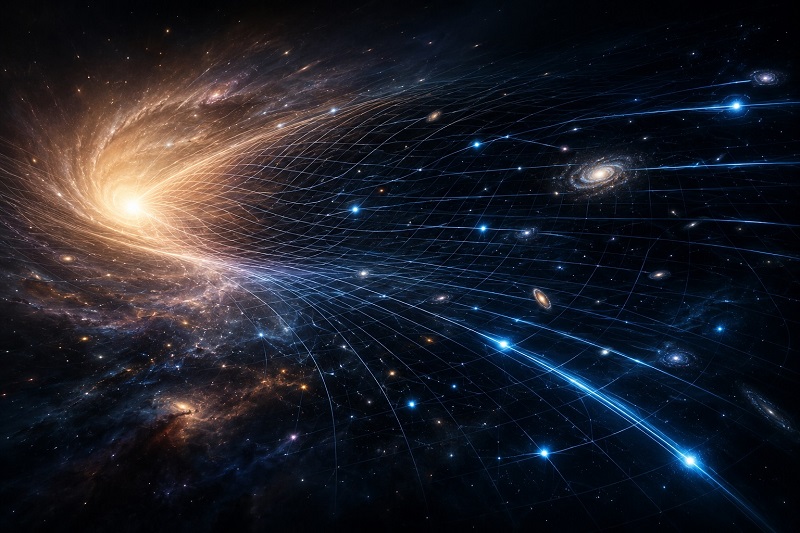
For nearly 30 years, scientists have believed that a mysterious force called dark energy is causing the universe to expand faster and faster. But a new mathematical study suggests that dark energy may not be needed at all. Researchers from the University of California, Davis have published a paper in Proceedings of the Royal Society […]

The post Everything we thought we knew about dark energy could be wrong appeared first on Knowridge Science Report.

How We See the Beautiful, Violent Sun

28 May 2026 at 15:16

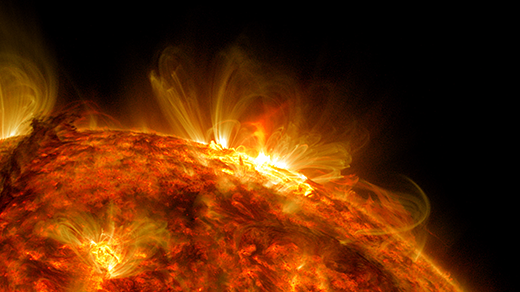
The sun is one of the most studied objects in the history of science. The ancient Babylonians and Chinese tracked sunspots and solar eclipses, etching their observations into clay tablets; these records would outlast their civilizations. When the telescope arrived in the early 1600s, astronomers such as Galileo Galilei, Christoph Scheiner, and Johannes Fabricius turned these instruments toward…

Source

Bioluminescent Deep-Sea Fish Use Crystal ‘Prisms’ to Recycle Their Own Glow

27 May 2026 at 20:37
Sigmops gracilis. Image credit: Wu Quancheng / Fisheries Research Institute, Council of Agriculture, Taiwan.

A marine biologist studying the photophores of a bioluminescent fish species found needle-shaped guanine crystals that scatter and redirect light instead of merely reflecting it, a discovery that could inspire more efficient biomedical and optical devices.

The post Bioluminescent Deep-Sea Fish Use Crystal ‘Prisms’ to Recycle Their Own Glow appeared first on Sci.News: Breaking Science News.

"Little red dot" in early Universe is a naked supermassive black hole

27 May 2026 at 19:37

The James Webb Space Telescope (JWST) was designed to give us the ability to look at one of the earliest periods in the evolution of the Universe, a time when some of the earliest stars were putting out enough light to ionize the hydrogen that accounted for almost all of the normal matter present at the time. There were lots of ideas about what we might see, but the Universe is full of surprises.

One of the first surprises was the existence of what picked up the moniker "little red dots," which are exactly what their name suggests. After some initial arguments, it became clear that these were early versions of the supermassive black holes that presently sit at the center of almost every galaxy. Now, gravitational lensing has allowed astronomers to confirm that a little red dot is little more than a supermassive black hole without much in the way of a galaxy around it.

Making a little red dot bigger

The little red dot in question is called Abell 2744−QSO1, and gravitational lensing has both magnified it and caused it to appear three times in the vicinity of the galaxy cluster that did the lensing. Based on details in its spectrum, we're looking at the object as it appeared just 700 million years after the Big Bang.

Read full article

Comments

© NASA, ESA, CSA, Lukas Furtak, Alyssa Pagan

How to model a net‑zero system across timescales

27 May 2026 at 08:51

A successful clean‑energy transition depends on understanding how to balance variable renewable power with the growing electricity demands of transport, heating, and industry. A key challenge is capturing how renewable energy sources like wind and solar fluctuate hour by hour, but this variability also creates new opportunities to align supply with increasingly flexible forms of demand, such as electric vehicles, heat pumps, and other electrified services. Alongside these short‑term dynamics, it is equally important to determine the long‑term infrastructure needed to support a fully decarbonised energy system.

In this research, two powerful models (REMIND and PyPSAEur) are linked and allowed to exchange information repeatedly to determine both what infrastructure should be built and how it would operate each hour of the year. REMIND is a global energy and climate model that looks decades ahead, analysing investments, technology choices, and pathways to netzero. PyPSAEur is a detailed model of the European electricity system that simulates realtime grid behaviour. By combining a model that excels at longterm planning with one that captures hourly power system dynamics, the researchers create a much more realistic tool for answering these complex questions. 

They then test this approach on a Germany case study under two conditions: one with demandside flexibility (where electricity use can shift to cheaper hours, such as smartcharging electric vehicles) and one without flexibility. Their findings show that a fully renewable energy system is technically and economically achievable, that flexible systems perform far better than inflexible ones, and that even with flexibility, electricity prices can vary significantly between sectors, creating political challenges around fair pricing. Both scenarios of the German case study reach net-zero emissions by 2045.

This research gives policymakers a clearer way to design reliable, affordable, fully renewable energy systems by showing how to integrate renewables, manage electrification, use flexibility to reduce costs, understand sectoral price differences, and build markets. 

“Models used to inform climate policy have always faced a fundamental trade-off: they either capture the long-term perspective needed for investment decisions, or the hourly detail needed for power system planning, but not both. Our coupling of REMIND and PyPSA-Eur is a first step towards resolving this trade-off for an increasingly electric future energy system.” – Dr Adrian Odenweller, Potsdam Institute for Climate Impact Research

Read the full article

REMIND-PyPSA-Eur: integrating power system flexibility into sector-coupled energy transition pathways

Adrian Odenweller et al 2026 Prog. Energy 8 025001

Do you want to learn more about this topic?

The role of grid-forming inverters in enabling high penetration of renewable energy in power systems: standards, ancillary services, current deployment, and future perspectives Ali Q Al-Shetwi et al. (2026)

The post How to model a net‑zero system across timescales appeared first on Physics World.

❌