Normal view

From equations to nuclear medicine: Keamogetswe Ramonaheng on building medical physics in Africa

1 June 2026 at 11:00

For Keamogetswe Ramonaheng, physics was never just about equations – it was about clarity. “From a young age, I was attracted to mathematics and science as a way of understanding complex phenomena through a structured approach,” she says. “Physics was the area that spoke to me the most because it is the foundation for the fundamental principles that govern the natural world.”

Ramonaheng is head of medical physics and radiobiology at the Nuclear Medicine Research Infrastructure (NuMeRI) in Pretoria, South Africa, where she applies the principles of radiation science to treat cancer. NuMeRI, which opened in 2024, is the first research facility in Africa dedicated to nuclear medicine. It’s a joint venture between the Steve Biko Academic Hospital, the University of Pretoria, iThemba Laboratories for Accelerator-Based Sciences and the Nuclear Energy Corporation of South Africa.

Ramonaheng’s academic journey began at the University of the Free State (UFS), where she completed her undergraduate and honours studies before starting an internship at Universitas Academic Hospital in Bloemfontein. There she saw how a rigorous physics training can lead to tangible, clinical benefits. “The ability to comprehend and harness the interaction between radiation and matter in the human body demonstrated the power and relevance of scientific inquiry,” she recalls.

In many ways, nuclear medicine found me

Keamogetswe Ramonaheng

Thanks to a fellowship from the International Atomic Energy Agency (IAEA), Ramonaheng completed a clinical placement at Royal North Shore Hospital in Sydney, Australia. She later continued her postgraduate studies at UFS, becoming the first Black South African woman to earn a PhD in medical physics for nuclear medicine. “In many ways, nuclear medicine found me,” says Ramonaheng, who is grateful to the encouragement of various senior staff members who saw her potential and guided her into the field.

Multifaceted role

Following a spell as an independent medical physicist and manager at Universitas Academic Hospital and lecturer at UFS, Ramonaheng joined NuMeRI in 2024 and the University of Pretoria. Along with the team of scientists she leads, Ramonaheng oversees the safe and effective use of ionizing radiation at NuMeRI used to treat and diagnose disease in a safe and effective manner.

It’s a varied role, which stretches from providing patient-focused clinical services to carrying out applied research. “We integrate research with operations,” says Ramonaheng. “That requires careful planning and rigorous quality assurance, ensuring that innovation does not compromise safety.”

Among her duties, Ramonaheng carries out dosimetry calculations for innovative radiopharmaceuticals, works on new forms of quantitative imaging, and helps to develop novel radionuclide therapies, including using alpha particles to treat cancer. She also uses gamma-ray cameras equipped with highly sensitive cadmium-zinc-telluride detectors, which allow radiopharmaceuticals to be quantified and imaged more precisely.

Ramonaheng is particularly interested in “theranostics” – a form of “precision medicine” that combines therapy with diagnostics. It involves giving a patient a tumour-targeting molecule labelled with a radionuclide. This allows the tumour to be visualized using techniques such as positron emission tomography (PET) or single-photon emission computerized tomography (SPECT). The same molecule – or one similar to it – is then used to deliver a therapeutic radionuclide directly to the tumour.

Daily challenges

For Ramonaheng, a typical day is fast-paced. Mornings often begin with her overseeing radiation-safety protocols and ensuring that radiation imaging and counting equipment are working as well as possible, such that they meet quality assurance standards. Through the day, Ramonaheng also oversees all operational medical-physics activities and carries out her duties as chair of NuMeRI’s radiation protection committee.

As the day progresses, she might find herself reviewing clinical theranostics dosimetry workflows to carrying out patient-specific dose calculations or evaluating quantitative imaging metrics from SPECT/CT and PET/CT systems. Other tasks include reviewing research protocols for cancer theranostics, mentoring postgraduate students at the University of Pretoria, and examining clinical trials.

Innovation accelerates when silos are dismantled

Keamogetswe Ramonaheng

Ramonaheng works in a highly interdisciplinary environment, collaborating with radiographers, nurses, radiochemists, radiopharmacists, medical physicists and clinicians to address live issues in real time. “Innovation accelerates when silos are dismantled,” she says.

The work is not without its challenges. Funding for postgraduate training is a persistent concern. Clinical physics is also a highly specialized field, which means it can be hard to recruit people with the right skills, who might be drawn to better-paid industry jobs. In addition, NuMeRI is an operationally complex mix of advanced imaging systems, radiopharmaceuticals and clinical regulations, which requires good project-management and planning skills.

But Ramonaheng, who recently won two awards at the 8th Theranostics World Congress in Cape Town, feels the benefits outweigh the challenges. “It is very fulfilling to see the translation of research into clinical application,” she says. Just as gratifying, she adds, is watching her students move from their studies to publications and clinical applications. “You see the entire process of scientific advancement.”

A more promising future

Looking ahead, Ramonaheng envisages a growing use of artificial intelligence (AI) in her work. She also collaborates with national and international partners to automate workflows and enhance efficiency, precision and patient-centred care. Another ambition for Ramonaheng is to further strengthen NuMeRI as an Africa-wide hub for research, clinical service and training – a vision reinforced by the IAEA recently naming NuMeRI as one of 18 global “anchor centres” for its work in radiotherapy and medical imaging.

Ramonaheng believes medical physics will grow rapidly in Africa over the next 10 years, fuelled by an expansion of theranostics and precision medicine. Her hope is to guide this growth through mentorship and leadership, ensuring that Africa develops its own talent pool of medical physicists who can address the continent’s unique healthcare needs.

Africa suffers, for example, from limited access to advanced imaging and targeted therapies. Ramonaheng’s aim is to optimize personalized and precision medicine for cancer patients, ultimately improving treatment outcomes and quality of life. Eventually, she hopes, medical physics will be recognized as a profession across the continent. “We are building not only research outputs but human capital.”

Leadership is not only about the creation of paths, but the creation of paths where there were no paths previously.

Keamogetswe Ramonaheng

Being a pioneer in the field has required resilience on her part. “Competence must be coupled with confidence,” says Ramonaheng, who has had to learn the unwritten rules of a world dominated by men. As a mentor, her guiding principle is the African concept of motho ke motho ka batho babang – a person is a person only through others. “Leadership is not only about the creation of paths,” she says, “but the creation of paths where there were no paths previously.”

Her message to young physicists – particularly women and those from other underrepresented groups – is clear. “Medical physics is a dynamic and impactful field at the intersection of physics, medicine and technology,” she says. “ It allows you to see the direct translation of science to patients.” Medical physics requires resilience, curiosity and commitment, but for Ramonaheng its beauty is that equations don’t stay on paper – they become a tool for healing.

The post From equations to nuclear medicine: Keamogetswe Ramonaheng on building medical physics in Africa appeared first on Physics World.
ESTRO debate reveals rising confidence in upright proton therapy

26 May 2026 at 09:30

Two years ago, the ESTRO 2024 meeting in Glasgow dedicated a conference session to the discussion of upright radiotherapy. In particular, the speakers pondered whether this emerging technique – in which patients are treated sitting up rather than lying down – offers hope of increasing access to advanced radiotherapy, or whether it’s merely hype.

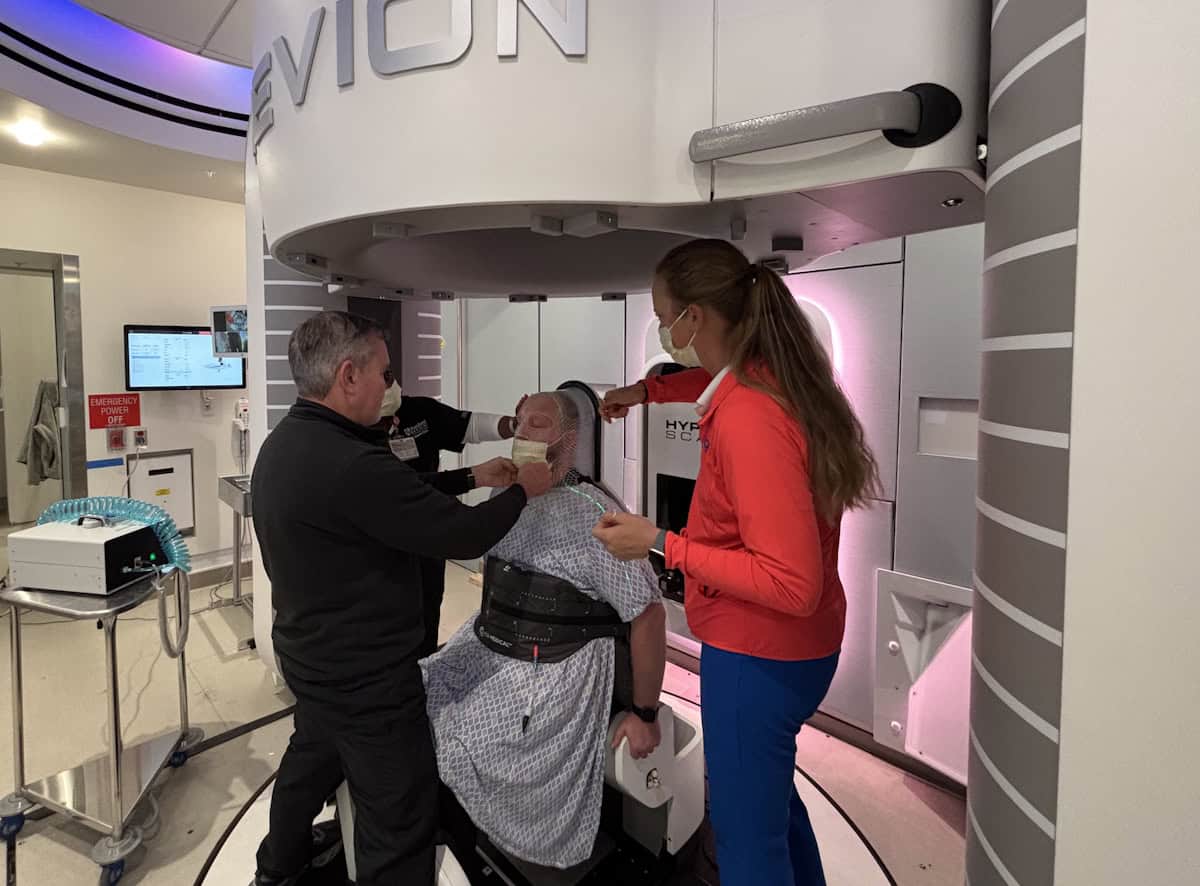
Things have moved on since then. Leo Cancer Care introduced its upright photon therapy system, Grace, and received commercial approval in the US and (just last week) Europe for its Marie upright positioning and CT system. Stanford Medicine recently unveiled the world’s first ultracompact proton therapy facility, pairing Mevion Medical Systems’ compact S250-FIT proton therapy system with the Marie platform. Meanwhile, the body of published research on the feasibility and patient experience of upright treatments continues to grow.

At this year’s ESTRO 2026 meeting in Stockholm, the theme was revisited by four experts in the field, who debated the motion that “Upright radiotherapy will be a mainstream and standard radiotherapy delivery option in 2035”.

The customary pre-debate vote revealed that just one quarter of the audience thought that photon-based upright radiotherapy would become mainstream, with the remainder believing that it would remain a niche technique. When it came to upright proton therapy, however, the vote was split roughly 50:50. So could the speakers persuade the attendees to change their minds?

Patient-centred care

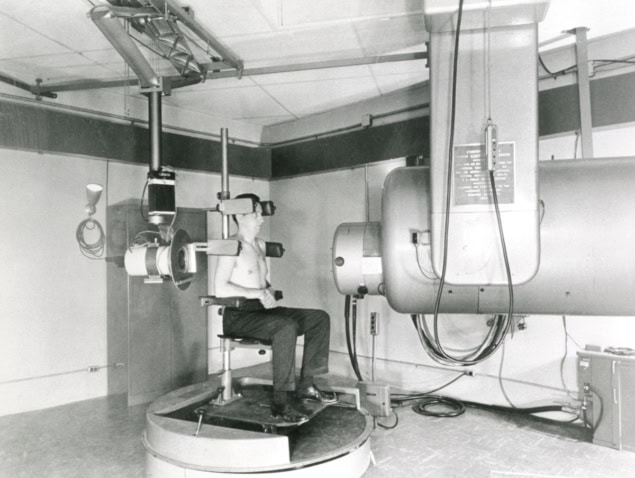
The debate began with Tomas Kron from the Peter MacCallum Cancer Centre in Australia arguing the case for upright X-ray radiotherapy. He pointed out that upright positioning is not a new idea. “Historically, photons and upright have been around for a very long time. It has been, if not standard practice, widely used. But what role will it play in 2035?”

The first high-energy linear accelerator for medical use
Not a new idea The first high-energy linear accelerator for medical use, known as LA-1, was developed at Stanford in the 1950s. Patients with head-and-neck or lung cancer could sit on an isocentrically mounted chair for treatment. The machine was decommissioned in 1972 and now resides in the Smithsonian Institution. (Courtesy: Stanford Medicine)

Kron described a clinical imaging trial underway at Peter Mac investigating upright cone-beam CT for planning lung cancer radiotherapy. The study showed that image quality was good enough for adaptive treatment planning, and that the lung was expanded and moved less in the upright position. Kron noted that patient setup and imaging was “really, really easy”, taking just a few minutes.

But what’s more important, he emphasized, is the patient experience. Patients treated while sitting up can maintain eye contact with the doctors throughout, they feel more involved and empowered, with one patient commenting: “My breathing was strong, I felt comfortable, the band around my chest was giving me a bear hug.”

“It’s really all about patient-centred care. Physical comfort and emotional wellbeing are top priorities,” Kron said. “Clearly, in an upright scenario this is much more likely to be the case.”

Upright radiotherapy offers many other unique features, including anatomical advantages and the ability to customize the chair, for example, for bariatric or paediatric patients. An upright treatment system is also more compact than a couch-based machine, requiring a smaller bunker. It could also be used as a mobile radiotherapy unit, said Kron – reducing the need for patient travel.

Kron’s team found that 80–90% of their patients could be treated just as well with upright radiotherapy as supine (lying down). “There are anatomical advantages with upright, there are patient preferences, there are economic benefits. What’s not to like,” he concluded.

The myth of mainstream

“Upright radiotherapy will not be mainstream and standard,” declared the second speaker, Livia Marrazzo from the University of Florence in Italy.

“Mainstream means widely adopted, used across the majority of radiotherapy centres, the default in clinical practice … and standard is even stronger, backed by clinical evidence, guideline-endorsed, reproducible and validated,” Marrazzo told the delegates. “It’s not ‘it works in some centres, is technically feasible, has early adopters, may have advantages for some patients’. But that is where we are with upright radiotherapy.”

Livia Marrazzo
The art of persuasion Livia Marrazzo argued that upright radiotherapy will not be mainstream by 2035. (Courtesy: Icro Meattini)

From a practical standpoint, most of the roughly 16,000 radiotherapy systems worldwide are linac-based recumbent machines with a typical lifecycle of 10 to15 years. Many were recently replaced with supine systems optimized for intensity-modulated and image-guided radiotherapy. “The installed base is locked into supine geometry for another full cycle,” Marrazzo explained.

She refuted many of the advantages proposed by Kron. “We have limited clinical evidence supporting comfort advantages,” she said. “It may benefit specific patient groups and conditions, but this doesn’t mean mainstream.” Overall, clinical experience is limited, with no comprehensive evaluations of plan quality and no comparative clinical studies.

She highlighted the particular challenges of breast cancer treatments, which account for 25-30% of cases in her radiotherapy department. “When we place a breast cancer patient upright, we lose the natural breast separation, so have much more difficulty in hitting the target and avoiding the contralateral breast,” she explained. “This exemplifies how upright is not a plug-and-play replacement for a conventional supine workflow.”

“Are we sure we would like to have upright as the standard radiotherapy delivery option by 2035 or do we want to push our efforts somewhere else?” Marrazzo concluded. She would prefer a focus on introducing technologies such as AI-driven planning and contouring, fully adaptive workflows, ultra-hypofractionation or biology-guided treatment adaptation. “These are all solutions that can be software-driven, scalable and compatible with existing supine infrastructure.”

The motion for protons

With half of the audience already agreeing that upright proton therapy will become mainstream, Petra Trnkova from Czech Technical University had perhaps a slightly easier task as she presented the case for upright protons. Nevertheless, she began by suggesting that her opponents are simply “scared of progress and won’t accept that, even without evidence, we can move forward in radiotherapy”.

Trnkova reiterated the benefits of upright radiotherapy cited by Kron: favourable patient anatomy, lower installation cost, improved sustainability, and patient-centric management. “For proton therapy, these improvements are much more significant,” she noted.

For starters, upright systems could help address the massive disparity in access to proton therapy around the globe. Sharing a map showing how proton therapy facilities are mostly distributed in wealthy countries, Trnkova noted: “My opponents may tell you that it’s not possible to do this by 2035, but when you look at this map, I ask you, can we wait any longer?”

Compact S250-FIT proton therapy system
Saving space The compact S250-FIT proton therapy system is small enough to fit in a standard linac vault. (Courtesy: Stanford Medicine)

Increasing access to proton facilities is enabled by the extreme size reduction when eliminating the need for a large rotating gantry, enabling proton therapy systems small enough to fit in a standard linac vault. Upright proton therapy can also reduce machine complexity, increase rotation speed and lower energy consumption – reducing costs, improving system upgradeability and increasing environmental sustainability.

“Another consequence of smaller facilities is we can really have patient-centred care,” Trnkova added. Recalling the 10 to 15 year linac lifetime mentioned by Marrazzo, she suggested another option: “You can replace your linac with proton therapy. Then you can have the full set of treatments available for each patient”.

Upright proton therapy could also ease the introduction of new treatment techniques, such as proton arc therapy, which offers dosimetric benefits over intensity-modulated proton therapy, but it is difficult to deliver with a gantry. It could also enable in vivo dosimetry, using shoot-through protons for range verification, or mixed-beam delivery of protons and photons.

“Upright positioning offers many opportunities, it’s the only way towards the democratization of proton therapy,” Trnkova concluded. “Stop asking what opportunities upright radiotherapy brings, start asking what you can do to bring it faster to clinical practice.”

The reality check

The final speaker, Carles Gomà from Clinic Barcelona in Spain, reflected upon what makes a good radiotherapy system. “In my view, it’s a three-legged stool: beam delivery, imaging and immobilization,” he said. “And progress comes with a combination of the three.”

For example, focusing too heavily on beam delivery and imaging can lead to immobilization being forgotten. “Immobilization means comfort, and if we are comfortable, we are still,” Gomà explained. “I cannot care less how many papers say patients are more comfortable in an upright position,” he added, pointing out that people will pay five times more to fly in business class where they can lie down.

The other reason cited for moving to upright proton therapy is its lower cost. “But is proton therapy expensive?” Gomà asked. He described the situation in Catalonia, which has a population of eight million and in 2018 spent Euro 42.2M on external-beam radiotherapy. “This is exactly the same cost as one immunotherapy drug for the same population,” he pointed out. “Proton therapy is not expensive; photon therapy is ridiculously cheap.”

Gomà also considered whether “suboptimal protons” are better than photons. “I’m going to answer no,” he said, describing two recent phase III, randomized trials comparing photons with protons for oropharyngeal cancer. The US trial concluded that proton therapy provides a new standard-of-care option, but the UK trial reported no difference between the two modalities.

“Let’s learn from history and not repeat the same mistakes,” he concluded. “True progress is improvement without compromise. If we want to make the stool higher, we have to work on all three legs at the same time.”

Final vote at the ESTRO debate
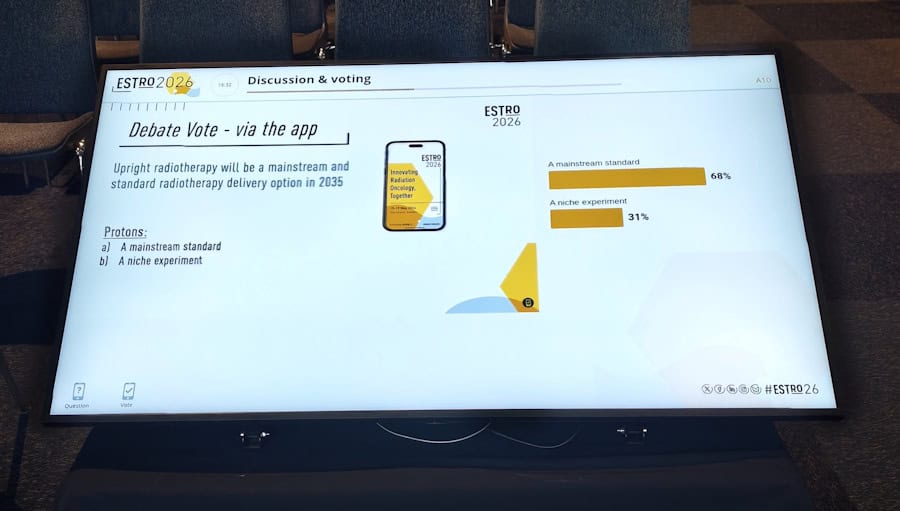
The final vote At the end of the debate, the ESTRO delegates strongly supported upright proton therapy. (Courtesy: Ye Zhang)

The debate concluded with decisive a final vote: while support for upright photon therapy reduced a little, over two-thirds of the audience believed that upright proton therapy will indeed become mainstream and standard by 2035.

Writing on LinkedIn, session co-chair Ye Zhang from the Paul Scherrer Institut noted: “The debate sparked an inspiring shift in perspective, with final voting showing slightly increased scepticism toward mainstream upright photon therapy (dropping from 23% to 18% support), but a dramatic surge in favour of upright proton therapy, which jumped from 47% to a 69% majority.”

The post ESTRO debate reveals rising confidence in upright proton therapy appeared first on Physics World.

End-to-end dosimetry audit for SRS/SBRT: optional or mandatory at the beginning of the journey?

27 April 2026 at 09:59

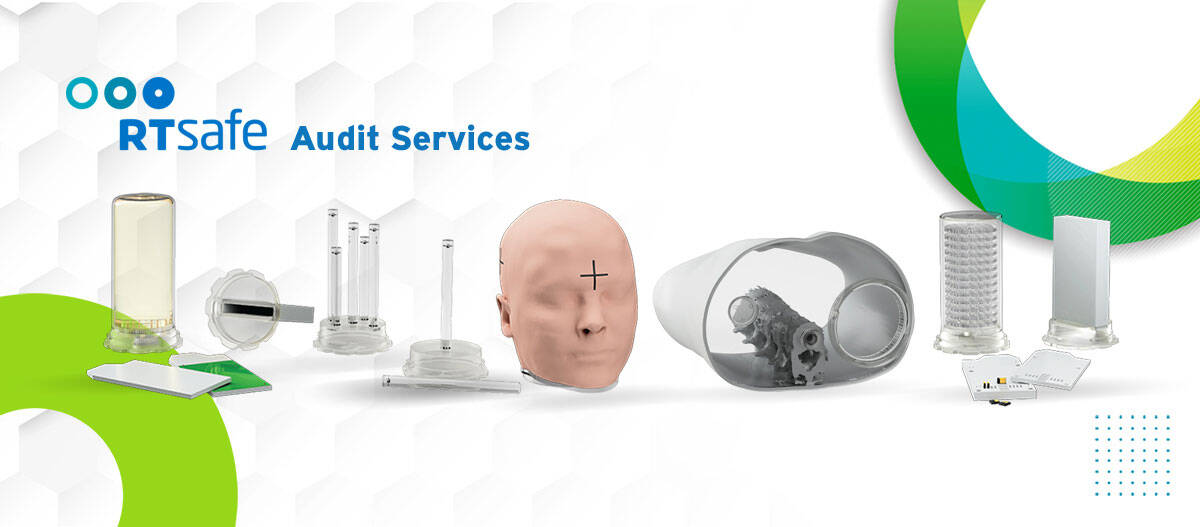
RTsafe: Audit service


Experience of RTsafe succeSRS/SBRT implementation for Varian Halcyon machine.

This presentation focuses on the implementation of end-to-end dosimetry audits for SRS/SBRT treatments using the RTsafe independent audit system on a Varian Halcyon machine.

SRS/SBRT are advanced radiotherapy techniques that deliver very high ablative doses of radiation, with great accuracy, precision and conformality. As we know, in radiotherapy, even small errors in the acquisition of CT images for simulation, in planning, dosimetry, treatment delivery, or patient positioning can lead to negative consequences.

Given the high-dose gradients and submillimeter accuracy required in stereotactic radiotherapy, the audit evaluates the entire treatment chain – from imaging and target definition to planning, delivery and dose verification. The role of such audits in detecting geometric and dosimetric uncertainties is highlighted, along with their contribution to ensuring treatment accuracy, consistency and patient safety in high-precision radiotherapy. Last but not least, especially at the beginning of the implementation of these techniques in a new radiotherapy department, the audit can also help to validate the specific procedures for SRS/SBRT and the professional training for the members of the treatment team.

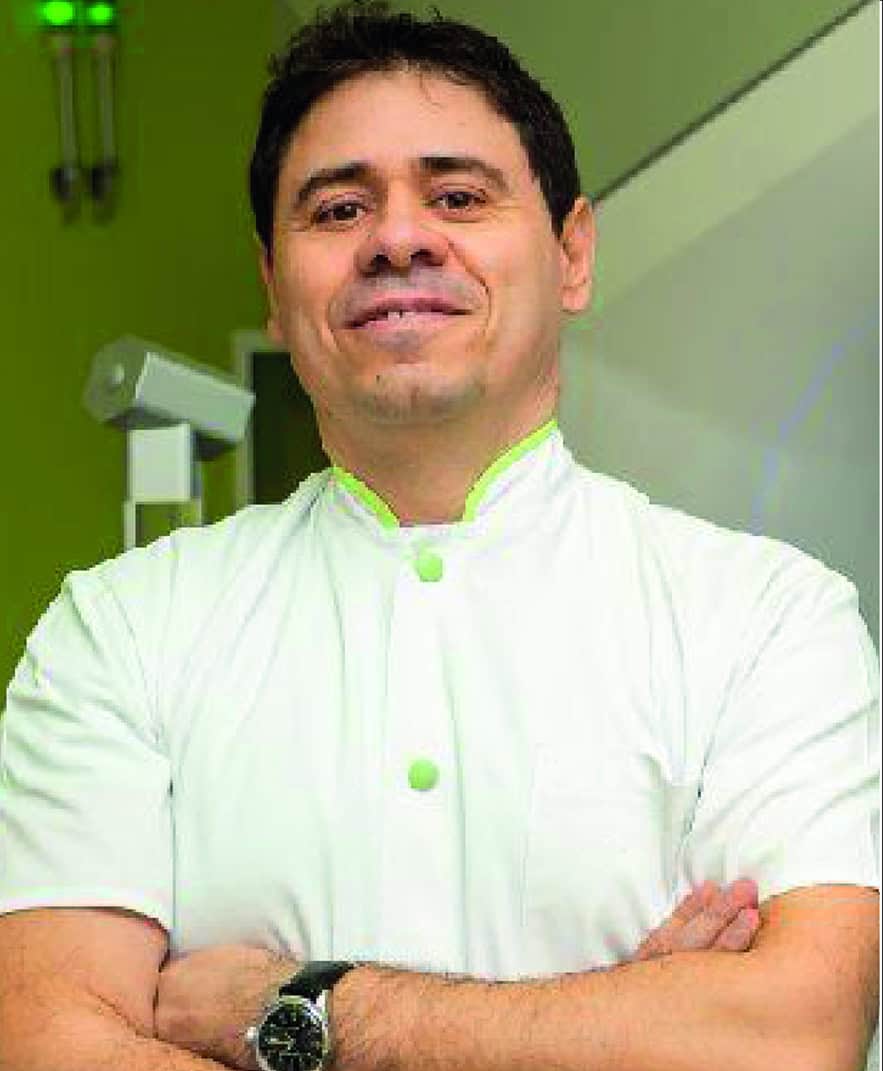
Florin Costache

Florin Costache is a medical physicist expert in radiotherapy across multiple clinics, while also serving as a radiation safety officer, with more than 20 years of professional activity in clinical and academic environments. Throughout his career, he has worked in leading radiotherapy centers in Romania, contributing to commissioning, quality assurance, dosimetry and advanced treatment planning using modern systems such as Varian platforms. Florin’s expertise spans advanced radiotherapy techniques, radiation safety and the implementation of quality assurance systems in clinical practice.

In addition to his clinical work, Florin is a lecturer, course coordinator and former president of the Romanian Medical Physics Society, with numerous scientific publications and conference presentations.

The post End-to-end dosimetry audit for SRS/SBRT: optional or mandatory at the beginning of the journey? appeared first on Physics World.
Report highlights challenges and opportunities for UK medical physics

24 April 2026 at 12:00

Medical physics – the application of physics principles and techniques to medicine – plays a pivotal role within modern healthcare, with advances in the field serving to improve diagnostic accuracy, treatment precision and patient safety. But despite its immense potential to enhance patient care, medical physics in the UK faces various funding, regulatory and approval challenges that may prevent it from fulfilling this promise.

Taking a closer look at these obstacles, the Institute of Physics (IOP) has published a new community perspective report entitled Medical Physics in the UK: Opportunities and Challenges. The report examines the barriers to translation and commercialization of medical physics research, and proposes the next steps towards creating a more supportive environment for medical physics in the UK.

The report was instigated by the IOP Medical Physics Group and presents the conclusions of a series of discussions, held over two months, examining the challenges that medical physicists encounter in their daily work. The report also highlights the outcomes of an intensive two-day workshop examining the translation of quantum technologies into clinical applications.

The challenges and the opportunities

The UK has a strong legacy of leading medical physics research. To benchmark its contributions, the report authors analysed the top 5% most highly cited papers published in international medical physics journals from 2014 to 2023, revealing that the UK is fourth in the world for its research output in medical physics.

The UK also boasts a large, diverse medical technology industry and has the sixth largest medical device market globally. Notably, its research output involves a high proportion of non-academic co-authors – including corporate, government and clinical collaborators – suggesting a strong potential for translating physics research into the medical market.

The report identifies some of the challenges in realising this potential, including a stretched workforce and critical skills shortages, and outlines some of the more impactful obstacles – namely misaligned funding structures, a complex regulatory landscape, and lengthy approval processes for medical devices and clinical trials.

In the UK, medical physics research is funded by a combination of government agencies, charitable organizations, and independent trusts. The multidisciplinary nature of medical physics, however, risks promising projects falling into the gaps between funding categories, making it difficult for researchers to secure financial backing.

Navigating the regulatory landscape for medical physics developments is also a complex process, with different global markets having their own specific requirements. Challenges here include obtaining initial regulatory approval, adapting to evolving standards and managing multiple regulatory bodies simultaneously. And while new technologies are often sold into larger markets such as the USA and Germany, the UK’s medical device approval process lacks seamless integration with international regulatory bodies, creating barriers to such wider market adoption.

Finally, clinical trials and validation processes for medical physics innovations can often take several years. Securing funding for large-scale trials and collecting sufficient data to demonstrate long-term efficacy can also lead to delays in introducing new technologies to patients.

Overcoming these challenges will be key to fully exploiting the significant potential of medical physics to revolutionize healthcare in the UK. An initial step could be to bring together this diverse community – including researchers, medical practitioners, industry, NHS officials, government representatives and funders – to initiate a collaborative dialogue and brainstorm innovative strategies.

The report suggests three possible discussion points: how to better align funding mechanisms to support interdisciplinary research; how to shape an integrated regulatory framework with increased transparency; and how to strengthen collaboration between academia, healthcare and industry.

Such discussions should result in a comprehensive list of actionable recommendations. The report authors propose that the IOP establishes an impact project to explore the details of these recommendations and identify pragmatic, implementable solutions for their implementation.

The post Report highlights challenges and opportunities for UK medical physics appeared first on Physics World.
Science and standards: a comprehensive guide to radiological protection

15 April 2026 at 09:30
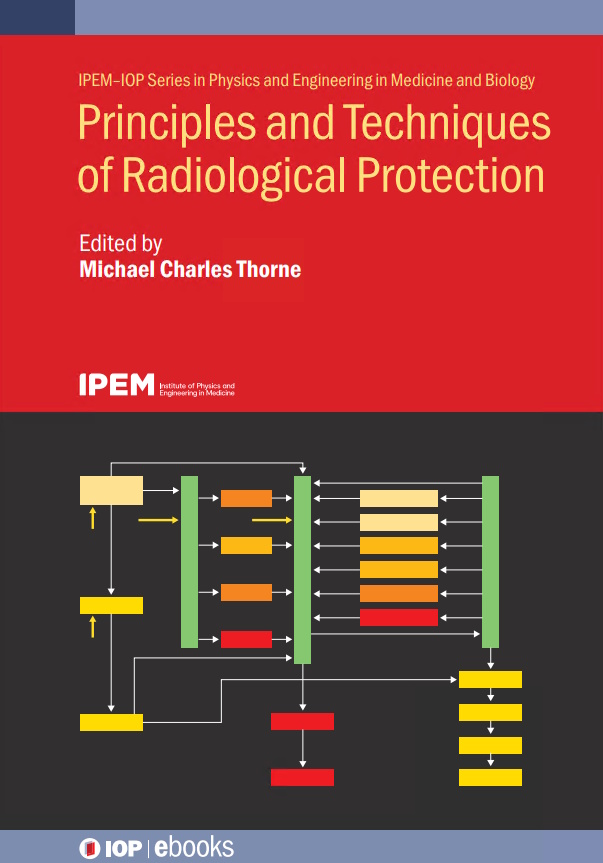
Book cover of Principles and Techniques of Radiological Protectio
Comprehensive guide The new ebook is part of the IPEM–IOP Series in Physics and Engineering in Medicine and Biology. (Courtesy: IOP Publishing)

The discovery of X-rays and radioactivity in the late 19th century gave rise to a surge of interest from the scientific community, shortly followed by the realization of the adverse effects of ionizing radiations on health. By about 1910 the dangers were widely recognised and some basic protection measures were being adopted. It was not until 1934, however, that the first quantitative standards of radiological protection were published.

Of course, protection against the adverse effects of ionizing radiation is as important today as ever, particularly for those working within nuclear and defence-related industries, medicine and R&D, as well as hospital patients undergoing radiation-based procedures and members of the general public. As such, the last century has seen the development of a complex international regulatory system, with recommendations on occupational and public exposures to radiation – from organizations such as the International Commission on Radiological Protection (ICRP) and others – continually revised and updated.

A new book, Principles and Techniques of Radiological Protection, provides a comprehensive overview of the current regulatory context for radiological protection. The text also provides an overview of the scientific issues relating to radiological protection and the current state-of-the-art tools used to comply with the relevant legislation and guidance.

Targeted at postgraduate students and new entrants to the field, the textbook is designed to cover a wide range of topics that an early-career radiation protection professional might need, or want, to know about. It also serves as a day-to-day reference work for specialists such as radiation protection advisors (RPAs) to identify appropriate techniques to address radiological protection issues as they arise.

“I aimed to produce a book that I would have liked to have had available when I started work in radiological protection just over 50 years ago,” explains the book’s editor Michael Thorne. “As I come towards the end of my career in the field, I aimed to include information, tools and techniques that I would have liked to have had readily accessible in a single volume.”

History, theory and practical applications

Thorne begins the book with a brief history of radiological protection and how historical developments continue to influence the discipline today. The next chapters examine the physical aspects of radiological protection, including an overview of basic nuclear physics and the sources of radiation, radiation transport through and interactions with matter, and the instruments used to detect and monitor radiation. Later chapters cover the principles of internal dosimetry, phantoms and biokinetic models, and mathematical modelling of radionuclide transport.

Michael Thorne
Michael Thorne A chartered radiation protection professional with 50 years of experience, Thorne is editor-in-chief of the Journal of Radiological Protection and consultant at Mike Thorne and Associates Limited. (Courtesy: Michael Thorne)

“I have also given a detailed account of natural background radiation and modelling the transport of radionuclides in the environment; and I have included a chapter on the effects of radiation on the environment, with specific emphasis on non-human biota,” says Thorne. “Throughout, I have recruited co-authors with decades of relevant experience to capture their expertise in each of the specialized areas.”

The book also provides examples of how this information is employed practically within various fields, including the nuclear industry and industries handling naturally occurring radioactive materials. Several chapters and themes are of particular relevance to those working within medical physics.

“There are two chapters specifically on radiology and nuclear medicine, written by Colin Martin, who is well known internationally for his work in this area,” Thorne tells Physics World. “There are also specialized chapters on biokinetic modelling, the nature and use of both mathematical and physical phantoms in radiation dosimetry, and on the use and abuse of instruments for radiation monitoring.”

The book rounds off with a look at the some of the major and minor accidents that led to exposure of members of the public and workers using radioactive sources. The final chapter addresses emergency planning and response for such incidents, including suggested protective actions and the roles and responsibilities of various organizations.

“Throughout, the emphasis is on broad principles and widely applicable techniques,” says Thorne. “It is considered that an individual who gains a clear understanding of these principles and techniques will be readily able to apply that understanding to the diverse and changing set of challenges that arise.”

  • Individual copies of Principles and Techniques of Radiological Protection can be purchased at the IOP Publishing Bookstore.

The post Science and standards: a comprehensive guide to radiological protection appeared first on Physics World.

Biomedical optics play crucial roles across medicine

2 April 2026 at 14:59

PMB 70th anniversary logo

This episode of the Physics World Weekly podcast features Brian Pogue, who is professor of biomedical engineering at Dartmouth College in the US. He is also the co-founder of several start-up companies that are developing optics-based systems for medicine.

In conversation with Physics World’s Tami Freeman, Pogue explains that optical technologies underlie many of today’s routine medical procedures. The field of optics is also converging with the world of medical physics, and Pogue talks about exciting new techniques for guidance, dosimetry and in vivo verification of radiation therapy cancer treatments.

This podcast is supported by One Physics, your trusted, local partner in medical physics and radiation safety.

The post Biomedical optics play crucial roles across medicine appeared first on Physics World.
❌