A tropical fruit best known for its sweet flavor may also help tackle one of the world’s most common nutritional problems. Regularly drinking guava juice could be a simple and affordable way to help reduce the risk of anemia among women in low and middle income countries, according to a review of existing research published [...]
Scientists are discovering that some of the cells linked to aging may also be key to staying healthy. A growing body of research is changing how scientists view one of aging biology’s most studied cell types: senescent cells, often called “zombie cells.” While these cells have long been associated with aging and chronic disease, new [...]
A remarkable new study of the world’s oldest verified living person reveals a surprising picture of extreme longevity. Maria Branyas lived through two world wars, the 1918 flu pandemic, the Spanish Civil War, and COVID-19. When she died in 2024 at age 117 years and 168 days, she was the oldest verified living person in [...]
A pleasant swim at the beach or pool can quickly turn deadly. Every year, over 4,000 people die from unintentional drowning across the United States.
Swim safety experts say drowning is highly preventable. They recommend learning basic swimming skills, designating “water watchers” to keep an eye on children in the water, and avoiding swimming alone or under the influence.
But what if your outfit could stop you from drowning? Swim safety experts say wearing the right color on your next beach day is a good way to stay visible and out of harm’s way—especially for inexperienced swimmers and kids.
So what are the safest swimsuit colors?
Lisa Zarda, Executive Director of the U.S. Swim School Association, says people wearing bright, neon colors are easiest to spot in pools, lakes, and oceans, while blue, black, white, and gray swimsuits blend into the water.
“When the water is moving and reflecting the sunlight, certain colors just disappear under the water,” she said. “Especially in open water, where it can be kind of murky and hard to see: The brighter the color, the better.”
Wearing bright colors helps lifeguards and other safety officials identify and rescue people who are at risk of drowning. Vivid orange and super-bright, highlighter yellow are two standout colors for swim safety.
“Think safety vests and traffic cones,” Zarda said. “Those are bright colors also for a reason—so that they can be easily seen.”
An informal study by Alive Solutions, a public safety group, tested swimsuit visibility in three different conditions: in a pool with a standard light bottom, a pool with a dark bottom similar to dark blue ocean environments, and in an outdoor lake with brown-gray water.
Across the board, the study identified bright, neon orange as the most visible color. But there was some slight variation of which colors stood out best in different environments. Against a dark pool bottom, neon yellow, green, and orange were the most eye-catching, while even brighter reds and pinks appeared darker, and both light and dark colors faded into the water.
In a pool with a light bottom, most colors stood out, while light colors like white and light blue disappeared almost instantly.
In a lake, only neon colors were visible while all other colors quickly blended. So bottom line: stick to a neon orange swimsuit if you want to be sure to be seen.
Dark colored swimsuits can be especially hard to spot in open water. Image: mrs / Getty Images / MARTINS RUDZITIS
What makes neon stand out?
All visible color is the result of reflected light. A red apple, for instance, absorbs many wavelengths along the light spectrum, but bounces back red wavelengths. So to the human eye, an apple appears red.
Ordinary colors, like the red of an apple, only reflect the light they receive, but fluorescent pigments do more than that. They also absorb incoming nonvisible ultraviolet and some visible blue light and then re-emit part of that energy as intensely visible light. This is why fluorescent colors almost seem to glow.
Fluorescent shade’s high-contrast is why traffic safety signs, protective gear, and safety and rescue objects, like buoys, are often made with neon materials. It’s also what makes fluorescent swimsuits extra safe.
Swim safety for kids
As summer comes into full swing, Zarda says wearing a neon swimsuit is just one piece of the puzzle to prevent drowning, particularly for kids.
Children are extremely vulnerable to drowning accidents. Kids between ages one to four die from drowning more than any other cause of death, according to the Centers for Disease Control and Prevention. For children aged five to 14, drowning is the second leading cause of unintentional injury.
“Choosing the right swimsuit color doesn’t replace any of the other important layers of protection.” Zarda said.
“Always having undistracted adult supervision, having a fence around your pool, enrolling your child in swim lessons so that they know how to swim and navigate in the water—those are all still very important.”
In Ask Us Anything, Popular Science answers your most outlandish, mind-burning questions, from the everyday things you’ve always wondered to the bizarre things you never thought to ask. Have something you’ve always wanted to know? Ask us.
Sunburn and mosquito bites go together in the summer like a hot dog and ketchup. To keep from becoming a mosquito buffet, most of us turn to bug sprays with DEET. An acronym built from its scientific identification (diethyltoluamide), DEET was developed for the United States Army in 1946 and entered civilian use in 1957. It is generally considered safe when used as directed.
However, mosquitoes can learn to associate the repellant with food. They may even become attracted to it. The findings are detailed in a study published today in the Journal of Experimental Biology.
“If someone applies DEET and the concentration fades over time, but a mosquito still manages to feed, the insect may begin associating that smell with a reward,” Clément Vinauger, a study co-author and biochemist at Virginia Tech, said in a statement. “That’s a possibility we should take seriously when we think about how repellents are used in the real world.”
Ace processors
Like it or not, Earth’s over 3,500 known mosquito species are pretty smart and an evolutionary wonder. They use sensory information to find hosts and can adapt to changing environments.
“Mosquitoes are remarkable at processing information about their environment,” Vinauger said. “What we are trying to understand is not only how they detect us, but how their brains interpret those cues and turn them into behavior.”
A DEET-covered dinner bell?
In this new study, the team focused on the yellow fever mosquito (Aedes aegypti). This species spreads several diseases to tens of millions of people each year, including dengue fever, Zika, yellow fever, and chikungunya.
The mosquitoes were restrained behind a piece of fabric mesh. They then offered the mosquitoes a bag of warm blood (yum) that was just out of the insects’ reach to see how enthusiastically the insects stabbed at it with their proboscises. As expected, the mosquitoes were interested in the blood, particularly when the team rewarded them by lowering the bag within reach. Things changed a bit once DEET entered the experiment. When the team offered the insects blood when surrounded by the scent of DEET, they initially stayed away from the potential feast.
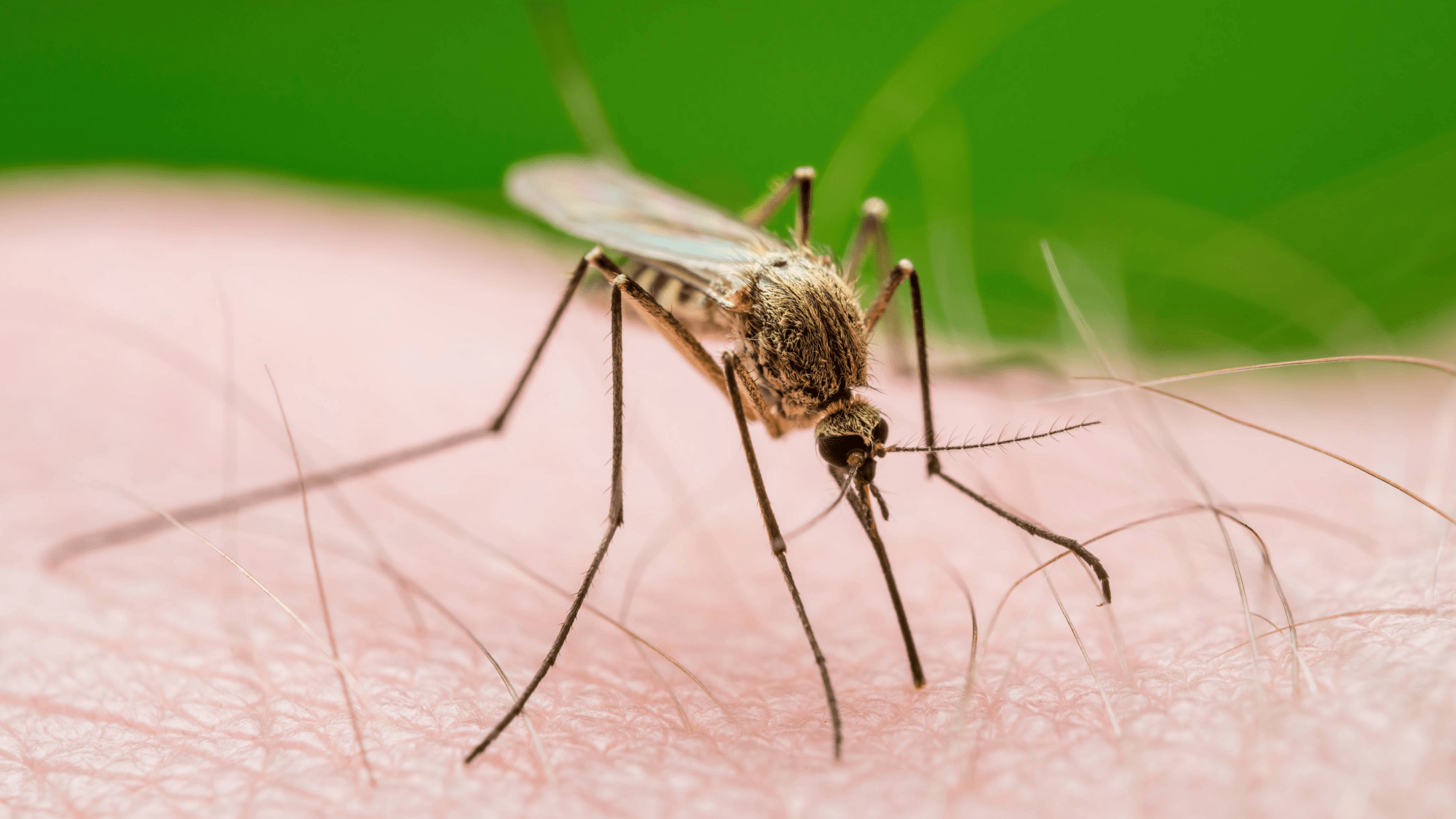
A female yellow fever mosquito (Aedes aegypti), feeding on a bag of warm blood. Image: Romina Barrozo.
To see if they could be trained to associate that smell with the dinner bell, the team fed the mosquitoes warm blood for 20 seconds, squirting the scent of DEET into the enclosure in the final 10 seconds of dining. They repeated the procedure three more times before noting how the mosquitoes responded to only the scent of DEET. In this trial, over 60 percent of mosquitoes tried to bite when they smelled DEET.
To examine further, the mosquitoes were given a choice between two human hands. The hand belonged to study co-author Ayelén Nally of the University of Buenos Aires. One of Nally’s hands was coated with DEET at normal concentrations and the other was bare. The untrained mosquitoes avoided the DEET-treated hand, while the trained mosquitoes were drawn to it.
Interestingly, the mosquitoes could form that same association when sugar, instead of blood, was used as the reward.
According to the team, they are seeing how the mosquito’s brain can rewrite its response based on their experiences. What they have learned matters just as much as what a chemical like DEET does.
“If mosquitoes are repeatedly exposed to DEET, it becomes less effective as a repellent,” study co-author Claudio Lazzari from University of Tours in France added.
Keep the bug spray
Importantly, this does not mean you should stop using DEET completely. It is still one of the most effective ways to keep the dangerous insects away, particularly where mosquito-borne disease is common.
“If you’re in tropical regions where disease risk is real, you should use it,” Vinauger said. “Instead of applying a lot at once, you may want to reapply regularly so it’s always active and providing continuous protection.”
Treated clothing may also be a challenge since DEET concentrations in fabric decline over time. Additional study to understand their behavior is crucial for public health as mosquito-borne illnesses increase due to climate change.
“We need to understand how mosquitoes keep outsmarting our control strategies,” Vinauger concluded. “And that takes understanding how they work—at the molecular level, the neural level, the behavioral level.”
For a woman in her mid-40s to mid-50s, it arrives without warning. She wakes up, overheated, wondering why it’s so hot in the house—until she sees the thermostat is set for 70 degrees, same as always. Or, she’s midway through a work presentation when heat rises from her chest to her face, and she wonders if the flush on her cheeks is visible to everyone in the room.
It’s a hot flash—a rite of passage for the majority of women in either perimenopause, the years leading up to menopause, or the years beyond it. Menopause itself is diagnosed after 12 consecutive months without a period, but the hot flashes don’t always get the memo.
Here’s everything doctors currently know about hot flashes.
What is a hot flash, and who gets them?
Hot flashes are a sudden heat flare up often paired with flushed skin and sweating. They don’t usually last long, between a minute and five minutes in duration.
Most women experience a hot flash about four and a half to five years after their last period, Dr. Monica Christmas, an OB/GYN at University of Chicago Medicine and director of its menopause program tells Popular Science. She also is the associate medical director of the nonprofit Menopause Society, which provides healthcare professionals with tools and resources to support women through the transition.
Women have grappled with hot flashes—whether simply annoying or genuinely debilitating—for centuries. In 1582, Dr. Jean Liebault of France was among the first to document the phenomenon. But while we know much more about hot flashes and night sweats than Liebault ever did, one question still stumps experts.
“What we can’t answer is why doesn’t everybody get them,” Christmas says. “Because everybody doesn’t get them. I have patients that will say, ‘I don’t know,’ if I say, ‘Are you having any hot flashes or night sweats?’ And as soon as they say that, I’m like, ‘You’re not having them.’”
What’s actually happening inside women’s bodies during a hot flash?
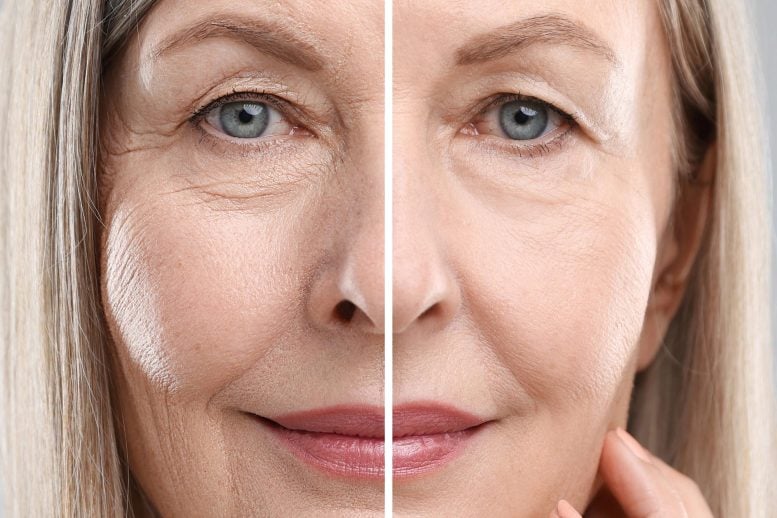
During a hot flash, a woman might feel like she’s spiking a high fever, but physiologically, that’s not what is happening. As women approach menopause and the ovaries begin to make less estrogen, the brain’s internal thermostat—the hypothalamus—becomes hypersensitive to even small shifts in temperature, Christmas says.
The body “thinks” it’s overheating, even when the actual temperature hasn’t changed much. In response, our bodies try to cool us down. Blood vessels dilate, which is supposed to help dissipate some of that heat, but then that triggers a sweating reflex.
“Many people will say, ‘I feel this out of nowhere, this surge of warmth that typically is from the nipple line up,’” she says. “And then as soon as the heat came on, and I felt like I was internally heated up or on fire, I start to sweat.”
Exactly how an individual woman experiences hot flashes varies wildly. Some describe very mild symptoms. Others grapple with profuse sweating. Some experience only hot flashes during the day, while some have regular night sweats. About four in five women experience them at some point during the menopause transition, according to the American College of Obstetricians & Gynecologists.
“There’s a lot of variability,” Christmas says. Common triggers include alcohol, caffeine, high-sugar and highly processed foods, along with stress.
Black women also are more likely to experience more severe and longer-lasting symptoms, sometimes up to 11 years, she says. And research also shows that women with more severe, longer-lasting hot flashes and night sweats appear to be at higher risk of cardiovascular disease.
That doesn’t mean treating hot flashes automatically lowers heart risk, Christmas says. But it does reinforce that these women deserve particularly careful attention to blood pressure, cholesterol, and lifestyle. “I want to make sure I’m doing everything possible to minimize that risk,” she says when she treats her patients.
There’s more to hot flashes than hormonal changes
For decades, the entire process was blamed purely on estrogen loss, Christmas says. But that explanation left some unanswered questions.
“That doesn’t explain why every menopausal woman doesn’t have night sweats,” she says. “And it also doesn’t quite explain why we can sometimes start to experience them during the perimenopause transition because during perimenopause, people still have some estrogen.”
Newer research now is telling a more complex story. When the brain recognizes that a woman’s estrogen levels are low, nerve cells in the hypothalamus called KNDy neurons (pronounced “candy”) become overactive, releasing neurotransmitters, which are chemical signals the brain uses to send messages throughout the body. These neurotransmitters include kisspeptin, dynorphin, and neurokinin B.
“It’s actually those neurotransmitters that seem to have more of an impact on our ability to regulate our internal temperature,” Christmas says. “They’re not hormones.”
What to do if you get a hot flash
For women in the middle of their hot flash years—along with the 10 percent of menopausal women who continue to experience them—there are treatments.
Estrogen-based hormone therapy can help, but not every woman, including those with a history of blood clots or breast cancer, can take hormone therapy.
Hormone therapy can help alleviate hot flashes. Video: Hormone therapy – Four things a Mayo Clinic women’s health specialist wants you to know., Mayo Clinic
Fortunately, researchers’ new understanding about the role of KNDy neurons has allowed for new treatments that block the brain signals that trigger hot flashes in the first place. The FDA approved a new drug called Veozah (it’s chemical name is fezolinetant) in 2023. It targets the neurokinin 3 receptor, which plays a key role in regulating body temperature.
Lynkuet, another drug (with the chemical name elinzanetant), came along in 2025. It blocks both the neurokinin 1 and neurokinin 3 receptors, interrupting the process that triggers hot flashes at two points instead of one.
Other medications can also provide relief, though weren’t originally developed for hot flashes, Christmas says. Some SSRIs and SNRIs; gabapentin, a neurologic medication; and oxybutynin, used for overactive bladder, are all used off-label for hot flashes and night sweats.
Cognitive behavioral therapy and hypnosis also have been shown to reduce hot flashes. “I’m menopausal, too, so I know if I’m under a lot of stress or in a stressful situation, I’m going to probably have more hot flashes than not,” Christmas says.
“So there’s certainly something about being able to calm our central nervous system down that seems to have an impact, too.”
If you’re struggling with hot flashes, Christmas recommends seeing your healthcare provider for help. Treatments are available. What’s more, in some cases, hot flashes or night sweats could signal other issues, including thyroid disorders, cancer, and infections, among others.
But bottom line, when it comes to hot flashes, you don’t have to sweat them out.
In Ask Us Anything, Popular Science answers your most outlandish, mind-burning questions, from the everyday things you’ve always wondered to the bizarre things you never thought to ask. Have something you’ve always wanted to know? Ask us.
Have you ever pressed a crosswalk button and wondered if it actually does anything? You might be onto something.
Called placebo buttons, controls that don’t do anything exist everywhere. Sometimes it’s because of accidents of history; sometimes they’re installed specifically to trick people into feeling an illusion of control. Either way, they’re hard to notice. Here are a few buttons you press every day that might not actually work.
Pedestrian buttons may or may not do anything
In New York City, an official told CNN that only around 100 of the 1,000 crosswalk buttons in that city actually do anything. The Boston Globe has reported that the buttons in and around downtown areas of that city aren’t functional. And in the UK, the BBC has reported that the buttons in downtown London are completely superfluous during the day when pedestrian traffic is high—the lights trigger on the same timed routine, regardless of any button presses. The buttons do, however, work in the evening, when pedestrian traffic slows down.
Why is this? Timing. Modern traffic lights are designed to allow the flow of traffic to be consistent. The general idea is that cars driving at the speed limit should more-or-less hit green lights as they go. Regularly timed pedestrian crossings make this math a lot simpler in places with a lot of pedestrian traffic, so most cities opt for them in downtown areas.
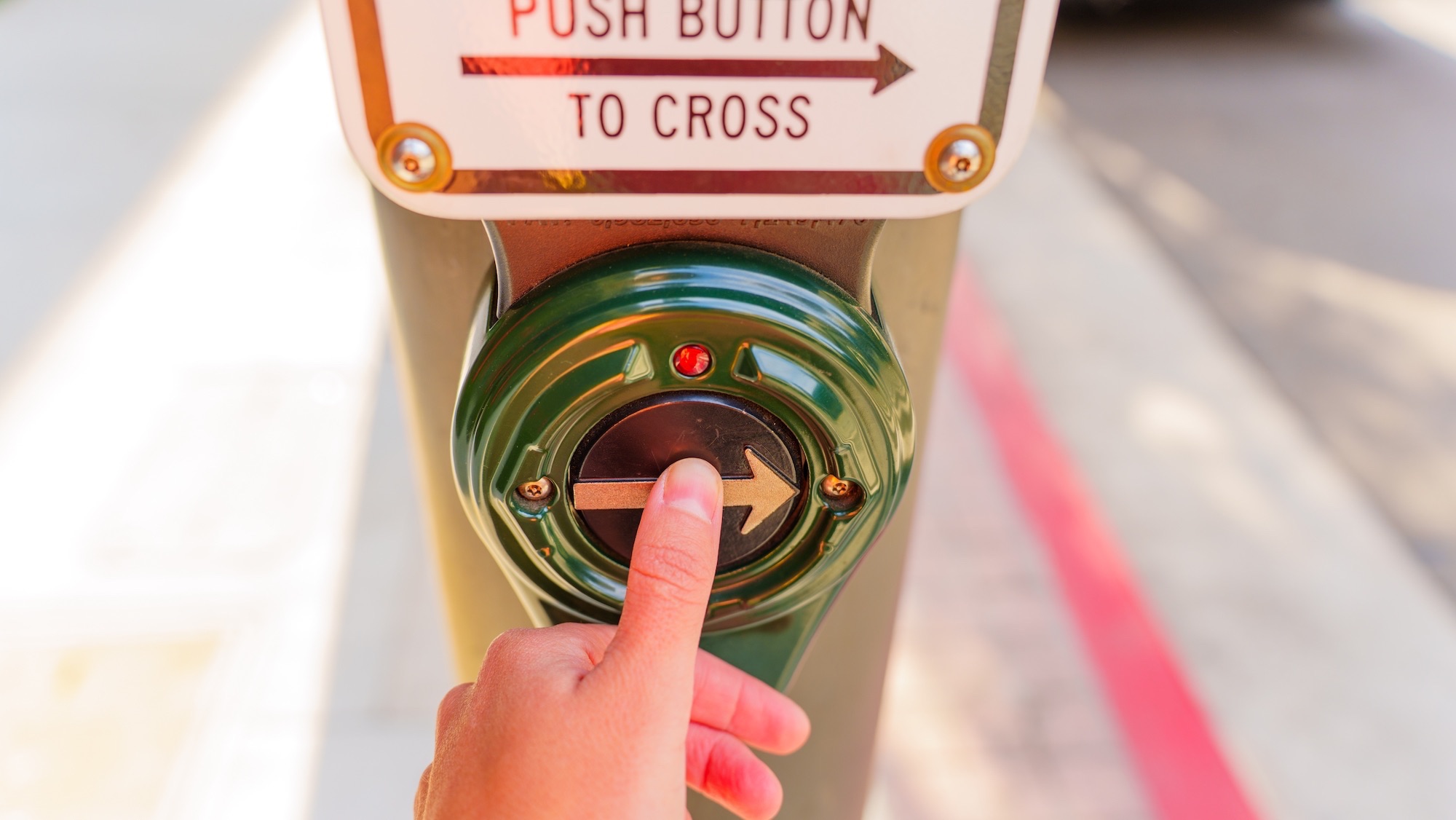
Pushing the crosswalk button may or may not change the light, depending on the time of day. Image: Shutterstock MFajarH
The situation is different if you live in a small town, suburb, or anywhere else with infrequent pedestrian traffic. In such areas, pressing the button may be necessary to trigger the walk light.
The problem: It’s not always clear whether the button you see triggers the walk light or not. If you press the button and the light changes, you’ll naturally assume pressing the button worked even if it’s the timer that triggers it. But if pressing the button is necessary, well, then the only way to find out involves waiting longer than necessary at a cross walk (which might be interesting, scientifically, but only if you’re not in a rush).
My personal solution: I just press the button. If it works, great, and if not I’ll never know.
Elevator “close door” buttons don’t work immediately
Have you ever pressed the “close door” button on an elevator and noticed the door didn’t immediately close? There’s a reason for that, at least in the United States: the Americans with Disabilities Act (ADA).
This law, passed in 1990, set specific rules for elevators, including how long the door needs to stay open. The regulations state that elevator doors “shall remain fully open in response to a car call for 3 seconds minimum.” There’s another rule that adds more time based on how far the call button in the hallway is from the elevator entrance, assuming a walking speed of 1.5 feet per second. For example: If the button is 10 feet from the door, that means the door needs to stay open for 6.67 seconds.
Sure, feel like you’re in control. Image: Shutterstock sommthink
What’s this have to do with the close door button? Well, in theory someone could press the button to close the door earlier than the code dictates is legally required. Some elevators are designed so that the close door button does nothing until enough time has passed, but in some cases the button is just disabled entirely for the sake of simplicity (generally because the door automatically closes after the required wait time).
That’s why, in many situations, pressing the close door button on an elevator doesn’t do anything. That doesn’t stop a certain kind of guy from repeatedly mashing it, though.
Your office thermostat might be a lie
A 2003 article published by the Wall Street Journal revealed something many office workers already suspected: some office thermostats don’t actually do anything. The article includes a widely cited claim— from a single HVAC installer—that up to 90 percent of office thermostats are fake. That’s almost certainly not true, and the article itself notes that other experts say the number is below two percent.
But what is certain is that at least some fake thermostats exist. Why? To reduce complaints. A 2022 article published by Propmodo, a real estate trade publication, quotes an HVAC installer who claims to have installed a fake thermostat after a number of complaints from office workers. “Our service calls disappeared, and to my knowledge, the system is still set up and working as it has since 1987,” said Vaughn Langless, an electrical inspector from Rochester, New York.
It’s a good story, and points to a psychological reality: Being able to make choices about our environment is psychologically beneficial. A 1976 study by psychologists Judith Rodin and Ellen Langer gave some nursing home residents control over small things in their environment—which plants they want to care for, for example, or when to watch a movie. Another floor was told staff would make those choices. The residents able to make choices were more alert, active, and even died at a lower rate. There is decades of similar research, showing that control over your environment leads to real benefits.
Placebo buttons are what happens when designers notice this psychological reality and try to get the benefit on the cheap. A working office thermostat would require either letting employees actually change the temperature (which costs money) or running a more responsive HVAC system. But a button that looks like it works costs basically nothing. That may be brilliant, or evil, or both—it’s all a matter of perspective. Regardless, placebo buttons lurk all around us.
Long-haul travelers often feel totally out of whack for several days after arriving at their destination. Jet lag is a natural phenomenon, but can it be prevented?
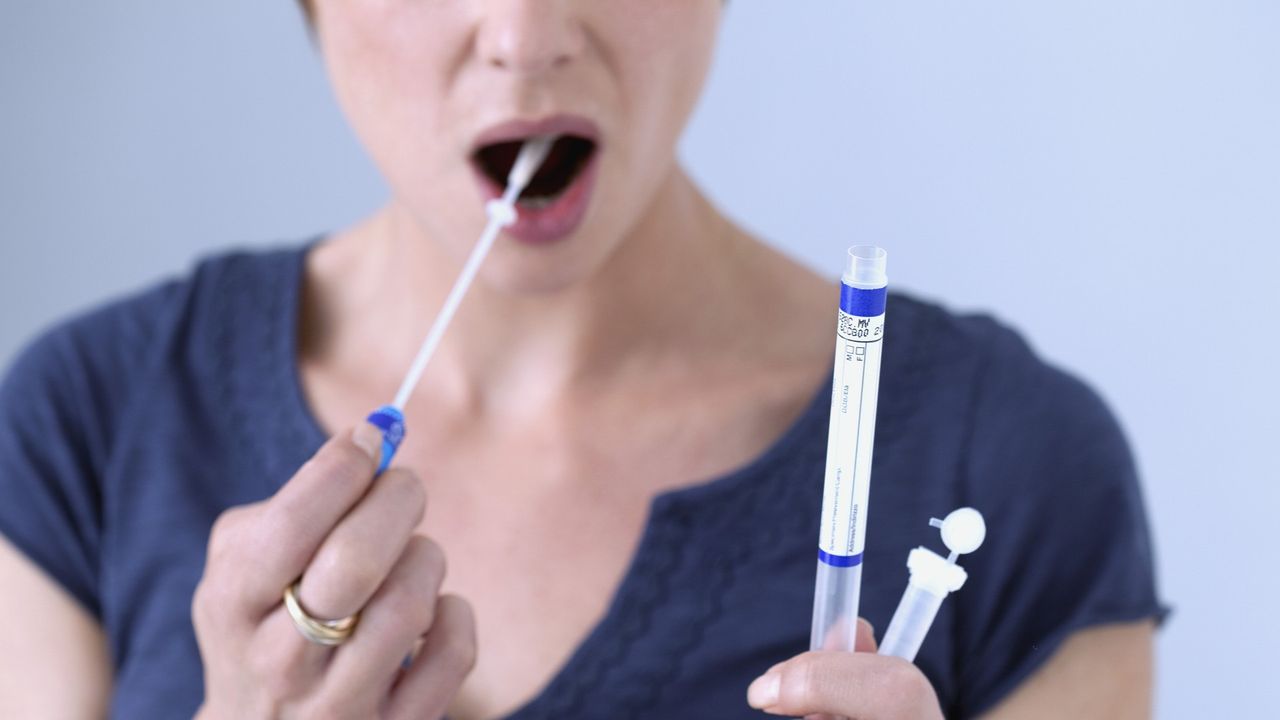
A new needle-free technology isn't ready to replace blood draws, but it could serve as a screening tool to flag people who need a full-blown blood test.
People with a rare genetic disorder that damages the amygdala are helping neuroscientists rethink how the brain shapes fear, trust and concern for others.
Live Science spoke with Alika Maunakea, an Native Hawaiian epigeneticist, about how epigenetics underpins health disparities between Native Hawaiians and others in Hawaii.
Therapy is predicated on trust. You can’t be honest and vulnerable, and share how you’re really feeling, if you don’t believe in the embodied-concerned-frown sitting in the armchair across from you.
So you can understand why one woman, 31-year-old Molly Quinn, was taken aback when her trusted therapist suddenly whipped out an AI model to start recording their private conversations, NPR reports.
“She wasn’t taking notes like she usually did,” Quinn recalled realizing halfway through one session. “The iPad was just propped up.”
Where were her words being processed and stored? Will they one day become training data? It’s not something you have to ask yourself when your therapist jots stuff down on a clipboard. But those questions were now racing through Quinn’s head, leaving her uneasy.
“The more I thought about it, the more I just started getting more and more sick to my stomach,” she told NPR. “This person who I’m supposed to be able to trust with some very private and very intense emotions had just completely disregarded something I said I was not comfortable with. I felt completely violated.”
Though her therapist offered to stop using the AI tool, Quinn cut her off and found another one.
“The trust was gone,” she told NPR.
Like doctors, therapists across the country are adopting AI tools for notetaking and generating transcripts. AI companies offering these services frame it as a way of cutting down on the drudgery of paperwork and other administrative tasks, freeing up more time to focus on patients — a permutation of a common AI industry refrain: let us do the tedious stuff for you.
The reliability of AI tools remains fairly dodgy, though, and even setting aside questions of hallucinations creeping into clinical notes — which is something we’re already seeing happen — it’s not clear whether patients are even comfortable with the tech yet. In a YouGov survey cited by NPR, only 11 percent of Americans said they would be open to using AI in mental health care. An even slimmer eight percent said they would trust AI being used this way, while 40 percent said they don’t trust the technology at all.
“Even the presence of AI changes the therapeutic experience,” Marisa Cohen, a couples and sex therapist in New York, told NPR. “Clients know or feel like something else is listening to them. That awareness can subtly alter their disclosure.”
“When you introduce something that’s being stored electronically, it raises additional questions about trust and safety,” Cohen added. “It’s essentially a third party.”
Tal Salman, the CEO a popular AI scribe tool for therapists called Berries, insists that conversation recordings are deleted immediately and that transcripts are stored on HIPAA compliant servers in the US. Even if this is true, if AI companies’ tools are to ever have a place in private mental health settings, they need the trust of patients — and that’s something the AI industry clearly hasn’t earned yet. Quinn fears that AI-recorded conversations could one day be exposed by hackers.
“We’re going to see breaches,” she told NPR. “Maybe not tomorrow, maybe not next week. But in a few years? I think we’re going to see them. And I don’t want my therapy session to be part of that.”
It’s no secret that many of the world’s top CEOs are obsessed with AI. By pursuing lofty goals of complete AI automation, these executives have created one of the largest financial bubbles in recent memory while transforming the job market into a barren wasteland, with little to show for their efforts so far.
As the top tech companies have yet to find a way to turn AI into a profitable venture, those decisions to go all-in on AI are looking increasingly delusional. According to Aaron Levie, CEO and founder of the massive cloud computing company Box, there’s a simple explanation for it: many of his colleagues are suffering from AI psychosis.
“CEOs are uniquely prone to AI psychosis because they’re sufficiently distant from the last mile of work that still has to happen to generate most value with AI,” Levie wrote on X-formerly-Twitter. Translation: AI-happy CEOs are out of touch with the rank-and-file workers tasked with making their AI ambitions come to life.
As an example, Levie offers cases in which corporate executives say “look I made this awesome product prototype” with an AI chatbot. “Yes but you didn’t have to review the code before it went into production and fix a bunch of issues,” he retorts.
Whether “AI psychosis” is the best metaphor for this concept is up for debate. Arguably the most common definition of AI psychosis is that it’s a phenomenon where extreme interactions with AI triggers or amplifies delusions or paranoia, sometimes already existing and sometimes seemingly newly cooked up with the AI. The symptoms can be extreme, with AI chatbots convincing victims that they’re communing with God-like entities, or have singlehandedly uncovered a grave threat to humankind.
There are indeed some executives who seem to fit the bill. Last year, Futurism reported that colleagues of Geoff Lewis, managing partner of the multi-billion dollar investment firm Bedrock, were concerned that he was suffering from a break with reality after spending too much time with ChatGPT (ironically, Bedrock was an early investor in OpenAI.) In that case, Lewis had claimed to be mapping an incomprehensible “non-governmental system” that was designed to disrupt his life.
That said, there’s a major gap between an exec believing they’re targeted by a vast conspiratorial network and an exec buying into AI hype. The phenomenon Levie is identifying might better fall under “organizational blindness,” a known phenomenon where leaders of a company find themselves disconnected from the reality of work on the ground. Coupled with a ravenous hunger for profit, this kind of tunnel vision seems to be exactly what we’re seeing in companies around theglobe.
In today’s world, many executives and managers operate at an abstract level, working via spreadsheets, emails and Zoom meetings. This is different from concrete labor, meaning the specific, friction-heavy tasks that workers perform, like writing code or wiring server racks. When a board-room full of executives loses sight of this tangible labor — by failing to consider the kinds of tasks AI chatbots are actually good at, for example — it can certainly create a break from material reality, though one driven by social factors rather than psychological.
In other words, there are two possibilities: either the world’s CEOs are losing their minds, or they’re just succumbing to the latest manifestation of capitalism run amok. Occam’s razor probably suggests the latter.
Longtime Cybertruck watchers might remember a peculiar day back before the brutalist pickup was even released, when Tesla CEO Elon Musk randomly tweeted that the vehicle would function as a rudimentary flotation device.
“It will even float for a while,” he wrote at the time.
It wasn’t a one-off claim. Musk later boasted that the vehicle would be able to “traverse at least 100m [330 feet] of water as a boat.”
“Mostly just need to upgrade cabin door seals,” he claimed, writing at another point that the “Cybertruck will be waterproof enough to serve briefly as a boat, so it can cross rivers, lakes and even seas that aren’t too choppy.”
Unsurprisingly, all Musk’s bluster about the truck serving as a makeshift schooner turned out to be flimflam. In fact, it quickly emerged that just getting wet in a car wash could brick the thing.
To muddy the waters further, the company ended up adding what it calls “Wade Mode” to the vehicles, which sets the truck’s ride height to the highest level, ostensibly so it can ford creeks and streams.
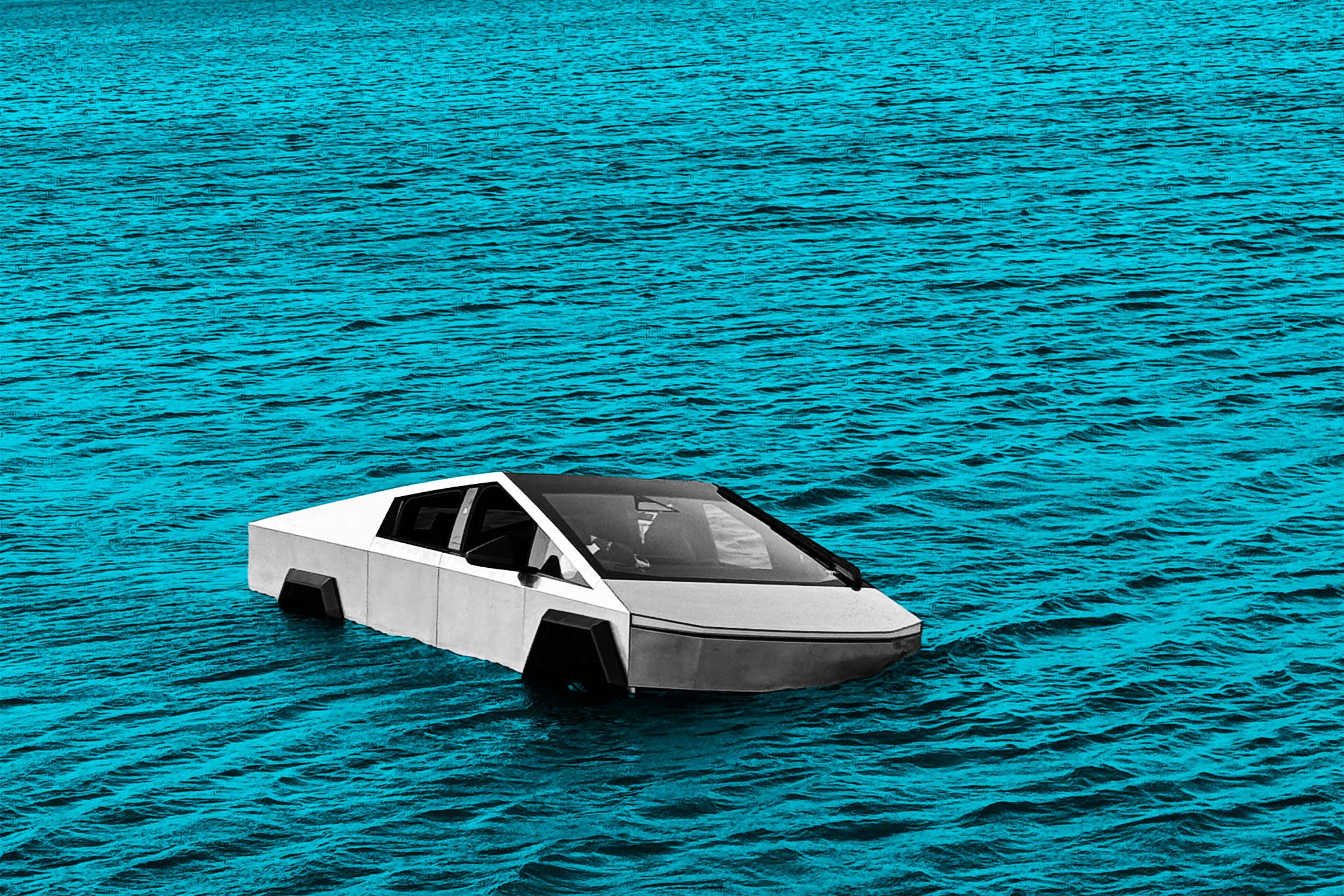
All that mixed messaging clearly got jumbled for a Texas man, though, who activated Wade Mode and drove his Cybertruck into a lake. Unsurprisingly, things didn’t go well for him.
“Yesterday, [Grapevine Police Department] and [Grapevine Fire Department] were dispatched to Grapevine Lake, where a Tesla Cybertruck was stranded in the water,” police in Grapevine, Texas, wrote on X-formerly-Twitter. “The driver drove into the lake to use the ‘Wade Mode’ feature when the vehicle became disabled.”
Not only is the man’s vehicle swamped — as the cops showed in an amazing attached photo — but he’s in legal trouble as well.
“The passengers abandoned the vehicle and the driver was arrested,” they wrote.
Stanley Plotkin, 93, was instrumental in developing a number of vaccines over the course of his career. He recently said that he’s “beginning to regret having lived so long—because we’re going downhill.” How could we possibly have gotten here?
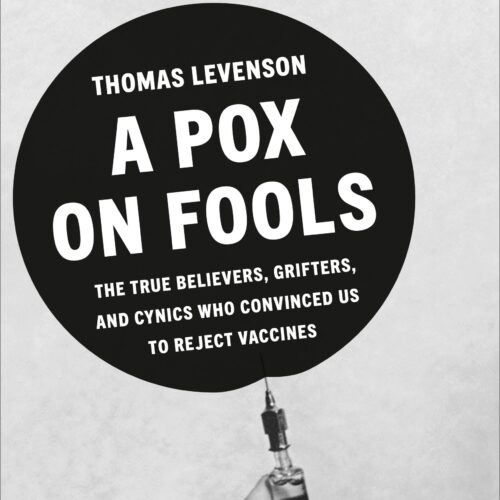
Maybe we’ve always been here. It turns out that the anti-vaccine arguments currently flooding the Internet have been around for as long as vaccines have. In his new book A Pox on Fools, Thomas Levenson breaks them down into three categories, as made clear in the book’s subtitle: “The True Believers, Grifters, and Cynics Who Convinced Us to Reject Vaccines.” The accusations these people levy against vaccines can just as easily be used to categorize the arguments themselves: They are wrong, they are bad, and they are intolerable.
Wrong
As Levenson tells it, in the early 18th century, a couple of forward-thinking Westerners learned about inoculations against smallpox from Ottoman women and an enslaved African. At that point, infectious disease was by far the leading cause of death, as it had been forever. In the 19th century, roughly 40 percent of babies died of infection before they turned 5.

 Login
Login

 A tropical fruit best known for its sweet flavor may also help tackle one of the world’s most common nutritional problems. Regularly drinking guava juice could be a simple and affordable way to help reduce the risk of anemia among women in low and middle income countries, according to a review of existing research published [...]