Normal view

Tesla Insiders Admit Self-Driving Is a Complete Disaster

29 May 2026 at 21:10

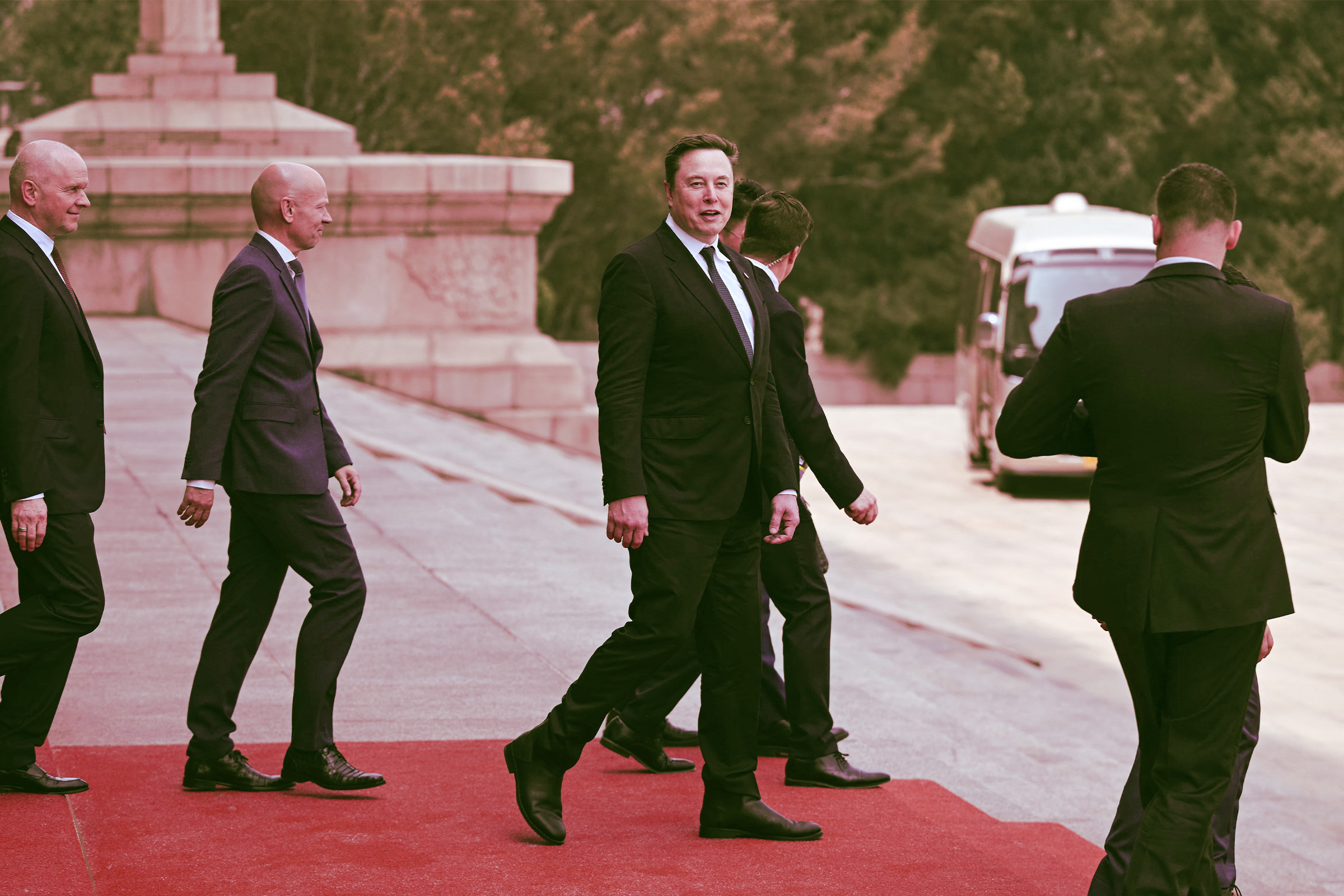
It turns out not even the people building Tesla’s self-driving tech trust Elon Musk’s extravagant claims about the company’s autonomous vehicles.

New reporting by Reuters interviewed nine former data labelers and a former self-driving engineer about their take on Tesla’s Full Self-Driving mode. The results were overwhelmingly negative, with seven of the data specialists admitting they wouldn’t ride in a Tesla in FSD.

“We have all seen it fail,” one Tesla insider told Reuters. “Definitely don’t trust Elon on this,” the self-driving engineer concurred, referencing Musks’ declaration that the the vehicles are ready for “safe unsupervised” rides.

One erstwhile worker told the publication they wouldn’t ride in a Tesla robotaxi “if you f**king paid me.”

At least five data labelers, whose job was to comb through hours of FSD footage to train the vehicle’s software to avoid past mistakes, told Reuters they routinely saw clips of Teslas driving above the speed limit, an issue which engineers and managers treated like a low-priority compared to edge-case issues.

Those glowing recommendations come amidst concerns that Tesla’s FSD mode may never be truly safe enough for public roads.

In recent months, Tesla operating on FSD move have driven riders into lakes, off bridges, and even into the path of oncoming trains — and those are just the incidents that get media exposure. Given these insiders’ direct access to terabytes’ worth of proprietary FSD footage, we’re inclined to take their word on it.

More on Tesla: Man Drives Cybertruck Into Lake to Test Elon Musk’s “Boat” Claims, and It Went About as Well as You’d Guess

The post Tesla Insiders Admit Self-Driving Is a Complete Disaster appeared first on Futurism.

Debt Collectors Are Being Replaced With AI Agents

27 May 2026 at 21:10

With inflation out of control amidst a low-fire, low-hire economy, the amount of private debt in the United States is at an all time high. That’s a grim milestone for any country, let alone one as technically rich as the US — and it’s leading to a massive rise in late payments and credit delinquency.

But as more and more lenders come looking for their payments, it’s increasingly AI — rather than humans — doing the collecting.

New reporting by Wired details the rise of AI agents for hounding debtors. As one Seattle man identified as Ben told the publication, autonomous bots are even making erroneous calls on old debts that have already been settled.

During a call regarding a $266 dispute with a past landlord, Ben said he was hounded by Eve, an obviously artificial voice agent sent by the company ProCollect.

“Would you like to resolve it today by card or bank transfer?” the AI agent asked.

Knowing that he had already settled the dispute, Ben poked and prodded, trying to test its limits after it refused to connect him to a human. “I figured it was just going to kick me over to a person when I asked about repayment structure or anything more technical,” he told Wired.

In the end, he got the bot to engage in some quasi-sexual roleplay, where he was “just a little guy” and his debt was a sultry giantess. After a few minutes of this, Ben says he was unceremoniously whisked away to a human, who confirmed the debt had been settled.

As cofounder of AI call center startup Altur Pedro Fernández told Wired, debt collectors are some of his sector’s “best early adopters.” Altur, for example, places over 2.5 million debt calls a month with AI agents.

It’s not surprising they get things wrong, either. Debt collection is based on massive webs of data, spreadsheets which are essentially sold down the line from the original creditors to second-hand buyers, a sloppy and frustrating system at best.

For all their faults, humans are infinitely more reasonable when it comes to resolving discrepancies that turn up in the shuffle. While nobody likes a debt collector, human or otherwise, at least you can argue back to a fleshbag.

More on AI agents: Oops: Bosses Realize Their Companies Have Been Swarmed by Legions of Redundant AI Agents

The post Debt Collectors Are Being Replaced With AI Agents appeared first on Futurism.

Nintendo Is Completely Ignoring AI and Doing Fine

24 May 2026 at 17:45

Do nothing. Win?

That’s more less Nintendo’s approach to AI, and the market is rewarding the Japanese video game maker for it, in Bloomberg’s analysis.

For the record, Nintendo is not a stellar stock. Investor uncertainty over its cheap Switch 2 pricing, which didn’t budge even as memory costs soared, helped cap off five straight months of decline, the longest loss streak sustained by the company in a decade.

But earlier this week, it showed some signs of life. On Tuesday, shares climbed as much as 6.8 percent in Tokyo for three days in a row, joining a broader rally of Japanese video game stocks, per the reporting.

It’s less a reflection on Nintendo, however, and more on shifting investor attitudes towards AI.

“This is all part of the rotation out of AI tech and into beaten-up names,” Amir Anvarzadeh, Japan equity strategist at Asymmetric Advisors Pte, told Bloomberg. Tuesday’s climb “underline the growing caution about the market — massive gains in AI tech which cannot be sustainable.”

Tomo Kinoshita, global market strategist at Invesco Asset Management Japan, speculated that it was a sign of investors hedging their bets ahead of Nvidia’s quarterly earnings, which were released Wednesday.

“Nvidia often fails to live up to the market’s sky-high expectations, and AI stocks can suffer as a result,” he said. “I expect many investors are temporarily selling AI stocks in preparation, which is driving the rotation.”

That prediction seems to have been vindicated. Despite clinching another record quarter, Nvidia’s numbers were less impressive than investors hoped, sending shares tumbling by a few percent. Its profits literally doubling from the same period a year ago was apparently not enough.

More on finance: SpaceX Stock May Actually Be a Horrendous Investment

The post Nintendo Is Completely Ignoring AI and Doing Fine appeared first on Futurism.

Hackers Find That Inaudible Sounds Hidden in Podcasts or Random Videos Can Hijack Your AI Voice Chatbot

24 May 2026 at 12:30

Imagine this scenario: your algorithm has pulled up a background YouTube video, or maybe a podcast. Unbeknownst to you, hackers have embedded inaudible sounds in it, designed to hijack your smart speaker or phone’s AI assistant — meaning the cybercriminals can now access your private photos, bank accounts, or any other personal information you’ve hooked up to your AI system.

It sounds like an also-ran episode of “Black Mirror,” but it’s exactly what researchers have shown is possible in new research being presented this week at the IEEE Symposium on Security and Privacy.

Basically, a team of researchers in China and Singapore found that they can construct “adversarial audio,” completely undetectable to the human ear, that tricks voice AI models into doing things they shouldn’t. Then it’s a breeze to hide it in innocent-sounding audio — a song, a movie, or anything else that unsuspecting targets might play in the background — and lay in wait for users to accidentally compromise their digital lives.

“It takes just half an hour to train this signal, and then, because this signal is context-agnostic, you can use it to attack the target model whenever you want, no matter what the user says,” lead author Meng Chen, a PhD candidate at China’s Zhejiang University, told IEEE Spectrum of the work. “These single-point defenses struggle to resist our attack because we found it’s very hard for these models to distinguish the normal user intent and our adversary attack.”

One catch, at least for now: the technique required the hackers to have access to the full weights of the AI model they’re targeting, meaning they were only able to attack open source models. But because many commercial AI systems are built on open source models, that meant that their exploit was effective against mainstream products by Microsoft and Mistral.

Mistral didn’t respond to IEEE‘s request for comment, but Microsoft issued a statement that should probably give anyone pause before connecting any important information whatsoever to one of the company’s voice AI models.

“We appreciate the researchers’ work to advance understanding of this type of technique,” it read. “This study evaluates model resilience through controlled, direct interactions with the model itself, which helps inform our approach to building model resiliency. In practice, AI models are often integrated into user applications, and we offer developers tools and guidance they can use to implement additional layers of protection that help safeguard users.”

More on AI: Researchers Alarmed by AI That Can Self-Replicate Into Another Machine

The post Hackers Find That Inaudible Sounds Hidden in Podcasts or Random Videos Can Hijack Your AI Voice Chatbot appeared first on Futurism.

Insiders at SoftBank Worry Their CEO Is Getting Conned by Sam Altman

23 May 2026 at 17:00

The rise of AI is many things: technological, sociological, political, even teleological.

But perhaps above all, it’s financial. When OpenAI released ChatGPT back in late 2022, it quick picked up enormous user traction — and moneymen across the tech industry immediately started scheming about how to cash in from the rush of interest.

The model they coalesced around hinges on gigantic investments in computing infrastructure to power the tech. It’s high risk and high reward: in their telling, the investments will pay off massively as the tech matures to automate huge swathes of the labor market, but some critics fear it’ll never generate enough revenue to justify the incredible spending.

Nobody is more exposed than the Japanese investment company SoftBank, which has poured an eye-watering $60 billion into OpenAI over the past few years.

According to explosive new reporting by Bloomberg, even certain insiders at the company are rattled. Viziers of founder Masayoshi Son have privately questioned what will happen if the Sam Altman-led company can’t pull off its grand promises — and Son’s reaction has apparently been so “brusque,” in the publication’s wording, that they eventually gave up.

What’s clear from the reporting is that Altman has done what he does best: turned Son into a true believer in his vision of computer superintelligence that causes profound shifts for the entire course of civilization.

Habib Imam, a former SoftBank insider who’s now at Menlo Park Capital, told Bloomberg that it’s fundamentally a “bet on a worldview about AGI,” adding that “you can’t hedge a worldview.”

The reality is that Son’s track record is dodgy. He made a series of canny bets during the company’s early history, then bet big on the Chinese retailer Alibaba, netting immense returns. But in recent years, the company is probably best known for Son’s dogged financial support of WeWork, the would-be coworking space startup with an Altman-like charismatic founder named Adam Neuman — and which imploded in spectacular fashion in 2019.

The question essentially comes down to a Rorschach test: is Altman a visionary ushering in a new world order, or is he a con man taking Son — and many other financial luminaries around the world — for a wild ride that’ll soon come crashing back to reality?

No matter how remote the chances, the consequences of the latter scenario could be catastrophic. SoftBank has already sold top assets, including shares in fellow AI company Nvidia, to pay for its OpenAI commitment. And insiders are reportedly jittery about signs that OpenAI is losing ground, with its defectors who jumped ship and started Anthropic now attracting the most buzz in the industry.

For their part, both companies downplayed Bloomberg‘s reporting.

“SoftBank and OpenAI have built a strong strategic partnership grounded in a shared view of where AI is headed and what it will require at global scale,” Softbank told the outlet. OpenAI said the two companies have a “great relationship” and are “among each other’s closest collaborators.”

More on Sam Altman: Sam Altman Faces Nightmare Questions in Cross-Examination

The post Insiders at SoftBank Worry Their CEO Is Getting Conned by Sam Altman appeared first on Futurism.

Man Drives Cybertruck Into Lake to Test Elon Musk’s “Boat” Claims, and It Went About as Well as You’d Guess

23 May 2026 at 14:45

Longtime Cybertruck watchers might remember a peculiar day back before the brutalist pickup was even released, when Tesla CEO Elon Musk randomly tweeted that the vehicle would function as a rudimentary flotation device.

“It will even float for a while,” he wrote at the time.

It wasn’t a one-off claim. Musk later boasted that the vehicle would be able to “traverse at least 100m [330 feet] of water as a boat.”

“Mostly just need to upgrade cabin door seals,” he claimed, writing at another point that the “Cybertruck will be waterproof enough to serve briefly as a boat, so it can cross rivers, lakes and even seas that aren’t too choppy.”

The Cybertruck finally did make it to market, where it’s suffered a seemingly endless parade of recalls, embarrassing incidents, and dismal sales figures.

Unsurprisingly, all Musk’s bluster about the truck serving as a makeshift schooner turned out to be flimflam. In fact, it quickly emerged that just getting wet in a car wash could brick the thing.

To muddy the waters further, the company ended up adding what it calls “Wade Mode” to the vehicles, which sets the truck’s ride height to the highest level, ostensibly so it can ford creeks and streams.

All that mixed messaging clearly got jumbled for a Texas man, though, who activated Wade Mode and drove his Cybertruck into a lake. Unsurprisingly, things didn’t go well for him.

“Yesterday, [Grapevine Police Department] and [Grapevine Fire Department] were dispatched to Grapevine Lake, where a Tesla Cybertruck was stranded in the water,” police in Grapevine, Texas, wrote on X-formerly-Twitter. “The driver drove into the lake to use the ‘Wade Mode’ feature when the vehicle became disabled.”

Not only is the man’s vehicle swamped — as the cops showed in an amazing attached photo — but he’s in legal trouble as well.

“The passengers abandoned the vehicle and the driver was arrested,” they wrote.

More on the Cybertruck: Cybertruck Recalled to Keep Its Wheels From Flying Off While Driving

The post Man Drives Cybertruck Into Lake to Test Elon Musk’s “Boat” Claims, and It Went About as Well as You’d Guess appeared first on Futurism.

SpaceX Stock May Actually Be a Horrendous Investment

22 May 2026 at 14:10

Elon Musk has just pulled back the curtain on the biggest public stock offering in history, and the numbers are ghastly.

SpaceX, which is expected to go public on Nasdaq in June, just released the first round of financial summaries all companies are required to share when they’re about to sell stock to the public for the first time. The documents reveal Musk is targeting a raise of at least $80 billion — for a proposed valuation of $1.75 trillion — which would immediately make the rocket company one of the top 10 most valuable conglomerates in the US, Axios calculated.

With that kind of valuation in mind, one might expect SpaceX to be massively profitable going into its debut — but that’d be dead wrong.

According to the financial statement, the company lost $4.9 billion in 2025, even though it brought in around $18.7 billion in revenue. It’s not like that situation is about to turn around in time for the IPO, either: over the first three months of 2026, SpaceX posted further net losses of $4.3 billion.

As analyst Scott Melker pointed out, SpaceX wants investors to believe the company will someday make 93 times what it currently makes in a year. To understand why that’s absolutely nuts, just peep the numbers from the previous IPO record holder, Saudi Aramco, the state oil company of Saudi Arabia.

Commonly understood to be the most profitable corporation on Earth, Aramco went public in 2019. When it did, investors accepted a valuation about 6 times more than what Aramco made in yearly sales, raising $26 billion for a valuation of $1.7 trillion, as one analyst noted. SpaceX is asking for about 15 times more than that.

“Bro, have you seen inflation lately? Ketamine is expensive!” one stock analyst razzed on X-formerly-Twitter (that platform, by the way, has all but imploded under Musk’s leadership, with revenue down around 59 percent compared to 2021, the year before he took over).

To justify its wild revenue ambitions, SpaceX estimates its total addressable market — the maximum money it could make if everything goes perfectly — at $28.5 trillion. Of that, nearly 80 percent is attributed to the imaginary landscape of “enterprise applications,” which the document describes as a buffet of various Earth-shattering AI tools that have yet to be built, including one agentic AI platform called “Macrohard.”

Put it all together, and the numbers only work if you put your faith in unprecedented earnings from technology that doesn’t even exist, in a market as infinite and uncharted as outer space itself.

More on investments: It Seems a Lot Like Trump Accidentally Invested $1 Million in a Conveyor Belt Sushi Restaurant Thinking It Was an AI Hardware Company

The post SpaceX Stock May Actually Be a Horrendous Investment appeared first on Futurism.

How NextEra Energy Wielded Political Power in Florida

29 May 2026 at 21:29
NextEra, which is seeking to buy Dominion Energy, has often butted heads with consumer groups, residents and journalists in its home state.

© Ulysse Bellier/Agence France-Presse — Getty Images

A Dominion Energy power plant near Davis, W.Va. NextEra Energy’s political activities are expected to be scrutinized as it seeks approval of its purchase of Dominion.

A Clean Energy PAC Helped Beat Chip Roy, and Now It Has New Targets

29 May 2026 at 20:47
A PAC representing wind and solar energy interests spent $1.1 million to boost the Republican primary opponent of Chip Roy, an opponent of renewables. Now they are trying to save a Republican ally in Iowa.

© Michael A. McCoy for The New York Times

A group of renewable energy investors paid for this projection on the side of the Energy Department building in Washington gloating over Representative Chip Roy’s defeat in a Republican primary for Texas attorney general.

Energy Transition Bank Financing Struggles to Pull Ahead of Fossil Fuels in Asia

14 May 2026 at 02:00
Financial institutions have taken different approaches toward disclosing climate transition plans. The world’s largest banks and investment managers remain active in defining complete transition plans and even updating them – while complete disclosure among smaller institutions is lagging.

AI Data Centers, Energy and Finance: Dispatch from the BNEF Summit New York 2026

5 May 2026 at 13:27
The US energy landscape is changing quickly. Demand for artificial intelligence is driving up power demand while electric vehicle (EV) adoption slows down and enters a more complex phase. Together, these trends are reshaping how utilities, policymakers, financiers and automakers respond to emerging challenges in the energy sector.
❌