A rare meteorite discovered in the Sahara Desert proves that our solar system almost had at least one extra planet. In a study published in the journal Earth and Planetary Science Letters, astronomers say the chunk of space rock known as Northwest Africa (NWA) 12774 once belonged to a protoplanet possibly as large as Mars. That is, until a cosmic crash likely blew it to smithereens.
The solar system includes eight known planets (sorry, Pluto). Barring interstellar catastrophe, this number will remain the same until the sun finally dies about 5 billion years from now. However, this total planetary count was never a guarantee.The solar system’s earliest era featured multiple embryonic protoplanets that had the potential to grow together into additional cosmic neighbors.
The remnants of these long gone celestial bodies are scarce, but traces still exist. That said, astronomers didn’t expect to find protoplanetary evidence in a meteorite like NWA 12774. Discovered in 2019, NWA 12774 is an angrite—one of the oldest known types of volcanic rock that was formed during the solar system’s era about 4.56 billion years ago. They’re also very rare. Of the roughly 80,000 meteorites discovered on Earth so far, only 68 are angrites.
A slice of NWA 12774. The green circle is an olivine crystal, a magnesium-rich mineral. Credit: John Kashuba
Unlike rocky planets such as Mars and Earth, angrites do not have a lot of silicon dioxide. Because of this, astronomers have long assumed that angrites always originated in asteroids no larger than about 124 miles wide. NWA 12774 blows this theory apart..
While analyzing the meteorite, researchers at the University of Colorado Boulder detected clinopyroxene, a mineral crystal that exists throughout Earth’s mantle and crust. NWA 12774’s clinopyroxene was also heavy in aluminum, which directly points to formation under massive amounts of pressure underground. The team then calculated the conditions necessary to create an angrite like NWA 12774, and settled on at least 17.5 kilobars of pressure. To put that in perspective, the pressure experienced at the bottom of the roughly 35,875-foot-deep Mariana Trench is barely one kilobar.
Small asteroids simply don’t possess the conditions needed to generate a rock like NWA 12774. What’s more, the angrite’s sharp crystalline edges also indicate that it formed at comparatively shallow depths in its host body. Based on all of these factors, astronomers now believe NWA 12774 once belonged to a young protoplanet with a radius anywhere from 621 to 2,050 miles wide. This means that instead of an asteroid, the angrite may have existed inside something as big as Mars.
“It’s incredible to think there was once a world this large,” Aaron Bell, a UC Boulder earth scientist and study co-author, said in a statement. “We only know it existed because a few fragments of it happened to land on Earth. These meteorites preserved evidence of a completely different pathway through which early planets developed.”
Although it’s unclear how the protoplanet met its demise, some type of crash between early solar system denizens is definitely a possibility. Regardless, the ramifications are huge for astronomers’ understanding of our cosmic neighborhood’s history.
“The materials that formed the angrite parent body are fundamentally different from the ingredients of Earth and Mars,” explained Bell. “It points to a distinct and separate evolutionary path in planetary formation in the early history of our solar system.”
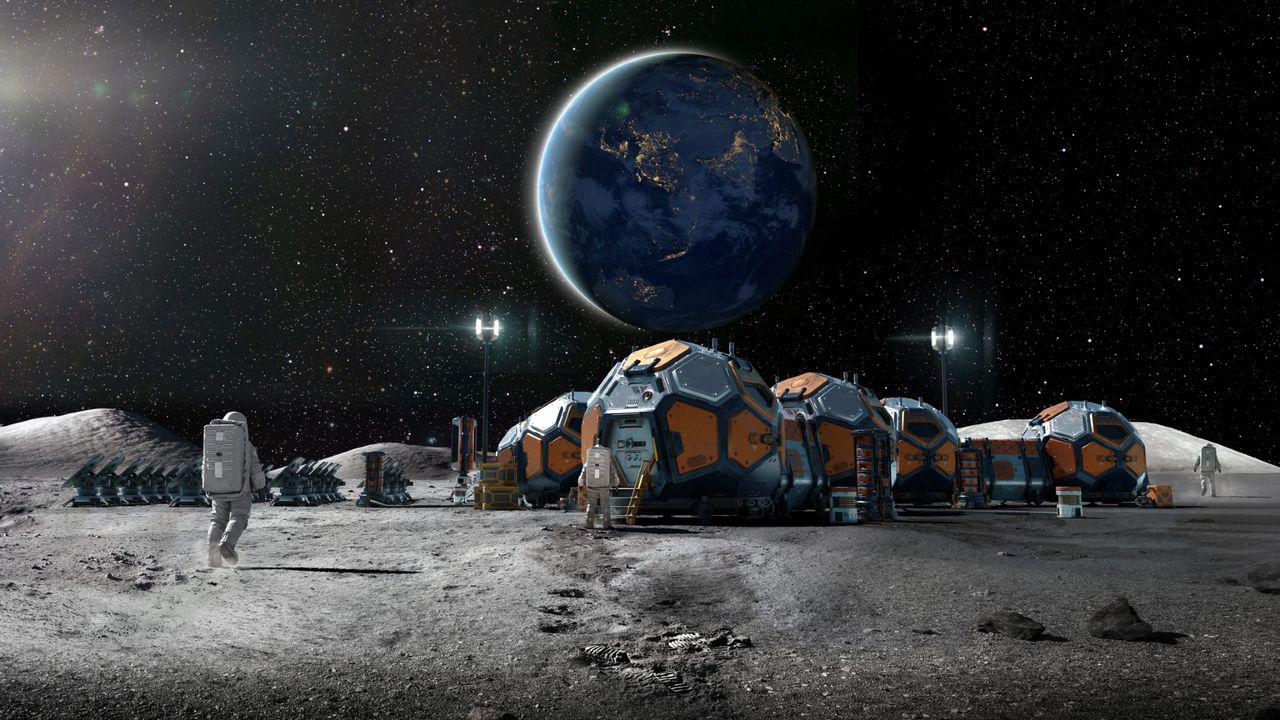
Scientists propose that a moon base could act as an isolated first line of biological defense against extraterrestrial samples that might be harmful to Earth's biosphere.
Scientists propose that a moon base could act as an isolated first line of biological defense against extraterrestrial samples that might be harmful to Earth's biosphere.
The Northwest Africa (NWA) 12774, an angrite meteorite discovered in the Sahara Desert, likely in Mauritania, appears to be a fragment of a vanished protoplanet, offering the strongest evidence yet that a large planetary body formed and was later destroyed during the Solar System’s chaotic infancy.
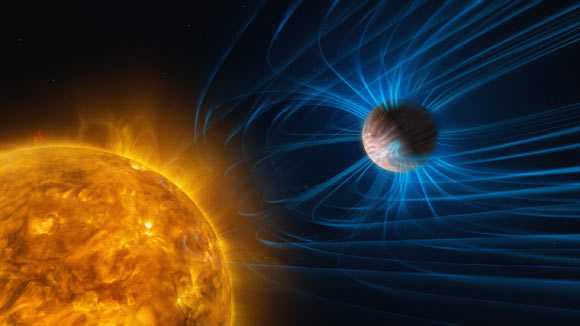
By tracking fierce winds racing through the atmospheres of seven ultra-hot Jupiters, astronomers have uncovered the strongest evidence yet that magnetic fields shape weather on worlds beyond our Solar System.
I premiere my 2013 video lecture "8 Reasons Why Evolution is Foolish" on YouTube. I present 8 reasons why evolution is impossible. I cover questions on cosmogony, the origin of the universe, the stars and galaxies, the Earth, and the origin of life.
The existence of evidence for Earth’s past equatorial ring, shown by impact craters, raises questions about its loss. Modeling its effects on Earth's rotation presents challenges. However, current findings indicate minor impacts on day length, with significant stability in the Earth-Moon system over 10,000 years.
Using the spectral data from the Mid-Infrared Instrument (MIRI) onboard the NASA/ESA/CSA James Webb Space Telescope, astronomers have detected methane on 3I/ATLAS.
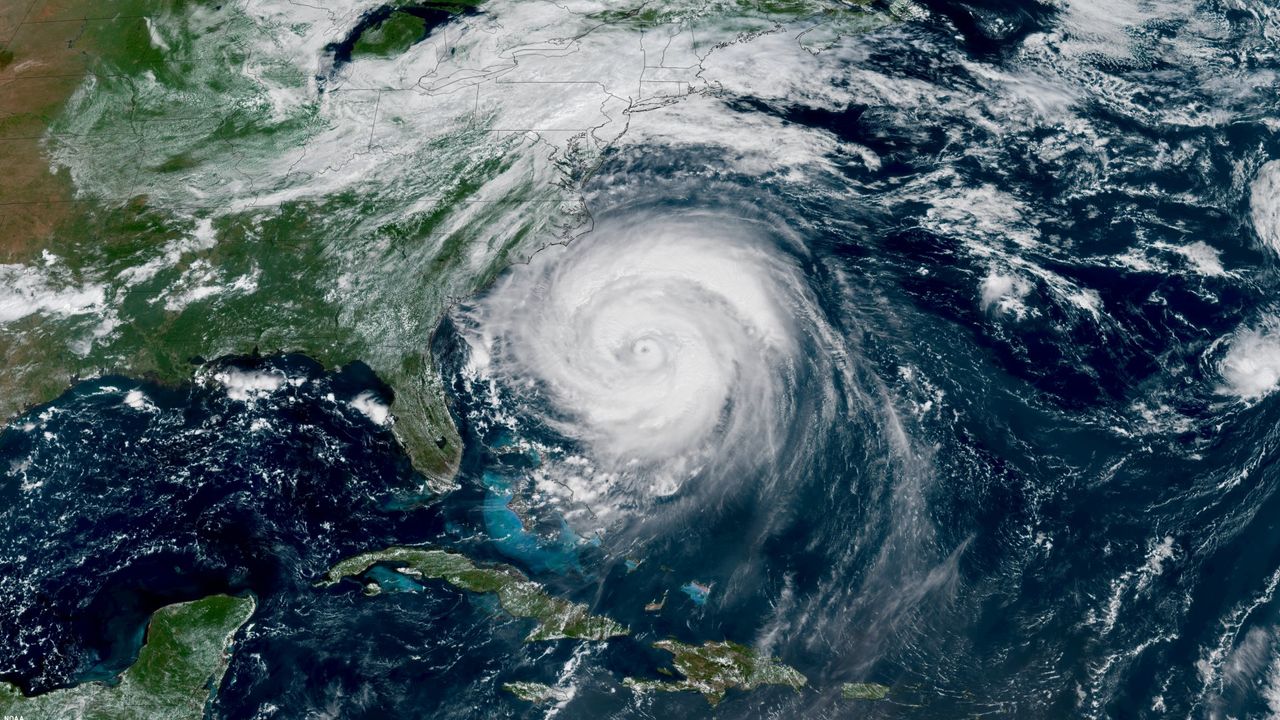
Forecasters at the National Oceanic and Atmospheric Administration predict a below-normal number of named storms in the upcoming 2026 Atlantic hurricane season.
Forecasters at the National Oceanic and Atmospheric Administration predict a below-normal number of named storms in the upcoming 2026 Atlantic hurricane season.
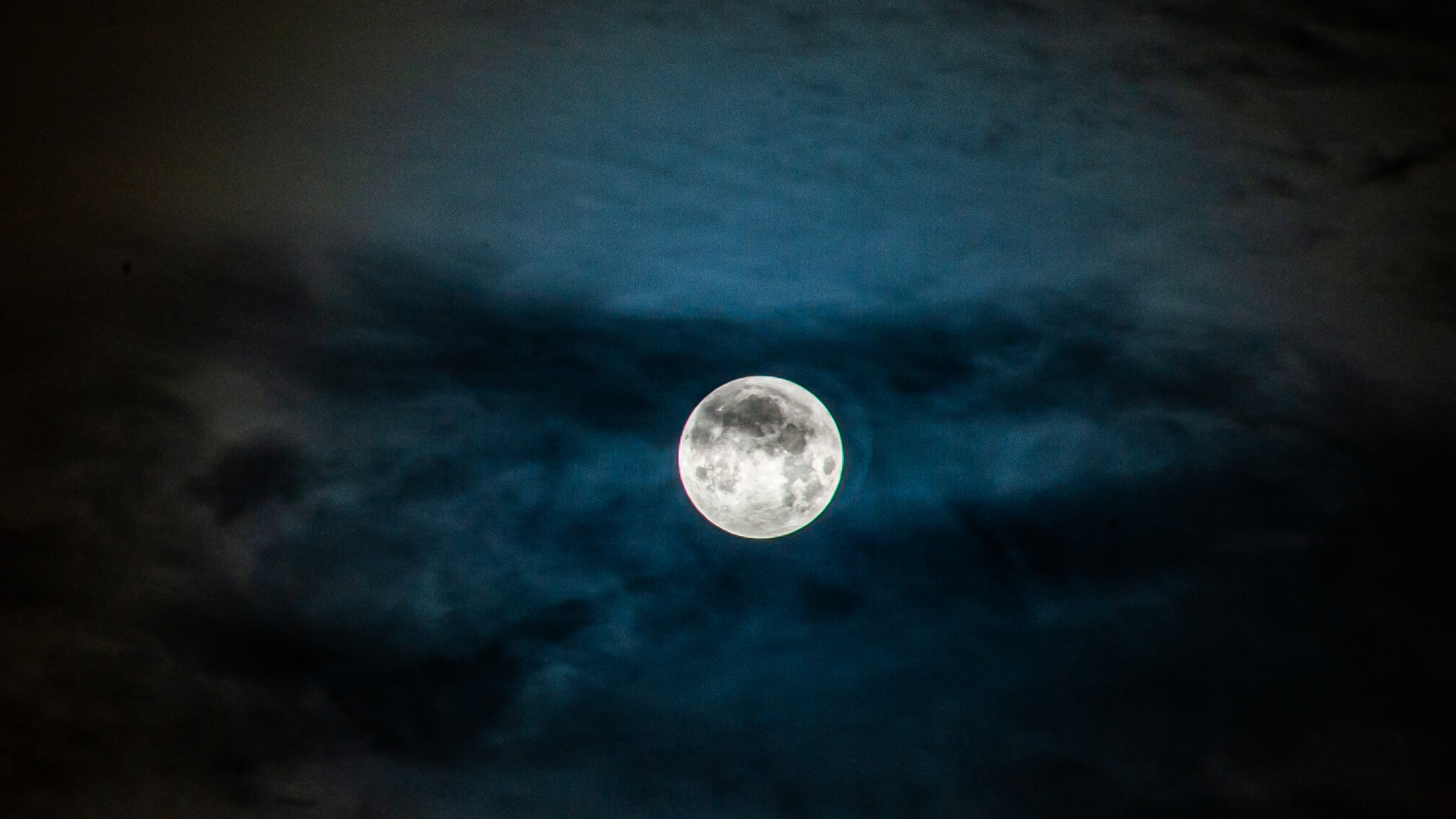
This weekend, Earth will be treated to a nice blue moon. Our planet’s only natural satellite won’t put on a pleasant azure hue (indeed, blue moons have nothing to do with color). Instead, it will be the second full moon for the month of May, following the full Flower Moon on May 1. The blue moon will reach peak illumination at 4:46 a.m. EDT on Sunday May 31.
A seasonal blue moon is one extra full moon within an astronomical season, or the dates between solstices and equinoxes. A typical astronomical season has three full moons within it. If it has four full moons instead, then the third may be called a blue moon.
A calendrical (or monthly) blue moon is the one most of us are familiar with. It is the second full moon to fall in one calendar month—like in May 2026. It takes the moon roughly 29.5 days to complete one cycle of phases (new moon to new moon). So if a full moon falls on the first of the month on the calendar, there will be a second full moon at the end of the month. The only month in which a calendrical blue moon cannot fall is February.
How rare are blue moons?
Blue moons are not quite as rare as the phrase “once in a blue moon” makes it sound. Calendrical blue moons happen every 2.5 years (or 30 months) on average, and seasonal blue moons fall about once every two to three years.
Two blue moons can also occur in one year. In 2018, January and March both had two full moons, with no full moon in February. The next time two blue moons will fall in one calendar year won’t be until 2037.
Why is it a micromoon?
May’s blue moon will also be a micromoon and the smallest micromoon of the year. Micromoons have nothing to do with size and everything to do with distance. Typically, the moon is about 238,855 miles away from Earth. Micromoons are further away, and this month’s micromoon will be 252,360 miles away. With the further distance, a micromoon may appear a bit smaller and dimmer than usual.
On the opposite end of the spectrum are supermoons, which are closer to Earth at only 225,130 miles away.
NASA has also put together a handy lunar photography guide if you want to snap that perfect moon pic. If using a smartphone, NASA recommends stabilizing the device, turning off the flash, and tapping the moon on screen to focus the camera directly on it instead of the sky. Your brightness also needs to come down and taking pictures at twilight or as the moon clears the horizon will give the sensor less contrast.
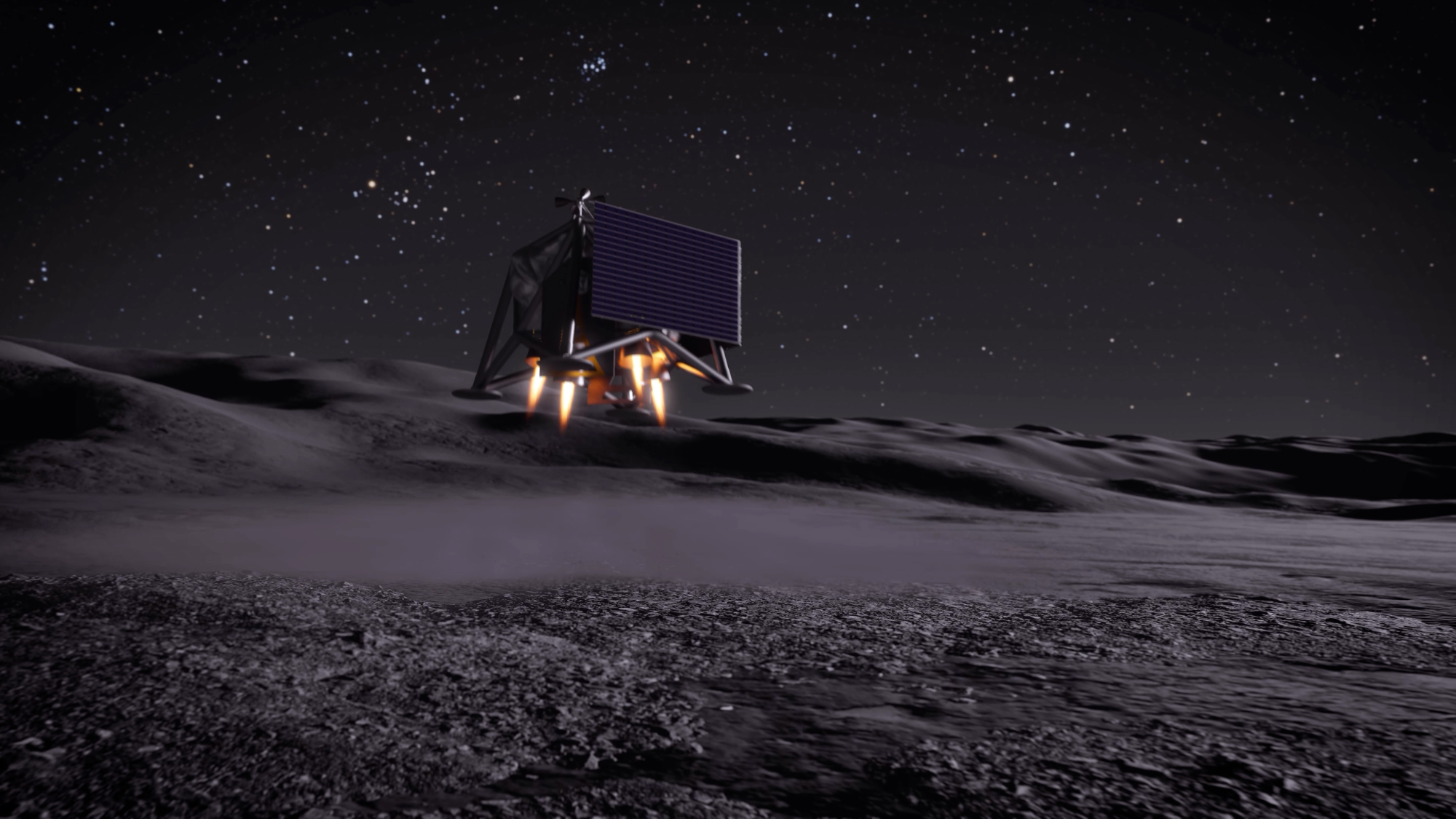
As NASA looks ahead towards Artemis III in mid-2027, the agency is sharing new details on several projects, including a future permanent moon base and a drone mission called MoonFall. The mission will send four drones to survey the surface of the moon’s South Pole to spot potential landing sites for future Artemis astronauts.
According to the update, the Jet Propulsion Laboratory (JPL) in Southern California has been developing the drone design and testing prototype hardware ahead of the scheduled 2028 launch. Each drone will land on the moon’s surface and gather high-resolution imagery of the terrain over the course of a single lunar day (up to 14 Earth days). After each drone’s last flight, its survive-the-night payload will continue to work for several months. Payloads that are designed to survive-the-night can endure the sub-zero temperatures of the lunar night, which can get as cold as -208 degrees Fahrenheit.
Each of the four drones should weigh about 550 pounds, and stand at four-feet tall and seven feet in diameter. They will use a Lunar Dashcam imaging system to create maps of the terrain. The drones will also be equipped with a laser retroflector array so that mission control can precisely locate the drones, a neutron spectrometer system to help determine how much (if any) subsurface water is present, and a spectrometer to measure radiation.
Texas-based Firefly Aerospace was selected to build the spacecraft that will transport the drones. Firefly’s Elytra spacecraft will carry the drones for a 45-day transit from the Earth to the moon. After entering lunar orbit, it will deorbit and perform a braking maneuver to send out the drones roughly 31 miles above the lunar South Pole.
No stranger to lunar exploration, Firefly Aerospace’s Blue Ghost lander became the first commercially built lander to reach the lunar surface in March 2025. While on the moon, Blue Ghost delivered 10 NASA instruments designed to gather lunar subsurface data and also snapped some beautiful images of a solar eclipse.
As of now, NASA and 66 other nations have signed the Artemis Accords. While not an international treaty, the Artemis Accords is an agreement for high-level principles of space exploration and provides a basic legal framework for exploring and developing the lunar surface during this century. However, the NASA-led Artemis group is in direct competition with an initiative led by China to explore the lunar South Pole and potentially extract its resources.
For a few select evenings in the late spring and early summer, sunlight aligns with Manhattan’s grid. The city’s bustling streets are washed with golden light as the sun sets, while tourists and locals alike flood the streets to snap that perfect picture. This event is nicknamed Manhattanhenge and it will begin on May 28 and continue through July 12.
However, you don’t need to live in the Big Apple to see a “henge” like Manhattanhenge. They actually pop up in a few places and a website called Hengefinder can help you find the closest henge.
Meet Hedgefinder
Data scientist and engineer Victoria Ritvo created the website, while software engineer John Pribyl built the accompanying app. Ritvo wrote about creating Hedgefinder in her blog, and details the three basic steps that scientists can use to find a henge. First, find the angle of the road, or its bearing relative to true north. Second, find the angle of the sun at sunset, or its azimuth. Third, find the dates when those two angles match.
While you don’t have to do any of that high-level math, you can read about how Rivoto and Pribyl made their calculations. You simply put in an address or city and can get a calculation for the closet henge near you.
“Having Hengefinder active means henges are now explorable outside of Manhattan, and I’ve been searching for them using the app,” Ritvo writes. “My favorite one so far, I haven’t actually seen. I’m intrigued by the Haarlemmertrekvaart, a canal which traces the southern edge of Westerpark in Amsterdam.”
Interestingly, much of Europe is left out of henge mania due to medieval street design. Amsterdam’s famed canals do offer an option, where sunlight can reflect off of the water. Henges may have been occurring twice a year for the past 400 years on the Haarlemmertrekvaart.
How henges work
The sun does not set in the same place every day. Its position changes along the horizon with the seasons. While the angle does not usually match the directions of a street, it will on a few days each year if the street is angled correctly.
In 1997, the term Manhattanhenge was first coined by Neil deGrasse Tyson, an astrophysicist and director of the Hayden Planetarium at New York’s American Museum of Natural History. Tyson noted that the setting sun framed by Manhattan’s building was comparable to how the sun’s rays strike the center of England’s Stonehenge on the solstice. The Neolithic humans who built the stone circle in stages between 3100 BCE and 1600 BCE intended for the light to shine that way on the solstice. But the builders of Manhattan? Not so much.
Chicagohenge in Illinois and Baltimorehenge in Maryland both occur when the sunset lines up with the grid systems in those cities around the spring and fall equinoxes in March and September. In Canada, Torontohenge occurs in February and October.
To effectively travel on Mars, rovers need to deal with a lot of sand. German engineers have created a new kind of ground rover that uses swimming motions to push through sand that may otherwise cause the wheels to get stuck. Its inspiration: the African sandfish (Scincus scincus), a lizard known for burrowing into the Sahara Desert and literally swimming through its sand like a fish. It’s one of the animal kingdom’s strangest methods of propulsion, but it may help shape the future of Mars exploration.
A video of the rover, released this week by the University of Würzburg, shows a mini-fridge-sized, silver rover making its way through a sandy, Martian-mimicking test floor. Rather than rolling forward, each of its four wheels cuts through the sand in what looks like a figure-eight motion. The rover pushes on several yards and then cuts a corner and returns to where it started.
“The wheels mimic the animal’s [sandfish’s]characteristic interaction with the ground, generating both longitudinal and lateral forces,” University of Würzburg researcher Amenosis Lopez said in a statement. “The rover leaves sinusoidal tracks in the sand.”
The sandfish: nature’s cute solution to slippery sand
Though most people likely associate space rovers with round wheels or tracks reminiscent of those on WALL-E, neither design is ideal for dealing with Mars’s uniquely harsh and sandy environment. Sand is unique because it’s a material with both solid and liquid-like qualities. On top of sand’s mixed texture, rovers roaming on the Red Planet have to deal with steep slopes and uneven terrain, where varying levels of slipperiness can cause imbalance. Patches of softer sand are also a nightmare for wheels, making the prospect of a rover getting stuck never far from mind
But nature figured out a solution to this issue millions of years ago, and it’s called the sandfish. Contrary to its name, the Sahara Desert native is a lizard in the skink family. Above ground, the sandfish uses its tiny legs to scrabble around much the same as any lizard. Things get more interesting when it burrows down into the sand. X-ray imaging shows the sandfish propelling itself forward under the sand, using a powerful waving motion to generate thrust and overcome drag. The result looks like an animal swimming through the sand, remarkably similarly to how a fish would oscillate its body to move through water
Engineers at Georgia Tech took those observations and used them to create their own sandfish robot in 2011. Testing with their robots showed that the little lizard’s oddly wedged shaped head may also help it generate lift forces and more easily swim through sand.
Sink or swim: new rover did both
Researchers working on the sandfish-inspired robot said it outperformed a wheeled version when navigating through a sandy test track. Where the round wheels would wobble and weave, the oscillating wheels stayed relatively stable. That’s not to say the new approach worked right out of the gate. Early models of the design were reportedly so heavy that the rover literally sank into the sand. The team went back to the drawing board and made a second version, this time increasing each wheel’s width and reducing overall mass
It’s unlikely these oddball new wheels will become the main chassis system for NASA rovers, at least not in the immediate future. More work still needs to be done to increase their overall controllability and account for slippage that can occur in complicated, real-world environments. There are also the added variables of accounting for scientific instruments and other cargo a rover might have to carry.
More than anything, the wheel design is a testament to the sandfish’s innate ingenuity and evolutionary gifts. Many scientists only recently began to truly appreciate these traits and what other technology they could inspire.
There are more opportunities to access space than ever, thanks to a bevy of commercial rockets, some with reusable boosters, led by SpaceX's workhorse Falcon 9. So why is NASA launching fewer telescopes and planetary science missions than it did a quarter-century ago?
The answer is complex. It is not necessarily the money. The space agency's science budget this year is $7.25 billion, roughly the same as it was in 2000, adjusted for inflation. This is despite attempts by the Trump administration to drastically reduce NASA science funding.
In the early months of his tenure, NASA Administrator Jared Isaacman's focus has been on human spaceflight and the Moon. This isn't terribly surprising given NASA's wildly successful Artemis II mission carrying four astronauts around the Moon last month. Since taking office in December, Isaacman has announced an overhaul of the Artemis program, canceling a space station to be built in orbit around the Moon in favor of construction of a base on the lunar surface.

 Login
Login