 Login

NASA’s X-59 Is About to Crack the Sound Barrier Without the Boom — and Possibly Change How We Fly
 The experimental jet was built to kill the sonic boom. First, it has to survive going supersonic.
 The experimental jet was built to kill the sonic boom. First, it has to survive going supersonic.
Entre células estaminais, plantas e fluidos, a Estação Espacial Internacional continua a funcionar como um laboratório único, onde cada dia de trabalho ajuda a preparar o futuro da exploração espacial e, em muitos casos, a melhorar a vida na Terra.
The post Células estaminais cultivadas no espaço podem ajudar a combater o cancro appeared first on Tek Notícias.
 Who said science can't be pretty?
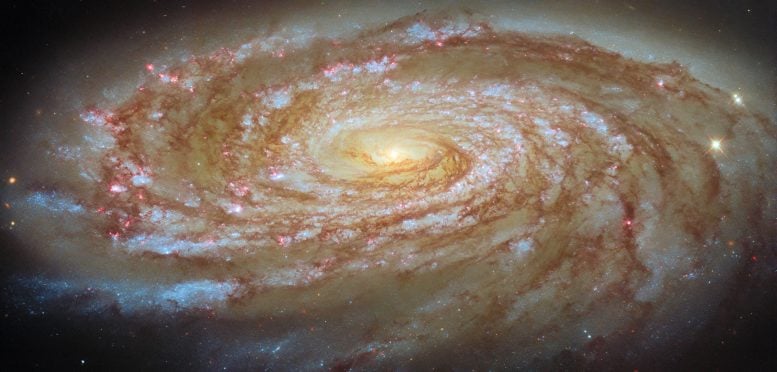 A spectacular spiral galaxy known as M88 is traveling toward the crowded heart of the Virgo Cluster, where powerful forces are already beginning to reshape its future. A striking new image from the NASA/ESA Hubble Space Telescope highlights Messier 88 (M88), a spiral galaxy that is in the midst of a cosmic journey spanning hundreds [...]

Blue Origin’s CEO says damage to its New Glenn launch pad is not as bad as feared and the rocket could return to flight by the end of the year.
The post Blue Origin seeks to resume New Glenn launches by year’s end appeared first on SpaceNews.
 NASA’s Fermi telescope may have finally uncovered the magnetic powerhouse behind the universe’s brightest supernovae. An international team of astronomers analyzing observations from NASA’s Fermi Gamma-ray Space Telescope has found what appears to be the first convincing detection of gamma rays from a rare type of extraordinarily bright stellar explosion known as a superluminous supernova. [...]


NASA is holding a news conference on Wednesday, January 18th to announce its next steps for the Sustainable Flight Demonstrator project. The project aims to develop a new generation of lower-emission single-aisle airliners and to validate green technologies related to the project. The conference will be led by NASA Administrator Bill Nelson and other agency […]
The post NASA to Announce Major Eco-Friendly Aviation Project Update appeared first on Science Bulletin.

Using the spectral data from the Mid-Infrared Instrument (MIRI) onboard the NASA/ESA/CSA James Webb Space Telescope, astronomers have detected methane on 3I/ATLAS.
The post Webb Detects Methane on Interstellar Comet 3I/ATLAS appeared first on Sci.News: Breaking Science News.
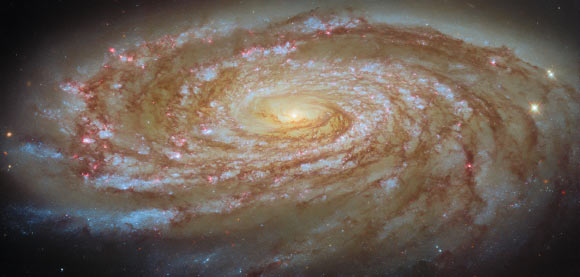
A newly-released Hubble image shows Messier 88, a black hole-powered spiral galaxy that is gradually plunging toward the crowded heart of the Virgo Cluster.
The post Hubble Captures Active Spiral Galaxy: Messier 88 appeared first on Sci.News: Breaking Science News.
Um meteoro explodiu na costa de Massachusetts, nos Estados Unidos, provocando um estrondo sentido em vários estados. De acordo com a NASA, a energia libertada foi equivalente a cerca de 300 toneladas de dinamite.
The post Bola de fogo atravessa céus nos Estados Unidos com estrondo massivo. NASA confirma explosão de meteoro appeared first on Tek Notícias.
Entre galáxias espirais, auroras verdes e novas vistas infravermelhas da enigmática lua Titã, de Saturno, maio confirmou uma vez mais que a fotografia continua a ser uma das formas mais poderosas de explorar lugares onde, por agora, ainda não podemos chegar.
The post Um pôr do sol impossível, um cometa azul e outras imagens da NASA para descobrir em maio appeared first on Tek Notícias.
Forty years ago, the future seemed just around the corner—and the vehicle that was going to take us there was NASA's Space Shuttle. Originally envisioned as part of a larger integrated space transportation system, the shuttle was billed as a fully reusable vehicle, totally unlike the one-and-done capsules of the fading Apollo era, capable of making monthly (and perhaps even weekly) ferry flights to low Earth orbit.
The shuttle, it was hoped, would transform human space flight from extraordinary to mundane. Brands like Coke and Pepsi were quick to hop aboard and expand the Cola Wars into space, and there were even plans to blast Sesame Street's Big Bird into orbit.
The loss of Challenger in January 1986—carrying educator Christa McAuliffe, who would have been the first private citizen in space—put the kibosh on all of that. The shuttle, while fantastically advanced, would never be the vehicle to help humankind slip all of our surly bonds, so to speak. Even operating at its most frantic peak in 1985 just before Challenger's loss, the shuttle hardware managed a maximum of nine flights in one calendar year; for most of the 1990s, it performed at five or six flights per year. Civilians in space—to say nothing of Big Bird—would have to wait.


© 20th Century Fox
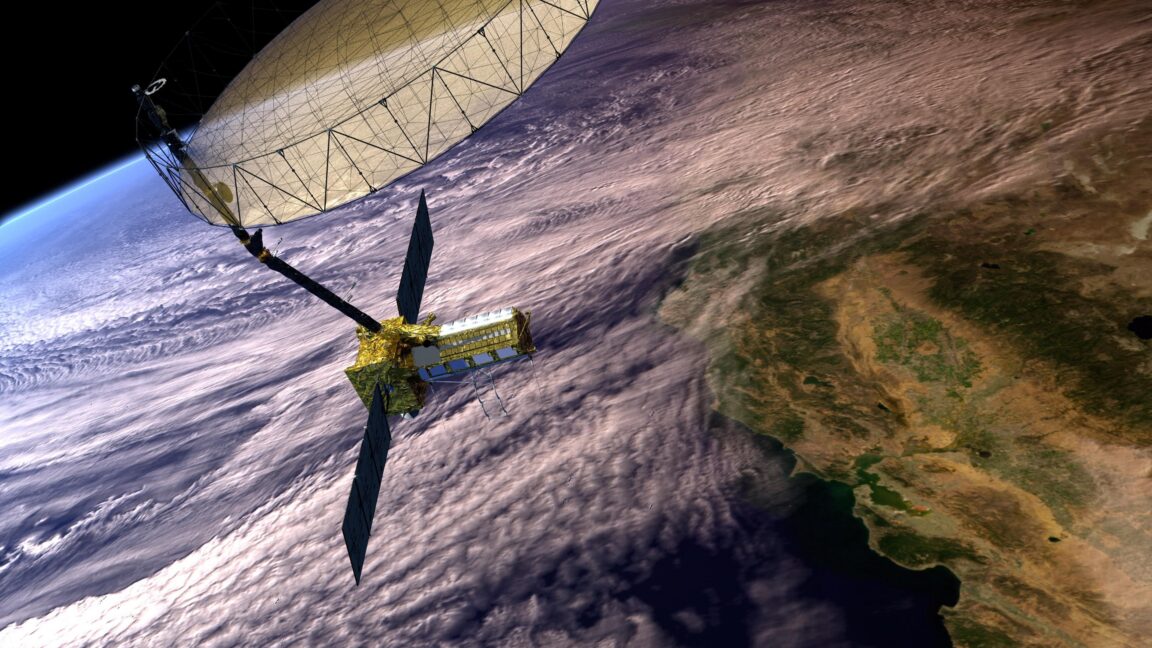
NASA satellites designed to observe cyclone wind speeds and collapsing ice sheets have also proven capable of identifying the approximate locations of GPS jammers. That could help monitor high-risk areas for aircraft and ships navigating the growing prevalence of GPS interference worldwide.
Two different NASA satellite systems showed how they could locate a known but mysterious GPS jammer within several kilometers of its position in Iran, according to an experiment by Sean Gorman, CEO and cofounder of the location-based technology company Zephr.xyz that was detailed in the magazine GPS World. Such jammers use strong signals to overpower the weaker radio signals coming from US-operated GPS satellites and other global navigation satellite systems.
Such NASA satellites cannot perform “near-real time monitoring” or pinpoint the exact location of GPS jammers, said Clara Chew, principal scientist and lead of the GNSS systems and data team at the California-based satellite manufacturer Muon Space, who was not involved in the study. But Chew told Ars that identifying the approximate locations of GPS jammers “could potentially be helpful for flight planning” or for “indicating high risk areas for maritime shipping.”
© NASA/JPL-Caltech
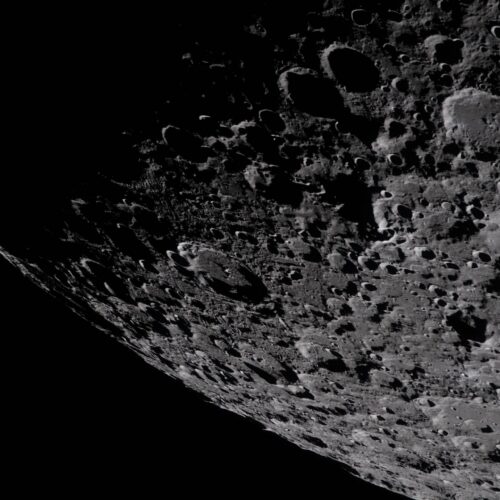
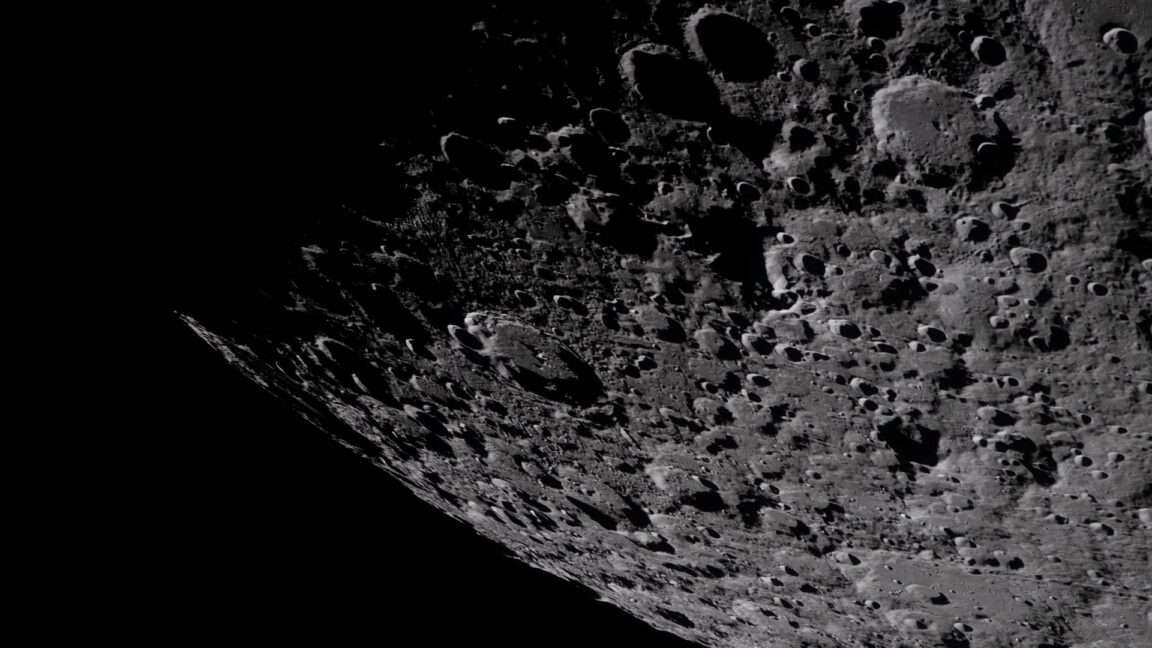
NASA officials announced contract awards for the initial elements of a lunar base on Tuesday, including two rovers that will provide mobility to astronauts.
With the series of announcements, NASA Administrator Jared Isaacman sought to maintain momentum around a Moon Base initiative revealed two months ago as part of the space agency's return to the Moon. "For those waiting patiently, the grand return is close at hand, and we will not slow down," he said.
The manager for the lunar base, Carlos Garcia-Galan, said the space agency had selected two companies, Astrolab and Lunar Outpost, to build approximately 1-ton rovers that would be ready for delivery to the Moon in 2028. Astrolab will receive $219 million for its "CLV-1" rover, and Lunar Outpost $220 million for its "Pegasus" rover, building upon initial contracts awarded two years ago. Each rover is expected to have a range of 200 km and be capable of driving autonomously, with guidance from operators on Earth, in addition to being driven by astronauts.
© NASA
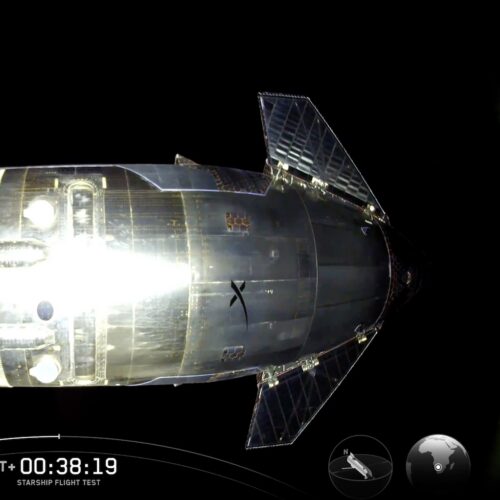
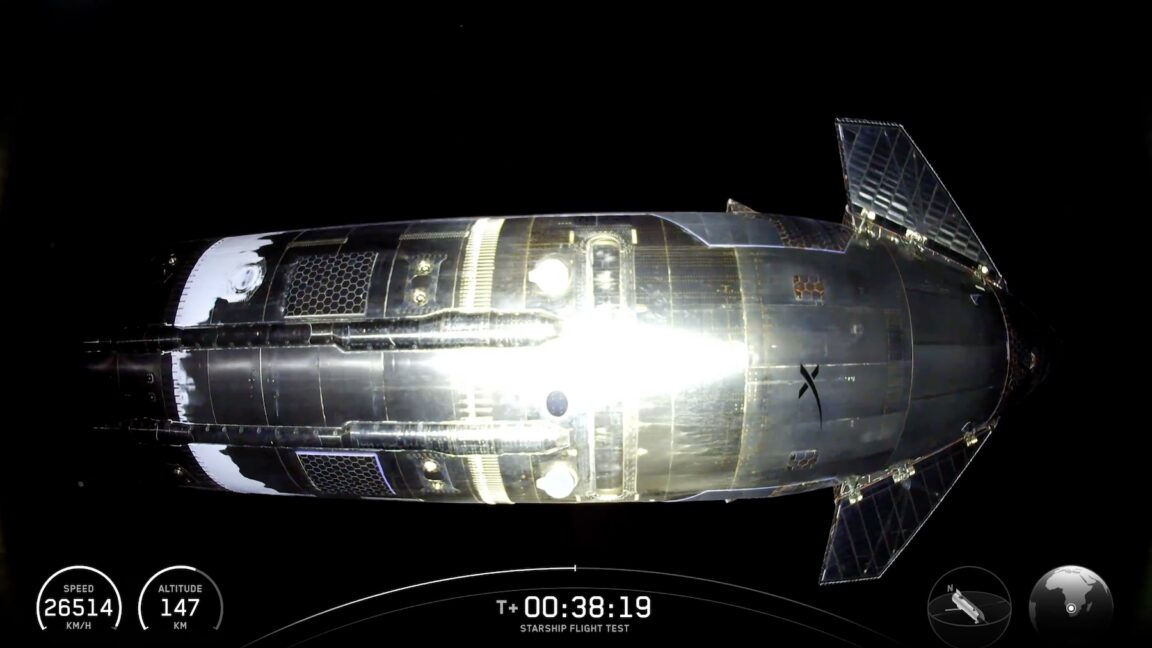
SpaceX launched the first test flight of its upgraded Starship rocket and Super Heavy booster Friday, with mostly positive results.
The powerful rocket, propelled by 33 methane-fueled main engines, climbed away from SpaceX's Starbase launch facility in South Texas at 5:30 pm CDT (6:30 pm EDT; 22:30 UTC) Friday. Within a few seconds, the 408-foot-tall (124-meter) rocket, the largest ever built, cleared the launch tower and turned onto an eastward heading over the Gulf of Mexico.
Starship splashed down on target in the Indian Ocean a little more than an hour later to conclude the first flight of the latest version of SpaceX's stainless-steel mega-rocket. Starship V3 fared better on its debut than the first flights of Starship V1 and V2 in 2023 and 2025. Both past versions of Starship broke apart during launch on their inaugural flights.
© SpaceX
NASA Administrator Jared Isaacman sent a long email to employees on Friday morning outlining several structural changes that are intended to make the sprawling agency more efficient and allow it to better accomplish major goals, such as returning to the Moon and building a base there.
"I believe it is imperative to concentrate resources towards the highest priority objectives in the National Space Policy and liberate the best and brightest from needless bureaucracy and obstacles that impede progress," Isaacman wrote in his 3,000-word letter.
Isaacman's message stressed that no one at NASA will lose their jobs, and no field centers will be closed as part of these changes. Rather, the overall intent is to improve operational efficiency and focus on the agency's core missions. Isaacman laid these out as: execute on the Artemis Program to return humans to the Moon; build an enduring Moon Base; develop a "Space Reactor Office" to get America underway on nuclear power in space; ignite an economy in low-Earth orbit; and build more X-planes and launch more science missions.
© Kevin Carter/Getty Images

