❌

Normal view

NASA Calls for Proposals to Accelerate Lunar Surface Technologies 

8 September 2026 at 21:16
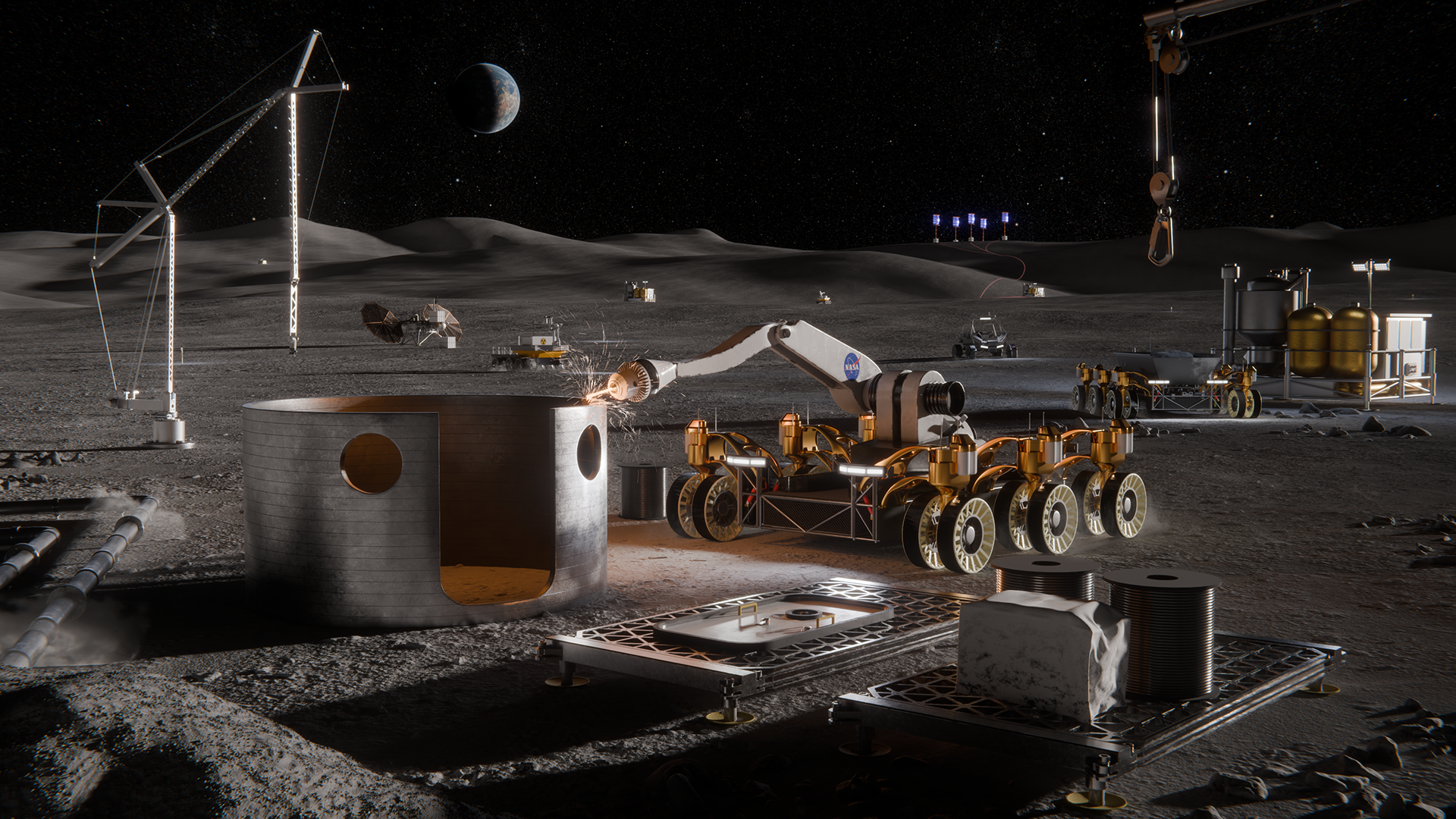
Artistic concept of lunar surface technologies and infrastructure capabilities, including in-situ resource utilization oxygen production systems, surface power systems, in-space manufacturing tools, and advanced nanomaterials production.
Credit: NASA

NASA is seeking proposals to advance the technology and infrastructure needed to explore the Moon and establish a Moon Base in the lunar South Pole region.

Announced on Tuesday, Sept. 8, the solicitation targets capability gaps, including power generation, oxygen extraction, and producing materials on the Moon required for construction and operations. These technologies are essential to making humanity’s next great leap in lunar exploration.

“NASA is accelerating the development of key technologies and closing critical gaps needed for long-term human exploration at the Moon,” said Greg Stover, director of NASA’s Advanced Research and Technology Division. “Partnering with industry will strengthen the U.S. industrial base as we mature the capabilities and infrastructure needed for a sustainable lunar presence.”

The NextSTEP-3 Broad Agency Announcement Appendix A: Lunar Enabling Infrastructure Accelerator solicitation aims to mature and demonstrate capabilities in five areas:

  • Vertical solar array technology that can provide consistent power generation, management, distribution, and energy storage.
  • In-situ resource utilization oxygen from regolith production to extract usable oxygen molecularly bonded to rock and dust covering the Moon’s surface.
  • Radioisotope Stirling generator, a type of nuclear energy technology that uses heat from fissile materials to produce electric power for operating spacecraft systems in the darkest, dustiest, and most remote places.
  • In-space advanced manufacturing to reduce reliance on resupply missions from Earth and to optimize mission flexibility and resilience on the Moon.
  • Innovative nanomaterials production to advance the commercial availability and quality of nanomaterials that can be used in lunar exploration.

The solicitation intends to cultivate U.S.-led capabilities while maintaining full and open competition among private industry, academic institutions, and not‑for‑profit entities, as well as international partners participating through U.S.-led teams. 

NASA may apply insights gained from the resulting contracts of this solicitation, such as technical data, and demonstration results, to shape future acquisition strategies.  

To learn more about NextSTEP-3, visit:

https://go.nasa.gov/4x20o3t

-end-

Rob Margetta
Headquarters, Washington
202-358-0918
robert.j.margetta@nasa.gov

Share

Details

Last Updated
Sep 08, 2026

Building the Moon Base: NASA Stories at the Ion  

11 August 2026 at 15:16
4 Min Read

Building the Moon Base: NASA Stories at the Ion  

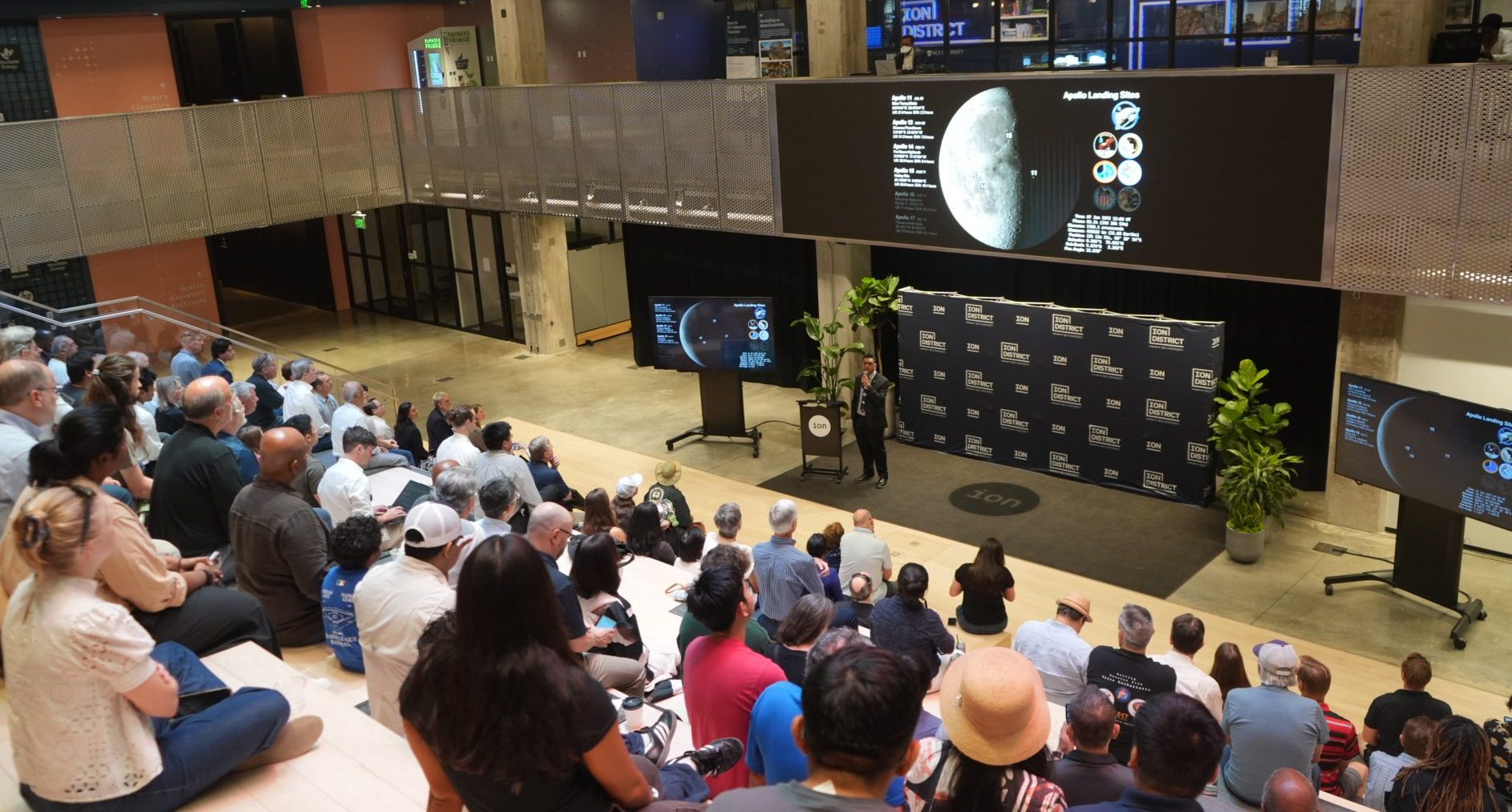
Shatel Bhakta, principal systems engineer for NASA’s Moon Base Program, gives a presentation during NASA Stories at the Ion in Houston on July 30, 2026.
Credits: NASA/Sumer Loggins
Shatel Bhakta, principal systems engineer for NASA’s Moon Base Program, gives a presentation during NASA Stories at the Ion in Houston on July 30, 2026.
NASA/Sumer Loggins

As NASA prepares to return astronauts to the lunar surface for longer stays and increasingly complex operations, building the Moon Base will require new ideas, advanced technologies, and expertise across many fields. 

During NASA Stories at the Ion on July 30, Shatel Bhakta, principal systems engineer for NASA’s Moon Base Program, presented “Building the Moon Base: Challenges and Opportunities at the Lunar South Pole.” He discussed the work required to establish a sustained human presence at the Moon. 

Through its growing partnership with Rice University and the Ion, NASA’s Johnson Space Center in Houston hosts recurring talks connecting agency experts with entrepreneurs, researchers, students, and industry leaders. The series gives Houston’s innovation community a closer look at the people and ideas shaping the future of exploration.  

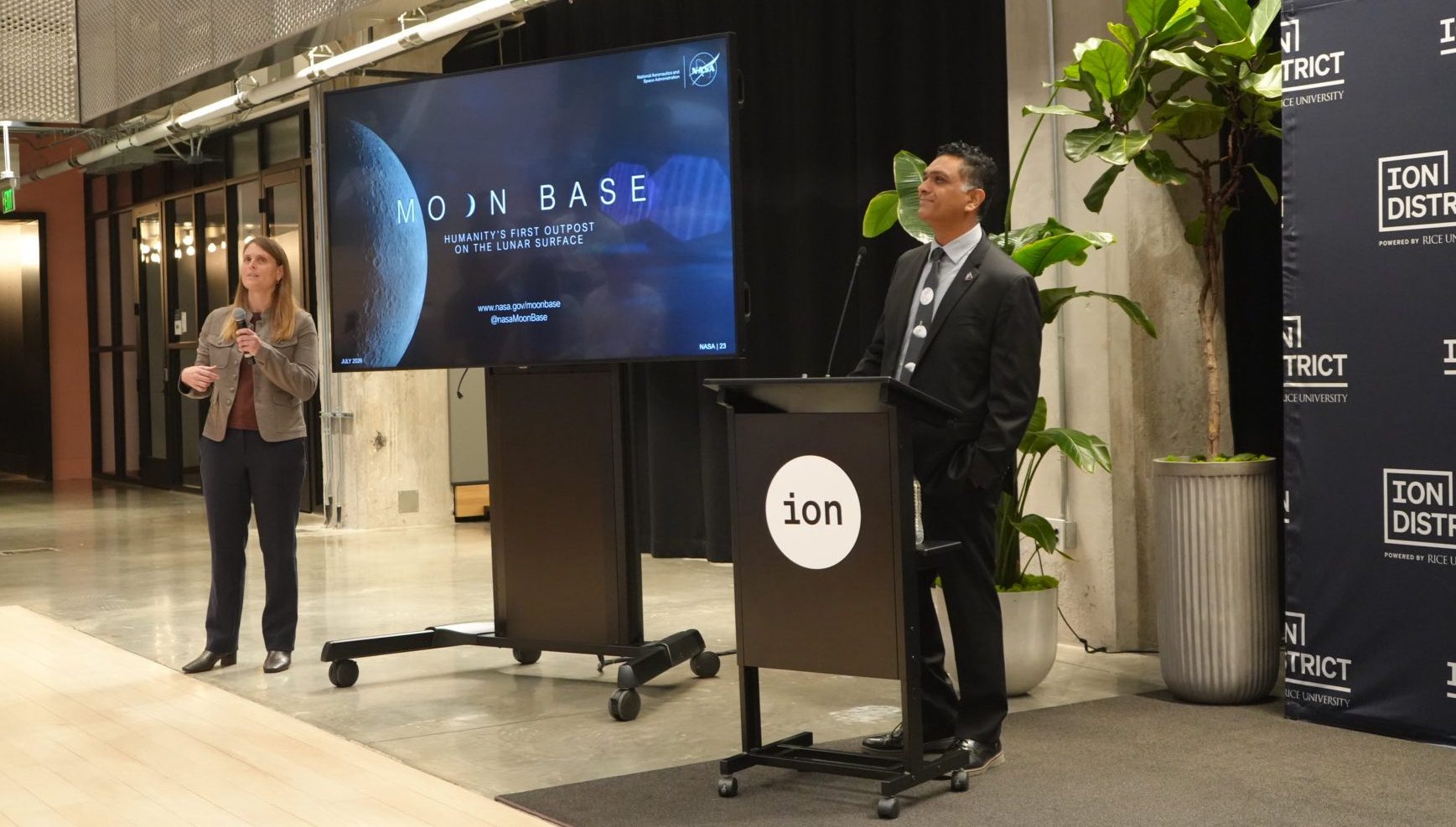
Shatel Bhakta, principal systems engineer for NASA’s Moon Base Program, presents during NASA Stories at the Ion. At left is Laura Neder, head of platform for the Rice Alliance for Technology and Entrepreneurship and the Ion District. 
NASA/Sumer Loggins

Laura Neder, head of platform for the Rice Alliance for Technology and Entrepreneurship and the Ion District, welcomed attendees and introduced Monte Goforth, acting director of Business Development and Technology Integration at Johnson. Goforth delivered opening remarks on the value of sharing NASA’s work beyond the agency and bringing people together to support future exploration before introducing Bhakta. 

Bhakta outlined how NASA is working toward long-duration human exploration of the lunar South Pole through the agency’s Moon Base Program. 

As part of that effort, NASA is taking a step-by-step approach to Moon Base development. Early robotic missions and technology demonstrations will help NASA gather data about the lunar environment, test systems, and reduce risks before expanding infrastructure and human operations.  

“This is probably going to be the most challenging endeavor NASA has ever undertaken,” Bhakta said.  

Meeting that challenge will require collaboration between NASA and its commercial and international partners to develop solutions for operating in extreme environmental conditions.  

Unlike the Apollo landing sites, areas near the lunar South Pole contain steep slopes, deep craters, and lighting conditions that change throughout the year. The Sun remains low on the horizon, creating shifting shadows that can complicate navigation and leave solar panels without sunlight for extended periods, increasing the need for energy storage and other power sources. 

Because of the region’s rugged terrain, crews, rovers, and other surface systems may not always have a clear line of sight to Earth. NASA will need communications infrastructure to relay signals across the lunar South Pole. 

Bhakta explained that Moon Base may not be a single cluster of connected structures. Terrain, lighting, power, and landing constraints could require habitats and other systems to be distributed across the lunar surface. 

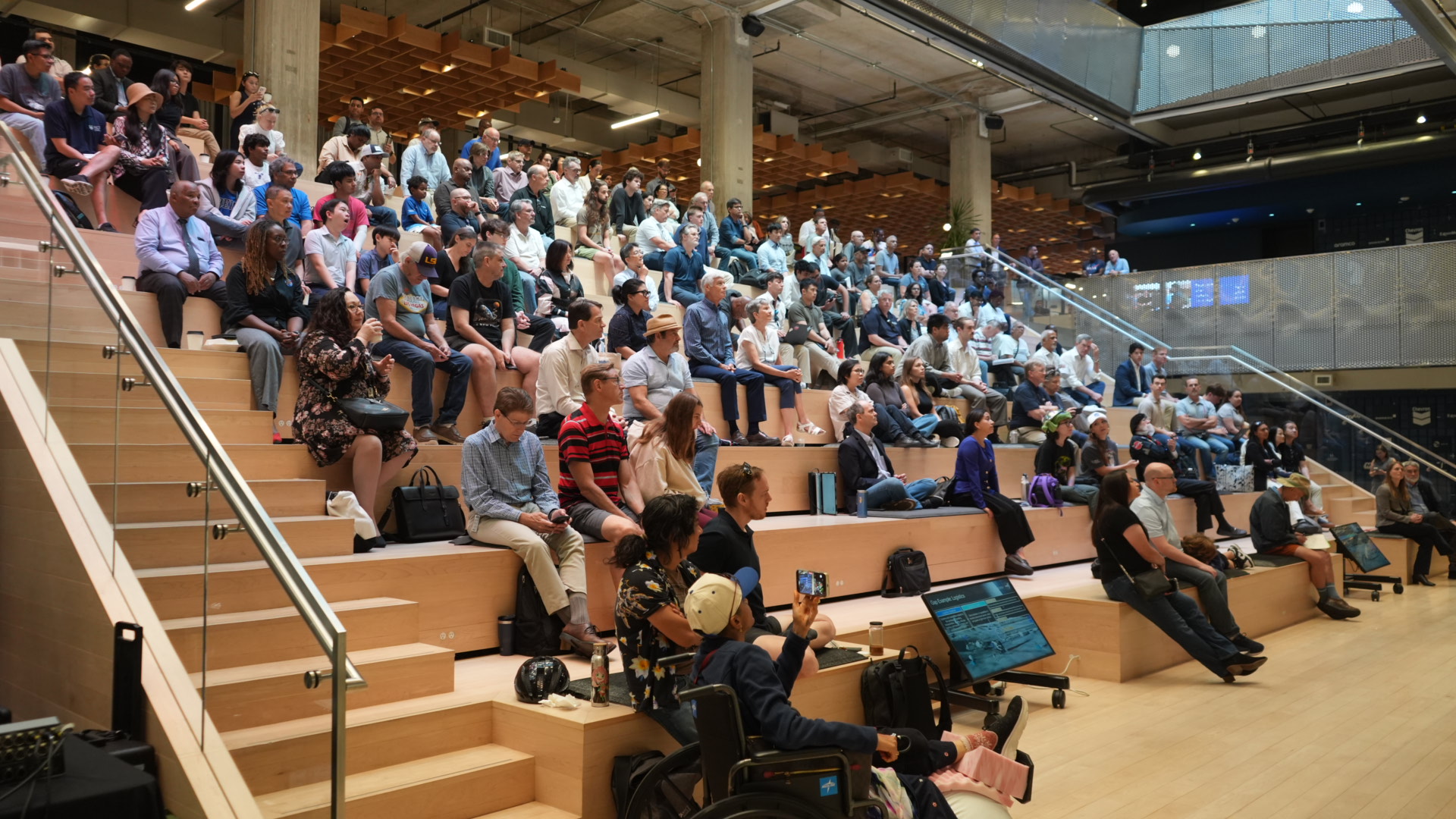
Attendees listen as Shatel Bhakta, principal systems engineer for NASA’s Moon Base Program, discusses the challenges of establishing a sustained human presence at the Moon.
NASA/Sumer Loggins

Lunar regolith, or Moon dust, remains one of the greatest challenges. Without mitigation, the sharp and clingy substance could damage equipment and spacesuits while posing health risks to astronauts. Its electrostatic properties can also change depending on lighting and environmental conditions. 

Understanding how lunar regolith behaves will be essential to ensuring crews can safely live and work on the lunar surface. 

Some permanently shadowed regions near the lunar South Pole may not have received direct sunlight for billions of years and may contain water ice and other volatile materials. These resources could support future exploration, but using them will require new mobility, power, and processing systems. 

The Moon will also serve as a proving ground for missions farther into the solar system. Operating on the lunar surface will help NASA learn how crews, equipment, and infrastructure perform away from Earth before future human missions to Mars. 

As NASA develops these capabilities, Bhakta explained that keeping the Moon Base architecture adaptable will require understanding how individual systems connect and work together. 

“Don’t deal with the technology directly,” Bhakta said. “Deal with the interfaces.” 

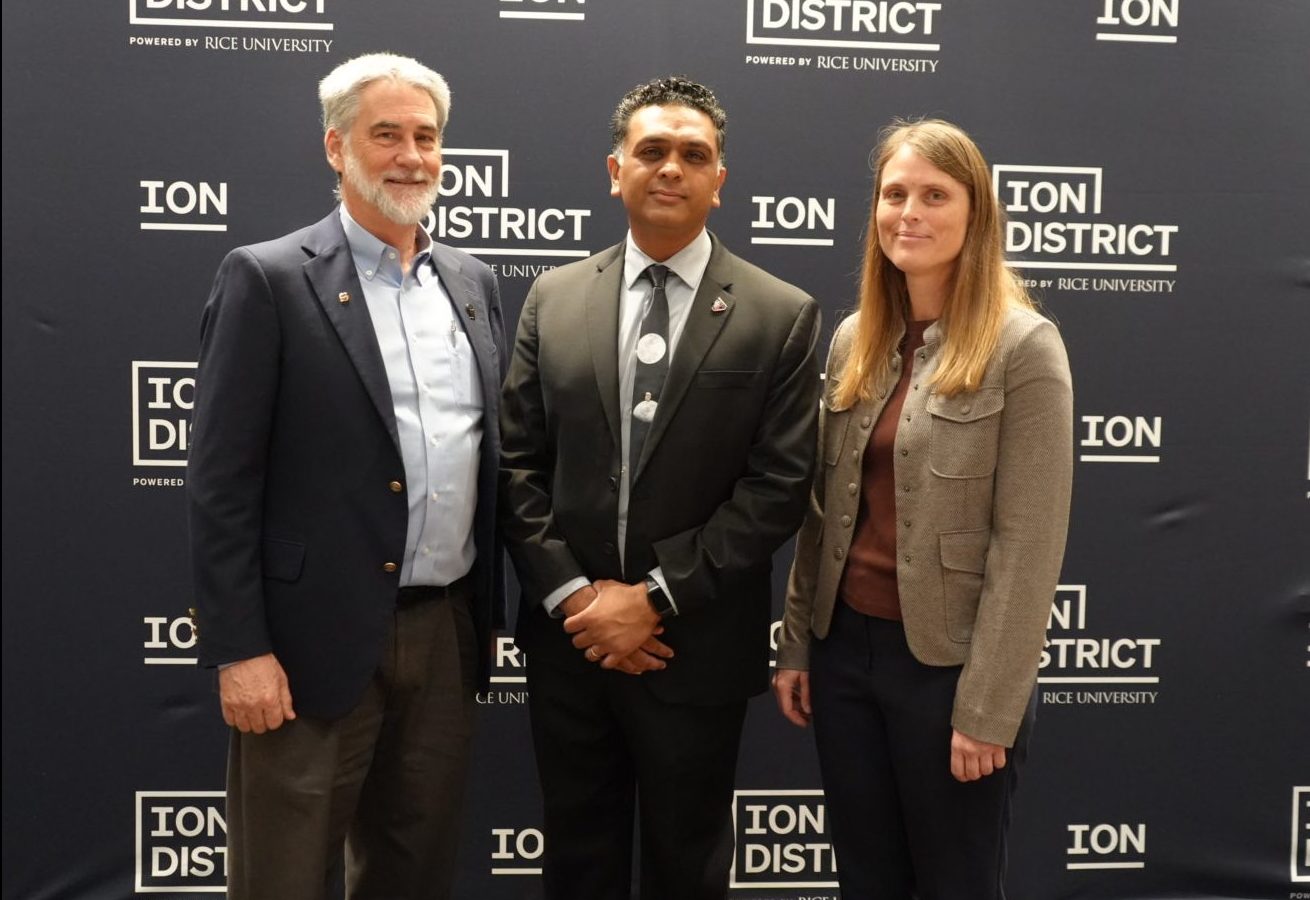
From left, Monte Goforth, acting director of Business Development and Technology Integration at NASA’s Johnson Space Center; Shatel Bhakta, principal systems engineer for NASA’s Moon Base Program; and Laura Neder, head of platform for the Rice Alliance for Technology and Entrepreneurship and the Ion District, pose during NASA Stories at the Ion.
NASA/Sumer Loggins

Building the Moon Base will take more than engineers and scientists. NASA will need communicators, business professionals, researchers, and people from many other fields to help solve problems and share the agency’s work. 

“There are many ways to contribute,” Bhakta said. “Don’t be afraid that your skill set does not fit in.” 

Moon Base build-up will offer multiple entry points for industry and international collaborators to participate, innovate, and contribute. From early demonstrations to long-term surface operations, there are multiple solicitations currently open.  

Find more information at:

www.nasa.gov/moonbase-solicitations

About the Author

Sumer Loggins

Sumer Loggins

Share

Details

Last Updated
Aug 11, 2026
Keep Exploring

Discover More Topics From NASA

Could Humans Evolve Into a New Spacefaring Species? Scientists Explore the Future of Reproduction Beyond Earth

5 August 2026 at 15:01

Humanity’s greatest challenge in becoming a multi-planet species may not be building bigger rockets or landing astronauts on Mars. Instead, it could come down to the question: Can humans safely conceive, carry pregnancies, and raise healthy children off Earth?

A new review published in Frontiers in Space Technologies argues that the answer to this question remains unclear. Drawing on decades of research on animal reproduction in space alongside emerging advances in artificial intelligence, biotechnology, synthetic biology, and cybernetic systems, the researchers suggest that future generations born off Earth may require technologies far beyond today’s medical capabilities.

In the most speculative sections of the paper, researchers even envision a scenario in which reproduction itself acts as a tool for helping humans gradually adapt to life in space.

Rather than presenting new experiments, the paper synthesizes existing evidence while outlining possible technological pathways that could someday enable permanent human settlements on the Moon, Mars, or even deeper into the solar system.

The central message is that surviving in space is only the first hurdle. Establishing self-sustaining civilizations will ultimately depend on whether human reproduction can succeed under conditions of microgravity, radiation, isolation, and other environmental stresses that evolution never prepared us to face.

“It is proposed that prenatal and early postnatal developmental stages may constitute critical biological windows for facilitating long-term adaptation to space,” researchers write. “Such interactions could ultimately transform reproduction and early development into active drivers of human evolution, contributing to the emergence of biologically distinct populations progressively adapted to diverse space environments.”

Despite more than six decades of human spaceflight, no human has ever conceived or carried a pregnancy in space. Therefore, science has little direct evidence about what would happen if astronauts attempted to start families off Earth. Nearly everything researchers know comes from studies involving animals ranging from sea urchins and fish to frogs, birds, mice, and rats.

The results are encouraging in some respects but troubling in others.

Several non-mammalian species have successfully reproduced in orbit. Medaka fish, for example, became the first vertebrates to reproduce in space, with fertilization rates comparable to those seen on Earth. Yet, even when reproduction occurs successfully, researchers have documented developmental abnormalities in some species, suggesting that space environments can slightly modify embryonic development.

Rodent studies paint an even more complicated picture. Fertilization is not impossible under microgravity, but early embryonic development frequently suffers. Experiments have shown reduced blastocyst formation, slower embryo development, lower live birth rates, and changes in gene expression. Other studies have linked space radiation to DNA damage, genomic instability, and developmental defects affecting the nervous system.

At the same time, some findings show surprising resilience. Mouse embryos cultured aboard the International Space Station have developed into apparently normal blastocysts under certain conditions. In contrast, freeze-dried mouse sperm stored in orbit for months later produced healthy offspring after returning to Earth.

These mixed findings suggest that reproduction may be biologically possible, but far from routine, under space conditions.

In their review, researchers also examined growing evidence that spaceflight affects male and female reproductive health even before conception occurs.

Microgravity and radiation appear capable of disrupting sperm production, reducing testosterone levels, altering ovarian function, impairing egg maturation, and interfering with hormone regulation.

Some studies suggest sperm can still swim under simulated microgravity, but lose their capability to navigate effectively toward an egg. Others report that radiation accelerates the depletion of ovarian follicles and increases DNA damage in reproductive cells.

More concerning is the possibility that some biological changes could be passed to future generations through epigenetic mechanisms. Experiments involving mice have suggested that spaceflight may alter gene regulation in sperm and influence gene expression in offspring, although the long-term significance is still unknown.

For women, pregnancy itself could present an even greater challenge. On Earth, pregnancy requires profound cardiovascular changes that help deliver oxygen and nutrients to a growing fetus. Microgravity, however, causes fluid redistribution, muscle loss, reduced blood volume, bone demineralization, and changes in cardiovascular function that could interfere with placental development and fetal growth. Radiation exposure, oxidative stress, circadian disruption, and limited medical support would only add to those risks.

Researchers argue that simply shielding astronauts from radiation may not be enough. Gravity itself appears to function as a biological signal that influences everything from cell organization to tissue development. That realization carries renewed interest in artificial gravity as a potential solution.

Instead of depending solely on habitats built on the Moon or Mars, future space settlements could include rotating structures that generate centrifugal force to recreate Earth-like gravity.

Such habitats have appeared in science fiction for decades, but researchers suggest they may ultimately become essential for healthy conception, pregnancy, childhood development, and multigenerational life off Earth.

Researchers propose dedicated orbital research platforms where scientists could systematically study reproduction under lunar, Martian, or custom-designed gravity levels before humans attempt permanent settlements.

Artificial intelligence also features prominently in the researchers’ vision of the future. They propose AI-powered “digital twins” capable of integrating biological, physiological, and environmental data to simulate how embryos, pregnancies, and developing children might respond to different gravitational and radiation environments. These computer simulations could help researchers examine scenarios that would be difficult, or ethically impossible, to test directly in humans.

Perhaps the paper’s most futuristic proposal is something the researchers call Synthetic Reproductive Adaptive Enhancement Technology, or SRAET. This speculative concept envisions highly automated reproductive systems combining artificial wombs, advanced reproductive biotechnology, biosensors, AI-assisted monitoring, and predictive developmental modeling into a closed-loop environment capable of supporting conception through birth under carefully controlled conditions.

The framework explores the controversial possibility that future advances in gene editing and synthetic biology could one day help humans adapt biologically to off-world environments.

Researchers emphasize that such ideas are still speculative and acknowledge the enormous ethical, biological, and safety concerns surrounding germline modification, off-target mutations, and multigenerational consequences. Rather than advocating immediate implementation, they present these possibilities as conceptual pathways that justify careful scientific and ethical discussion.

For fans of science fiction, many of these concepts may sound remarkably familiar. Yet, researchers attempt to ground their arguments in existing developmental biology, reproductive medicine, aerospace engineering, and space medicine while clearly distinguishing current evidence from future speculation.

In the end, researchers suggest that the future of human space travel may depend less on propulsion systems than on understanding how life develops under entirely new environmental conditions. If humanity hopes to establish permanent settlements off Earth, science will first need to ensure that future generations are able to begin life safely under alien skies.

“Ultimately, the greatest challenge of human expansion beyond Earth may not be transporting humans into space, but understanding how life itself can develop, adapt, and evolve under space conditions,” researchers write. “In this sense, SRAET would not merely support reproduction beyond Earth; it would represent a developmental biotechnology through which humanity may begin to actively participate in shaping its own evolutionary future.”

Study: Ferraz M, Moeharram L. “Past, present and future of human reproduction and development in space.” Frontiers in Space Technologies. 2026.

Tim McMillan is a retired law enforcement executive, investigative reporter and co-founder of The Debrief. His writing typically focuses on defense, national security, the Intelligence Community and topics related to psychology. You can follow Tim on Twitter: @LtTimMcMillan.  Tim can be reached by email: tim@thedebrief.org or through encrypted email: LtTimMcMillan@protonmail.com 

Sending repurposed Mars rover to the moon could cost more than $1 billion

31 July 2026 at 21:53
OPTIMISM

Converting an engineering model of a Mars rover into an actual lunar rover could cost NASA more than $1 billion, an estimate strongly rejected by the agency’s administrator.

The post Sending repurposed Mars rover to the moon could cost more than $1 billion appeared first on SpaceNews.

Scientists Warn Extraterrestrial Encounters Could Endanger Earth—a Quarantine Facility on the Moon May Be Our Last Line of Defense

22 June 2026 at 14:28

During future space missions, humans may finally encounter extraterrestrial life forms, settling the age-old question of whether we are alone in the cosmos. But what if alien biology is so different from that of Earthlings that its presence could become a potential global hazard?

This is the concern raised by researchers Frederick I. Moxley and Anthony Ricciardi in a new study, which argues that in an era of sample return missions and space missions that are carrying humans and our robotic probes farther into the cosmos than ever before, we need to be prepared to enact measures to protect our planet against the unforeseen consequences of any potential alien encounters the future may hold.

“The advancement of space exploration into an era of sample return missions from Mars, asteroids, and icy moons raises the potential for biological contamination either to or from Earth,” the authors write in their recent study, published in the journal Ambio. Given the potential for such contamination, Moxley and Ricciardi approach the question of alien contact from the perspective of past examples where invasive species on Earth have caused major disturbances to the environments they encounter.

“We consider the possibility that extraterrestrial organisms introduced to Earth could behave analogously to invasive species by destabilizing ecosystems or interacting unpredictably with their new environment,” the authors write, pointing to the multitude of examples known to science, many of which involve the introduction of microbial organisms into new environments—often with devastating consequences.

In many cases, such organisms not only can survive in new environments, but can often adapt with remarkable speed, even in some of the most extreme environments.

This, the authors say, challenges the idea that extraterrestrial life might not even be capable of surviving on Earth, as expressed by some past research.

“The plausibility of encountering extraterrestrial life warrants stringent planetary protection measures grounded in biosafety and biosecurity principles,” the authors warn.

So how do they suggest protecting Earth against such potentially catastrophic events involving future encounters with extraterrestrials?

According to Moxley and Ricciardi, building a quarantine facility on the Moon could serve as Earth’s last line of defense against any unintended alien invasions that could radically disrupt Earth’s fragile ecosystems.

“Due to its proximity, natural isolation, and apparent lack of a biosphere, the Moon can serve as a secure site for biocontainment of extraterrestrial samples,” the authors write. In their study, they examine historical instances where biological invasions have led to catastrophic environmental changes and argue that constructing a biocontainment facility on the Moon “should form the cornerstone of modern astrobiological risk mitigation strategies.”

Moon base extraterrestrial
Artist’s concept of a future lunar base (Image Credit: NASA/SAIC/Pat Rawlings)

What the researchers propose falls in line with current plans NASA has for a permanent lunar base, which is one of the many ambitious efforts under its Artemis Mission. Such a lunar outpost, which will serve as the official Artemis Base Camp, is planned for construction near the Moon’s South Pole.

At a cost of close to $30 billion, the effort will help to facilitate an ongoing human presence on the Moon by as soon as 2028, according to current mission timelines, and will serve as a science hub in support of future lunar exploration.

For Moxley and Ricciardi, incorporating a quarantine facility within our future lunar infrastructure that can house any extraterrestrial life forms we may encounter could prove to be vital. Ultimately, having such a facility may play the important role of shielding Earth against unintentional contamination by a potentially invasive alien species.

The team’s recent paper, “Protecting earth from extraterrestrial contamination: The case for a lunar biocontainment facility,” was published in Ambio.

Micah Hanks is the Editor-in-Chief and Co-Founder of The Debrief. A longtime reporter on science, defense, and technology with a focus on space and astronomy, he can be reached at micah@thedebrief.org. Follow him on X @MicahHanks, and at micahhanks.com.

Astrobotic says sale to Voyager will allow it to scale up

20 June 2026 at 20:51
John Thornton

Lunar lander developer Astrobotic decided to sell to Voyager Technologies so it could quickly scale up to meet the projected demands of NASA’s lunar base initiative.

The post Astrobotic says sale to Voyager will allow it to scale up appeared first on SpaceNews.

Astrobotic unveils Griffin-1 lunar lander

16 June 2026 at 21:48
Griffin-1

Astrobotic showed off the lunar lander it plans to launch later this year that will be the vanguard of NASA’s new lunar base ambitions.

The post Astrobotic unveils Griffin-1 lunar lander appeared first on SpaceNews.

New Glenn forced an explosive rewrite for NASA’s plans to build a moon base

9 June 2026 at 13:00
Blue Origin’s New Glenn exploded during a May 28 static-fire test. Credit: NASASpaceFlight

NASA unveiled plans in March to develop a lunar base as part of its “Ignition” event that outlined the agency’s new direction in human spaceflight. The plans, though, were rather […]

The post New Glenn forced an explosive rewrite for NASA’s plans to build a moon base appeared first on SpaceNews.

Let’s build the moon base, but not lose sight of Mars

Illustration representing NASA's moon-to-Mars ambitions. Credit: NASA

These are heady days for NASA and the space industry. The Artemis 2 crew flew around the moon, traveling farther into space than any humans previously had; NASA announced an […]

The post Let’s build the moon base, but not lose sight of Mars appeared first on SpaceNews.

NASA takes steps toward building Moon Base, including discussing a "perimeter"

26 May 2026 at 22:03

NASA officials announced contract awards for the initial elements of a lunar base on Tuesday, including two rovers that will provide mobility to astronauts.

With the series of announcements, NASA Administrator Jared Isaacman sought to maintain momentum around a Moon Base initiative revealed two months ago as part of the space agency's return to the Moon. "For those waiting patiently, the grand return is close at hand, and we will not slow down," he said.

The manager for the lunar base, Carlos Garcia-Galan, said the space agency had selected two companies, Astrolab and Lunar Outpost, to build approximately 1-ton rovers that would be ready for delivery to the Moon in 2028. Astrolab will receive $219 million for its "CLV-1" rover, and Lunar Outpost $220 million for its "Pegasus" rover, building upon initial contracts awarded two years ago. Each rover is expected to have a range of 200 km and be capable of driving autonomously, with guidance from operators on Earth, in addition to being driven by astronauts.

Read full article

Comments

© NASA

❌