❌

Normal view

Are Martian organics remnants of ancient life?

8 October 2026 at 12:00

Since the 1976 Viking missions, when NASA first successfully placed uncrewed landers on Mars, scientists who study life in the universe, known as astrobiologists, have been gathering evidence to determine whether microorganisms ever lived on the red planet. It has been a challenging determination to make. Until a Mars sample return mission occurs, all necessary analyses must take place on Mars, using instruments designed as much to withstand the stresses of space travel as to collect data, which limits how thoroughly scientists can study Martian rocks. As a result, the search for evidence of microbial life on Mars is inherently incremental. 

Recently, scientists added another piece of exciting, yet inconclusive, evidence to their search. In the summer of 2024, the Mars 2020 Perseverance Rover science team was searching for signs of ancient microbial life in a 3,700-million-year-old lake bed on Mars, known as Jezero Crater. In the process, they detected complex, carbon-containing organic molecules in mudstones within a river channel that once brought water to the now-dry lake bed. 

This is not the first time complex organic molecules have been detected in Martian mudstones. However, there are 2 reasons that astrobiologists are particularly interested in this new discovery. First, these organic molecules are widely dispersed across all 4 river channel mudstones they analyzed. Second, some of the organic molecules they found are associated with minerals that are known to support microbial life on Earth. 

Widely dispersed organic molecules associated with minerals that can support microbial life are exactly what astrobiologists would expect to see if microorganisms once lived in Jezero Crater. However, organic molecules can also form through geological processes, like when gases and minerals react at high temperatures and pressures at deep-sea vents on Earth. Therefore, astrobiologists must carefully assess organic molecules to determine their origin. 

In July of 2026, more than 60 Perseverance science team members took a first step towards determining whether ancient microorganisms could have made the organic molecules found in Jezero Crater. They compared the organic molecule detections in Martian mudstones to similar detections of organic molecules in samples of known origin, including fossilized Earth life, meteorites, and minerals. 

NASA scientists detected the organic molecules in Jezero Crater with a rover instrument called Scanning Habitable Environments with Raman and Luminescence for Organics and Chemicals (SHERLOC). SHERLOC uses a 248.6 nanometer (nm) wavelength laser to excite molecules in unknown materials. When molecules are excited, they absorb and scatter the laser light, causing characteristic shifts in the wavelength of the scattered light. 

Instruments like this, known as Raman spectrometers, detect the shifted light and display the detections as lines called spectra, which scientists use to identify the unknown molecules. The Raman spectra from the 4 mudstones in Jezero crater showed shifts of about 1600 nm, which is characteristic of complex carbon molecules. These shifts appear as bands in the spectra that are often called G-bands.

Raman spectrometers are common laboratory instruments, but most use lasers with wavelengths of 485 nm or higher, so the spectra they produce can be slightly different from SHERLOC spectra even when the laser excites the same kind of molecule. To get around this issue, the scientists compared the Mars spectra with spectra of complex carbon molecules from fossilized Earth microorganisms, coal, graphite, meteorites, and synthetic samples collected by Raman instruments using the same wavelength laser that SHERLOC uses. They found that the spectra collected on Mars overlap with at least one example from every sample type except graphite. 

These results don’t rule out the possibility that organic molecules in Jezero Crater were produced by ancient microbial life, but they can’t tell us exactly how they formed either. That determination will have to wait until the samples are brought to Earth so they can be studied with laboratory instruments.

The Perseverance team has made a small but critical contribution towards determining whether microbial life ever inhabited our closest planetary neighbor, Mars. Their efforts exemplify how the science of astrobiology and the search for possible extraterrestrial life slowly and carefully move forward. If we keep at it, humans may one day have a definitive answer to one of our most consequential questions: Are we alone?

The post Are Martian organics remnants of ancient life? appeared first on Sciworthy.

Microscopic fragments of ancient alien tech may litter the moon — and scientists have a plan to find them

11 September 2026 at 16:29

Tiny fragments of ancient alien tech may be strewn across the surface of the moon, and it may be relatively easy to find these microscopic relics, scientists propose in a new study.

The theoretical study does not claim to have found any evidence of advanced alien civilizations; rather, it offers a new way to search for clues of their existence.

Unlike Earth, the moon has no functional atmosphere or magnetic field, so it is completely exposed to the vacuum of space. As a result, it is constantly bombarded by meteorites, as well as hit by a steady stream of microscopic particles from the rest of the solar system and beyond. Because the moon has no water or tectonic movements, this microscopic matter accumulates and remains on the surface, completely undisturbed.

In the new paper, uploaded June 23 to the preprint server arXiv, the researchers argue that some of this dust originates from star systems beyond our own and, therefore, may contain evidence of long-lost alien civilizations. They also propose a new experiment that could potentially find these microscopic fragments within samples collected over the next decade or more. (The study has not been published yet, but it has been submitted to the International Journal of Astrobiology.)

"The moon has been quietly accumulating material from space for billions of years, much of it likely billions of years older than the moon itself," study first author Lewis Pinault, a planetary scientist at University College London and an affiliate of the SETI Institute, said in a statement. "We're asking whether that ancient collection might contain microscopic traces of technologies that existed long before humans ever looked up at the sky."

Photo of the moon with the crescent Earth in the background

Unlike Earth, the moon lacks a functional atmosphere or magnetic field, meaning that its surface is exposed to the vacuum of space. This allows cosmic dust and other tiny particles to embed themselves within the lunar regolith. (Image credit: NASA)

Tiny technosignatures

Until now, the search for evidence of advanced alien civilizations, known as technosignatures, has focused mainly on radio signals that could be emitted from inhabited exoplanets or hypothetical megastructures, such as Dyson spheres. However, these signals would originate only from active civilizations, not those that died out long before we could spot them.

The authors of the new study argue that when a civilization dies, traces of its technology could survive and end up in space, either via the deterioration of megastructures and other smaller spacecraft or via powerful asteroid strikes on once-inhabited exoplanets. Once in space, tiny specks of metal or other artificial materials could be ejected from star systems by powerful gusts of stellar wind and eventually drift toward us.

Using computer models, the team predicted that pieces of tech up to 3 micrometers across (three-millionths of a meter, or about 3% the width of a human hair) could escape their star systems and travel across interstellar space for up to 1 billion years. Then, they estimated how much of this material could be reaching the solar system and how likely it would be to end up on the moon. (We already know that interstellar dust can penetrate the inner solar system because scientists found some within samples collected from the surface of Bennu, an asteroid that orbits between Earth and Mars and was visited by NASA's OSIRIS-REx probe in 2020.)

GIF showing simulation of moon passing through ions being blown of Earth by the solar wind

The moon is constantly being bombarded by tiny particles, some of which come from outside the solar system. (Image credit: University of Rochester illustration / Shubhonkar Paramanick)

To date, no lunar samples have contained any technosignatures. However, the scientists who studied them were likely not looking for such particulates, and the samples were probably too small to yield meaningful results, the study authors argue.

The researchers believe that a sample of lunar regolith with a volume of 35 cubic feet (1 cubic meter) could be enough to find at least one technological fragment. The team also proposed ways of combing through the material using microscopy, industrial materials analysis and AI-assisted imaging.

However, if such a sample does not yield any results, this would not necessarily disprove the researchers' hypothesis and may instead mean their models are off and a greater sample size would be required, the team wrote.

"Eminently reasonable"

A photo of the Artemis II rocket launching from Florida

Future missions in NASA's Artemis II program could bring back more samples of lunar regolith from the moon for future analysis. This photo shows the Artemis II mission lifting off April 1 from the Kennedy Space Center in Florida. (Image credit: Chip Somodevilla/Getty Images)

Several upcoming space missions will collect fresh samples from the lunar surface, including China's recently delayed Chang'e-7 mission and future missions in NASA's Artemis program. These samples could potentially hold technosignatures, although the volume of regolith collected will be far less than what the researchers are proposing.

Therefore, we may have to wait until humans establish a permanent moon base before astronauts can collect enough material to be analyzed properly. This may not be that far off, as both the U.S. and China are planning to construct lunar bases within the next decade. Researchers also think the samples could be analyzed on the moon rather than on Earth.

As a result, the SETI Institute, which leads the international hunt for technosignatures, views the new idea as very promising.

"The concept of searching the lunar regolith for microscopic technosignatures is at once extraordinarily original and eminently reasonable," Bill Diamond, president and CEO of the SETI Institute, who was not involved in the new study, said in the statement. "This is a novel addition to the search methodologies applied to seeking evidence of technology as a proxy for life and intelligence beyond our solar system and we are excited at the prospect of bringing this to fruition."

Extraterrestrials quiz: Are you an alien expert, or has your brain been abducted?

Is There Alien Debris on the Moon? Some Scientists Plan to Find Out.

5 September 2026 at 10:02
Researchers want to explore the idea that microscopic particles shed by alien civilizations have accumulated on the lunar surface, making it an archive of extraterrestrial technology.

Scientists Discover How Extraterrestrial Life Could Thrive In the Harsh Acidic Clouds Surrounding Venus

1 September 2026 at 13:12

A new theoretical kind of extraterrestrial life could survive the harsh acid clouds of Venus, according to MIT researchers.

Despite longstanding conceptions that Venus would be too deadly for even the hardiest of extremophiles, new evidence suggests a rethinking of life from the ground up may be in order. The work was revealed in a recent paper published in the Proceedings of the National Academy of Sciences, which describes how extraterrestrial life could form from peptides to thrive only in such a hostile environment.

Based on recent evidence, it may be time to cast a wider net in the search for extraterrestrial life and look at planets that bear little resemblance to Earth.

The Brutal Venusian Environment

“We really don’t know the full extent of what planet archetypes are out there,” said senior co-author Sara Seager, the Class of 1941 Professor of Planetary Sciences in the Department of Earth, Atmospheric and Planetary Sciences and a professor at MIT’s departments of Physics and of Aeronautics and Astronautics. “We’re seeking exoplanets that might be a true Earth twin, but what if they’re all Venuses? Our findings definitely open up a whole range of possibilities.”

About 30 to 40 miles above Venus’s scorching surface, which reaches temperatures close to 900° F, lies a pocket of milder temperatures that some scientists think may be conducive to life. However, this region’s heavy cloud cover poses its own challenges. Instead of being composed primarily of water, the clouds on Venus are 98% sulfuric acid, which is strong enough to dissolve metals and would kill any known life on Earth.

While traditional astrobiological thinking held that this would be far too extreme for complex biological molecules to hold together, new evidence is overturning that idea. Recent work at MIT suggests that peptides can endure such challenging conditions, maintaining their stability and adopting shapes useful to biological processes.

“If peptides find their way to that cloud layer of concentrated sulfuric acid, they will stay and be stably preserved in that cloud of droplets,” said senior co-author Mei Hong, an MIT professor of chemistry and one of the senior authors of the new study. “And once these macromolecules have a defined three-dimensional structure, they can potentially have a function.”

Seeding Extraterrestrial Life

Following the concept of panspermia, which holds that the building blocks of life are transmitted throughout the universe on meteoroids, asteroids, and comets, the researchers investigated whether any building blocks could survive the Venusian conditions to give rise to extraterrestrial life.

Work began in Seager’s lab in 2020, studying how biological molecules could endure the stress of such an acidic environment. With nuclear magnetic resonance spectroscopy, they analyzed the structures of molecules in sulfuric acid solution. Surprisingly, nucleic acids, lipids, and amino acids all maintained their integrity under acidic conditions. 

The next step was to investigate whether peptides could likewise hold their integrity and also assume useful biological shapes. They were surprised to find how resilient the peptides were, holding on for weeks at a time. Ironically, the lack of water in the environment could be a blessing, as without it, the hydrolysis reaction that breaks down peptides cannot occur.

“Without water, an acid that you would consider a harsh solvent suddenly is not as menacing as one might think,” Hong said.

New Concepts in Extraterrestrial Life

Additionally, the sulfuric acid molecules acted as scaffolds, allowing biologically useful shapes to form that otherwise wouldn’t, such as omega loops, which are found in some naturally occurring proteins on Earth but not typically in peptides.

“What hadn’t been known is that peptides can survive so well and have specific three-dimensional shapes in an acidic environment,” Hong explained.

Follow-up work will take these ideas even further, synthesizing a DNA alternative called PNA, made from peptides. Their existing work shows that a single PNA strand is stable in sulfuric acid, but the new research will attempt to recreate DNA’s double-strand structure with peptides. They also plan to investigate whether long peptides can hold omega loops under these acidic conditions. 

Based on their results, extraterrestrial life could easily be hiding in environments highly divergent from anything seen on Earth. Continued investigation may reveal that rather than being poisonous, environments like Venus may be the only places certain lifeforms could exist.

The paper, “Peptides Adopt Stable Omega-loop Structures in Concentrated Sulfuric Acid,” appeared in Proceedings of the National Academy of Sciences on September 4, 2026.

Ryan Whalen covers science and technology for The Debrief. He holds an MA in History and a Master of Library and Information Science with a certificate in Data Science. He can be contacted at ryan@thedebrief.org, and follow him on Twitter @mdntwvlf.

No Sample-Return Required? Scientists Demonstrate Extraterrestrial Biosignature Detection Method Using the Mars Rover’s Existing Instruments

17 July 2026 at 13:49

An international team of researchers has demonstrated a new biosignature detection method for distinguishing between abiotic and biotic apatite mineral samples on Mars using instruments already aboard the Perseverance Rover, rather than returning samples to Earth.

The team said their mineral-based biosignature detection approach was successful in identifying samples with nearly 98% accuracy and allows for “deeper time” searches for signs of life, given the longer-lasting nature of minerals compared to biological materials. They also suggest their approach could broaden the capabilities of upcoming rover and life-hunting missions without adding new tools or sensors.

Advantages of a Mineral-Based Approach for Hunting Biosignatures

In a study detailing the team’s technique, Robert M. Hazen from the Carnegie Institution for Science and colleagues explained that searching for life and biosignatures beyond Earth “is a central objective of astrobiology.” They also note that this research is complemented by studies exploring the origin and early evolution of terrestrial life. Still, they add, although identifying biosignatures remains a key challenge, “robust mineral biosignatures remain limited.”

For example, most proposed biosignature missions focus on organic molecules or searching for fossils preserved in sedimentary environments or aquatic environments, including the subsurface oceans of some of the solar system’s moons. However, there are few, if any, proposed missions searching for signs of life preserved in mineral records, which the team notes “can retain records of biological activity over much longer geological timescales”

On Mars, NASA’s Perseverance rover has meticulously collected soil and rock samples deemed most likely to contain biosignatures. However, efforts to send a future sample-return mission to the red planet to retrieve samples are currently stalled and may never be completed.

According to the study authors, there are flight-ready instruments “already deployed on the “Perseverance” rover and planned for deployment on the “Rosalind Franklin” rover capable of searching for signs of life in place rather than returning the samples to labs on Earth. However, they add, “to fully exploit these mission-limited yet information-rich tools, it is essential to efficiently extract as much diagnostic value as possible from the data they generate.”

To search for mineral-based biosignatures, the team focused its research on Raman spectroscopy.

Using Instruments Already Aboard Mars Rovers to Search for Life

“Raman spectroscopy is particularly attractive because it provides bond-specific information on crystal structure and chemical substitution in a nondestructive manner,” they explain.

The team also notes that the Raman spectra acquired by the rover’s instruments “are highly comparable to those obtained under laboratory conditions,” increasing the robustness of any possible life signal.

“This consistency enables direct translation of laboratory reference datasets to planetary environments,” they write.

However, they add, Raman spectra from natural geological samples are often complex, including “overlapping vibrational modes, heterogeneous backgrounds, and chemistry-dependent band shifts.” Until now, this complexity has made interpreting samples based on individual spectral peaks or qualitative inspection inherently challenging.

“Identifying reliable biosignatures that can be detected by flight-ready instruments, such as Raman spectroscopy, remains a central challenge in astrobiology,” the researchers explain. “Developing robust mineralogical indicators of life therefore represents a critical and complementary approach for planetary exploration.”

Approach Distinguishes Abiotic and Biotic Features

To test their approach, the team focused on the mineral apatite. A ubiquitous phosphate, the team notes that apatite can be found “in terrestrial and extraterrestrial environments.” Although apatite is a major component of biological formations such as teeth and bones, it also forms naturally, providing an opportunity to search for biosignatures over much longer timescales if scientists can differentiate the two.

“Here, we integrate Raman spectroscopy with interpretable machine learning to distinguish biotic from abiotic apatite, a ubiquitous phosphate mineral in terrestrial and extraterrestrial environments,” the researchers write.

First, Hazen and colleagues compiled 331 Raman spectra samples. Critically, they included only specimens with known origin attributes: biogenic, abiogenic, or synthetic.

Next, they used this data to extract 21 “band-resolved features.” This was accomplished by training a random forest classifier to identify the “most diagnostic” features of each sample.

“Determining the origin of a sample involves assessing multiple independently varying features of a Raman spectrum, including band positions, widths, and relative intensities, the type of multivariate analysis well suited to machine learning,” the study authors explain.

After some comparative analysis, the team ultimately determined that a sample’s carbonate band and the width of the dominant phosphate band, “reflecting chemical composition and crystal structure, respectively,” were the strongest indicators of biological, natural, or synthetic origin.

After using their method to check the 311 samples, the team said the model successfully  distinguished biotic from abiotic apatite “with classification accuracy exceeding 96%.” In fact, the team reported that their mineral-based biosignature detection method misidentified only one biotic apatite sample as abiotic and one abiotic sample as biological.

“Here, we show that biologically formed apatite can be distinguished from abiotic counterparts using interpretable machine learning applied to Raman spectra,” the study authors write.

Life Detection Across Diverse Planetary Environments

When discussing the potential implications of their new mineral-based biosignature detection approach, the team noted that their findings establish a “broadly applicable and mission-relevant strategy for deep-time archives and future planetary missions.” More broadly, the researchers note that their findings highlight the “growing importance of combining flight-ready analytical instruments with AI” to fully leverage datasets already captured by Mars rovers and other “in situ” planetary missions.

“As planetary exploration increasingly shifts toward autonomous decision-making and target selection, the integration of interpretable AI with mineralogical biosignatures offers a powerful and extensible framework,” they write.

Beyond mineral-based biosignature detection strategies, the research team notes that future life hunting missions will “increasingly rely on the joint interpretation of mineralogical and organic spectroscopic signatures.” These include on-board py-GC-MS measurements, infrared spectroscopy, luminescence, laser-induced breakdown spectroscopy, X-ray fluorescence, and “other analytic methods.”

Future approaches will increasingly rely on AI to analyze these disparate datasets, which the authors note will allow for biologically mediated patterns to be distinguished from natural or synthetic backgrounds “in a physically and chemically consistent manner.”

“In this context, such an integrative and interpretable framework provides a pathway toward autonomous, mechanism-informed life detection across diverse planetary environments, advancing the broader goals of planetary science in understanding habitability, biosignature preservation, and the coevolution of geology and biology,” the authors conclude.

The study “Mineral biosignature identification from Raman spectroscopy using machine learning” was published in PNAS Nexus. 

Christopher Plain is a Science Fiction and Fantasy novelist and Head Science Writer at The Debrief. Follow and connect with him on X, learn about his books at plainfiction.com, or email him directly at christopher@thedebrief.org.

Why Did the US Government Brief Groups of Christian Pastors About UFOs and Aliens?

26 June 2026 at 03:43
In February 2026, President Trump directed the U.S. government to release documents on UFOs, UAPs, and alien life. Questions arise about the nature of these phenomena, ranging from interdimensional entities to possible deceptions involving spiritual beings, echoing long-standing debates on extraterrestrial existence and their implications for faith.

NASA’s Perseverance Rover Finds Complex Carbon at Ancient Martian Site Rich in Potential Biosignatures

25 June 2026 at 13:54

Evidence for possible life on Mars in the ancient past continues to build, thanks to a recent discovery by NASA’s Perseverance rover that identified complex carbon in two mudstones.

As detailed in a recent paper published in Science Advances, Perseverance collected samples in the Jezero crater, a location that has continued to yield possible biosignatures of life on Mars in the ancient past.

In the same region, scientists reported potential evidence of microbial activity on ancient Mars, adding to a growing list of circumstantial evidence for one of the most intriguing possibilities in modern space exploration: the prospect that Earth may not have been the only planet in our Solar System that has held the potential to host life.

A Prime Location for Life on Mars

Among the study’s most significant findings is that complex macromolecular carbon was discovered alongside other potential biosignatures. Jezero Crater, a 28-mile-wide impact basin on the Martian surface, once contained flowing water roughly 3.5 billion years ago, making it one of the most promising locations in the search for ancient life. Water is essential to all known life on Earth, serving as a universal solvent and playing a critical role in biological processes.

“Jezero Crater was selected as a landing site due, in part, to its past evidence of aqueous activity and potential to preserve organic material,” co-lead author Kyle Uckert, a research scientist at NASA’s Jet Propulsion Laboratory, told The Debrief. “The Perseverance Rover’s exploration of Jezero Crater helps us understand the past habitability of Mars.”

Perseverance targeted a distinctive geological feature known as the Bright Angel outcrop, where the samples were collected. The outcrop consists of mudstones deposited in the dry bed of an ancient river that once flowed into Jezero Crater. Comparable sedimentary deposits on Earth are often associated with environments capable of preserving evidence of microbial life.

Analyzing Samples

Determining the origin of the organic carbon preserved within these Martian rocks is key to understanding whether the Red Planet ever supported life.

Using its onboard Raman spectrometer, Perseverance mapped the distribution of the rocks’ organic matter. One sample contained organic carbon within a primary silicate-dominated matrix, while another preserved carbon within secondary carbonate and sulfate minerals.

Notably, the carbon appears to have remained remarkably well preserved despite billions of years of exposure to the harsh Martian environment. Researchers suggest its limited weathering may indicate that the material is resistant to radiation and oxidation—possibly because it is mixed with iron-rich regolith or protected by clay minerals—or that it was only recently exposed at the surface through erosion.

The researchers are quick to point out that their findings do not determine whether the carbon originated through biological or non-biological processes. Nevertheless, the discovery adds another intriguing piece of evidence to the ongoing search for ancient life on Mars.

“Macromolecular carbon may be delivered to Mars via meteorites, or may have formed through hydrothermal geologic processes,” Uckert said.

Continuing to Explore Life on Mars

According to the researchers, determining the true origin of the carbon will ultimately require returning Martian samples to Earth, where they can be examined using far more sophisticated laboratory instruments than those carried aboard Perseverance.

“Further constraining the origin, distribution, and alteration history of the MMC observed in the Neretva Vallis mudstones requires high-resolution and high-sensitivity analyses in terrestrial laboratories, which can be facilitated by the return of the Cheyava Falls rock core, ‘Sapphire Canyon’ to Earth,” explained co-lead author Ashley Murphy, a postdoctoral research scientist at the Planetary Science Institute.

“The Perseverance Rover science payload is not designed to determine whether martian organic molecules were created by biologic or geologic processes, and our study is unable to make this distinction,” Uckert added.

The researchers say that future sample-return missions, combined with advanced laboratory analyses on Earth, may finally help resolve one of planetary science’s most enduring questions.

“The Perseverance Rover collects samples of scientifically compelling martian rocks for potential return to Earth,” Uckert concludes.“Using high-resolution terrestrial instruments to analyze these rock samples, particularly the Sapphire Canyon core collected on the Cheyava Falls rock, may provide more compelling evidence for a biologic or abiotic origin of this organic matter.”

The paper, “Spatially Distributed Complex Organic Matter Detected in an Ancient River Valley in Jezero Crater, Mars,” appeared in Science Advances on June 24, 2026.

Ryan Whalen covers science and technology for The Debrief. He holds an MA in History and a Master of Library and Information Science with a certificate in Data Science. He can be contacted at ryan@thedebrief.org, and follow him on Twitter @mdntwvlf.

Something in space may be changing alien signals before they can reach Earth. Scientists have a solution.

23 June 2026 at 17:00

Humans have been searching the stars for alien radio signals for decades — and so far, E.T. has not phoned home. But that doesn’t mean intelligent life isn’t out there, a new study hints. Rather, something else could be interfering: according to the research, space weather surrounding alien planets could be preventing us from detecting technological signals from extraterrestrial civilizations.

The findings, published March 5 in The Astrophysical Journal, offer a potential answer to the Fermi paradox: Given the size of the universe, there are many potentially habitable planets that could support life, and yet we have not detected technosignatures from any of them ‪— so, "Where is everyone?" physicist Enrico Fermi famously posited in 1950.

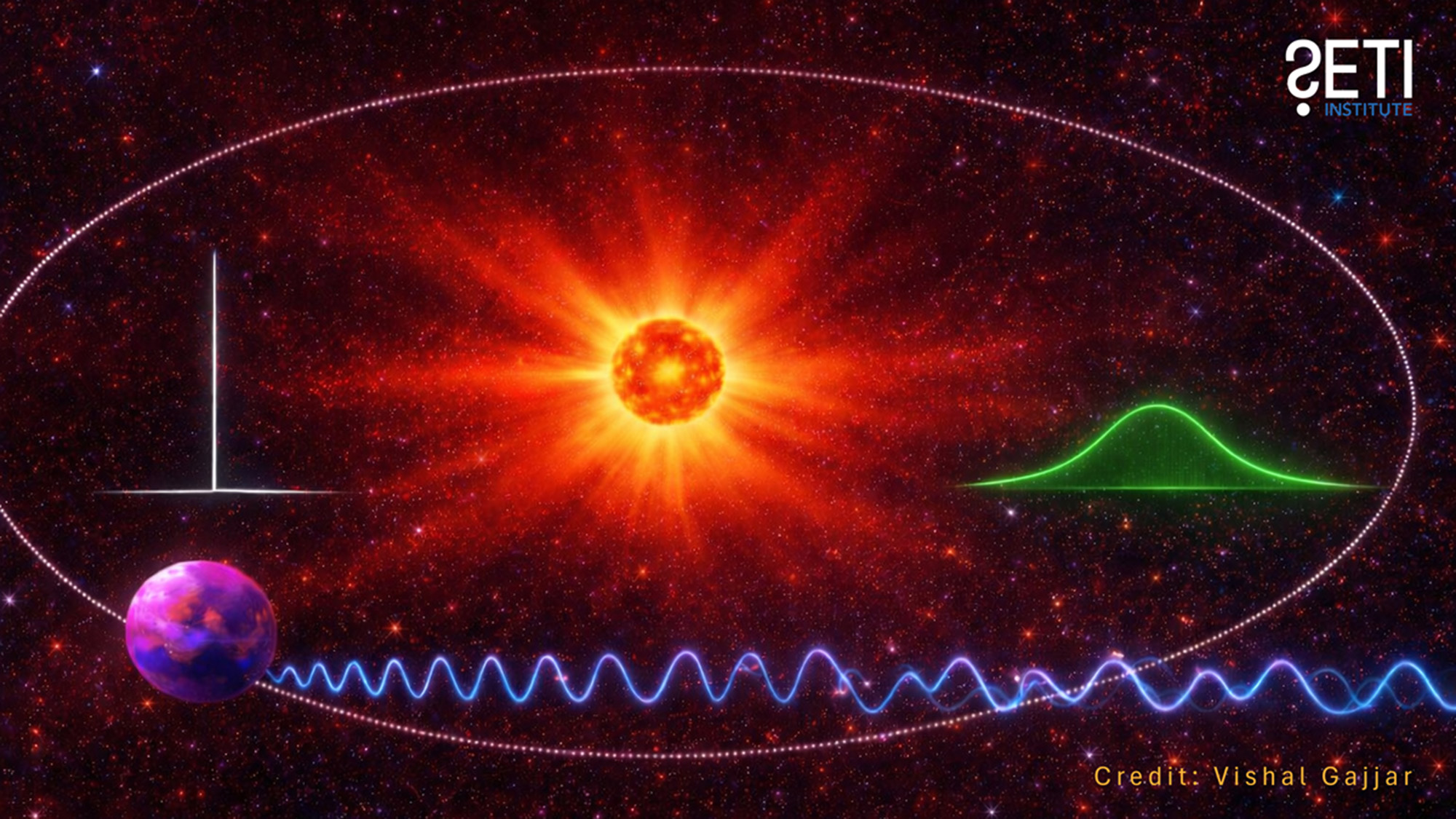
In the new study, researchers found that space weather caused by a planet's star could broaden hypothetical technosignals, dissipating their power over a larger range of frequencies and making them more difficult to detect.

"If a signal gets broadened by its own star's environment, it can slip below our detection thresholds, even if it's there, potentially helping explain some of the radio silence we've seen in technosignature searches," Vishal Gajjar, an astronomer at the SETI Institute and first author of the paper, said in a statement.

One way astronomers search for alien life is by looking for very narrowband signals, which are sharp spikes in the power of a radio emission. This spike usually only covers a few hertz.

"These don't occur naturally," Evan Keane, an astronomer at Trinity College Dublin who was not involved in the research, told Live Science. "So, if you see something very narrowband, you know that it is from something of interest." Astronomers would, for example, be able to easily detect some narrowband technosignatures on Mars, coming from the Mars rovers. But they have not observed any such signals from a clearly non-human origin.

Distorting signals

The new research argues that astronomers may have been looking for the wrong signal shape. In the new study, the researchers found that alien signals could be distorted by stellar space weather surrounding their home stars, which could explain why they have not been detected.

Space weather refers to changes in the space environment caused by charged particles, radiation and giant lumps of plasma called coronal mass ejections emitted by the sun. Other stars also generate space weather in their vicinity.

Gajjar and SETI colleague Grayce Brown investigated how space weather has historically impacted communications between Earth and spacecraft such as Mariner IV, which flew by Mars in the 1960s, and the Viking probes, which launched in 1977 for a voyage through the solar system and beyond. They created one of the largest collections of signal broadening examples and used that information to determine how other sunlike stars would affect the environment around their exoplanets. From this, the team calculated what would happen to a hypothetical alien narrowband signal that originated on one of them.

A graph showing various wavy lines next to an exoplanet with a glowing sun in the middle of the image

A planet’s radio signal may begin as a sharp tone (left, white) but can be spread out by the star’s plasma winds into a wider, fainter signal (right, green). The new study suggests radio astronomers may be missing signals by mostly looking for the sharp white shape instead of the broader green one. (Image credit: Vishal Gajjar)

Then, they turned their attention to M dwarf stars, the most common type in the Milky Way. These stars account for three out of four stars in our galaxy, and some have been around since the early universe. That gives them a lot of time to have developed technologically advanced life, according to the paper.

There are no actual measurements of space weather around these stars, so Gajjar and Brown modeled what might happen to a narrowband technosignal that emerged from exoplanets and had to travel through interplanetary plasma. They found that hypothetical narrowband signals from these exoplanets were more likely to be smeared by space weather, making them even harder to detect.

In the paper, the authors propose a framework to estimate how much broadening would happen to a signal, given its frequency and the type of star its exoplanet was orbiting.

This new framework doesn’t totally answer Fermi’s infamous question, but it does give us a potential reason for the silence. The Fermi paradox "is not solely evidence for the absence of transmitters, but also a reflection of our detection limitations arising from a mismatch between the assumed signal morphology" and shape, the researchers wrote.

A step forward for SETI

Michael Garrett, an astrophysicist at the University of Manchester in the U.K. who was not involved in the study, welcomed the research.

"It is a solid contribution that SETI researchers and signal-processing teams should pay attention to," he told Live Science. "One of the strengths of the paper is that it's grounded in real measurements too, drawing on decades of spacecraft observations."

However, he emphasized that the paper focused on narrowband radio signals, which was only one way of potentially detecting an alien civilization. By contrast, Garrett's work explores the possible combined radio leakage from a technological civilization across a large range of frequencies.

Andrew Siemion, director of Breakthrough Listen Oxford Hub in the U.K. who was not involved in the research but collaborates with the SETI Institute, said this is the first paper to explore the space around exoplanets and its impact on detectability.

"The work offers a very concrete mechanism through which a candidate signal might ultimately be validated as having a likely origin with a distant planetary system," he told Live Science.

The authors recommended that future searches, especially with sensitive next-generation telescopes such as SKA-Low, take note of signal broadening when searching for civilizations beyond Earth.

Are you a UFO fanatic? Find out with our extraterrestrials quiz!

Scientists Warn Extraterrestrial Encounters Could Endanger Earth—a Quarantine Facility on the Moon May Be Our Last Line of Defense

22 June 2026 at 14:28

During future space missions, humans may finally encounter extraterrestrial life forms, settling the age-old question of whether we are alone in the cosmos. But what if alien biology is so different from that of Earthlings that its presence could become a potential global hazard?

This is the concern raised by researchers Frederick I. Moxley and Anthony Ricciardi in a new study, which argues that in an era of sample return missions and space missions that are carrying humans and our robotic probes farther into the cosmos than ever before, we need to be prepared to enact measures to protect our planet against the unforeseen consequences of any potential alien encounters the future may hold.

“The advancement of space exploration into an era of sample return missions from Mars, asteroids, and icy moons raises the potential for biological contamination either to or from Earth,” the authors write in their recent study, published in the journal Ambio. Given the potential for such contamination, Moxley and Ricciardi approach the question of alien contact from the perspective of past examples where invasive species on Earth have caused major disturbances to the environments they encounter.

“We consider the possibility that extraterrestrial organisms introduced to Earth could behave analogously to invasive species by destabilizing ecosystems or interacting unpredictably with their new environment,” the authors write, pointing to the multitude of examples known to science, many of which involve the introduction of microbial organisms into new environments—often with devastating consequences.

In many cases, such organisms not only can survive in new environments, but can often adapt with remarkable speed, even in some of the most extreme environments.

This, the authors say, challenges the idea that extraterrestrial life might not even be capable of surviving on Earth, as expressed by some past research.

“The plausibility of encountering extraterrestrial life warrants stringent planetary protection measures grounded in biosafety and biosecurity principles,” the authors warn.

So how do they suggest protecting Earth against such potentially catastrophic events involving future encounters with extraterrestrials?

According to Moxley and Ricciardi, building a quarantine facility on the Moon could serve as Earth’s last line of defense against any unintended alien invasions that could radically disrupt Earth’s fragile ecosystems.

“Due to its proximity, natural isolation, and apparent lack of a biosphere, the Moon can serve as a secure site for biocontainment of extraterrestrial samples,” the authors write. In their study, they examine historical instances where biological invasions have led to catastrophic environmental changes and argue that constructing a biocontainment facility on the Moon “should form the cornerstone of modern astrobiological risk mitigation strategies.”

Moon base extraterrestrial
Artist’s concept of a future lunar base (Image Credit: NASA/SAIC/Pat Rawlings)

What the researchers propose falls in line with current plans NASA has for a permanent lunar base, which is one of the many ambitious efforts under its Artemis Mission. Such a lunar outpost, which will serve as the official Artemis Base Camp, is planned for construction near the Moon’s South Pole.

At a cost of close to $30 billion, the effort will help to facilitate an ongoing human presence on the Moon by as soon as 2028, according to current mission timelines, and will serve as a science hub in support of future lunar exploration.

For Moxley and Ricciardi, incorporating a quarantine facility within our future lunar infrastructure that can house any extraterrestrial life forms we may encounter could prove to be vital. Ultimately, having such a facility may play the important role of shielding Earth against unintentional contamination by a potentially invasive alien species.

The team’s recent paper, “Protecting earth from extraterrestrial contamination: The case for a lunar biocontainment facility,” was published in Ambio.

Micah Hanks is the Editor-in-Chief and Co-Founder of The Debrief. A longtime reporter on science, defense, and technology with a focus on space and astronomy, he can be reached at micah@thedebrief.org. Follow him on X @MicahHanks, and at micahhanks.com.

Consciousness is Not Exclusive to Earth’s Biology, Philosophers Argue

17 June 2026 at 23:48
Levin et al suggest that we could have more in common with our extraterrestrial neighbors than initially thought. Image credit: Fernando Ribas.

University of California, Riverside’s Professor Eric Schwitzgebel and University of Lisbon postdoctoral researcher Jeremy Pober argue that consciousness is substrate flexible, meaning it can arise not just in the biological tissue we find on Earth, but potentially in radically different physical materials found elsewhere in the cosmos.

The post Consciousness is Not Exclusive to Earth’s Biology, Philosophers Argue appeared first on Sci.News: Breaking Science News.

Could Alien Consciousness Be Unlike Anything We Can Imagine? Non-Human Intelligence May Be Stranger Than We Think, These Experts Say

17 June 2026 at 12:55


Consciousness may arise in systems far different than the biology on Earth we are used to, according to University of California, Riverside (UCR) researchers, who argue that many forms of conscious experience may be possible in alien lifeforms.

Eric Schwitzgebel of UCR worked with Jeremy Pober, a former graduate student, not to understand what consciousness is, but rather, to explore whether it could arise in beings that differ radically from Earth’s biological standards.

At a time when questions about the possibility of alien life visiting Earth are on many minds, their work examines what unexpected forms might achieve consciousness—the first step toward intelligence.

Substrates and Consciousness 

Central to the pair’s work is the idea of “substrates,” from the Latin for “the level below,” referring to the underlying material base from which something is made. Although the term may be most familiar from geology, it can be applied conceptually across many disciplines, from biology to linguistics, to describe an underlying structure or form.

The researchers framed their core question around what they call “substrate flexibility”: can a specific property be achieved across many substrates, or is it more limited? One example they use is computer data storage. Information can be stored in many ways, including optical, magnetic, and solid-state media, indicating that storage exhibits a high degree of substrate flexibility.

But what about consciousness? Can it also be achieved flexibly? Perhaps the answer depends on the specificity of the question and whether we are considering human consciousness or a broader concept of consciousness itself.

A Diverse Universe

The researchers began by considering the scale and nature of our universe as it is presently understood. That includes roughly a trillion galaxies containing countless planets unlike our own, which they estimate may have given rise to more than a thousand alien civilizations during the 13.8 billion years since the Big Bang. Notably, they do not focus solely on Earth-like planets that might theoretically harbor biological life recognizable to us.

“With that many draws from the lottery, some of these life forms will be strange indeed,” the pair writes in their paper.

This idea is not far-fetched, as astrobiologists have long hypothesized that life in the cosmos may take forms radically different from those on Earth, composed of available local materials, possibly including entirely different chemical structures.

The pair does not argue that such exotic lifeforms definitely exist in some corner of the universe, only that, in such a large and diverse universe, it is relatively unlikely that the same building blocks would commonly arrange themselves in precisely the same way as on Earth.

Consciousness Isn’t Special

Taking inspiration from the idea of Nicholas Copernicus, the researchers argue that since the Earth, and thereby humanity, are not the center of the universe, it is likely that consciousness is also not a unique feature of our planet, or even recognizable biology.

However, the authors are quick to note that simply because consciousness may exist in multiple substrates does not mean it must exist in every substrate. AI systems, for example, may represent a form of silicon-based life, but they are not necessarily conscious at present. Additionally, perhaps how they are conscious should be considered more broadly, taking into account the variety of possible substrates, rather than simply assessing how well AI models the human brain.

That broader perspective is a crucial element of the pair’s conclusions. Consciousness should be considered in terms wider than simply assessing how well something replicates the human mind. While the authors concede that a similar substrate may be required to perfectly reproduce human consciousness, a broader view of the phenomenon may be necessary to recognize forms of consciousness that are fundamentally alien to our own.

The paper, “Substrate Flexibility and the Copernican Principle of Consciousness,” appeared in draft form on the University of California, Riverside website on May 28, 2026.

Ryan Whalen covers science and technology for The Debrief. He holds an MA in History and a Master of Library and Information Science with a certificate in Data Science. He can be contacted at ryan@thedebrief.org, and follow him on Twitter @mdntwvlf.

Signature of Alien Life ‘Found’ on a Planet 124 Light-Years from Earth

An article claims scientists found evidence of biological activity on exoplanet K2-18b, citing detected molecules linked to microbial life. However, this overstates findings, because some other chemical processes may explain the results. The inordinate desire to find extraterrestrial life reflects a rejection of the Creator.

Have Aliens Terraformed Other Planets? New Insights

12 February 2025 at 23:13
Extraterrestrial life has been searched for without success, and now a new method is suggested. I participated in an interview on the David Rives Genesis Science Report about this new search method, which examines similarities among clustered planets, suggesting terraforming has occurred.

❌