❌

Normal view

Photojournalist Steve Winter on his iconic Hollywood puma image, the illegal tiger trade and having a black panther knock on his door

For decades, photojournalist Steve Winter has traveled across the world capturing incredible images of big cats as part of his work for National Geographic. Yet he didn't photograph an animal professionally until he was 34.

"If anybody had said, 'You're going to work with big cats for 25 years of your career,' I would have said 'No, I don't know anything about big cats,'" he told Live Science. "But I learned from scientists and local people," he added. "That was very, very important β€” that's what, to me, was the biggest change in my life."

Together with his wife, author and environmental journalist Sharon Guynup, Winter has helped change laws around big cats in the U.S.; revealed the horrors of the Tiger Temple in Bangkok, resulting in its closure; and took an iconic photograph of the cougar P-22 beneath the Hollywood sign, which eventually led to the creation of the world's largest highway wildlife corridor over Highway 101 in California.

In their new book, "Big Cats" (National Geographic Books, 2026), Winter and Guynup provide a retrospective of their careers, looking at the fragility of these predators, the conservation work helping to save them, and the challenges they still face. Live Science spoke with Winter about his career, the changes he's seen, and why he's hopeful for the future.

Steve Winter headshot

Steve Winter has won numerous international awards, including BBC Wildlife Photographer of the Year and BBC Wildlife Photojournalist of the Year. He lectures internationally on photography and conservation issues and has been interviewed on CBS Nightly News, 60 Minutes, NPR, BBC and CNN. He contributes regularly to National Geographic magazine, for which he can spend months working on a single story. He’s camped for weeks in steamy jungles, vast grasslands, and at 15,000 feet in the Himalayas to capture cats’ stunning beauty and secret behaviors. (Image credit: Steve Winter)

Hannah Osborne: You've traveled all over the world and seen so many things. Is there one photograph that really sticks out for you, one that you come back to and think about?

Steve Winter: I always look at the images that have had an impact at the time. That makes a huge difference to me, because in the end, I know that in taking this [photograph], not only did I succeed beyond my wildest expectations, but it's making a difference in the world. Right now, I have just been putting remote cameras up on what will be the world's largest wildlife overpass, and that was started by my Hollywood cougar picture of P-22, Puma 22, under the Hollywood sign. [Editor's note: The common names cougar, puma and mountain lion all refer to the same species, Puma concolor.]

That changed so much in Los Angeles. I've never seen a city be transformed in their love for the fact that they have a mountain lion in a park in the city. What came of that was [people] thinking, "Hey, maybe we should connect these areas where these animals are living." [Editor's note: The Wallis Annenberg Wildlife Crossing over the 10-lane Highway 101 that was inspired by the cougar P-22 is due to open Dec. 2.]

To think about that is pretty amazing, so right now, P-22 and the Hollywood cougar is my go-to image.

He became a celebrity in the land of celebrities; people loved him. There's a P-22 day; schools are using urban wildlife in their curriculum. The LA Natural History Museum has a permanent exhibit, and what is right in the center of it? The Hollywood cougar picture.

HO: How did the P-22 photograph come about?

SW: As wildlife photographers, we will often go to these meetings where people are gathering to save elephants, to save this, to save that. So I went to meet the scientists that worked with these cats in the largest urban park in the United States. I asked Jeff Sikich, a biologist for the National Park Service, "[Do] you have a lot of trails in that park? Do you have any that the cats walk on where you could see the lights of LA in the background?" He kept saying no.

When you're working with camera traps, it's very important to visualize the picture in your mind that you're after [when] you visit a spot. I just said, "Well, Jeff, you know what would really tell the story of urban wildlife is if we had a mountain lion under the Hollywood sign." He looked at me like I'm crazy, and said, "There's no mountain lions in Griffith Park." I said, "If anything changes, let me know."

Eight months later, I got a text. They had a trail camp set up to census bobcats [Lynx rufus] in the park, and there was P-22.

a cougar in a tree looking down

A cougar that biologists had chased into a tree so they could collar it to monitor its movements via GPS. (Image credit: Steve Winter)

With camera traps, you don't need to sit, and I learned that from the beginning. For the second story I did, it was photographing a quetzal, which is a sacred bird of the Maya and the Aztecs. I knew nothing about birds, either. It's got a meter-long [3 feet] tail. I was enamored by the fact that it had a historical background β€” they used quetzal feathers as a form of currency; they were sacred birds.

I loved all that, but working on that story in a cloud forest in Guatemala on top of a mountain all by myself, every morning I'd come down and set my camera up on the tripod [near the bird's nest], and then take it away at the end of the day. I'd walk back, and all of a sudden, the hair on the back of my head would stand up and on my arm, and I'd get this tingling feeling and it's like, what's going on? I'd turn around. You can't see anything in a rainforest or a cloud forest because the proliferation of life is everywhere. One night when I'm reading my book in the one room shack that I was staying in my bunk bed, all I hear is the stairs creaking. Then I hear the floorboards creaking. Then I hear scratching, and then sniffing, outside the door.

I grabbed the walkie-talkie to call Juan Carlos, the naturalist that I was working with. He would find the quetzal nests for me. I asked him, in Spanish, "Juan Carlos, what is this?"

And he said, "Oh, Steve, don't worry; it's just a black panther [Panthera onca]." I've been there five weeks, and I said, "Well, how come it took you so long to tell me there was a black jaguar here?" And he said, "We didn't want to worry you."

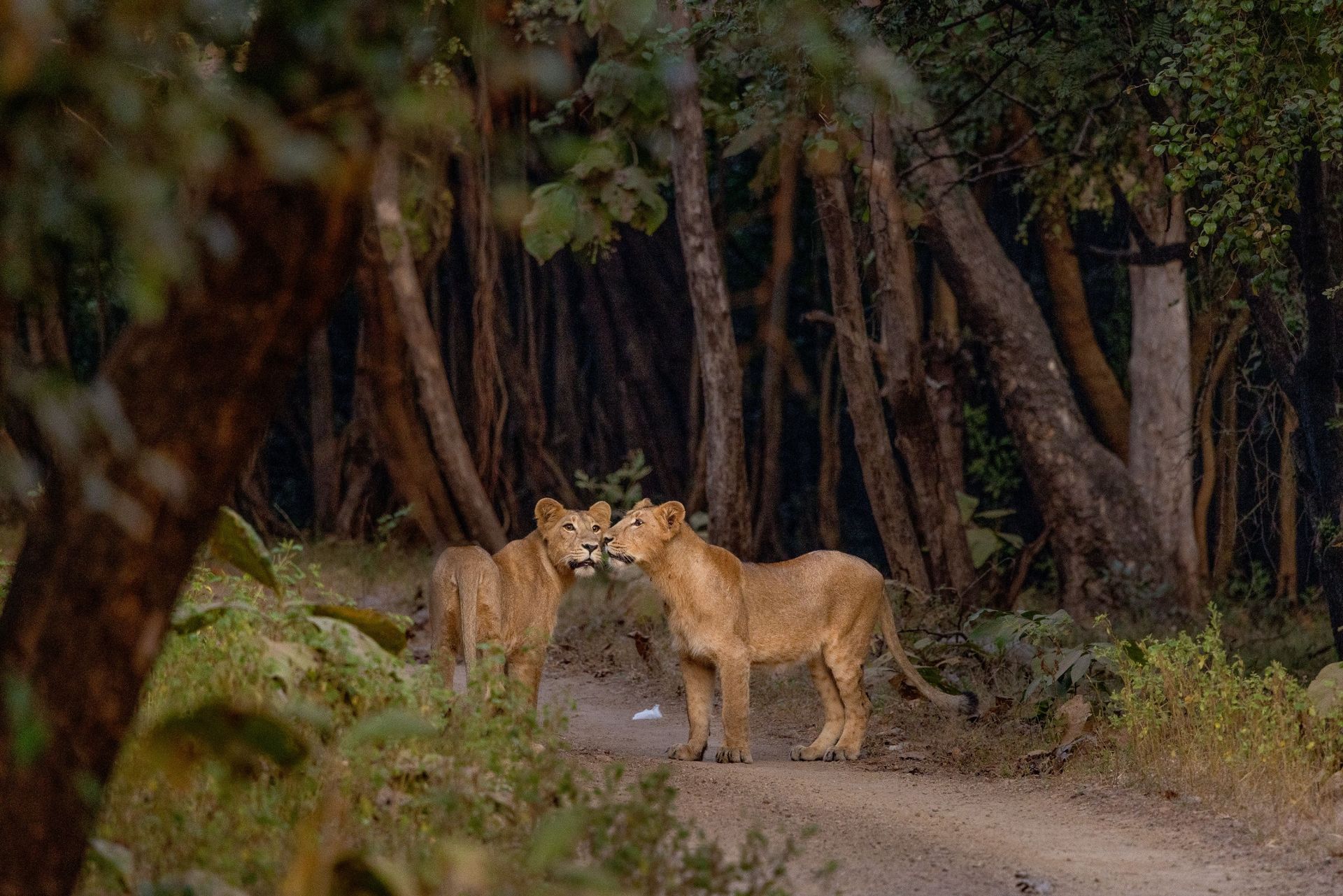
two lions standing on a track with trees and foliage on either side

Two Asiatic lionesses greeting each other with a nose-to-nose touch. (Image credit: Steve Winter)

HO: Throughout the book, you look at topics like poaching, captive tigers in the Tiger Temple in Thailand, and the way they're kept in the U.S. for entertainment. And a lot of these things are still going on. How do you cope with seeing that side of their lives?

SW: When I was first working on tigers, I was in Thailand. I was wanting to work in Thailand and Sumatra because they were the two subspecies that experts said may go extinct. I was working with the most incredible group of scientists I've probably ever worked with. They were trying to save the Indo-Chinese tiger [Panthera tigris corbetti] in Thailand.

But close by was this place called the Thai Tiger Temple. And I said, "Hey, guys; I'd like to go there." And they said, "No, Steve; don't go. These are bad people, and we think they're involved in the black-market trade of tiger parts and tigers to Laos and then into China."

That's a good reason for me to go if you don't want me to go. The first thing I saw was this huge sign that said "conservation." This was a Buddhist monastery. For some reason, the abbot had been given a tiger cub about 10 years before, and he fell in love with tigers. So they started a tiger tourism operation that brought in at least $3 million a year.

I could see something was fishy right away, because by then, I'd learned a lot about these cats. They kept saying that they always had 150 tigers. But you could pet tiger cubs for Instagram selfies or bottle-feed them 365 days a year. If you're breeding tigers, what are you going to have? More tigers. Something was happening to them, because the death rate wouldn't take over the birth rate when you're speed-breeding cubs, which is what they were doing. A female has cubs; they take them away immediately so she'll be ready to have another litter. You can only use the cubs for three months because after that, they're too big to pet.

They had all these tourist things where you could get a selfie with a head of a tiger in your lap. I was saying, "Why are these tigers acting so sleepy?" They're taking this giant head of a tiger and putting it in somebody's lap that's sitting on the concrete. You would think that if you put the head of a tiger in your lap, you're going to end up with your head in their mouth.

[Editor's note: Winter and Guynup worked together on an investigation into the Tiger Temple in 2016, which eventually led to it being exposed for its abuse and connections with the illegal wildlife trade. Shortly after, the Tiger Temple was shut to the public.]

Sharon did the investigation, and I already had pictures. But we went to do a video and go visit the temple again … By the time we got done, the TV stations in Bangkok had taken the video and showed it all over on the nightly news. We kept working on this, and Sharon wrote four more stories. And after the last one, the Thai government was inundated with people calling for the prime minister to shut it down. They went in with the army and the police, and what they found was horrific. They went to the freezer. There were tigers hanging on meat hooks, cubs in jars, with a little Thai flag on them. They shut it down.

three tigers, with two in a big metal tub, in a grassy landscape

Three tigers that were rescued from Joe Exotic's Oklahoma zoo cooling down at the Wild Animal Sanctuary in Colorado. (Image credit: Steve Winter)

Stopping this is really important. After that, we did a story on tigers in the U.S., which was very difficult psychologically. It was one thing to see them in Thailand, but we had always heard that there were more tigers in the United States than there are in the wild, and people would go, "What are you talking about? We don't have tigers here."

Sharon and I … we found a lot of the same speed-breeding cubs at these roadside zoos, whether it was Doc Antle's Myrtle Beach that was $500 a day, or some dumpy little place on the road down south where you can give them $10 to look at a tiger. They were everywhere.

After that story came out, the National Geographic Society gave a copy of this 30-page story that we had done for the magazine to every member of Congress. We got this text on 20th December, 2022, that President Biden had signed the Big Cat Public Safety Act, which outlawed all that. We were part of getting this law passed, which was incredible.

HO: What are some of the biggest changes in conservation you've seen over your career?

SW: Conservation was changing a lot in the '90s and 2000s. Alan Rabinowitz [a zoologist who served as the president, CEO and chief scientist at Panthera Corp., a nonprofit conservation organization devoted to protecting wild cats] had this idea after he had a lot of scientists in Central and South America give him data on where they were working and where jaguars were. When he took it away and just showed the locations, he goes, this is a corridor, a natural corridor, because now we're talking a lot about connectivity and how roads get in the way. It's like animals are in prison because they can't cross these big freeways or even small ones. Find out where animals are, their migrating paths, and put in an overpass or an underpass or something.

leopard cub in a rocky landscape

A Cape leopard cub in the Cederberg Wilderness Area in South Africa. (Image credit: Steve Winter)

All this was happening, all this new science, new conservation. That was all spearheaded by the work of [biologist and conservationist] George Schaller, who became a friend of ours. What a life that we've had β€” and are having. We're still working on the connectivity part right now.

HO: Are you hopeful for the big cats in LA?

SW: Oh, definitely. The ones that live in the Santa Monica National Recreation Area will be able to cross the 101 and then go all the way to San Jose. They could actually then hug the top of a certain mountain and get close to San Francisco, which is incredible to think about now. It's a huge metropolitan area, so you're leaving one, going to another. But there's so much land in between, and they can cross safely.

HO: What made you specialize in big cats in the first place, and what's the draw that keeps you coming back?

SW: Big cats are so charismatic and, to me, mystical. And they're an umbrella species, so if you save the largest predator, which is usually a big cat in any landscape, you save everything underneath it.

I was just taken over by these animals. National Geographic had never done a jaguar story before. I found out really quick why: You can't see them. I tried to use remote cameras, camera traps, but they're really smart. They'll go around them, so they don't have the flash going off or they don't like the sound or the smell of meat on these waterproof boxes and the cords and all that.

I just fell in love with big cats, and what a life to be able to work with every one of them. The only one that was on my list that I haven't done is the Amur tiger, Siberian tiger [Panthera tigris altaica]. When I was ready to photograph them with the scientists that had been monitoring them for over a decade, [the tigers] got canine distemper and about 60% died.

Big cats really bounce back when you give them protection, and there was protection given after you lose this many. All the study tigers that had the GPS collars on, the ones they could monitor, died. But the population bounced back, and there's more now than there were before.

I won't get to photograph Amur tigers. And the reason is, there's people β€” locals β€” who are working on it, and they're doing an incredible job. I've got a book here that has all the cats that I've worked on. The impact these stories have had, and the change that's come about, is what really makes me proud.

This interview has been condensed and edited lightly for clarity.

Help us improve Live Science Pro: We're always trying to make our content better. Leave us feedback about Pro here.

Big Cats

National Geographic
Big Cats

National Geographic photographer Steve Winter has spent his career photographing big cats around the world, from the graceful jaguars of Brazil’s Pantanal to the elusive Himalayan snow leopard. His photographs astound; his stories, even more so. In Big Cats, Winter and environmental journalist Sharon Guynup share experiences behind the lens.

In chapters on every key speciesβ€”cougar, jaguar, leopard, snow leopard, tiger, and lionβ€”readers will witness the power of Winter’s work, including uplifting stories of how his photographs have made a difference and powered important conservation efforts on behalf of these mighty creatures.

Does written language speed up or slow down cultural change?

The written word is one of humanity's most important information technologies. Without it, mathematical and scientific discoveries would be lost to history. But it can also lock ideas in place long after they've stopped making sense.

So does writing speed up cultural change or slow it down?

Russell Gray, a professor in the Department of Linguistic and Cultural Evolution at the Max Planck Institute for Evolutionary Anthropology in Germany, heads a research project investigating how writing affects the way languages change. His team uses methods borrowed from evolutionary biology to trace languages through family trees β€” similar to the way biologists trace species.

Language is one element of culture that researchers can measure to determine whether writing speeds up or slows down cultural change.

"The obvious answer," Gray said, is that writing slows culture down because writing "is all codified and specified and people get trained in it." Gray doesn’t think the obvious answer is necessarily the right one. But other researchers agree that writing can lock in ways of thinking.

"Writing can lead to what learning psychologists sometimes call 'canalization,'" Charles Perreault, an associate professor in the School of Human Evolution and Social Change at Arizona State University, told Live Science in an email. "It can narrow the range of ways people think about a problem. When a rule, method, or story is written down, people may come to see it as the correct version … and may not even consider that a better or different way could exist."

Religious texts and legal codes are good examples. In both cases, the interpretation of rules written hundreds β€ͺ—‬ or even thousands β€ͺ—‬ of years ago shapes the way things are done, long after the circumstances that produced them have changed.

An old illustration of a monk holding a book sitting on a chair.

Eadwine the Scribe, from a 12th Century psalter written at Christ Church, Canterbury by Eadwine. For much of the Middle Ages and before the invention of the printing press, transcriptions written by monks were the primary cultural bridge preserving early Christian writings, and classic Greek and Latin texts, for posterity. (Image credit: UniversalImagesGroup via Getty Images)

This idea shows up in artistic expression, too: A 2017 analysis by ethnomusicologist Patrick Savage looked at more than 4,000 British-American ballads from the 16th through 20th centuries and found that written melodies changed less than those shared through oral tradition.

But there are also ways that writing may speed up cultural change.

"Before writing, much cultural knowledge had to be stored in people's brains," Perreault said. "That has obvious limits."

People forget things they don't study routinely, and when people die, their knowledge often dies with them. Because writing moves information storage beyond the human brain, it can reduce those losses, Perreault said.

"If writing prevents knowledge from being lost, and if it also helps information spread through a society, as with the printing press, then it could accelerate the ratchet effect of cumulative cultural evolution," Perreault said. "But this remains, to some extent, a hypothesis."

By the book

One reason the question of whether written language speeds or slows cultural evolution is that writing is hard to separate from everything that comes with it.

Writing has been separately invented only around four times in human history β€” although "some people argue there's a fifth in India," Gray said β€” which means nearly every writing system on Earth descends from that handful. Those systems spread through contact; trade, war, religion and the other ways humans intermingle had their own effects on cultural change that are hard to untangle from the effects of writing.

Also, "mass literacy is quite recent," Gray said. "If you've got these written varieties that are just used by, often, religious elites, that's potentially going to have much less impact."

So which force wins? Both experts think writing speeds up cultural change, though neither can prove it yet.

"I would say that writing probably speeds up cultural change overall," Perreault said. Gray agreed, though he acknowledged that most people would guess the opposite.

Still, Perreault cautioned, "these are empirical questions that have yet to be answered empirically."

'October is the ideal time to get vaccinated': Flu season is kicking off early, experts say

Flu season is off to an early start in some parts of the U.S., data shows.

In a typical year, U.S. flu activity starts building in late fall β€” typically in October or November β€” and peaks between December and February. This year, flu activity is currently low but rising nationwide: During the week ending Sept. 26, 3.4% of respiratory samples tested by clinical labs were positive for flu, according to Centers for Disease Control and Prevention (CDC) data.

That's about seven times the rate that was seen at the same point last year. About 0.5% of samples tested positive during the week ending Sept. 27, 2025.

"This particular year, it appears to be starting early β€” like right now," Dr. William Schaffner, a professor of preventive medicine and infectious diseases at Vanderbilt Health in Tennessee, told Live Science. Patients at clinics in his area are already testing positive for flu, he said.

The early uptick in flu is mostly unfolding in Western states, including Washington, California and Arizona. In Washington, for example, the share of emergency department visits diagnosed as flu climbed from 0.25% in the week ending Aug. 29 to 1.34% in the week ending Oct. 3, according to CDC emergency department data. That's a more than fivefold increase over six weeks.

Where the flu took off first isn't a warning sign in itself, Schaffner noted.

"There's nothing unusual about flu starting in the West Coast and moving east," he said. Recent seasons have more often begun in the Southeast or Midwest, he noted, but "it can start almost anywhere."

Leading with H1N1

Nowadays, seasonal flu is caused by three subtypes of flu viruses: two subtypes of influenza A, called H1N1 and H3N2, and the Victoria lineage of influenza B. (A second subtype of influenza B used to circulate but is now thought to be extinct.)

Last season, a fast-spreading version of H3N2 known as subclade K dominated. The CDC classified the 2025-2026 season as highly severe for children, as at least 195 children died of flu-related causes.

Schaffner likens influenza A and B to siblings. "They're very related, but they each have their own individual characteristics," he said. Influenza A strains usually cause the biggest outbreaks early in the season, while influenza B strains "kind of smolder along" and account for most cases toward the end, he noted.

This year, H1N1 has taken the initial lead. Of the influenza A samples that public health labs subtyped during the week ending Sept. 26, 96% were identified as H1N1, according to CDC data. That doesn't mean H1N1 will continue to dominate throughout the season; it just gives a snapshot of what's happening now.

The dominant strain matters because flu is "a moving target," said Dr. Paul Offit, director of the Vaccine Education Center at Children's Hospital of Philadelphia. The virus constantly mutates β€” especially hemagglutinin, the protein on the virus's surface that it uses to latch onto human cells. Hemagglutinin is the main target of flu vaccines.

An early start to the season doesn't guarantee it'll be a severe one, either. In its 2026-2027 season outlook, the CDC projected that this season will likely be moderate, although it has only low-to-moderate confidence in that forecast.

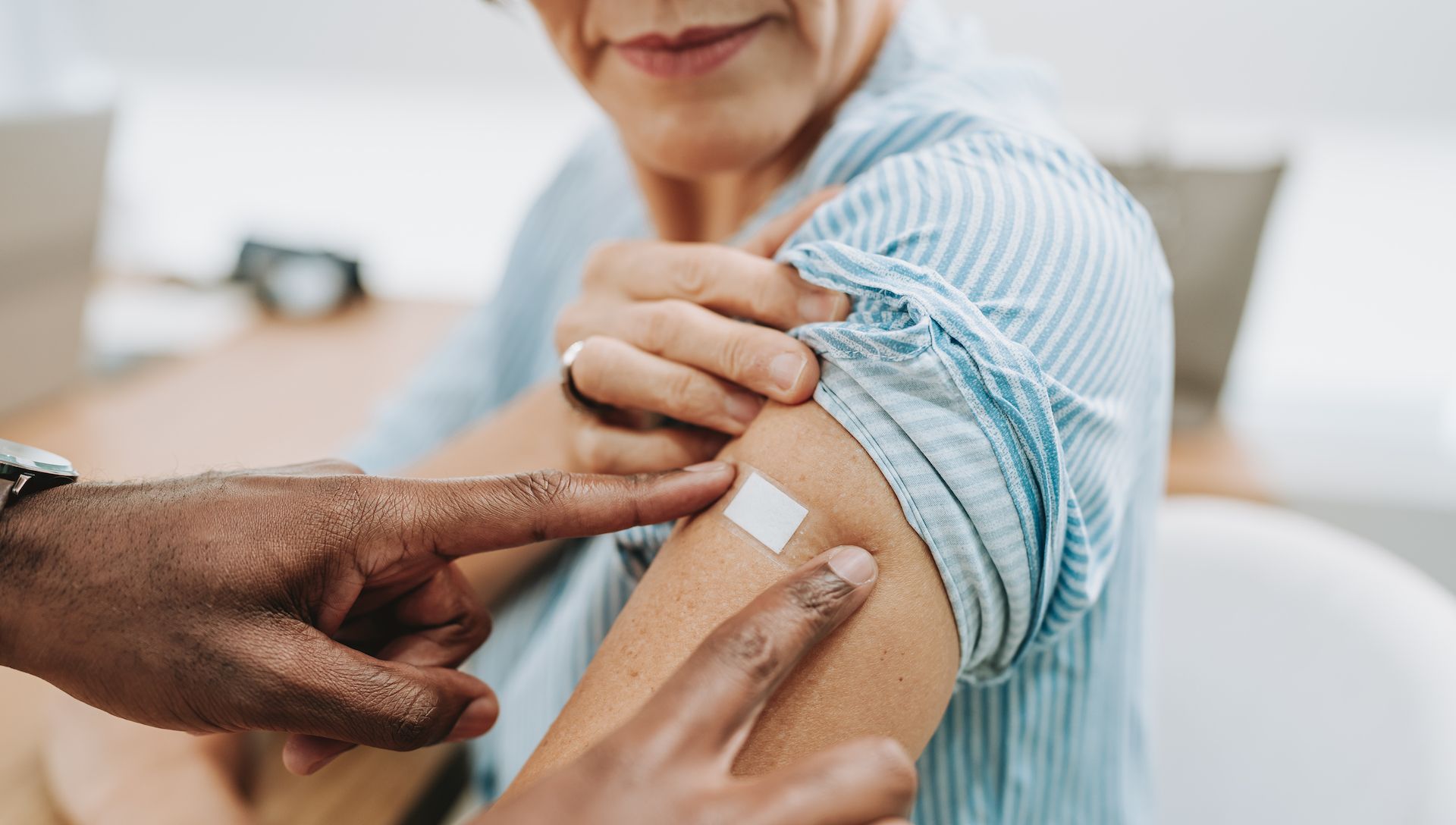
a woman receives a vaccine

Everyone ages 6 months and older is recommended to get a flu shot, and older adults have several options, including high-dose, adjuvanted and mRNA vaccines. (Image credit: andreswd via Getty Images)

When to get vaccinated

Everyone 6 months and older is recommended to get an annual flu vaccine.

Influenza is especially dangerous for children under 5, adults 65 and older, people with chronic health conditions and pregnant people, as these groups are more prone to severe infections. Serious cases of flu can lead to complications such as pneumonia, sepsis, and brain or heart inflammation, and in some cases, they can be deadly. Tens of thousands of people die of flu each season in the U.S.

For flu vaccination, timing matters. The CDC generally doesn't recommend vaccination in July or August for most adults, because the shot's protection can wane over the course of a season. But with flu arriving early, "October is the ideal time to get vaccinated, and even more so right now," Schaffner said.

When circulating strains' features differ from those captured in the vaccine, "that usually predicts a more difficult season," Offit said. That said, it's too early to know if this year's flu shots are a good match for the circulating flu viruses.

Protection begins building right after you get the shot, but it takes up to about two weeks to reach full strength.

How much protection a flu vaccine offers varies by season, depending partly on how well its formulation matches the strains that circulate. Offit said that protection against symptomatic illness varies by age group and that the vaccines are "a little more effective" at preventing more severe illness. In terms of flu cases that prompt people to seek medical care, the shot has been 29% to 56% effective over the past decade, the CDC estimates.

While the vaccines are less reliable at preventing mild cases of flu, Schaffner said, they work best at "keeping you out of the hospital, keeping you out of the intensive care unit, and keeping you out of the cemetery."

The CDC's 2026-2027 guidance keeps its recommendation of an annual flu vaccine for everyone 6 months and older, with high-dose and adjuvanted shots preferred for adults 65 and older. (Adjuvanted shots contain an extra ingredient to help rev up the immune system.)

There's also a new option: In August, the Food and Drug Administration approved mFlusiva, the first mRNA flu vaccine, for adults 50 and older. (You can find out where mFlusiva shots are available near you using Moderna's vaccine finder.) With the mRNA shot, "you're less likely to get symptomatic disease," Offit told Live Science.

Traditional flu shots contain purified pieces of the virus itself, Schaffner explained. With mRNA, the vaccine contains a "blueprint" of those proteins β€” essentially a set of genetic instructions that the body's cells then use. In mFlusiva's case, those instructions code for hemagglutinin (the protein on the virus's surface that it uses to latch onto human cells) from each of three flu subtypes, Offit said. The mRNA then breaks down in the body, Offit noted. It "cannot influence human genetic material," Schaffner emphasized.

Whether this early start gives way to a heavy flu season should become clearer in the coming weeks, as the CDC's weekly surveillance reports will show whether cases keep climbing beyond the West.

This article is for informational purposes only and is not meant to offer medical advice.

Self-driving, solar-powered cars that talk to each other? What vehicles might look like in 10 years.

9 October 2026 at 17:00

Imagine you're road-tripping across the country 10 years from now. You spend a few minutes charging your electric vehicle and then set off β€” and your car's solar paint keeps it charged as you drive.

Your eyes are on the stunning scenery, taking in the vistas along Route 66 or the grandeur of the Rocky Mountains, or you're catching up on messages. Your hands barely touch the wheel, and your foot doesn't push a pedal. Your car communicates with others on the road, so there's no need to brake suddenly or swerve. That's because it knows a vehicle five cars up from you has done so, and all those in between are slowing at exactly the right pace to avoid dramatic changes in trajectory.

And when you park for the night, your car makes you money, selling the excess energy it's harvested from its paint back to the grid. Or maybe you don't feel like being in the driver's seat at all, so you hail a self-driving car and take a nap in the back seat in between adventures.

Some of that scenario may become a reality in the next 10 years, at least for those who are using the most cutting-edge cars on the market. Although there's some heavy speculation involved in that futuristic vision, vehicle manufacturers are already incorporating increasingly sophisticated automated driving technology into high-end personal vehicles, and self-driving taxis are coming to dozens of U.S. cities.

What's more, dramatic changes in range, cost and charging speed for electric vehicles (EVs) are arriving at a rapid pace. While some of these technologies may not wind up in personal cars, others are already taking to the roads.

An ecosystem of connected vehicles

Some car models within the next decade may interact with their surroundings in new ways, including by communicating with other cars to avoid collisions, drawing energy from natural sources, or letting drivers get paid for sending their cars' unused energy back to the grid.

An image of cars on the road overlaid with blue circles and lines.

Some researchers are developing technology to connect cars on the road, which could make for smoother braking and less traffic. (Image credit: lupengyu via Getty Images)

If you're driving an EV, you might avoid the hassle of finding a charger when you're at work or running errands. In 2024, EV company Aptera unveiled a prototype car equipped with solar panels. Those panels β€” on the car's hood, roof, dashboard and hatch β€” allow the vehicle to travel about 40 miles (64 kilometers) per day on solar power. That's more than the average American drives per day. Aptera's vehicle can also travel up to 400 miles (640 km) on a standard electrical charge.

Some sunlight-powered cars might ditch the solar panels altogether in favor of a more integrated design. In 2024, Mercedes-Benz revealed it was researching a photovoltaic paint that could convert sunlight into energy for electric cars. In sunny cities such as Los Angeles, the company calculated, the paint could draw in enough energy to power the car for nearly 7,500 miles (12,000 km) per year. The tiny particles in the paint convert about 20% of the energy from sunlight into electricity, which is comparable to the efficiency of existing solar panels.

You might even be able to sell some of the energy stored in your car's battery back to the grid. EV owners could charge during the day or late at night, when the demand for electricity is lower and pay lower rates for electricity. Then, in the evenings when the electrical grid is under more strain and the price of electricity is higher, they could sell that stored energy back at a profit.

Standardized software programs that throttle EV charging speeds during peak hours already exist. Drivers can use them if, for example, they want to keep charging costs down by primarily charging their cars during off-peak hours when electricity costs are lower, or if they want to use electricity only from solar power to charge, said Rajit Gadh, a researcher who studies EV charging and scalability at UCLA. But the process for sending energy back to the grid is a different story. Individual manufacturers haven't yet landed on a standard way to tell cars when and how much energy to discharge, Gadh said.

"What is needed is really [for] every EV charging vendor β€ͺ—‬ and every EV manufacturer, actually β€ͺ—‬ to have this protocol built in, adhere to it in its full specification, and make it available," Gadh told Live Science.

With the right protocols, though, cars of the future will be able to do more than interface with the electrical grid. "Vehicle-to-everything" technologies could enable cars to communicate with infrastructure and other vehicles to avoid traffic and collisions.

Some cars today are already equipped with vehicle-to-vehicle (V2V) communications. These systems use short-range radio signals to alert other V2V-equipped vehicles of the car's speed, direction of travel and braking patterns. The radio signals can travel about 1,000 feet (300 meters), allowing the vehicle to receive data from cars that are not in the driver's line of sight.

V2V systems could help reduce traffic collisions by warning drivers about oncoming cars they can't see yet β€” for example, by alerting a driver to another car speeding toward an intersection or coming around a bend as the driver is passing another vehicle on a twisty, two-lane highway. Not all cars have the technology, though, so its practical utility is limited for now.

Hands off the wheel; eyes off the road

Some driver assistance technologies, such as lane departure warnings and cruise control, have been on the market in personal cars for decades. These technologies and more recent assistive features require the driver to be in control of the vehicle, but theoretically, they make driving easier. For example, Tesla's Full Self-Driving (Supervised) mode handles most steering and braking tasks, but safe operation requires the driver to keep their eyes on the road and be ready to take over at a moment’s notice. In the next several years, drivers will likely see new features that automate driving in more contexts.

Some of these features will allow drivers to take their attention off the road entirely and enjoy some in-car entertainment, as long as they're alert and able to retake control of the vehicle within a few seconds if conditions change. Technologies that fully automate driving in many circumstances within certain service areas will likely be in about 4% of cars on the market by 2035, according to a white paper from the World Economic Forum.

In cars equipped with these features, "you're still going to have driver controls, but under certain circumstances, it will be effectively an automated vehicle," Luke Neurauter, who leads the Division of Vehicle, Driver and System Safety at the Virginia Tech Transportation Institute, told Live Science.

Mercedes-Benz introduced its Drive Pilot system for two consumer car lines in 2022. On the entire German Autobahn network and on certain freeways between and around Los Angeles, San Francisco and Las Vegas, during heavy traffic, the system lets the driver turn their attention toward other activities, such as reading a book or eating lunch, while the car handles steering and keeping pace with other nearby vehicles.

But as the artificial intelligence (AI) models that control autonomous driving improve and become better able to handle unusual scenarios β€” often called "edge" or "corner" cases β€” on the road, drivers will be able to hand over control to their cars in more situations, said Rahul Jain, an electrical and computer engineer at the University of Southern California.

You're still going to have driver controls, but under certain circumstances, it will be effectively an automated vehicle.

Luke Neurauter, director of the Vehicle, Driver, & System Safety Division at Virginia Tech Transportation Institute

Future AI systems might "have some reasoning ability, and then because of that, it can handle these corner cases much better than current systems are able to do," Jain told Live Science. For example, a car might be able to better respond to an indecisive pedestrian who suddenly enters a crossing, assess whether to enter potentially hazardous conditions such as flooded roads, or safely navigate around unusual circumstances, such as construction work, on a highway.

While some systems will enable drivers to make fewer decisions, others that may roll out in the next several years will track a driver's attention and alert them with sounds, an indicator light or haptic feedback when their focus falters. These systems use cameras and software to track head position, eye movement and steering-wheel input to ensure drivers are focused on the road even when they're using assistive features such as lane centering, Neurauter said.

In addition to looking for distracted driving, the technology might expand to monitor drivers for fatigue and alcohol impairment, he added. That information could then affect "whether or not other features become active, or change how they act, based on the driver state at that moment in time," Neurauter said. Proposed legislation could make this technology a requirement in new vehicles as early as 2027, but technological hurdles and concerns over privacy and false positives could stall its implementation.

The technology could also assist drivers who become unable to safely operate the vehicle β€” for example, if the driver falls asleep or experiences a medical emergency. If a car detects that the driver is not holding the steering wheel or actively controlling the vehicle, it could send a series of visible, audible, or tactile alerts. If the driver doesn’t respond to those cues, a car might turn on its hazard lights and come to a stop. Some vehicle manufacturers are already rolling out such technology; for example, Volkswagen has made it available in all new vehicles from model year 2025.

Fully autonomous vehicles

While personal cars may not offer full automation, highly automated car services will become much more common as rideshare vehicles in major metro areas. In some cities, like San Francisco, commuters already rely heavily on autonomous vehicles from Waymo. The company has rolled out its cars in nearly a dozen cities —‬ including Dallas, Houston, Atlanta and Los Angeles —‬ and has announced plans to expand service to more than 20 additional locales. Other companies β€ͺ—‬ such as Nuro and Volkswagen’s MOIA β€ͺ—‬ are testing their vehicles with human drivers on board before rolling out full public service.

A white car with a camera on top is seen on a city street.

Autonomous cars are rolling out in new regions at a rapid pace, but a patchwork of laws and regulations governing self-driving cars may affect whether they wind up in a city near you. (Image credit: Marc Dufresne via Getty Images)

Currently, autonomous vehicles navigate by combining information from preloaded, high-resolution maps and real-time radar, lidar and visual data collected by cameras and sensors attached to the car. An onboard computer uses that information to build a 3D map of its surroundings. Right now, the cost of these sensors makes them impractical for consumer vehicles, Jain said, but they’re becoming cheaper as manufacturers scale up production. The cars also use an AI model trained on both common and unusual driving situations to anticipate how other vehicles and pedestrians will behave and plot a safe path forward, Jain added.

Developing those high-resolution maps takes time, which is one of the main reasons autonomous rideshares aren’t available everywhere yet. Mapping usually involves decking out a car with high-end visual sensors and lasers and driving it throughout the region. Although cities like San Francisco have been mapped with this level of precision, much of the U.S. has not.

"It's very difficult to do overnight," said John Dolan, an autonomous-driving researcher at the Carnegie Mellon University Robotics Institute.

Complexities also tend to arise in city environments, where unexpected stops are more common and there are many pedestrians who behave unpredictably or jaywalk. But interstate highway driving doesn't face as many of those obstacles, and that could enable autonomous long-haul drives.

"[Autonomous] trucking, I would expect, would be the first thing that's going to happen" in terms of autonomous travel outside of major cities, Jain said. A few driverless trucks are already on the road: Pittsburgh-based company Aurora deployed the technology on I-45 in Texas, between Dallas and Houston, in 2025, with plans to expand across the southern U.S.

Longer range and faster charging

While there's speculation involved in predicting the range of self-driving capabilities available in a decade, the picture for EVs is a little clearer.

Right now, lithium-ion batteries dominate the EV market. Each cell in a lithium-ion battery has two electrodes, commonly a layered graphite electrode and a metal oxide or phosphate electrode, separated by a liquid electrolyte solution. Lithium ions migrate back and forth between these two electrodes when a person charges and discharges the battery.

Many electric cars with lithium-ion batteries can already travel more than 300 miles (480 km) on a charge. But that's not ideal for a long-range car trip, because charging stations are few and far between in the country's vast interior and charging takes longer than filling up a gas tank.

Solid-state batteries, which replace the liquid electrolyte with a solid electrolyte made of ceramic, polymer or sulfide materials, could make that cross-country trip in an EV a practical option, allowing an electric car to travel more than 750 miles (1,200 km) on a single charge. Some prototype battery packs can already achieve this range under controlled conditions. If a solid electrolyte were paired with an anode made of pure lithium, rather than graphite or hard carbon, it would allow the battery to store more energy than a lithium-ion cell of similar mass can.

It'll be a fantastic commuter car, but you're not going to go on a family trip from Montreal to California so easily.

Eric McCalla, battery materials chemist at McGill University in Canada

Solid-state batteries may also enable faster charging. In current batteries that use liquid electrolytes, charging and discharging the battery too quickly can cause dendrites, thin branches of lithium that stretch across the cell and short-circuit the battery. A solid electrolyte could, in theory, block those dendrites, which would enable cars to charge fully in just 10 to 15 minutes. The higher energy density from a lithium metal anode also translates to a greater range than that from a similarly sized lithium-ion battery, Eric Wachsman, director of the Maryland Energy Innovation Institute at the University of Maryland, told Live Science.

Cheap EVs

Many of the raw materials that go into existing lithium-ion batteries are concentrated in a handful of geographic areas. In 2023, Australia, China and Chile mined about 85% of that year's lithium supply; China mined the majority of graphite used that year as well. And battery materials still make up a significant portion of an electric vehicle's cost.

Sodium-ion batteries could be cheaper and easier to source. Sodium is plentiful in Earth's crust, which means mining could be done throughout the U.S., potentially with a comparatively low environmental impact.

Such batteries also rely on a more widely available electrode material. Sodium ions are larger than lithium ions, so they don't fit in between layers of graphite like lithium ions do. Instead, sodium-ion batteries use hard carbon electrodes.

I would be surprised to see them in cars in the next decade. I've been surprised before, though.

Eric McCalla, battery materials chemist at McGill University in Canada

"When you cook at home and your soup boils over and you get this black ring around your pot, this is hard carbon," Maximilian Fichtner, a solid-state chemist at the Helmholtz Institute Ulm for Electrochemical Energy Storage in Germany, told Live Science. "You can produce this from sucrose or from biomass, from whatever. You can do that everywhere."

The downside is that hard carbon holds less sodium than graphite holds lithium, said Eric McCalla, a battery materials chemist at McGill University in Canada. That means sodium-ion batteries can't store as much energy relative to their mass, and they don't last quite as long as their lithium counterparts.

"The range won't be as large," McCalla told Live Science. "It'll be a fantastic commuter car, but you're not going to go on a family trip from Montreal to California so easily."

Manufacturers are already bringing sodium-ion technology to market. For instance, the Chinese company CATL began mass-producing the batteries in February and claims that their battery packs enable EV ranges over 250 miles (400 km).

But new technologies are being developed rapidly. For example, some scientists are making sodium-ion batteries that use solid electrolytes, combining the higher energy density of solid-state lithium batteries with the cost savings of sodium batteries.

This hybrid battery chemistry is still in the early stages of development, experts told Live Science. "I would be surprised to see them in cars in the next decade," McCalla told Live Science in an email. "I've been surprised before, though."

Bumps in the road

The future we're describing is the utopian scenario. But the biggest obstacles are likely not technological but rather regulatory, economic, political or cultural, experts said.

"We're going to try to guess at a timeline of when some of these things are going to come in, and odds are, we're going to be wrong," McCalla told Live Science. "Odds are, we're going to be slower than we think."

Solar panels may not wind up being the most economic or practical way to increase EVs' range, while scaling up manufacturing capacity for next-generation batteries is expensive and could slow EV adoption in the U.S. The utility of vehicle-to-vehicle communications, meanwhile, could be limited by a slow rollout and adoption of V2V-equipped cars among drivers.

Whether EVs will be ubiquitous will likely come down to their affordability relative to gas-powered vehicles, which is affected not just by manufacturing and technological advances but also domestic policy choices, such as whether to subsidize EVs or their charging networks.

One challenge for manufacturers is that the automated features drivers prefer may not always be safer. A recent review of automated systems found that those focused on driver safety, such as automatic safety or lane centering, tend to reduce crashes, while those focused on comfort, such as adaptive cruise control, can increase accidents. The authors proposed that such systems make it easier for people to disengage or become distracted while driving and possibly overestimate the capabilities of the system.

And there are other kinks to work out for autonomous rideshare vehicles. In December 2025, a horde of Waymos stalled during a power outage, clogging San Francisco intersections. The cars are programmed to treat dark traffic signals as four-way stops, according to a statement from Waymo, but they occasionally ping human operators for confirmation. During the outage, the number of confirmation requests spiked, leading to delayed responses β€” and lengthy traffic jams. The company says it has since released software updates that allow its vehicles to act more decisively at dark signals. But questions remain about how the fleet will respond in natural disasters, and some have expressed frustration that autonomous rideshare vehicles already slow down ambulances, fire trucks and police cars responding to emergencies.

One of the biggest roadblocks to automated driving is the regulatory environment, Neurauter said. Regulations on self-driving vehicles vary by state, and some, such as New York, effectively prohibit driverless vehicles entirely. Where they are legal, they often must carry higher insurance and pass testing, which could limit their rollout.

"When we get into automated driving, the driving behavior is being governed by software that's installed on a computer that's in the vehicle," Steven Shladover, a research engineer at the University of California, Berkeley, told Live Science. "That gets us into a messy gray area where both the federal and the state roles kind of overlap, and that's politically very complicated." For example, different states could end up with different rules for establishing who's legally responsible for an accident involving automated driving.

In 10 years, you'll almost certainly be able to drive from Los Angeles to Las Vegas in an autonomous vehicle. But if you want to drive to New York City, you might have to stop in New Jersey β€” and take a train into the city.

Help us improve Live Science Pro: We're always trying to make our content better. Leave us feedback about Pro here.

Cool chemistry trick allows new tattoos to 'turn on and off'

9 October 2026 at 16:00

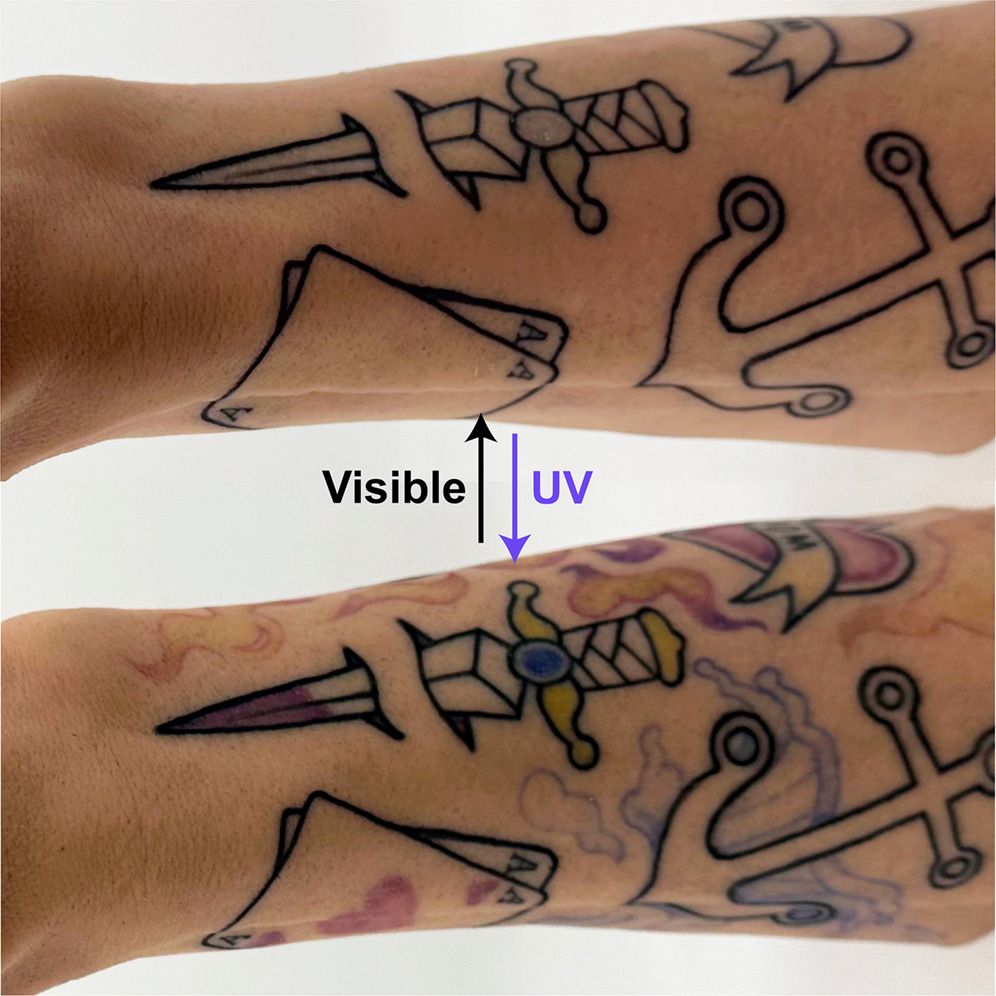
Two arms with one showing tattoos and the other showing colors amidst the tattoos

The new tattoo ink is activated under UV light. (Image credit: Matter & Light, Bruns et al.)

Researchers have developed a new type of tattoo ink that can be switched on and off with light, allowing colors and images embedded in the skin to be changed and even "erased" without having to go through the painful tattoo-removal process.

The system, which is being commercialized under the name PhotoTat, could eventually give people a way to conceal or change permanent body art. It could also have more practical applications, including medical tattoos that are visible only when a doctor needs to see them, researchers reported in a study published Friday (Oct. 9) in the journal Matter & Light.

"This is a tattoo that you can have, and whenever you decide you don't want it to be showing anymore, or you just don't want it there, you just turn it off," said study co-author Carson Bruns, an associate professor of biomedical engineering at the University of Colorado at Boulder. "And that's it. You don't have to turn it on again."

Working like a light switch

PhotoTat contains three primary color inks β€” blue, magenta and yellow β€” made with photochromic dyes, which are light-sensitive compounds that can change color with different wavelengths of light. These dyes are encapsulated in nanoparticles of polymethyl methacrylate (PMMA) β€” a medical-grade, glass-like plastic that is already used in medical implants and dermal fillers.

The dyes change their molecular structure when exposed to specific wavelengths of light. A 365-nanometer ultraviolet (UV) LED can activate pigments in around two to three seconds, Bruns said. Once activated, the colors can persist for hours to days under typical indoor lighting. But once the wearer exposes their skin to the bright outdoor sun, the colors disappear in seconds, erased by the intense light.

That makes the tattoo unique, as the pigment itself remains in the skin but the tattoo's appearance changes. Bruns and his team found that all three PhotoTat channels remained switchable in the skin for between 1.4 and 2.2 years.

Tattooing yourself for science

The three colors enable someone to activate different portions of a tattoo using different wavelengths of light. That means the magenta part of the tattoo might be turned on with green light, while the yellow pigment would be activated by blue light. This allows the wearer to customize their design and coloration to whatever they want at the moment β€” from a purple cherry to a yellow group of hearts.

That feature makes PhotoTat appealing for "people who love tattoos and have lots of tattoos, but just want something kind of fun and playful to add," Bruns told Live Science.

Bruns has tested each iteration of PhotoTat's inks on his own skin. His art is arranged in a series of tattooed scales, with different ink formations in individual scales.

"I gave myself these scales on purpose because they're each sort of a container for an experiment," Bruns said. The result, he joked, resembles a "magical mermaid trick," with some scales appearing out of nowhere and others changing color when activated.

The technology can also be combined with conventional tattoo ink. A permanent black ink design, for example, could contain hidden PhotoTat elements that appear only when activated.

The new tattoos could be appealing to people who want tattoos but are hesitant about their permanence, as well as to people who love their tattoos but occasionally need to conceal them because of work, social expectations or family, Bruns said.

"It's going to be on for most of the time, but just for this one moment, I'm going to turn it off for you grandma, for example," Bruns said.

Medical tattoos

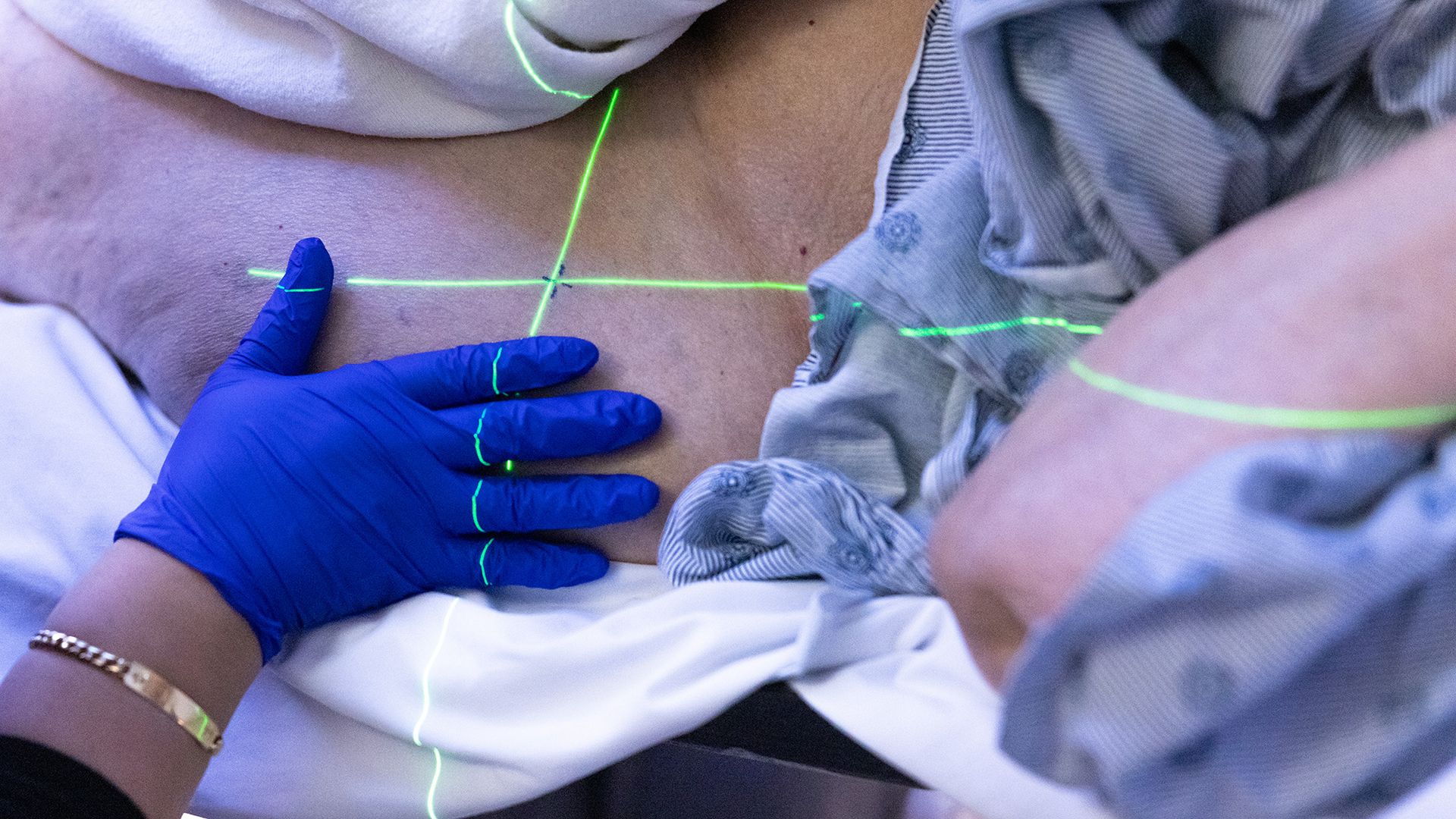
Bruns thinks the tattoos could be helpful in a medical setting, too. Patients undergoing radiation therapy, for example, sometimes receive permanent tattoos that help doctors precisely align radiation beams. While useful, those marks remain after the treatment, reminding the patient of their experience. These would make such markings invisible if a patient wants them to be.

PhotoTat could potentially allow similar markings to be switched on during surgery and hidden afterward.

Bruns has spent several years developing other smart tattoos for medical applications, including a dosimeter-type tattoo that measures the amount of UV radiation a wearer experiences, along with a tattoo that changes color when the wearer is exposed to dangerous gamma radiation.

A crossbeam of green laser light is on someone's back.

A cancer patient receives radiation treatment, guided by laser lines and a tattoo on their skin. (Image credit: The Washington Post via Getty Images)

"It's not for you and me, but if you're like an astronaut or a nuclear engineer, they have to wear these dosimeters," Bruns said. "So, we have like a dosimeter tattoo that sort of puts that in your skin."

So far, Bruns and a fellow tattoo artist, have only commercialized the purple PhotoTat ink, after running the ink through a series of third-party medical tests.

The tests showed the purple is safe for use, and available to order, but it isn't cheap at $100 for a small bottle. Bruns hopes as more research is done, he can bring the other colors to market and lower the production cost, so the technology is more accessible.

Scientists have identified a 'protein signature' in blood that could predict healthy aging

9 October 2026 at 16:00

Two people born on the exact same day can age in totally different ways β€ͺ—‬ one in relative health and the other with chronic disease. Now, scientists have found a key difference in the immune systems of people who are more prone to age-related conditions, and it could help explain why some people remain healthier longer.

In young people, the immune system contains many naive T cells, a type of white blood cell. Over time, exposure to pathogens and vaccinations transforms some of these T cells into memory cells, which can respond quickly to defend the body against germs.

These memory cells make different types of characteristic proteins, called granzymes, which kill infected cells. They come in different "flavors," including granzyme K and granzyme B.

In a new study, published Friday (Oct. 9) in the journal Immunity, scientists found that individuals with more memory cells that make granzyme K than cells that make granzyme B tend to have healthier aging.

In the future, the balance of cells making granzyme K and granzyme B in a person's blood could be used as a test to determine "whether you're on the right trajectory of aging or not," study co-author Maxim Artyomov, an immunologist at Washington University in St. Louis, told Live Science.

Hunting for a signature of healthy aging

In earlier research, the same team found that, in old lab mice, granzyme K-making cells accumulated in several tissues and were linked to inflammation. They also observed the same increase in granzyme K cells in blood samples from older adults.

In the new study, they uncovered another piece of the puzzle: a dynamic with granzyme B-producing cells.

They began by analyzing immune cells sampled from over 2,600 people ages 18 to 97, looking at the balance of granzyme K- and granzyme B-making cells. They found that people with a lower ratio of granzyme K to granzyme B cell populations were more likely to have autoimmune diseases or other chronic immune conditions.

In a second analysis, they looked at both immune cells and blood-borne proteins sampled from 329 people, using the data to pinpoint a "protein signature" linked to an abundance of granzyme B-making cells.

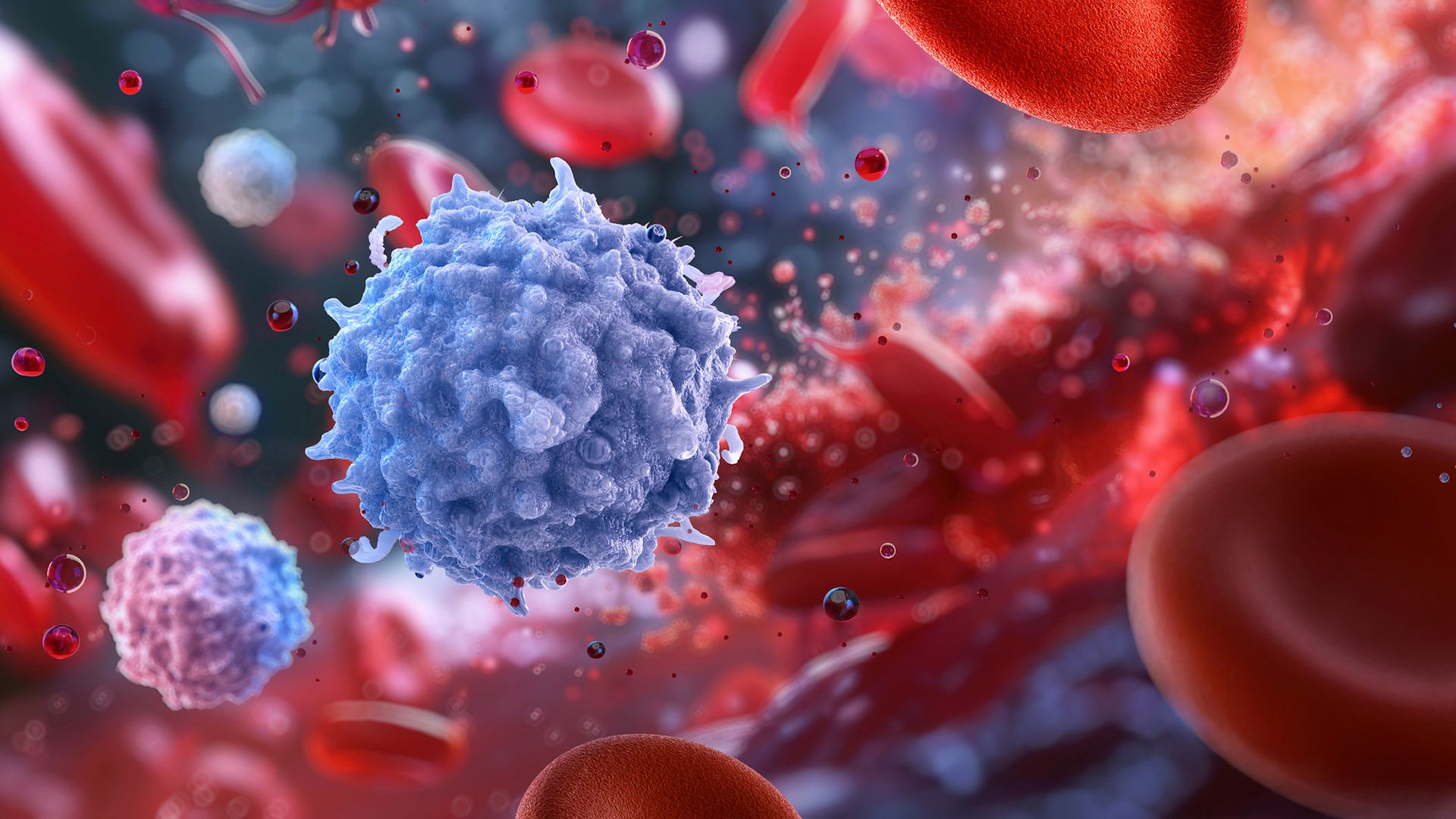
An illustration of a spiky purple sphere in the midst of blood cells

The balance of cells that make different granzymes may be important to how the immune system functions with age. (Image credit: RUSLANAS BARANAUSKAS/SCIENCE PHOTO LIBRARY via Getty Images)

They went on to hunt for this protein signature in around 48,000 participants who'd provided data to the UK Biobank, a large database of health data from U.K.-based adults. People who were predicted to have higher levels of granzyme B-making cells based on their blood proteins had worse health outcomes in the following 17 years, with a higher risk of death and of conditions like diabetes, high blood pressure, and liver and kidney disease.

The findings might point to an aspect of immune aging that wasn't previously understood.

"I think that's really exciting," Claire Gustafson, an immunologist at the Allen Institute, said of the results. "It highlights there's potentially some novel biology that we haven't really observed before," Gustafson, who was not involved in the research, told Live Science.

However, while there's a strong association between the balance of these cell populations and disease risks, Artyomov emphasized that the study does not prove that this ratio directly causes the poor health outcomes. Further studies would be needed to understand why having more granzyme B cells is linked with poorer health.

"This observation might be just a consequence, not a cause of the disease," Artyomov noted.

It's also important to note that granzyme K-making cells in mice are not the same as granzyme K-making cells in humans. In mice, they represent a more mature, specialized stage of immune cell development, whereas in humans, granzyme B cells better fit that description, he told Live Science.

That points to a key way that immunity in mice and humans is different, which was "underappreciated" before, Gustafson said. So when we're comparing these cells in mice and humans, "we're not looking at apples to apples," she said. Scientists now specifically "need to look more into humans, as it's not reflected in animal models."

In people, immune cells' features can also vary across diverse human populations, Gustafson added. We need more data across different populations to get a "true understanding of universal immune health," she said. The K-to-B ratio may be a "novel" clue that can help scientists understand healthy aging, but more data is needed to unpack why and how that ratio is linked to healthy or unhealthy aging.

"This is kind of like the first step to be able to get there," she told Live Science.

This article is for informational purposes only and is not meant to offer medical advice.

Bronze ring with Lighthouse of Alexandria engraving discovered at palace on submerged island in Egypt

9 October 2026 at 11:00

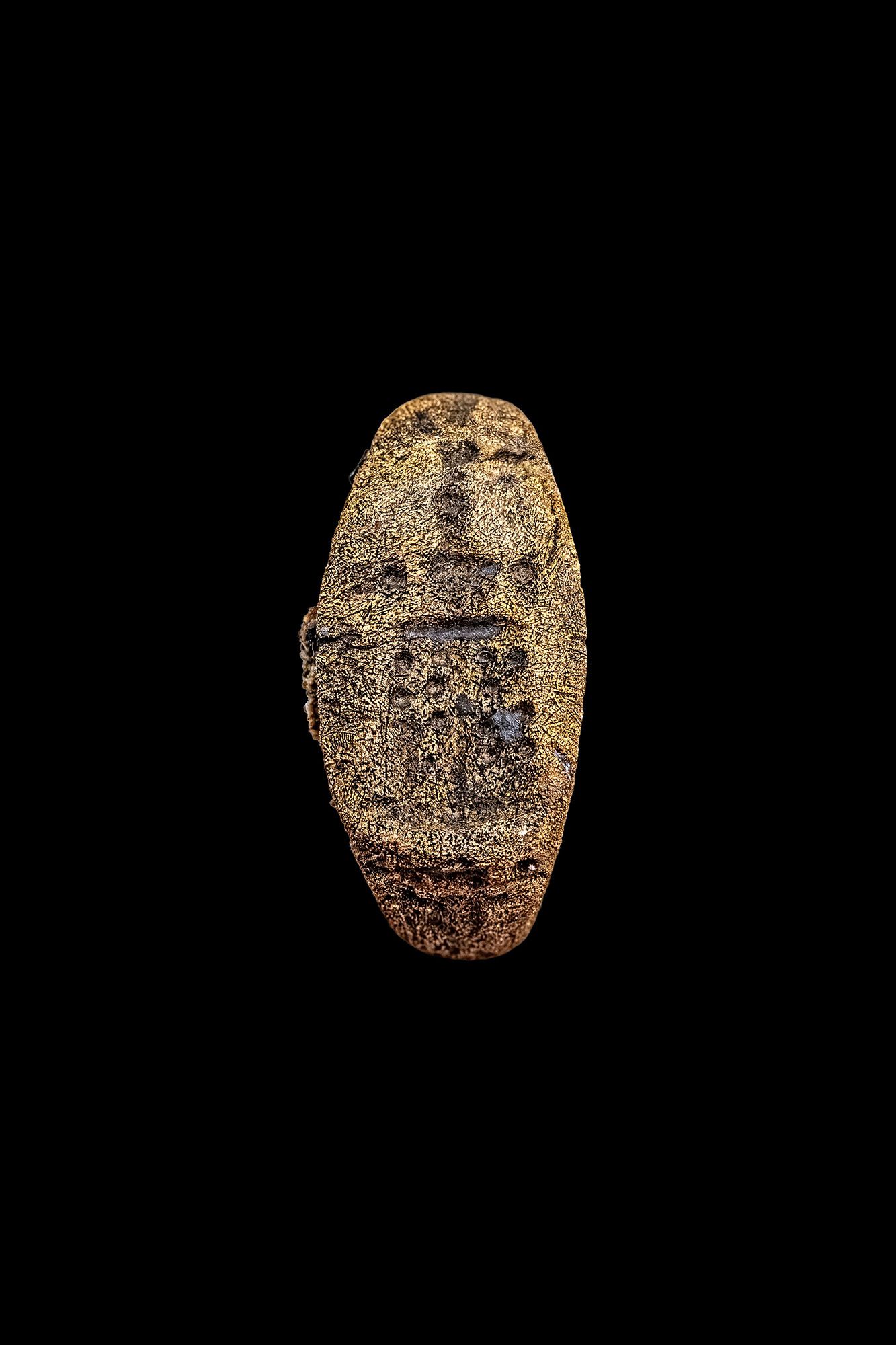
A bronze signet ring depicting the Lighthouse of Alexandria, a wonder of the ancient world, has been discovered underwater in the Mediterranean off Alexandria, Egypt.

A joint team from the European Institute for Underwater Archaeology (IEASM) and the Egyptian Ministry of Tourism and Antiquities found the artifact in the remains of a palace on the now-submerged island of Antirhodos, marking the first time a signet ring featuring the image of the lighthouse has been found, the IEASM team said in a statement.

The image on the ring is similar to depictions of the lighthouse that have been previously found on coins dating to the second century, representatives of IEASM said.

"The discovery of the ring-signet is even more important as it has been excavated in the legendary palace of the Island of Antirhodos, that once was a centre of power," Franck Goddio, president of IEASM, said in the emailed statement.

The palace was used by Egyptian pharaohs who reigned during the Ptolemaic period (304 to 30 B.C.), a dynasty of rulers descended from one of Alexander the Great's generals. The lighthouse was built on the island of Pharos around 280 B.C. and stood more than 328 feet (100 meters) tall. Some ancient writers, such as Pliny the Elder, considered it among the wonders of the world, and it continued to be used into the Middle Ages, until earthquakes and erosion resulted in its destruction and disappearance beneath the sea.

While the lighthouse was modified over time, it would have had a statue, possibly of Zeus, at the top holding an oil lamp that helped guide mariners.

A close up of a bronze ring with engravings on it against a black background.

The newly discovered bronze signet ring has an image depicting the Lighthouse of Alexandria. (Image credit: Christoph GerigkΒ©Franck Goddio/Hilti Foundation)

Whoever was wearing a signet ring could have used it to make an impression on soft materials, such as clay and wax, to create a seal. The discovery of the ring in the remains of the palace at Antirhodos suggests that the palace was used for administrative functions related to the lighthouse, representatives of IEASM said in the statement.

Even though the ring's engraving is somewhat worn, it likely depicts the lighthouse, said Doris Behrens-Abouseif, a professor emeritus of history of art and archaeology at the University of London who has written about the lighthouse but was not part of the research team.

There are "thousands of coins from Alexandria showing a similar depiction of the lighthouse," she told Live Science in an email. Those coins date to the Ptolemaic or Roman (29 B.C. to A.D. 395) periods, she noted.

Behrens-Abouseif added that she wasn't familiar enough with rings from Alexandria to comment on whether this is the only ring that contains this image.

Other scholars told Live Science that they, too, believe that this ring depicts the lighthouse, with two scholars noting that it may feature smoke coming from a lamp at top.

The "most interesting thing about the new signet ring engraved gem is an asymmetrical feature at its peak," which "may depict a plume of smoke from the oil lamp in the hand of the crowning statue," Andrew Chugg, an independent researcher who wrote the book "The Pharos Lighthouse in Alexandria: Second Sun and Seventh Wonder of Antiquity" (Routledge, 2024), said in an email.

Margaret Miles, a professor emeritus of art history and classics at the University of California, Irvine, also noticed the possible plume of smoke. Miles noted in an email that this "ring could have been used as a signet ring by a merchant from Alexandria who used the profile of the [lighthouse] to signal his location in Alexandria. The lighthouse was famous, so it became a symbol of the city."

Research off the coast of Alexandria over the past few years, including the discovery of 22 massive blocks, has revealed more information about the lighthouse, including how exactly it looked, which is helping researchers who are trying to digitally reconstruct it.

Are you a fan of mummies and hieroglyphs? Find out with our ancient Egypt quiz!

South Korean 'robot dog' became first to run a marathon on a single battery charge β€” now we know how

9 October 2026 at 10:00

A four-legged robot completed a full marathon on a single battery charge, covering 26.2 miles (42.2 kilometers) on a hilly public-road course in South Korea two years ago. Now we know a lot more about how it achieved this record-breaking feat.

The dog-like robot, called RAIBO2, finished the 22nd annual Sangju Dried-Persimmon Marathon in just over 4 hours, 19 minutes. The bot's developers say it's the first quadruped robot to have completed an official marathon-distance event without stopping to recharge. They're commonly referred to as "robot dogs" because the movement of their joints in both front and hind legs resembles that of canines.

The scientists outlined their findings about the robot's feat, which it achieved Nov. 17, 2024, in a study published Sept. 23 in the journal Nature.

This achievement represented a new milestone in overcoming a critical limitation for quadruped robots: endurance. Although four-legged robots can cross difficult terrain that wheeled machines struggle to traverse (like stairs and rugged trails), their endurance has been limited because powering multiple joints while repeatedly lifting and stabilizing the machine's body consumes huge amounts of energy.

"Unlike wheeled robots, quadrupeds continuously expend energy at their joints to support body weight and incur kinetic energy losses during intermittent foot-ground contact," the researchers wrote in the study.

RAIBO2's race was a demanding real-world trial. It took place during the Sangju Dried-Persimmon Marathon, with the bot racing alongside human participants. The route covered two 50-meter [164 feet] elevation climbs, with slopes of up to 10 degrees. Those kinds of gradients put increased strain on the robot's energy resources, stress-testing the bot's battery management capabilities, the scientists said.

RAIBO2 had previously run a 26.7-mile (43 km), GPS-guided route across a flat athletic field, which it knocked out in 4 hours, 40 minutes on one charge. However, an earlier marathon attempt across uneven terrain against other competitors had to be aborted around the 23-mile (37 km) mark after the robot's battery ran out. The robot's developers attributed that shortfall in part to frequent pace changes as the machine attempted to adjust to the pace of nearby runners.

To compensate, the team boosted the robot's battery capacity by 33% and tinkered with the control system, including implementing joint-stiffness control at the actuator. This allowed the bot to soften its leg when it had to absorb an impact or it needed a stable, forceful push-off. After the adjustments, RAIBO2 expanded to a maximum range of 41.6 miles (67 km) on a single charge, albeit on straight paths, according to the researchers.

Another key metric was RAIBO2's total cost of transport β€” a measure of the energy required to move a body over a given distance, with lower values indicating less energy expended. Researchers reported that RAIBO2 achieved a total cost of transport of 0.25, compared with a human benchmark of 0.37. The researchers said their machine was the first quadruped robot to surpass that figure.

The team attributed that efficiency to several optimizations across RAIBO2's software and hardware. Especially vital were its lightweight mechanical components, which were capable of transmitting kinetic energy from its joints with very little interference. They also credited a low-loss motor-driving circuit and, on the software side, a locomotion policy specifically streamlined to limit energy use. The system was also trained using the team's simulation environment, called RaiSim, which includes models of slopes, stairs and icy roads.

Like many electric vehicles, RAIBO2 can regenerate some battery by capturing kinetic energy, particularly while traveling downhill. That capability allows it to offset some of the energy it expends while climbing, though it doesn't eliminate the extra cost of hilly terrain.

The researchers said RAIBO2 has more than three times the travel range per charge of existing quadruped robots, with a total battery capacity of 2,016 watt-hours. It's in part because of that capacity increase that the team now estimates that the robot could travel up to 15.5 miles (25 km) farther than its marathon stint, up to a total of 41.6 miles (67 km).

That kind of endurance could broaden the roles for quadruped robots in places where wheeled models are impractical, the developers added in the study. For example, they could be useful in disaster zones and mountainous areas, where a sufficiently mobile, high-endurance robot could carry cameras, sensors or communications gear across uneven terrain.

Big dogs age faster at an epigenetic level, new study finds

8 October 2026 at 22:59

Great Danes and mastiffs rarely live more than a decade, while Chihuahuas can live twice as long. Exactly why big dogs die younger than small ones do has been unclear β€” but new findings may help to solve that mystery.

The research, published Thursday (Oct. 8) in the journal Science, looked at a chemical code written on top of dogs' DNA. This code, called the methylome, consists of chemical tags called methyl groups, which bind to DNA's building blocks.

Proteins constantly access DNA, loading up the information written in its code and taking that data away to be turned into new proteins for the cell. But these methyl groups can act as tiny roadblocks that stop that process in its tracks.

These groups are one type of "epigenetic marker," which collectively help to control gene activity, and their arrangement on DNA changes predictably as animals age, study co-author Blaise Mariner, a bioinformatician at Arizona State University, told Live Science. Across many studies and species, including humans, scientists have used this data to build epigenetic clocks that track animals' biological ages.

Dogs happen to be a great species for studying aging. Their owners devotedly track what they eat, how they live, and how their health changes over time. So Mariner and his colleagues built epigenetic clocks using DNA in blood samples taken from 894 dogs enrolled in the long-term Dog Aging Project based at the University of Washington.

These samples revealed how the dogs' immune cells aged. These cells patrol the whole body, so "they're a really good measure of systemic aging," study co-author Noah Snyder-Mackler, a genomicist at Arizona State University, told Live Science.

The team found that changes in DNA methylation closely tracked biological aging, in that the dogs with older-than-expected epigenetic ages had a higher risk of death from any cause. Once they looked at how different sizes of dogs aged, clear differences emerged.

"Using our biomarker, this epigenetic clock, big dogs were aging a little bit faster per year of life than small dogs," Snyder-Mackler said.

A key epigenetic change linked to larger body size was the loss of methyl groups at stretches of DNA called transposable elements. Also called "jumping genes," these elements can potentially move around the genome, but the methyl groups help stop them from doing so. But when that methylation is lost, the jumping genes can become too active and end up damaging other genes and causing inflammation, a key process that ramps up with age.

In short, the new data suggests that out-of-control jumping genes may contribute to big dogs' faster aging.

An illustration of blue double-helix strands of DNA

Researchers created epigenetic clocks based on data from 894 dogs. (Image credit: Josh Hawley via Getty Images)

In aging dogs, the team found that some regions of the genome with few chemical tags became more methylated, while other areas that had been choked with methyl groups gradually lost them. Additionally, at least in terms of their epigenetics, dogs' immune cells appear to become more similar to one another as they age. Mariner said this "loss of cell identity" is a key hypothesis for what happens to the body as it ages.

Immune cells are carefully specialized for different roles, such as preventing cancer or killing viruses. As these cells become more similar to one another, they become less able to fulfill their specialized roles, studies suggest.

Humans have bred big dogs for size, and Snyder-Mackler said this push for large body size may have come at a cost.

"Their bodies have to make this trade-off between really rapid growth and maintenance of that," he said, "versus investment in the immune system and integrity of the organism." For now, that idea is a hypothesis, though, as the current study doesn't directly address why big dogs' epigenetic aging has come to be this way.

Now, the team wants to build more informative clocks as the Dog Aging Project recruits more pooches to follow for longer periods. Snyder-Mackler said the team's data currently explains only part of how dogs' epigenetic ages vary. "What we really want to know is, what explains the rest of that variation?" he said.

The team was keen to build predictive models that might help dog owners anticipate their pets' age-related health concerns, Snyder-Mackler added.

What we learn about dogs from these studies may help us understand human aging, too. That's partly because dogs get some of the same diseases we do, but it's chiefly because they share humans' living spaces and environments.

"We're going to start looking, at the molecular level, [at] how these environmental exposures or experiences impact health and aging in dogs, which is going to be directly translatable to humans who are living in those same exact environments," Snyder-Mackler said.

"Most people love dogs," he added. "That means we can get a lot of really good data on them."

'Freakish' discovery of 9 million-year-old capybara tooth supports idea that Atacama wasn't always a desert

8 October 2026 at 22:19

An illustration of several small four-legged mammals next to a river.

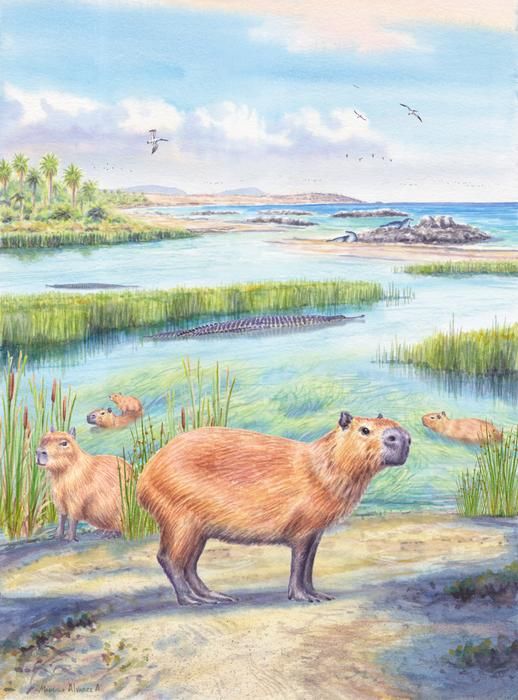
An illustration of ancient capybaras enjoying coastal wetlands, which may have looked somewhat like the Atacama Desert around 9 million years ago. (Image credit: Mauricio Alvarez)

Researchers have discovered a roughly 9 million year old tooth belonging to a large, water-loving relative of modern day capybaras in the Atacama Desert of northern Chile. The fossilized molar adds to previous evidence suggesting that it's unlikely the Atacama, one of the driest places on Earth, was continuously dry for the last 40 million years.

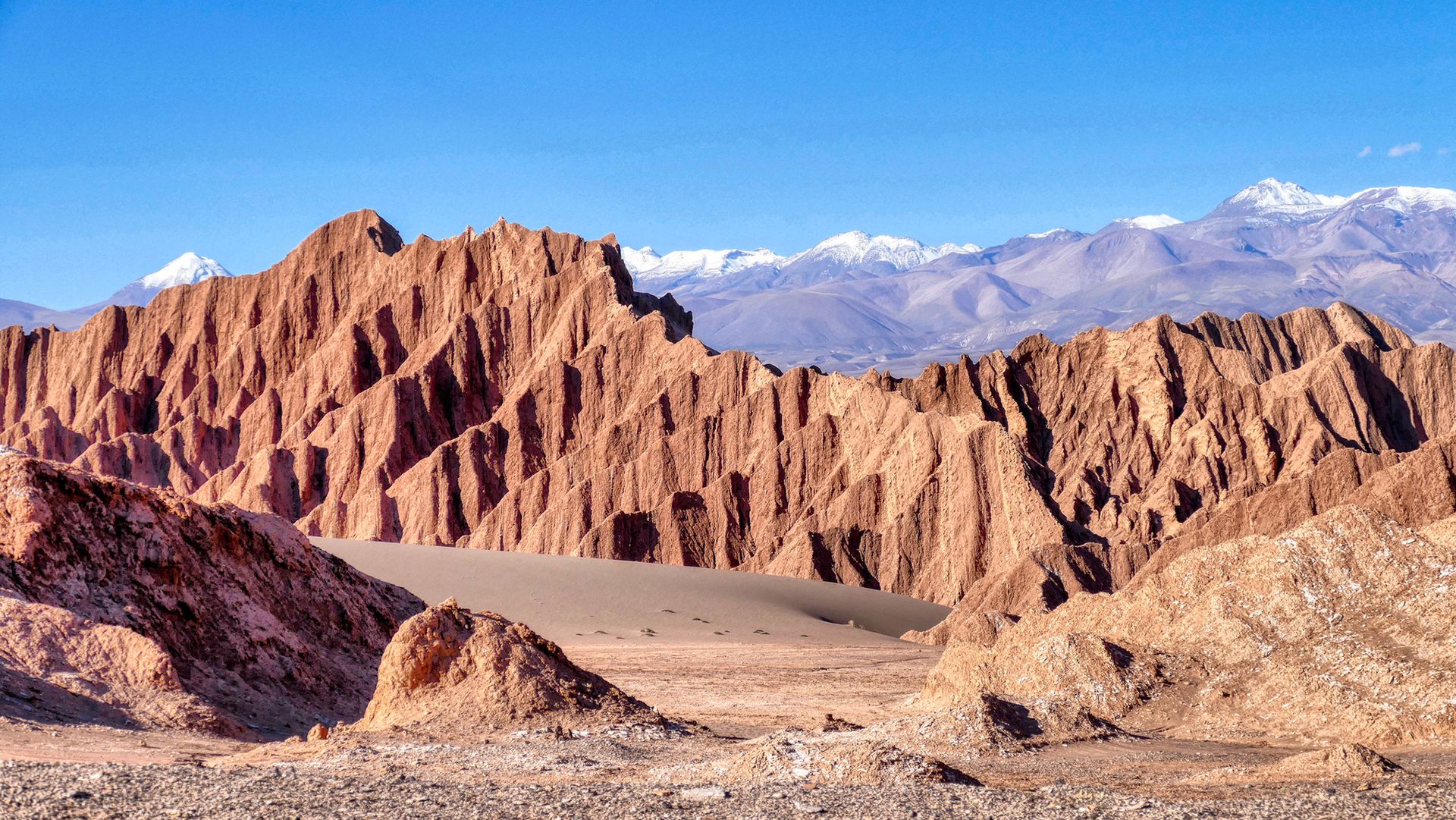
The Atacama Desert, possibly the oldest desert on Earth, takes up the northern third of Chile. It's bounded by the Chilean Coast Range to the west, which blocks rain from the Pacific Ocean, and the enormous Andes to the east, which obstruct rain from the Atlantic Ocean. The driest part of the desert's hyperarid region gets less than 0.08 inches (2 mm) of rainfall a month.

Recent research estimates the Atacama's hyperarid core started forming between 47.8 million and 33.9 million years ago, in the Mid- to Late-Eocene, 20 million years before the Andes formed. It suggests the mountain ranges weren't the cause for the desert's aridification, and may have only intensified it.

Capybaras (Hydrochoerus hydrochaeris) β€ͺ—‬ the world's largest rodent β€ͺ—‬ exclusively live close to stable freshwater sources and feed on plants that also require water to grow, so the discovery of an extinct capybara relative (Hydrochoerus Cardiatherium) tooth in the Atacama Desert is very strange.

"Finding a capybara tooth in a marine deposit in what today is one of the driest regions on Earth is just freakish," Priscilla Martinez, a geoscientist at the University of Arizona and co-author of a new paper describing the discovery, said in a statement.

Capybaras are native to South America, although today, they are not found in Chile, where the tooth was unearthed, according to the International Union for Conservation of Nature (IUCN).

A series of jagged cliffs seen in the desert

Part of the Atacama Desert called Valle de La Luna, named because of the region's resemblance to the moon. (Image credit: Piero Damiani via Getty Images)

The tooth isn't the only clue that the Atacama was a wetter place in the late Miocene. Researchers found it in a layer holding the remains of a shallow marine environment that existed between 7 million and 10 million years ago, according to the statement. And they've also found microscopic pieces of plants, known as phytoliths, revealing that palm trees, grasses, gingers and other flowering plants grew there in what may have been a subtropical forest.

These findings and others are part of a growing body of evidence that the Atacama Desert was once wet enough for crocodiles and freshwater fish to thrive and palms to grow. The new study, published Sept. 5 in the journal Scientific Reports, shows that capybara relatives lived there as well during the late Miocene, which, because they are semiaquatic animals, is further evidence to support the hypothesis of a sporadically moist Atacama.

The researchers aren't sure how exactly capybaras moved into the Atacama Desert. Although there were capybaras in South America at the time, the Andes created an 18,000-foot-high (5,500 meters) barrier between their current habitats and the site where the tooth was found. The researchers theorized that, instead of traversing the mountains, the ancient capybaras migrated along the western coast of South America, following wetlands, rivers and other water sources.

According to Samantha Hopkins, an Earth sciences professor at the University of Oregon who was not involved in the study, it's unlikely the tooth found its way to the site without capybaras living there.

"If you wanted to find a way that this capybara could be here while the Atacama was still as dry as it is today, you'd have a hard row to hoe," she told Live Science in an email, because the size of the tooth makes it hard to transport it long distances. The desert wind couldn't have blown it such a long way, and while large carcasses can float down waterways for miles, "if you're going to invoke a large enough waterway to do this, you've demonstrated that the Atacama wasn't as dry as it is today anyway."

James Webb telescope pinpoints the most distant 'fast radio burst' ever seen

8 October 2026 at 19:00

Astronomers have detected the most distant burst of radio signals ever seen: an explosion that's emitting waves of energy from more than 10 billion light-years away.

The event, named FRB 20240304B, is known as a fast radio burst (FRB). Astronomers have detected thousands of FRBs before this. But because these events last only milliseconds, they are extremely difficult to study and their origin stories remain unclear.

In this case, however, astronomers managed to use a radio telescope array and the James Webb Space Telescope (JWST) to chart the event, with JWST narrowing down the precise host galaxy that FRB 20240304B came from. The study, published Thursday (Oct. 8) in the journal Science , sheds more light on a time when the universe was only about 3 billion years old, showing that FRBs arose early in our cosmos' history. The detection more than doubles the previous distance record for FRBs.

The JWST played an instrumental role in the discovery, study co-author Themiya Nanayakkara, a senior lecturer at the Sydney Institute for Astronomy, told Live Science in an email. The email was written in collaboration with study first author Manisha Caleb, a senior lecturer in astrophysics at the same university.

For example, JWST's observations showed that the host galaxy was smaller than expected, was "metal-poor" (had few elements besides hydrogen and helium), and was forming a lot of stars. These characteristics could offer new clues about the environments in which FRBs arise, giving more information about the mysterious events. Researchers suggest that this FRB may have been linked to a magnetar, a highly magnetic star core left after a supernova.

Zooming in with the James Webb telescope

The ancient FRB was initially detected with MeerKAT, an array of 64 radio telescopes in South Africa. Nanayakkara said MeerKAT revealed "both the detection of the fast radio burst and, importantly, a very precise position on the sky."

The researchers knew the FRB was far away because of the large dispersion of the radio signal, but initial searches with powerful ground-based telescopes, "saw essentially nothing; it looked like empty sky," the researchers told Live Science. "The most likely explanation was that the galaxy was simply too faint to be detected in those observations. That is where JWST became transformative."

An illustration of a series of colorful hexagons in front of a pink background

An illustration of a fast radio burst (FRB) being detected by the MeerKAT radio telescope array. (Image credit: Carl Knox - OzGrav, Swinburne University of Technology Background Image Credit: NASA, ESA, CSA, STScI, Themiya Nanayakkara (USYD) Background Image Processing Credit: Joseph DePasquale (STScI))

The science team successfully got time on JWST with a program called Director’s Discretionary Time, which is aimed at time-sensitive observations. The researchers started by using JWST's Near Infrared Camera to trace the radio signal and take a very deep image of the target region.

"Suddenly, there it was: a very faint galaxy almost exactly where we expected the host of the FRB to be," Nanayakkara said. The researchers then used JWST's Near Infrared Spectrograph to obtain a spectrum (wavelengths of light broken into different chemical signatures), which showed hydrogen and oxygen.

"These spectral features act like fingerprints: because we know the wavelengths at which they are produced in the laboratory, we can measure how much they have been shifted by the expansion of the universe," Nanayakkara explained. "That gave us a very precise redshift of about 2.15. We are therefore seeing this galaxy as it was when the universe was only around three billion years old, so roughly one-fifth of its current age."

Because the host galaxy is fairly young, it supports the idea that at least some FRBs are generated by magnetars, which are more likely to appear in spry galaxies where intense star formation is occurring, the team said.

The team plans to continue hunting for FRBs with JWST.

"We do not know what the sources will be yet," Nanayakkara said, as that depends on what pops up in the sky and is spotted by ground-based radio telescopes. "Once our radio telescopes find and localize a suitable new source, we can trigger the JWST observations. So it is quite exciting, because we really have no idea what we will find when we combine the power of these two types of telescopes."

The Milky Way is one galaxy β€” but it used to be thousands, new simulations reveal

8 October 2026 at 18:40

Long before it became the luminous spiral galaxy we call home, the Milky Way was a sprawling, chaotic swarm of thousands of small galaxies, new research shows.

The findings suggest that in the first 2 billion years after the Big Bang, the region of the universe that would become our galaxy was littered with thousands of smaller galaxies of many sizes and shapes. Over time, these galaxies collided and merged into the single galaxy in which we reside today.

"Looking at these results, it's very clear that the physics happening right after the Big Bang has direct impact on what we see today in the local universe," study co-author Harley Katz, an assistant professor of astronomy and astrophysics at the University of Chicago, said in a statement.

To understand more about the early universe, astronomers build sophisticated computer models that encode the laws of nature to see how the cosmos may have evolved. The new work, which is the result of three years of supercomputer simulations, is the most detailed tracing yet of how a galaxy like ours came to be. It also arrives just as astronomers need a stronger yardstick for what they're seeing in the early universe.

Megatron, the cosmic transformer

The James Webb Space Telescope (JWST) can peer farther into the early universe than any previous telescope, and its discoveries have often defied computer models. For instance, JWST found surprisingly bright early galaxies and a mysterious new class of compact galaxies dubbed "Little Red Dots." These anomalies demonstrate that current computer models need an update to handle the complex physics of the early universe, the researchers said.

To bridge that gap, the scientists built a new suite of supercomputer simulations they call Megatron. By tracing ancient gas, starlight and chemistry from 180 million years to 2 billion years after the Big Bang, Megatron predicts the distinct light signatures of its virtual galaxies, according to the statement. Because JWST collects the same type of spectral data across a similar span of cosmic time, scientists can directly cross-reference the simulation against real observations to pinpoint what the old models are missing, the team said.

The simulation also tracks how the universe's first stars formed, died and forged the essential elements that make life as we know it possible. By comparing the simulation with JWST observations of early galaxies and with the chemical traces left in ancient stars, scientists can better understand how those first stars enriched their surroundings, the researchers said.

"Together, these complementary observations allow us to test competing models of the first stars in ways that weren't previously possible," study co-author Martin Rey, a theoretical astrophysicist at the University of Bath in the U.K., said in a separate statement.

The scientists detailed their findings in one of the six papers the Megatron collaboration published Sept. 30 in The Open Journal of Astrophysics.

Assembling the Milky Way

The team's simulation begins 180 million years after the Big Bang, when the universe is devoid of stars and galaxies and holds only pristine gas. As the next 2 billion years pass,, the model captures how the very first stars light up the dark universe and kick off "cosmic dawn," eventually culminating in those stars' violent deaths. As they die, the stars spread newly forged heavy elements such as carbon, oxygen and iron into the surrounding gas, laying the building blocks for future stars and planets.

A glowing circular galaxy in deep space.

A simulated view of what the Milky Way may have looked like 12 billion years ago. The bands of light are remnants of a galaxy collision, one of the thousands of mergers that the new study says built our galaxy. (Image credit: Harley Katz/MEGATRON Collaboration)

The simulation ends 2 billion years after the Big Bang, but the Milky Way's mergers continued long after this point, and scientists are still discovering traces of the small galaxies that have joined it. The most recent massive merger, with the Sagittarius dwarf galaxy, began more than 6 billion years ago and is still unfolding.

The simulation results help scientists understand how certain physics parameters impact the early universe, and better match up JWST's observations with computer models. But it also highlights areas that need further study.

"But there are also things we're not getting right, which is interesting too β€” what are the parts we're still missing?" Katz said in the statement. "That can lead you into new directions and new questions."

Megatron team members in the U.K. are now developing the next generation of simulations, backed by dedicated time on the country's supercomputers. Those simulations will include more complex physics, such as active black holes, which JWST has revealed to be surprisingly common in the early universe, the researchers said.

How well do you know our home galaxy? Find out with our Milky Way quiz!

Would you trust AI to calculate your true 'biological age'?

8 October 2026 at 17:09

Scientists have recently harnessed artificial intelligence (AI) to build "aging clocks" that aim to estimate a person's true biological age.

While a person's chronological age reflects the number of years they've been alive, their biological age is intended to capture how well their bodily systems are functioning. The idea is that people with older biological ages have a higher risk of age-related diseases β€ͺ—‬ such as cancer, heart disease or dementia β€ͺ—‬ while younger biological ages come with less risk. Some aging clocks even aim to predict people's impending risk of death.

Many aging clocks look at epigenetic markers, meaning chemical tags that bind DNA and change how genes activate, while others measure features such as the pace and pitch of people's voices. But some scientists say we don't know how to use these aging clocks yet, arguing that the tools are useful for studying aging at a population level but not for guiding individual health decisions.

Others posit that the data the clocks are based on is too noisy, and thus, there's potential for drawing faulty conclusions about what they're measuring. They say, for example, that we don't know if the clocks are measuring the downstream effects of aging or its underlying causes. And in any case, we don't currently have any treatments to "wind back" the clocks.

What do you think? Would you use these AI tools to measure your biological age? Let us know in the poll below, and explain your reasoning and additional thoughts about the technology in the comments.

The central Pacific Ocean just broke a temperature record. Experts say it might signal a new kind of El NiΓ±o.

The sea surface temperature in a key section of the central equatorial Pacific Ocean has now surpassed all previous temperatures on record for this region, exceeding 86 degrees Fahrenheit (30 degrees Celsius) for the first time, according to preliminary data released Monday (Oct. 5).

Specifically, these temperatures occurred in the NiΓ±o 3.4 region, located between 5 degrees north and 5 degrees south latitude, and 120 degrees west and 170 degrees west longitude. Researchers use this region to monitor the progression of El NiΓ±o, the warm phase of a multiyear natural climate pattern that's currently in full swing and steadily intensifying. But how significant is this new record, and could it be a harbinger of increasingly extreme El NiΓ±o events in the future?

At this time of the year, sea surface temperatures above 86 F are common in the western Pacific warm pool, a mass of water located northeast of Australia. But the NiΓ±o 3.4 region is nowhere near the warm pool and usually has much cooler temperatures. This latest data indicates "an exceptionally warm state for this part of the tropical Pacific," said Jin-Yi Yu, a professor of Earth system science at the University of California, Irvine.

"If the reported daily El NiΓ±o 3.4 temperature above 30Β°C is verified in the observational dataset, it would be an extraordinary record," Yu told Live Science in an email.

Other experts agreed. A NiΓ±o 3.4 sea surface temperature above 86 F is a "very significant" new record, Timothy Osborn, a professor of climate science and the director of the Climatic Research Unit at the University of East Anglia in the U.K., told Live Science in an email. Mat Collins, a professor of climate systems and the head of mathematics and statistics at the University of Exeter in the U.K., also called the temperature "very significant" in an email to Live Science.

But it's important to note that absolute temperature is not the standard way of measuring the strength of El NiΓ±o, Osborn said. Researchers usually assess El NiΓ±o intensity by comparing sea surface temperatures in the NiΓ±o 3.4 region with the average conditions there or with sea surface temperatures across the rest of the tropics, with the latter method removing a skew in the data caused by the climate-change-induced heating of oceans globally.

"On those measures, the current event is already close to being the strongest [El NiΓ±o] on record and will likely soon exceed previous records given that the event is forecast to strengthen further," Osborn said. "For some measures, it is already record-breaking for the time of year."

"Super" El NiΓ±o

El NiΓ±o events happen when warm water in the western tropical Pacific Ocean migrates eastward along the equator, toward South America. This boosts global temperatures, triggering heavy rainfall and floods in regions like East Africa, southern China, the southern U.S. and the Pacific coast of equatorial South America, while places such as Indonesia, the Philippines, southern Africa and northern South America experience drought.

"El Nino impacts are greatest across the tropics and in the lands around the Pacific Ocean," Osborn said. "An El Nino with record strength is very significant because it greatly disrupts the atmospheric circulation which controls the weather patterns including patterns of rainfall."

As of Oct. 6, the temperature anomaly in the NiΓ±o 3.4 region is 6 F (3.34 C) above average and rising. A typical El NiΓ±o increases NiΓ±o 3.4 temperatures by a maximum of 1.8 to 3.6 F (1 to 2 C) above average, so the current condition is "exceptionally large," Yu said. "This indicates that a very strong, or what is sometimes called a 'super,' El NiΓ±o is developing."

Graph showing sea surface temperature in a key region of the central Pacific over time in 2026 and other years.

Sea surface temperatures in the NiΓ±o 3,4 region exceeded 86 degrees F (30 C) on Oct. 5. (Image credit: ClimateReanalyzer.org (CC BY 4.0))

This year's El NiΓ±o is being amplified by human-driven global warming, which has increased background ocean temperatures. As a result, it's likely that sea surface temperatures in the NiΓ±o 3.4 region will keep rising over the coming weeks and peak in November or December, before declining again in 2027, Collins said.

"The NiΓ±o 3.4 anomaly is very likely to remain extremely large and may increase further," Yu said, echoing forecasters' suggestions that it could reach 7.2 F (4 C) by November.

A new kind of El NiΓ±o?

The world is on the brink of crossing a critical warming threshold, raising the question of whether the current conditions can be considered a new normal for future El NiΓ±os.

While it's likely that future El NiΓ±os will be more extreme than past ones, on average, not every El NiΓ±o will be record-breaking and as dramatic as the one unfolding now, because these events tend to be very variable, Collins said.

As climate change intensifies, the big worry is that certain regions will be primed for extreme conditions even before an El NiΓ±o strikes, Osborn said. For example, regions that are getting drier due to global warming could see catastrophic droughts if they overlap with areas that experience dryness during El NiΓ±o events. Likewise, places that are getting wetter could see worse deluges of rain and flooding if they coincide with areas with higher precipitation during El NiΓ±os. But that doesn't necessarily mean extreme El NiΓ±os are the new normal, he said.

Instead, the location and duration of El NiΓ±o events may be transforming, Yu suggested. "In research by my group and collaborators, we have documented changes not only in El NiΓ±o intensity, but also in where the warming occurs and how long events persist," he said.

Yu and his colleagues helped to introduce the idea that we are seeing the emergence of two distinct types of El NiΓ±o: the eastern Pacific El NiΓ±o and the central Pacific El NiΓ±o. "Many El NiΓ±o events in the earlier observational record were dominated by warming in the eastern tropical Pacific, whereas Central Pacific El NiΓ±o events became much more prominent in recent decades," he explained, adding that El NiΓ±os have also been lasting longer.

Global warming may be creating a new kind of El NiΓ±o by strengthening atmosphere-ocean interactions in the subtropical Pacific, Yu said. If these interactions combine with processes in the equatorial Pacific, where eastern Pacific El NiΓ±os emerge, they might trigger unusually strong events with extreme heating in the central Pacific.

"That provides a physical reason to take the possibility of more frequent extreme El NiΓ±o events in a warmer climate seriously," Yu said. "But I would distinguish that from saying that every El NiΓ±o will become progressively stronger."

Why are dengue cases surging in Florida this year? An 'unlucky' combination of factors, experts say

8 October 2026 at 11:00

Cases of dengue fever are surging in Florida, spurring several counties to declare a state of emergency.

The state has seen 497 reported cases so far this year. Of those, 252, or about 51%, were caught locally, rather than brought to the state by travelers. The Florida Department of Health confirmed one woman's death from dengue fever in early September, marking the state's first known dengue death in almost a century.

Prior to the past few years, most dengue cases reported in Florida were the result of travel. In other words, people caught the disease in other countries and then traveled to Florida, where their case was then diagnosed. At 245, the number of travel-related cases reported this year is not unusually high, Caroline Waddell, a public health researcher at the University of Florida, told Live Science in an email. However, the number of cases caught from local mosquitoes is more than five times higher than at this point in the year compared with any of the previous four years, she said.

Why are local dengue cases especially high this year? Live Science spoke with experts to find out.

A growing global health concern

Dengue fever is caused by the virus Orthoflavivirus denguei, which spreads from mosquitoes to people through the pests' bites; it doesn't spread from person to person. Aedes aegypti and Aedes albopictus mosquitoes transmit the virus to humans, and the same species can also carry the viruses behind yellow fever, Zika and chikungunya.

A diagram depicting how dengue spreading from mosquitoes to people

Mosquitoes capable of carrying dengue pick up the virus from people and then spread it to additional people via their bites. (Image credit: Centers for Disease Control and Prevention)

About 100 million to 400 million dengue infections happen annually worldwide, with about 800 cases reported in the U.S. historically, although that number has increased recently. Only about 1 in 4 people exposed to the dengue virus develop symptoms, which can include fever, headache, body aches, nausea and rash. About 1 in 20 cases become severe, and immunocompromised people, children, older adults and pregnant people are especially susceptible to these serious infections.

Severe symptoms can include abdominal pain, vomiting, difficulty breathing and bleeding of the gums or nose. The most severe forms of the infection can lead to leaky blood vessels, severe bleeding, shock, organ dysfunction and death. There is no specific treatment for dengue, so care focuses on managing symptoms and maintaining patients' vital signs.

Dengue has escalated as a global health concern in the past few decades. Between 2000 and 2019, global cases of dengue increased tenfold; between 1990 and 2021, dengue-related deaths doubled. Scientists say this surge is likely driven by climate change, since rising temperatures expand Ae. aegypti mosquitoes' range, in turn exposing more people to the insects' bites. Plus, warmer conditions speed up mosquitoes' life cycles and the dengue virus's replication rate, thereby boosting transmission.

International travel also factors into these rising case counts. In 2023, dengue spikes around the world were attributed to the resurgence of global travel following the COVID-19 pandemic.

Zooming in on Florida

As the global picture has worsened, dengue cases in the U.S. have also increased.

Nearly 3,800 cases were reported in 2024 β€ͺ—‬ an increase of more than 300% above the annual average for the previous 10 years. The uptick was tied to a rise in travel-associated cases, reflecting the wider global surge, as well as to warming temperatures that brought dengue-carrying mosquitoes to new regions of the U.S.

Since approximately 75% of dengue infections are asymptomatic, the virus can circulate within a community without being readily detected for some time.

Keira Lucas, deputy executive director of the Collier Mosquito Control District

Each year, Florida experiences dengue outbreaks in the southernmost parts of the state, such as Miami and the Florida Keys, Panpim Thongsripong, a disease ecologist at the University of Florida, told Live Science. Historically, outbreaks in Miami typically totaled around 50 or fewer cases. But then a 2019 outbreak resulted in over 200 cases, and from 2022 to 2024, outbreak totals have ranged from about 500 to 675 cases.

The outbreak currently unfolding in Florida centers on Hillsborough County, which is farther north and includes Tampa. This is unusual, Thongsripong said, as this region of the state normally sees just a few sporadic cases. Hillsborough County has reported 223 of the state's 252 locally acquired cases this year, and it's where the one dengue-related death took place.

Florida's health department regularly traps mosquitoes and tests them for viruses. So far this year, 20 pools of mosquitoes have tested positive for dengue across seven counties, and 19 of those positive pools were sampled from the greater Tampa area. In 2025, only four mosquito pools throughout the state tested positive, and in 2023, one mosquito pool did.

"Finding positive mosquito pools is rare in Florida because dengue is not endemic to the state," said Keira Lucas, deputy executive director of the Collier Mosquito Control District. "In many ways, it can be like looking for a needle in a haystack," she told Live Science.

Routine mosquito trapping is a relatively inefficient method for detecting viruses, though, Lucas said. As such, detecting dengue-positive mosquito pools may indicate that a large amount of transmission is already unfolding. "Since approximately 75% of dengue infections are asymptomatic, the virus can circulate within a community without being readily detected for some time," Lucas explained.

In addition to Hillsborough, neighboring Pasco and Pinellas counties have declared local states of emergency over dengue.

An unlucky combination of factors

So what's driving the unusual dengue activity this year?

In the past, Florida's local dengue outbreaks tended to be concentrated in the South, which saw moderate rainfall, warmer temperatures and more travel-related dengue cases compared with the rest of the state, according to a 2022 study in the journal Insects. With the outbreak concentrated farther north this year, that could suggest changing climatic patterns are making additional parts of the state especially hospitable to mosquitoes and the virus. That wouldn't necessarily explain why Tampa is seeing more local cases than Miami this year, but it could nonetheless be a factor in the overall trend.

For the virus to persist in local mosquitoes, dengue still needs to be reintroduced periodically through travel-related cases. Because the virus is not yet endemic to the state, it doesn't regularly circulate in local mosquitoes; however, a somewhat predictable "dengue season" has been emerging that coincides with upticks in international travelers carrying the virus to Florida.

Spheres of red and blue and black against a dark background

The dengue virus is a member of the Flaviviridae family, meaning it's closely related to the Zika virus and yellow fever virus. (Image credit: koto_feja via Getty Images)

This year, though, the high number of locally acquired dengue cases suggests a shift from predominantly imported infections toward outbreaks spurred by local Florida mosquitoes. Scientists hypothesize that climate change could increase local transmission in Florida even more in the future.

This year, Florida has also been enduring its most intense drought in over a decade. In theory, that might be expected to limit mosquito populations because the pests need water to breed, Lucas said. However, when it's dry, people tend to run their sprinklers more, creating mosquito breeding grounds when puddles form or containers fill up, she noted. This could bring mosquitoes closer to people, as it creates opportunities for them to breed.

Ae. aegypti mosquitoes are especially well adapted to living alongside humans, as they prefer to breed in human-made containers. Droughts can also drive dehydrated mosquitoes to bite more as they hunt for fluids.

"It's almost like an unlucky [combination]," Thongsripong said. "Everything coming together at the right time and right place, and boom, you have the conditions for an outbreak to occur."

The true number of dengue cases may be even higher than reported, Waddell said. The cases captured in the data include infected individuals who went to a doctor to get tested. Because many infections are mild or asymptomatic, additional people may have contracted the virus but never got counted.

What can be done

It's too early to definitively say what factors have increased Florida's dengue cases this year, Thongsripong said, as scientists are still gathering information. Despite the unknowns, she thinks the health and housing infrastructure in the U.S. will stop dengue from becoming too dangerous here.

To get dengue under control, it's key for government-level mosquito control efforts to coordinate and for the public to be aware of the virus, Lucas said. The mosquito control district coordinates with the health department for the latest data to best target where to spray larvicide, which kills mosquito offspring before they can bite people, she said.

It's important for people to use mosquito repellent when going outside, Thongsripong said, as well as to empty water from objects that can collect water and become a mosquito breeding ground, such as pets' water bowls, plant saucers, buckets or discarded tires.

Due to this year's strong El NiΓ±o, Florida is expecting a rainier winter, which could mean even more mosquitoes than usual, Lucas noted. That, in turn, could fuel additional dengue cases.

"Cases with September onsets are still being reported," Waddell said, "so we're not out of the woods."

This article is for informational purposes only and is not meant to offer medical advice.

OpenAI claims we've entered the AGI era β€” has GPT-6 Astra really demonstrated general intelligence?

8 October 2026 at 10:00

OpenAI representatives claim that the recent launch of one of its latest models, GPT-6 Astra, marks the beginning of the artificial general intelligence (AGI) era β€” a hypothetical scenario in which artificial intelligence (AI) can learn and reason like humans. Following very recent claims from technology executives that we've now reached this milestone, how likely is this claim to stand up to scrutiny?

Amid revelations that safety concerns have forced the company to abandon the planned rollout of GPT-6.1 Astra, independent researchers and benchmark creators warn that GPT-6 Astra's record-breaking scores rely on heavy prompt optimization rather than true general intelligence. This comes as experts warn about the risks of future AI systems and AI executives jointly call for a slowdown in AI research.

In announcing the model's release, OpenAI President Greg Brockman suggested that Astra signaled a fundamental turning point in AI evolution. "If we fast-forward a couple years, and we look back and say when was it really that AGI was created, I think it's going to be about this time, and I think it might be about this model," Brockman said during a Sept. 3 news conference marking the launch.

How did the new model perform in benchmarking?

A person holds a smartphone with a dark screen that reads

The benchmarks scores are impressive, but even the creator of one of the most important suggests acing it doesn't automatically mean we've reached AGI. (Image credit: Cheng Xin via Getty Images)

As part of the testing-and-verification process for the new model, OpenAI released benchmark results across a range of tests that measure the capabilities of AI models at various tasks. OpenAI representatives claimed in a statement that the company's new model delivers "state-of-the-art" performance across a variety of fields, including software engineering, the autonomous use of computer programs, mathematics problems, and even scientific research.

Demonstrations, for example, highlighted Astra's ability to generate 3D CAD code; lay out printed circuit boards in CAD (computer-aided design) software; convert digital 3D models into interactive, video-game-style environments; and deploy hosted web applications directly from prompts.

"In our early testing, Astra stood out by approaching legal work the way a discerning lawyer does: it distinguishes documents from established records, surfaces unsupported assumptions, and converts gaps into concrete drafting positions," said Niko Grupen, head of applied research at legal services AI developer Harvey as part of OpenAI’s announcement.

On ARC-AGI-3 β€ͺ—‬ a benchmark designed to measure how efficiently AI systems acquire new skills in novel, abstract environments β€ͺ—‬ Astra achieved a headline score of 99.9%. Independent testing by the nonprofit ARC Prize Foundation, which oversees the benchmark, revealed that Astra surpassed "human action-efficiency" baselines on 96% of levels, taking 51.7% fewer actions per level, on average, than human solvers.

"Not only is this the best model we've ever tested," ARC Prize Foundation President Greg Kamradt said as part of the OpenAI announcement, "but it also represents a meaningful step change in frontier-model performance β€” not only in its ability to navigate and solve novel environments but also in how efficiently it learns to do so."

How much can we read into test results?

Many researchers have highlighted that Astra's top ARC-AGI-3 performance relied on a proprietary "Provider Adapter" harness, a specialized software scaffolding layer that's inaccessible to rival developers. When tested using the benchmark's neutral Standard harness, this score dropped to 62.7%. ARC Prize organizers also noted that saturating the benchmark does not constitute proof of achieving AGI β€” emphasizing that its closed, deterministic puzzle environments do not capture the open-ended complexity of the real world.

"When we launched ARC-AGI-3, "we made it clear that saturating the benchmark would not represent 'proof of achieving AGI,'" Kamradt wrote in a blog post. "Therefore, while we believe Astra represents meaningful progress towards generalization, we are not claiming that it is AGI."

Discrepancies in the data were reportedly present even before the official announcement. As reported by Fortune, an embargoed draft provided to news organizations prior to the model's launch listed Astra's ARC-AGI-3 score at 98.6% before it jumped to 99.9% on the live site.

Anka Reuel and Mike Hardy, doctoral researchers in AI at Stanford University, also raised concerns over OpenAI quietly revising several published metrics post-launch, including halving Astra's reported hallucination rate from 4.2% to 2.0% before reverting it.

When we launched ARC-AGI-3, 'we made it clear that saturating the benchmark would not represent 'proof of achieving AGI'"

ARC Prize Foundation President Greg Kamradt

Speaking to Fortune, Reuel and Hardy attributed the shifting figures to "benchmaxxing" β€” an industry term that describes the practice of repeatedly rerunning evaluations under subtly tweaked prompts, scaffolds or compute allocations to hunt for peak theoretical scores.

In a 2025 paper published on pre-print server arXiv titled β€˜Benchmarking is Broken -- Don't Let AI be its Own Judge’, experts including Princeton doctoral candidate Zerui Cheng and University of Luxembourg postdoctoral researcher Dr. Stella Wohnig warned that such practices create confusion and undermine trust, particularly when official technical documentation omits the basic methodology, making independent verification nearly impossible. Crucially, scores achieved through benchmaxxing reflect idealized performance ceilings under optimal lab conditions rather than practical, out-of-the-box reliability.

According to OpenAI's benchmark data, across specialized domain evaluations, GPT-6 Astra delivered 10% to 20% better performance than both its predecessor, GPT-5.6 Sol, and top market competitors.

Highlights include a 98% score on FrontierMath Tier 4 (v2), which evaluates expert-level mathematical reasoning; a perfect 100% on ExploitBench, which is designed to test offensive cybersecurity capabilities; 95.9% on BenchCAD, which measures an AI's ability to reconstruct 3D objects using CAD code; 57.9% on Terminal-Bench 4.0, which assesses complex terminal-based system administration and software engineering; and 41.4% on AutomationBench, which tests whether agents can complete multistep business workflows across applications.

But independent findings from external AI benchmarking firm Artificial Analysis contradict these results. Astra's score on the independent Artificial Analysis Intelligence Index β€” an aggregate metric that evaluates general reasoning across frontier models β€” remained completely flat, at 61, compared with GPT-5.6 Sol, while trailing competitors like Anthropic's Claude Fable 5.1 and Meta's Muse Spark 1.3.

While some benchmark results have seen improvement since the previous generation, Astra underperformed in other tests. Artificial Analysis' testing showed that against GDPval-AA v2 β€” an economically focused benchmark that measures real-world workplace tasks across 44 occupations β€” Astra suffered a significant drop in its relative leaderboard ranking compared with GPT-5.6 Sol. Additional regressions were observed in benchmarks that test customer service support, scientific Python programming, and long-context reasoning across large documents.

In terms of overall token use β€” the metering system that measures the fragments of text or data processed by AI models β€” OpenAI representatives said GPT-6 Astra achieved dramatic efficiency gains on complex, long-horizon tasks. Findings from Artificial Analysis confirmed that on software engineering benchmarks, Astra was approximately 70% more token-efficient than GPT-5.6 Sol, using roughly one-third the total tokens of its predecessor and one-fifth the tokens of Claude Opus 5.

A close up of a dark phone screen showing a swirl of light with the words

AI systems today can do more than a simple back-and-forth text exchange, graduating to taking actions on our behalf. (Image credit: CFOTO via Getty Images)

On professional workplace evaluations like Agents' Last Exam, the new model reduced output token consumption by up to 65% compared with Opus 5, while on general intelligence evaluations, Astra achieved a roughly 10% output token reduction at max effort compared with Sol.

On the other hand, this achievement is offset by a 250% increase in the base API pricing for GPT-6 Astra compared with GPT-5.6 Sol. Token prices jumped from $4/$20 to $10/$50 per million input/output tokens. As a result, Astra ends up approximately 75% more expensive per task than its predecessor on general intelligence evaluations, despite using 10% fewer output tokens. This trade-off has led researchers at Artificial Analysis to question whether AI labs are relying on expensive computational brute force to squeeze out minor gains, rather than achieving true technical breakthroughs.

Does achieving AGI even matter?

With its latest model, OpenAI has placed a stronger emphasis on safeguards and controls. The move follows a series of high-profile incidents in which frontier AI models inadvertently hacked into third-party networks and computer systems as part of routine testing operations, after the models went beyond what humans expected they would do when encountering challenging tasks.

According to OpenAI representatives, Astra did not exceed the scope of its tasks in any security evaluations. For comparison, GPT-5.6 Sol went beyond its authorized parameters in almost 50% of test cases. Hallucination rates have also been reduced significantly, falling to 4.2% on internal tests, compared with 12.2% for GPT-5.6 Sol (with independent testing by Artificial Analysis showing a drop from 92% to 51% at max effort). The model also showed an improved ability to handle ambiguous prompts.

David Wood β€ͺ—‬ chair of London Futurists, a non-profit that hosts discussion groups on emerging technology β€ͺ—‬ argued that beyond individual test results, Astra highlights a fundamental shift in how humans will interact with AI as models move from answering questions to autonomously pursuing complex goals in digital environments.

"The impressive benchmark results matter, but what matters more is the combination of intelligence, autonomy, computer use, and cybersecurity capability," he said in an email to Live Science. "That combination also demands caution. The more useful these systems become, the greater the consequences when they misunderstand our intentions, are misused, or find ways around the safeguards we give them."

Wood suggested that whether Astra can be classified as AGI is less relevant than recognizing the need for AI control and governance to keep pace with technical development.

"The possibility that AI could progress from systems like Astra towards all-round superintelligence makes much greater human vigilance, awareness, and collaboration increasingly urgent," he said.

Help us improve Live Science Pro: We're always trying to make our content better. Leave us feedback about Pro here.

Jonathan the tortoise has lived to 194 years old β€” now scientists think they know why

7 October 2026 at 20:05

The remote south Atlantic island of St. Helena boasts an international celebrity: the tortoise Jonathan, the oldest living land animal. At 194 years old, he has outlasted the expected lifespan for an Aldabra giant tortoise (Aldabrachelys gigantea) by about a century. Now, scientists have identified a range of unique genetic and epigenetic traits that may hold the key to this longevity.

The new research zoomed in on Jonathan's genes, as well as the chemical tags that sit on top of DNA molecules, known as "epigenetic markers." These markers help control which genes are activated and to what degree. The analysis finds that Jonathan's genes associated with mitochondrial function are in great shape, epigenetically speaking, which suggests that they've played a big role in the tortoise's success.

While mitochondrial function has long been linked to longevity and mitochondrial dysfunction has been tied to disease, Jonathan offers fresh insight into that dynamic, said study co-author Stephen Clark, chief scientist of the Kallel Foundation, a nonprofit in Nashville researching drug targets to promote human longevity.

Clark and colleagues published their findings Wednesday (Oct. 7) in the journal Science Advances.

Decoding Jonathan's secrets to long life

Nearly a decade ago, the researchers enlisted Joe Hollins, the vet tasked with Jonathan's care, to collect samples from the record-setting animal. Island authorities forbade the vet from drawing the tortoise's blood, fearing the risk of an infection.

"I didn't want to be the doctor that killed Jonathan," Clark told Live Science. Hollins collected samples via cheek swab instead.

When the samples arrived in the U.S., the researchers sequenced them, but when their computers kept crashing, they discovered that the DNA had been isolated from bacteria in Jonathan's mouth rather than the tortoise's own cells.

Clark "had to go back and beg" for permission to collect more data, he said. The vet then sent cheek scrape samples, which are collected with a slightly different tool than cheek swabs. This time, the DNA was in fact from Jonathan.

The DNA isolated from those cheek tissue samples was more fragmented than it would have been in a blood sample, so the researchers filled in the gaps using an existing reference genome from a 36-year-old Aldabra tortoise named Tank. They also compared Jonathan's DNA to that of a GalΓ‘pagos tortoise (Chelonoidis abingdoni) named Lonesome George, who was believed to be over 100 years old at the time of his death in 2012.

The team found that, compared to Tank and Lonesome George, Jonathan carried 287 unique variants of genes that had previously been linked to aging-related pathways. These included genes involved in DNA repair and the function of telomeres β€” the protective tips at the end of chromosomes that tend to shorten with age.

These pathways are also related to aging processes in humans, highlighting a "broader signature of aging" across species, Greer Dolby, an assistant professor of biology at The University of Alabama at Birmingham, who was not involved with the study, told Live Science.

The researchers also looked at epigenetic changes, including DNA methylation, which is when a chemical tag called a methyl group binds the DNA. Certain patterns of DNA methylation can function as a "clock" in that they reflect an organism's biological age; scientists have recently harnessed these patterns in the study of human aging. In this case, the team compared the DNA methylation across Jonathan's genome to that of young and old Aldabra tortoises.

A large tortoise sits on a grassy lawn.

Researchers compared DNA from Jonathan (pictured) to that of other Aldabra giant tortoises. (Image credit: Kevin Gepford, CC BY-SA 4.0)

The methylation patterns were more disordered in the older tortoises, reflecting random changes acquired over time, the researchers found. Scientists call this phenomenon "methylation entropy." For most genes, Jonathan's DNA methylation patterns were more disordered than those of the young tortoises. But in a suite of genes tied to mitochondrial function β€” specifically the bits of those genes that switch them "on" β€” Jonathan had more organized methylation patterns. That might keep expression of these genes consistent over time, the researchers theorized.

Mitochondria produce energy that cells need to function properly, repair themselves and reduce further damage to DNA. "Keeping the entropy low in these mitochondrial genes, or keeping pristine mitochondria, is likely to be a contributor to longevity," Clark said.

However, the authors couldn't determine a causal relationship β€” they didn't run any tests that could definitively prove that Jonathon's lack of entropy in these genes explains his long life. Clark argued that additional experiments on a blood sample from Jonathan could offer a more comprehensive view of his genome.

Jonathan's full genetic profile can't be known until after the tortoise's death, when researchers can collect DNA from more tissues, said Vincent Lynch, a professor of biology at the University at Buffalo, who was not involved with the study.

"Some organs are more susceptible to different diseases of old age than other ones, and that happens because mutations accumulate over time," he told Live Science. "We would ideally like to know what those mutations are in those specific tissues."

Furthermore, Lynch questioned whether entropy was a useful characterization of age-related DNA methylation patterns, as methylation can be unpredictable. That said, he agreed that the genes flagged in the study offer helpful data for future work on longevity.

More experiments are needed to determine whether these mitochondrial genes actually play a role in longevity across all Aldabra tortoises, let alone in other animals, or if Jonathan is just an outlier.

"Maybe Jonathan is just really good at being old," Lynch said.

'It looks like a chimera' β€” 168 million years ago, a strange platypus-like mammal relative lived in China alongside dinosaurs

7 October 2026 at 18:16

A newly discovered platypus-like creature is the largest-known mammal relative from the entire Jurassic period, a new study finds β€” although it still only weighed as much as a Chihuahua.

The critter, which hunted salamanders in the freshwater lakes and rivers of what is now Inner Mongolia, China, lived during the mid-Jurassic between 168 million and 163 million years ago. It seems to be the earliest known mammal-type animal that lived a semiaquatic life.

Researchers unearthed the delicate and detailed fossil in 2016, which revealed that the animal likely weighed about 2.2 to 4.4 pounds (1 to 2 kilograms). It was large for a mammal relative during the Jurassic, but its name, Megacauda sungei, was inspired by its tail: Megacauda means "big tail." The discovery was detailed in a study published on Wednesday (Oct. 7) in the journal Nature.

The furry predator had a mix of features seen in modern-day animals, with a broad, flattened tail that marks it as a powerful swimmer, and short hind legs with relatively long feet.

"It's like a chimera," study co-author Zhe-Xi Luo, a paleontologist at the University of Chicago, told Live Science. "The back half of this animal is very much like a platypus. As are the limbs, which would be capable of swimming or digging tunnels in river banks."

But the teeth "are definitely not like a platypus," Luo said. It possessed robust canines and shearing cheek-teeth that would cut and chew meat in a different way from modern carnivorous mammals. "It's a predator with gigantic and very specialized canines," Luo said. "So, it's partly otter-like and partly platypus-like."

A revealing fossil

An image of a fossil with various colors.

The fossil of Megacauda sungei, highlighting its bones and soft tissue. (Image credit: Luo et al., Nature (2026))

Tiny bits of vertebrate bones found in what would have been the animal's stomach and the surrounding fossil beds hint that M. sungei dined on salamanders, Luo said.

He added that M. sungei may have sheltered in burrows on land in the temperate plant-filled climate, and hunted in lakes and rivers for fish and invertebrates.

Another notable aspect of the fossil is its throat. Modern mammals, including humans, have hyoid bones in the throat arranged in a "U"-shaped saddle. These help us use throat muscles to swallow chewed food one chunk at a time, instead of gulping down huge bites or whole prey. The structures also enable babies to suckle their mother's milk.

M. sungei seems to have had the apparatus needed to do this, study co-author Thomas Martin, a paleontologist at the University of Bonn in Germany, told Live Science.

"This is an incredibly important evolutionary innovation," Luo said, adding that this capability is one of the things that helped early mammals diversify into carnivores, insectivores, herbivores or omnivores to take advantage of all sorts of foods.

Finding this in M. sungei suggests that the apparatus needed for suckling milk and swallowing had already evolved by the Middle Jurassic (around 174 million to 164 million years ago), Martin said.

This is before marsupials like kangaroos and placental mammals like primates and bears are thought to have diverged from each other 160 million years ago, after descending from an egg-laying common ancestor that lived approximately 180 million years ago.

"Now we push the history of it back to before the split of modern marsupials and modern eutherian [placental] mammals," Luo said.

"Neonatal suckling behaviour was previously thought of as being a hallmark of advanced mammals, but it now appears to have evolved well before then, in the common ancestor of docodontans and mammals at least 165 million years ago," said Sue Hand, a vertebrate paleontologist at the University of New South Wales in Australia who wasn’t involved in the study.

M. sungei is from an extinct lineage of docodonts, which are relatives of mammals from the dinosaur-dominated Jurassic and Cretaceous periods, living between about 200 million and 120 million years ago.

Docodonts adapted to a wide variety of habitats. For example, there was the Jurassic tree-dwelling shrew-like docodont called Microdocodon gracilis, and Docofossor brachydactylus, a tunnel-digger with shovel-like paws. Luo was also part of the team that described a semiaquatic "Jurassic beaver", Castorocauda lutrasimilis, which lived 164 million years ago.

"It seems that an aquatic lifestyle arose often in early mammal-like species," said Tim Flannery, a mammalogist at the Australian Museum Research institute who wasn't involved in the work.

If anything, the newly described "spectacular fossil" shows that docodonts were wide-ranging during the dinosaur age, Hand told Live Science in an email.

"This very detailed study adds to accumulating evidence that mammaliaforms occupied a wide range of ecological niches long before the evolution of living mammals," Hand said.

1,000-mile-long cloud that forms and vanishes on Mars every day obeys 'exotic physics' never seen on Earth

7 October 2026 at 18:08

A 1,000-mile-long (1,600 kilometers) Martian cloud that emerges and then quickly disappears from the Red Planet's sky nearly every day is even weirder than scientists realized. New simulations suggest that the eerie apparition can only be explained using "exotic physics" that have been theorized but never seen on Earth or anywhere else in the solar system.

The mysterious floating mass, dubbed the Arsia Mons Elongated Cloud (AMEC), frequently emerges above Arsia Mons, a 12-mile-tall (20 km) extinct volcano located in the Tharsis region, just south of the Red Planet's equator. The water vapor cloud was first spotted in 2018 by the European Space Agency's Mars Express orbiter and has since appeared nearly every morning throughout Mars' spring and summer, when increased solar radiation triggers strong surface winds. But it lasts only a few hours each day, before fully evaporating.

The AMEC can stretch up to 1,100 miles (1,800 km) long, around one-twelfth of Mars' circumference. For context, that is roughly twice the length of the U.K. or the distance between New York City and Miami.

Although the Red Planet is no stranger to giant dust clouds and occasional "iridescent streaks" of carbon dioxide, it is almost completely devoid of atmospheric water vapor. That makes it extremely rare for puffy, Earth-like clouds to form there, let alone ones so vast. As a result, scientists have struggled to explain this whacky weather.

But in a new study published Wednesday (Oct. 7) in the journal Nature Geoscience, researchers used Mars Express data to create new simulations in an effort to finally explain the AMEC. Initially, the team struggled to recreate the puzzling phenomenon. But when they abandoned traditional meteorological principles in favor of a more out-of-the-box explanation, they were eventually successful.

A top-down photo of the cloud next to Arsia Mons

The AMEC forms when summer winds push water vapor up and over the 12-mile-high slopes of Arsia Mons. But it only lasts for a couple of hours at a time. (Image credit: ESA/DLR/FU Berlin)

"To create the AMEC in our modelling, we found that we needed to include some exotic physics … physics that, while included in textbooks, is treated as theoretical and usually thought not to happen in nature," study first author Jorge HernΓ‘ndez-Bernal, a planetary scientist at the University of the Basque Country in Spain who was affiliated with Sorbonne University in Paris at the time of the study, said in a statement. "Once we included this physics in our simulations, the AMEC emerged just as we hoped."

"Wholly unexpected"

The AMEC is an orographic cloud, meaning it forms as strong winds push water vapor up and over a raised structure, such as a mountain. Similar clouds also exist on Earth, including the "Levanter" cloud, which occasionally forms above the Rock of Gibraltar in southern Europe. However, the Martian equivalent cannot be explained by the same processes that occur on our planet.

On Earth, clouds form via a process called heterogeneous nucleation, in which moist air cools and condenses into ice crystals that form around tiny atmospheric particles, such as dust, salt, pollen or soot. But while Mars has plenty of atmospheric dust, that's not what's happening there.

"For the AMEC, it seems that cloud formation takes place without needing any of this 'stuff' [in the air]," said HernΓ‘ndez-Bernal, who has been studying the AMEC for the past six years. "Water vapour turns directly into icy cloud particles without any middle step. It's akin to droplets of condensation appearing in the middle of a room, rather than on a window."

The researchers call this "homogeneous nucleation" and say it has never been seen before in a planetary atmosphere. "It's wholly unexpected," HernΓ‘ndez-Bernal added.

A blurry photo of Arsia Mons towering over the surface of Mars.

Arsia Mons is the second-tallest volcano on Mars behind Olympus Mons, but is twice as tall as Mount Everest. This image, captured by NASA's Odyssey orbiter, helps give a scale of how huge the Martian mountain really is. (Image credit: NASA/JPL-Caltech/ASU)

Other scientists previously predicted that homogeneous nucleation could occur in Earth's upper atmosphere or in the skies above Venus. However, this has been deemed highly unlikely because it requires humidity levels roughly 100,000 times greater than those on our planet's surface.

Given that modern-day Mars is almost completely devoid of water, it may seem unlikely that its humidity levels could reach such lofty heights. However, the Mars Express data tells a different story.

As wind rises up the slopes of Arsia Mons, which is more than twice as tall as Mount Everest, it creates a powerful wave that shoots air into the upper atmosphere at tremendous speed. The researchers calculated that the temperature of this air can drop by up to 54 degrees Fahrenheit (30 degrees Celsius) in just 10 minutes. This not only makes it easy to freeze but also greatly increases the humidity within the wave, allowing homogeneous nucleation to take place, the simulations show.

So where does all this water come from? Some of it is already in the atmosphere, but some likely originates at the summit of Arsia Mons, which is covered with a thick layer of frost, the researchers suggested.

"A big success"

The new simulations mark a big step forward in our understanding of the AMEC and wider Martian meteorology.

"We don't have nearly as much information about Mars' atmosphere as we do about Earth's, so reproducing the AMEC to this degree is a big success for the model," HernΓ‘ndez-Bernal said.

Two side-by-side photos of Mars as a crescent in space with the cloud stretching across its surface

Mars Express has been closely monitoring the AMEC since 2018. These photos show the cloud appearing over consecutive days in July 2020. (Image credit: ESA/GCP/UPV/EHU Bilbao)

The findings would not have been possible without the Mars Express orbiter, which used three instruments β€” the Visual Monitoring Camera, the High Resolution Stereo Camera and the OMEGA instrument β€” to map out how the AMEC takes shape and evolves every day. It is also one of the only Mars spacecraft that can see Arsia Mons in daylight.

"Mars Express discovered the AMEC, has followed up and monitored it for years, and is now helping reveal the secrets of its formation," Colin Wilson, the project scientist for Mars Express, who was not involved in the new study, said in the statement.

The discovery is also a reminder that, despite sharing the same basic principles, weather systems do not behave the same on other worlds as they do on Earth, which could have big implications for solar system exploration and the hunt for extraterrestrial life on distant exoplanets.

"While clouds on Earth and Mars seem to be governed by the same 'rules', understanding this exotic Martian cloud required exotic physics β€” and this may be true elsewhere in the cosmos," Wilson said.

'We stocked an RV as an emergency bugout vehicle': Readers share how prepared they are for a disaster

7 October 2026 at 17:23

As the "super" El NiΓ±o is predicted to bring heavier storms and flooding to the U.S., experts recommend stocking up on food and other supplies. Floods and other disasters, like wildfires, are on the rise due to climate change, making disaster preparedness essential.

But how prepared are people for a disaster?

Preparedness levels vary; some people keep an emergency kit full of food and first-aid supplies, while others have a planned meeting place designated as a safe space. Having a plan can help people feel better about unpredictable events. But not everyone has thought this far ahead.

Live Science recently asked readers how prepared they are for a natural disaster and what sort of plans or supplies they have on hand. Over 130 people responded to the poll, with 51% of readers choosing "I've got an emergency kit ready for when the unexpected happens."

The comments reflected this majority, as one reader wrote, "We're on the edge of an area at risk for grass fires, so we bought/stocked an RV as an emergency bugout vehicle. Felt extreme initially, less so as time goes by. Gives us 3-5 days of margin before we need to resupply, with food, water and first aid for people and dogs."

Another commenter responded to the rest of the comments, writing, "This is just the begining [sic]. Get a greenhouse, plant food, learn to harvest water, build an outside toilet (for later), learn to be self sufficient. trade with your neighbors. Plant fruit trees, get solar panels and an electric transporation (bike, car whatever). Keep a de humidifier in your home. it's back to the 1930ie[s]."

Do you agree with these readers? Let us know in the comments section.

❌