The continuation of AI chatbots arriving in CarPlay, Apple’s opt-in approach to using customer data for AI training, and turmoil surrounding WordPress leadership are the topics for this MacVoices Live! discussion. The conversation also examines Bending Spoons’ latest billion-dollar acquisition, Apple’s international iCloud+ bundles, the potential for services to expand Apple’s global ecosystem, and Michael Dell’s support for new youth investment accounts.
The MacVoices Live! panel explores some of the useful new macOS Golden Gate features, including AI-assisted Shortcuts and improved iPhone Mirroring. They debate the emerging iPhone Duo and foldable-phone market and why one would prefer to give the new foldable a try. The value of AppleCare’s new family coverage plan is also reviewed for with households with many devices, and as an option for an individual. T-Mobile’s fee for iPhone Handoff, and GM’s decision to retain CarPlay in gas-powered vehicles wrap up this session.
GM made the decision to drop Apple CarPlay and Android Auto phone casting from its newer EVs, and it’s one we’ve been pretty critical of. Although the automaker told us it made that decision in order to offer a better, more unified experience to its customers, that may well have changed: here, customers still have the choice to just cast their phone to the center screen.
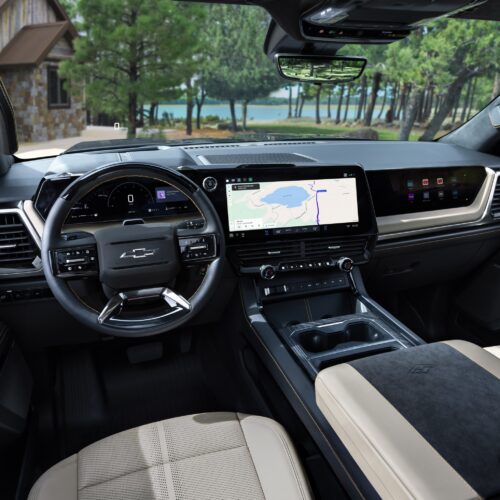
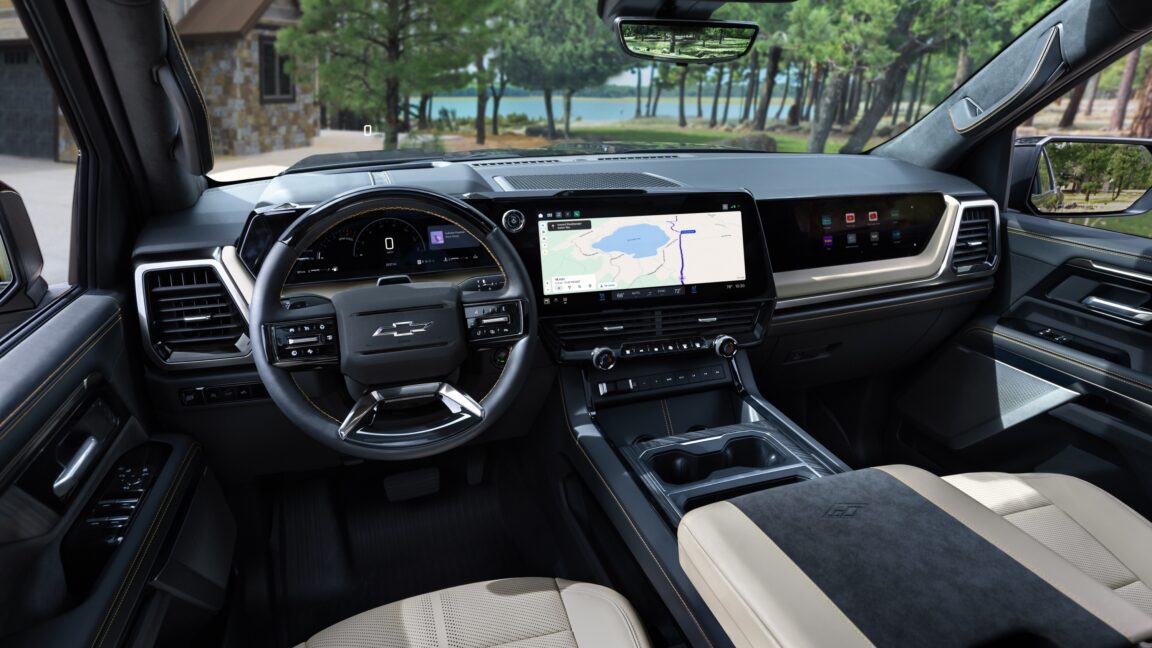
And it has done a better job of integrating CarPlay and Android Auto into the experience, putting the casting apps in a large window or tile that takes up most but not all of the infotainment screen. To the left is another card that allows you to access other native apps, like towing or music (although you can still have CarPlay as the source for that native music app, should you start feeling a little Inceptionish). Porsche took a similar approach to working with, rather than against, users who enjoy CarPlay, and this looks like a welcome step from GM.
GM’s spokesperson wouldn’t be drawn on whether this means we’re going to see a corporate retreat from the previous stance on EVs, but I will note that the press release it sent Ars does say that the system was built “as a single scalable foundation across electric, gas and diesel-powered vehicles, it transforms time spent behind the wheel into an effortless, personalized journey,”—emphasis mine.
The car industry accidentally did something I’ve always wanted to see, which was to release basically the same car under two brands and models, with one major consumer-facing difference. It’s kind of remarkable how good of a experimental design this is, since the performance and driving characteristics of both cars are identical, but drivers in one model get a major phone integration the others do not.
[…]
For the years these cars were sold together, the Honda outsold the Blazer by 43%, 73%, and 166% in each time period. Today in 2026, people are buying a Honda Prologue over one and a half times more often than the Chevy Blazer EV the Prologue is based on.
My favorite CarPlay feature is when it’s reading a text message to me and I go to tap the “Done” button and it suddenly turns into a “Call” button underneath my finger and I have to wait for all of the animations to finish before I can actually end the call and then I wonder (a) did the person notice that I called them for a few seconds and (b) do I need to explain that now and (c) are they going to call me back now and (d) HOW DID THIS INTERFACE EVER SHIP oh my god
O novo sistema permitirá que os motoristas usem o CarPlay ou o Android Auto (do Google) em uma tela dividida que também exibe indicadores importantes do veículo, como nível de combustível, pressão dos pneus, status do sistema de condução, entre outras informações. Além disso, o sistema permite ao motorista utilizar funções do veículo e aplicativos do celular com menos alternância entre telas.
A nova interface estreará no final deste ano inicialmente nas picapes Chevrolet Silverado e GMC Sierra (modelo 2027), sendo que a GM planeja implementar o novo sistema em modelos futuros.
A GM desenvolveu sua própria tecnologia de infoentretenimento como parte de um sistema de software veicular totalmente integrado, se afastando de conexões de projeção de smartphones. No entanto, a nova interface foi desenvolvida em conjunto com a Apple e o Google, demonstrando o interesse contínuo nesses sistemas.
Ouvimos nossos clientes e o que eles desejam; daqui para frente, continuaremos oferecendo a projeção em nossas picapes. Trabalhamos tanto com a Apple quanto com o Google para desenvolver uma nova tela dividida que inclui a experiência de projeção lado a lado com a experiência nativa.
—Michael Wahlstrom, diretor executivo de gestão de produtos para aplicativos e serviços conectados da GM.
A GM ainda não informou se disponibilizará o CarPlay em seus veículos elétricos, que passaram a utilizar o sistema próprio da empresa — o qual já conta com integrações nativas de alguns serviços da Apple. No final do ano passado, a GM fechou um acordo para levar o Apple Music a veículos elétricos que não conseguiam se conectar ao CarPlay.
General Motors has capitulated on its hard line against phone projection, bringing Apple CarPlay and Android Auto into a new truck user interface after years of pushing customers toward its own software, according to Bloomberg News‘ David Welch.
The automaker will introduce the system later this year on the 2027 Chevrolet Silverado 1500 and GMC Sierra 1500. Rather than letting CarPlay or Android Auto occupy the entire screen, GM is placing the phone interface in a large window alongside native functions such as trailering data, tire pressure, fuel information, and Super Cruise.
The design is a retreat from GM’s 2023 decision to drop CarPlay and Android Auto from electric vehicles, a move that drew backlash from buyers who wanted their familiar phone apps on the dashboard. Gas-powered trucks had kept the features, and the new interface is meant to end the either-or choice between Apple or Google and GM’s own system.
GM product officials have described the split view as the “sweet spot,” allowing drivers to use phone apps without losing truck-specific tools. Tapping the phone icon opens CarPlay or Android Auto in the large pane; the home control returns the native layout.
The software also adds updated graphics, animated transitions, and simplified layouts for towing and off-roading on large displays, including a 16.3-inch touchscreen. GM plans to start with its highest-volume pickups before spreading the interface more widely.
MacDailyNews Take: Shocker.
General Motors is blowing it by barring the widely-used Apple CarPlay (and Google’s derivative Android Auto) that allow drivers to bypass vehicle’s infotainment systems, shifting instead to an built-in infotainment system, Google Automotive, for future electric vehicles.
For us, and many, many others, General Motors simply moves even further out of consideration for future purchases (GM never really was in consideration anyway).
Please help support MacDailyNews — and enjoy subscriber-only articles, comments, chat, and more — by subscribing to our Substack: macdailynews.substack.com. Thank you!
General Motors is about to launch new versions of its bestselling Chevrolet Silverado and GMC Sierra pickup trucks for model year 2027, and among the changes are new user interfaces for the trucks’ digital displays. The automaker has gone for a more minimalist approach than we’ve seen from it in the past, and after a demo yesterday, it seems like it has been listening to constructive feedback to improve the products. And yes, unlike GM’s electric vehicles, these trucks still let you cast your Apple or Android phone to the infotainment system.
Although GM showed us video of the main instrument cluster—the gauges and info that’s presented to the driver—we don’t have any screenshots we can show you. But I was impressed with the restraint and lack of visual noise; instead, the background is always black, which should be dark even at night thanks to local dimming technology.
There are a number of different views. One with simple half-moon dials for speed and engine rpm; on the right side of the display is a user-configurable zone, where you can browse your music or audio feeds, display trip info, or turn-by-turn directions. Another is a driver assist display, with green as the highlight color to show when Super Cruise is active; this shows you a representation of what the car’s fused sensors are seeing around it. A third is for off-road driving, with your various angles and diff settings, and a fourth is for towing.
Apple has published no known-issues list for iOS 27, no security notes for it and no accessory compatibility page, so nothing on the record predicts a dead CarPlay connection or a lost Bluetooth pairing on Monday. What Apple has published is a short list of changes that touch exactly those areas, plus one deadline that […]
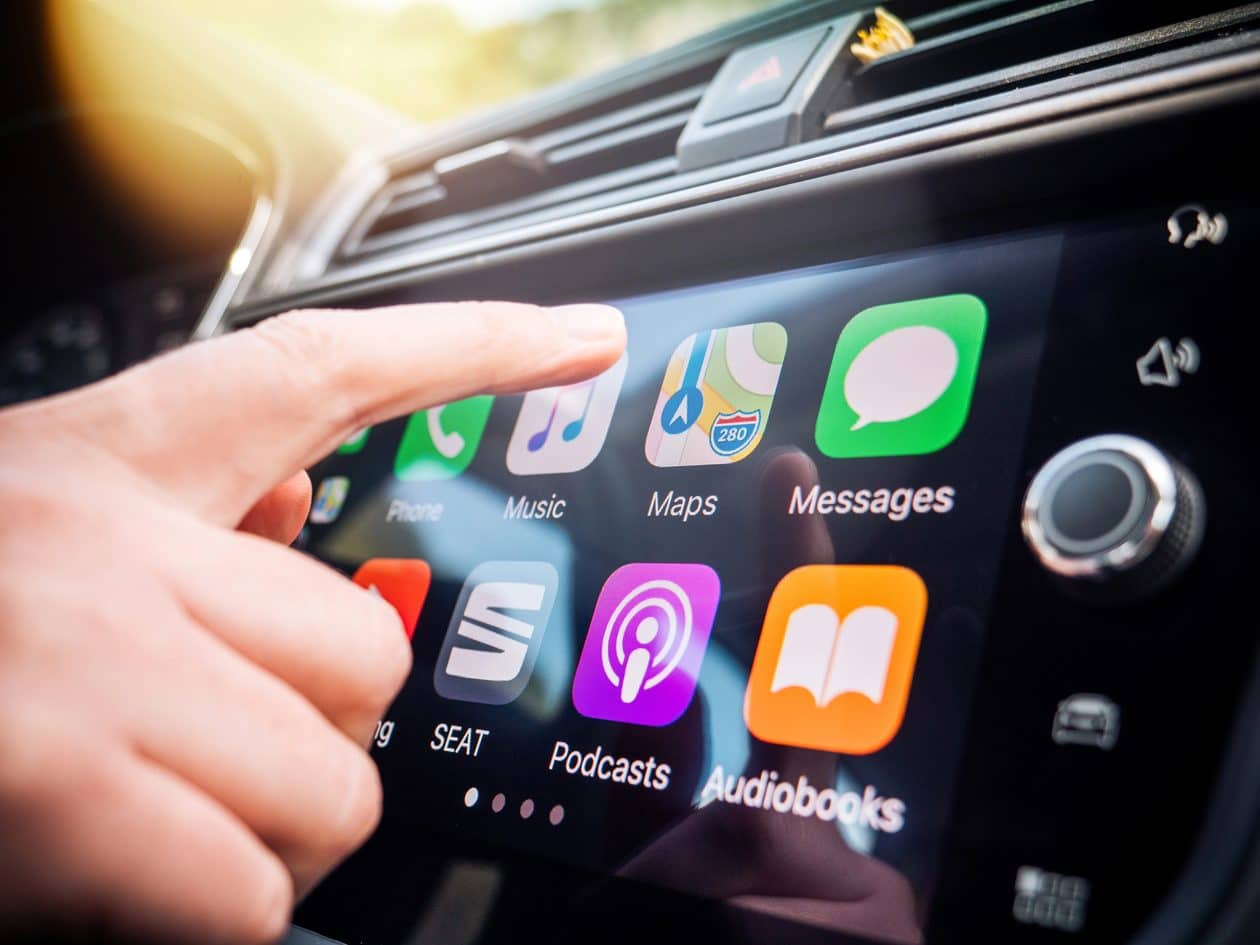
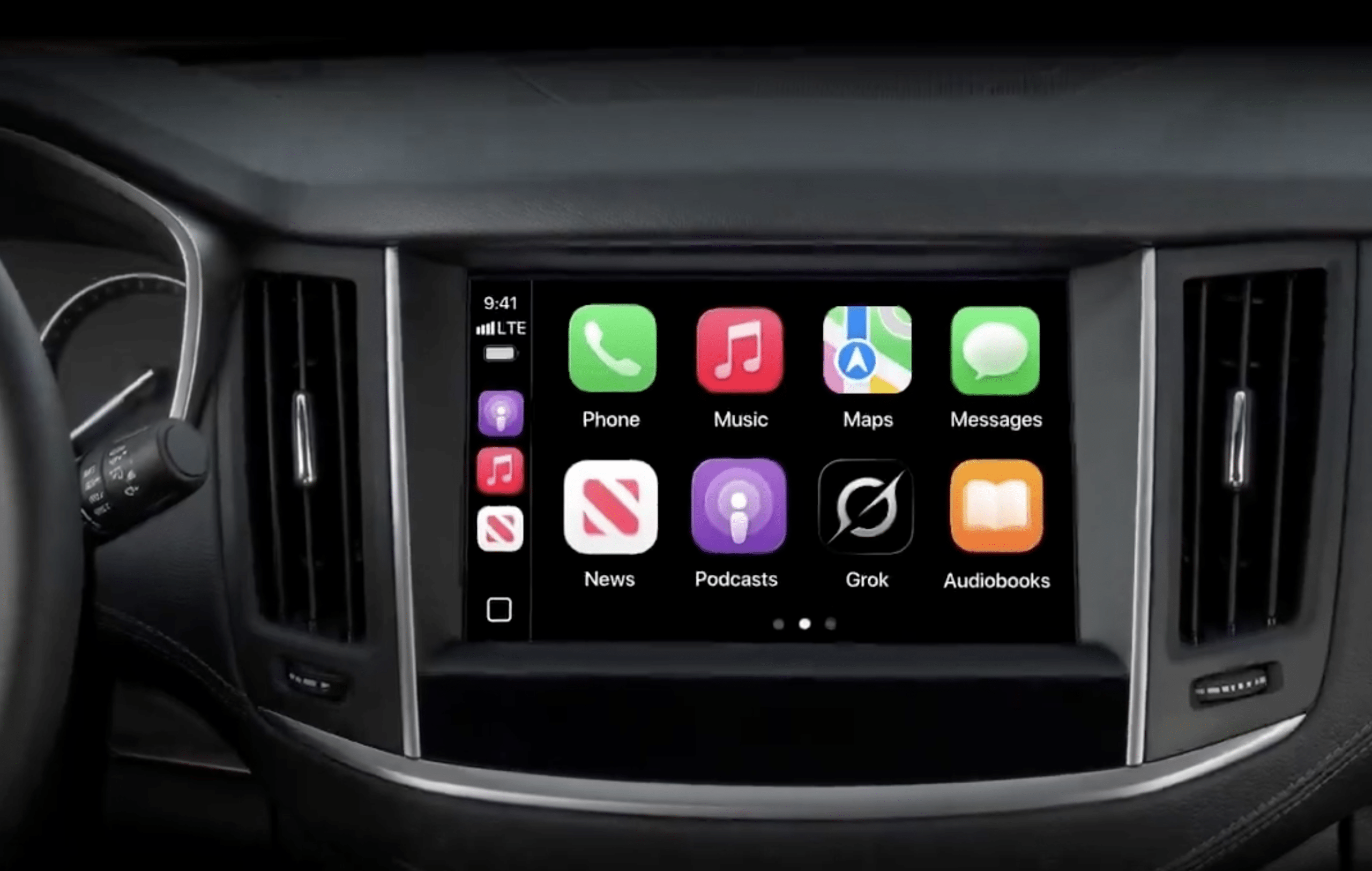
CarPlay chatbots now span five major services, giving the growing collection of dashboard apps a much more conversational side. Claude is the latest addition, joining ChatGPT, Perplexity, Grok, and Meta AI. Drivers can increasingly bring their preferred AI service into the car through an iPhone app update, although access is not equally open across all five.
The appeal is easy to understand. A question comes to mind during a trip, and instead of saving it for later, you can ask it aloud. A follow-up can become part of the same conversation. There is no need to turn every request into a rigid command or reach for a keyboard.
But the headline needs one qualification: Meta AI has appeared in CarPlay while remaining unavailable to some accounts. Five apps have added support; that does not mean every driver can open all five and immediately start talking.
Claude Brings CarPlay Chatbots to Five
Anthropic’s latest iPhone update adds a straightforward CarPlay experience: begin a new voice conversation or return to a recent chat. The reported Claude integration places those choices inside the simplified dashboard interface rather than reproducing the full mobile app.
That continuity could be particularly useful for someone who already uses Claude regularly. A conversation does not have to begin again simply because the setting has changed from a desk to a parked car or a journey.
Claude’s arrival also makes the category feel less experimental. ChatGPT, Perplexity, and Grok established an earlier presence, while Meta AI recently joined the lineup. There is now a broader choice of familiar services rather than one chatbot acting as a demonstration of what CarPlay might eventually support.
This is not a reason to install all five. An assistant that already understands the conversation you want to continue may be more convenient than another app with a different account, unfamiliar controls, and an empty chat history.
Image Credit: Grok / X
Meta AI Still Has an Access Catch
Meta AI is the entry readers should approach with the most caution about availability. Reports describe its icon appearing on the CarPlay screen, only for the app to display a notice that the experience is not supported for that account.
Coverage of the limited Meta AI rollout also notes that moving to a paid account did not necessarily remove the restriction. Paying solely to unlock CarPlay would therefore be a poor assumption.
An icon and a working service are different things. The first shows that the app includes a CarPlay interface; the second depends on whether the provider has enabled access.
If Meta AI opens normally on the iPhone but refuses to work on the dashboard, that account-specific message is important. Repeatedly reconnecting the cable or resetting the vehicle’s infotainment system is unlikely to resolve a restriction controlled by the service.
What CarPlay Chatbots Actually Do
The useful distinction is between discussing something and making the car do something.
A conversational assistant can help explain an unfamiliar subject, work through an idea, or answer follow-up questions. You might ask for a plain-English explanation of a concept mentioned in a podcast, practice a short introduction, or explore ideas for a weekend project.
Those are different requests from changing a destination, calling a contact, or adjusting a vehicle setting. A chatbot’s ability to describe an action should not be mistaken for permission to perform it.
Apple recognizes voice-based conversational apps as a supported CarPlay category, alongside separate categories for navigation, audio, messaging, and driving tasks. Developers must build an appropriate CarPlay experience; an ordinary iPhone chatbot does not automatically qualify simply because it has a microphone button.
The distinction also helps set expectations about the screen. A dashboard conversation should not become an invitation to read paragraphs, inspect generated images, or manage a complicated workspace while driving.
For everyday use, short questions make more sense than elaborate assignments. Asking for three talking points is manageable. Dictating a detailed business proposal while negotiating traffic is a task better saved for somewhere stationary.
ChatGPT Has Clear Requirements and Limits
OpenAI’s CarPlay support documentation confirms availability across all ChatGPT plans, globally, on supported iPhones running iOS 26.4 or later. The latest ChatGPT app and a CarPlay-compatible vehicle are required.
Its interface supports starting a voice conversation, returning to recent or pinned chats, and accessing projects. However, OpenAI explicitly says the CarPlay version cannot access maps, vehicle information, or live location, and cannot control the car or other apps.
That rules out assuming it knows which intersection you are approaching or can change a route because you discussed a destination.
These requirements also mean ChatGPT’s CarPlay support is not something that requires waiting for iOS 27. Readers already using compatible software can check the existing app without installing an upcoming operating-system beta.
Choosing an Assistant Without Adding Dashboard Clutter
There is little value in treating the car as a place to conduct a five-way AI comparison. Try the services while parked, then keep the one that suits the conversations you actually want to have.
Listen for how clearly an assistant answers, whether it understands follow-up questions, and how easily a conversation can be stopped. A response that feels impressive on a laptop may be exhausting when spoken through car speakers for several minutes.
Ask for shorter answers when needed. “Explain that in two sentences” is often a more useful instruction in this setting than requesting a comprehensive overview.
For work-related conversations, consider who else is in the vehicle before resuming a saved chat. A colleague’s name, a client discussion, or a personal detail can become audible to passengers even when the phone remains untouched.
The presence of an app inside CarPlay should not be treated as approval to share confidential information with its provider. Keep employer rules and the service’s own account settings in mind before discussing business material.
Voice Quality Can Depend on the Car
A disappointing voice experience is not always a sign that the AI service misunderstood the question. OpenAI notes that CarPlay audio depends on the vehicle’s microphones, speakers, and echo cancellation. The same app can therefore sound or behave differently across cars.
Before abandoning an assistant because it repeatedly misses words, test it while parked with the cabin quiet. That makes it easier to distinguish a microphone or audio-routing problem from an account restriction or an unhelpful response.
There is also a small behavior worth knowing about ChatGPT: CarPlay may reopen the last-used app when the iPhone reconnects. If a chatbot unexpectedly returns to the display on your next trip, that alone does not mean it has started a fresh conversation or begun listening.
Is CarPlay really a key factor in car buyers choices? At least one statistic supports that position, raising questions about automakers ignoring customer preferences. The panel also examines Gmail’s upcoming changes, Apple’s evolving iPhone purchasing strategy, and a troubling article about advertising and tracking on computer monitors and smart displays.
Apple Vision Pro’s measurable impact in surgery leads a discussion of spatial computing in medicine, including shorter procedures, surgeon ergonomics, patient benefits, and equipment costs. The panel also explores CarPlay on pontoon boats, Apple Maps versus Waze, another delay in Apple’s legal fight with Jon Prosser, and the difficult privacy compromises surrounding Siri and Apple Intelligence in China.
The integration of Apple Maps in Ford’s future electric vehicle platform generates discussions of the auto industry picking and choosing technology. The MacVoices Live! panel also examines security risks involving Claude Cowork and exposed shared chats, OpenAI’s dispute with Hugging Face, and the hazards of autonomous AI tools. If that wasn’t enough, selfie-based account recovery puts a new spin on the facial recognition.The panel includes: Chuck Joiner, Web Bixby, Eric Bolden, Marty Jencius, David Ginsburg, Brian Flanigan-Arthurs, Jim Rea, Jeff Gamet, and Mark Fuccio.
Do smart glasses need video recording to be relevant? The MacVoices Live! panel debate the importance of privacy, accessibility, navigation, object recognition, captions, and visual assistance as measures of usefulness. They examine the stigma created by existing smart glasses, the difference between processing and storing images and the public expectations around recording, detection apps, and […]
OpenClaw’s official iPhone app is tempting many to get into the whole agentic a AI thing. Chuck Joiner, David Ginsburg, Brian Flanigan-Arthurs, Ben Roethig, Eric Bolden, Marty Jencius, Jeff Gamet, Norbert Frassa, Jim Rea, and Web Bixby discuss whether this is a good idea and how anxious they are to put it into practice. They also touch on the security implications of a stolen iPhone, and Apple’s standing as the world’s most valuable brand.The discussion evolves in an exploration of the technical challenges behind an immersive Vision Pro classical concert, and debate whether smart glasses could deliver the same experience,
Rivian’s rejection of CarPlay and physical buttons in favor of voice and AI control sees to question safety, convenience, data control, and long-term car software support. Chuck Joiner, David Ginsburg, Jeff Gamet, Guy Serle, Web Bixby, Eric Bolden, Marty Jencius, and Jim Rea question whether Rivian has other motives, and then dive into Tesla updates, AI voice recreation of Stan Lee, Spider-Man ticket promotions, Dashlane concerns, and Andy Ihnatko’s new site.
Apple’s CarPlay is coming to Crest and Balise pontoon boats
MasterCraft Boat Holdings has announced that it is adding Apple CarPlay to its upcoming Crest and Balise pontoon boats, MacRumors reports. The company is partnering with Savvy Navvy to bring CarPlay and on-water navigation to boaters.
Boaters who purchase select 2027 Crest or Balise pontoons will gain access to CarPlay, offering many of the same features available in cars. The Savvy Navvy mobile app will integrate with CarPlay to display nautical charts, GPS tracking, smart routing, and live weather forecasts alongside other CarPlay apps.
Savvy Navvy will provide specialized water navigation—a feature not available through the Apple Maps CarPlay integration.
“Boaters have been asking for a modern infotainment system for years,” says Jelte Liebrand, Founder and CEO of Savvy Navvy. “Plan your trip on the couch, step aboard, and it is already at the helm. No complicated ways to synchronise things; it just works. Savvy Navvy for CarPlay works on iOS and Android with any compatible display. I’m thrilled to see Crest and Balise put CarPlay in front of their boaters.”
Starting with the 2027 model year, Apple CarPlay with Savvy Navvy will come standard on all new Balise and Crest Conquest and Caribbean models. A limited Savvy Navvy Premium subscription is included.The Savvy Navvy app is available for CarPlay worldwide starting today and works with any compatible CarPlay display, including aftermarket marine head units.
MacDailyNews Take: BoatPlay.
Please help support MacDailyNews — and enjoy subscriber-only articles, comments, chat, and more — by subscribing to our Substack: macdailynews.substack.com. Thank you!
A fabricante de barcos de lazer MasterCraft Boat Holdingsanunciou ontem que está levando a compatibilidade com o CarPlay a alguns de seus barcos pontão (pontoon boats) em parceria com o app Savvy Navvy.
Um pedido antigo de clientes da fabricante, o sistema de infoentretenimento da Apple, bem como o Android Auto, serão implementados por padrão em modelos 2027 (ou mais recentes) das marcas Crest e Balise, que contarão com vários dos mesmos recursos disponíveis em carros.
A parceria com o Savvy Navvy, no entanto, permitirá que usuários confiram também informações como cartas náuticas, rastreamento por GPS 1Global positioning system, ou sistema de posicionamento global., rotas inteligentes, previsões meteorológicas em tempo real e dados de marés, muitas das quais ainda não estão disponíveis no app Mapas (Maps), da Apple.
Quem adquirir um barco elegível das linhas Balise, Crest Conquest ou Caribbean ganhará ainda acesso a todos os recursos do Savvy Navvy Premium, versão mais completa do serviço de navegação, sem custo extra.
Ainda segundo a MasterCraft Boat Holdings, os primeiros modelos compatíveis com o CarPlay serão lançados já no próximo mês. O Savvy Navvy, por sua vez, está disponível para download na App Store.
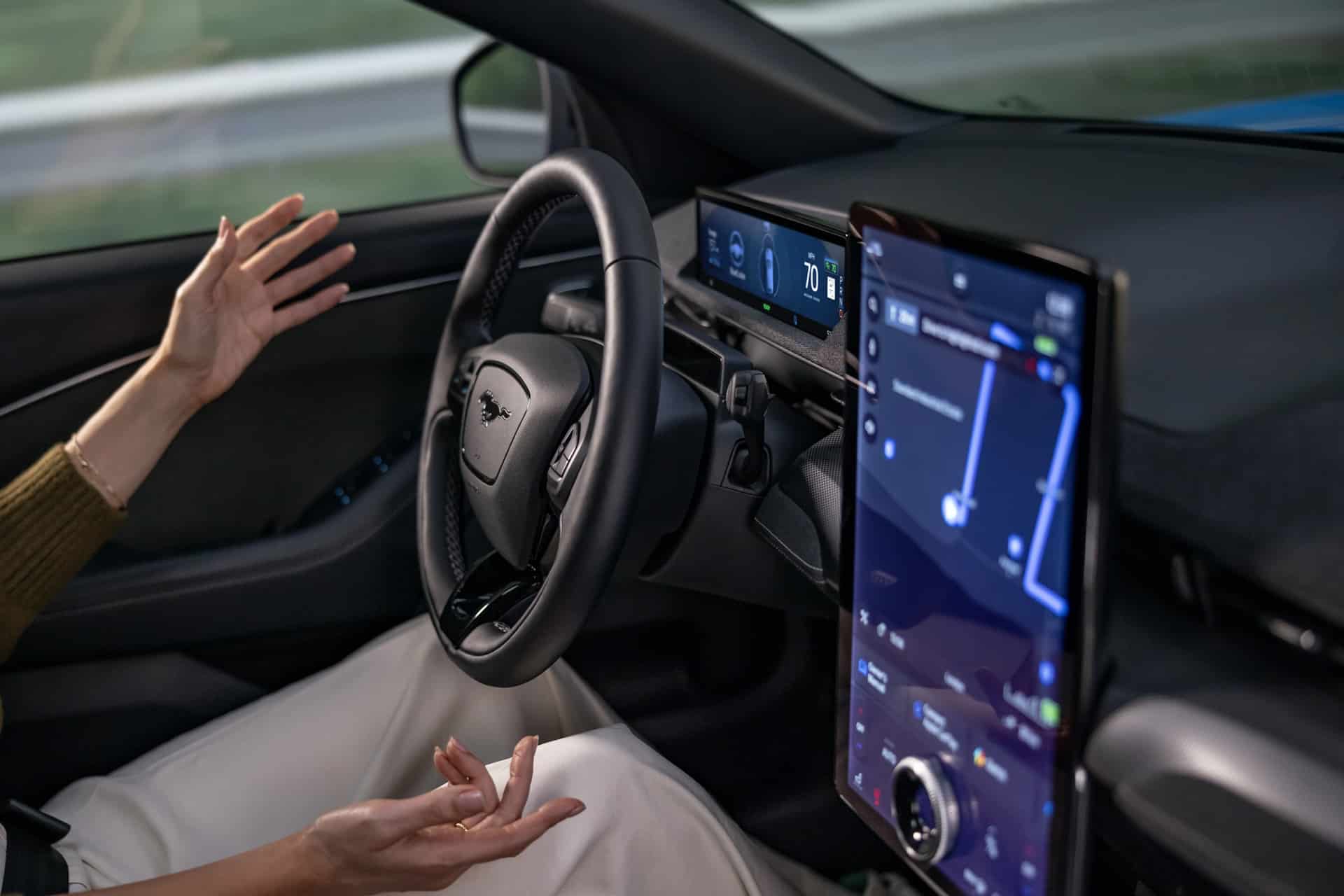
Ford Apple Maps integration will place the navigation service directly inside a new family of affordable electric vehicles, beginning with a midsize pickup expected to start at approximately $30,000 in 2027.
The truck will not depend on CarPlay or a connected iPhone to access Apple Maps. Ford plans to embed the service through MapKit for Automotive, allowing the automaker to incorporate Apple navigation into its own displays, controls and software environment.
CarPlay will remain available for drivers who want to use iPhone apps, messages, calls and media. The native integration, however, means Apple Maps can continue providing directions when no phone is connected or when the driver uses a device from another manufacturer.
The partnership extends beyond dashboard navigation. Ford also intends to use road-level information from Apple Maps while developing future versions of BlueCruise, connecting Apple mapping data with the driver-assistance technology planned for its Universal Electric Vehicle Platform.
Ford Apple Maps Moves Beyond CarPlay
Ford Apple Maps represents a different approach from the familiar relationship between an iPhone and a vehicle.
CarPlay runs from the phone and presents selected apps through the dashboard. The embedded version of Apple Maps will operate as part of the truck software, giving Ford greater control over how directions, charging information and vehicle data appear across its displays.
Drivers can expect turn-by-turn guidance, live traffic conditions, incident reports and detailed destination information. Ford will be able to adapt the visual experience to match the interface created for its new electric platform rather than reproducing the standard CarPlay layout.
EV routing may become the most practical benefit. The system can consider available range, charging locations and route conditions before recommending where a driver should stop.
When supported by the vehicle, navigation can also trigger battery preconditioning before arriving at a fast charger. Bringing the battery toward an appropriate temperature can reduce charging time, particularly during cold or extremely hot conditions.
Integrating those functions removes part of the planning burden from longer electric trips. Drivers will not need to move constantly between a navigation app, charging network software and separate vehicle menus to understand whether a station is suitable.
The native experience also gives Ford an alternative to building a complete mapping platform internally. Apple already maintains search, traffic, routing and place information across a large geographic network, while Ford can concentrate on vehicle-specific functions.
Apple, meanwhile, gains a route into factory-installed automotive software without needing to produce its own car.
A Different Strategy From CarPlay Ultra
The Ford arrangement should not be confused with CarPlay Ultra.
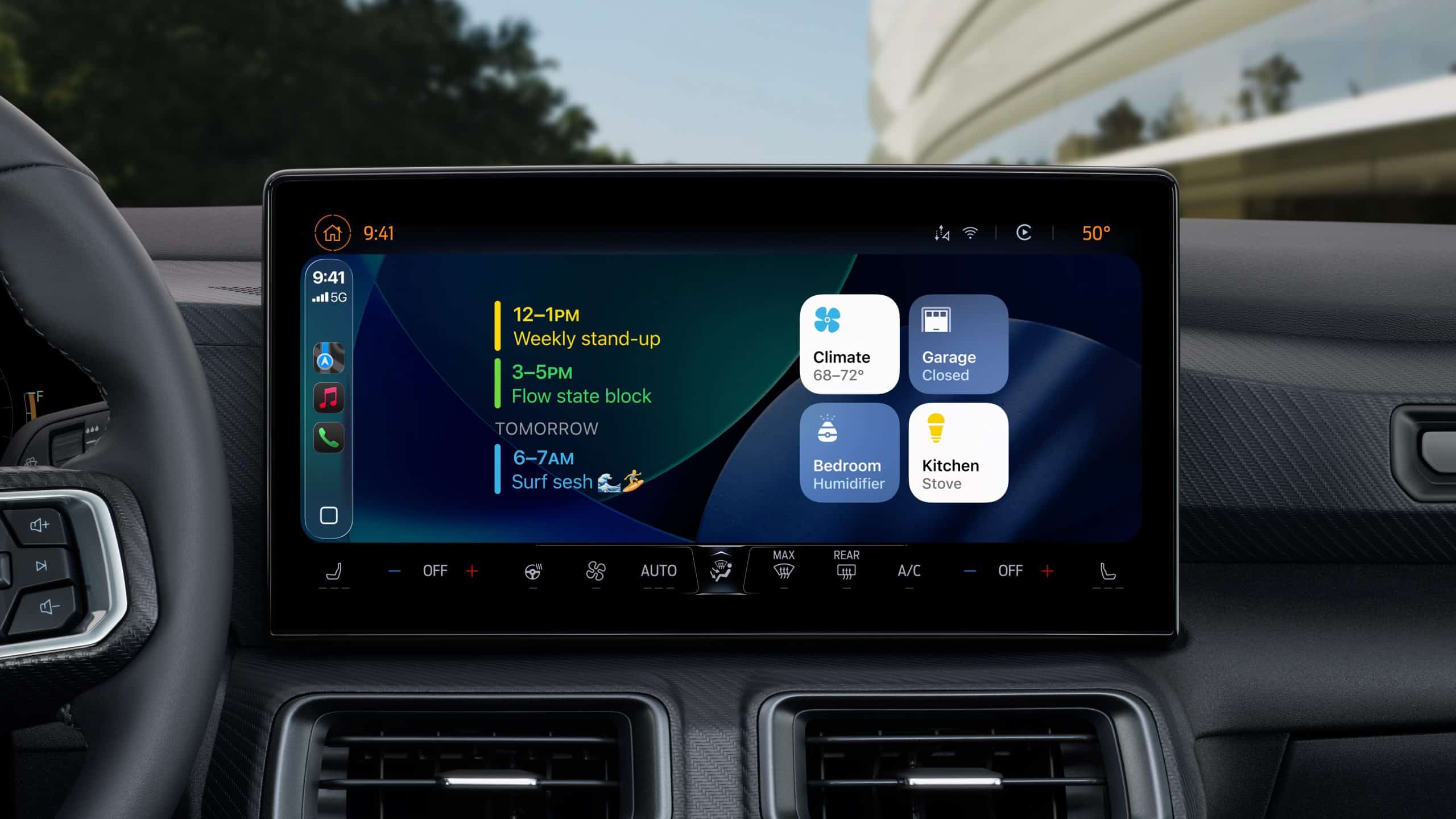
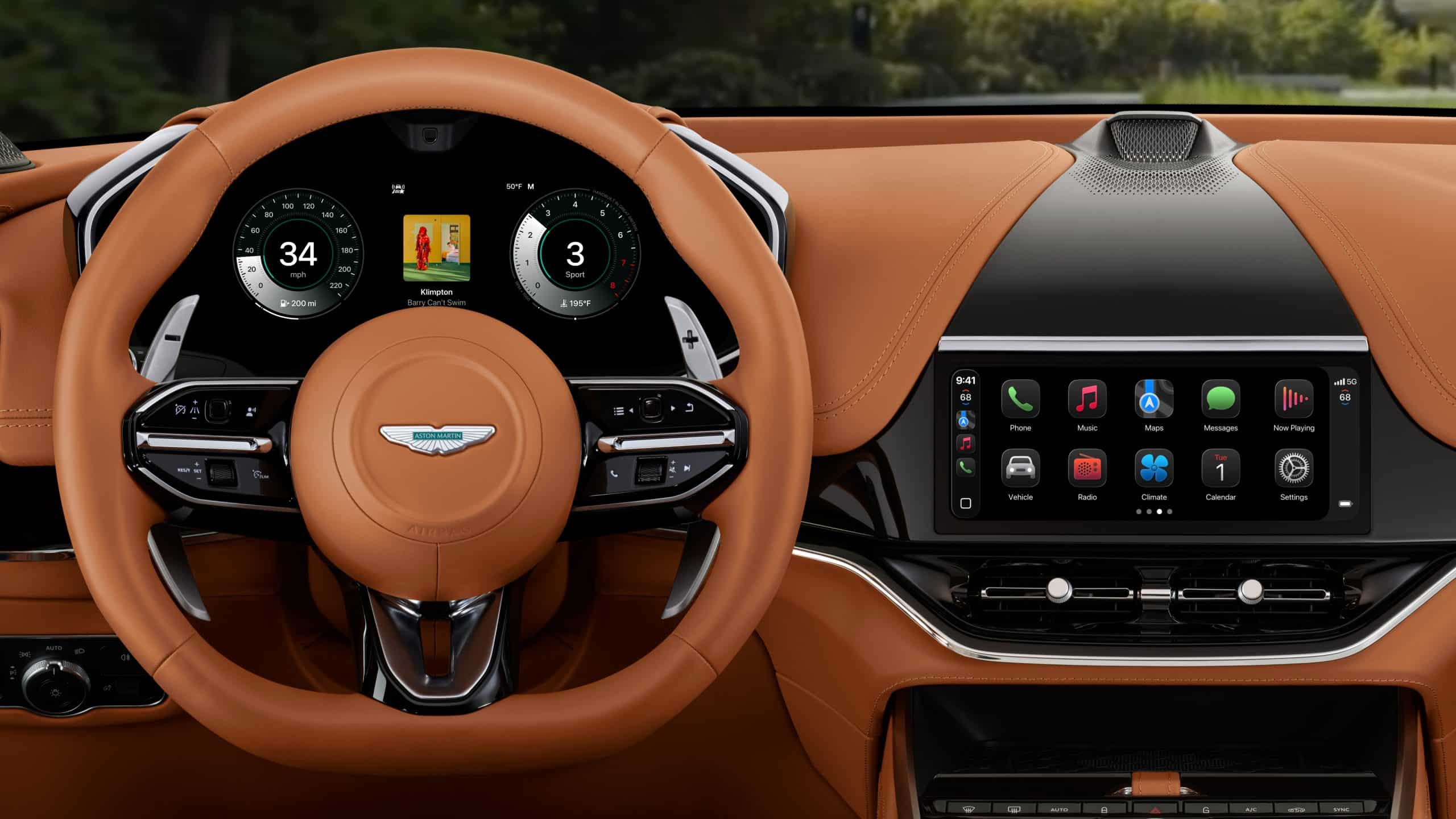
CarPlay Ultra expands the iPhone experience across multiple vehicle screens and can combine phone content with information supplied by the car, including speed, fuel or battery levels and climate controls.
Ford is taking a more selective path. Apple Maps becomes a native service, but the broader dashboard remains a Ford environment.
That distinction may appeal to automakers reluctant to hand control of the cabin interface to another company. Ford can use Apple technology for navigation while preserving its own identity, subscription services and software architecture.
Drivers still receive a recognizable Apple product, but the vehicle manufacturer determines where it appears and how it interacts with charging, driver assistance and other functions.
The arrangement could provide a model for other automakers that want access to individual Apple services without adopting the complete CarPlay Ultra experience.
Image Credit: Ford
A $30,000 Electric Truck Needs More Than a Low Price
The targeted price of approximately $30,000 would place it below many electric pickups currently available in the United States. Ford is aiming at drivers interested in an EV but unwilling or unable to spend the amounts associated with large premium trucks.
The company says the vehicle will provide more passenger space than a recent Toyota RAV4 while including a front storage compartment and a conventional truck bed. Performance is expected to compare with a Mustang EcoBoost, giving the pickup a stronger argument than affordability alone.
Reaching the price target requires changes throughout the vehicle rather than a smaller battery placed inside an existing truck design.
Ford has reduced the number of components, fasteners and assembly operations involved in the new platform. Its zonal electrical architecture is intended to shorten wiring and simplify how software-controlled systems connect across the vehicle.
Lithium iron phosphate batteries will form part of the structural floor. The chemistry avoids nickel and cobalt, generally costs less than alternatives focused on maximum energy density and can offer strong durability for repeated charging.
Production is planned for the Louisville Assembly Plant in Kentucky, where Ford is introducing a manufacturing process that separates major vehicle sections before bringing them together later in assembly.
Apple Maps supports the same cost-conscious strategy. Ford can offer a mature navigation experience without financing the creation of every mapping layer from the beginning.
Apple Maps Will Support BlueCruise Development
The partnership becomes more significant when mapping information begins supporting driver assistance.
Ford Latitude AI plans to use road-level Apple Maps data while developing future BlueCruise capabilities. The objective is to create smoother hands-free travel from a highway entrance ramp through the eventual exit.
Apple Maps can provide advance knowledge of road layouts, interchanges, curves and exits. Ford sensors and onboard systems must still identify vehicles, pedestrians, construction and unexpected changes in real time.
Apple is not developing or controlling BlueCruise. Ford remains responsible for the cameras, sensors, processors and driving decisions used by the system.
The maps provide another layer of context. A vehicle that understands the route in advance can prepare for lane changes, merges and exits before its sensors reach them.
Ford is also developing a large driving model through Latitude AI using extensive road data. Combining that work with detailed maps could allow the company to improve assistance without depending entirely on moment-to-moment visual detection.
The Universal Electric Vehicle Platform is expected to support more capable automated driving in later models. Ford has discussed eyes-off operation from 2028, although final hardware, pricing and regulatory approval remain unresolved.
Introducing that technology through an affordable platform would represent a departure from the usual industry pattern. Advanced driver assistance often begins in expensive vehicles where premium pricing absorbs the cost of sensors and computing.
Ford wants to distribute the development expense across a larger family of electric products.
Image Credit: Ford
Apple Maps Gives the Truck a Familiar Entry Point
The Apple Maps name may make the new truck feel less unfamiliar to customers buying an electric vehicle for the first time.
Charging behavior, range estimation and route planning can create hesitation among drivers accustomed to gasoline vehicles. Presenting those functions through a navigation service already used on millions of iPhones reduces the number of unfamiliar interfaces introduced at once.
Existing Apple Maps users may also recognize saved locations, search behavior and visual guidance, although Ford has not explained which personal features will require an Apple Account or connected iPhone.
The embedded service will still need reliable integration with vehicle range, charger availability and battery temperature. A familiar logo alone cannot compensate for inaccurate charging information or route estimates.
Ford has not yet announced the truck name, final driving range, battery capacity, production specifications or confirmed base price. Those details will determine whether the pickup can combine its promised affordability with enough capability for everyday work and travel.
The first production model is scheduled for 2027, leaving Ford time to refine the software and reveal how Apple Maps will appear across the dashboard before the Louisville assembly line begins building customer vehicles.
A Apple anunciou hoje uma parceria com a Ford para que o Apple Maps seja integrado à Universal Electric Vehicle Platform (UEV) da montadora até 2027, por meio do seu kit de desenvolvimento MapKit for Automotive.
A Maçã ainda afirmou que as informações cartográficas em nível de via serão utilizadas pela equipe Latitude AI da Ford para desenvolver um sistema de condução hands-free.
Com o novo SDK 1Software development kit, ou kit de desenvolvimento de software., a plataforma UEV da Ford permitirá navegação curva a curva a partir de instruções em linguagem natural, informações de trânsito e incidentes em tempo real, busca intuitiva com cartões detalhados de locais e opções de rotas inteligentes.
A Ford deverá utilizar os dados viários dos Mapas da Apple para aprimorar a próxima geração do BlueCruise, seu sistema de condução sem as mãos para rodovias. A experiência da plataforma UEV poderá se assemelhar à dos Mapas no CarPlay, oferecendo um roteamento inteligente para elétricos e pré-condicionamento de bateria — nesse caso, integrados diretamente ao sistema de navegação do veículo.
O CEO 2Chief executive officer, ou diretor executivo. da Ford, Jim Farley, comentou a parceria:
Nossos novos carros de porte médio terão um preço por volta de US$30.000 e redefinirão o que a tecnologia avançada pode ser — simples, útil e realmente acessível para mais consumidores. […] Nós temos o orgulho de incorporar a navegação e a tecnologia de navegação de mapas do Apple Maps diretamente na nossa Universal Electric Vehicle Platform, dando aos consumidores uma experiência definitiva de navegação junto com o nosso app da Ford, uma suíte completa de software e a próxima geração do BlueCruise, tudo habilitado para uma nova arquitetura zonal. O Apple Maps entregou um produto de classe mundial, e estamos honrados em ser um dos primeiros a incorporá-lo diretamente em um veículo, ajudando a definir uma condução mais intuitiva e capaz.
Para os proprietários de carros da Ford, a Apple confirmou a continuidade do suporte ao CarPlay, embora a colaboração permita que até mesmo quem não utiliza um iPhone possua os Mapas da Apple com todos os seus recursos. Com o kit de desenvolvimento MapKit for Automotive, a expectativa da Apple é que mais montadoras incorporem os Mapas aos seus próprios sistemas.
Notas de rodapé
1
Software development kit, ou kit de desenvolvimento de software.
O WhatsAppoficializou hoje um conjunto de novidades para usuários de recursos e dispositivos da Apple, com destaque especial para o CarPlay e o iPad — que só ganhou um app do mensageiro no ano passado.
No caso do sistema de infoentretenimento da Maçã, foi revelada uma reformulação completa da experiência, que inclui agora a possibilidade de ouvir e responder mensagens com as mãos livres. Também passou a ser possível fazer ligações, consultar o histórico delas e acessar seus favoritos diretamente da multimídia do veículo.
Divulgação/Meta
Usuários de iPad, por sua vez, agora podem criar uma conta na plataforma e configurá-la diretamente do tablet, o que os livra também de ter que conectar o app a um smartphone. Segundo o mensageiro, essa adição era um dos principais pedidos dos usuários.
O WhatsApp também oficializou a possibilidade de compartilhar uma música do Apple Music ou do Spotify na forma de um status, expandindo as possibilidades de expressão nessa seção do app.
Por fim, também foi anunciada uma integração com o Adobe Acrobat para permitir que usuários abram PDFs diretamente do WhatsApp Web (ou do app para Windows) sem precisar baixá-los. Também passou a ser possível fazer edições simples, como destacar e adicionar comentários, sem deixar o mensageiro e com criptografia de ponta a ponta.
Divulgação/Meta
Segundo a Meta, essas novidades já foram liberadas para todos os usuários do WhatsApp.

 Login



 .