A new approach to computing has quietly taken shape at Sandia National Laboratories, where researchers have developed a way to store information that could make future electronics more energy efficient.
The MacVoices Live! examines Apple’s transition from Tim Cook to John Ternus, weighing Cook’s legacy, Apple’s dramatic financial growth, Vision Pro, and criticism of his tenure. They consider what Ternus’ engineering background could mean for hardware and software, while discussing Phil Schiller, Eddie Cue, other executive changes, succession planning, and the importance of preserving institutional […]
Faltam poucas horas para o evento especial “Surprise and shine”, no qual a Apple deverá apresentar oficialmente seu primeiro iPhone dobrável — chamado nos rumores mais recentes de “iPhone Duo”, embora parte da imprensa ainda trate o produto como “iPhone Ultra”. E, no momento em que todos os olhos se voltam para Cupertino, um executivo da Samsung aproveitou para dar uma “dica” pública à concorrente.
Em entrevista à revista WIRED, Hee-Cheul Moon, chefe do grupo de P&D Mecânico Avançado da Samsung, afirmou que a chegada da Apple ao mercado de dobráveis é vista com bons olhos internamente — e até como uma validação do trabalho que a companhia coreana vem fazendo há sete anos nessa categoria.
Ao ser questionado sobre o que diria à Apple antes da estreia do rival, Moon foi direto: “A chave para entregar o maior valor ao cliente nesse mercado é o peso do aparelho.” E completou dizendo que essa não é uma equação simples de resolver.
Segundo estimativas, o dobrável da Apple deverá pesar entre 230 e 241 gramas — mais que o iPhone 17 Pro Max (233g) e bem acima dos 201g do Galaxy Z Fold8, o modelo mais leve já lançado pela Samsung na linha principal. Para chegar a esse número, a empresa afirma ter revisado cerca de 270 componentes e mais de 180 peças auxiliares do aparelho, eliminando 15 delas, redesenhando a placa de circuito interna e usinando a placa de suporte da tela a cerca de 0,2mm de espessura — mudança viabilizada por um novo filme de liga de titânio, batizado de “Flex Titanium”, que a Samsung diz ajudar a manter a tela mais plana e a conter o avanço do vinco ao longo do tempo.
Resta saber se a Apple — que, ao que tudo indica, investiu pesado no desenvolvimento da dobradiça do “iPhone Duo” — conseguirá equilibrar a robustez buscada com um peso mais competitivo, ou se o “conselho” da Samsung vai se confirmar como o principal ponto fraco do novo aparelho.
A sul-coreana também postou um vídeo intitulado “Welcome to Foldables” (“Bem-vinda aos Dobráveis”), provavelmente como forma de provocação à Apple:
A resposta, pelo menos para boa parte dessas dúvidas, virá já nas próximas horas.
UK-based manufacturing software startup CloudNC announced Wednesday a $20 million B extension round, bringing its lifetime total raised amount to $128 million.
A Apple parece estar preparando seus sistemas para a nova leva de produtos que será lançada em breve. A menos de 24 horas do evento “Surprise and shine” (“Surpreendente e brilhante”), a empresa adicionou nada menos que 37 novos identificadores de hardware ao seu backend, abrangendo iPhones, iPads, Macs, Apple Watches e outros dispositivos.
A descoberta foi feita por Aaron Perris. No X, ele compartilhou todos os identificadores, sendo sete deles relacionados a iPhones.
A bunch of upcoming Apple device identifiers have been found on Apple’s backend. Interestingly, there are 7 iPhone models listed. We only know of 6.
O número chama atenção pois, até o momento, os rumores dão conta de seis modelos compondo a futura linha: “iPhone 18 Pro”, “iPhone 18 Pro Max” e “iPhone Ultra”, além dos “iPhone 18”, “iPhone Air 2” e “iPhone 18e” — os três últimos, segundo as notícias, só serão lançados no ano que vem.
Isso, porém, não significa necessariamente que a Apple esteja preparando um sétimo iPhone do qual nunca ouvimos falar. O identificador pode muito bem ser simplesmente uma variante de um dos modelos já esperados — como, por exemplo, uma configuração específica do “iPhone Ultra” destinada à China.
Além dos iPhones, a lista inclui nove identificadores de Macs, oito de iPads, nove de Apple Watches, um de Apple TV e três associados à categoria “HomeAccessory”, utilizada internamente pela Apple para produtos domésticos.
Lembrando que, no evento de amanhã, a Apple muito provavelmente lançará produtos como o “Apple Watch Series 12”, o “Apple Watch Ultra 4”, uma nova geração da Apple TV e, quem sabe, o aguardado hub inteligente para a casa — além dos iPhones, é claro. Novos Macs (como um iMac com chip M6 e a estreia dos “MacBooks Ultra”) e iPads (como o iPad mini com tela OLED), contudo, não são esperados para esta semana.
Researchers in the Department of Electrical and Computer Engineering of the Faculty of Engineering and the Centre for Advanced Semiconductors and Integrated Circuits (CASIC) at the University of Hong Kong (HKU) have made a breakthrough in brain-inspired computing. In collaboration with Hewlett Packard Labs, the team has developed a memristor chip that overcomes a long-standing limit on the capacity of "associative memory," the brain-like ability to recall complete information from a partial cue, while keeping it reliable even when a large fraction of the hardware fails.
Just replaced an 8 yr. old Mac Mini that died, with a MacBook NEO. It's OS is Tahoo 26.6.2.
This was very stressful. I was on the phone with Apple support for about 3 hrs. hooking up everything. I just got off the phone with my internet supplier, trying to get the printer to work, Took about another hour but finally printing now.Glad that's over.
If you're looking for a laptop that's purely for crushing work without frivolous features eating its precious processing power, few are as simple yet effective as the HP OmniBook X Flip 2-in-1 laptop.
It's not going to win any design contests, but it will help you conquer your daily tasks with superb performance, detailed resolutions, and handy AI features, all of which are now 50% off for $699.99 at Best Buy for a limited time before it returns to its steep $1349.99 listing price on September 7, 2026.
The HP OmniBook X Flip 16-inch laptop will bulldoze any lightweight workflow tasks you throw at it thanks to its AMD Ryzen AI 5 430 (2026), 16GB RAM, and 512GB SSD, while being much cheaper than the competition.View Deal
Why buy the HP Omnibook X Flip 14"?
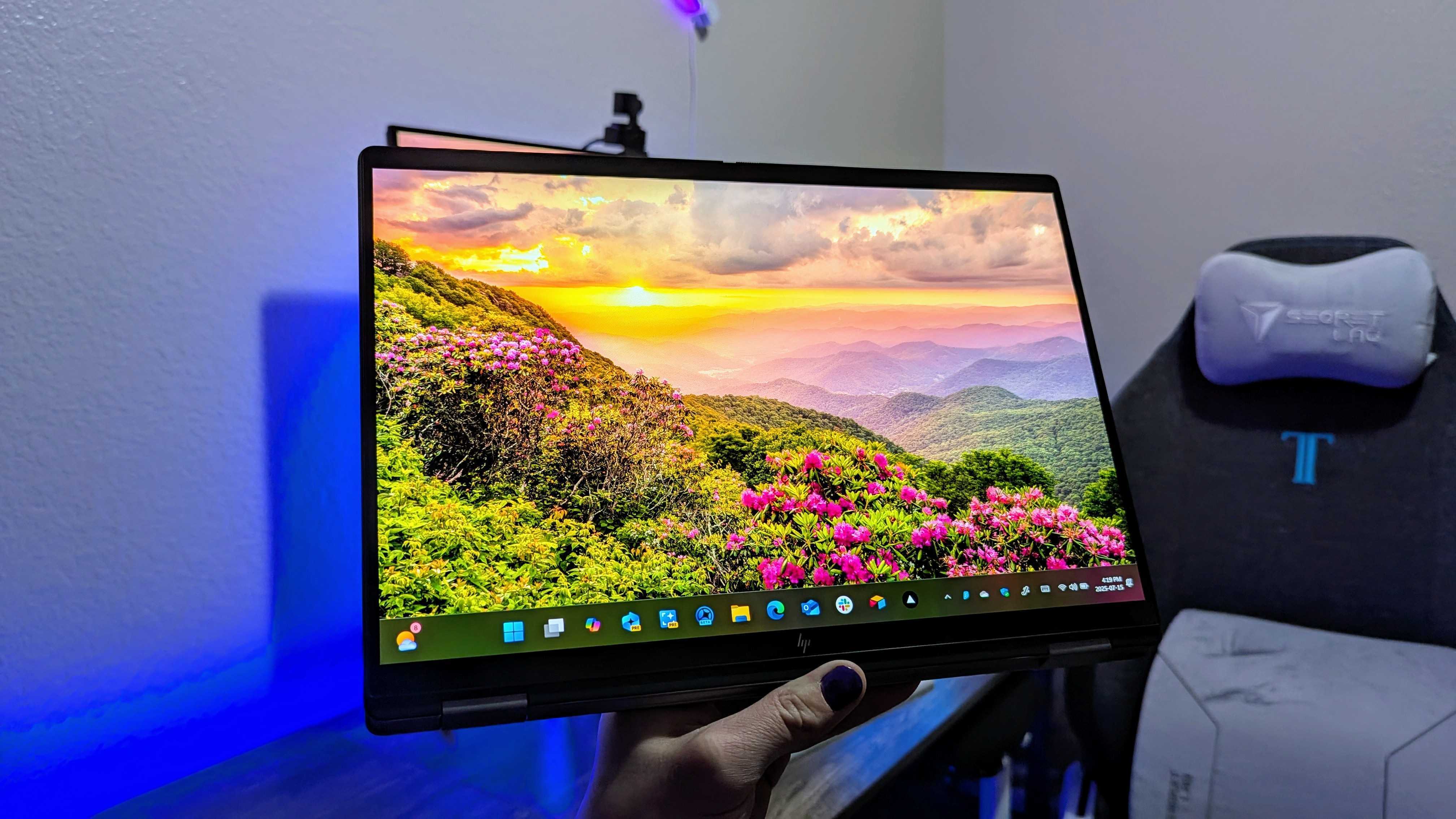
The HP OmniBook X 2-in-1 laptop in hand. (Image credit: Windows Central (Zachary Boddy) | HP)
The HP OmniBook X Flip 16" 2-in-1 laptop is equipped with handy components like an AMD Ryzen AI 5 430 (2026) CPU, 16GB RAM, and a 512GB SSD.
While some of these components aren't as powerful as the ones found in the 14-inch version of the HP OmniBook X Flip we reviewed some time ago, they're still more than capable of handling daily workflow tasks, whether it's crunching numbers on spreadsheets, typing up long essays via Microsoft Office, researching info on the internet, and more.
It also features an NPU with 50 TOPS to help the laptop perform local AI tasks more efficiently, a 16-inch 2K OLED touchscreen to display images and videos with crisp detail and vibrant colors, and a long-lasting battery life of 30 hours so you can work for a whole day without worrying about it losing power.
Add on top a comfortable-to-use keyboard, a plethora of USB and HDMI ports, and stylus pen compatibility for easier note-taking or digital art sketching, and you've got a laptop that's worth the price of admission, especially now that it's 50% off for Best Buy's Labor Day Sale.
FAQ
How long will Best Buy's Labor Day Sale last?
Best Buy's Labor Day Sale will last until September 7, 2026.
Can it handle gaming or heavy creative work?
No, mainly because it was designed for light workflow tasks and everyday productivity. Trying to use the HP OmniBook X Flip 16-inch laptop for gaming or heavy creative work will cause its performance to stutter and overheat quickly.
What convertible modes does it support?
The HP OmniBook X Flip 16-inch laptop supports Laptop Mode, Tablet Mode, Tent Mode, and Reserve Mode (a.k.a. Media Mode).
Join us on Reddit at r/WindowsCentral to share your insights and discuss our latest news, reviews, and more.
Sam Altman has described himself as a “mega Apple fanboy” while discussing the trade secrets lawsuit now dividing two companies that were close technology partners only two years ago.
Speaking with journalist Alex Heath on the Sources podcast, the OpenAI CEO said he was “very sad” when he learned about the case. His admiration for Apple, however, did not soften his rejection of the allegations against OpenAI and two former employees.
Altman said the company does not want another business’s intellectual property and would dismiss anyone found to have improperly brought confidential material into OpenAI. He also said an internal investigation left him convinced that the employee at the center of the dispute had not acted improperly.
That is OpenAI’s account, not a resolution of the lawsuit. Apple alleges that trade secrets connected to hardware design, manufacturing and supply-chain operations were taken for the benefit of OpenAI’s consumer-device program. The defendants deny wrongdoing, and the court has not settled those competing claims.
Sam Altman Separates Personal Admiration From the Case
Altman’s response was unusually personal for a dispute of this scale.
Technology executives normally leave active litigation to lawyers and carefully written company statements. Calling himself a fanboy places Altman on familiar ground with millions of customers who admire Apple products while disagreeing with a corporate decision.
His first reaction, he said, was to assume that the accusations sounded serious enough that someone must have behaved badly. OpenAI then examined the matter and reached a different view.
Altman said the company would act if it found that someone had taken another company’s intellectual property. At the same time, he argued that an employee who had done nothing wrong deserved a defense.
That distinction is central to OpenAI’s public position. It does not deny that former Apple employees now work on its hardware initiative. Instead, the company disputes the allegation that their movement between employers brought protected information into the program.
Personal admiration cannot answer the evidentiary questions. Being a customer, praising a company or enjoying its products has no bearing on whether confidential files were accessed or used. Altman’s comments are more revealing as an account of how sharply the relationship has changed.
OpenAI once promoted its work with Apple as a partnership built around safety, innovation and access to advanced AI. It now describes the lawsuit as aggressive, inaccurate and unnecessary.
Image Credit: OpenAI
From ChatGPT Partnership to Hardware Rivalry
In June 2024, both companies announced an agreement to integrate ChatGPT into experiences across iPhone, iPad and Mac.
Siri could ask for permission to send certain requests to ChatGPT, while Writing Tools could use the model for composition and image generation. The integration gave OpenAI direct exposure inside some of the world’s most widely used personal devices without requiring every user to create an account.
At the time, Sam Altman said the partnership would introduce ChatGPT to users in a new way. Apple presented the external model as an optional extension of Apple Intelligence, keeping permission and privacy controls between the user and the third-party service.
The arrangement made sense while the companies occupied complementary positions. Apple controlled the devices and operating systems; OpenAI supplied a widely recognized generative model.
Consumer hardware changed that balance.
OpenAI is developing a family of AI-native devices with designer Jony Ive, whose work at Apple helped shape products including iPhone, iMac, iPod and Apple Watch. Tang Tan, another longtime hardware figure who previously worked on major Apple products, is now OpenAI’s chief hardware officer.
Once OpenAI began recruiting deeply from Apple’s hardware organization, the relationship was no longer limited to providing a model inside Siri. The companies were moving toward competition over the physical objects through which people may interact with AI.
That competition helps explain why the lawsuit reaches beyond an ordinary employment disagreement. Hardware development depends on manufacturing knowledge, component choices, testing systems, supplier relationships and production methods that can take years to build.
Apple’s complaint alleges that OpenAI benefited from confidential information in those areas. OpenAI argues that the case is being used to slow a potential rival and discourage employees from leaving.
What Apple Alleges Against OpenAI
Apple filed its lawsuit in July against OpenAI, Tang Tan and former electrical engineer Chang Liu.
The complaint alleges that former employees misappropriated trade secrets connected to product development and shared them with OpenAI as it accelerated its consumer-hardware ambitions. Apple has also sought a preliminary injunction intended to prevent the use of disputed information while the case proceeds.
According to Associated Press reporting on the original complaint, Apple accused OpenAI of encouraging recruits to provide confidential knowledge and advising them on how to avoid scrutiny during the transition between companies.
Those are allegations. OpenAI has denied that it requested, received or wants Apple’s trade secrets.
In its public response, OpenAI disputed several details surrounding Apple’s communications and treatment of departing employees. It argued that continued access to some files resulted from Apple’s own account-management practices and said former employees had attempted to handle that access responsibly.
OpenAI also said Tan had instructed his team not to use confidential material belonging to previous employers. Its motion to dismiss asks the court to reject Apple’s case, while its opposition to the requested injunction challenges the evidence and need for immediate restrictions.
Reuters reported that roughly 400 former Apple employees had joined OpenAI’s hardware initiative, according to figures appearing in court filings. Headcount alone does not establish misuse of trade secrets. It does illustrate the scale of the talent movement and why the dispute has become a defining fight over the next generation of personal hardware.
OpenAI’s Device Work Is Continuing
Sam Altman said he does not expect the lawsuit to slow the company’s device program.
That is the most direct business claim in his interview. It suggests that OpenAI has separated disputed material and personnel questions from the work it believes can continue without relying on protected Apple information.
Whether the schedule remains unaffected may depend on the court. A preliminary injunction could impose restrictions before a full trial, depending on its scope. A denial would allow development to proceed without that requested intervention, although the wider lawsuit would remain active.
OpenAI has revealed little about the devices themselves. The company has discussed an AI-native hardware family rather than a single conventional phone replacement, and Altman has spoken about the privacy discomfort created by products that visibly point cameras at other people.
That leaves the design, release timing and commercial strategy largely unknown. No product has been publicly introduced, and Altman’s assurance that development continues does not amount to a launch announcement.
The lawsuit also does not automatically end ChatGPT’s role across Apple platforms. The existing integration remains a separate customer-facing arrangement unless either company announces a change.
For people using ChatGPT through Siri or Writing Tools, the legal conflict currently produces more drama in court filings than difference on the screen. The stranger question is how long two companies can remain software partners while preparing to compete over the device sitting on the table beside that screen.
Image Credit: Samuel Boivin—NurPhoto via Getty Images
Gaming continues to improve on Windows 11 PCs powered by Snapdragon X chips. A recent Adreno GPU driver improves stability and quality for several titles, though the exact changes you'll see depend on if your system has a Snapdragon X chip or a Snapdragon X2 chip.
Well-known titles including Halo Infinite and Black Myth: Wukong are among the games that will benefit from the driver update for those with Snapdragon X2 processors. Avowed, Borderlands 4, and Dishonored 2 are among the library of games that will improve when running a Snapdragon X chip.
Windows 11 PCs powered by Snapdragon processors have come a long way. A massive library of apps now run natively on Windows 11 on Arm and emulation has improved to fill remaining gaps.
While there are pieces of enterprise and legacy software that do not work with Windows 11 on Arm, the biggest remaining gap is gaming.
Easy Anti-Cheat is now supported, as is Logitech G HUB. Many games now perform better on Snapdragon X systems, but I think it's safe to call it a work in progress.
There are two change logs to go through, one for Snapdragon X and one for Snapdragon X2, both of which were shared on Reddit by user "lexcyn":
Snapdragon X Series Platforms: Game Stability/Quality Improvements
Avowed
Borderlands 4
Dishonored 2
Dishonored: Death of the Outsider
DREDGE
Nobody Wants to Die
RoboCop: Rogue City - Unfinished Business
Seven Deadly Sins: Origin
Split Fiction
Squad
Snapdragon X2 Series Platforms: Game Stability/Quality Improvements
007 First Light
Black Myth: Wukong
Borderlands 3
Dishonored 2
Dishonored: Death of the Outsider
F1 2022
Granblue Fantasy: Relink
Hades 1
Halo Infinite
Hollow Knight
It Takes Two
Lies of P
Seven Deadly Sins: Origin
Split Fiction
Star Wars Outlaws
Yakuza Kiwami 3
Qualcomm and Microsoft continue to work on the gaming experience on Snapdragon X systems. A recent update to Snapdragon Control Panel redesigned game library navigation and improved the software experience.
The Snapdragon X2 Elite Extreme and other Snapdragon X2 chips are more powerful, allowing them to better handle modern games.
When announcing those chips, Qualcomm did not mention gaming in its press release, but it's clear that the company has plans to power gaming PCs with its Snapdragon X processors. ASUS took a different approach and listed the Zenbook A16, highlighting its gaming capabilities.
As more games are optimized and supported, gaming on Windows 11 on Arm will trend upward.
Join us on Reddit at r/WindowsCentral to share your insights and discuss our latest news, reviews, and more.
Over the last several years, the company has become the PC industry's unofficial concept lab, routinely showing off hardware that seems pulled from science fiction. We've seen rollable displays that grow taller, gaming laptops that transform into ultrawide displays, foldable PCs, attachable screens, rotating displays, and enough unusual form factors to make even the most adventurous laptop enthusiast pause for a moment.
Some of those ideas have remained concepts. Others have eventually become real products. The ThinkBook Plus Gen 6 Rollable (yes, they actually ship some of these!) is perhaps the best example, evolving from an eye-catching prototype into an actual shipping device. But even as Lenovo's concepts have become increasingly impressive from an engineering perspective, I've often found myself wondering how many of them actually solve a problem that regular laptop buyers have. Making a display expand is certainly cool. Convincing people they need it is the harder challenge.
That's why Project Swan immediately stood out to me.
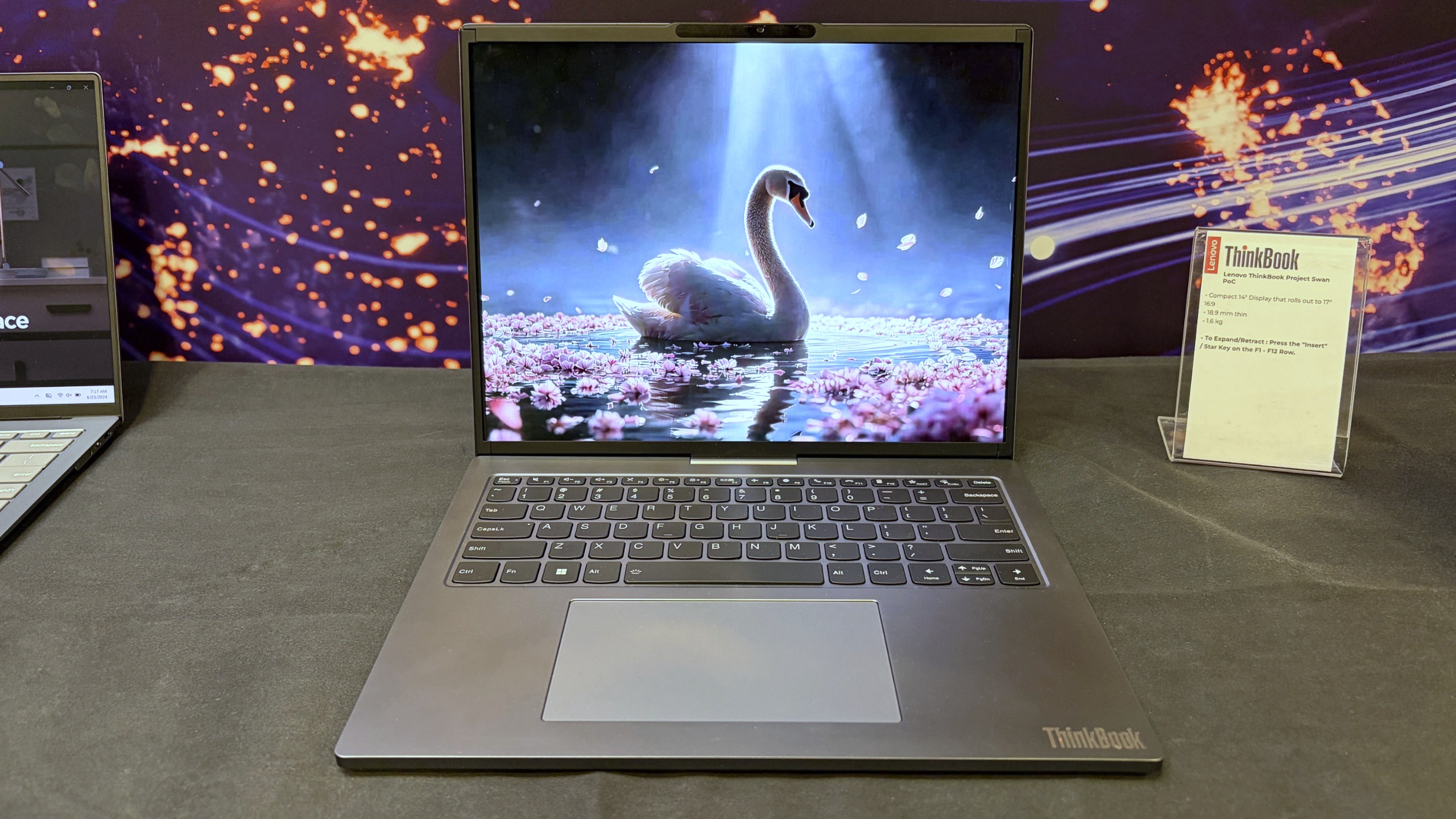
Lenovo's Project Swan laptop in "normal" mode at 14-inches. (Image credit: Future)
Officially, it's another Lenovo proof-of-concept device, but after spending time with it in person, I came away thinking this may be the company's most practical display concept yet. Not because it's the most ambitious, but because it's arguably the least ambitious.
And that's exactly why it works.
Lenovo finally found a sensible use for a rollable display?
The Lenovo ThinkBook Project Swan begins life as a fairly normal-looking 14-inch laptop.
At 17.9mm thick and weighing 1.6kg (3.5lbs), it isn't trying to break weight records or compete with ultra-premium featherweight notebooks (like Lenovo's new AeroBlade concept). Instead, the focus is on creating a laptop that's comfortable to carry throughout the day while offering something extra when users return to their desk, settle into a hotel room, or need more space for serious work.
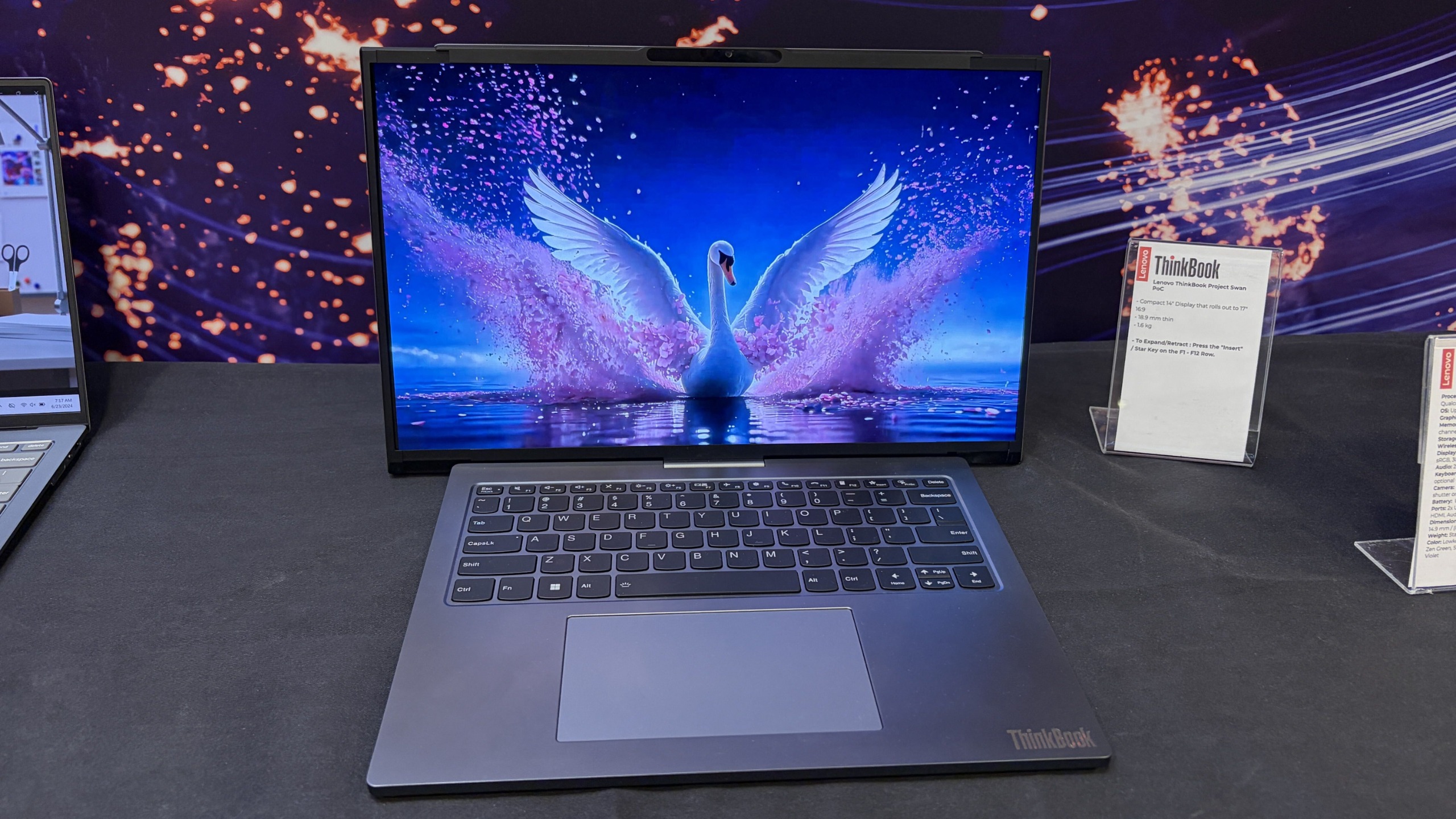
That "something extra" is a rollable display that expands horizontally into a 17-inch 16:9 workspace.
Unlike Lenovo's previous rollable designs, which generally expanded vertically, Project Swan widens itself by extending the display out to the sides. It's all done with a touch of a button (see my video below), and it only takes a few seconds.
The result feels much more like using a traditional external monitor than using an experimental form factor. You suddenly have enough room for side-by-side documents, large spreadsheets, dashboards, presentations, browser windows, Teams chats, and everything else that tends to compete for space on a 14-inch screen.
Lenovo's Project Swan laptop in extended mode, where the display reaches 17 inches. (Image credit: Future)
The transformation is dramatic enough to get attention, but conservative enough to feel practical. During my hands-on session, that was the first thing that struck me about the device.
Many of Lenovo's earlier concepts felt designed to answer the question, "Can we do this?"
Project Swan feels far more interested in answering the question, "Would people actually want this?"
That's a subtle distinction, but it's an important one.
This feels like the next step in Lenovo's display experiments
Lenovo Project Swan concept laptops side-by-side, demonstrating the screen in standard view versus expanded rollable view. (Image credit: Lenovo)
Project Swan didn't emerge in a vacuum. In many ways, it feels like the natural evolution of everything Lenovo has been experimenting with over the last few years.
The ThinkBook Plus Gen 6 Rollable demonstrated that expandable OLED displays could successfully transition from concept to commercial product. Lenovo's Legion rollable gaming laptop concept showed how flexible displays could create an ultrawide experience without requiring users to carry an enormous machine. Other projects explored foldable displays, secondary screens, and entirely new ways of interacting with PCs.
As impressive as many of those concepts were, some occasionally felt like technology showcases first and products second.
Project Swan reverses that equation.
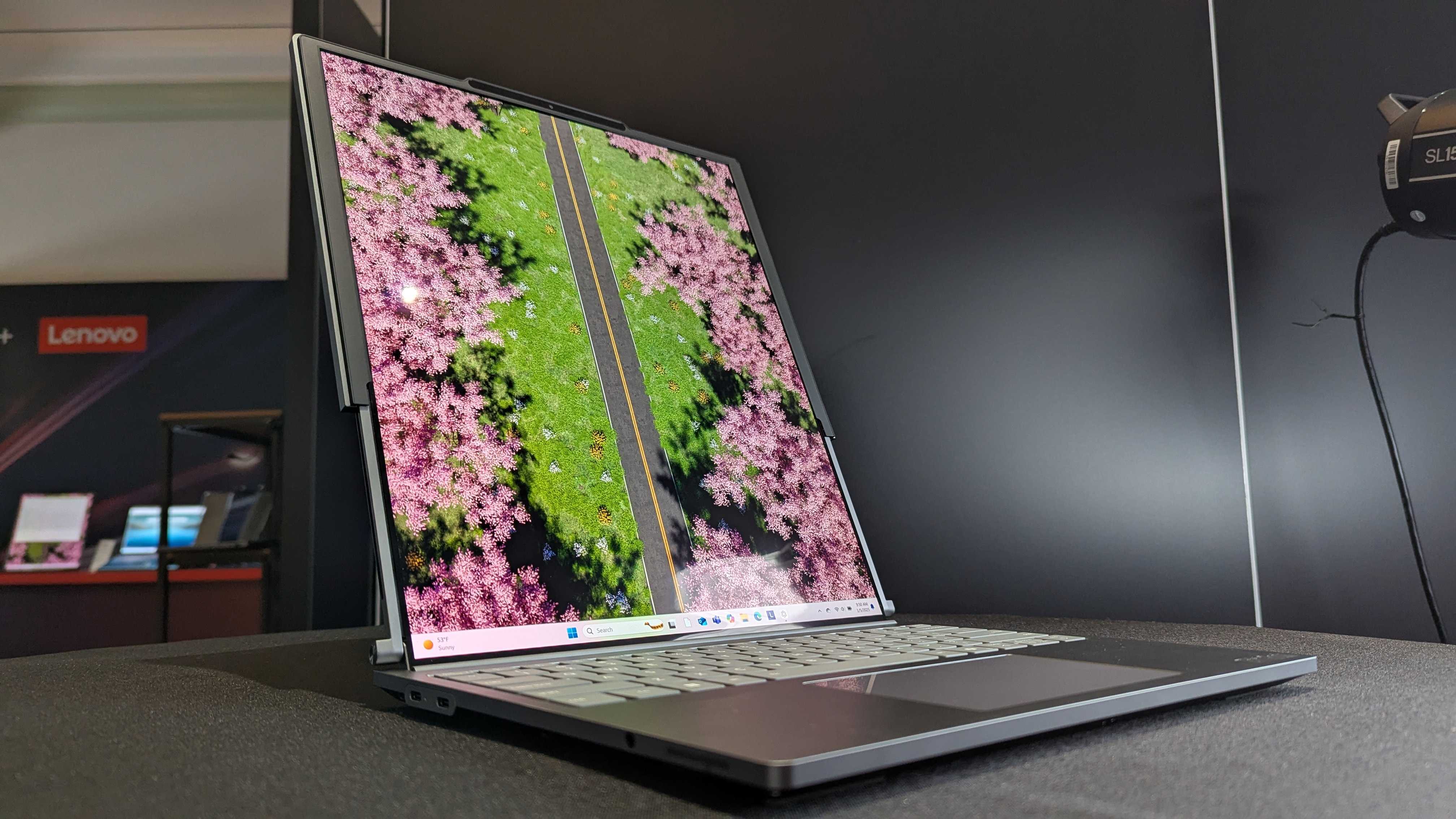
Lenovo ThinkBook Plus (Gen 6) laptop and its vertical rollable display at CES 2025. (Image credit: Windows Central | Zachary Boddy)
Rather than dramatically changing how people interact with a laptop, it simply gives them more screen real estate when they need it and gets out of the way when they don't. That's a much easier benefit for consumers to understand and, perhaps more importantly, a much easier benefit to justify paying for.
After all, most people already know the dilemma.
A 14-inch laptop is ideal for travel. A larger display is ideal for work.
Project Swan attempts to deliver both.
The idea makes sense. The challenges are obvious.
Read image of the Project Swan laptop cover and its motorized rollable display. (Image credit: Lenovo)
That isn't to say there aren't trade-offs.
The first thing I noticed when using the expanded display was that the system becomes somewhat top-heavy. That's hardly surprising given the additional display hardware housed in the lid, but it was noticeable enough that I'd expect Lenovo's engineers to still be looking at ways to refine the balance.
Pricing is another obvious concern.
Rollable OLED displays aren't cheap (it's $3,499 for the ThinkBook Plus Gen 6 Rollable), and if Project Swan ever becomes a commercial product, it's almost certainly going to carry a premium compared to a traditional clamshell laptop. The value proposition may be easier to understand than some other concept devices, but consumers still need to be convinced that expandable screen space is worth the additional cost.
Then there's the question everyone asks whenever a company unveils a rollable or foldable display.
How durable is it?
Flexible OLED technology has improved dramatically over the last few years, but long-term reliability remains an important consideration. How will the mechanism hold up after years of daily use? What happens after thousands of expansion cycles? Will buyers trust a laptop that contains moving display components?
The technology may be ready, but consumer confidence isn't something that can be engineered overnight.
The bigger question is whether people want these new form factors
That's really the challenge facing every laptop manufacturer right now.
The industry has spent years experimenting with alternatives to the traditional clamshell design. Foldable PCs promised tablet-sized displays that fit inside a laptop footprint. Dual-screen systems like the Lenovo Yoga 9i attempted to replace physical keyboards with additional displays. Rollable devices have explored several different directions entirely.
Some enthusiasts love these ideas, but many consumers remain perfectly happy with the laptops they already own.
That's what makes Project Swan so interesting to me. It isn't asking users to learn a new workflow or completely rethink how they use a PC. Instead, it's enhancing something people already understand: bigger screens are often better, but bigger laptops are harder to carry.
Whether that argument ultimately resonates with buyers remains an open question, but it's certainly the clearest pitch Lenovo has made for a rollable display so far.
Lenovo deserves credit for keeping the experimentation alive
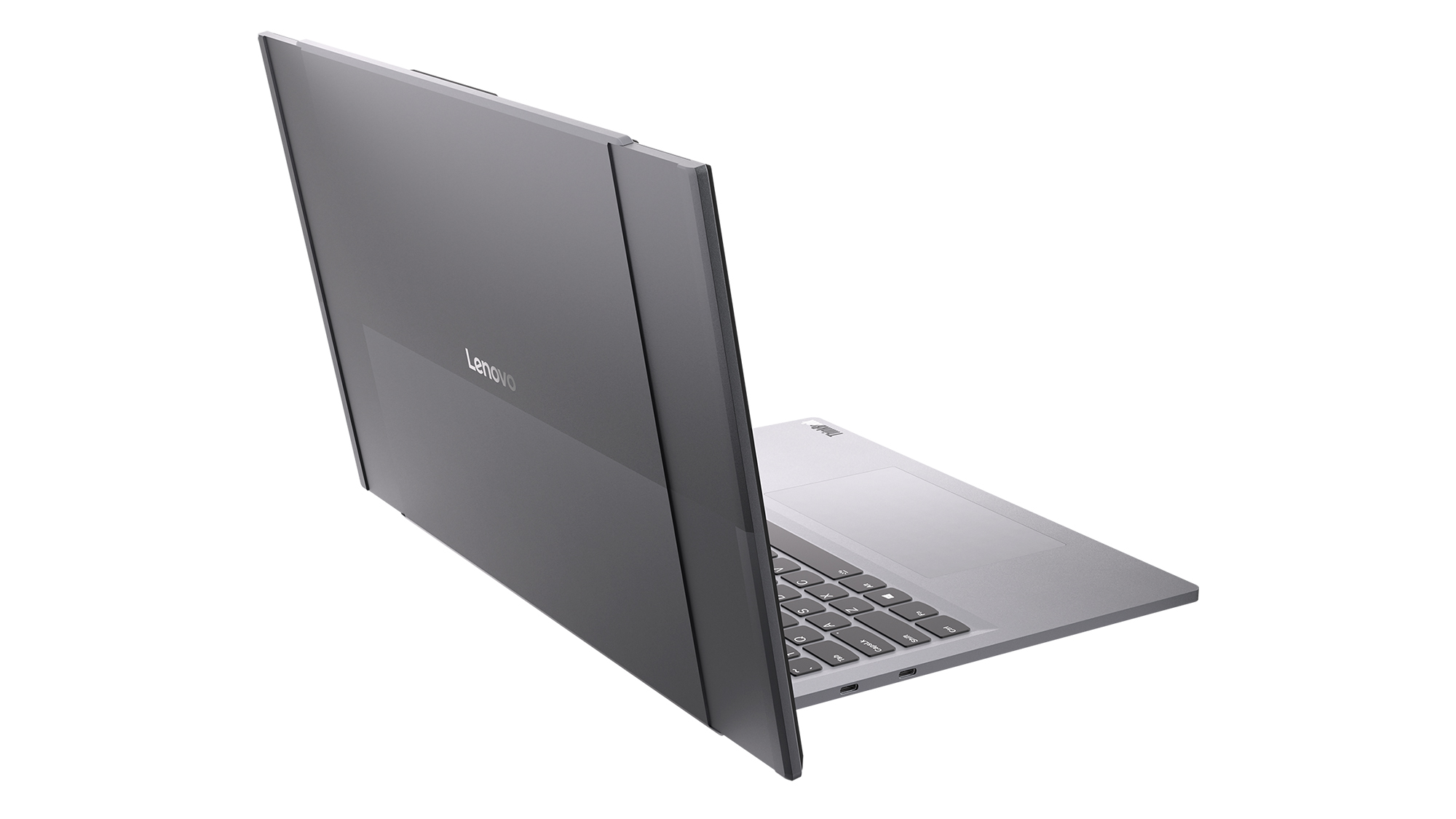
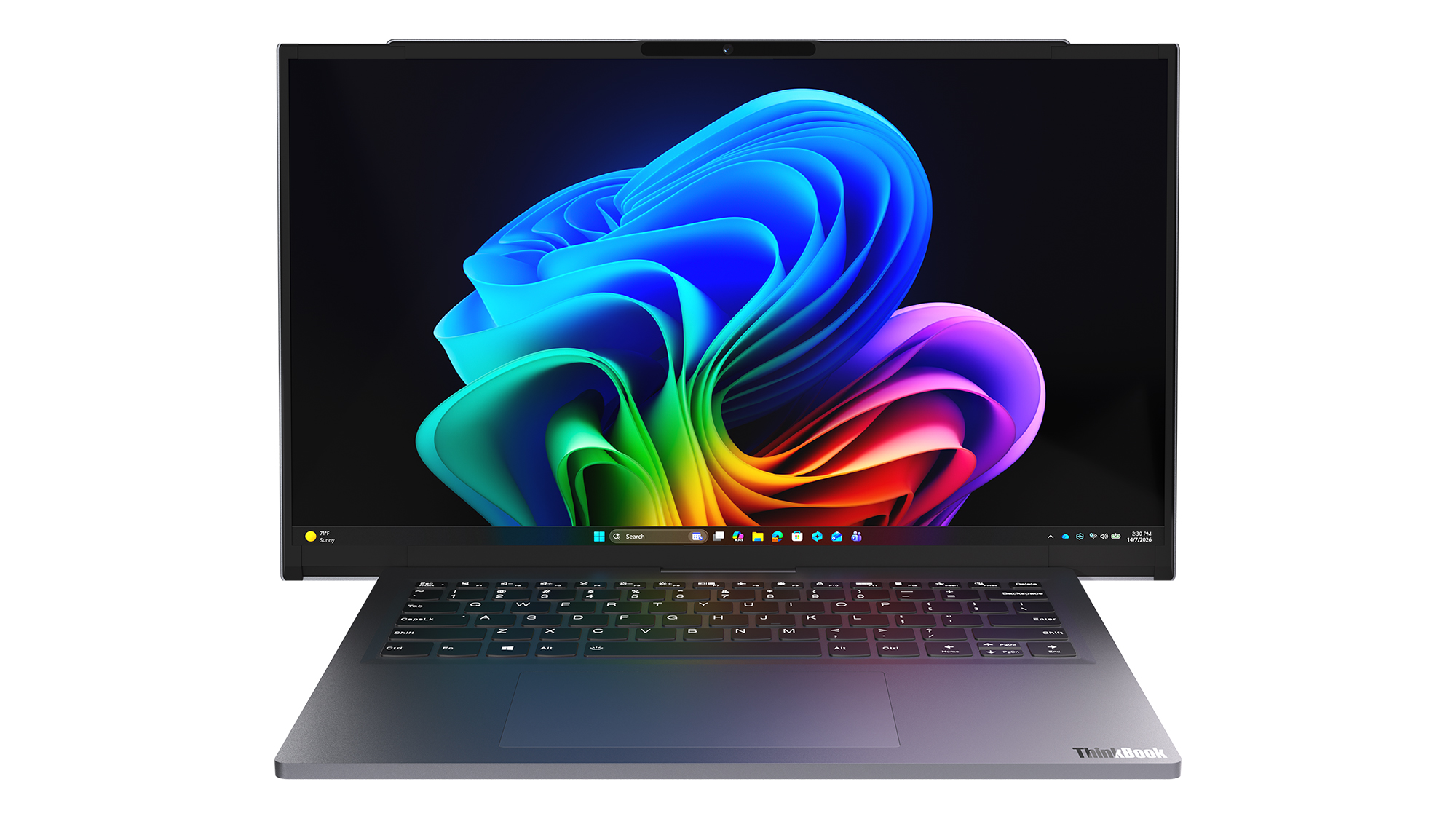
Front view of the open grey Lenovo Project Swan concept laptop with its rollable screen expanded horizontally beyond the keyboard base. (Image credit: Lenovo)
Even if Project Swan never reaches store shelves, I appreciate what Lenovo is doing here.
The PC industry can sometimes become obsessed with processor upgrades, AI features, and specification sheets while overlooking more fundamental questions about how people actually use their devices. Lenovo's concepts consistently ask those questions, even when the answers occasionally seem, well, strange.
What's refreshing about Project Swan is that it feels grounded in reality. The company isn't trying to reinvent personal computing or create an entirely new category. Instead, it's exploring a straightforward idea that almost everyone who has worked on a laptop can relate to.
Sometimes you want a compact machine for travel.
Sometimes you wish that same machine had a much larger screen.
Project Swan is the most convincing attempt I've seen yet to bridge that gap.
I still have concerns about durability, balance, pricing, and whether consumers are truly interested in another alternative laptop design. But after trying it for myself, I'm more optimistic about this concept than many of Lenovo's previous experiments.
Ironically, that's because it feels less ambitious. Rather than trying to change how we work, Project Swan simply gives us a little more room to do it.
And that may be exactly what makes it one of Lenovo's most promising concepts yet.
Let me know in the comments what you think about Project Swan. Should Lenovo continue to push this concept of an expanding display, or focus more on other ideas (and if so, which ones)?
Join us on Reddit at r/WindowsCentral to share your insights and discuss our latest news, reviews, and more.
Competition for Apple's MacBook Neo is heating up.
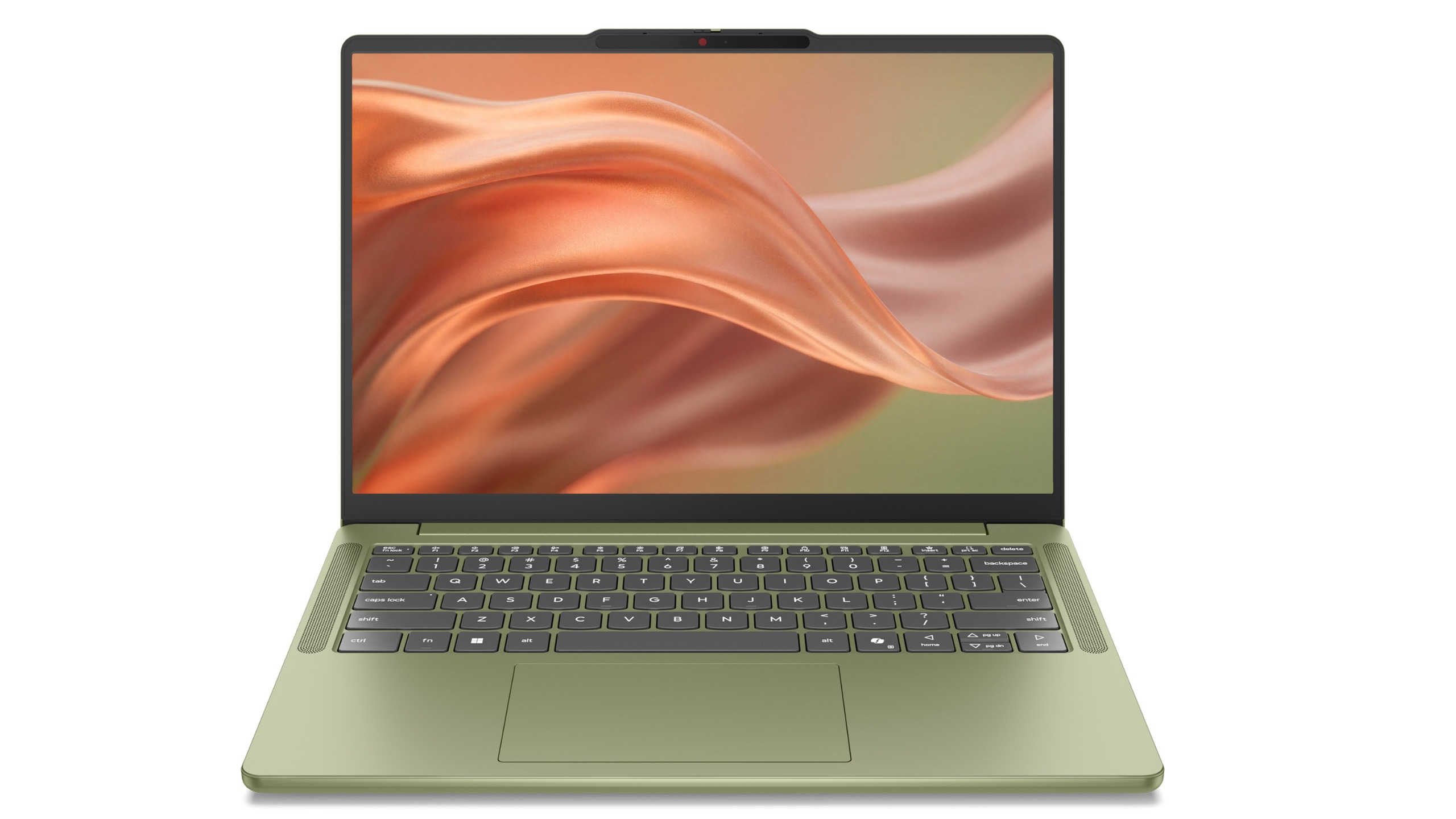
Just days after Dell unveiled a new 14-inch laptop designed to take on Apple's latest mainstream notebook, Lenovo is entering the fight with something considerably more interesting: a laptop that lets you express your personality instead of forcing you to settle for silver, gray, or slightly darker gray.
I recently got to see Lenovo's new IdeaPad Vibe lineup in person in New York City, and while the company talked plenty about AI, processors, and battery life, the thing that immediately stood out to me was how different these laptops look compared to almost everything else on the market.
Most PC makers treat color options as an afterthought. Lenovo is making them the product.
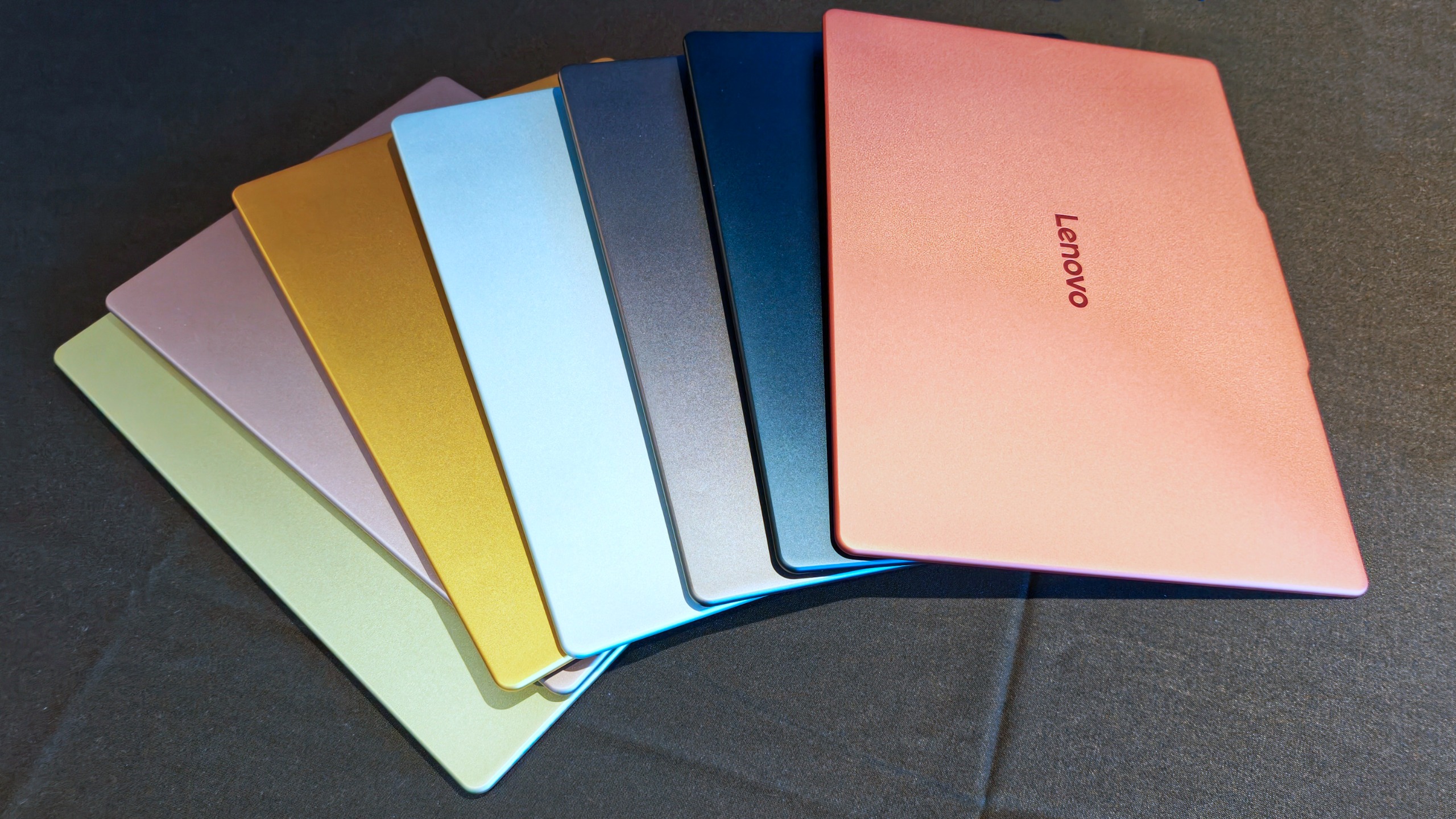
(Image credit: Daniel Rubino)
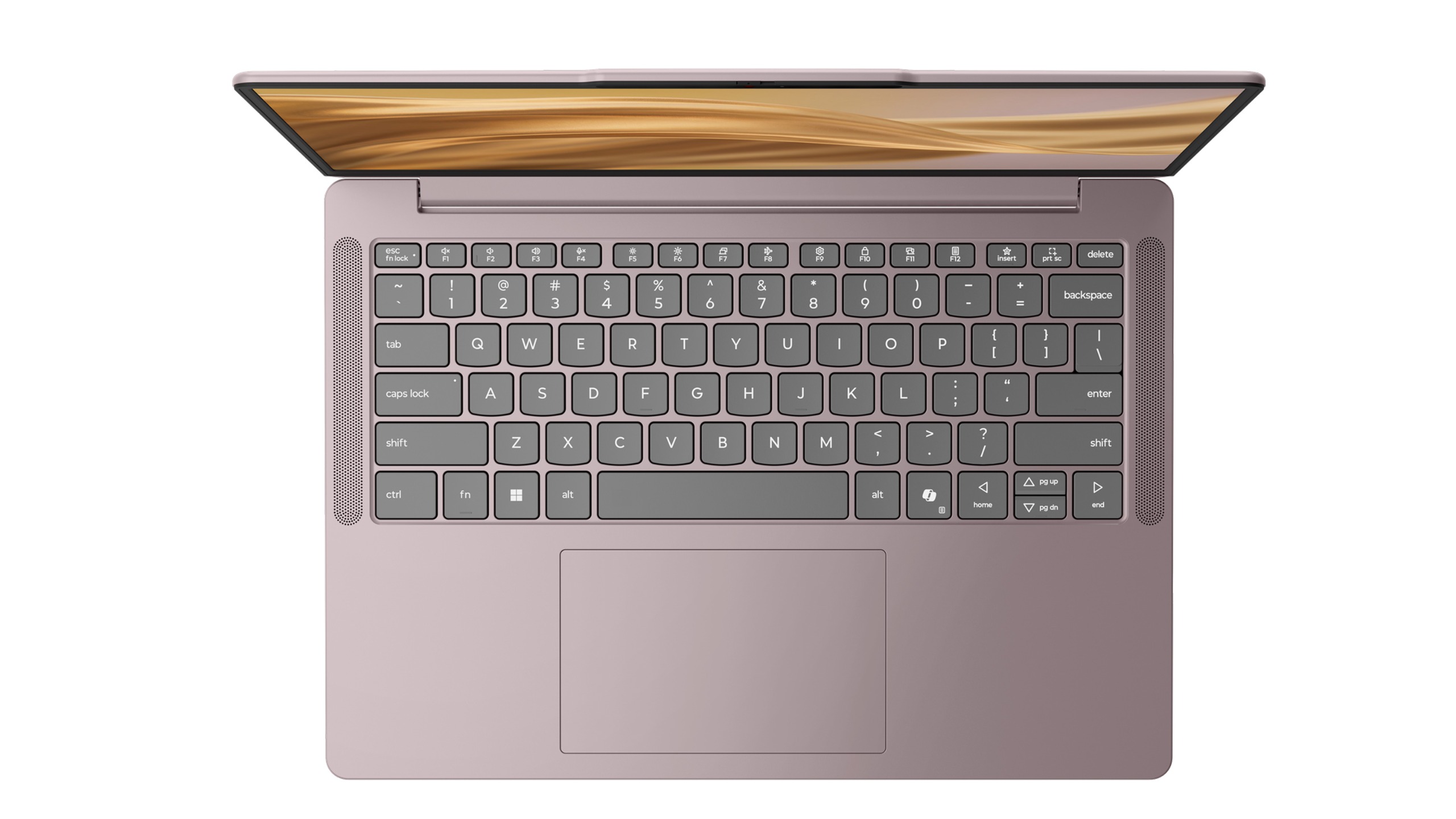
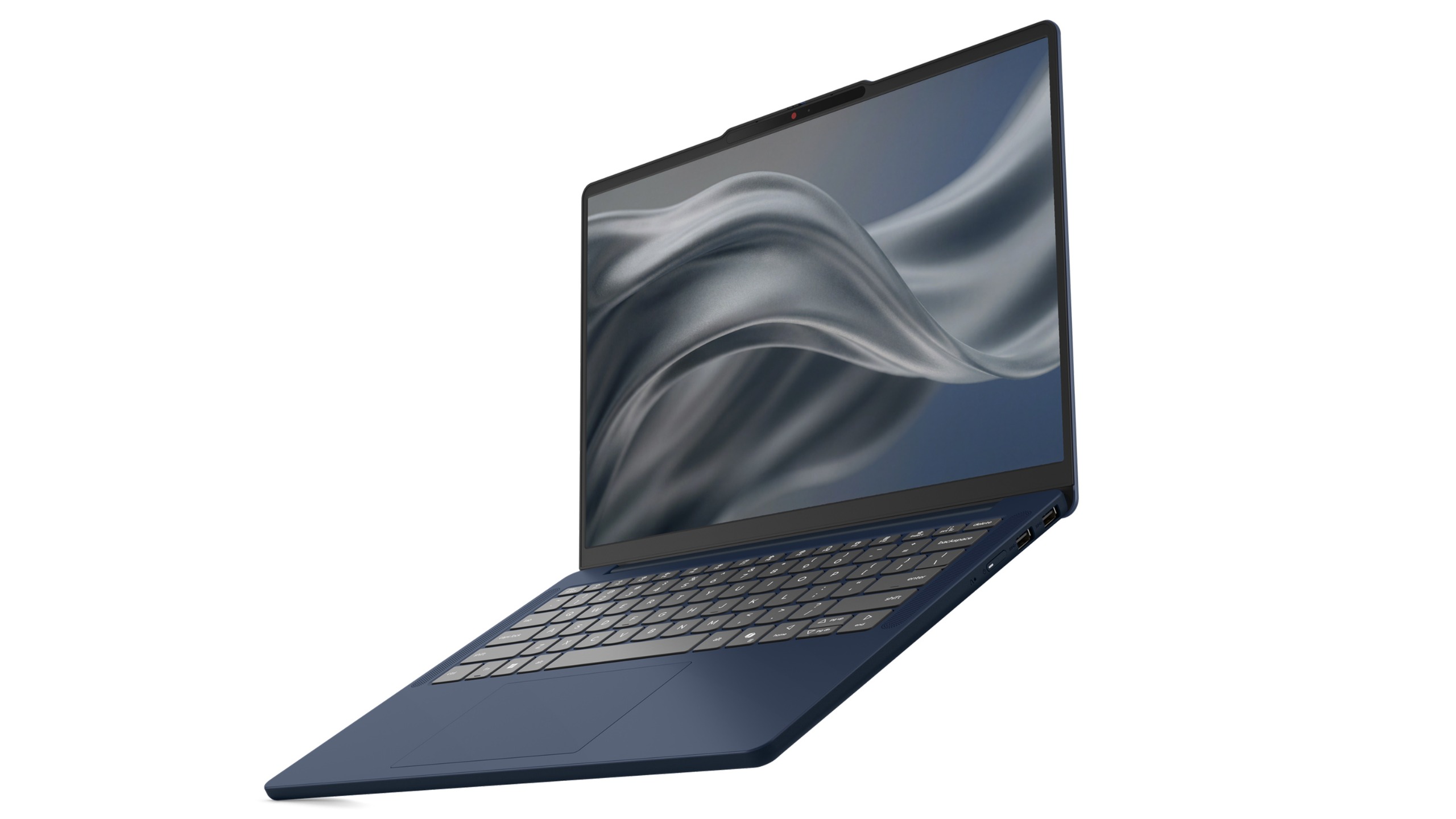
The new IdeaPad Vibe will be available in seven Pantone-developed colors, including Chill Blue, Zen Green, Spicy Gold, Radiant Coral, Dreamy Violet, Lowkey Grey, and Moody Blue. Lenovo says the colors were developed alongside the Pantone Color Institute and are designed to reflect different moods, personalities, and lifestyles.
And that's just the beginning.
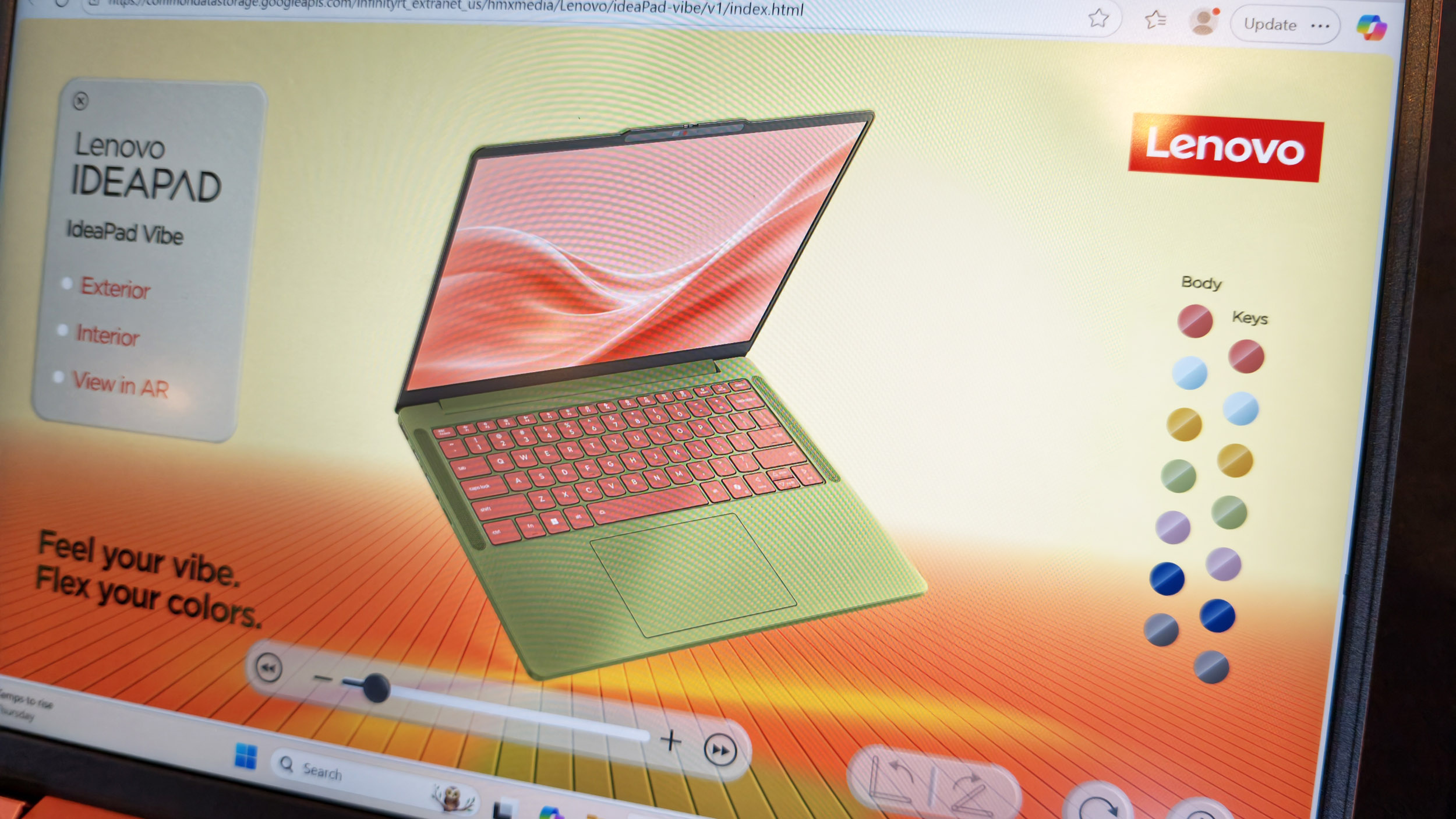
As shown in Lenovo's custom configurator (below), users will be able to mix and match chassis colors and keyboard colors to create something uniquely theirs. The company is also offering swappable custom keycaps, adding another layer of personalization that is virtually unheard of in the mainstream laptop space.
The configurator demo I saw almost felt like building a custom character in a video game rather than buying a laptop, and reminded me of the XBOX Design Lab for custom controllers.
Demo of the web creation tool to let you customize the new IdeaPad Vibe. (Image credit: Daniel Rubino)
In fact, my biggest complaint about the IdeaPad Vibe is that there might be too much choice.
That's obviously a good problem to have, but after looking through the various color combinations, shell finishes, and processor options, I could already imagine spending far too much time trying to decide which configuration to order (I know because I tried).
That's not a sentence I ever expected to write about a Windows laptop.
Lenovo IdeaPad Vibe in Zen Green and black keycaps. (Image credit: Lenovo)
Of course, a laptop can't survive on colors alone, and thankfully Lenovo seems to have put together a genuinely compelling package underneath all that personality.
The IdeaPad Vibe comes in both 14-inch and 15-inch sizes and starts at just 1.3kg (2.87 pounds) for the smaller model. OLED display options are available with up to 100% DCI-P3 color coverage, while IPS models can offer refresh rates up to 120Hz.
Lenovo is also packing in practical features including dual SSD slots, Wi-Fi 7, USB-A and USB-C ports, HDMI, a MicroSD card reader, and a 5MP IR webcam with a privacy shutter.
AMD, Qualcomm or Intel (eventually)
Lenovo IdeaPad Vibe in Dreamy Violet. (Image credit: Lenovo)
Then there's the processor selection.
For launch, buyers can choose between AMD Ryzen AI 400 series configurations and Qualcomm Snapdragon X models (we're not clear on exactly which Snapdragon X chip, or even if it's X2), while Intel-based versions will arrive later. AMD models support up to 32GB of upgradeable memory and up to 1TB of SSD storage, while Snapdragon versions offer up to 24GB of memory and the same dual-slot storage flexibility.
Personally, I'd go Qualcomm.
We've reached a point where Snapdragon X PCs consistently deliver excellent everyday performance while also offering some of the best battery life available in the Windows ecosystem. The combination of a lightweight chassis, Copilot+ PC capabilities on supported configurations, and Qualcomm's efficiency makes the Snapdragon version particularly appealing to me.
That isn't to say AMD isn't tempting. AMD's advantage here is flexibility. The Ryzen AI configurations support memory upgrades up to 32GB and offer optional 50Wh or 65Wh battery configurations, making them attractive for enthusiasts who want more control over their hardware.
What impressed me most during my hands-on time wasn't any single specification. It was how cohesive the overall package felt.
The laptops looked premium, felt solid in the hand, and didn't come across as budget systems despite their surprisingly aggressive pricing. That's important because Lenovo isn't positioning the IdeaPad Vibe as a niche fashion accessory. This is meant to be a mainstream Windows laptop that happens to have far more personality than its competitors.
And right now, that may be enough to help it stand out.
Final thoughts
Lenovo IdeaPad Vibe in Chill Blue. (Image credit: Lenovo)
Apple's MacBook Neo has clearly encouraged PC makers to rethink the mainstream laptop category. Dell has already responded with its own fresh take on the formula with its just-announced Dell 14S, and now Lenovo is bringing something completely different to the table: customization.
Instead of asking buyers which shade of gray they prefer, Lenovo is asking what their "vibe" is.
That's a much more interesting question, even if a bit on the nose and a tad cringey.
The Lenovo IdeaPad Vibe with AMD processorslaunches inOctober 2026 starting at $699.99, while Qualcomm Snapdragon X models will follow in November 2026 with the same $699.99 starting price. Intel is only listed as coming later.
And after seeing them in person, I think Lenovo may have stumbled onto something other PC makers have forgotten: technology can be personal, but it can also be fun.
Join us on Reddit at r/WindowsCentral to share your insights and discuss our latest news, reviews, and more.
Most are fascinating engineering exercises that are never destined for store shelves. They're designed to spark conversation, generate headlines, and give us a glimpse into what might be possible someday. Some do come to market, like rollable display PCs.
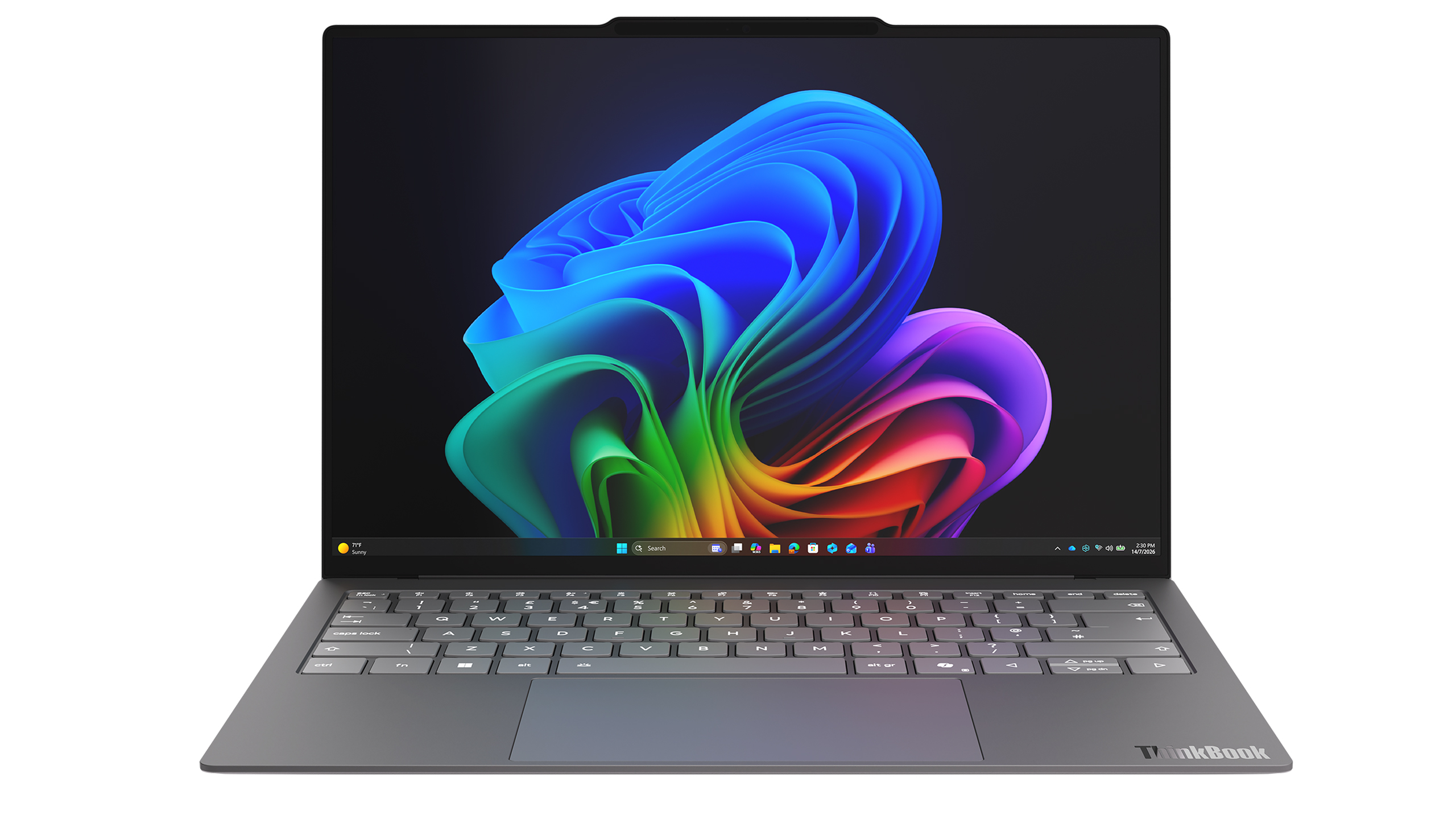
Lenovo's new Project AeroBlade concept feels different.
Officially, it's one of the company's latest proof-of-concept devices, unveiled as part of its annual wave of experimental hardware at IFA 2026. Unofficially? I think there's a very good chance we're looking at Lenovo's next big premium laptop platform.
After getting hands-on with AeroBlade, I walked away convinced this isn't some far-future moonshot. If you told me a shipping version appears within the next year, I wouldn't be surprised in the slightest.
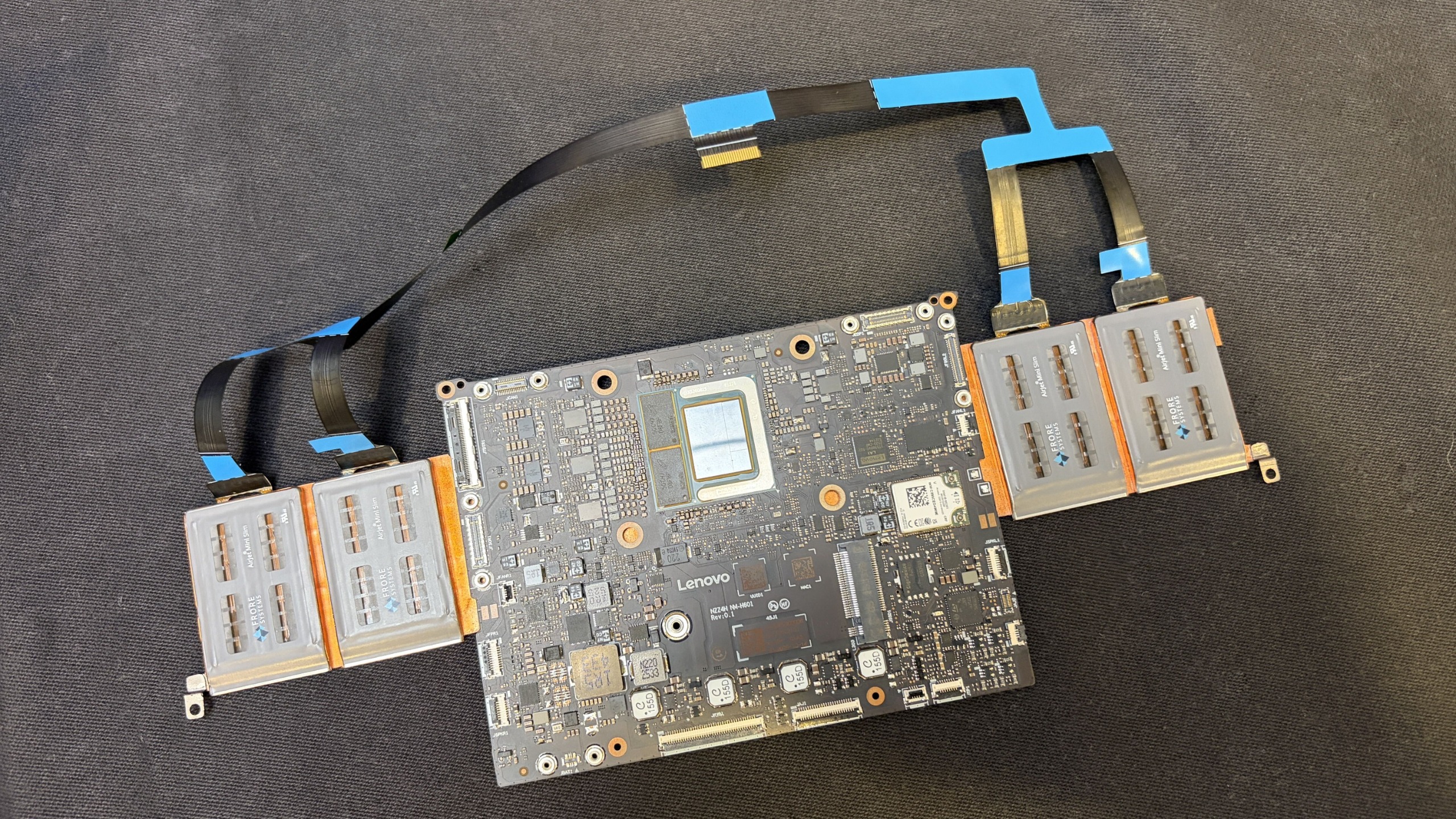
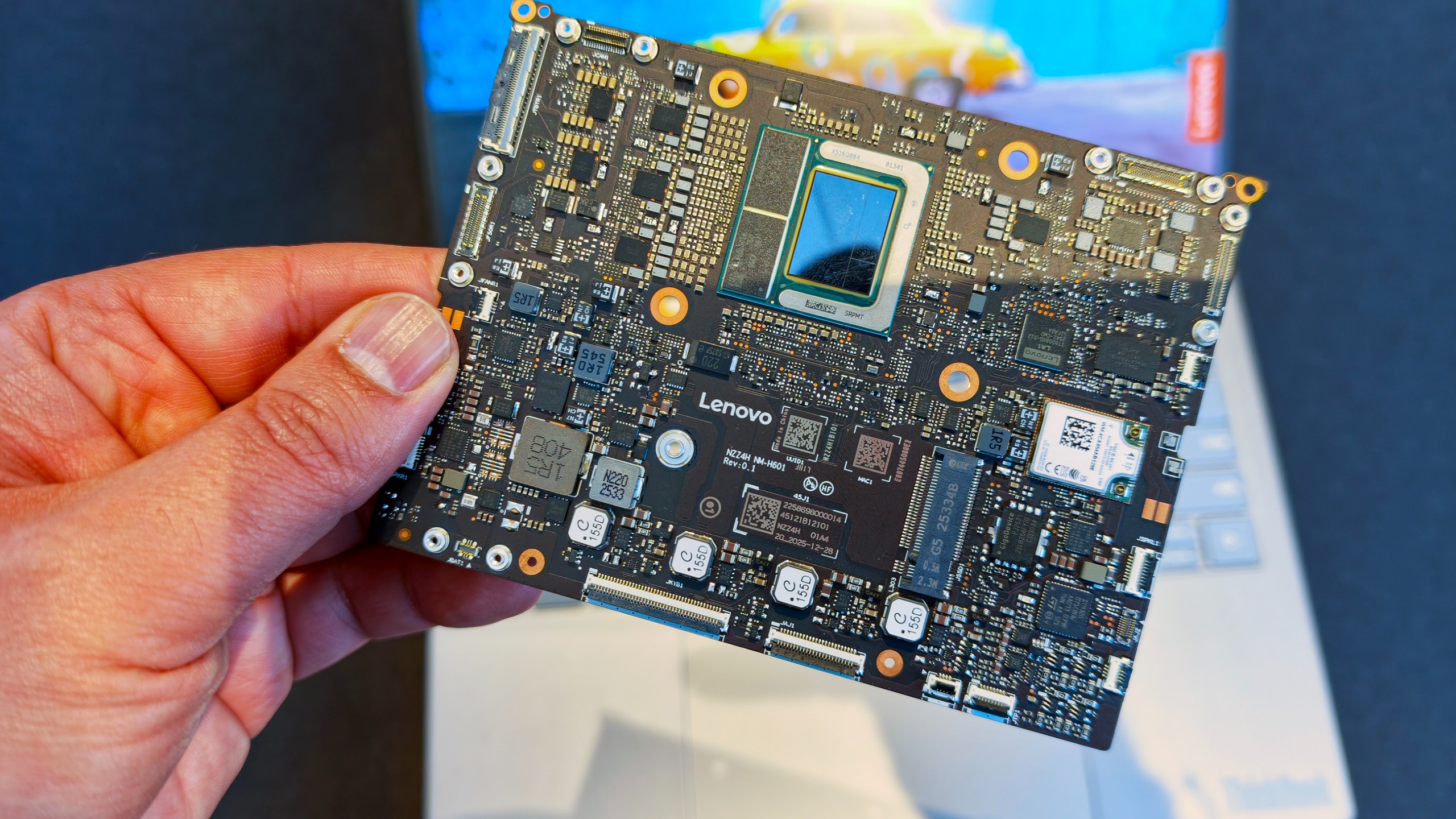
Motherboard and AeroJet cooling system. (Image credit: Future)
And it can't happen soon enough.
Project AeroBlade is a 14-inch laptop that measures under 10 mm thin and weighs less than 830 grams (1.8lbs). That's lighter than many tablets with keyboard covers attached, yet Lenovo claims performance remains comparable to today's ThinkPad X1 Carbon class of Intel-powered laptops. According to Lenovo, the system achieves this through a completely reimagined thermal design built around its Active Flow cooling architecture developed alongside Frore Systems.
That's the entire motherboad for this laptop👀! (Image credit: Daniel Rubino)
Those numbers don't really hit you until you pick it up.
The first thing that struck me wasn't the thickness. It was the weight. Or rather, the lack of it.
The AeroBlade almost feels unfinished when you lift it because your brain expects more mass. Premium laptops have gotten thinner over the last decade, but reducing weight has become increasingly difficult without introducing compromises. AeroBlade somehow manages to feel substantial and premium while remaining almost shockingly light.
Lenovo says the chassis uses a magnesium-aluminum construction paired with a high screen-to-body OLED display, Thunderbolt 4 connectivity, and Wi-Fi 7. On paper, it sounds like a modern flagship ultrabook. In person, it feels like somebody accidentally removed half the laptop. That's a compliment.
What makes AeroBlade truly interesting, however, isn't how thin it is; it's how Lenovo got there.
The fan is dead. Long live AirJet.
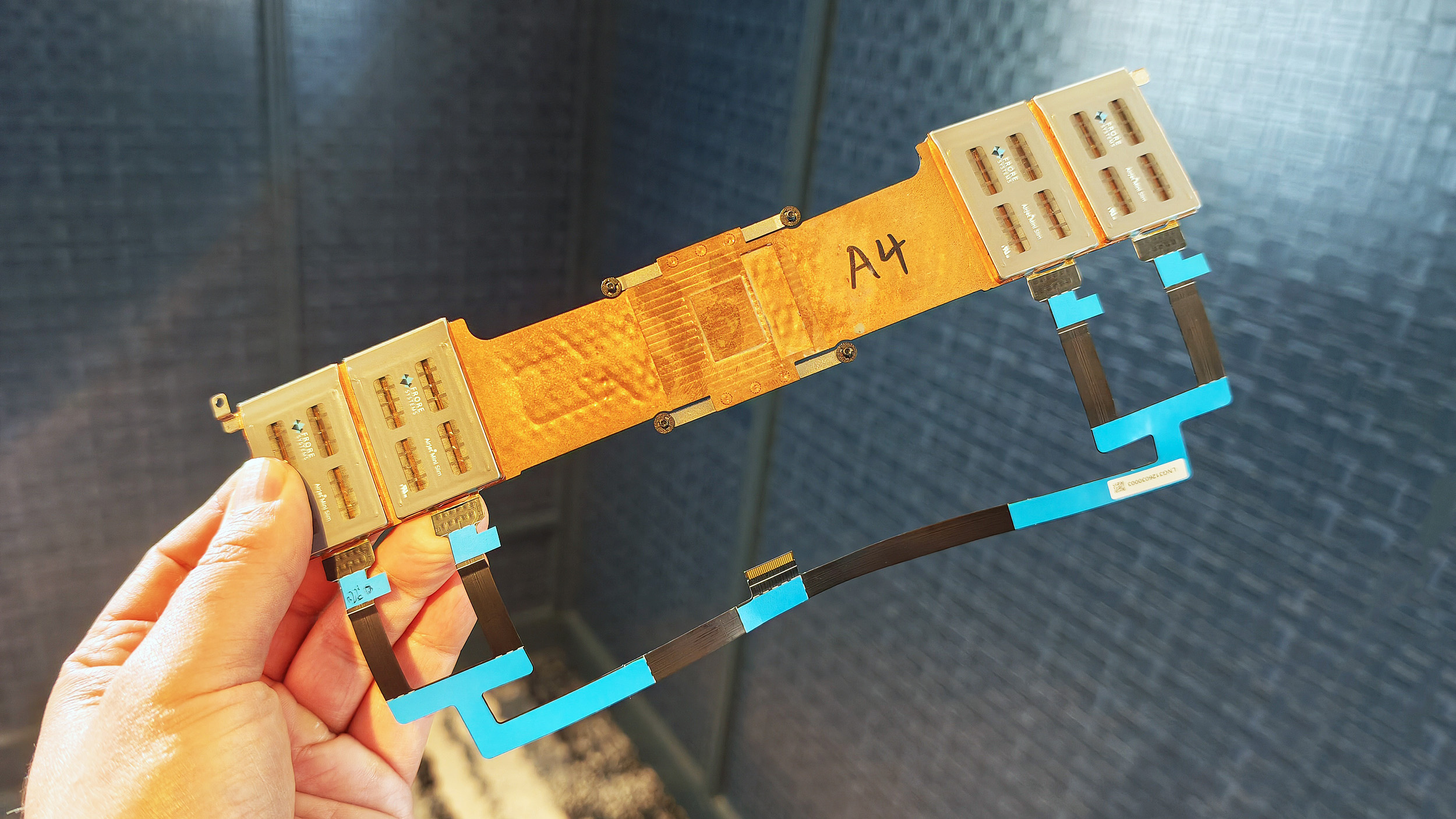
Entire Frore AirJet solid-state cooling strip assembly with copper heat sinks and ribbon cables. (Image credit: Daniel Rubino)
For decades, laptop cooling has largely followed the same formula.
A processor generates heat. Heat pipes move that heat toward a heatsink. One or more fans blow air through the system and out of vents.
The design has evolved, but the fundamentals haven't changed much.
Frore Systems wants to change that.
AirJet is a solid-state active cooling solution that replaces traditional laptop fans with tiny cooling chips that use vibrating membranes to generate airflow. Instead of spinning fan blades, AirJet creates high-velocity pulsating air jets that remove heat while operating at extremely low noise levels. Frore describes it as the world's first solid-state active cooling chip.
One AirJet Mini Slim module is only 2.65mm thick, consumes up to 1 watt of power, removes up to 5.25 watts of heat, and generates significantly higher back pressure than traditional fans. The technology was specifically designed for ultra-thin devices where conventional cooling becomes difficult or impossible.
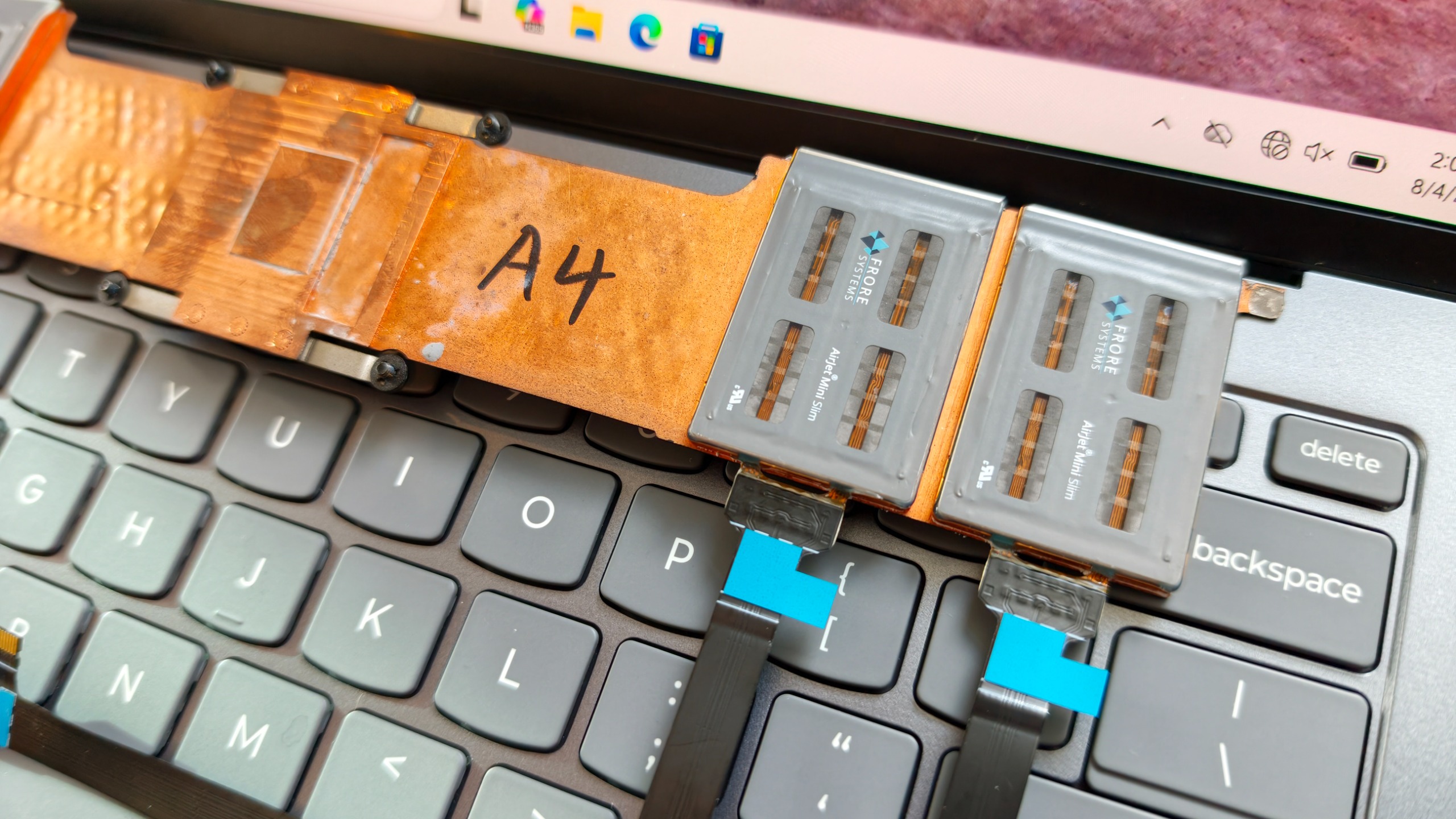
Close-up of two Frore AirJet Mini Slim solid-state cooling chips installed on a copper heat pipe strip above gray laptop keyboard keys showing how they are placed in the laptop. (Image credit: Daniel Rubino)
The clever part is that these modules don't need the large internal spaces required by traditional fans.
Instead of designing a laptop around cooling hardware, manufacturers can distribute AirJet modules throughout the chassis in different locations.
That flexibility is both the technology's greatest strength and its biggest challenge.
During conversations at the event, it became clear why we've seen AirJet demonstrations for a few years but haven't yet seen a flood of mainstream laptops using it.
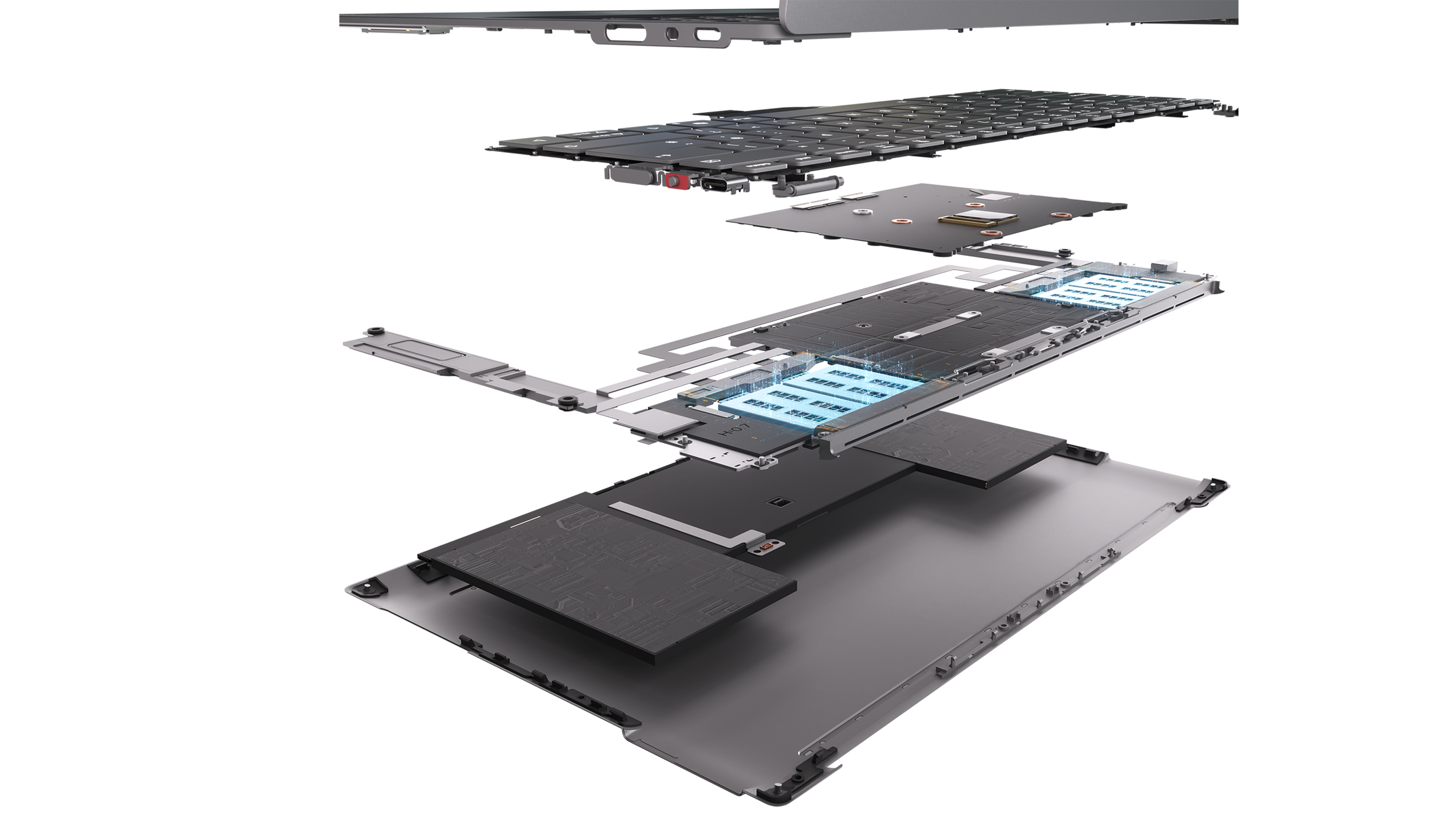
Exploded diagram revealing the internal layers, motherboard, and Frore AirJet solid-state cooling modules of a Lenovo AeroBlade concept laptop. (Image credit: Lenovo)
This isn't a simple parts swap.
OEMs have spent decades designing motherboards, thermal layouts, and internal structures around conventional fans. AirJet requires engineers to rethink much of that architecture. The cooling solution may be smaller, but integrating it properly involves substantial redesign work throughout the entire system.
That's a lot of engineering investment.
But judging by AeroBlade, the payoff might be worth it.
A laptop with almost no compromises
Rendering of the Lenovo ThinkBook AeroBlade laptop. (Image credit: Lenovo)
The most impressive thing about AeroBlade is that Lenovo doesn't appear to be treating fanless computing as a compromise.
Traditionally, when manufacturers build ultra-thin fanless systems, performance becomes the sacrifice. The device is quiet and portable, but sustained workloads eventually cause thermal throttling.
Lenovo's pitch is essentially the opposite.
Side view of an ultra-thin grey laptop standing open at a 90-degree angle, highlighting its extremely slender display and base. (Image credit: Lenovo)
The company believes Active Flow can deliver sustained AI and productivity performance without the compromises typically associated with fanless PCs. The only noise I noticed during my brief hands-on came under heavier workloads, where there was a faint whooshing sound from moving air. It was subtle enough that I had to actively listen for it.
What I didn't notice were intake vents covering the bottom of the chassis. Hooray!
That's because the cooling system works differently than traditional laptop designs. Air management has largely been pushed toward the rear of the system, creating a cleaner and more minimalist design.
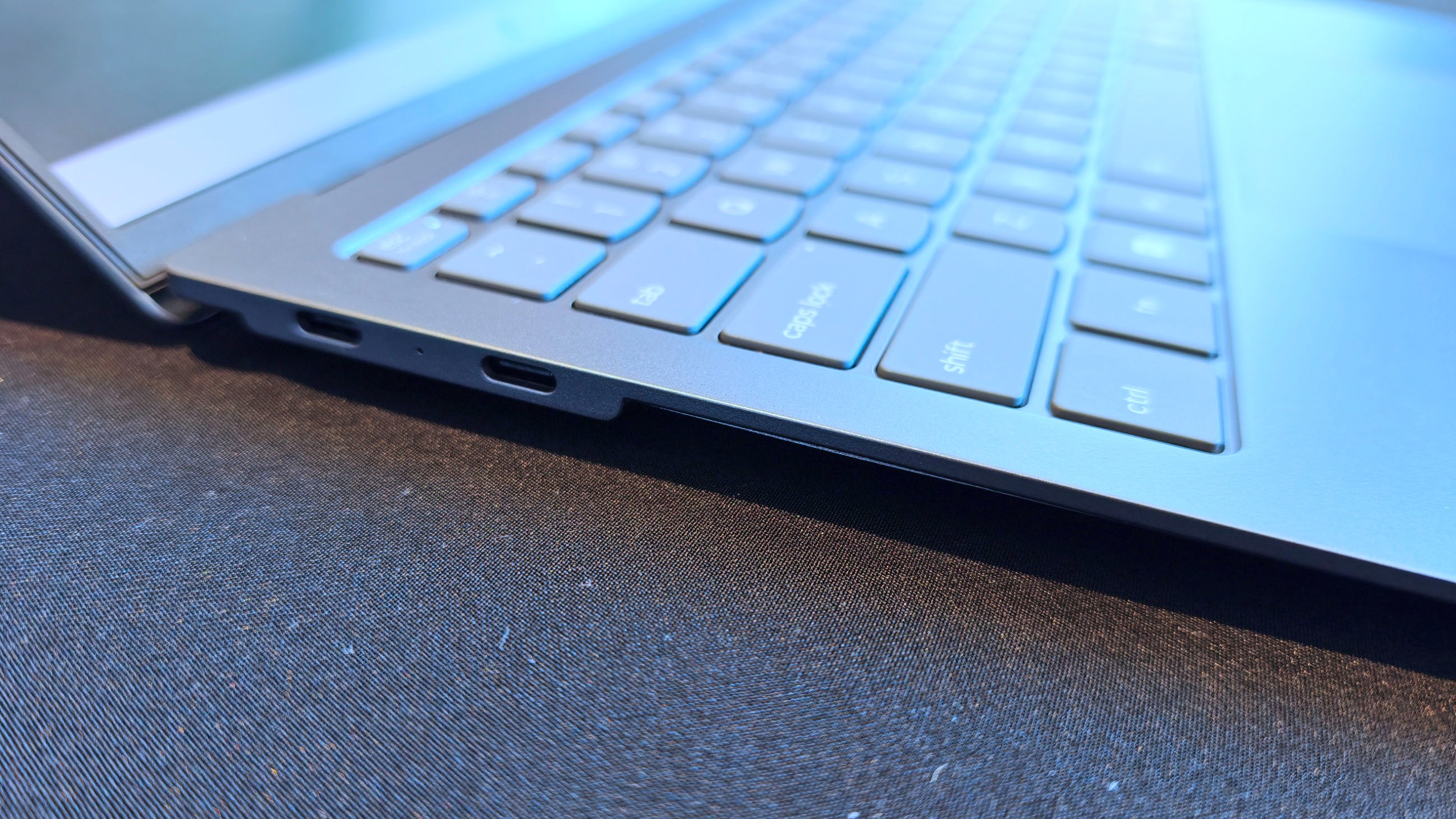
Super thin, but still room for some Type-C ports. (Image credit: Daniel Rubino)
The result is a device that feels almost impossibly refined, and that's why I think AeroBlade is a big deal.
Most laptop innovation over the last few years has focused on AI accelerators, NPUs, display tech, and silicon improvements. Those things are important, but they're largely invisible to users (well, maybe not displays, but still).
In many ways, cooling technology determines what kind of laptop manufacturers can build.
Lenovo could make impossibly thin and light (compared to what we are used to), or use that extra space for a larger battery for absurd laptop longevity. It opens a bunch of engineering doors and options.
The concept that doesn't feel like a concept
Lenovo loves showing proof-of-concept devices, and many never become products.
But the company's track record also shows that some of its most interesting concepts eventually make the jump to production after enough refinement (I'm hoping Lenovo's Legion handheld foldable concept is one of those).
AeroBlade feels like one of those projects. Indeed, this was my first question to Lenovo, as proof-of-concept is often wacky designs, rolling displays, dual displays ... things that look weird but could be useful.
Super thin and light laptop with no vents? Who wouldn't want this? I don't think we really need a focus group to see if it's a good idea!
The hardware already looks polished. The underlying technology exists. The user benefits are immediately obvious. And perhaps most importantly, the industry is constantly searching for ways to make laptops thinner, lighter, quieter, and more efficient.
AirJet checks every one of those boxes.
Will this technology replace fans in gaming laptops with RTX-class graphics anytime soon? Probably not.
But for premium ultraportables, enterprise notebooks, all-in-one desktops, handheld gaming PCs, and productivity-focused systems, I think we're looking at one of the most significant advances in PC design we've seen in years. (We've already openly wondered about Aerojet in a Steam Deck 2).
So, yeah, ironically, the biggest innovation at Lenovo's event wasn't AI.
It was airflow.
Join us on Reddit at r/WindowsCentral to share your insights and discuss our latest news, reviews, and more.
NVIDIA has confirmed new details and availability info about its upcoming RTX Spark SoC for Windows 11 devices. At IFA 2026, the company announced that it expects the first RTX Spark laptops to begin shipping as soon as next month, sometime in October depending on the OEM. Additionally, two new devices are joining the launch lineup; the Lenovo Yoga 9n laptop and Acer SFF desktop PC.
Alongside availability news, NVIDIA has also confirmed configuration details for the upcoming RTX Spark chips. There will be two different configurations of the RTX Spark N1X, with configurable RAM and storage based on what OEMs wish to offer. The high-end RTX Spark will be targeted at desktops and laptops, with support for up to 128GB unified memory, 20 CPU cores, and 6144 Blackwell RTX cores.
There will also be a less powerful RTX Spark configuration exclusively for laptops, which can only be configured with 24GB or 32GB unified memory, a 5120-Core Blackwell RTX GPU, and an 18-core CPU. While still a high-end chip, this should allow RTX Spark to ship in laptops that cost closer to $2,000, significantly lower priced than the high-end SoC.
Category
Specification 1
Specification 2
GPU Cores
6144-core Blackwell RTX GPU
5120-core Blackwell RTX GPU
CPU Cores
20-core Grace CPU
18-core Grace CPU
Memory
24-128 GB Unified Memory
24-32 GB Unified Memory
Form Factors
Laptops and Compact Desktops
Laptops
NVIDIA is touting RTX Spark as the best SoC for AI development on Windows. It supports NVIDIAs full AI stack, as well as the Windows Agent Framework and 120B parameter agents. It also supports hardware accelerated 4:2:2 video for video editing professionals.
While the first RTX Spark devices are expected to begin shipping in October, it's not yet clear which OEMs will be first out the gate. All major Windows hardware makers, including Dell, Lenovo, HP, ASUS, and Microsoft have all announced RTX Spark devices that are expected to ship by the end of this year. Devices like the Surface Laptop Ultra have not yet been given a release date, though Microsoft typically does aim to ship new Surface PCs in October.
We'll be sure to keep you updated on all the RTX Spark device availability as more information is revealed by OEMs. In the meantime, are you considering an RTX Spark device as your next Windows PC? Let us know in the comments!
Join us on Reddit at r/WindowsCentral to share your insights and discuss our latest news, reviews, and more.

 Login