The weather on Earth can get pretty messy sometimes. But in space, it can be wild—and the effects can be far-reaching.
Solar flares, giant explosions on the sun, can send out streams of energy that block radio communications and fry satellite electronics. Geomagnetic storms, caused by variations in solar wind, can mess with GPS signals and spark current surges on Earth that overload power grids.
The impact of space weather isn’t limited to temporarily losing electricity or digging out dusty paper maps for directions when satellite navigation systems fail. Every electronic financial transaction in the world, for instance, relies on time stamps sent by satellite systems. And, in May 2024, a solar storm threw out GPS systems used to accurately guide tractors in planting and harvesting crops, hobbling food production for days and costing US farmers $500 million.
Although satellites can be built with tougher shields or have their orbits adjusted, those are just Band-Aids; there’s currently little we can do to protect ourselves from space storms.
Boston University researcher Brian Walsh has an idea for how to change that. He’s been testing the theoretical feasibility of a system of spacecraft that could fire chemical elements to the edge of Earth’s magnetic field, temporarily fortifying our defenses and deflecting potentially damaging space weather. In simulations, Walsh and researchers from the University of Michigan found the system could cut the intensity of a major geomagnetic storm in half. The findings were published in the journal Space Weather.
“Since humans have been in space, we’ve been trying to predict what’s going to happen in the space environment,” says Walsh, a BU College of Engineering associate professor of mechanical engineering. “But we came up with a model that could flip the paradigm. It’s like people in a village who see a river flooding—maybe they can predict when that will happen, but probably what’s even better is if they could build a storm wall. That’s what we’re proposing here.”
Bouncing Storms Past the Earth
Walsh says his idea for a weather wall in space was inspired by a natural phenomenon: material peeling off the Earth’s atmosphere and floating to the edge of our planet’s protective bubble, the magnetosphere, to bolster it. “I thought, maybe you could turn [that process] up, increase the intensity of it,” he says.
His proposed system, named StormWall, would start with the launch of six spacecraft into a geosynchronous orbit matching the Earth’s own rotation. Each craft would be fitted with a canister loaded with what the researchers call a mass-loading material. When released, the material—an alkaline chemical element like barium or lithium—would photoionize, a process that induces an electrical charge, seeding the atmosphere with plasma.
In their simulations, Walsh and his colleagues found that this plasma would disrupt the flow of energy between any solar storm and the magnetosphere—and that would be enough to bounce the space weather around and past our planet.
Not Science Fiction
Walsh admits a weather wall in space sounds a little like science fiction, but says it’s within our reach.
“When you apply some really serious physics to it, it does work. And the amount of mass we need, the launch capacities—it’s all within our capabilities,” he says. “People have always thought, ‘space is huge, the sun is massive, we just have to sit here and take whatever it gives us.’ But what we found is that we can impact it.”
One of the biggest barriers to implementation is cost. Launching six spacecraft, together carrying the equivalent of about a dozen oil trucks–worth of material, wouldn’t be cheap. And once the payload is fired out and photoionizes, the system would be dead and couldn’t be replenished—it’s one and done. But with private companies investing billions in space infrastructure—and even contemplating data centers in orbit—Walsh says the math on cost-benefit ratios could soon favor his proposed approach. In their paper, Walsh and his colleagues point out that a massive once-in-a-century geomagnetic storm—the last one was in 1859—would cause devastating damage in space and on Earth, with power grid costs alone topping $2.4 trillion.
He’s confident the team can bring down the StormWall costs too. Next on their agenda is studying ways to half the material used, simulating a pulsed release of materials to extend the system’s lifespan, and examining potentially more efficient orbits. They also want to dig deeper into the chemistry involved to nail down the best elements to use.
And although space junk is a major issue in Earth’s lower atmosphere, Walsh says any materials they pump into its higher reaches would quickly be carried out of the system after they’ve done their job. “The material drifts out on these natural highways, it leaves the system—the magnetosphere flushes the material out within six or so hours.”
Geoengineering Space
As the head of BU’s Space Physics & Technology Lab, much of Walsh’s broader research is focused on observing and better understanding the space environment around Earth; he and his team were recently part of a mission that sent a telescope to the moon to image our magnetic shield. Although the StormWall project is loosely connected to that wider work, Walsh says it’s a bit of an outlier. “This is quite different than what anyone is doing right now—I don’t know of anyone proposing to geoengineer space.”
Should the idea literally take off, he says that, unlike some space missions that might reap rewards for the few, this one would benefit us all.
“If you built it, if it was deployed, it would help all people on the planet,” says Walsh. “You couldn’t make it in a way that helped only one country, one group of satellites.”
Terrestrial Space Weather Protection Through Human-Produced Mass-Loading
Article Publication Date
2-Jun-2026
COI Statement
The authors declare no conflicts of interest relevant to this study.
Media Contact
Jennifer Rosenberg
Boston University
jennr@bu.edu
Journal
Space Weather
Funder
U.S. National Science Foundation
DOI
10.1029/2025SW004846
bu içeriği en az 2000 kelime olacak şekilde ve alt başlıklar ve madde içermiyecek şekilde ünlü bir science magazine için İngilizce olarak yeniden yaz. Teknik açıklamalar içersin ve viral olacak şekilde İngilizce yaz. Haber dışında başka bir şey içermesin. Haber içerisinde en az 12 paragraf ve her bir paragrafta da en az 50 kelime olsun. Cevapta sadece haber olsun. Ayrıca haberi yazdıktan sonra içerikten yararlanarak aşağıdaki başlıkların bilgisi var ise haberin altında doldur. Eğer yoksa bilgisi ilgili kısmı yazma.: Subject of Research: Article Title: News Publication Date: Web References: References: Image Credits:
The Sun is experiencing long-term changes, as revealed by an international team of researchers led by the University of Birmingham, who have identified a major squeeze in the four most recent solar activity cycles.
A recent paper in the Monthly Notices of the Royal Astronomical Society by the University of Birmingham-led team reveals that Solar magnetic activity is now being forced into a shallow layer of the Sun, just beneath the solar surface, marking a major change to our host star’s active biorhythm.
The Sun’s 11-year cycles of activity range from a low ebb to robust periods, producing explosive events such as highly charged particle ejections and coronal mass ejections, which are major drivers of dangerous space weather.
Inside the Sun
Below the solar surface, processes generate the Sun’s magnetic field, which drives the solar cycles, which in turn drive space weather. Space weather can be extremely hazardous to the electronic and communications infrastructure we rely on, both in space and on Earth’s surface, including GPS systems and the power grid. Therefore, as our reliance on that infrastructure grows, accurately predicting space weather has become an increasingly important concern.
Scientists have primarily used external markers, such as sunspots, to track solar activity, but, like in any system, much of what drives the Sun occurs beneath the surface. To pierce the solar veil, the researchers have adopted a technique called helioseismology, which allows them to listen to small sound waves from inside the Sun. These waves reveal minute changes beneath the surface, providing a very different understanding of the most recent solar cycles than what could be observed from external markers.
A History of the Sun
The research relied on nearly four decades of helioseismic data collected by the Birmingham Solar Oscillations Network (BiSON) of six telescopes located around the globe. Finally, researchers had sufficient historical data on the Sun’s inner workings to conduct a lengthy study of how these workings have changed over time.
In their analysis of that data, the international team identified a slow but growing change in the structure of the Sun’s interior, occurring across multiple cycles.
“The Sun has its own ‘active biorhythm’ creating rising and falling magnetic activity that shapes space weather,” said lead author Professor Bill Chaplin, from the University of Birmingham. “However, traditional surface measures don’t capture the full story – that the Sun may be entering a different mode of behavior unfolding over decades.”
“We have uncovered evidence of systematic changes in the solar activity cycle,” Chaplin added. “Crucially, magnetic activity is becoming more tightly confined near the surface with each cycle. This is the first such discovery and would have been impossible without the long BiSON observations.”
A Deeper Look
From 1987 through 2025, during cycles 22-25, shifts in p-mode oscillations driven by magnetic activity revealed internal changes in the Sun. The team identified three different groups of oscillations, marked by the low, medium, and high-frequency bands, each penetrating the solar surface to a different depth. Compared with traditional external markers, the data revealed three unique elements.
Since cycle 23, oscillation frequencies and external markers have begun telling very different stories, indicating major changes in the Sun’s internal workings. As time goes on, more and more of the changes are occurring near the surface, at depths of less than 1,000 kilometers. In the most recent cycle, 25, helioseismic data are giving off much stronger indications of this activity than surface markers.
According to the researchers, weakening magnetic fields cannot account for the changes observed, suggesting a major structural reorganization beneath the Sun’s surface.
The team says that continuing exploitation of the BiSON data into cycle 26 will be essential to determining whether this indicates a sustained change in solar activity.
Ryan Whalen covers science and technology for The Debrief. He holds an MA in History and a Master of Library and Information Science with a certificate in Data Science. He can be contacted at ryan@thedebrief.org, and follow him on Twitter @mdntwvlf.
A mysteriousweather anomaly on Venus has finally been explained in new research, providing deeper insights into the weather volatility of other planets in our solar system.
University of Tokyo researchers revealed their findings in a recent paper published in the Journal of Geophysical Research, focused on their investigation of a massive cloud disturbance observed on the second planet from the Sun.
This unusual cloud phenomenon involves a 6,000-kilometer-wide wave front that travels around Venus over just a few Earth days, and scientists believe it could potentially affect future space missions.
A Weather Aberration on Venus
Japan’s Akatsuki Venus orbiter first observed Venus’s enormous, 6,000-kilometer-wide atmospheric wave move across the planet’s equator at tremendous speed in 2016. Now, a decade later, the University of Tokyo team has some answers about this peculiar feature.
Compared to Earth, Venus is a slow mover, with its rotation even slower than its 243-day orbit. Despite this, Venusian clouds move at an incredible pace, 60 times the planet’s rotational speed in what is known as “superrotation,” a phenomenon also observed on Mars, the Sun, and Earth’s supersonic atmosphere.
“We identified the phenomena, but for years we couldn’t understand it,” said lead author Professor Takeshi Imamura from the Graduate School of Frontier Sciences at the University of Tokyo. “However, thanks to this research, we’re now able to show that this cloud disruption is caused by the largest known hydraulic jump in the solar system.”
The Venusian atmosphere is hot, dense, and toxic, being composed of almost 97% carbon dioxide. This results in constant cloud cover, which rains sulfuric acid. While this creates a deadly environment for humans, at a distance, it’s a perfect natural weather laboratory. This extreme cloud density makes hard-to-spot weather patterns and processes more readily apparent than they would be on a planet such as ours.
The strange formation in the Venusian atmosphere resulted from a sudden slowdown of the fluid, known as a hydraulic jump, produced when a large atmospheric Kelvin wave moving east across Venus becomes unstable in the lower to middle cloud region. The Kelvin wave’s sudden slowing produces an updraft, pushing sulfuric acid vapor into the upper atmosphere, where it can condense into clouds. As though clouds trail, they form the enormous wavefront spotted by Akatsuki Venus.
“Venus has three distinct cloud layers, and the dynamics of the lower and middle layers are not so well understood,” said Imamura. “Our discovery of a hydraulic jump on Venus connecting a very large-scale horizontal process with a strong localized vertical wave is unexpected, as in fluid dynamics these are usually disconnected.”
Analyzing Venusian Weather
The Japanese researchers used a fluid-dynamic model to simulate the hydraulic jump observed on Venus, combined with a microphysical box model to track air flow through the atmosphere. In their analysis, the University of Tokyo researchers identified how the cloud disturbance maintains the Venusian atmosphere’s superrotation.
“Up until now, we used a global circulation model (GCM) for Venus that is similar to Earth’s, but this model doesn’t include the hydraulic jump which we have now identified,” explained Imamura. “Our next step will be to test this discovery within a more inclusive climate model that includes other atmospheric processes. We will face challenges due to the significant processing power required to run such simulations. Even with modern supercomputers, it isn’t easy.”
This marks the first hydraulic jump observed on another planet, but the researchers say this may be a portent of things to come as scientists get a closer look at other bodies in the universe.
“Under some circumstances, Mars’ atmosphere may also have the right conditions for a hydraulic jump,” mentioned Imamura.
As humanity stretches out into space with hopes of crewed Mars landings in the coming decades, advancing models of extraterrestrial atmospheric conditions will be essential to mission safety.
Ryan Whalen covers science and technology for The Debrief. He holds an MA in History and a Master of Library and Information Science with a certificate in Data Science. He can be contacted at ryan@thedebrief.org, and follow him on Twitter @mdntwvlf.
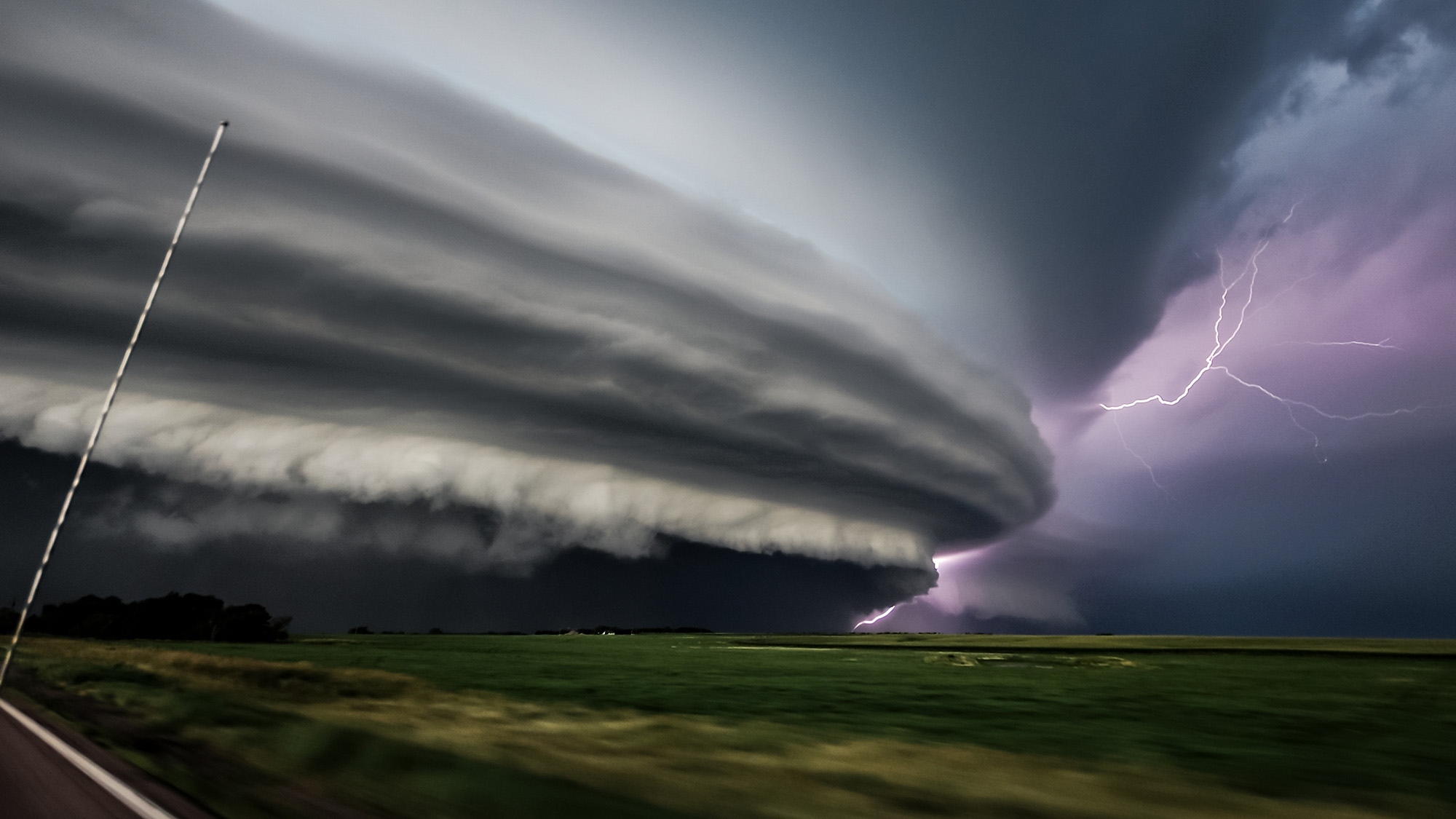
We’ve all seen the movies. Scientists gear up to chase tornadoes across the Oklahoma plains, competing with each other to get there first. But is the reality of storm chasing anything like the movies? In a new episode of Popular Science’s Ask Us Anything podcast, we ask real life storm chaser, Cyrena Arnold, to untangle fact from fiction and break down what it’s really like to go speeding after tornadoes.
Sarah Durn: It’s a balmy Saturday afternoon in Kansas, and you’re driving along a wide open road. You glance in the rear view mirror and your heart skips a beat. Huge, black storm clouds are building in the sky behind you. Lightning flashes. Thunder rumbles. On the radio, an alert blares. A tornado has been spotted not far away.
As you drive as fast as you can away from the storm, a caravan of 10 SUVs whizzes by. What the heck are they doing? Why would anyone drive towards a tornado?
Little do you know, that caravan is packed with hardened storm chasers, just like Helen Hunt’s character in the 1996 classic film Twister. But is real storm chasing anything like the movies?
Laura Baisas: And hello, I’m news editor Laura Baisis.
SD: Here at Popular Science, we can’t stop thinking about all the world’s strangest questions, and this week, we have a special interview episode of Ask Us Anything delving into all things storm chasing. Woo-hoo. What is it? Who does it? And is it anything like the movies? Laura, you actually interviewed real-life storm chaser and meteorologist Cyrena Arnold for this episode.
LB: I did. Cyrena is the absolute coolest.
SD: Ah, I wanna go storm chasing with her so bad.
LB: Kinda do and kinda don’t. Kind of a little afraid of it, but also if I’m gonna go storm chasing with anybody, I think a seasoned meteorologist is kind of the perfect person to go with.
SD: Yeah, I don’t know. I might get too scared, but the idea of it seems fun.
LB: The idea of it’s great. Sounds great on paper.
SD: Sounds great. And you also wrote a story for Popular Science all about storm chasers, so before we get into your interview with Cyrena, let’s lay a bit of groundwork here. Can you tell us what exactly is storm chasing?
LB: So it’s a term that’s evolved quite a bit over the years, but Hollywood tornado movies basically get a lot of it right.
In general, storm chasing means tracking a severe thunderstorm where a tornado is likely to form.
SD: So badass. So where do chasers typically go to track these storms?
LB: It varies, but tornadoes primarily happen here in the United States.
SD: Really, you don’t get tornadoes elsewhere?
LB: You do. While tornadoes happen in China, Canada, and even Australia, nowhere has tornadoes like the good old U.S. of A.
We have by far the most frequent tornadoes, as well as the most dangerous storms.
SD: I don’t know if that’s an award you want.
LB: No.
SD: And when and where do most of these tornadoes happen in the U.S.?
LB: So it can vary a bit. Peak tornado season for the Southern Plains, so that’s Texas, Oklahoma, and Kansas, is from May into early June.
On the Gulf Coast, it’s earlier in the spring, and in the Northern Plains and Upper Midwest—so think North and South Dakota, Nebraska, Iowa, Minnesota—tornado season is more June and July.
SD: And what are chasers actually doing when they go out?
LB: So that’s cool. That all depends on the specific chaser. For a lot of hobby storm chasers, it’s all about getting that great picture or video of a tornado.
SD: Kinda like Glenn Powell’s character in Twisters?
LB: Exactly. So then you have storm chasers with more of a meteorology background. These chasers can collect really important data on these storms, so things like wind speed, direction, precipitation. All of this helps weather forecasters get on-the-ground data that even the most advanced radar might not see.
SD: Okay, so it’s a little more like Daisy Edgar-Jones’s character in Twisters, or Helen Hunt’s character in the original film.
LB: Exactly.
SD: And I imagine the fact that these real-life storm chasers can report things that radars can’t see is really important, right?
LB: Absolutely. Storm chasers in the field can radio back in to the National Weather Service about what they’re seeing, and from there, the Weather Service can issue potentially life-saving warnings.
SD: Wow, so storm chasers are actually saving lives.
LB: Absolutely, and that’s not something I necessarily even realized until I spoke with Cyrena and she talked about how important that is. Storm chasers are able to be the eyes and ears on the ground and help keep people safe.
SD: No pressure.
LB: Yeah, yeah. None whatsoever.
Now, before we get into my interview with real-life storm chaser Cyrena Arnold, we want to hear from you. What questions are rotating around in your brain? Submit your question by clicking the “Ask Us” link at popsci.com/ask. Again, that’s popsci.com/ask, and click the “Ask Us” link.
SD: We’ll be right back with Laura’s interview with a real storm chaser, after this quick break.
LB: And welcome back. Today, we have a very special guest interview. With us is Cyrena Arnold, a meteorologist, author, and host of the Storm Front Freaks podcast. She’s currently based in New Hampshire, where she is the director of product marketing at Atmospheric G2, and importantly, has 20 years of chasing storms.
Cyrena, thank you so much for joining.
Cyrena Arnold: Yeah, you’re welcome.
LB: So first, tell me, how did you get into storm chasing?
CA: Ah, that’s a very good question, and how I got into storm chasing was accidentally storm chasing. So I was born in the southern Caribbean where they don’t even get hurricanes, where the weather is really nice.
And when I was five, we moved to Denver, Colorado, or a suburb of Denver, and all of a sudden one day there was this thunderstorm, and I’d never seen a thunderstorm before, and then there’s hail, and I’d never seen hail before, and there was lightning, and I hadn’t seen that, and then a funnel cloud formed.
LB: Ah.
CA: And it formed a tornado, and the tornado just went across this big field, and I so vividly remember standing in the doorway of my house, looking out at that and going, “Wow.” That’s, that’s cool.
And a switch flipped in me when that happened. And so I just, I just loved weather, and I have really dedicated my entire life to it, you know, all of my education and every science fair project and everything like that.
So I knew I wanted to study severe weather. I knew I wanted to go to the University of Oklahoma, and when you’re out there at the meteorology school. It was wonderful. My first big storm chase was Cordell, Oklahoma, October 9th of 2001, where we saw seven tornadoes. One was a F3 tornado.
LB: Wow.
CA: And that’s the beginning.
LB: And one thing I think, like, me, myself, and anybody that watches some sort of a sci-fi or some sort of fictional take on a very real thing has to wonder: What do the actual scientists think about this portrayal? So can you tell me, what do you think about the Twister films specifically? Are they at all accurate?
CA: Yes and no.
LB: Right.
CA: There are some things about them that are super accurate.
LB: Mm-hmm.
CA: And there are some things about them that are not. I think the, for me, the funniest thing is how successful they are in storm chasing. They make it seem so easy.
LB: Right.
CA: You, you know, we’re out, oh, we’re gonna get in the car, and you drive 30 minutes, and there’s a tornado, and there’s another tornado, and, and no. No. No, no, no, no. The, the real story—
LB: Hmm…
CA: —is that you see a tornado on average about one out of every 10 of your storm chases.
SD: Wow.
CA: So you have a very low percentage rate. And then in order to do that, you’ve gotta forecast this right. You’ve gotta set yourself up in the right place. You’re possibly driving hundreds of miles, and you’re putting in a tremendous amount of time for a couple seconds.
Most tornadoes are very short-lived. They’re small, and there are some bigger ones, but you spend a lot of time and work to be successful, and I’ll go entire years and not see one. That’s probably one of the biggest things is that they just make it look so easy and, and so simple, and it’s not. Some other things that they get right or wrong, there’s always, like, a rivalry, right?
Yeah. Like in Twister, you know, it was Jo and, you know, Jonas and, and they fought. And, in the Twisters movie, same thing, right? You know, these competitive chase teams. This is a hobby that has some of the greatest camaraderie out there, and if you don’t believe me check out a gas station any time you see a whole bunch of storm chasers there.
They’re not fighting in the parking lot. They’re doing stuff together, looking at weather models together. They’re taking pictures together, laughing, joking, playing, like, football together. This is a like, a group thing. And I know when we’re out there with the Storm Front Freaks, we’ll see people that we’ve interviewed on our podcast and that we know and talk to, and you, like, run up to these people and give them hugs and high fives.
You know? You know these people, and we have this common bond.
LB: Yeah.
CA: So there is a lot more camaraderie in it, and very, very little competition.
LB: What about some things if it’s like your group, where you’re going out there and you’re, you’re not necessarily doing pictures and video, you’re doing more research and data.
How is that portrayed in the movies, that side of it?
CA: Yeah. It’s funny because in the movies it seems like everyone’s out there for research purposes. And that’s really cool, and in the 1980s and ’90s, that was absolutely true. Most of the people who went storm chasing were meteorologists. It was for scientific purposes, stuff like that.
Today because of those movies, they’ve made it a lot more popular where a vast majority of the storm chasers that are out there now have absolutely no meteorological credentials. And that’s totally cool. That’s fine as long as you go through a lot of training education, ’cause this is still an, this is an incredibly dangerous thing to be doing.
You can’t just walk out your front door and say, “I’m gonna go chase a tornado today,” or you’re gonna get yourself hurt. So most of the people who are out there are hobbyists. They do it for fun. They’ve taken a lot of chaser education courses and talked with other chasers, and a lot of those people who are doing it for fun or into photography.
They, maybe they want a picture of a tornado. Maybe they want really great storm structure. There are still researchers out there. There are still research projects. You have mobile radar on wheels teams out there with remote mesonet sites, so cars or stations you can move to have weather sensors on the ground, and they are collecting data, and we are still trying to understand how tornadoes form.
And that’s a part of it as well. And then you have the small sliver, fraction of a percent of, let’s just call them YouTuber using yahoos or stuff like that like wanna try to touch a tornado and bring you as close to it as possible, but that’s a real small sliver, so—
LB: Okay.
CA: —storm chasing is an incredibly wide spectrum of what’s out there, and, and I’d say a vast majority of them are out there to witness the beauty of nature and actually don’t have any degree or credentials or education in meteorology at all.
LB: And you mentioned the danger. How dangerous is it really?
CA: That can vary. If you wanna stay back from the storms, and you’re wanting to get storm structure, you wanna see the mammatus, and you wanna see the anvil. Maybe you’re far enough back you can see, like, an overshooting top. That’s, that’s pretty good.
LB: Yeah.
CA: You’ll find yourself okay there. But the hazards aren’t just the tornado. The hazards are downbursts. The hazards are lightning. The hazards are hail. The hazards are flooding, flash flooding. Water and flooding kills more people in weather than all of the different weather perils combined.
LB: Wow.
CA: So flooding is incredibly dangerous.
But if you have properly educated yourself, you understand the storm structure and where these different things are located and understand storm motion and dynamics and thermodynamics—
LB: Mm-hmm …
CA: —it can be done in a relatively safe way.
LB: Have you ever been caught up in a situation that you’ve thought, “Maybe I shouldn’t have gotten myself into this,” or, you know, any, um, dangerous storms?
CA: Absolutely. Absolutely. Uh, I got caught one time in a wet microburst of a storm structure that I didn’t understand, and I have never felt wind and rain like that in my life. I was stuck inside my truck. I couldn’t see anything. It was rocking like I was in a hurricane, and the bed liner in the back of my truck was bowing from how much wind was going through there.
I thought it was gonna pop out and go flying away. My ears popped from this wet microburst. It was crazy.
LB: Mm-hmm. Wow.
CA: I remember when this happened, I was like, “I’ve messed up. This is not a safe place.” I’ve been way too close to lightning. When you’re out storm chasing, that’s just inevitable as well.
So I got a car stuck in the mud one time because the mud out there is a special kind of mud that when it gets wet, that turns into the slickest stuff you’ve ever seen, and unless you have four-wheel drive, you’re not getting out of it. Learned that the hard way, and while running to safety, almost got hit by lightning.
I’ve chased tornadoes at night, ’cause I thought that would be fun, and then I realized I couldn’t see anything. So in, in my early days, in my college days, I’ve made a ton of mistakes, and I’m really lucky to say that I, you know, I learned from all of those experiences.
LB: Do you have… I, I know that this might be like asking, you know, what’s your fav- who’s your favorite kid, but do you have a favorite chase?
CA: Ooh. There was a storm in Clovis, New Mexico May of 2003 that was probably the angriest storm I’ve ever seen, and it was actually, it’s funny, we called her Tina because it was the day we chased her was either the day of or the day after Tina Turner passed away. And you know, and she was a, like, powerhouse, right?
And so this storm was just ferocious. And so we called her Tina, and so I’ll always remember Storm Tina. It had inflow winds blowing into the storm at, like, 67 miles an hour sustained. This thing was just sucking up air from the lower atmosphere and throwing it up high like I had never seen in a storm before.
The teals and the green colors you saw inside the storm from the hail that it was producing in the places that I didn’t wanna be were incredible. This storm was just, it was angry, and it was ferocious.
There’s also a storm, God, in the early 2000s. I was in, like, Okarche, Oklahoma, and this one, I, was hilarious ’cause we have our old-school video cameras. We’re filming it. We know we’re in the right area. We’re looking at the storm structure. The sirens in the town go off, which gives you goosebumps, and when you’re a storm chaser, is one of the coolest sounds in the world. If you’re living there, that’s terrifying. And we’re looking for it, looking for it, and we, you know, kind of, kind of finally see it at the end, but then we gotta drive away and get to safety.
We go back and watch our video that night, and with the resolution of the video camera, the contrast was better, and there was a funnel and a tornado in front of us the whole time, and we couldn’t see it because of—
LB: Whoa …
CA: —the way the light was and the brightness and the contrast. We were in, like, just this weirdest place.
LB: Just the whole time, it was there? Just—
CA: The whole time, yep.
LB: Hanging out.
CA: Just hanging out, had no idea, and so it was, yeah, and that one was, that, like, that’s just one that, uh, me and, and my friends from college, we just look back at and laugh. Like, to this day, we’re still like, “Oh, yep, you know? That Okarche day, man.”
LB: So when you’re actually out there, how is that whole team setup and dynamic different than it is in the movies?
CA: The movies are funny ’cause it’s almost like there’s the set day. Yeah. Where, where all of a sudden, hey, on the calendar, oh my God, it’s May 1st, tornado season is, is opening. You know, and that’s not how it is at all.
There are opportunities where chasers can get together. There’s storm chasing conferences. They usually happen in the off-season in, like, February, which is nice. But with a changing climate too, we have changing storm times, and we’re actually seeing Tornado Alley shift further east, and the seasons are longer.
We’re seeing it fall more into, uh, February, March in, in the southeastern parts of the U.S.. So people just start showing up, and you start chasing on their own. And once you really start getting into the severe season, yeah, you meet up, and you see other people when you’re out there, and in the gas station parking lots, people are there, and you see each other and can hang out for a bit while you’re staging and waiting for storm initiation or whatever.
But it’s not like they show in the movies where it’s like, “Oh my God, everyone mark your calendar for this day and we’re all gonna meet at this gas station in this small Oklahoma town.” It doesn’t work that way at all, and there’s days you can have a line of storms that form from Texas through the Dakotas, and so storm chasers just spread out all along across that line naturally, and it’s just a very natural sort of process. That’s not as scheduled and not as quick and easy as they make it look in the movies.
LB: There you go. Last question, but I love to ask scientists this one, whether it be from movie, TV, comic books, books, favorite fictional scientist?
CA: Miss Frizzle. Does she count?
LB: Oh, 100%. She, she definitely has a PhD, but is also teaching elementary school as a scientist, yes.
CA: You know she’s a teacher—
LB: Mm-hmm.
CA: But man, Miss Frizzle embodies everything about science, the curiosity, the willing to learn, making mistakes and trying again, and also, like, rocking outfits.
LB: Yes.
CA: Like, really cool science-y dresses and stuff while doing it, and making science fun, and I think that is awesome. I am so … I’m game. That’s great. Sign me up. She’s amazing.
LB: Cyrena, thank you so much for joining us. Now, if people wanna find you on the internet, where should they look?
CA: Everything for me is at wxcyrena, and Cyrena is spelled really unusually. Thank you, Mom and Dad. Love you so much. It’s C-Y-R-E-N-A, so W-X-C-Y-R-E-N-A on all the social media platforms.
My website, everything is at wxcyrena. And find me. Find me on social media. We’re gonna be talking about the storm chase while we’re out doing it, so check in and see what’s going on there. And we were just talking about Miss Frizzle. She’s one of my favorite people, and I am trying to be her, I think, more and more every day.
I’ve written three children’s books about weather, too, and so you can find those through the links in trying to find me. I have The Weather Story, The Hurricane Story, and The Tornado Story, which are factual books, real meteorology, but in a nice, lyrical, easy to understand way for kids, and it’s just so important to me that science communication and science education piece is a cornerstone of what I do, so go check those out, too, if you’re looking me up.
LB: Awesome. Well, thank you, and good luck chasing.
CA: Thank you. I hope you find some wonderful, what we, other people call terrible, weather.
SD: What an interview. Now I really wanna go storm chasing with her.
LB: I know. I’m more convinced now.
And that’s it for this episode, but don’t worry, we’ve got more episodes of Ask Us Anything live in our feed right now. Follow or subscribe to Ask Us Anything by Popular Science wherever you enjoy your podcasts.
And if you like our show, leave a rating and review.
SD: Our producer is Alan Haburchak. This week’s episode was based on an article written for Popular Science by Laura Baisis.
LB: Thank you, team. Thank you, meteorologists and storm chasers, and thanks everyone for listening.
SD: And one more time, if you want something you’ve always wondered about explained on a future episode, go to popsci.com/ask and click the “Ask Us” link.
Until next time, keep the questions coming, and listen to those storm warnings.
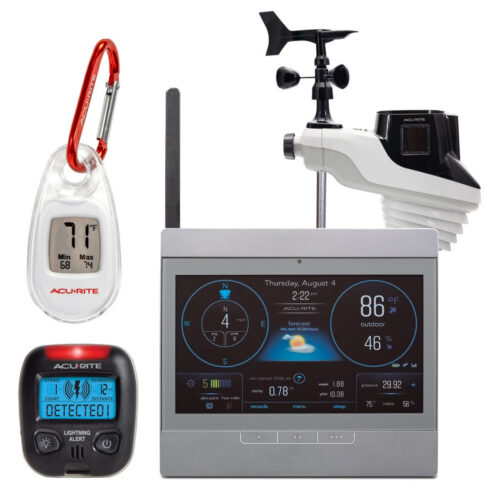
AcuRite must kill its customers’ favorite companion app due to “obsolete technology," VP of product development Jeff Bovee tells Ars Technica.
AcuRite, which makes smart weather-monitoring devices, announced this month that the My AcuRite iOS and Android app that has been around since 2016 won’t be available after May 30. After that date, device owners must use AcuRite NOW, which AcuRite released in June 2025, to control their gadgets.
The announcement has frustrated long-time AcuRite users, largely because the new app lacks some of its predecessors' capabilities. For example, AcuRite NOW doesn’t allow renaming multiple temperature sensors, organizing on-screen sensors, or reporting temperatures as anything other than whole numbers (AcuRite says it's working on adding some of these features).
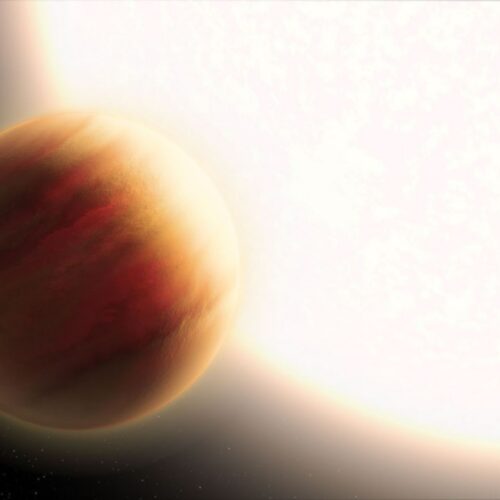
WASP-94A b is a hot, tidally locked gas giant orbiting close to one of the stars in a binary system roughly 690 light-years away from Earth. In a new Science study, scientists led by Sagnick Mukherjee, an astrophysicist at Johns Hopkins University, used the James Webb Space Telescope to learn what the weather looks like out there.
Tidal locking means that you no longer have day- and night-side temperature differences sweeping across the planet. “We wanted to understand the atmospheres of such planets,” Mukherjee says. “Are they static or dynamic? Do they have winds? Do they have clouds?” His team found that, on WASP-94A b, it’s cloudy in the morning, but the skies are clear in the evening. The fact that we didn’t know this already means we might have gotten the chemistry of this and many other exoplanets surprisingly wrong.
Averaged atmospheres
WASP-94A b has a mass slightly below half of Jupiter but has a diameter that’s over 70 percent wider. “This means the planet has low density, and its atmosphere extends further out into space, which makes it easier to observe,” Mukherjee explains. When astronomers study atmospheres like this, they usually rely on transmission spectroscopy. By analyzing the spectrum of light filtering through the planet’s atmosphere as it crosses in front of its star, they can figure out its chemical composition.
As summers become hotter, air conditioner sales are booming. If you’re looking to invest, here’s what to consider
When a heatwave struck the UK this week, Jon Connorton, a software developer, began monitoring temperatures inside his east Hampshire terrace house. With some rooms reaching close to 40C, it was time to deploy the air conditioner. “We just wheel it out in emergencies,” he said. “We were having trouble sleeping.”
Connorton and his wife have a portable air conditioner. These plug-in devices cool interior air by removing heat from it and blowing that heat outside, typically via a large hose slung from a window or door.
Government should fit solar panels to power air con units where vulnerable people live, say green advocates
As the country baked in record May temperatures, climate campaigners have said the UK government needs to urgently start installing air conditioning units in schools, care homes and places where vulnerable people live.
In 2022, when temperatures spiked above 40C (104F), about 3,000 people in Britain died of causes associated with heat. Studies show air conditioning can cut heat related deaths by 75%.
AcuRite must kill its customers’ favorite companion app due to “obsolete technology," VP of product development Jeff Bovee tells Ars Technica.
AcuRite, which makes smart weather-monitoring devices, announced this month that the My AcuRite iOS and Android app that has been around since 2016 won’t be available after May 30. After that date, device owners must use AcuRite NOW, which AcuRite released in June 2025, to control their gadgets.
The announcement has frustrated long-time AcuRite users, largely because the new app lacks some of its predecessors' capabilities. For example, AcuRite NOW doesn’t allow renaming multiple temperature sensors, organizing on-screen sensors, or reporting temperatures as anything other than whole numbers (AcuRite says it's working on adding some of these features).
WASP-94A b is a hot, tidally locked gas giant orbiting close to one of the stars in a binary system roughly 690 light-years away from Earth. In a new Science study, scientists led by Sagnick Mukherjee, an astrophysicist at Johns Hopkins University, used the James Webb Space Telescope to learn what the weather looks like out there.
Tidal locking means that you no longer have day- and night-side temperature differences sweeping across the planet. “We wanted to understand the atmospheres of such planets,” Mukherjee says. “Are they static or dynamic? Do they have winds? Do they have clouds?” His team found that, on WASP-94A b, it’s cloudy in the morning, but the skies are clear in the evening. The fact that we didn’t know this already means we might have gotten the chemistry of this and many other exoplanets surprisingly wrong.
Averaged atmospheres
WASP-94A b has a mass slightly below half of Jupiter but has a diameter that’s over 70 percent wider. “This means the planet has low density, and its atmosphere extends further out into space, which makes it easier to observe,” Mukherjee explains. When astronomers study atmospheres like this, they usually rely on transmission spectroscopy. By analyzing the spectrum of light filtering through the planet’s atmosphere as it crosses in front of its star, they can figure out its chemical composition.

 Login
Login