Normal view

When Food Runs Short, This Single-Celled Organism Turns into Giant Cannibal to Survive

3 June 2026 at 20:55
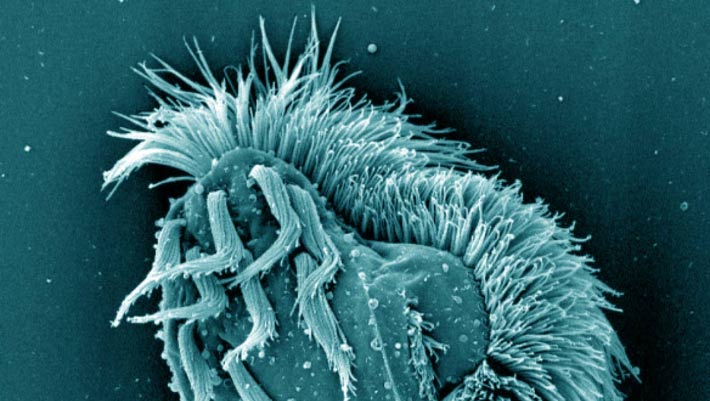
Euplotes gigatrox. Image credit: Ben Larson & Samuel Lord.

Euplotes gigatrox, a new species of ciliate collected from a seawater filtration system on the Caribbean Island of Curaçao, can transform into a cannibalistic ‘supergiant,’ raising new questions about the complexity of life at the microscopic scale.

The post When Food Runs Short, This Single-Celled Organism Turns into Giant Cannibal to Survive appeared first on Sci.News: Breaking Science News.

Southern Ocean Eddies Drive High-Latitude Warming Spotlight

3 June 2026 at 18:04

In a groundbreaking study published in Nature Climate Change, scientists have uncovered a critical driver behind a high-latitude warming hotspot in the Southern Ocean—a phenomenon attributed to the complex interactions of ocean mesoscale eddies. The Southern Ocean is a vital component of the global climate system, playing a fundamental role in heat and carbon uptake, yet understanding its warming patterns remains a grand challenge due to the intricate interplay of oceanic and atmospheric processes.

Over the past four decades, from 1982 to 2023, observations have revealed a notable surface warming signal concentrated in certain regions of the Southern Ocean. To robustly characterize this warming, researchers employed a suite of state-of-the-art sea surface temperature (SST) datasets derived from multiple sources including NOAA’s Optimum Interpolated SST, ECMWF’s ORAS5 ocean reanalysis, NOAA’s Extended Reconstructed SST, the Institute of Atmospheric Physics surface temperature records, and the high-resolution Met Office OSTIA product. These datasets, varying in spatial resolution from 0.05° to 2°, collectively ensure a detailed and reliable representation of temperature trends despite the Southern Ocean’s formidable observational challenges.

Beneath the surface, the temperature structure and mixed layer depth have been meticulously analyzed using the extensive Argo float network, which provides high-resolution data from 2004 to 2023. By calculating the mixed layer depth through the vertical buoyancy frequency maximum method, the team achieved a consistent and physically meaningful depiction of how the upper ocean stratification evolves in the warming hotspot region. This approach also aligns well with other established methods, lending further confidence to the interpretation of subsurface heat dynamics.

One of the study’s fundamental breakthroughs involved the incorporation of satellite-observed daily surface geostrophic currents to calculate eddy kinetic energy (EKE)—a critical measure of the ocean’s mesoscale variability. Geostrophic currents at a fine spatial resolution of 0.125° were segmented into mean flows (3-month averages) and perturbations representing eddies. Through careful analysis of these perturbations, the researchers quantified how mesoscale eddies contribute to the Southern Ocean’s thermal state, elucidating their pivotal role not just as passive features but as active agents in heat redistribution.

Additionally, satellite-based chlorophyll-a concentration data spanning 1998 to 2023 was leveraged to assess biological responses to warming. Chlorophyll serves as a proxy for phytoplankton biomass, which is highly sensitive to changes in upper ocean temperature and mixing. This integrated biophysical perspective enables the researchers to frame the warming process within broader ecological implications, an essential step toward comprehensive climate impact assessments.

To understand the mechanisms driving the observed warming hotspot, the scientists turned to high-resolution climate simulations using the Community Earth System Model-High Resolution (CESM-HR). This model components include coupled representations of the atmosphere, ocean, sea ice, and land, simulated at nominally eddy-resolving horizontal resolutions of 0.1° for the ocean and sea ice and 0.25° for atmosphere and land. Following the Coupled Model Intercomparison Project Phase 5 protocol, CESM-HR runs enable the dissection of key physical processes at unprecedented scales previously unreachable in global climate models.

The CESM-HR simulation strategy included two experimental setups: the pre-industrial control (PI-CTRL), representing a stable climate baseline, and a historical-forcing simulation incorporating time-varying anthropogenic influences up to 2100 under RCP8.5, known as HF-TNST. By calibrating trends to exclude model drifts through comparisons with the PI-CTRL, the authors ensured that derived long-term warming signals authentically represent climate change impacts, thereby enhancing the robustness of the mechanistic findings pertinent to the upper Southern Ocean’s response.

A pivotal analytical tool was the partitioning of mean flows and mesoscale eddies, defined by deviations from 3-month averaged states. This allowed precise quantification of the roles played by mean circulation and eddy-induced heat transport. Such decomposition revealed that mesoscale eddies significantly modulate the convergence of heat transport within the warming hotspot, fundamentally altering thermal stratification and surface temperature trends.

The heart of the study’s analysis lies within the vertically averaged ocean heat budget framework. This diagnostic equation encapsulates the change in temperature within the water column as a balance between heat convergence by mean flows, heat convergence by eddies, surface heat fluxes, and turbulent mixing processes. In meticulous detail, the researchers computed these terms directly from model outputs, with turbulent mixing inferred as a residual term. Their quantitative assessment pinpoints mesoscale eddies as not mere bystanders but as key contributors to heat redistribution, exerting a critical influence on regional warming patterns.

Further mechanistic insight was achieved through the computation of the conversion from mean available potential energy (MAPE) to eddy available potential energy (EAPE), a dynamical energy exchange indicative of baroclinic instability—the process through which energy stored in mean density gradients transfers to eddy fields. Utilizing daily velocity, temperature, and salinity from selected periods when fine-scale model outputs are available, the study convincingly demonstrates enhanced energy conversions under warming scenarios. This intensification of baroclinic instability facilitates stronger eddy generation and thus more vigorous vertical eddy heat transport.

The cascade of energy from MAPE to EAPE and subsequently to eddy kinetic energy (EKE) underscores the vital role of mesoscale eddies in modulating Southern Ocean warming. The amplified vertical eddy heat transport identified by the research signifies a dynamic ocean adjustment process that not only shapes temperature evolution but also likely impacts nutrient fluxes, carbon cycling, and sea ice distribution in polar regions.

This study represents a significant advancement in oceanographic climate science by unequivocally linking mesoscale eddy dynamics to observed high-latitude Southern Ocean warming hotspots. Beyond enriching our conceptual understanding, these findings underscore the necessity of resolving ocean mesoscale processes in global climate models. Such resolution is essential for credible projections of polar climate change, which carry profound implications for global sea level rise, weather patterns, and carbon sequestration.

In conclusion, by integrating cutting-edge observational datasets, state-of-the-art Earth system modeling, and sophisticated dynamical analyses, this research unravels the intricate mesoscale mechanisms underpinning Southern Ocean warming. It highlights the synergistic coupling of ocean physics, climate forcing, and energy conversions that together sculpt the spatial patterns of warming at high latitudes. This paradigm shift fosters optimism in our capacity to predict and, ultimately, mitigate the impacts of climate change on Earth’s most sensitive ocean frontiers.

Subject of Research: High-latitude warming hotspot in the Southern Ocean driven by ocean mesoscale eddies and their role in heat transport and energy conversion.

Article Title: High-latitude Southern Ocean warming hotspot induced by ocean mesoscale eddies.

Article References:
Li, D., Jing, Z., Cai, W. et al. High-latitude Southern Ocean warming hotspot induced by ocean mesoscale eddies. Nat. Clim. Chang. (2026). https://doi.org/10.1038/s41558-026-02652-7

DOI: https://doi.org/10.1038/s41558-026-02652-7

Image Credits: AI Generated

Rare hybrid sea turtle released back into the ocean after rescue

29 May 2026 at 15:32

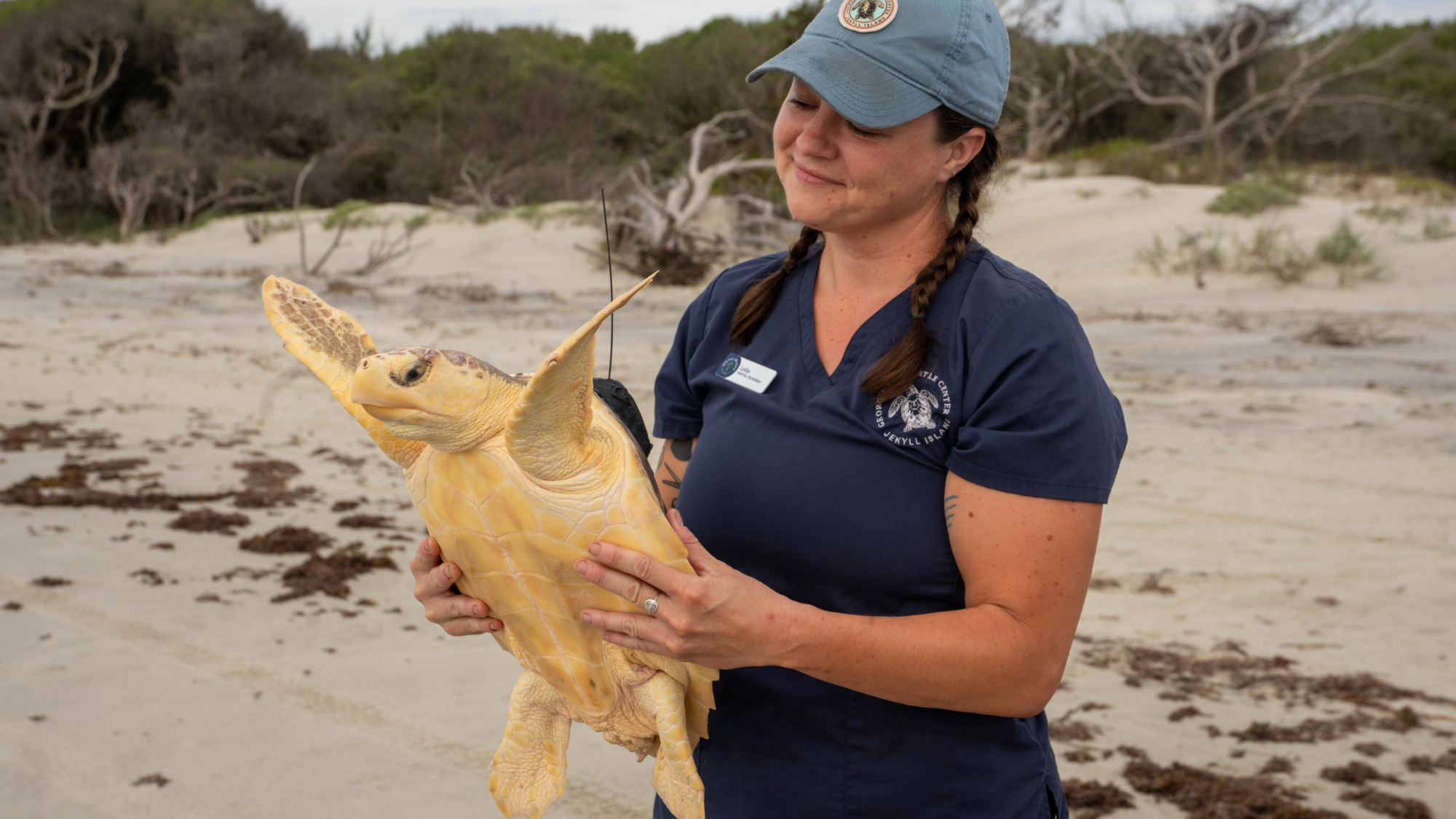
A unique turtle is officially getting a second chance at life in the big blue. Last month we reported on a special resident at the Georgia Sea Turtle Center in Jekyll Island, Georgia: a first-generation hybrid sea turtle, the child of a Loggerhead sea turtle father (Caretta caretta) and a Kemp’s ridley sea turtle (Lepidochelys kempii) mother. Nicknamed Earl Grey, the reptile-turned-celebrity has returned to the wild. 

This Hannah Montana of turtles was slated to be released on Wednesday, but on Tuesday the Georgia Sea Turtle Center announced a change of plans because of “some unexpected pre-release complications.” Luckily, these complications must have been resolved. He was sent on his way Thursday morning, only one a day behind schedule. 

“Yesterday evening, veterinarians at the Georgia Sea Turtle Center determined that the best course of action for Earl Grey’s well-being and successful transition back into the ocean was to conduct a private release,” according to a George Sea Turtle Center spokesperson.

The turtle was rescued from a beach in Brewster, Massachusetts, where it was stranded and cold-stunned. The turtle’s mixed background was revealed by genetic testing after the Loggerhead ridley (or Kemp’s Loggerhead?) arrived at the turtle center. Hybrid animals are natural, but we don’t know how many wild hybrid sea turtles there are. Most hybrid animals are only confirmed with genetic testing. 

a turtle in a bucket with a telemetry device on its shell
Earl Grey on his way to the beach for release. Image: Jekyll Island Authority.

“From an evolutionary perspective, hybridization could be one of many ways genetic diversity is introduced into a population,” Jaynie L. Gaskin, Georgia Sea Turtle Center director, told Popular Science in April. “We encourage other rehabilitation facilities to consider genetic testing for any suspected hybrid sea turtles, as there may be more individuals than we currently realize!”

In a Facebook video, the turtle center highlights the traits that the rare hybrid sea turtle inherited from each species, including a hook-shaped beak of a Kemp’s ridley (the mother) and the colors of a Loggerhead (the father). A combination of, in their words, the “best of both worlds.” . 

Stay warm, E.G.! 

The post Rare hybrid sea turtle released back into the ocean after rescue appeared first on Popular Science.

What’s the safest swimsuit color? Skip blue and black.

29 May 2026 at 14:01

A pleasant swim at the beach or pool can quickly turn deadly. Every year, over 4,000 people die from unintentional drowning across the United States. 

Swim safety experts say drowning is highly preventable. They recommend learning basic swimming skills, designating “water watchers” to keep an eye on children in the water, and avoiding swimming alone or under the influence.

But what if your outfit could stop you from drowning? Swim safety experts say wearing the right color on your next beach day is a good way to stay visible and out of harm’s way—especially for inexperienced swimmers and kids.

So what are the safest swimsuit colors?

Lisa Zarda, Executive Director of the U.S. Swim School Association, says people wearing bright, neon colors are easiest to spot in pools, lakes, and oceans, while blue, black, white, and gray swimsuits blend into the water. 

“When the water is moving and reflecting the sunlight, certain colors just disappear under the water,” she said. “Especially in open water, where it can be kind of murky and hard to see: The brighter the color, the better.” 

Wearing bright colors helps lifeguards and other safety officials identify and rescue people who are at risk of drowning. Vivid orange and super-bright, highlighter yellow are two standout colors for swim safety.

“Think safety vests and traffic cones,” Zarda said. “Those are bright colors also for a reason—so that they can be easily seen.”

https://www.facebook.com/childrens.national/posts/pfbid08GZb6eHevPEyuJLgsdP3PzFXXYM58Q6vfRibrHJFhxWSmnhX8tf5DCeWqKkLvstnl

An informal study by Alive Solutions, a public safety group, tested swimsuit visibility in three different conditions: in a pool with a standard light bottom, a pool with a dark bottom similar to dark blue ocean environments, and in an outdoor lake with brown-gray water. 

Across the board, the study identified bright, neon orange as the most visible color. But there was some slight variation of which colors stood out best in different environments. Against a dark pool bottom, neon yellow, green, and orange were the most eye-catching, while even brighter reds and pinks appeared darker, and both light and dark colors faded into the water. 

In a pool with a light bottom, most colors stood out, while light colors like white and light blue disappeared almost instantly. 

In a lake, only neon colors were visible while all other colors quickly blended. So bottom line: stick to a neon orange swimsuit if you want to be sure to be seen.

Boy in dark blue swim trunks standing on jetty on a lake.
Dark colored swimsuits can be especially hard to spot in open water. Image: mrs / Getty Images / MARTINS RUDZITIS

What makes neon stand out?

All visible color is the result of reflected light. A red apple, for instance, absorbs many wavelengths along the light spectrum, but bounces back red wavelengths. So to the human eye, an apple appears red.

Ordinary colors, like the red of an apple, only reflect the light they receive, but fluorescent pigments do more than that. They also absorb incoming nonvisible ultraviolet and some visible blue light and then re-emit part of that energy as intensely visible light. This is why fluorescent colors almost seem to glow.

Fluorescent shade’s high-contrast is why traffic safety signs, protective gear, and safety and rescue objects, like buoys, are often made with neon materials. It’s also what makes fluorescent swimsuits extra safe.

Swim safety for kids

As summer comes into full swing, Zarda says wearing a neon swimsuit is just one piece of the puzzle to prevent drowning, particularly for kids.

Children are extremely vulnerable to drowning accidents. Kids between ages one to four die from drowning more than any other cause of death, according to the Centers for Disease Control and Prevention. For children aged five to 14, drowning is the second leading cause of unintentional injury.

“Choosing the right swimsuit color doesn’t replace any of the other important layers of protection.” Zarda said. 

“Always having undistracted adult supervision, having a fence around your pool, enrolling your child in swim lessons so that they know how to swim and navigate in the water—those are all still very important.”

In Ask Us Anything, Popular Science answers your most outlandish, mind-burning questions, from the everyday things you’ve always wondered to the bizarre things you never thought to ask. Have something you’ve always wanted to know? Ask us.

Related 'Ask Us Anything' Stories

The post What’s the safest swimsuit color? Skip blue and black. appeared first on Popular Science.

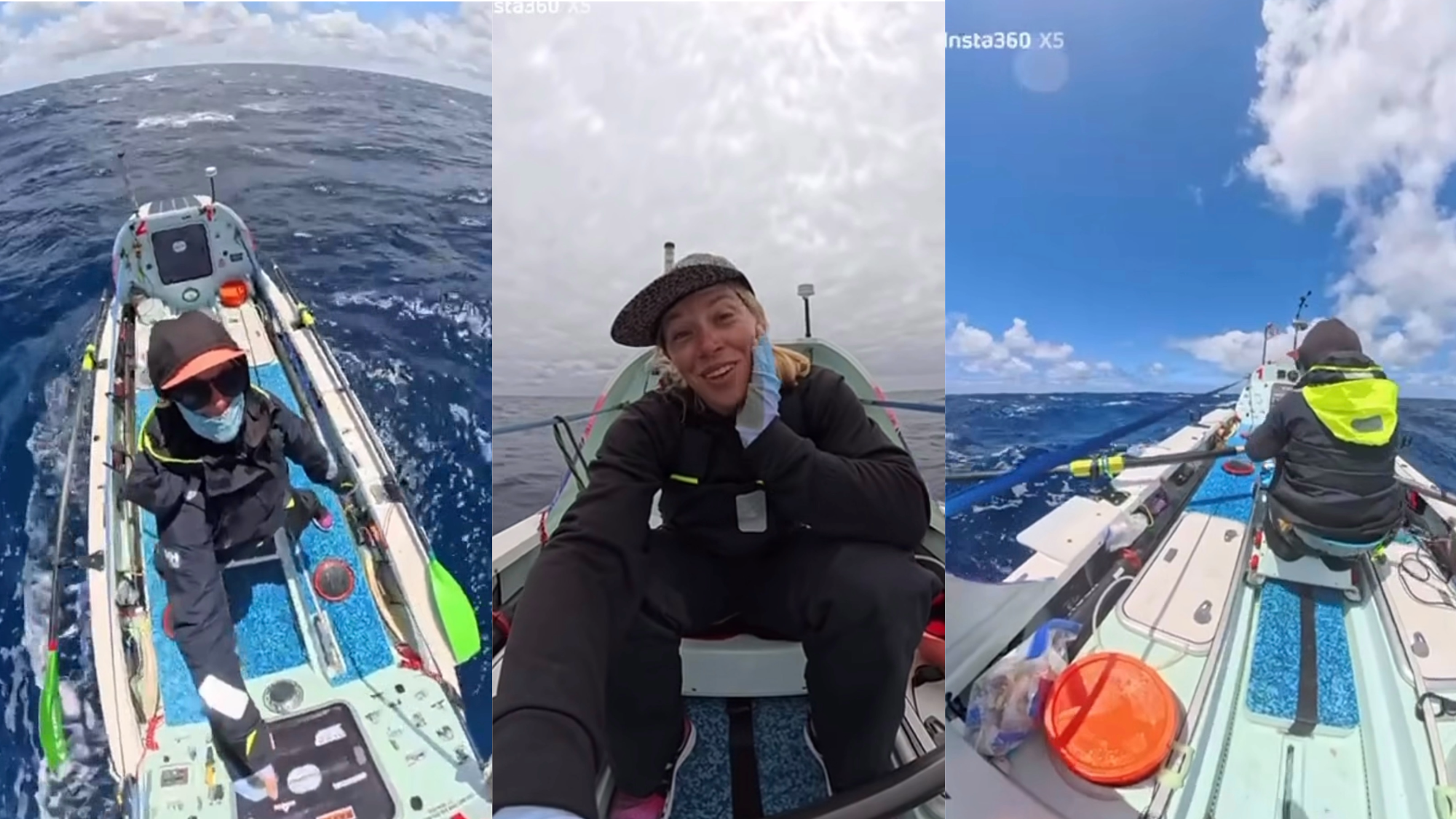
Kelsey Pfendler is trying to become the youngest woman to row solo from California to Hawaii

28 May 2026 at 20:14

A 31-year-old New York native named Kelsey Pfendler is one week into her audacious quest to become the youngest woman to row unassisted from California to Hawaii. To complete her over 2,400-mile journey, she will need to face stormy seas and traverse waters teeming with all types of ocean life.  If she succeeds, Pfendler will become the first American woman ever to do so.

@yourowkelsey

A couple hours of napping and some food will make you feel like a new woman! Waves and wind are still big, but luckily they are becoming more favorable, allowing Kelsey’s boat to catch and ride the waves. Kelsey is rowing to raise funds for The Whale Foundation an organization whose mission is to support, restore, and celebrate the health and well-being of the Grand Canyon river guiding community. Links to learn more and donate are in our bio. @Concept2 @Recpak @insta360 official

♬ original sound – YouRowKelsey

Pfendler set off from Monterey, California on May 21 and has been posting daily updates on her TikTok. A separate live tracker  also plots her position on a digital map. As of May 28, the tracker shows her off the Southern California coast, moving at 1.6 knots. The multi-month voyage is a major test of physical strength and mental fortitude,  and it’s already proven grueling. In just her first week, Pfendler battled strong headwinds as she pushed away from the California coast, leaving her hands covered in blisters.

@yourowkelsey

Absolutely flying today! Waves are around 14ft and wind maxed about 22mph earlier, which gave her a good boost of speed. 229 miles so far, about 2,000 to go. @Concept2 @Recpak

♬ original sound – YouRowKelsey

And it has only gotten tougher. Pfendler’s route took her directly into the path of a weather front, bringing bone-chilling temperatures and punishing waves. Worse, while taking cover from the waves, she lost the cap to her heavy-duty freshwater bag. Though she has the ability to make more freshwater with a desalination device, it runs on solar power and the storm left the skies too dark and overcast for the device to work. As a result, Pfendler has had to tap into her emergency supply of 25 small water bottles, a scarcity that has also prevented her from using water to rehydrate her freeze-dried camp food.

“It’s tortillas and peanut butter until I get some sun,” Pfendler said. 

But the trip has had its lighter moments as well. Pfendler posted an update sharing her excitement when she crossed the continental shelf. At about 50 to 60 miles off the California coast, crossing the continental shelf is something few humans get to experience so intimately.  She also recounted a moment where she spotted either a sea lion or a dolphin hunting fish nearby, sending them leaping out of the water all around her boat.

“It was really cool, it was in the dark and it was kinda special for me,” Pfendler said, 

This quest  isn’t Pfendler’s first rodeo. She completed a similar rowing trip from California to Hawaii in 2024 with three companions, serving as the skipper. That trip took 40 days, 22 hours, and 14 minutes. Still, rowing in total isolation—even for an experienced oarswoman—adds another layer of challenge. If Pfendler completes the trip, she will be just the third woman ever to do so. The record, set by British rower Lia Ditton in 2020, currently stands at 86 days, 10 hours, and 56 seconds.

The post Kelsey Pfendler is trying to become the youngest woman to row solo from California to Hawaii appeared first on Popular Science.

‘World’s deepest banner protest’ launched at the bottom of the sea

28 May 2026 at 23:27
Deep below the ocean surface, at roughly the depth of 130 five-story buildings stacked end to end, a robot has unfurled a protest sign that reads: “LISTEN TO THE SCIENCE!” A Greenpeace remotely operated vehicle (ROV) holds the banner more than 2,300 meters (7,500 feet) below the surface of the Norwegian Sea, in front of a hydrothermal vent field known as Loki’s Castle. “This marks the deepest banner protest in history, to speak for ecosystems that have no voice of their own,” Sandra Schöttner, chief scientist for the Deep Arctic Expedition, Greenpeace International, said in a press release. The protest, carried out on May 27 during Greenpeace’s Deep Arctic Expedition, targeted an area of the Arctic seabed that the Norwegian government opened to deep-sea mining in early 2024 before reversing course under political pressure. Loki’s Castle was discovered in 2008 in the Arctic Ocean between Greenland and Norway. Here in the depths, hot fluid, between 300 and 320 degrees Celsius (572 and 608 degrees Fahrenheit), pours from mineral chimneys on the seafloor. These vents support a rich and unusual community of life, including microbes that resemble the distant ancestors of complex life on Earth. A 2024 study in Scientific Reports documented the animals living around the vents, including five new-to-science species. The authors suggested areas like this along the Arctic Mid-Ocean Ridge should be treated as “vulnerable ecosystems” and protected. In January 2024, the government of Norway opened roughly 281,000 square kilometers (108,000 square miles) of Arctic waters (an area…This article was originally published on Mongabay

Study: Early Complex Life Forms Were Bottom-Dwellers

27 May 2026 at 21:54
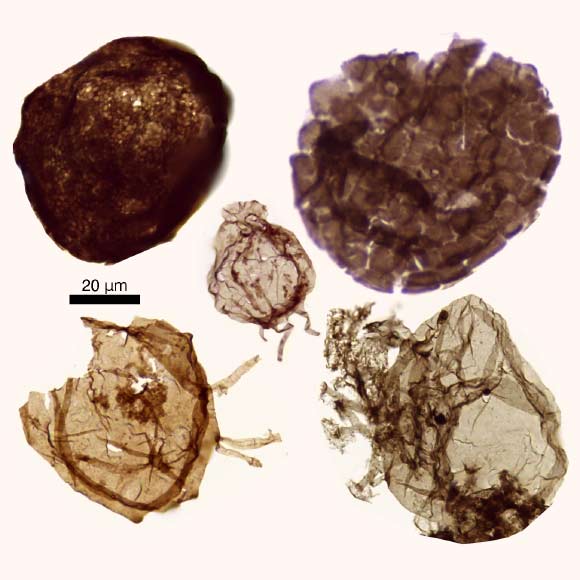
Fossil eukaryotes from Northern Territory, Australia. Image credit: Lechte et al., doi: 10.1038/s41586-026-10533-4.

Analyzing 1.75-billion-year-old microfossils from ancient Australian seabeds, paleontologists say ancient eukaryotes -- the ancestors of every plant, animal and fungus -- huddled in oxygenated seafloor patches for over a billion years before breaking free into open water.

The post Study: Early Complex Life Forms Were Bottom-Dwellers appeared first on Sci.News: Breaking Science News.

A Powerful El Niño Is Forming. If History Is a Guide, It Could Hit Hard.

21 May 2026 at 18:36
The biggest episodes of the past have altered the course of human events, according to researchers. An emerging one is drawing historic comparisons.

© Dea/Biblioteca Ambrosiana, via Getty Images

An illustration published in 1877 depicted a scene in southern India. Millions died from a famine that coincided with an El Niño that year.

Does the Arctic Ocean regulate or amplify global warming?

14 May 2026 at 12:00

Greenhouse gases trap heat within the atmosphere. One such gas that exists beneath the ocean floor is methane. Ice-like substances on the seafloor that contain methane, known as methane hydrates, can break apart or melt, releasing methane gas into the ocean, risking further global warming. Melting permafrost, active tectonics, daily tidal patterns, and changing sea levels can similarly trigger methane’s escape from sediments. However, scientists don’t understand how these triggers will respond to future climate change.

A team of researchers hypothesized that future global warming could actually accelerate methane’s escape into the ocean. To investigate this hypothesis, they focused on an ancient global warming event approximately 56 million years ago, called the Paleocene-Eocene Thermal Maximum or PETM. Arctic Ocean temperatures at times exceeded 20°C (68°F) during this event. These elevated temperatures serve as an analog for today’s rapidly warming conditions. 

Once methane enters seawater, its fate is largely determined by 2 sets of biological processes. Today, 90% of methane released into the ocean from the seafloor is consumed by tiny organisms called microbes via a process known as anaerobic methane oxidation. During this process, microbes consume methane alongside sulfate, producing a solid iron-sulfur mineral, pyrite. Anaerobic methane oxidation prevents methane from escaping into the atmosphere by trapping it in minerals. In this case, the ocean becomes a reservoir, or sink, for methane. 

Despite this, too much methane could overwhelm the sulfate-dependent cycle. If that occurs, a different set of microbes consumes methane alongside oxygen in a process known as aerobic methane oxidation. Aerobic methane oxidation produces carbon dioxide, a potent heat-trapping greenhouse gas that escapes from the ocean. Aerobic oxidation accounts for 10% of methane consumption in oceans today, though this could have been different in the past. 

To determine how much anaerobic versus aerobic methane oxidation occurred during the PETM, the team extracted data from sediments retrieved from the Arctic Ocean floor. As sediment piles up on the seafloor, it compacts. Scientists can drill deep into the seafloor to extract a cylindrical sample, or core, of this compacted sediment. 

The age of sediments in a core increases with depth. Therefore, younger sediments exist at the top of the core, and older sediments exist at the bottom. For this project, the team used a previously extracted core from the Arctic Ocean that contained sediments dating back 100 million years. They found 56-million-year-old sediments from the PETM at a depth of 386 meters, or 1,266 feet, in this core. 

The researchers explained that microbes leave behind unique carbon-based molecules called organic biomarkers when they decompose. These organic biomarkers accumulate in seafloor sediments. The 2 different types of methane-consuming microbes leave behind 2 different biomarkers, one for anaerobic methane oxidation and one for aerobic methane oxidation. This team measured the amount of each biomarker in the sediment core to determine which microbes were dominant during the PETM. 

The biomarker left behind from microbes performing aerobic methane oxidation is called hop(17)21-ene. The researchers noticed that the amount of hop(17)21-ene increased by a factor of 4 during the PETM. At the same time, the biomarker left behind from microbes performing anaerobic methane oxidation, called glycerol dialkyl tetraether, decreased to half. They interpreted these trends to reflect the rise of aerobic methane cycling and the shutdown of anaerobic methane cycling, respectively. They attributed this transition to the release of enough methane to overwhelm the sulfate-dependent methane cycle under warming conditions.

To estimate the amount of carbon dioxide produced by aerobic methane oxidation during the PETM, the researchers located another biomarker in the sediment core, called phytane. Phytane is produced by organisms that consume carbon dioxide during photosynthesis, and its structure preserves clues to the amount of carbon dioxide available at the time. The researchers found that during and well after the PETM, the concentration of carbon dioxide in the Arctic Ocean was 4 times greater than modern levels. They concluded that the Arctic Ocean became a prolonged source of carbon dioxide to the atmosphere, even after the PETM.

The team suggested that the uptick in aerobic methane oxidation during the PETM serves as an analog for the modern Arctic Ocean, which continues to warm rapidly in the face of modern climate change. Their results highlight how the transformation of methane into carbon dioxide poses a threat. More carbon dioxide in the atmosphere warms the air, which heats the oceans, causing more methane to escape from the seafloor and eventually be converted into additional carbon dioxide. When triggered, this feedback would continue to amplify and could become difficult to recover from.  

The post Does the Arctic Ocean regulate or amplify global warming? appeared first on Sciworthy.

‘Ocean with David Attenborough’ – masterpiece and call to action

8 June 2025 at 21:13

Wake-up call, and a call to arms The spectacular feature-length documentary ‘Ocean with David Attenborough’ is his very first partnership with National Geographic, now showing on Disney+ channel in Australia. With the great...

The post ‘Ocean with David Attenborough’ – masterpiece and call to action first appeared on Science Illustrated.

❌