Normal view

Ancient Fossils Reveal Bryozoans Existed at the Dawn of Animal Life, Solving a 500-Million-Year Mystery

3 June 2026 at 17:49

A groundbreaking discovery has reshaped our understanding of one of the most enigmatic groups in the animal kingdom: bryozoans. These tiny, colonial filter-feeders, omnipresent in today’s oceans, have long baffled paleontologists due to their conspicuous absence from the Cambrian fossil record. While the Cambrian explosion, occurring around 530 million years ago, heralded the rapid emergence of nearly all major animal phyla, bryozoans appeared to be absent until the Ordovician period, roughly 50 million years later. This puzzling gap, often dubbed the “elephant in the room” of Cambrian paleontology, may now be firmly closed thanks to the discovery of exquisitely preserved fossils from Southern China, dating back around 520 million years.

A multinational team of scientists from China, Sweden, Australia, and Germany recently unveiled a trove of fossils from the Xiannüdong Formation in southern Shaanxi Province. These fossils include detailed specimens of the previously known species Protomelission gatehousei and an entirely new genus and species, Dayingomelission hexaclitia. Both taxa thrived during the early Cambrian and provide compelling evidence that bryozoans were not only present but already exhibiting complex colony architectures at this early stage in animal evolution.

What sets these fossils apart is not solely their antiquity but the extraordinary quality of their preservation. The tiny colonies, each only a few millimeters in size, retain exquisite three-dimensional structures with internal soft tissues authentically mineralized in phosphate. This mineralization has allowed researchers to peer inside the original skeletal housing, revealing membranous sacs, minute muscle fibers, and distinctive skeletal features including diagnostic styles—unique structural spines characteristic of bryozoan anatomy. Such soft tissue detail is rarely captured in fossils this ancient, making these specimens an invaluable window into Cambrian marine ecosystems.

These findings decisively settle a long-standing debate over the affinities of these fossils. Some previous interpretations suggested Protomelission gatehousei could be a green alga or a collection of isolated, unrelated skeletal elements. However, the combination of hexagonal modular colony architecture and intricate internal anatomy makes the bryozoan affinity unequivocal. This marks an unprecedented confirmation that true bryozoans were indeed present during the Cambrian explosion, closing a perplexing gap in the fossil record.

Advanced imaging technologies played a crucial role in this breakthrough. Using state-of-the-art microscopic and tomographic techniques, researchers could visualize internal soft tissues and skeletal arrangements without damaging the specimens. This high-fidelity reconstruction allowed for a comprehensive phylogenetic analysis, clearly situating both Protomelission and Dayingomelission within Stenolaemata, one of the principal bryozoan classes still extant today. Such deep roots suggest that the bryozoan lineage originated even earlier than previously suspected—perhaps extending into the Ediacaran period, preceding the Cambrian radiation altogether.

These revelations carry profound implications for reconstructing early animal evolution. Bryozoans exhibit a highly modular colonial lifestyle in which genetically identical zooids cooperate within a shared skeleton—a key evolutionary innovation. The presence of fully developed modular colonies during the Cambrian implies that this mode of life was not a late development but a pivotal player in the Cambrian explosion itself. Consequently, the rise of complex multicellularity and functional integration within animal colonies must be reconsidered within this early evolutionary framework.

Additionally, the environmental context of these fossils offers insights into their preservation and ancient ecological niches. The bryozoans inhabited shallow, clear marine waters associated with reef settings—an environment contrasting with the deeper-water deposits typically yielding soft-tissue fossilization during the Cambrian. Such ecosystems may have fostered the radiation and diversification of early bryozoans, although their fossil record remained elusive until now due to specific taphonomic biases.

The significance of the discovery extends further: it suggests a more cosmopolitan distribution of early bryozoans in Cambrian seas. Combined with prior finds from ancient South Australian deposits, these Chinese fossils indicate that bryozoans were widespread and ecologically versatile much earlier than assumed. This cosmopolitanism hints at complex biogeographic patterns and diversification dynamics underpinning early marine ecosystems during one of Earth’s most transformative intervals.

Debunking alternative hypotheses about these Cambrian fossils not only clarifies bryozoan origins but also enhances our understanding of early marine biodiversity. A clearer timeline now places bryozoans as contemporaries of other foundational animal groups, reshaping models of early metazoan community structure. It emphasizes that the Cambrian explosion was as much about the emergence of novel ecological partnerships and colony-level complexity as it was about the appearance of individual taxa.

The ability to detect and interpret soft tissue mineralization in fossils surpasses traditional paleontological methods, underscoring technological advances that continue to revolutionize our window into deep time. These detailed anatomical insights would have been unthinkable decades ago, and they open fresh avenues for understanding evolutionary developmental biology and the genetic underpinnings of early animal form and function.

Moreover, the research highlights the synergy of international collaboration in paleontology. Combining expertise from institutions like Northwest University, the Swedish Museum of Natural History, and universities in Australia and Germany, alongside advanced imaging labs, coalesced into a breakthrough that will likely influence studies of other enigmatic Cambrian groups where fossil evidence remains scant or ambiguous.

In summation, these high-fidelity bryozoan fossils from the early Cambrian Xiannüdong Formation dramatically alter the evolutionary narrative of one of today’s most successful aquatic invertebrate phyla. By authenticating that bryozoans were indeed participants in the Cambrian explosion, this research closes a half-century-old mystery, revealing a much earlier and more complex history for these tiny, yet evolutionarily influential marine architects.


Subject of Research: Animals
Article Title: High-fidelity modular skeletons authenticate a Cambrian origin for Bryozoa
News Publication Date: June 3, 2026
Web References: 10.1038/s41586-026-10590-9
Image Credits: Baopeng Song
Keywords: Cambrian explosion, bryozoans, Protomelission gatehousei, Dayingomelission hexaclitia, fossil record, modular colonies, early animal evolution, soft tissue preservation, Stenolaemata, phosphate fossilization, Xiannüdong Formation, paleontology

Ice Age Enigma: Taimering Mammoth Probably Processed by Early Hunters and Gatherers

3 June 2026 at 15:53

In a remarkable archaeological breakthrough near Regensburg in Bavaria, Germany, a nearly 2.5-meter-long spirally twisted tusk belonging to a woolly mammoth (Mammuthus primigenius) was unearthed during routine construction work in Taimering. This discovery, made six years ago by the Bavarian State Office for the Preservation of Historical Monuments (BLfD), reverberates profoundly through the scientific community, offering an unparalleled window into the Ice Age fauna of Central Europe. Alongside the tusk, researchers uncovered over seventy additional bones and bone fragments predominantly from the mammoth’s ribcage, as well as hand and foot bones, though the long bones remain conspicuously absent. Experts attribute the exceptional preservation of these remains to millennia of conservation within the wet sedimentary environment, which staved off the deleterious effects typically inflicted by exposure and predation.

Subsequent paleontological analyses meticulously confirmed that all the bones and the tusk belong to a single, remarkably large but juvenile individual. The mammoth is estimated to have stood approximately three meters tall at the shoulder—indicative of the species’ impressive stature even before reaching full maturity. The spatial arrangement and pristine condition of the bones strongly imply that the animal perished in close proximity to the excavation site. Detailed surface examinations revealed the absence of evidence for transport by water or predation-induced disarticulation, suggesting rapid burial in the sediments of an ancient pond or a slow-moving tributary of the Danube River during the Last Glacial Maximum. Radiocarbon dating places this event between 27,000 and 25,000 years ago, embedding the specimen firmly within a critical temporal context.

One of the most striking revelations from the site involved the identification of anthropogenic modifications on the bones. Researchers discerned clear cut marks—most notably on the ribs—attesting to human butchering activities. Intriguingly, one of the broad rib bones appears to have served as a makeshift cutting board, further underscoring the direct interaction between Palaeolithic humans and this megafaunal giant. However, it remains unresolved whether humans hunted the mammoth or scavenged its carcass after natural death. The osteoarchaeological analyses led by Kerstin Pasda from the Friedrich-Alexander-University Erlangen-Nürnberg provide compelling evidence of deliberate exploitation but stop short of clarifying the exact nature of the encounter.

Pollen analysis by Dr. Philipp Stojakowits from the University of Augsburg provided vital environmental context, revealing a tundra-like steppe populated by herbaceous plants and scattered dwarf shrubs. This biome, commonly known as the Mammoth Steppe, was a complex and nutrient-rich ecosystem that stretched expansively across Eurasia during the peak of the last glaciation from 30,000 to 20,000 years ago. It represented a vast treeless habitat nestled between the retreating Scandinavian ice sheet and the southern Alpine glaciers, capable of sustaining diverse megafauna including woolly mammoths. The palaeoecological insights gleaned from these studies place the Taimering mammoth within an ecosystem marked by climatic extremes yet surprisingly rich biodiversity.

This discovery is of exceptional significance not only because mammoth remains are exceedingly rare in this part of Europe but also due to the scarce evidence of human presence in the region during this notoriously harsh glacial period. PD Dr. Gertrud Rößner, a leading paleontologist at the Bavarian State Collections of Natural History, highlighted the rarity of such finds in Central Europe, contrasting with more common discoveries in eastern Eurasia. Additionally, archaeologists Andreas Maier of the University of Cologne and Thorsten Uthmeier of the Friedrich-Alexander-University Erlangen-Nürnberg emphasized that prevailing climatic conditions likely forced Palaeolithic hunter-gatherers to seek refuge in more hospitable southern and eastern zones, rendering direct evidence of their activities exceedingly rare in Bavaria.

The collaborative scientific endeavor involved 14 specialists from a panoply of institutions including the Bavarian State Collections of Natural History, Friedrich-Alexander University Erlangen-Nürnberg, the Bavarian State Office for the Preservation of Historical Monuments, the Reiss-Engelhorn Museums, the Curt Engelhorn Center for Archaeometry in Mannheim, and several major universities across Germany. This interdisciplinary approach ensured comprehensive analyses employing advanced archaeological, palaeontological, and geological techniques, culminating in a robust reconstruction of the mammoth’s life and death against the backdrop of Ice Age Europe.

Such integrated research has immense implications. Beyond expanding the paleobiogeographical distribution of woolly mammoths, the site furnishes rare evidence of human predation or scavenging behavior in an environmental context generally considered hostile to sustained human occupation during the Last Glacial Maximum. The cut marks on the bones, coupled with contextual geological data, provide a rare snapshot into hominin subsistence strategies and adaptability under extreme climatic stress, critical for understanding human evolution and migration patterns during this epoch.

Moreover, the preservation of the mammoth’s tusk alongside the skeletal remains offers valuable material for ongoing studies related to the species’ growth patterns, physiology, and ecological niche. The tusk’s spiral curvature—a characteristic feature in Mammuthus primigenius—provides insights into the age and health status of the individual, while microscopic analyses of growth increments may yield data on environmental fluctuations and dietary intake. The care taken in meticulously extracting and preparing these finds at the Bavarian State Collections of Natural History underscores the scientific potential locked within these ancient relics.

Attention to the depositional environment has also yielded critical stratigraphic information. The wet-soil conditions responsible for the near-perfect conservation of the bones also hint at palaeo-hydrological dynamics of the region during the Ice Age. These insights are invaluable for reconstructing the geomorphology of prehistoric landscapes and understanding how megafaunal species interacted with their habitats, maneuvered across glacial terrains, and responded to rapidly changing environmental parameters.

In summary, the Taimering mammoth discovery challenges and enriches prevailing narratives about Ice Age Europeans and their megafauna. It bridges gaps between palaeontology, archaeology, and palaeoecology, providing a multidimensional view of an ancient world teetering on the edge of monumental climatic upheaval. This research not only celebrates a spectacular scientific find but also sets a new standard for interdisciplinary collaboration in Quaternary science, offering promising avenues for further revelations about the complex interplay between humans and their environment tens of millennia ago.


Subject of Research: Animals

Article Title: A cold case from the last Glacial Maximum: A partial mammoth skeleton from southern Germany (Danube Valley, Germany) – Part 1: Traces of human activity and archaeological context

News Publication Date: 3-Jun-2026

Web References:
http://dx.doi.org/10.1016/j.jasrep.2026.105839

Image Credits: Credit: BLfD

Keywords: Woolly mammoth, Mammuthus primigenius, Ice Age, Last Glacial Maximum, archaeology, palaeontology, human activity, butchering marks, Mammoth Steppe, palaeoecology, radiocarbon dating, Bavaria, Central Europe.

Taimering mammoth was likely butchered by hunters and gatherers

The wooly mammoth from Taimering (Bavaria, Germany), discovered in 2020, was buried in a former Ice Age pond after its death. Pollen findings and radiocarbon dating confirm that the mammoth lived and died during the harsh conditions of the Last Glacial Maximum. Cut marks on several ribs suggest that Paleolithic humans tampered with the carcass. An interdisciplinary research team initiated by SNSB paleontologist Gertrud Rößner and FAU geographer Christoph Mayr is now presenting the results of its scientific investigations in the Journal of Archaeological Science: Reports, published in two parts.

Scientists Discover a Bizarre Crocodile Cousin That Walked Like a Dinosaur

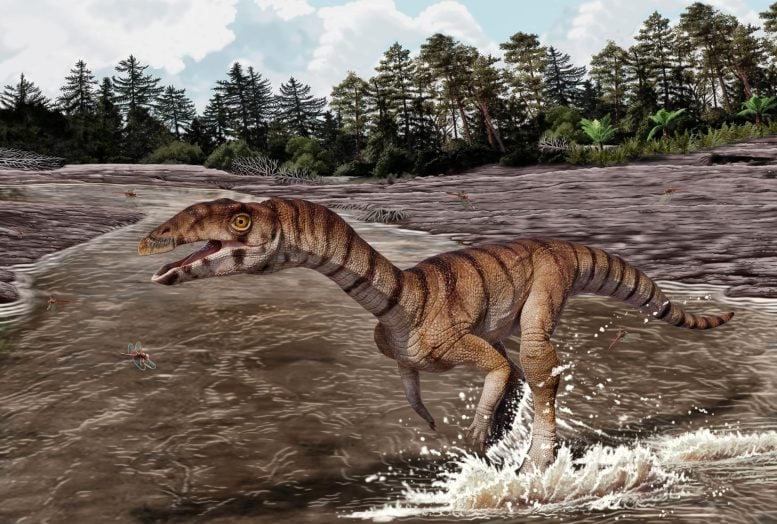
Labrujasuchus expectatus ReconstructionA newly discovered crocodile relative from the Triassic had a beak, tiny arms, and walked on two legs, making it look more like an ostrich-like dinosaur than a crocodile. During the Triassic Period, the ancestors of many modern animal groups were branching into an astonishing variety of shapes and lifestyles. Evolution was experimenting with body [...]

The Physics of the Global Flood

31 January 2025 at 04:42
The biblical account of Noah’s Ark and the global Flood as a divine judgment on humanity's wickedness is discussed. That includes the processes of water covering the Earth, and tectonics theories to explain geological changes during the Flood and implications for Earth's environment post-Flood.

A Single Jawbone From Egypt Is Changing How Scientists Think About Ape Origins

1 June 2026 at 13:20


For much of the past century, fossils from East Africa have shaped our understanding of ape evolution. Now, a jawbone found in the Egyptian desert adds a new dimension to that story.

A team from Mansoura University and the University of Southern California has described a new species, Masripithecus moghraensis, in a study that appeared in the journal Science. The fossil of a lower jaw found at the Wadi Moghra site in northern Egypt, the researchers say, is the first clear evidence of an ape fossil in North Africa. Dating to 17 to 18 million years ago, it predates the known dispersal of early apes into Europe and Asia by at least a million years. This may indicate that early ape evolution extended further north than previously thought.

“We spent five years searching for this kind of fossil because, when we look closely at the early ape family tree, it becomes clear that something is missing — and North Africa holds that missing piece,” said Hesham Sallam, paleontologist at Mansoura University and senior author of the study.

A Jaw That Changes the Map

The fossil is of a lower jaw with several distinctive features. Masripithecus had large canine and premolar teeth, as well as molars with rounded, textured surfaces and a robust jaw. No other ape from the same time period shows this combination of features. According to the researchers, these traits indicate a flexible diet based mainly on fruit, with some harder foods like nuts and seeds. This adaptability would have been important in northern Africa, with increasing seasonal variation in the climate.

Masripithecus stands out among East African apes of similar age by its anatomy. Its place in the ape family tree is even more significant. By combining fossil features and geological data with DNA from living apes, the team found that Masripithecus appears closer to the lineage that eventually gave rise to modern apes than any previously known Early Miocene species.

“It is well known that the fossil record of hominoids in Africa is geographically very biased,” said David Alba, a paleontologist at the University of Barcelona, in an interview with National Geographic. “It is also known that they were present in Saudi Arabia sometime later, so finding them in northern Africa by this time is important, but not totally unexpected.”

A Corridor Between Worlds

This discovery is important for both geography and anatomy. During the Early Miocene, the African and Arabian plates were moving closer to Asia. At times, lower sea levels reduced marine barriers and opened a corridor through northern Africa and the Middle East. The team’s analysis supports the idea that this region played an important role in the early evolution of living apes. This shifts the focus of ape evolution. East Africa, once seen as the main center of ape origins, may have been more of a peripheral branch.

Erik Seiffert, co-author and paleontologist at the University of Southern California, said the discovery changed his own thinking. “For my entire career, I considered it probable that the common ancestor of all living apes lived in or around East Africa. But this new discovery, and our new and novel analyses of hominoid phylogeny and biogeography, now strongly challenge that idea.”

The genus name Masripithecus combines the Arabic word Masr (for Egypt) with the Greek píthēkos, meaning ‘ape’. The species name is a reference to Wadi Moghra, where the remains were found. The researchers expect that more fossils will be found as fieldwork continues in the region. For now, this discovery shows that important parts of evolutionary history may still be hidden in areas yet to be fully explored.

Austin Burgess is a writer and researcher with a background in sales, marketing, and data analytics. He holds an MBA, a Bachelor of Science in Business Administration, and a data analytics certification. His work focuses on breaking scientific developments, with an emphasis on emerging biology, cognitive neuroscience, and archaeological discoveries.

These Ancient Canadian Fossils Could Rewrite the Timeline of Early Animal Evolution

21 May 2026 at 13:11


A recent fossil discovery in Canada is reshaping scientists’ understanding of early animal evolution. 

Deep in the Canadian Northwest Territories, researchers from the American Museum of Natural History and Dartmouth College have uncovered more than 100 fossils belonging to the Ediacaran biota, a group of soft-bodied organisms that lived over 500 million years ago.

The new finding suggests evolutionary developments such as movement, sexual reproduction, and complex body structures appeared millions of years earlier than previously thought. 

The Ediacaran Period, which lasted from about 635 to 538 million years ago, marks an important stage in Earth’s history when multicellular life first became widespread. Before then, life mainly consisted of microscopic organisms.

The newly discovered fossils give scientists a closer look at this complex transition from simple microbial life to large, complex marine animals.

Found in the Mackenzie Mountains (traditional lands of the Sahtú Dene and Métis peoples), scientists researching the area discovered fossils belonging to the White Sea assemblage, a group of Ediacaran organisms previously found only in Europe, Asia, and Australia. 

A First-of-Its-Kind Discovery in North America

What makes the discovery even more impressive is the age of the fossils. Some scientists estimate the specimens are about 567 million years old, making them 5–10 million years older than any previously known White Sea fossils. The time overlap with the Avalon assemblage points to communities that existed earlier than researchers suggested.

Among the most important fossils found was Dickinsonia, a flat, oval-shaped organism believed to move across the seafloor while feeding on bacteria and algae. Scientists consider it one of the earliest animals capable of movement. Another fossil, Funisia, provides the oldest known evidence of sexual reproduction. This is a tubular organism that releases sperm and eggs into the water during reproduction. 

A fossil of Dickinsonia, a flat organism that moved around on the sea floor, lacking a mouth and instead absorbing bacteria and algae through its entire bottom surface

“For 3 billion years, life on Earth was dominated by microbes,” said the study’s lead author, Scott Evans, in a statement. “Then, all the sudden, we get these strange-looking marine animals big enough to see and capable of behaviors we would find familiar today.” 

Evans, who is the assistant curator of invertebrate paleontology at the American Museum of Natural History, also emphasized the site’s importance in advancing understanding of the changes organisms were undergoing during this period in our planet’s deep history.

“If we want to understand this transition, when life first became large, complex and unmistakenly animal, this new site has tremendous potential,” Evans said. 

Researchers also uncovered Kimberella, an organism thought to be an early relative of mollusks. It has a muscular foot used for scraping food from the ocean floor and could be the oldest known bilaterian. Another interesting fossil is the Eoandromeda, which may be an ancient comb jelly with eight spiral arms.

“Not only is this new site highly diverse, but also it is from a part of the rock succession where we have previously lacked fossil remains,” said study co-author Justin Strauss, an associate professor of Earth and Planetary Sciences from Dartmouth. “This is really exciting. Given our understanding of the regional geology in northwestern Canada, there is great potential here to revisit our understanding of Ediacaran Earth history.”

The fossils also challenge assumptions about where early animals first evolved. Scientists had previously believed shallow coastal waters were the main environment for early animal life. However, the Canadian fossils suggest otherwise, indicating that these organisms lived in deeper marine settings. 

Evans believes the results “suggest a pattern where evolutionary innovation begins in deeper environments and later spreads toward the coast.”

“We think of the deep ocean as a dark, inhospitable place, but it is also relatively stable, with few fluctuations in things like temperature and oxygen essential to most animal life,” Evans said. “This stability may have provided key opportunities to support early animal life.”

Chrissy Newton is a PR professional and the founder of VOCAB Communications. She currently appears on The Discovery Channel and Max and hosts the Rebelliously Curious podcast, which can be found on YouTube and on all audio podcast streaming platforms. Follow her on X: @ChrissyNewton, Instagram: @BeingChrissyNewton, and chrissynewton.com. To contact Chrissy with a story, please email chrissy @ thedebrief.org.

New Crocodile Cousin Discovered After 210 Million Years Hidden in Stone

2 June 2026 at 05:55
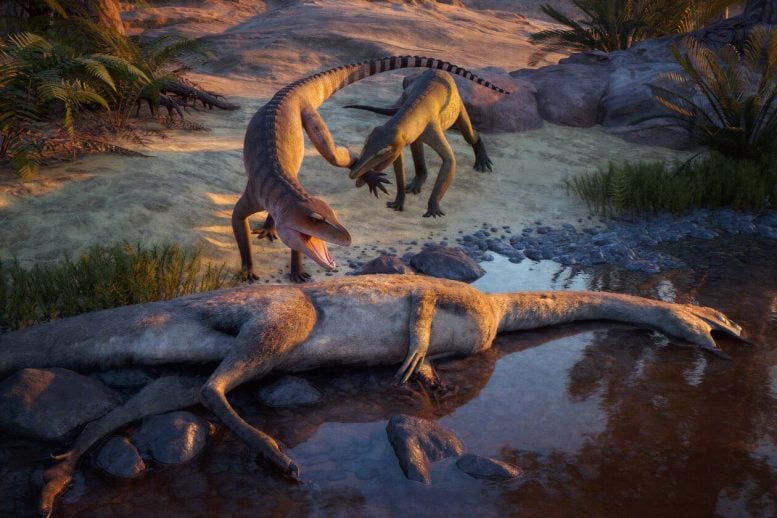
Eosphorosuchus Lacrimos Is Disturbed by Hesperosuchus AgilisA newly identified prehistoric crocodile relative, Eosphorosuchus lacrimosa, was discovered alongside another croc species in New Mexico fossils dating back 210 million years. Around 210 million years ago, two crocodile relatives about the size of modern jackals stood together along a humid riverbank in what is now northern New Mexico. One of them, Hesperosuchus agilis, [...]

The Missing Notebooks That Solved a 25-Year-Old Paleontology Mystery

1 June 2026 at 16:17
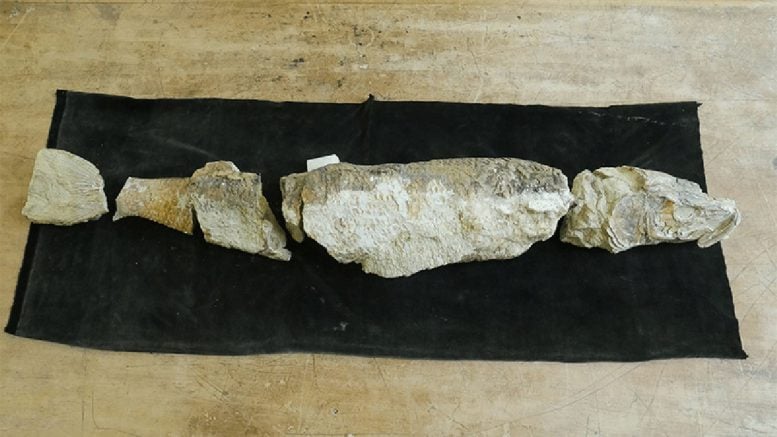
55 Million Year Old Tarpon Fossil FishField notebooks from the late Richard Köhler allowed researchers to finally catalog a remarkable fossil tarpon from Aotearoa New Zealand. Recently disclosed notebooks from a late paleontologist supplied the missing details researchers needed to complete their study of a “remarkable” fossil found nearly 30 years ago. Dr. Richard Köhler discovered the fossil fish in 1999 [...]
❌