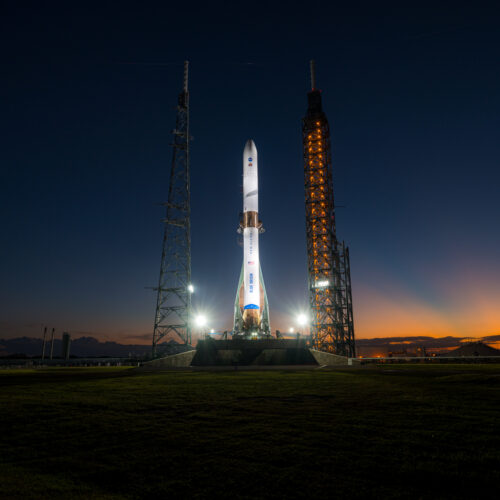
The chief executive of Blue Origin, whose large New Glenn rocket exploded spectacularly less than a week ago at the company's launch site in Florida, vowed Monday night that the company would launch again before the end of 2026.
Writing on the social media site X, Blue Origin's Dave Limp said the company had been able to complete a preliminary survey of the LC-36A launch site.
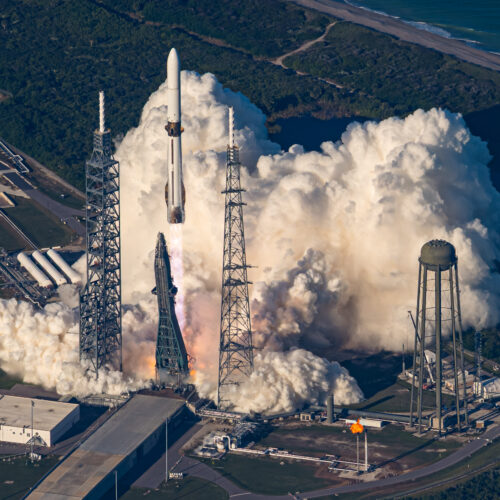
"Now that we’ve had access to the pad and integration facility, we can share a bit of good news," Limp said. "The propellant farm, oxygen, liquid hydrogen and LNG tanks are all in good shape. This is good luck because these are very long lead items. The water tower is also good."
The chief executive of Blue Origin, whose large New Glenn rocket exploded spectacularly less than a week ago at the company's launch site in Florida, vowed Monday night that the company would launch again before the end of 2026.
Writing on the social media site X, Blue Origin's Dave Limp said the company had been able to complete a preliminary survey of the LC-36A launch site.
"Now that we’ve had access to the pad and integration facility, we can share a bit of good news," Limp said. "The propellant farm, oxygen, liquid hydrogen and LNG tanks are all in good shape. This is good luck because these are very long lead items. The water tower is also good."
The chief executive of Blue Origin, whose large New Glenn rocket exploded spectacularly less than a week ago at the company's launch site in Florida, vowed Monday night that the company would launch again before the end of 2026.
Writing on the social media site X, Blue Origin's Dave Limp said the company had been able to complete a preliminary survey of the LC-36A launch site.
"Now that we’ve had access to the pad and integration facility, we can share a bit of good news," Limp said. "The propellant farm, oxygen, liquid hydrogen and LNG tanks are all in good shape. This is good luck because these are very long lead items. The water tower is also good."
The explosion of a New Glenn rocket has generated reverberations across the space industry with the rocket out of service for potentially a year or more.
Jared Isaacman, administrador da NASA, afirmou que a agência espacial vai colaborar com a Blue Origin na investigação do incidente com o foguetão New Glenn, avaliando também eventuais impactos nos programas Artemis e na futura missão Moon Base.
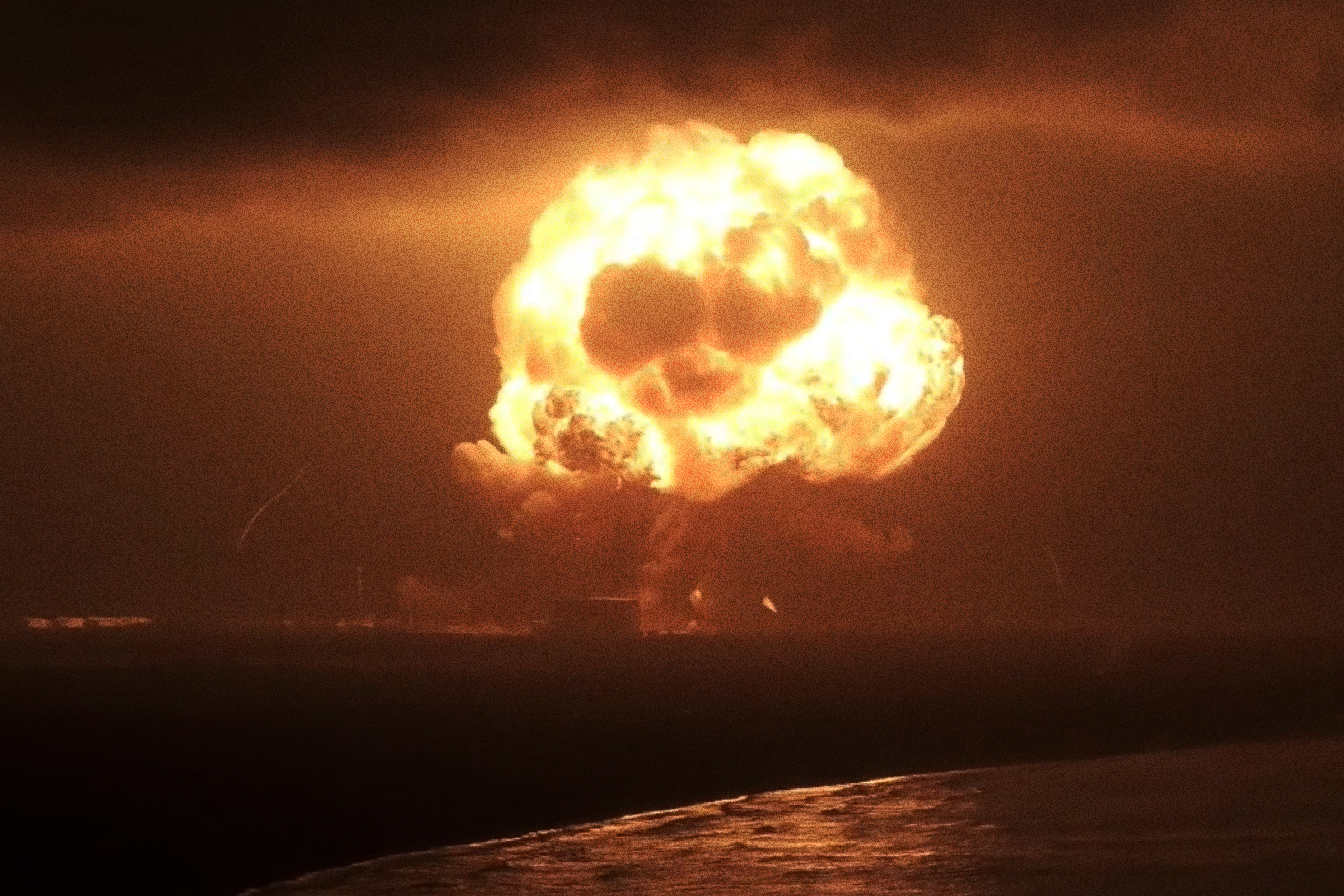
In what could turn out to be a huge setback for NASA’s highly ambitious plans to build a permanent Moon base, Jeff Bezos’ latest Blue Origin rocket erupted into a massive mushroom cloud on the launchpad last night.
During a wet dress rehearsal at the Space Force Station in Cape Canaveral on Thursday evening, the company’s New Glenn rocket exploded in dramatic fashion. Footage shows an enormous fireball engulfing the entire launch pad, a sight visible from far away.
It’s the very last thing NASA needed. Just days ago, the space agency announced a slew of “Moon base” missions to build out a permanent presence on the lunar surface — and they hinged on New Glenn rockets launching two of Blue Origin’s Blue Moon lunar landers that are delivering payloads, including rovers, there before the end of this year.
Even before Blue Origin’s latest setback, it was an enormously ambitious timeline. It’s unclear how the New Glenn explosion will affect NASA’s plans going forward, but it certainly doesn’t bode well, given the likely extensive damage to the surrounding pad.
“NASA is aware of the anomaly that occurred tonight at Launch Complex 36 involving Blue Origin’s New Glenn rocket at Cape Canaveral Space Force Station,” NASA’s administrator Jared Isaacman said in a statement. “Spaceflight is unforgiving, and developing new heavy-lift launch capability is extraordinarily difficult.”
“We will work with our partners to support a thorough investigation of this anomaly, assess near-term mission impacts, and get back to launching rockets,” he added. “We will provide information on any impacts to the Artemis and Moon Base programs as it becomes available.”
Bezos appeared distraught following the catastrophe.
“All personnel are accounted for and safe,” he tweeted around 10 pm Eastern on Thursday. “It’s too early to know the root cause but we’re already working to find it.”
“Very rough day, but we’ll rebuild whatever needs rebuilding and get back to flying,” he added. “It’s worth it.”
Even SpaceX CEO Elon Musk, who has a long history of butting heads with Bezos, struck an empathetic pose.
“Most unfortunate,” he tweeted. “Rockets are hard.”
The news comes just over a month after Blue Origin’s New Glenn rocket failed to deliver a communication satellite into a high enough orbit, turning it into nothing more than another piece of space junk.
The rocket and the firm’s Blue Moon lander are one of two options NASA is hoping to use to deliver astronauts to the surface of the Moon, alongside SpaceX’s Starship.
Unfortunately, Musk’s space company is similarly struggling to get its own rocket ready for prime time. Just yesterday, the Federal Aviation Administration announced it was grounding Starship and launching a “mishap investigation” after the company’s Super Heavy booster failed to reignite the majority of its thrusters before splashing down in the Gulf of Mexico on May 22. The second stage similarly erupted in a massive fireball after splashing down in the ocean.
“A return to flight of the Starship Super Heavy vehicle is based on the FAA determining that any system, process, or procedure related to the mishap does not affect public safety,” the regulator wrote in a statement.
Welcome to Edition 8.43 of the Rocket Report! A disclaimer: No one yet fully appreciates the ramifications of Blue Origin's New Glenn rocket explosion Thursday night on its launch pad at Cape Canaveral, Florida. What we know as of this writing is that much of Blue's sole orbital-class launch pad has been destroyed, and the New Glenn rocket will be grounded for an extended period of time. It is too soon for any hot takes, at least until the Sun rises at the Cape on Friday morning. One thing I am sure of is that we will be writing about this event for weeks, months, and years to come.
As always, we welcome reader submissions. If you don't want to miss an issue, please subscribe using the box below (the form will not appear on AMP-enabled versions of the site). Each report will include information on small-, medium-, and heavy-lift rockets, as well as a quick look ahead at the next three launches on the calendar.
Charting China's contribution to space junk. There's a problem with the drastic uptick in Chinese space launches over the last decade. China appears to be ignoring long-established norms about disposing of the upper stages of rockets, Ars reports. These are the parts of the vehicle that separate from the first stage of a rocket and push a satellite or spacecraft into orbit. In the early decades of spaceflight, launch operators routinely left upper stages in orbit after they released their payloads. But most launch companies today reserve enough propellant in their rockets to remove them from orbit to avoid the risk of spent upper stages becoming a source of space debris. But China is not following this trend. There has been striking growth in China’s rocket body mass. In the past five years, the mass of Chinese rocket bodies in long-lived orbits has risen from less than 100 metric tons to 252, according to a new analysis by Space Domain Awareness expert Jim Shell.
Thursday night's detonation of Blue Origin's New Glenn rocket during a static-fire test produced a spectacular fireball over Florida, sending shards of the rocket flying far and wide, into the sea and across the coastal scrubland nearby.
With sunrise on Friday teams from Blue Origin, the US Space Force, and NASA will be able to begin more thoroughly assessing the damage to Blue Origin's facilities and begin picking up pieces of the rocket.
On Thursday evening, Blue Origin attempted to test fire its massive New Glenn rocket at its Florida launch site, but something went very wrong after engine ignition. The super heavy lift rocket exploded in spectacular and disastrous fashion.
The static fire test was being filmed by NASASpaceflight.com on its Space Coast Live feed, which captured video of the conflagration that followed the destruction of the booster. The first stage of New Glenn, fueled with methane, produced a massive fireball above the launch site along the Florida coast, LC-36A. It is possibly the most dramatic and powerful rocket explosion since the Soviet Union's N1 rocket was destroyed during a launch attempt in 1969.
It was less than two months ago that the third flight of Blue Origin's heavy-lift New Glenn rocket left a customer's payload in an unusable orbit. Investigators have now identified the cause of the failure, and Blue Origin is preparing to launch the next New Glenn mission as soon as next week.
The Federal Aviation Administration and Blue Origin announced the closure of the failure investigation May 22. Yesterday, officials confirmed Blue Origin's next launch will loft a payload of 48 commercial satellites for Amazon's broadband network in low-Earth orbit. This will be the most satellites Amazon has launched on a single rocket, surpassing previous flights on United Launch Alliance's Atlas V, SpaceX's Falcon 9, and Europe's Ariane 6.
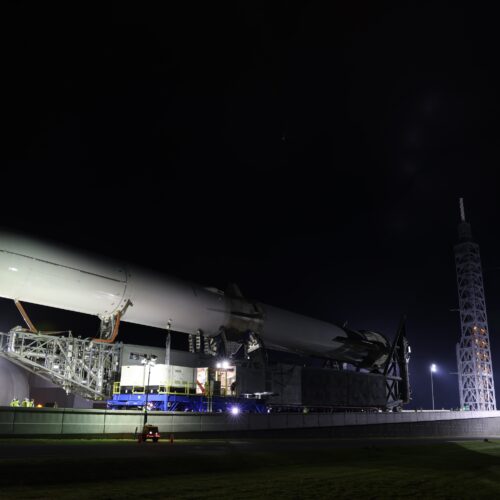
Blue Origin and Amazon, each founded by Jeff Bezos, have not officially revealed a target launch date, but public notices of airspace and maritime closures suggest the mission is set to lift off from Cape Canaveral Space Force Station, Florida, as soon as next Thursday, June 4. Blue Origin is expected to roll the New Glenn rocket to its launch pad in the coming days for a test-firing of its seven main engines, fueled by liquified natural gas and liquid oxygen.
It was less than two months ago that the third flight of Blue Origin's heavy-lift New Glenn rocket left a customer's payload in an unusable orbit. Investigators have now identified the cause of the failure, and Blue Origin is preparing to launch the next New Glenn mission as soon as next week.
The Federal Aviation Administration and Blue Origin announced the closure of the failure investigation May 22. Yesterday, officials confirmed Blue Origin's next launch will loft a payload of 48 commercial satellites for Amazon's broadband network in low-Earth orbit. This will be the most satellites Amazon has launched on a single rocket, surpassing previous flights on United Launch Alliance's Atlas V, SpaceX's Falcon 9, and Europe's Ariane 6.
Blue Origin and Amazon, each founded by Jeff Bezos, have not officially revealed a target launch date, but public notices of airspace and maritime closures suggest the mission is set to lift off from Cape Canaveral Space Force Station, Florida, as soon as next Thursday, June 4. Blue Origin is expected to roll the New Glenn rocket to its launch pad in the coming days for a test-firing of its seven main engines, fueled by liquified natural gas and liquid oxygen.
The rocket, built by the Jeff Bezos-owned space company, was to carry 48 satellites into space. Blue Origin reported on social media that “all personnel have been accounted for.”
Welcome to Edition 8.43 of the Rocket Report! A disclaimer: No one yet fully appreciates the ramifications of Blue Origin's New Glenn rocket explosion Thursday night on its launch pad at Cape Canaveral, Florida. What we know as of this writing is that much of Blue's sole orbital-class launch pad has been destroyed, and the New Glenn rocket will be grounded for an extended period of time. It is too soon for any hot takes, at least until the Sun rises at the Cape on Friday morning. One thing I am sure of is that we will be writing about this event for weeks, months, and years to come.
As always, we welcome reader submissions. If you don't want to miss an issue, please subscribe using the box below (the form will not appear on AMP-enabled versions of the site). Each report will include information on small-, medium-, and heavy-lift rockets, as well as a quick look ahead at the next three launches on the calendar.
Charting China's contribution to space junk. There's a problem with the drastic uptick in Chinese space launches over the last decade. China appears to be ignoring long-established norms about disposing of the upper stages of rockets, Ars reports. These are the parts of the vehicle that separate from the first stage of a rocket and push a satellite or spacecraft into orbit. In the early decades of spaceflight, launch operators routinely left upper stages in orbit after they released their payloads. But most launch companies today reserve enough propellant in their rockets to remove them from orbit to avoid the risk of spent upper stages becoming a source of space debris. But China is not following this trend. There has been striking growth in China’s rocket body mass. In the past five years, the mass of Chinese rocket bodies in long-lived orbits has risen from less than 100 metric tons to 252, according to a new analysis by Space Domain Awareness expert Jim Shell.
Welcome to Edition 8.43 of the Rocket Report! A disclaimer: No one yet fully appreciates the ramifications of Blue Origin's New Glenn rocket explosion Thursday night on its launch pad at Cape Canaveral, Florida. What we know as of this writing is that much of Blue's sole orbital-class launch pad has been destroyed, and the New Glenn rocket will be grounded for an extended period of time. It is too soon for any hot takes, at least until the Sun rises at the Cape on Friday morning. One thing I am sure of is that we will be writing about this event for weeks, months, and years to come.
As always, we welcome reader submissions. If you don't want to miss an issue, please subscribe using the box below (the form will not appear on AMP-enabled versions of the site). Each report will include information on small-, medium-, and heavy-lift rockets, as well as a quick look ahead at the next three launches on the calendar.
Charting China's contribution to space junk. There's a problem with the drastic uptick in Chinese space launches over the last decade. China appears to be ignoring long-established norms about disposing of the upper stages of rockets, Ars reports. These are the parts of the vehicle that separate from the first stage of a rocket and push a satellite or spacecraft into orbit. In the early decades of spaceflight, launch operators routinely left upper stages in orbit after they released their payloads. But most launch companies today reserve enough propellant in their rockets to remove them from orbit to avoid the risk of spent upper stages becoming a source of space debris. But China is not following this trend. There has been striking growth in China’s rocket body mass. In the past five years, the mass of Chinese rocket bodies in long-lived orbits has risen from less than 100 metric tons to 252, according to a new analysis by Space Domain Awareness expert Jim Shell.

 Login
Login