Reading view

Tesla Insiders Admit Self-Driving Is a Complete Disaster

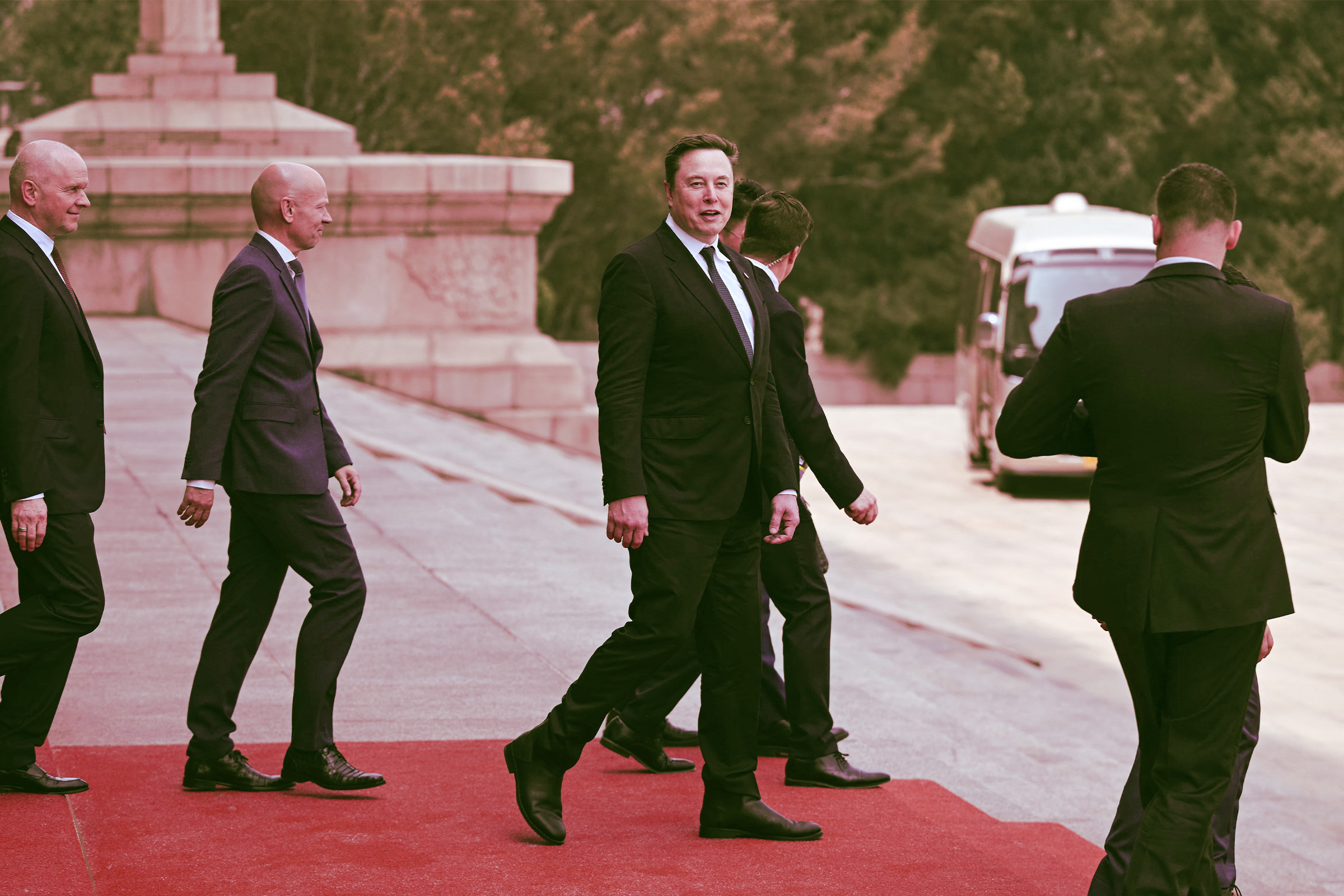
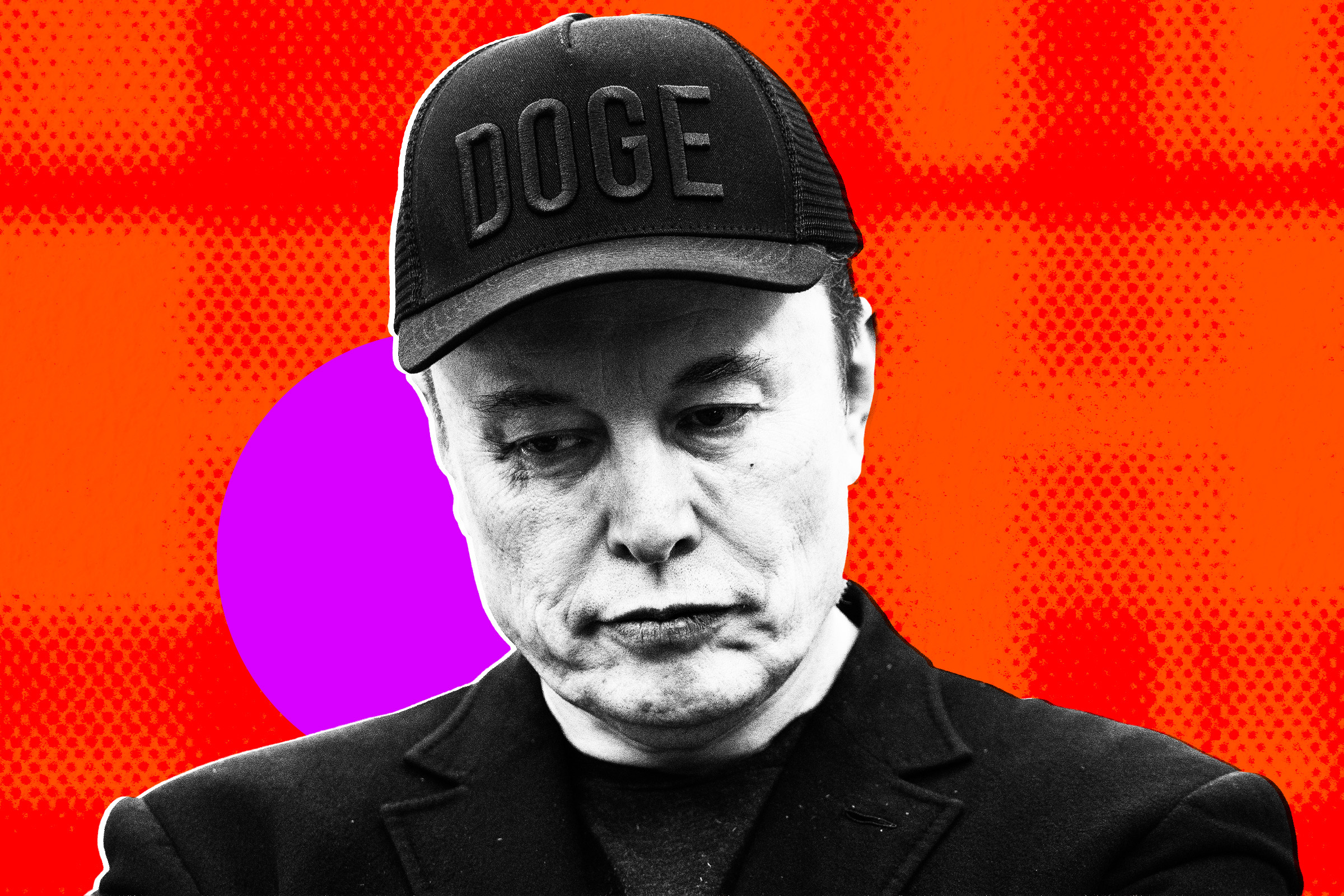
It turns out not even the people building Tesla’s self-driving tech trust Elon Musk’s extravagant claims about the company’s autonomous vehicles.

New reporting by Reuters interviewed nine former data labelers and a former self-driving engineer about their take on Tesla’s Full Self-Driving mode. The results were overwhelmingly negative, with seven of the data specialists admitting they wouldn’t ride in a Tesla in FSD.

“We have all seen it fail,” one Tesla insider told Reuters. “Definitely don’t trust Elon on this,” the self-driving engineer concurred, referencing Musks’ declaration that the the vehicles are ready for “safe unsupervised” rides.

One erstwhile worker told the publication they wouldn’t ride in a Tesla robotaxi “if you f**king paid me.”

At least five data labelers, whose job was to comb through hours of FSD footage to train the vehicle’s software to avoid past mistakes, told Reuters they routinely saw clips of Teslas driving above the speed limit, an issue which engineers and managers treated like a low-priority compared to edge-case issues.

Those glowing recommendations come amidst concerns that Tesla’s FSD mode may never be truly safe enough for public roads.

In recent months, Tesla operating on FSD move have driven riders into lakes, off bridges, and even into the path of oncoming trains — and those are just the incidents that get media exposure. Given these insiders’ direct access to terabytes’ worth of proprietary FSD footage, we’re inclined to take their word on it.

More on Tesla: Man Drives Cybertruck Into Lake to Test Elon Musk’s “Boat” Claims, and It Went About as Well as You’d Guess

The post Tesla Insiders Admit Self-Driving Is a Complete Disaster appeared first on Futurism.
  •  

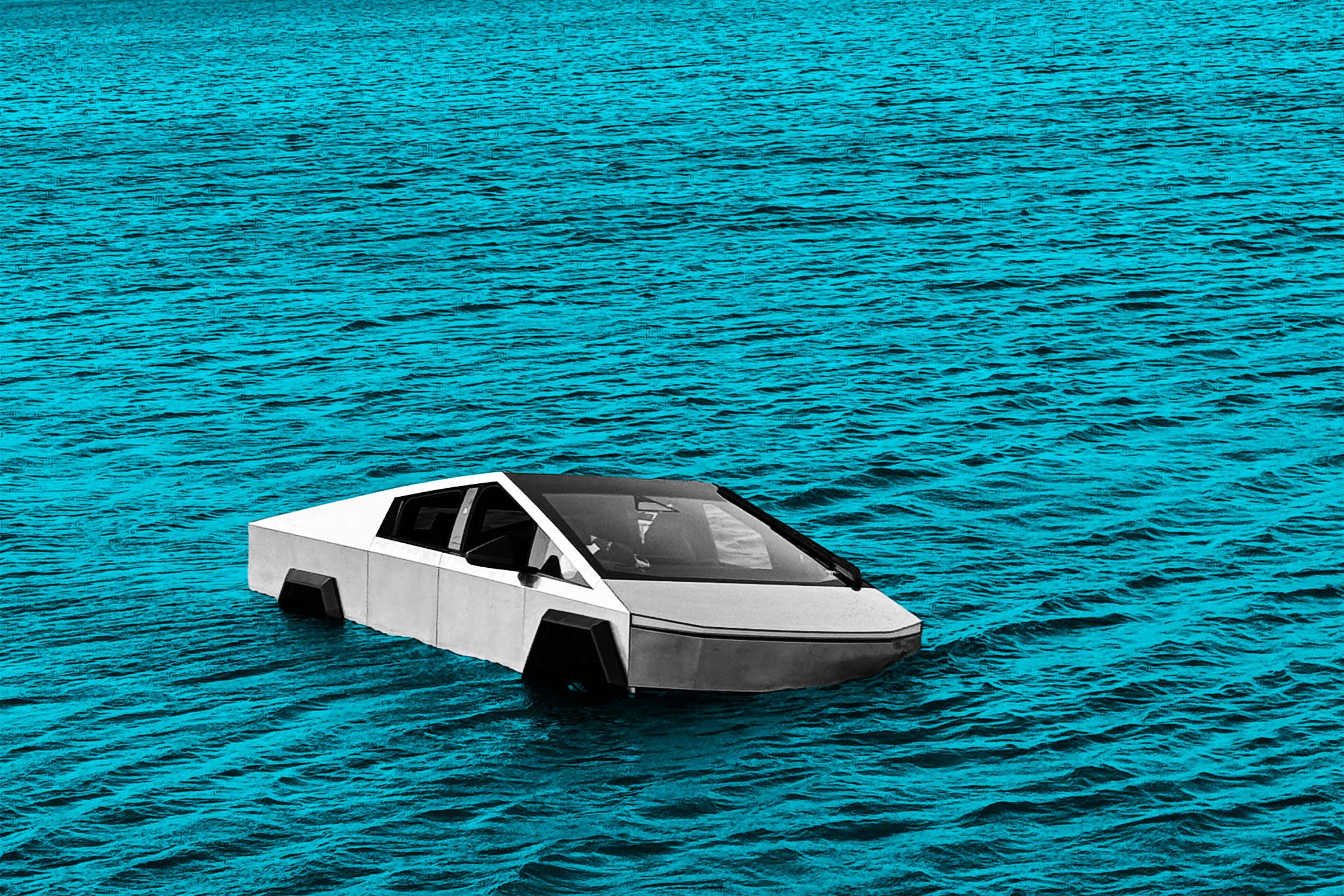
Man Drives Cybertruck Into Lake to Test Elon Musk’s “Boat” Claims, and It Went About as Well as You’d Guess

Longtime Cybertruck watchers might remember a peculiar day back before the brutalist pickup was even released, when Tesla CEO Elon Musk randomly tweeted that the vehicle would function as a rudimentary flotation device.

“It will even float for a while,” he wrote at the time.

It wasn’t a one-off claim. Musk later boasted that the vehicle would be able to “traverse at least 100m [330 feet] of water as a boat.”

“Mostly just need to upgrade cabin door seals,” he claimed, writing at another point that the “Cybertruck will be waterproof enough to serve briefly as a boat, so it can cross rivers, lakes and even seas that aren’t too choppy.”

The Cybertruck finally did make it to market, where it’s suffered a seemingly endless parade of recalls, embarrassing incidents, and dismal sales figures.

Unsurprisingly, all Musk’s bluster about the truck serving as a makeshift schooner turned out to be flimflam. In fact, it quickly emerged that just getting wet in a car wash could brick the thing.

To muddy the waters further, the company ended up adding what it calls “Wade Mode” to the vehicles, which sets the truck’s ride height to the highest level, ostensibly so it can ford creeks and streams.

All that mixed messaging clearly got jumbled for a Texas man, though, who activated Wade Mode and drove his Cybertruck into a lake. Unsurprisingly, things didn’t go well for him.

“Yesterday, [Grapevine Police Department] and [Grapevine Fire Department] were dispatched to Grapevine Lake, where a Tesla Cybertruck was stranded in the water,” police in Grapevine, Texas, wrote on X-formerly-Twitter. “The driver drove into the lake to use the ‘Wade Mode’ feature when the vehicle became disabled.”

Not only is the man’s vehicle swamped — as the cops showed in an amazing attached photo — but he’s in legal trouble as well.

“The passengers abandoned the vehicle and the driver was arrested,” they wrote.

More on the Cybertruck: Cybertruck Recalled to Keep Its Wheels From Flying Off While Driving

The post Man Drives Cybertruck Into Lake to Test Elon Musk’s “Boat” Claims, and It Went About as Well as You’d Guess appeared first on Futurism.
  •  

SpaceX Stock May Actually Be a Horrendous Investment

Elon Musk has just pulled back the curtain on the biggest public stock offering in history, and the numbers are ghastly.

SpaceX, which is expected to go public on Nasdaq in June, just released the first round of financial summaries all companies are required to share when they’re about to sell stock to the public for the first time. The documents reveal Musk is targeting a raise of at least $80 billion — for a proposed valuation of $1.75 trillion — which would immediately make the rocket company one of the top 10 most valuable conglomerates in the US, Axios calculated.

With that kind of valuation in mind, one might expect SpaceX to be massively profitable going into its debut — but that’d be dead wrong.

According to the financial statement, the company lost $4.9 billion in 2025, even though it brought in around $18.7 billion in revenue. It’s not like that situation is about to turn around in time for the IPO, either: over the first three months of 2026, SpaceX posted further net losses of $4.3 billion.

As analyst Scott Melker pointed out, SpaceX wants investors to believe the company will someday make 93 times what it currently makes in a year. To understand why that’s absolutely nuts, just peep the numbers from the previous IPO record holder, Saudi Aramco, the state oil company of Saudi Arabia.

Commonly understood to be the most profitable corporation on Earth, Aramco went public in 2019. When it did, investors accepted a valuation about 6 times more than what Aramco made in yearly sales, raising $26 billion for a valuation of $1.7 trillion, as one analyst noted. SpaceX is asking for about 15 times more than that.

“Bro, have you seen inflation lately? Ketamine is expensive!” one stock analyst razzed on X-formerly-Twitter (that platform, by the way, has all but imploded under Musk’s leadership, with revenue down around 59 percent compared to 2021, the year before he took over).

To justify its wild revenue ambitions, SpaceX estimates its total addressable market — the maximum money it could make if everything goes perfectly — at $28.5 trillion. Of that, nearly 80 percent is attributed to the imaginary landscape of “enterprise applications,” which the document describes as a buffet of various Earth-shattering AI tools that have yet to be built, including one agentic AI platform called “Macrohard.”

Put it all together, and the numbers only work if you put your faith in unprecedented earnings from technology that doesn’t even exist, in a market as infinite and uncharted as outer space itself.

More on investments: It Seems a Lot Like Trump Accidentally Invested $1 Million in a Conveyor Belt Sushi Restaurant Thinking It Was an AI Hardware Company

The post SpaceX Stock May Actually Be a Horrendous Investment appeared first on Futurism.
  •  

Tesla’s Semi Truck could Jolt the Trucking Industry

California truckers have expressed strong interest in the Tesla Semi because it costs much less and can travel further on a charge than electric trucks sold by established manufacturers.

Screens on either side of a Tesla Semi’s steering wheel provide a view of the traffic around the vehicle.
  •  

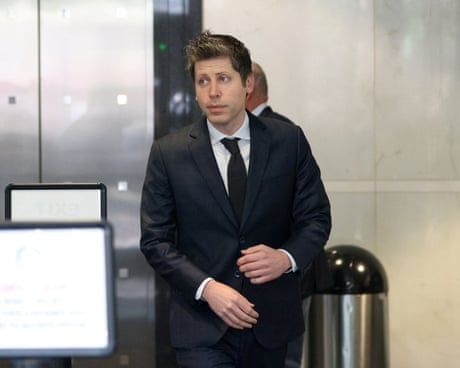
How Sam Altman’s victory over Elon Musk clears way for OpenAI’s trillion-dollar ambitions

OpenAI’s plans now seem all but guaranteed, given that the world’s richest man couldn’t put a stop to them

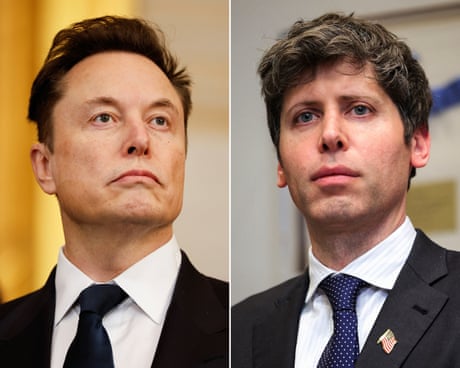
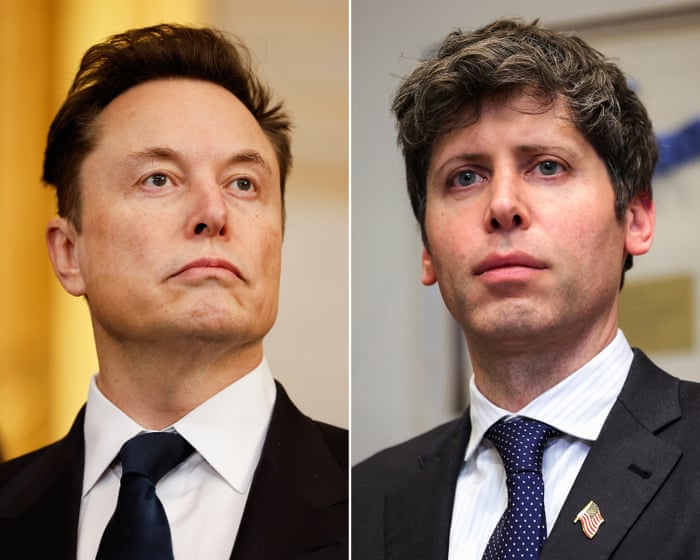
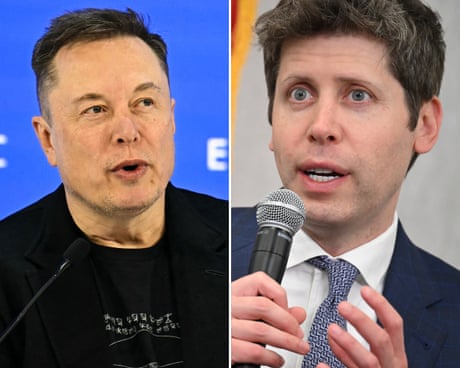
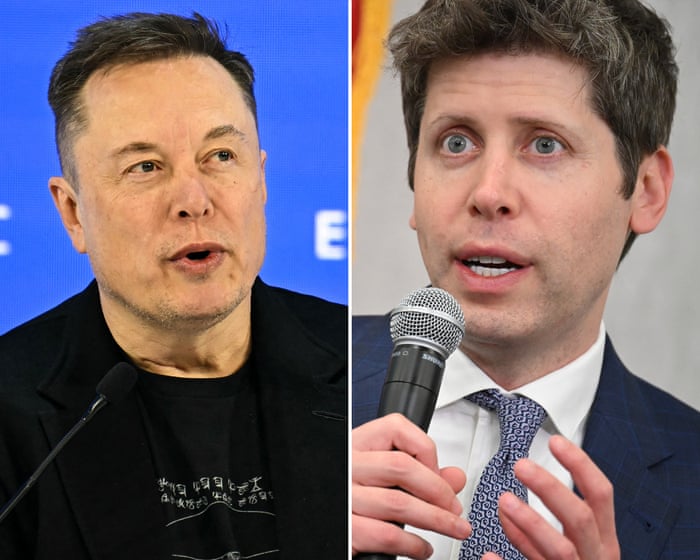
On Monday morning, a jury in Oakland, California, handed a resounding victory to Sam Altman and OpenAI in their long, bitter courtroom battle with Elon Musk.

The federal jury found Altman, OpenAI and its president, Greg Brockman, not liable for Elon Musk’s claims that they unjustly enriched themselves and broke a founding contract made with Musk when founding the startup. The unanimous verdict, delivered after less than two hours of deliberation, is a stark rebuke of Musk and his lawyer’s claims that Altman “stole a charity” through his leadership of OpenAI.

Continue reading...

© Composite: Getty Images

© Composite: Getty Images

© Composite: Getty Images

  •  

High-stakes courtroom drama of Musk v OpenAI hears closing arguments

Nine-person jury to consider whether AI firm bilked world’s richest person and unjustly enriched themselves

Closing arguments began on Thursday in Elon Musk’s lawsuit against Sam Altman and OpenAI, bringing the weeks-long courtroom battle between the two tech moguls nearer to a decision. A nine-person jury is set to deliberate and return a verdict on whether they believe the AI firm and Altman are liable in the case.

The trial, which began last month in an Oakland, California, federal courthouse, has gripped Silicon Valley and featured some of the tech industry’s biggest names as witnesses. Attorneys for both sides have presented testimony and documents that have exposed Musk and Altman’s private dealings, as well as provided a window into the contentious history of OpenAI.

Continue reading...

© Photograph: Manuel Orbegozo/Reuters

© Photograph: Manuel Orbegozo/Reuters

© Photograph: Manuel Orbegozo/Reuters

  •  

The Elon Musk v Sam Altman battle is a distraction | Karen Hao

Fixating on questions of whether Altman is untrustworthy, or whether Musk is even less so distracts from a far deeper problem with AI

If it wasn’t already clear, Elon Musk and Sam Altman hate each other.

While the two men were once co-founders of OpenAI, they’re now locked in a vicious feud, playing out in all its theatrics in front of a judge and jury in a California courtroom. Musk is suing, alleging that Altman and OpenAI’s president, Greg Brockman, tricked him into forming and funding the organization as a non-profit before they subsequently restructured it to have a for-profit entity. OpenAI says Musk was well aware of those plans and frames the lawsuit as an attempt to derail a competitor.

Continue reading...

© Photograph: Josh Edelson/AFP/Getty Images

© Photograph: Josh Edelson/AFP/Getty Images

© Photograph: Josh Edelson/AFP/Getty Images

  •  
❌