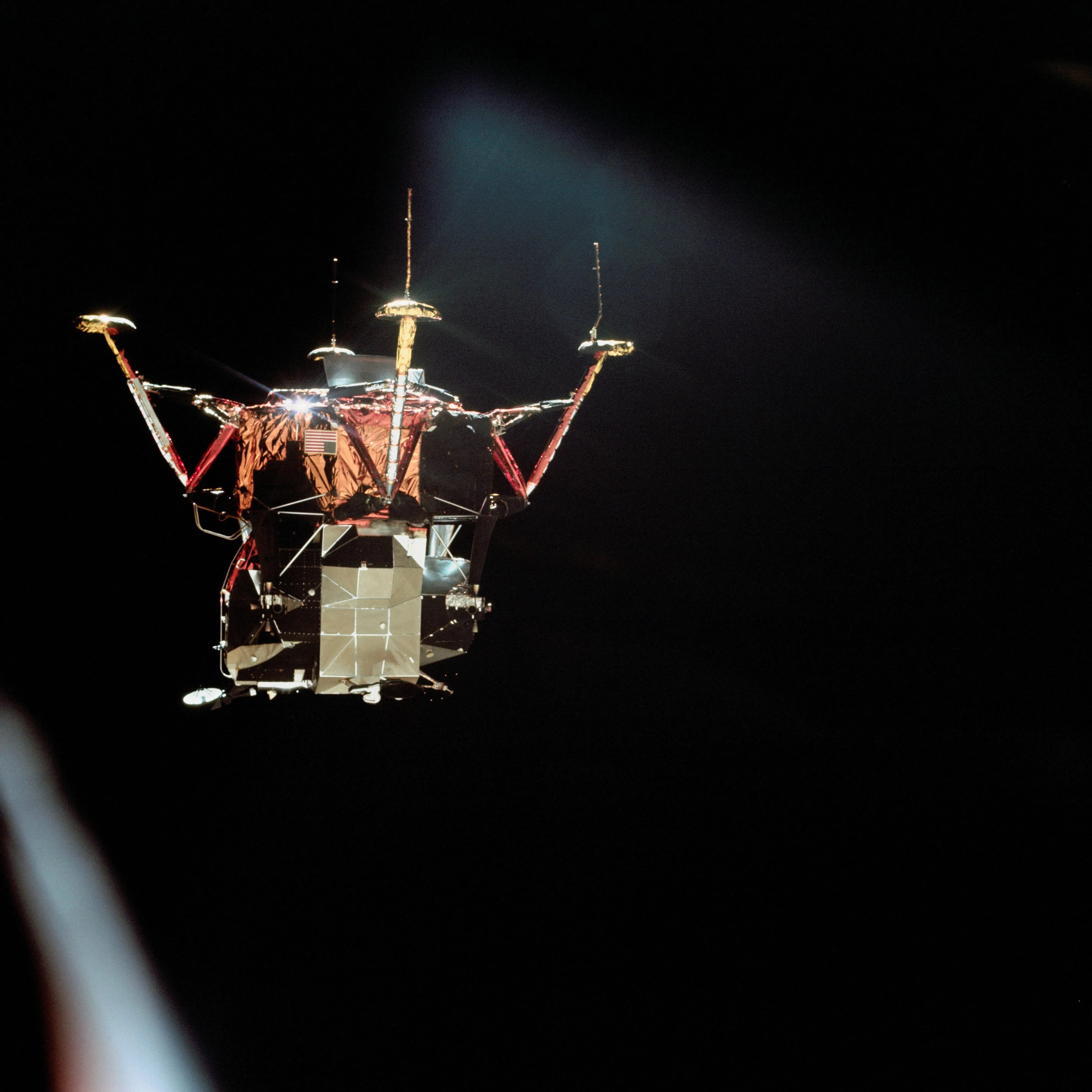
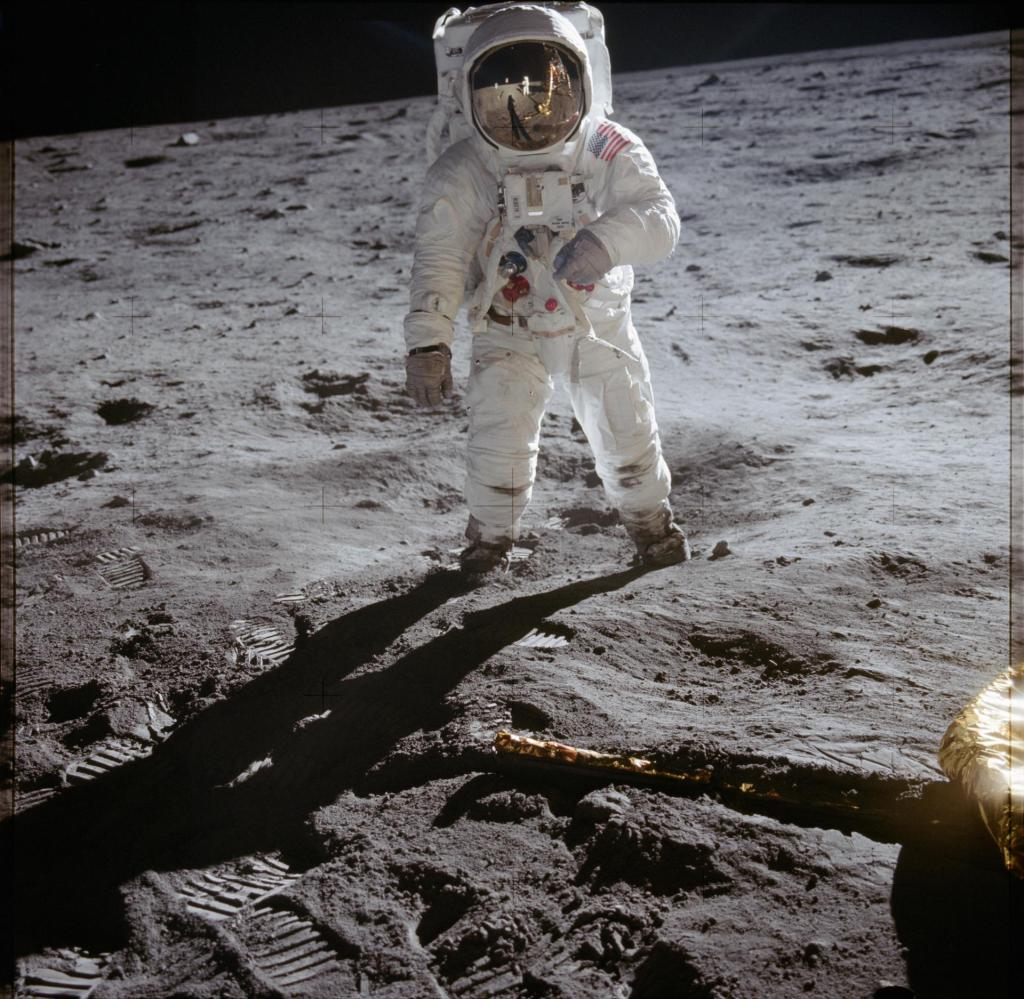
The Apollo Guidance Computer was crucial for the success of the 1969 Moon landing, operating effectively despite its limited technology. Today, Moon landing efforts face challenges but to do so again the U.S. needs to re-engineer new designs using new technology. NASA cannot just turn the clock back 60 years.
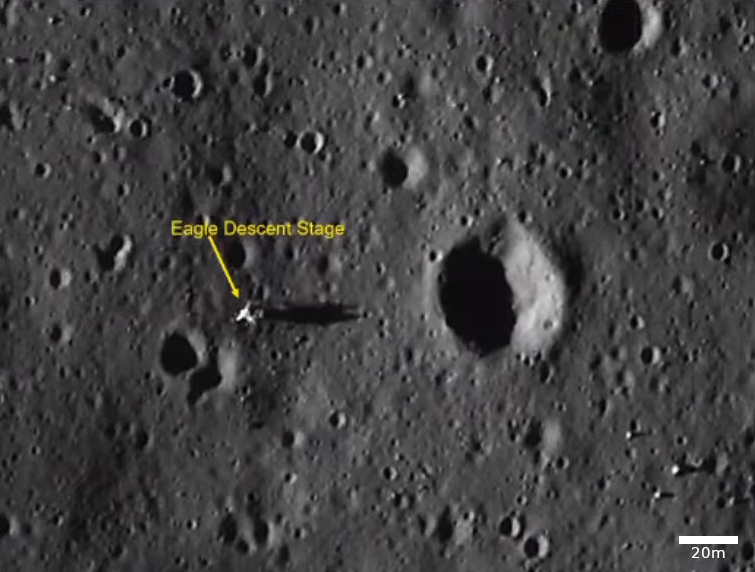
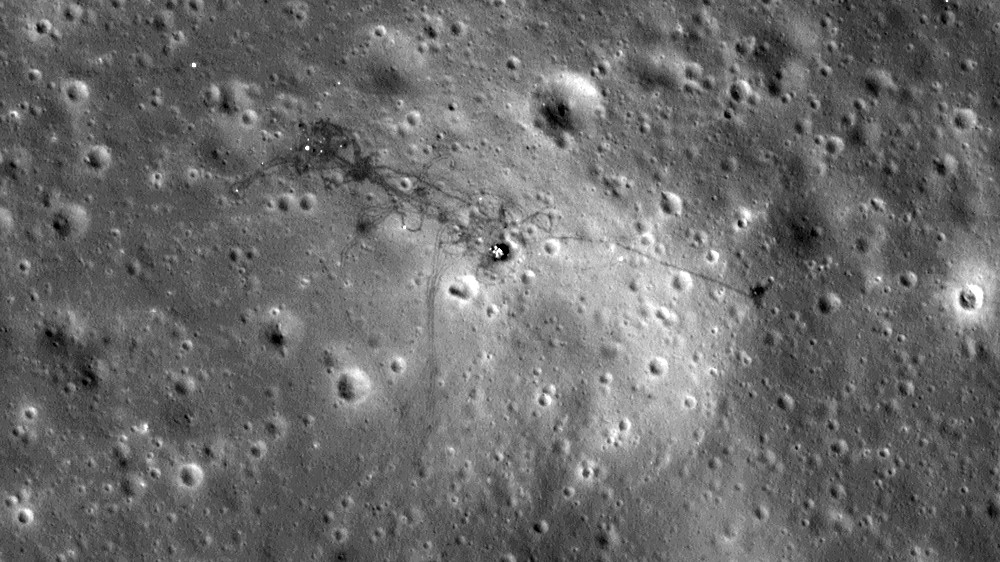
Many "Moon Landing Hoax" proponents dismiss any pictures from NASA which clearly show Apollo Moon landing sites, taken by the lunar orbiter spacecraft. Also we have clear images from India’s ISRO lunar orbiter. But we can’t resolve the Apollo Lunar Module descent stages with Earth-based telescopes because of the limitations of the physics involved.
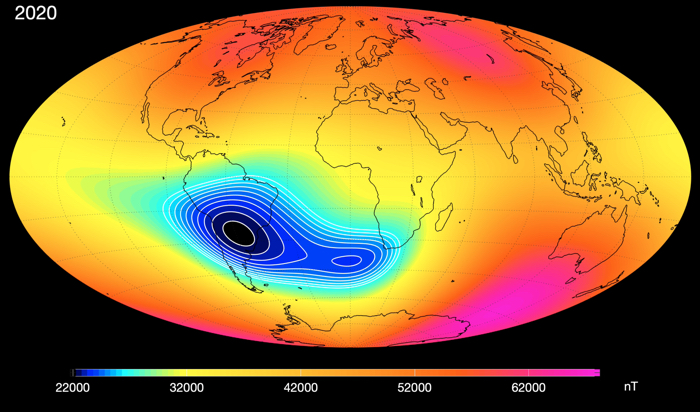
Recent satellite data indicate that the South Atlantic Anomaly in Earth's magnetic field is potentially splitting into two anomalies. This phenomenon, attributed to disturbances in the outer core, threatens the planet's magnetic shielding. This supports a young Earth perspective based on evidence of total energy decay from the magnetic field.
NASA is holding a news conference on Wednesday, January 18th to announce its next steps for the Sustainable Flight Demonstrator project. The project aims to develop a new generation of lower-emission single-aisle airliners and to validate green technologies related to the project. The conference will be led by NASA Administrator Bill Nelson and other agency […]
Une boule de feu en plein jour, une détonation digne d’une petite bombe, des bâtiments qui tremblent… et pourtant, un objet minuscule à l’échelle cosmique. Faut-il vraiment craindre ces visiteurs venus de l’espace ?
Residents of New England were startled over the weekend as a loud quaking boom shook the northeast, while many observers spotted a bright fireball streaking through the skies over the U.S. and Canada.
Now, NASA has confirmed that the energy released as a meteor exploded in the northeastern skies on May 30, 2026, was roughly equivalent to 230 tons of TNT. The resulting blast was also so bright that it registered in satellite imagery normally used to detect powerful lightning bolts.
Shortly after the incident, NASA took to social media, reporting that the GOES-19 satellite had detected a bright fireball at 2:06 p.m. EDT that coincided with reports of loud booms.
“The meteor appears to have fragmented at an altitude of 40 miles over northeast MA and southeast NH,” the NASA statement read, adding that at the time, the energy released as the object tore apart while streaking through the atmosphere was approximately the “equivalent to about 300 tons of TNT, which accounts for the loud noise.”
In the video above, provided by NOAA, imagery from the GOES East (GOES-19) satellite revealed the meteor, which the satellite’s sensors registered as a lightning bolt. The meteor appears approximately one second into the looped imagery above, seen as a bluish-white flash to the right of the center of the frame.
In a subsequent update issued on Monday, NASA officials have now revealed new details about the incident, confirming the object’s size, mass, and the approximate speed as it passed above the Earth.
“The meteor was about 5 feet (1.6 meters) in diameter with a mass of 5.6 metric tons and entered Earth’s atmosphere at roughly 42,000 mph,” NASA officials wrote in Monday’s statement. “The meteor traveled through the atmosphere from northwest to southeast for 26 miles before breaking up at an altitude of 31 miles and producing a meteorite fall into Cape Cod Bay.”
The NASA update also slightly downgraded the power of the blast that the exploding object produced.
“Based on the latest data, the energy released at breakup is estimated to be equivalent to about 230 tons of TNT,” NASA’s statement on Monday noted.
Fortunately, there were no injuries or damage to property or infrastructure resulting from the May 30 incident. However, some area residents who were present at the time of the explosion reported feeling buildings shaking on Saturday afternoon.
In a statement provided by the agency from its NASA Space Alerts account on X, which periodically issues notifications on “cosmic activity in near-Earth space including solar events, asteroids, comets, and meteors,” the agency noted that objects like the one observed over the northeast, while capable of producing loud noise, are generally not viewed as being potentially dangerous.
“NASA’s planetary defense network watches the skies for objects of all sizes – and specifically is tasked with finding objects 140 meters and larger which can cause widespread damage,” the notification read.
“Meteoroids, like this one over New England, are much much smaller,” the statement added, calling them “almost impossible to track in space” and adding that “they do not survive passage through our atmosphere intact and do not pose a hazard.”
Fortunately, larger and potentially more dangerous space objects aren’t as “impossible” for NASA to track. Presently, the American space agency and its international partners are tracking more than 40,000 larger near-Earth objects (NEOs) and are frequently discovering new ones as part of their broader planetary defense objectives.
The explosion heard over the northeast on Saturday marked only the latest in a series of similar incidents that have occurred in the early part of 2026.
NASA provides additional information about meteor reentries and their effects at its Fireballs FAQ page, which can be found here.
Micah Hanks is the Editor-in-Chief and Co-Founder of The Debrief. A longtime reporter on science, defense, and technology with a focus on space and astronomy, he can be reached atmicah@thedebrief.org. Follow him on X @MicahHanks, and at micahhanks.com.
When George Mason University scientists ran thousands of virtual simulations looking for the best ways to optimize group dynamics in future Moon bases, including NASA’s planned ARTEMIS mission base facility, they found that smaller crew sizes and longer mission durations adversely affected task completion, whereas shorter missions and frequent astronaut replacement mitigated challenges.
The Moon base simulations also found that extreme events such as moonquakes and radiation exposure increased group stress, resulting in what they described as an “emotional penalty that is applied multiplicatively” to the likelihood that the entire crew would execute the task.
Although the team behind the model reported no scenarios that resulted in a complete Lord of the Flies-level breakdown of crew cooperation, they said that their simulations explored the internal human and external environmental factors “that are more likely to lead to sustainable versus catastrophic scenarios on the Moon in the next couple of decades,” including planned NASA missions to the Moon and Mars as well as the burgeoning commercial space market.
Virtual Astronauts Evaluated on Task Performance
In a published paper detailing the study’s results, the George Mason University team behind the Lunar Base simulations noted that recent technological advancements and the emergence of the burgeoning commercial space industry “have led to substantial leaps in planning for future space missions.”
“The largest planned upcoming mission is the Artemis program, supported by NASA and the international Artemis Accords, which aims to create the first permanent human presence on the Moon and in deep space (the Moon to Mars architecture),” the study authors explain.
While engineers will test and plan for potential equipment failures, the authors also note that the success of any future base on the Moon, Mars, in orbit, or elsewhere in deep space will depend on how well the astronauts interact with each other in an extremely challenging environment. This gap led researcher Raymond Vera and colleagues at George Mason University in Virginia, USA, to develop their agent-based module (ABM) simulation tool for the Lunar Base.
According to the study authors, the model’s main objective is to “simulate a theoretical lunar mission environment” including the primary surface habitat (Moon Base) and the orbiting Gateway station, “for astronauts to perform relevant space mission tasks.”
“The successful completion of the mission is measured by task performance, which is significantly influenced by cognitive skills, psychological state, and interpersonal relationships, in addition to the exogenous factors of the extreme environment,” they explain.
Different Personality Types and Skillsets Improve Simulation Accuracy
To make their simulated astronauts as realistic as possible, the George Mason team said they randomly assigned each one with “DISC personality types” such as dominant, influential, steady, or conscientious. The virtual astronauts were also given different professional skills, physical health parameters, and what the researchers termed “other characteristics.”
With their virtual astronauts programmed and ready, Vera’s team had to create the perfect simulated Moon base, complete with task assignments, base operations requirements, and environmental factors gleaned from previous isolated, extreme environment missions and simulations.
Lunar Base ABM input-output flow diagram. This diagram illustrates the mapping between exogenous parameters (left, in blue), endogenous astronaut and task-related parameters (top and bottom, in red), and the model output indicators (right, in green). The flow of information represents how simulation inputs are processed to generate key performance metrics such as TLX score, coping capacity, tension, and task completion. Image Credit: Vera et al., 2026, PLOS One, CC0 (https://creativecommons.org/publicdomain/zero/1.0/)
“Drawing from the literature on proxy environments (extreme environments on Earth (i.e., Antarctica), space analogs, and past space missions), and on theories of small group complex systems and team science, we created a highly probable representation or simulation of expected social interactions between astronauts, and astronauts with the lunar environment for the Artemis program (i.e., Artemis IV (Lunar Gateway) and Artemis V (Lunar South Pole Base)),” the study authors explained.
Like real humans, the virtual astronauts learned to adapt over time in response to interpersonal dynamics and environmental conditions, becoming more efficient at performing routine tasks. These improvements resulted in the virtual astronauts advancing in skill level over time.
Because the Moon, Mars, and space itself are all challenging environments for humans, Vera’s team periodically introduced ‘extreme’ events into the virtual astronauts’ daily routine. In more basic scenarios, the astronauts had to work together to overcome broken equipment or a malfunctioning rover. During more challenging conditions, the virtual astronauts inhabiting the simulated Lunar Base were exposed to moonquakes and “intense radiation events.”
Thousands of Simulations Including Moonquakes and Radiation Events
First, the researchers noted that “Monte Carlo simulations consisting of tens of thousands of iterations show trade-offs in productivity and psychological well-being.” For example, a subset of the thousands of Moon base simulations involving more mundane tasks was mostly successful, with compatible personality and skill types working together to complete tasks accurately and in a timely fashion.
However, as mission duration became extended, incidents of task failure and virtual astronaut stress increased. To address this issue, a statement announcing the findings noted that “increasing crew size helped to optimize advancement in professional skill levels and boosted chances of teamwork-enhancing personality compatibility.” In short, adding more virtual astronauts with more diverse skills and personality types to the existing group of overworked or overtasked astronauts helped to stabilize the base’s operations.
To evaluate psychological health, the model evaluated coping capacity (the astronaut’s internal emotional state), and group tension defined by the researchers as “interpersonal strain.”
“These factors change over time based on personality interactions, environmental stressors, and unexpected activities,” the researchers explained.
For example, while increased crew size and improved virtual astronaut skills “boosted chances of teamwork-enhancing personality compatibility,” the team found that factors such as “longer mission duration and lack of astronaut replacements” introduced unnecessary psychological stress that “decreased performance on mission tasks” across the entire crew.
When the virtual astronauts experienced more extreme events, such as simulated radiation or moonquakes, they showed increased signs of stress, including reduced coping capacity and higher tension levels. The researchers said this convergence of stresses and reduced coping capacity can add up over time, resulting in an “emotional penalty that is applied multiplicatively to the task execution likelihood.”
“Scenario analysis shows that increasing crew size results in optimizing skill specialization and increasing the chance of teamwork personality compatibility,” the team explained in their findings. “In contrast, prolonged mission durations, higher learning rates, and the absence of astronaut replacements introduces additional psychological stress resulting in a decrease of task performance.”
Human Factors Increasingly Important in the Commercial 21st Century Space Age
The researchers suggested that future efforts could include examining the physiological effects of extended space missions and communication delays with Earth, which can reach several minutes depending on the base’s distance.
When discussing the implications of their work, the team said that using simulations like theirs “demonstrates how agent-based modeling can help mission planners evaluate operational resilience, team structures, and workload dynamics in support of future lunar exploration.”
“As humanity prepares to establish a permanent presence on the Moon, understanding human behavior becomes just as important as understanding engineering systems,” the study authors conclude. “Although human psychology and team science have been crucial for the success of past space missions, from the Apollo program and Skylab to the Space Shuttle (STS) and the International Space Station (ISS), human factors and social behavior will become even more ubiquitous and essential for space missions in the new era of commercial space.”
Christopher Plain is a Science Fiction and Fantasy novelist and Head Science Writer at The Debrief. Follow and connect with him on X, learn about his books at plainfiction.com, or email him directly at christopher@thedebrief.org.
NASA researchers have captured the longest solar radio emission ever observed, exceeding the previous record by almost four times, in a surprising discovery made possible by a groundbreaking new technique.
The event occurred in August 2025 and at first appeared to be nothing out of the ordinary. However, things took a strange turn when the signal surpassed the previous five-day solarradio emission duration record, continuing for 19 days.
Most solar radio emissions cease after just a few hours, although a good number may continue for several days, making the long duration of this event highly unusual. The findings were revealed in a recent paper in the journal Metrologia, which also showcases the new method researchers used, and its applications for exploiting a single data stream to uncover information that usually requires triangulation.
NASA Captures A Strange Emission
Solar radio emissions were first discovered accidentally during World War II after they interfered with British radar systems. Because the phenomenon was considered sensitive to the war effort, it did not appear in scientific literature until 1946, although an independent observation published in 1944 described the signals as “cosmic static.” Since then, astronomers have closely monitored solar radio emissions.
The seemingly innocuous emission first appeared on August 21, 2025, and continued until September 9, 2025. NASA researchers identified the event as a Type IV emission, generated by electrons trapped within solar magnetic fields. These emissions are generally benign and do not produce the kinds of interference that can threaten near-Earth satellites or ground-based electrical infrastructure during more severe solar storms.
Analyzing a Solar Radio Emission
Data for the team’s analysis came from several NASA platforms, including the Solar Terrestrial Relations Observatory (STEREO), the Parker Solar Probe, the Wind mission, and the Solar Orbiter, a European Space Agency collaboration.
No single instrument captured the entire event; instead, each spacecraft observed portions of the unusually long-lasting emission from different vantage points throughout the inner solar system.
Solar Orbiter was the first spacecraft to detect the activity, followed 12 days later by Wind and the Parker Solar Probe, and finally by STEREO one day afterward. Because the event persisted for so long, it passed through several optimal viewing geometries, providing researchers with an unusually rich dataset.
One advancement stemming from the research was the development of a new technique by the NASA team for identifying the source of a radio emission using STEREO data, called the wavevector-corrected ray sphere (WCRS). By applying a correction to direction-finding angles and combining the data with a coronal density model, WCRS allows researchers to perform advanced analysis from only a single data source.
NASA Continues to Probe Solar Activity
WCRS allowed the researchers to key in on a helmet streamer, a type of large magnetic feature residing in the solar atmosphere. The NASA team currently theorizes that coronal mass ejections, a volatile type of solar event known to send harmful waves of space weather toward Earth, likely fueled this intriguing yet significantly less dangerous event.
Three successive coronal mass ejections likely supplied the electrons needed to power the stream.
Researchers believe the new technique could help improve space weather forecasting, an increasingly important concern as modern society becomes more dependent on satellites and communications infrastructure. The method may also enhance scientists’ ability to identify and analyze future radio emissions from the Sun.
Ryan Whalen covers science and technology for The Debrief. He holds an MA in History and a Master of Library and Information Science with a certificate in Data Science. He can be contacted at ryan@thedebrief.org, and follow him on Twitter @mdntwvlf.
NASA has unveiled a wide range of Moon Base developments as its Artemis program seeks not only to return humans to the Moon, but also to establish permanent infrastructure there.
Among the disclosures was new information about crewed and autonomous lunar rovers, timeframes, and a lunar South Pole exploration mission in preparation for crewed landings. Together, these Moon Base missions will lay the groundwork for humanity’s permanent presence on the lunar surface.
“The Moon Base will be America’s and humanity’s first outpost on another celestial world,” said NASA Administrator Jared Isaacman. “Every mission, crewed and uncrewed, will be a learning opportunity as we return to the lunar surface, build the infrastructure to stay, and master the skills required to live and operate in one of the most demanding and dangerous environments imaginable.”
Moon Base Missions
During the presentation, NASA clarified its plans by announcing three missions designed to help establish the foundation for a permanent Moon Base, all of which are scheduled to launch this year. The agency also hinted that these three missions are only the beginning, with more than a dozen additional announcements expected later this year.
The Moon Base I mission could launch as early as this fall, using Blue Origin’s Blue Moon Mark 1 Endurance lander to deliver two instruments to the lunar surface to aid future landings. These include the Laser Retroreflective Array, which will allow spacecraft to precisely laser-target landing sites, and the Stereo Cameras for Lunar Plume-Surface Studies instrument, which will provide detailed data on how lander thrusters interact with lunar regolith.
Improving the predictability of landings and takeoffs will be essential for safety as the lunar surface becomes increasingly populated with permanent infrastructure.
Also planned for this year is the Moon Base II mission, which will carry another 1,100 pounds of cargo, highlighted by Astrolab’s FLIP rover, designed to test lunar mobility technologies for a future crewed lunar terrain vehicle. Finally, Moon Base III will deliver the Lunar Vertex rover, designed to study the Moon’s magnetic anomalies, along with payloads from the European Space Agency and the Korea Astronomy and Space Science Institute.
Lunar Vehicles
NASA says that establishing reliable surface mobility during the earliest stages of the Moon Base effort will be critical to long-term success. With Astrolab’s FLIP rover already testing lunar mobility technologies, it is no surprise that NASA has also awarded contracts to both Astrolab and Lunar Outpost to develop the first Lunar Terrain Vehicles (LTVs). NASA is currently targeting 2028 for its Commercial Lunar Payload Services (CLPS) initiative to place both crewed and uncrewed LTVs on the lunar surface.
Building on its work with the FLEX rover, Astrolab is already deep into development of its Crewed Lunar Vehicle, CLV-1, which is expected to support 2,000 pounds of mass and reach speeds of up to 6 mph on the lunar surface under optimal conditions.
Lunar Outpost’s competing vehicle, Pegasus, is expected to reach speeds of up to 9 mph and support manual, autonomous, or remote operation. Both companies are expected to finalize and test their lunar vehicles by the end of 2027.
Making Moon Base a Reality
Many different components will need to come together for the Moon Base initiative to succeed. In addition to the mission and vehicle announcements, NASA also discussed several smaller supporting projects. The planned 2028 Moon Fall mission, for example, will scout potential landing sites using a team of four drones designed by the Jet Propulsion Laboratory. NASA also said additional announcements regarding private-sector contracts tied to the Moon Base initiative are expected soon.
“We will go for the science, for all we stand to gain from an economic and technological perspective, for the innovations that will make life better here on Earth, and to prepare for where we will inevitably go next,” Isaacman concluded. “We are grateful for President Trump’s leadership, the bipartisan commitment from Congress, our industry and international partners, and the dedicated NASA workforce whose expertise enables us to achieve the near-impossible.”
Ryan Whalen covers science and technology for The Debrief. He holds an MA in History and a Master of Library and Information Science with a certificate in Data Science. He can be contacted at ryan@thedebrief.org, and follow him on Twitter @mdntwvlf.
After a Mars flyby on May 15, NASA’s Psyche spacecraft is well on its way to a 2029 rendezvous with the asteroid for which it is named, in search of evidence for how planets like ours first formed.
According to NASA‘s analysis of signals between the Psyche spacecraft and NASA’s Deep Space Network, the craft passed by Mars at a distance of less than 3,000 miles, achieving a gravity assist that boosted its speed and adjusted its orbital panel, without expending any precious propellant.
The NASA craft’s destination, the asteroid Psyche, is a metal-rich space object residing between Mars and Jupiter in the main asteroid belt and may represent some of the early building blocks of our Solar System.
NASA Confirms Mission Success
“Although we were confident in our calculations and flight plan, monitoring the DSN’s Doppler signal in real time during the flyby was still exciting,” said Don Han, Psyche’s navigation lead at NASA’s Jet Propulsion Laboratory in Southern California.
“We’ve confirmed that Mars gave the spacecraft a 1,000-mile-per-hour boost and shifted its orbital plane by about 1 degree relative to the Sun. We are now on course for arrival at the asteroid Psyche in summer 2029,” Han added.
With conserving fuel and power a necessity on any space mission, Psyche’s instruments were not powered up and calibrated until mere days before its Martian flyby. Although the craft’s imagers, magnetometers, and gamma-ray and neutron spectrometers were designed to capture data on Psyche, NASA scientists were able to give them a trial run by observing Mars while on approach.
This test allowed the instruments to observe the Red Planet at an unusual high phase angle, when it appeared as a narrow crescent illuminated by the Sun. Some of the data collected surprised the team, with the crescent (seen below) extending farther and appearing brighter than expected.
On approach, Psyche captured a stunning image of a crescent Mars. Credit: NASA/JPL-Caltech/ASU
NASA Calibrates Psyche
“We’ve captured thousands of images of the approach to Mars and of the planet’s surface and atmosphere at close approach,” said Jim Bell, the Psyche imager instrument lead at Arizona State University (ASU) in Tempe.
“This dataset provides unique and important opportunities for us to calibrate and characterize the performance of the cameras, as well as test the early versions of our image processing tools being developed for use at the asteroid Psyche,” Bell added.
Bell is no stranger to NASA’s extraterrestrial missions, also leading the team working on the Perseverance Mars rover’s Mastcam-Z imaging investigation. He added that calibration efforts would continue targeting Mars for the rest of the month, until the planet was out of range.
However, the Psyche spacecraft’s magnetometer calibration tests made another intriguing discovery: the team believes it detected the planet’s bow shock, a shock wave produced by the impact of stellar winds.
Rounding out the calibration effort, previous Mars data will also provide helpful information to the team responsible for calibrating the spacecraft’s gamma-ray and neutron spectrometer.
The large double-ring crater Huygens and the surrounding heavily cratered southern highlands were captured in great detail by Psyche’s multispectral imager. Credit: NASA/JPL-Caltech/ASU
Rendezvous with Psyche
NASA’s Psyche mission is now on its way to its final destination, which is estimated to be reached in August 2029. Its target, the 173-mile-wide asteroid Psyche, is hypothesized to be the remnant of an ancient planetary building block known as a planetesimal.
Once the craft arrives, it will assume a variable circular orbit, coming in closer and retreating to greater distances, seeking evidence of whether the asteroid contains a metallic core.
“We’ve been anticipating the Mars flyby for years, but now it’s complete. We can thank the Red Planet for giving our spacecraft a critical gravitational slingshot farther into the solar system,” said Lindy Elkins-Tanton, principal investigator for Psyche at the University of California, Berkeley.
“Onward to the asteroid Psyche!” she added.
Ryan Whalen covers science and technology for The Debrief. He holds an MA in History and a Master of Library and Information Science with a certificate in Data Science. He can be contacted at ryan@thedebrief.org, and follow him on Twitter @mdntwvlf.
NASA scientists say observations of an unusual phenomenon in the atmosphere of Mars have been confirmed, according to findings detailed in a new study.
The unexpected discovery was made possible with data from the American space agency’s Mars Atmosphere and Volatile Evolution (MAVEN) mission.
This story begins in 2023, when something very unexpected turned up in MAVEN data: NASA scientists observed what appeared to be an atmospheric effect known to occur here on Earth but never seen in Mars’ comparatively thinner atmosphere.
Based on data collected with MAVEN’s suite of instruments, the phenomenon—known as the Zwan-Wolf effect—occurs when charged particles end up being projected out of magnetic structures that atmospheric scientists call flux tubes. The resulting effect, which has been known to occur here on Earth for several decades, is beneficial because it is associated with the deflection of the solar wind around the planet.
“Very Interesting Wiggles”
For researchers like Christopher Fowler, the discovery of anything comparable to this odd atmospheric quirk anyplace other than Earth would have been the last thing he expected to find.
However, that’s precisely what occurred as he began digging into the MAVEN data.
“When investigating the data, I all of a sudden noticed some very interesting wiggles,” Fowler recently said.
As a research assistant professor at West Virginia University in Morgantown, Fowler was admittedly perplexed by what he discovered.
“I would never have guessed it would be this effect,” he said, “since it’s never been seen in a planetary atmosphere before.”
Now, Fowler is the lead author of the recent study that helped confirm its presence in the Martian atmosphere.
An Unlikely Discovery
One reason the discovery seemed so unlikely is the thinness of the Martian atmosphere compared to Earth’s. Mars lacks the global magnetic field our planet has, which significantly influences how solar winds and other space weather phenomena impact the planet.
Despite such conditions, confirmation of the Zwan-Wolf effect within a particle-rich region of the Martian atmosphere below 200 kilometers revealed that these charged particles were being squeezed in the same way as flux tubes do in our atmosphere, thereby spreading these charged bits of matter throughout the Red Planet’s atmosphere.
According to the team’s findings, they now believe that the Martian magnetosphere, which often changes with solar weather, likely indicates that the Zwan-Wolf effect is constantly at work in the planet’s atmosphere.
However, the effect is mostly undetectable by MAVEN’s instruments. That wasn’t the case in 2023, when space weather events recorded at that time appear to have amplified the effect enough that the NASA spacecraft’s sensors were able to observe it for the first time.
A Martian Swan-Wolf Effect is Confirmed
Still, the initial information the MAVEN team obtained was subtle. Fowler says it amounted to little more than a few notable fluctuations in magnetic field measurements, collected as MAVEN passed through the Martian atmosphere.
Taking a closer look at these “interesting” readings revealed an unexpected surprise, which they ultimately determined to be the same Zwan-Wolf effect known from decades-old studies of Earth’s atmosphere.
“No one expected that this effect could even occur in the atmosphere,” Fowler said of the discovery.
Although the presence of this effect is well-characterized on Earth, understanding its dynamics in Mars’ atmosphere could provide meaningful insights into the forces that drive it elsewhere, including unmagnetized regions like those surrounding planet Venus and moons like Titan.
Additionally, the team believes their work could help to better characterize the changes induced by space weather events and how they can thereby alter the environment on planets like Mars.
“That’s what makes this even more exciting,” Fowler added. “It introduces interesting physics that we haven’t yet explored and a new way the Sun and space weather can change the dynamics in the Martian atmosphere.”
The team’s new study, “Detection of Zwan-Wolf effect in the ionosphere of Mars,” appeared in Nature Communications on May 18, 2026.
Micah Hanks is the Editor-in-Chief and Co-Founder of The Debrief. A longtime reporter on science, defense, and technology with a focus on space and astronomy, he can be reached atmicah@thedebrief.org. Follow him on X @MicahHanks, and at micahhanks.com.
Subtle changes are occurring in the nighttime hours on planet Earth, according to NASA scientists who say an unexpected pattern has surfaced in new maps of the world’s artificial light.
The highly detailed new maps offer a revealing look at how humans are reshaping the nighttime world around our planet, as seen in patterns of variation in artificial light. The findings were detailed in a recent study by an international team of researchers, including scientists from the American space agency.
Drawing from NASA’s Black Marble Data, the maps indicate that, in addition to gradual shifts in the luminous displays that brighten the portions of Earth furthest from the Sun at any given time, there are also some surprises. These include what were recently characterized as “a world flickering with industrial booms and busts, construction, and blackouts,” driven by a range of factors, including industrial efforts.
Black Marble: Peering into the Visible Infrared
Black Marble is a product suite specifically designed to track changes in human infrastructure driven by artificial light. The system is calibrated each day to ensure accurate, up-to-date scientific observations.
“Black Marble is playing a vital role in research on light pollution, illegal fishing, fires, disaster impacts and recovery, and human settlements and associated energy infrastructures,” according to a NASA FAQ page detailing its capabilities.
(Image Credit: NASA Earth Observatory/Michala Garrison/Li, T., et al. 2026.)
At the core of Black Marble is the Visible Infrared Imaging Radiometry Suite (VIIRS), a system that is hosted on a trio of satellite platforms that include the National Oceanic and Atmospheric Administration’s NOAA-20 and NOAA-21, as well as the Suomi NPP.
Equipped with a unique sensor that features gain settings calibrated to capture high-quality low-light imagery of Earth by night, Black Marble offers a wealth of scientific data and stunning imagery of how humans are reshaping the planet through artificial light, capturing light across multiple wavelengths. Specifically, these include green and near-infrared light, as well as specialized filtering techniques for a variety of important applications.
What Maps of Earth’s Artificial Light Reveal
One thing the new maps reveal is how brightness from artificial light varies across densely populated regions, as seen in areas that lie between about 60 degrees south and 70 degrees north.
The new imagery, featured on NASA’s Earth Observatory page, shows areas of yellow and gold, indicating regions that saw significantly more illumination during the period the data were collected, between 2014 and 2022.
Additionally, the maps show purple areas indicating the opposite: greater dimming over the study period.
“Our findings challenge the prevailing perspective that changes in light radiance are largely gradual and unidirectional,” wrote the authors of a recent study published in Nature detailing what the maps reveal. “Instead, the nightlights of Earth are surprisingly dynamic, characterized by frequent and coexisting brightening and dimming.”
The research team found that, on average, every location where changes in artificial light were taking place “underwent 6.6 distinct shifts over the 9 years.”
Global radiance appears to have increased by an estimated 34 percent, the researchers say, although they note that this apparent surge in artificial lighting also effectively masked areas where significant dimming was taking place.
One area where this was particularly evident was on the U.S. West Coast, where cities appear to have increased in brightness proportionally with population increase, whereas along the East Coast, dimming was observed, which the researchers linked to more widespread use of energy-efficient alternatives like LED lighting, along with subtle economic changes and other factors.
Surges in the Eastern World
The areas with the greatest increase in artificial light at night were China and northern India, both of which coincided with areas of ongoing urban development.
Similar to patterns across the Eastern U.S., countries like the United Kingdom and France—especially in major cities like Paris—saw reduced artificial light pollution as LED lighting and other energy-saving conservation efforts were adopted. The sharpest overall drop in lighting occurred near the end of the study, when an energy crisis began impacting many European countries following the Russian invasion of Ukraine.
Micah Hanks is the Editor-in-Chief and Co-Founder of The Debrief. A longtime reporter on science, defense, and technology with a focus on space and astronomy, he can be reached atmicah@thedebrief.org. Follow him on X @MicahHanks, and at micahhanks.com.
Casimir Inc, a company founded and led by former DARPA-funded NASA warp drive pioneer and founder of the EagleWorks Lab, Harold G. “Sonny” White, has exited stealth mode to announce the pending 2028 commercialization of MicroSparc, a chip that the company claims uses customized microscale geometries to capture unlimited ‘free’ energy from the quantum world.
“Think: no batteries, no cords, and no charging—just continuous power from harvested quantum vacuum fields,” a company spokesperson explained in an email to The Debrief.
While several previous efforts have attempted to exploit the unusual, sometimes counterintuitive properties of the quantum realm to generate “free energy,” these attempts have consistently been met with skepticism or labeled pseudoscience due to their seeming violations of the law of conservation of momentum.
Similar sentiments were shared with The Debrief by scientists we spoke with, who declined to comment publicly on Casimir, MicroSparc, or the peer-reviewed study “Emergent quantization from a dynamic vacuum,” which details the underlying physics.
In an email to The Debrief, Dr. White, who recently added his partner from the non-profit Limitless Space Institute, Kam Ghaffarian (Intuitive Machines,Axiom Space, and X-energy) as a Casimir investor and board member, explained that MicroSparc’s use of customized Casimir cavities, which his team had researched with funding from the Defense Advanced Research Projects Agency (DARPA), does not violate the laws of physics.
Dr. Harold G. “Sonny” White, founder of Casimir, The Limitless Space Institute, and the acclaimed EagleWorks Lab, has worked in space research for over 20 years, including at NASA and DARPA. Image credit: Casimir, Inc.
“This concept became a central part of our DARPA Defense Sciences Office (DSO) research effort at the Limitless Space Institute, where DARPA funded early theoretical and experimental investigations into custom Casimir cavity structures and their interaction with the quantum vacuum,” White told The Debrief.
Instead, the noted advanced propulsion physics researcher said their MicroSparc design leverages 20th-century discoveries in quantum physics, such as quantum tunneling and Casimir cavities, to capture usable energy that could fuel small, low-power electronics in the near future. The company also suggests that its technology can potentially be scaled to power cars, homes, or even entire cities without the need for harmful fossil fuels or other greener, yet costly, fuel alternatives.
“Much of modern electronics is constrained by batteries, charging cycles, wiring, maintenance, or environmental limitations,” Dr. White told The Debrief. “If this technology scales successfully, its long-term implications could extend from ultra-low-power sensors and consumer electronics to remote infrastructure, defense systems, and eventually space applications, where persistent power is especially valuable.”
100 Years of Quantum Science & Understanding “The Vacuum”
Dr. White told The Debrief that to understand how MicroSparc extracts energy from the quantum vacuum requires first understanding the properties of a vacuum.
“Most people picture a vacuum as completely empty space: a sealed chamber with all air removed,” White explained, adding that at “our everyday scale, this makes sense.”
However, in the quantum realm, empty space is not exactly empty. Instead, White told The Debrief, decades of research in quantum physics and mechanics have revealed that at the quantum level, the classically ‘empty’ vacuum is filled with “fluctuating electromagnetic fields and virtual particles that constantly appear and disappear.” White noted that the Casimir Effect, on which its company is based and for which it is named, provides clear proof of this quantum vacuum behavior.
“Place two small metallic plates inside a vacuum chamber with a separation of roughly 100 nanometers, about 1/1,000th of a human hair,” White explained. “After removing all air, the pressure on the outer sides of the plates reads zero, as expected.”
However, he noted, a quick measurement between the plates shows that the pressure is negative. In traditionally constructed Casimir cavities, this region of negative pressure pulls the plates together. Dr. White told The Debrief that this happens because of “wave-particle duality.”
“Outside the plates, fluctuations of every wavelength are possible,” he explained. However, he also noted, inside the narrow gap of a Casimir cavity, only wavelengths narrow enough to fit can exist.
“Longer wavelengths are excluded, so the energy density between the plates is lower than outside them,” White said. “The resulting imbalance produces the measurable Casimir force. Hendrik Casimir predicted this in 1948.”
Although the pressure imbalance due to the limitation of some potential wavelengths between the conductive plates was first experimentally confirmed in the 1990s and has been observed several times since, engineers have struggled to convert the “work” performed by the cavities into usable energy when the unequal pressure causes the plates to collapse. According to Dr. White, the issue lies in the often-cited conservation of momentum.
“In a conventional Casimir setup, the force does perform work as the plates are pulled together,” the Casimir Inc. founder explained. “Once they collapse, however, no further energy can be extracted; you must use external energy to separate the plates again and reset the system.”
White noted that this limitation makes a traditionally constructed Casimir cavity operate more like a battery than a genuine energy-generation device. However, he also noted that his team’s work designing MicroSparc was focused on creating a ‘static’ Casimir cavity that “overcomes this limitation.”
“The underlying physics itself is not new,” White told The Debrief. “The Casimir effect has been part of established quantum mechanics since the mid-20th century and has been experimentally verified by laboratories around the world.”
How the MicroSparc Custom Casimir Cavity “Overcomes” Traditional Limitations
In their design, Casimir Inc’s scientists placed the two walls of their cavity on a substrate so that it cannot move and therefore cannot collapse under negative internal pressure. Notably, the two plates are also electrically connected.
Along the midplane of the cavity, White’s team placed a series of what they described as ‘micropillars’, or antennas. Similar to the conductive plates, these intentionally placed pillars are also electrically connected to one another. Critically, MicroSparc’s micropillars are electrically isolated from the cavity walls and also anchored so that they remain completely stationary under pressure.
To understand how this MicroSparc chip set-up generates seemingly free energy from nowhere, Dr. White told The Debrief that readers should “consider an atoll in the Pacific Ocean.” Specifically, White pointed out that powerful waves constantly batter the atoll’s outer shore, “while the lagoon inside remains much calmer,” because many of the large waves cannot enter.
The MicroSparc chip’s design includes pillars between Casimir cavities that collect tunneled electrons. Image credit: Casimir, Inc.
“In our device, the quantum vacuum outside the cavity walls vigorously stimulates electrons in the wall atoms,” Dr. White explained. “Occasionally, an electron will quantum tunnel from the wall to one of the central pillars.”
For clarification, quantum tunneling is a still-unexplained process in which an electron or other quantum particle can seemingly pass through a barrier without the classically required energy to do so. Like Casimir cavities, this phenomenon has been repeatedly demonstrated in various experimental setups.
“Once inside the protected cavity, the environment is far quieter, (so) the probability of the electron tunneling back to the wall is orders of magnitude lower,” White told The Debrief.
White said this phenomenon creates a one-way flow of electrons toward the pillars, a process he compared to “a kind of quantum ratchet.” By fabricating millions of these microscopic cavities on a single chip, White said his team was able to produce “a continuous electrical current drawn from the quantum vacuum.”
When asked if MicroSparc would constitute a “zero-point” energy device like those featured in science fiction, including the extended Stargate universe, Dr. White appeared to agree in general terms, while noting that “Zero-point energy (German: Nullpunktsenergie) is a term Einstein coined in 1913 connected to the community discussion on the topic.”
“I suspect sci-fi happily made use of the term,” White added, having previously conceded to The Debrief a general lack of specific knowledge about the appearances in science fiction of such scientific concepts.
“We Already Have Functioning Prototype Devices”
When asked if the newly completed round of capital investment is intended to advance theoretical designs to the prototype phase, Dr. White told The Debrief that the Casimir team has already fabricated “hundreds of prototype chips” in several university nanofabrication facilities, including the Texas A&M AggieFab facility and MIT.nano.
Early prototype of a MicroSparc chip designed at the Limitless Space Facilities that uses quantum processes to generate usable energy. Image credit: Casimir Inc.
Once a prototype MicroSparc chip is fabricated, the Casimir team tests it using low-noise experimental setups designed to reduce electromagnetic interference. Dr. White said these tests were performed in dark, RF (radio frequency)-sealed enclosures over several weeks “using precision electrometers capable of measuring signals down to microvolt and attoamp sensitivities.”
“Across these tests, we observed device outputs ranging from millivolts to volts at picoamp current levels, well above our instrumentation’s noise floor,” White told The Debrief.
The team also directly measured polarization fields at the microscale in individual custom Casimir cavities using Atomic Force Microscopy, which White noted was operating in “Kelvin Probe Force Microscopy mode.”
The Casimir team used specialized equipment to evaluate progress at multiple stages of manufacturing. Image credit: Casimir, Inc.
“The purpose of the current seed round is not to move from theory to a first proof of concept,” White told The Debrief. “We already have functioning prototype devices fabricated and tested in research nanofabrication environments.”
Instead, he said that the Casimir team will use the next phase of development and the new infusion of capital to focus on rapid design iteration, material system optimization, and facilitate a transition toward scalable semiconductor manufacturing.
“Over the next two years, we plan to work across multiple nanofabrication partners and material approaches aimed at increasing tunnel current magnitude and overall device performance, while developing the commercial pathway for first-generation products,” White explained.
As part of the announcement, the team said its primary target is a 5mm × 5mm semiconductor chip capable of producing approximately 1.5 volts at 25 microamps. Dr. White said this goal represents “roughly 40 microwatts of continuous power.”
“This output level is well suited for ultra-low-power electronics and sensor applications,” White explained, adding that the team’s “current target for initial commercial availability” is sometime in 2028.
Scaling for Large Scale Applications: “The Primary Constraints” are not Physics
When asked if this approach is limited to powering smaller, less energy-intensive devices, or if it could be scaled for cars, homes, or industrial applications, Dr. White told The Debrief that “there are no inherent quantum or physical limits that make large-scale energy harvesting from the vacuum impractical.”
“Once we reach our minimum viable performance target of 1.5 volts and 25 microamps from a 5mm × 5mm chip, we can multiply output through multi-layer chips, die stacking, and chip aggregation,” White explained, adding that a single, identically sized chip “can deliver roughly 200 times the power, moving us into the milliwatt range.”
From there, White said that the Casimir team could simply aggregate numerous chips onto printed circuit boards “to reach higher power levels.”
In one proposed example, the researcher stated that a 0.5-watt Casimir generator based on their design could provide a continuous trickle charge to a smartphone battery. In this scenario, White said that the phone would be fully recharged in roughly 24 hours under normal use, “effectively making the device immortal for typical daily operation.”
“Imagine five years from today, when you upgrade your favorite smartphone, there is a radio button option labeled “immortal phone upgrade — $500,” White hypothesized to The Debrief. “You might take advantage of that.”
When scaling to larger applications, the advanced propulsion physics pioneer noted that once his team successfully reduces costs to “around $100 per watt,” which they presently see as a viable target, Casimir could construct a 500-watt charging assembly approximately the size of a loaf of bread capable of delivering around 12 kilowatt-hours per day. White told The Debrief that this output level would be “sufficient for most daily driving needs, excluding long trips.”
Should the team reach its next goal of achieving a $10-per-watt threshold, Casimir’s founder said his company hopes to offer systems capable of powering homes and businesses “entirely off the grid.”
“Our roadmap begins with ultra-low-power applications such as IoT sensors, wearables, and tire pressure monitors, where the initial chips already fit the power profile,” White told The Debrief when describing his company’s larger vision. “From there, we expand into consumer electronics, electric vehicles, and eventually larger residential and commercial systems.”
“The primary constraints today are engineering and manufacturing maturity, not fundamental physics,” he added.
Expanding Humanity’s Reach Beyond the Solar System
When discussing the personal impact of this potentially historic accomplishment, Dr. White told The Debrief that his roughly 20 years in the space industry, “and much of my career,” have been shaped by trying to understand what it will take for humanity to reach the outer solar system, and eventually another star system. He said that the search has revealed two critical “needs” that science must address.
“First, we need a deeper understanding of fundamental physics,” Dr. White said. “Second, we need persistent power systems that can operate for extremely long durations in difficult environments.”
Although the current generation of Casimir prototypes operates at microwatt levels and is designed to fuel low-power electronics, the Casimir founder told The Debrief that he believes the device’s architecture is “fundamentally scalable over time.” White also noted the unusual connection between the negative vacuum energy generated in his team’s work and research in the advanced spacetime physics literature, including space-time warp metrics designed to propel a spacecraft to faster-than-light speeds.
Fundamentally, when asked about the most important part of his team’s work that he hopes curious readers will understand, White said that his company’s design is new, but the underlying physics is not.
“The Casimir effect and the quantum vacuum have been part of mainstream quantum mechanics for decades and have been experimentally studied by laboratories around the world,” White told The Debrief. “What is new is the attempt to engineer these effects into practical semiconductor devices using modern nanofabrication techniques.”
“The second important point is that even very small amounts of continuous power can be highly disruptive when delivered in the right applications,” White said.
When discussing MicroSparc’s potential applications, including scaling the technology to fulfill his personal dreams, White noted that the company’s achievement could mark an important advancement toward capabilities that may one day carry humans farther from Earth than present technologies allow.
“While a microwatt-scale chip may seem far removed from deep-space exploration to us,” White conceded, “it represents a small but meaningful step toward technologies that could ultimately expand humanity’s reach into the solar system and beyond.”
Christopher Plain is a Science Fiction and Fantasy novelist and Head Science Writer at The Debrief. Follow and connect with him on X, learn about his books at plainfiction.com, or email him directly at christopher@thedebrief.org.
Something is invading the ocean waters off the northeastern U.S. coast, as revealed in recent satellite imagery.
For several weeks now, eerie green plumes have been swirling in the shallow waters of the Mid-Atlantic Bight, the region that spans the coastlines from Massachusetts to North Carolina.
Beginning in April, blue-green swirling patterns have appeared in NASA satellite imagery, resembling colored smoke billowing into the waters of Delaware Bay, Chesapeake Bay, and other shallow areas along the northeastern coast.
Such regions are known for their discoloration, which scientists specializing in remote sensing describe as “noisy” environments, due to sediments and other materials that flow from inland, carried by rivers that empty into the ocean and deposit microscopic particles.
According to NASA, the blending of organic matter into ocean water, driven by warmer weather, can help feed periodic blooms of phytoplankton, which create the stunning swirls of deep green and blue seen in satellite images of Earth.
“This mix creates optical complexity that has long made it harder for scientists to distinguish and categorize phytoplankton blooms in shallow coastal zones compared to the deeper, darker, more uniform waters of the open ocean,” said Adam Voiland in a recent update for NASA’s Earth Observatory.
Above: Satellite imagery captured by image captured by the MODIS (Moderate Resolution Imaging Spectroradiometer) on NASA’s Aqua satellite on May 3, 2026, reveal swirling irridescent colors in shallow ocearn waters off the U.S. East Coast (Image Credit: NASA Earth Observatory/Michala Garrison)
For the last two years, the American space agency has been managing several missions to help it better characterize such conditions, including the Plankton, Aerosol, Cloud, Ocean Ecosystem (PACE). Initiated in 2024, PACE collects information on the chemistry and ecology of our oceans using satellite imagery that observes ocean color worldwide. The information PACE satellites gather can provide crucial insights into our planet’s carbon cycle and a range of other factors that often influence the size and duration of phytoplankton blooms.
The “optical complexity” Voiland describes is a particular challenge for scientists observing these phenomena in coastal regions such as the Mid-Atlantic Bight. Fortunately, NASA’s PACE mission data is complemented by data from other satellite missions, such as Aqua and Terra, all of which have contributed to the iridescent phytoplankton blooms that began appearing in early April.
Specifically, scientists point to diatoms, a variety of phytoplankton that undergo sudden surges in growth in the spring, as river runoff, often driven by meltwater that is carried downstream from higher elevations, is combined with increased seasonal daylight and a range of other environmental factors.
“Diatoms typically dominate blooms early in the spring, but we are seeing some signs of coccolithophores mixed in as well,” according to Anna Windle, a research scientist currently at Goddard Space Flight Center. Windle says that, based on data collected by PACE, some of the recent greens and blues have now been confirmed as the result of phytoplankton blooms, as shown in chlorophyll mapping of PACE satellite data.
While sometimes appearing brown or even indiscernible from sea level, diatoms in ocean water this time of year often appear in vibrant hues of green and blue in satellite imagery.
Above: Iridescent turquoise ocean waters are visible due to the presence of coccolithophores (image credit: NASA).
Certain varieties of phytoplankton blooms, such as those involving coccolithophores, are more likely to produce the turquoise coloration seen in imagery collected in recent weeks. These microscopic plant-like organisms inhabit the uppermost ocean layers and possess thick, scaly exteriors that are highly reflective, resulting in an iridescent greenish coloration often visible even at sea level.
Coccolithophores also play a significant role in the biogeochemical cycles in our seas, and scientists attribute as much as half of the calcium carbonate precipitation in our oceans to these organisms.
Over the next few weeks, the waters off the eastern seaboard will likely resume their normal coloration, unless these microscopic organisms are nourished by additional influxes of nutrients resulting from storms or other environmental events, which periodically carry organic materials into the “noisy” northeastern ocean waters.
Micah Hanks is the Editor-in-Chief and Co-Founder of The Debrief. A longtime reporter on science, defense, and technology with a focus on space and astronomy, he can be reached atmicah@thedebrief.org. Follow him on X @MicahHanks, and at micahhanks.com.
On May 27, 2026, NASA released new details about the Moon Base program – one of the most ambitious space projects in human history. Less than two months after the successful Artemis II mission, which sent four astronauts on a lunar flyby for the first time in over 50 years, the agency announced the first contracts, the […]
NASA is withdrawing a proposal to revamp its strategy for transitioning from the International Space Station to commercial stations, one that had been criticized by the companies developing such stations.
Using the spectral data from the Mid-Infrared Instrument (MIRI) onboard the NASA/ESA/CSA James Webb Space Telescope, astronomers have detected methane on 3I/ATLAS.

 Login
Login