Reading view

The P5 Report & The Future of Particle Physics (Part 1)

Particle physics is the epitome of ‘big science’. To answer our most fundamental questions out about physics requires world class experiments that push the limits of whats technologically possible. Such incredible sophisticated experiments, like those at the LHC, require big facilities to make them possible,  big collaborations to run them, big project planning to make dreams of new facilities a reality, and committees with big acronyms to decide what to build.

Enter the Particle Physics Project Prioritization Panel (aka P5) which is tasked with assessing the landscape of future projects and laying out a roadmap for the future of the field in the US. And because these large projects are inevitably an international endeavor, the report they released last week has a large impact on the global direction of the field. The report lays out a vision for the next decade of neutrino physics, cosmology, dark matter searches and future colliders. 

P5 follows the community-wide brainstorming effort known as the Snowmass Process in which researchers from all areas of particle physics laid out a vision for the future. The Snowmass process led to a particle physics ‘wish list’, consisting of all the projects and research particle physicists would be excited to work on. The P5 process is the hard part, when this incredibly exciting and diverse research program has to be made to fit within realistic budget scenarios. Advocates for different projects and research areas had to make a case of what science their project could achieve and a detailed estimate of the costs. The panel then takes in all this input and makes a set of recommendations of how the budget should be allocated, what should projects be realized and what hopes are dashed. Though the panel only produces a set of recommendations, they are used quite extensively by the Department of Energy which actually allocates funding. If your favorite project is not endorsed by the report, its very unlikely to be funded. 

An computer generate graphic showing two sprays of particles being injected from a single center point
The P5 report also created an awesome graphic that contains symbolism for the different aspects of the plan. The left  side depicts oscillating neutrinos and the shape of the Higgs potential. The right side depicts dark matter and the large scale structure of the universe. The central ball of light is supposed to represent discoveries of the unknown. Source

Particle physics is an incredibly diverse field, covering sub-atomic to cosmic scales, so recommendations are divided up into several different areas. In this post I’ll cover the panel’s recommendations for neutrino physics and the cosmic frontier. Future colliders, perhaps the spiciest topic, will be covered in a follow up post.

The Future of Neutrino Physics

For those in the neutrino physics community all eyes were on the panels recommendations regarding the Deep Underground Neutrino Experiment (DUNE). DUNE is the US’s flagship particle physics experiment for the coming decade and aims to be the definitive worldwide neutrino experiment in the years to come. A high powered beam of neutrinos will be produced at Fermilab and sent 800 miles through the earth’s crust towards several large detectors placed in a mine in South Dakota. Its a much bigger project than previous neutrino experiments, unifying essentially the entire US community into a single collaboration.

DUNE is setup to produce world leading measurements of neutrino oscillations, the property by which neutrinos produced in one ‘flavor state’, (eg an electron-neutrino) gradually changes its state with sinusoidal probability (eg into a muon neutrino) as it propagates through space. This oscillation is made possible by a simple quantum mechanical weirdness: neutrino’s flavor state, whether it couples to electrons muons or taus, is not the same as its mass state. Neutrinos of a definite mass are therefore a mixture of the different flavors and visa versa.

Detailed measurements of this oscillation are the best way we know to determine several key neutrino properties. DUNE aims to finally pin down two crucial neutrino properties: their ‘mass ordering’, which will solidify how the different neutrino flavors and measured mass differences all fit together, and their ‘CP-violation’ which specifies whether neutrinos and their anti-matter counterparts behave the same or not. DUNE’s main competitor is the Hyper-Kamiokande experiment in Japan, another next-generation neutrino experiment with similar goals.

A depiction of the DUNE experiment. A high intensity proton beam at Fermilab is used to create a concentrated beam of neutrinos which are then sent through 800 miles of the Earth’s crust towards detectors placed deep underground South Dakota. Source

Construction of the DUNE experiment has been ongoing for several years and unfortunately has not been going quite as well as hoped. It has faced significant schedule delays and cost overruns. DUNE is now not expected to start taking data until 2031, significantly behind Hyper-Kamiokande’s projected 2027 start. These delays may lead to Hyper-K making these definitive neutrino measurements years before DUNE, which would be a significant blow to the experiment’s impact. This left many DUNE collaborators worried about its broad support from the community.

It came as a relief then when P5 report re-affirmed the strong science case for DUNE, calling it the “ultimate long baseline” neutrino experiment. The report strongly endorsed the completion of the first phase of DUNE. However, it recommended a pared-down version of its upgrade, advocating for an earlier beam upgrade in lieu of additional detectors. This re-imagined upgrade will still achieve the core physics goals of the original proposal with a significant cost savings. With this report, and news that the beleaguered underground cavern construction in South Dakota is now 90% complete, was certainly welcome holiday news to the neutrino community. This is also sets up a decade-long race between DUNE and Hyper-K to be the first to measure these key neutrino properties.

Cosmic Implications

While we normally think of particle physics as focused on the behavior of sub-atomic particles, its really about the study of fundamental forces and laws, no matter the method. This means that telescopes to study the oldest light in the universe, the Cosmic Microwave Background (CMB), fall into the same budget category as giant accelerators studying sub-atomic particles. Though the experiments in these two areas look very different, the questions they seek to answer are cross-cutting. Understanding how particles interact at very high energies helps us understand the earliest moments of the universe, when such particles were all interacting in a hot dense plasma. Likewise, by studying the these early moments of the universe and its large-scale evolution can tell us about what kinds of particles and forces are influencing its dynamics. When asking fundamental questions about the universe, one needs both the sharpest microscopes and the grandest panoramas possible.

The most prominent example of this blending of the smallest and largest scales in particle physics is dark matter. Some of our best evidence for dark matter comes analyzing the cosmic microwave background to determine how the primordial plasma behaved. These studies showed that some type of ‘cold’, matter that doesn’t interact with light, aka dark matter, was necessary to form the first clumps that eventually seeded the formation of galaxies. Without it, the universe would be much more soup-y and structureless than what we see to today.
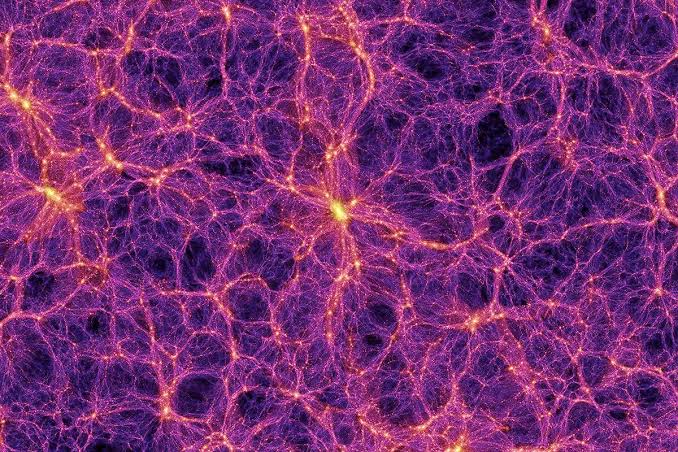
The “cosmic web” galaxy clusters from the Millenium simulation. Measuring and understanding this web can tell us a lot about the fundamental constituents of the universe. Source

To determine what dark matter is then requires an attack from two fronts: design experiments here on earth attempting directly detect it, and further study its cosmic implications to look for more clues as to its properties.

The panel recommended next generation telescopes to study the CMB as a top priority. The so called ‘Stage 4’ CMB experiment would deploy telescopes in both the south pole and Chile’s Atacama desert to better characterize sources of atmospheric noise. The CMB has been studied extensively before, but the increased precision of CMS-S4 could shed light on mysteries like dark energy, dark matter, inflation, and the recent Hubble Tension. Given the past fruitfulness of these efforts, I think few doubted the science case for such a next generation experiment.

A mockup of one of the CMS-S4 telescopes which will be based in the Chilean desert. Note the person for scale on the right (source)

The P5 report recommended a suite of new dark matter experiments in the next decade, including the ‘ultimate’ liquid Xenon based dark matter search. Such an experiment would follow in the footsteps of massive noble gas experiments like LZ and XENONnT which have been hunting for a favored type of dark matter called WIMP’s for the last few decades. These experiments essentially build giant vats of liquid Xenon, carefully shield from any sources of external radiation, and look for signs of dark matter particles bumping into any of the Xenon atoms. The larger the vat of Xenon, the higher chance a dark matter particle will bump into something. Current generation experiments have ~7 tons of Xenon, and the next generation experiment would be even larger. The next generation aims to reach the so called ‘neutrino floor’, the point as which the experiments would be sensitive enough to observe astrophysical neutrinos bumping into the Xenon. Such neutrino interactions would look extremely similar to those of dark matter, and thus represent an unavoidable background which would signal the ultimate sensitivity of this type of experiment. WIMP’s could still be hiding in a basement below this neutrino floor, but finding them would be exceedingly difficult.

A photo of the current XENONnT experiment. This pristine cavity is then filled with liquid Xenon and closely monitored for signs of dark matter particles bumping into one of the Xenon atoms. Credit: XENON Collaboration

WIMP’s are not the only dark matter candidates in town, and recent years have also seen an explosion of interest in the broad range of dark matter possibilities, with axions being a prominent example. Other kinds of dark matter could have very different properties than WIMPs and have had much fewer dedicated experiments to search for them. There is ‘low hanging fruit’ to pluck in the way of relatively cheap experiments which can achieve world-leading sensitivity. Previously, these ‘table top’ sized experiments had a notoriously difficult time obtaining funding, as they were often crowded out of the budgets by the massive flagship projects. However, small experiments can be crucial to ensuring our best chance of dark matter discovery, as they fill in the blinds pots missed by the big projects.

The panel therefore recommended creating a new pool of funding set aside for these smaller scale projects. Allowing these smaller scale projects to flourish is important for the vibrancy and scientific diversity of the field, as the centralization of ‘big science’ projects can sometimes lead to unhealthy side effects. This specific recommendation also mirrors a broader trend of the report: to attempt to rebalance the budget portfolio to be spread more evenly and less dominated by the large projects.

A pie chart comparing the budget porfolio in 2023 (left) versus the projected budget in 2033 (right). Currently most of the budget is being taken up by the accelerator upgrades and cavern construction of DUNE, with some amount for the LHC upgrades. But by 2033 the panel recommends a much more equitable balance between different research area.

What Didn’t Make It

Any report like this comes with some tough choices. Budget realities mean not all projects can be funded. Besides the pairing down of some of DUNE’s upgrades, one of the biggest areas that was recommended against were ‘accessory experiments at the LHC’. In particular, MATHUSULA and the Forward Physics Facility were two experiments that proposed to build additional detectors near already existing LHC collision points to look for particles that may be missed by the current experiments. By building new detectors hundreds of meters away from the collision point, shielded by concrete and the earth, they can obtained unique sensitivity to ‘long lived’ particles capable of traversing such distances. These experiments would follow in the footsteps of the current FASER experiment, which is already producing impressive results.

While FASER found success as a relatively ‘cheap’ experiment, reusing detector components from and situating itself in a beam tunnel, these new proposals were asking for quite a bit more. The scale of these detectors would have required new caverns to be built, significantly increasing the cost. Given the cost and specialized purpose of these detectors, the panel recommended against their construction. These collaborations may now try to find ways to pare down their proposal so they can apply to the new small project portfolio.

Another major decision by the panel was to recommend against hosting a new Higgs factor collider in the US. But that will discussed more in a future post.

Conclusions

The P5 panel was faced with a difficult task, the total cost of all projects they were presented with was three times the budget. But they were able to craft a plan that continues the work of the previous decade, addresses current shortcomings and lays out an inspiring vision for the future. So far the community seems to be strongly rallying behind it. At time of writing, over 2700 community members from undergraduates to senior researchers have signed a petition endorsing the panels recommendations. This strong show of support will be key for turning these recommendations into actual funding, and hopefully lobbying congress to even increase funding so that more of this vision can be realized.

For those interested the full report as well as executive summaries of different areas can be found on the P5 website. Members of the US particle physics community are also encouraged to sign the petition endorsing the recommendations here.

And stayed tuned for part 2 of our coverage which will discuss the implications of the report on future colliders!

  •  

The Search for Simplicity : The Higgs Boson’s Self Coupling

When students first learn quantum field theory, the mathematical language the underpins the behavior of elementary particles, they start with the simplest possible interaction you can write down : a particle with no spin and no charge scattering off another copy of itself. One then eventually moves on to the more complicated interactions that describe the behavior of fundamental particles of the Standard Model. They may quickly forget this simplified interaction as a unrealistic toy example, greatly simplified compared to the complexity the real world. Though most interactions that underpin particle physics are indeed quite a bit more complicated, nature does hold a special place for simplicity. This barebones interaction is predicted to occur in exactly one scenario : a Higgs boson scattering off itself. And one of the next big targets for particle physics is to try and observe it.

A feynman diagram consisting of two dotted lines coming merging together to form a single line.
A Feynman diagram of the simplest possible interaction in quantum field theory, a spin-zero particle interacting with itself.

The Higgs is the only particle without spin in the Standard Model, and the only one that doesn’t carry any type of charge. So even though particles such as gluons can interact with other gluons, its never two of the same kind of gluons (the two interacting gluons will always carry different color charges). The Higgs is the only one that can have this ‘simplest’ form of self-interaction. Prominent theorist Nima Arkani-Hamed has said that the thought of observing this “simplest possible interaction in nature gives [him] goosebumps“.

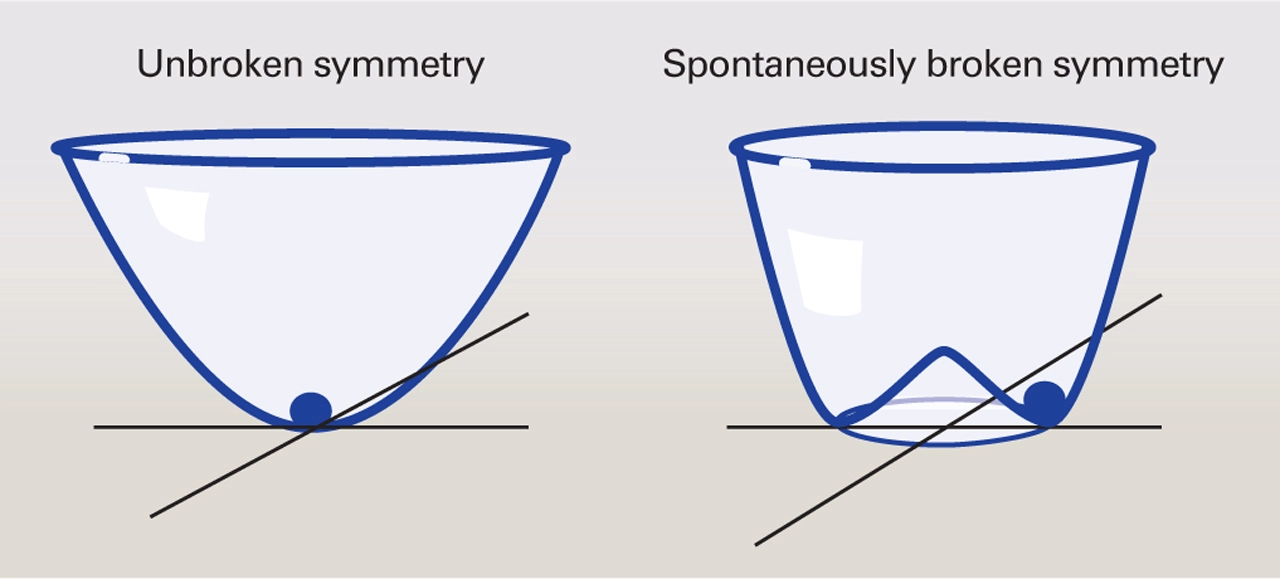
But more than being interesting for its simplicity, this self-interaction of the Higgs underlies a crucial piece of the Standard Model: the story of how particles got their mass. The Standard Model tells us that the reason all fundamental particles have mass is their interaction with the Higgs field. Every particle’s mass is proportional to the strength of the Higgs field. The fact that particles have any mass at all is tied to the fact that the lowest energy state of the Higgs field is at a non-zero value. According to the Standard Model, early in the universe’s history when the temperature were much higher, the Higgs potential had a different shape, with its lowest energy state at field value of zero. At this point all the particles we know about were massless. As the universe cooled the shape of the Higgs potential morphed into a ‘wine bottle’ shape, and the Higgs field moved into the new minimum at non-zero value where it sits today. The symmetry of the initial state, in which the Higgs was at the center of its potential, was ‘spontaneously broken’  as its new minimum, at a location away from the center, breaks the rotation symmetry of the potential. Spontaneous symmetry breaking is a very deep theoretical idea that shows up not just in particle physics but in exotic phases of matter as well (eg superconductors). 

A diagram showing the ‘unbroken’ Higgs potential in the very early universe (left) and the ‘wine bottle’ shape it has today (right). When the Higgs at the center of its potential it has a rotational symmetry, there are no preferred directions. But once it finds it new minimum that symmetry is broken. The Higgs now sits at a particular field value away from the center and a preferred direction exists in the system. 

This fantastical story of how particle’s gained their masses, one of the crown jewels of the Standard Model, has not yet been confirmed experimentally. So far we have studied the Higgs’s interactions with other particles, and started to confirm the story that it couples to particles in proportion to their mass. But to confirm this story of symmetry breaking we will to need to study the shape of the Higgs’s potential, which we can probe only through its self-interactions. Many theories of physics beyond the Standard Model, particularly those that attempt explain how the universe ended up with so much matter and very little anti-matter, predict modifications to the shape of this potential, further strengthening the importance of this measurement.

Unfortunately observing the Higgs interacting with itself and thus measuring the shape of its potential will be no easy feat. The key way to observe the Higgs’s self-interaction is to look for a single Higgs boson splitting into two. Unfortunately in the Standard Model additional processes that can produce two Higgs bosons quantum mechanically interfere with the Higgs self interaction process which produces two Higgs bosons, leading to a reduced production rate. It is expected that a Higgs boson scattering off itself occurs around 1000 times less often than the already rare processes which produce a single Higgs boson.  A few years ago it was projected that by the end of the LHC’s run (with 20 times more data collected than is available today), we may barely be able to observe the Higgs’s self-interaction by combining data from both the major experiments at the LHC (ATLAS and CMS).

Fortunately, thanks to sophisticated new data analysis techniques, LHC experimentalists are currently significantly outpacing the projected sensitivity. In particular, powerful new machine learning methods have allowed physicists to cut away background events mimicking the di-Higgs signal much more than was previously thought possible. Because each of the two Higgs bosons can decay in a variety of ways, the best sensitivity will be obtained by combining multiple different ‘channels’ targeting different decay modes. It is therefore going to take a village of experimentalists each working hard to improve the sensitivity in various different channels to produce the final measurement. However with the current data set, the sensitivity is still a factor of a few away from the Standard Model prediction. Any signs of this process are only expected to come after the LHC gets an upgrade to its collision rate a few years from now.

Limit plots on HH production in various different decay modes.
Current experimental limits on the simultaneous production of two Higgs bosons, a process sensitive to the Higgs’s self-interaction, from ATLAS (left) and CMS (right). The predicted rate from the Standard Model is shown in red in each plot while the current sensitivity is shown with the black lines. This process is searched for in a variety of different decay modes of the Higgs (various rows on each plot). The combined sensitivity across all decay modes for each experiment allows them currently to rule out the production of two Higgs bosons at 3-4 times the rate predicted by the Standard Model. With more data collected both experiments will gain sensitivity to the range predicted by the Standard Model.

While experimentalists will work as hard as they can to study this process at the LHC, to perform a precision measurement of it, and really confirm the ‘wine bottle’ shape of the potential, its likely a new collider will be needed. Studying this process in detail is one of the main motivations to build a new high energy collider, with the current leading candidates being an even bigger proton-proton collider to succeed the LHC or a new type of high energy muon collider.

Various pictorial representations of the uncertainty on the Higgs potential shape.
A depiction of our current uncertainty on the shape of the Higgs potential (center), our expected uncertainty at the end of the LHC (top right) and the projected uncertainty a new muon collider could achieve (bottom right). The Standard Model expectation is the tan line and the brown band shows the experimental uncertainty. Adapted from Nathaniel Craig’s talkhere

The quest to study nature’s simplest interaction will likely span several decades. But this long journey gives particle physicists a roadmap for the future, and a treasure worth traveling great lengths for.

Read More:

CERN Courier Interview with Nima Arkani-Hamed on the future of Particle Physics on the importance of the Higgs’s self-coupling

Wikipedia Article and Lecture Notes on Spontaneous symmetry breaking

Recent ATLAS Measurements of the Higgs Self Coupling

  •  

Quantum Pilot Wave Theory and Biblical Creation

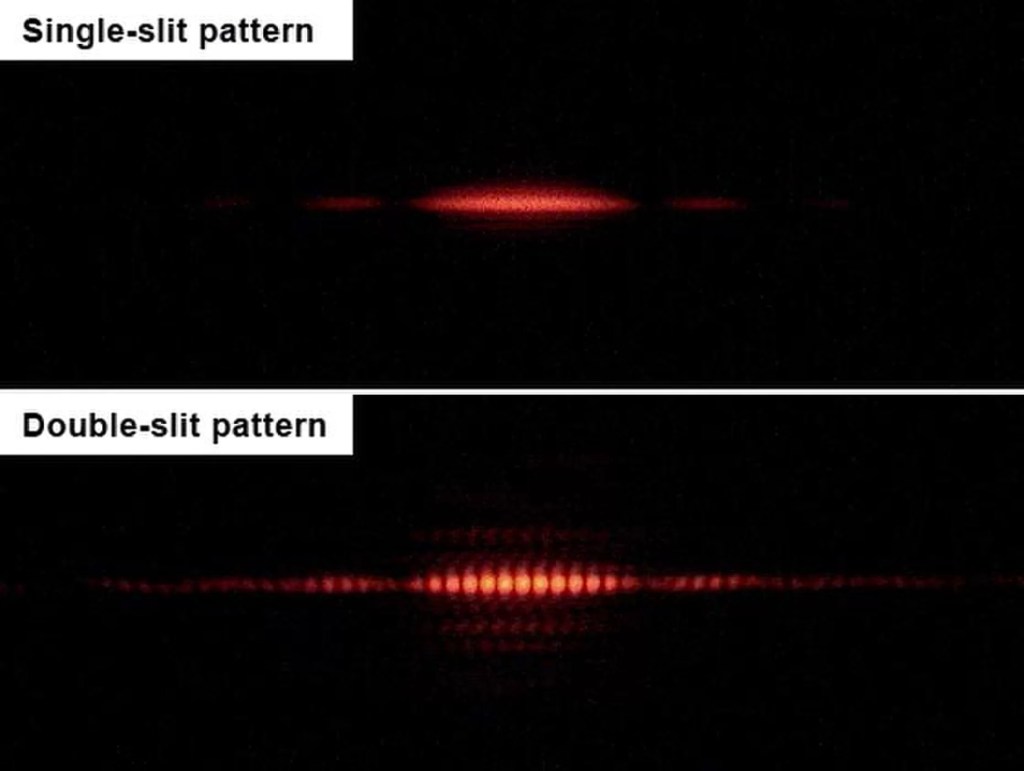
The introduction of quantum theory through the tree metaphor illustrates the observer effect emphasized in the double slit experiment. Wave-particle duality, de Broglie wavelength, and the role of observation in altering outcomes are key concepts. The deterministic pilot wave theory offers an alternative view, which includes the Creator of the universe.

  •  

Was the 1969 Moon Landing Faked?

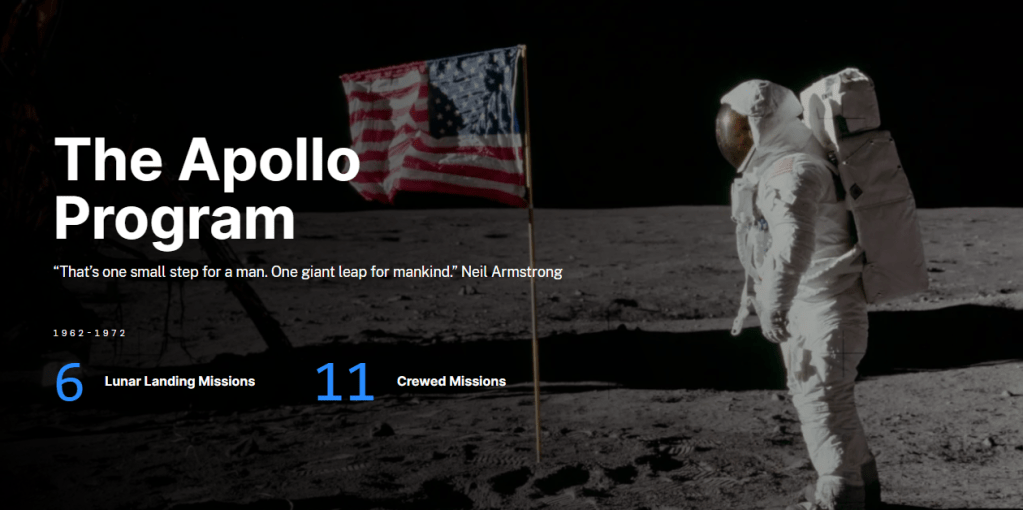
There are various conspiracy theories claiming the Apollo Moon landing was faked, some citing a spoof video as evidence. I reference my personal experiences and testimonies from Apollo astronauts, emphasizing the authenticity of the Moon landing. I highlight the significance of eye witness statements in discerning historical truth.

  •  

True Science and Science Falsely So-Called

I discuss the distinction between operational science, which relies on repeatable experiments, and historical science, particularly cosmology. While acknowledging the contributions of renowned scientists, I argue that cosmology lacks the capacity for experimental verification and is thus not true science, but science falsely so-called.

  •  

Understanding Heaven | Biblical and Scientific Perspectives

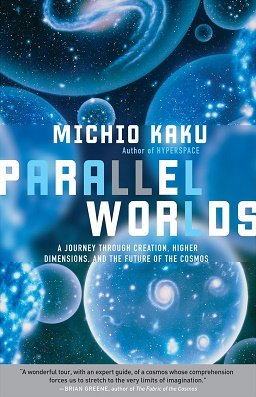
The concepts of heaven and cosmology, including the multiverse and parallel universes, are explored. I discuss differences between physical dimensions and the spiritual realm, critiquing string theory and advocating for a spiritual understanding of heaven as distinct from physical dimensions and laws.

  •  

CIA Denials and COVID “Coverup” Allegations Fuel Turbulent Week for U.S. Intelligence


CIA

Welcome to this edition of The Intelligence Brief… This week, a series of fast-moving controversies has placed the U.S. Intelligence Community under scrutiny, following viral (and contested) claims of an alleged CIA raid on the Office of the Director of National Intelligence and explosive testimony from a former intelligence officer alleging a federal coverup of COVID-19’s origins. In our analysis, we’ll be looking at 1) how prime time TV and social media-driven narratives about intelligence activity have quickly spread—and been challenged by officials, 2) the competing claims surrounding alleged CIA retaliation and oversight disputes raised during congressional testimony, 3) how the agency’s own shifting stance on COVID-19’s origins continues to fuel debate between policymakers and the scientific community, and 4) what this latest episode reveals about the growing intersection of intelligence, politics, and public trust in an era of fragmented information.

Quote of the Week

“As the CIA has already assessed, COVID-19 most likely originated from a lab leak, and efforts to undermine that conclusion are disingenuous.”

– Liz Lyons, CIA spokesperson

If you enjoy the news and perspectives offered by The Debrief, make sure that you aren’t missing our stories by making us one of your “preferred sources” on Google News. You can simply follow this link to add The Debrief to your list of favorites, and you can read more about Google’s preferred sources in our article here.


RECENT NEWS from The Debrief


U.S. Intelligence Community Pushes Back as Controversies Swirl Over CIA Claims

It’s been a bit of an odd week for the U.S. Intelligence Community.

Over the last 48 hours, renewed interest in the CIA’s Project MK-ULTRA has emerged amid claims of an alleged raid that targeted the Office of the Director of National Intelligence (ODNI), as well as new allegations from a former intelligence officer who testified before lawmakers on Wednesday about an alleged federal cover-up involving the origins of COVID-19.

Now, senior officials within the Intelligence Community (IC) are pushing back, challenging narratives that have made their way into news feeds via social media and widely shared video clips.

So what are the recent claims at the heart of these new controversies, whose uniting thread involves a three-letter agency long linked to illegal and/or unethical covert operations, many of which remain partially hidden behind the veil of official secrecy? Read on, dear subscribers, as we attempt to make sense of the latest IC controversies that have erupted over the last few days.

A Raid at the ODNI?

This week, claims involving an alleged CIA raid on the Office of the Director of National Intelligence (DNI) surfaced on social media.

The supposed incident was initially reported in a post by Fox News host Jesse Watters, in a now-deleted posting on X. Shortly thereafter, news was widely circulated that the spy agency had seized several dozen boxes of files containing records related to JFK and Project MK-ULTRA, which were reportedly being processed by the ODNI in advance of their public release.

The alleged incident prompted Congressman Anna Paulina Luna to fire back with plans to subpoena the agency if the files weren’t returned. “The CIA has 24 hours to return the documents to Tulsi Gabbard’s office or else I will make a motion to issue a subpoena,” Luna wrote in a posting on X. “These documents have been requested by Congress.”

Later that evening, after the news had entered the prime-time news cycle, DNI spokesperson Olivia Coleman responded with her own post on X, challenging the claims.

“This is false,” Coleman wrote, adding “the CIA did not raid the DNI’s office.”

The claims seemed a bit odd from the outset, especially since the DNI has oversight authority above the CIA. This has been the case since the 2004 Intelligence Reform and Terrorism Prevention Act, which outlined that the DNI leads the IC, and that the CIA Director, therefore, is required to report to the DNI.

That’s not to say that the CIA hasn’t been accused of operating outside of the law in the past. Nor was the situation involving the alleged seizure of JFK and MK-ULTRA files from the ODNI the only controversy America’s spy agency found itself embroiled in this week.

A CIA COVID-19 Coverup?

On Wednesday, a CIA whistleblower provided testimony before lawmakers claiming that there had been a federal cover-up involving the origins of COVID-19.

Speaking before the U.S. Senate Committee on Homeland Security and Governmental Affairs, James Erdman III, a former intelligence officer, described himself during introductory statements as a “career CIA operations officer” who was “on joint-duty assignment at the ODNI Director’s Initiatives Group, or the DIG, between March 2025 and April 2026. I was responsible for leading the DIG’s investigation into COVID origins, anomalous health incidents, and unidentified anomalous phenomena.”

Erdman, in other words, had a pretty diverse and interesting assignment during his time at the ODNI’s DIG. However, his reasons for speaking before lawmakers on Wednesday were very specific: “I’m here today to discuss the COVID coverup,” he told members of the Senate this week, along with its national security implications and “CIA refusal to comply with lawful oversight, as well as how we remedy these problems.”

In addition to his background with the IC, Fox News recently described Erdman as a “military veteran who co-founded the grassroots advocacy group Feds For Freedom, an organization that emerged during the COVID-19 vaccine mandate battles involving federal workers and members of the military,” though conceding that “public information online about Erdman’s early life is sparse” and that much of what is available appears on the Feds For Freedom website.

“Intelligence community leaders and senior analysts downplayed the possibility that the COVID pandemic originated as a result of a lab incident,” Erdman told lawmakers on Wednesday, adding that analysts who presented evidence supporting a lab origin for the virus became the targets of retaliation by the spy agency.

“CIA managers retaliated against them for their refusal to agree with management’s middle-of-the-night anonymous rewrite of the analysis, which changed the assessment to a non-call judgment,” Erdman said in testimony he provided. Erdman also reinforced the claims of an alleged removal of documents from the ODNI by CIA personnel, which ODNI representatives have disputed.

Another major focus of Wednesday’s hearing had been Dr. Anthony Fauci, of whom Senator Rand Paul of Kentucky, the Committee’s Chairman, asked how the former Director of the National Institute of Allergy and Infectious Diseases could “objectively comment on a discussion of COVID origins when he approved the very funding that may have caused the Pandemic Virus?”

The CIA Pushes Back

Following Wednesday’s hearing, Liz Lyons, a CIA spokesperson, pushed back on the claims presented during the hearing.

“The Committee acted in bad faith by subpoenaing an Agency officer for testimony today without notifying CIA, despite having already obtained closed-door testimony from the individual previously,” Lyons wrote in a posting on X.

Lyons further charged that Erdman was “not appearing as a whistleblower in pursuit of the truth, but instead in response to the subpoena issued by Chairman Paul.”

“This proceeding amounts to nothing more than dishonest political theater masquerading as a congressional hearing,” Lyons wrote in her statement. “As the CIA has already assessed, COVID-19 most likely originated from a lab leak, and efforts to undermine that conclusion are disingenuous.”

The debate over COVID-19’s origins is complex and remains highly controversial. As Lyons notes, the CIA had already shifted its position early last year, claiming that COVID-19 likely originated from a laboratory in Wuhan, China—a reversal from the agency’s past positions, which was made public shortly after current CIA Director John Ratcliffe was sworn into office.

Clashing with IC assessments are views from the scientific community, which continue to argue that there is little evidence that genetic engineering could be responsible for the virus, and that most reliable scientific evidence suggests the zoonotic transmission hypothesis remains most likely.

Despite the ongoing debate, it is noteworthy that, following the CIA’s apparent shift in its views regarding COVID’s origins in January 2025, an agency spokesperson conceded that “CIA continues to assess that both research-related and natural origin scenarios of the COVID-19 pandemic remain plausible.”

Altogether, this week’s developments underscore a few things, including how quickly the complexities of U.S. intelligence issues can become entangled with politics, public distrust, and the tangled web of fragmented information.

While the debate over issues like the origins of COVID-19 will no doubt continue, events over the last 48 hours at least serve as a reminder that transparency and accountability in intelligence matters are rarely straightforward—and that definitive answers often emerge only slowly, if at all.

That concludes this week’s installment of The Intelligence Brief. You can read past editions of our newsletter at our website, or if you found this installment online, don’t forget to subscribe and get future email editions from us here. Also, if you have a tip or other information you’d like to send along directly to me, you can email me at micah [@] thedebrief [dot] org, or reach me on X: @MicahHanks.

Here are the top stories we’re covering right now…

  •  

11,000-Year-Old Major Discovery in Canada Could Challenge “Everything We Thought We Knew” About North American Prehistory

A remarkable archaeological discovery in Canada is offering new insights into North America’s early Indigenous civilizations, challenging long-held ideas about early human settlement.

Unearthed near the vicinity of Sturgeon Lake First Nation, archaeologists say the remains of an 11,000-year-old settlement could represent one of the earliest Indigenous habitation sites ever found in North America.

The discovery, according to researchers at the University of Saskatchewan, was made along the North Saskatchewan River, approximately 5 kilometers north of Prince Albert.

While an abundance of archaeological evidence from this period in North American prehistory exists, the discovery of habitation sites from such early periods in the continent’s deep history is much rarer.

Evidence at the site now suggests the presence of more highly organized societies in the region at the time, pushing back the timescales for such discoveries and challenging past ideas about some of the earliest human settlements from the period.

A Chance Discovery

Echoing many of history’s most important archaeological discoveries, the North Saskatchewan River site was first located by Dave Rondeau, an avocational archaeologist who had been surveying the area and spotted artifacts exposed by an eroding portion of the riverbank.

For Rondeau, it was a surprising—and deeply exciting—moment of discovery.

“I saw the layers of history peeking through the soil,” Rondeau said about the discovery, adding, “I felt the weight of generations staring back at me.”

“Now that the evidence has proven my first instincts, this site is shaking up everything we thought we knew and could change the narrative of early Indigenous civilizations in North America.”

Sturgeon Lake First Nation
The unprecedented discovery was made along the North Saskatchewan River, approximately five kilometers north of Prince Albert (Image Credit: Sturgeon Lake First Nation)

Earlier this year, a meeting at Sturgeon Lake’s Cultural Center between archaeologists from the University of Saskatchewan and council leaders with Sturgeon Lake First Nation discussed the importance of the discoveries at the site. Primarily, rather than a hunting camp used only seasonally, evidence suggests the site discovered by Rondeau was a long-term settlement.

Among the evidence supporting this conclusion is the presence of charcoal layers indicating fire management, which the University of Saskatchewan research team says aligns with oral traditions from the region.

Dr. Glenn Stuart from the University of Saskatchewan said the site’s amazing state of preservation has been game-changing for him and his colleagues.

“This discovery challenges the outdated idea that early Indigenous peoples were solely nomadic,” Dr. Stuart said in a statement. “The evidence of long-term settlement and land stewardship suggests a deep-rooted presence,” Stuart added.

However, according to Stuart, there could also be a few controversial implications for the discovery.

“It also raises questions about the Bering Strait Theory,” Stuart said, a possibility that he says could offer additional support for “oral histories that [say] Indigenous communities have lived here for countless generations.”

Oral Traditions Confirmed

Such oral traditions from the region have long maintained that the region’s earliest inhabitants thrived here, and that the area was strategically significant for early trade and prehistoric culture.

Chief Christine Longjohn called the discovery “a powerful reminder that our ancestors were here, building, thriving, and shaping the land long before history books acknowledged us.”

Longjohn said that, despite such a deep presence being conveyed in oral traditions over time, this knowledge had been largely overlooked previously.

“For too long, our voices have been silenced, but this site speaks for us, proving that our roots run deep and unbroken,” Longjohn said.

Presently, the Âsowanânihk Council hopes to continue efforts to preserve the site alongside archaeologists from the University of Saskatchewan and the University of Calgary, and plans for the construction of a new interpretive center at the site have been put forward. Additional protective measures to ensure the site is not endangered by logging or other activities are also being undertaken.

For members of the Indigenous community like Longjohn, the site is more than just a window to Canada’s ancient history: it offers a direct connection to the ancestry of Canada’s First Nations residents.

“It carries the footsteps of our ancestors, their struggles, their triumphs, and their wisdom,” Longjohn said.

“Every stone, every artifact is a testament to their strength,” she added. “We are not just reclaiming history—we are reclaiming our rightful place in it.”

Micah Hanks is the Editor-in-Chief and Co-Founder of The Debrief. A longtime reporter on science, defense, and technology with a focus on space and astronomy, he can be reached at micah@thedebrief.org. Follow him on X @MicahHanks, and at micahhanks.com.

  •  

Chinese Adaptation of Snyder Hope Scale Validated

In a groundbreaking scientific endeavor poised to reshape psychological assessments in China, researchers have embarked on adapting the Snyder Adult Dispositional Hope Scale for use among older adults suffering from coronary heart disease. This work, published in the eminent journal BMC Geriatrics in 2026, transcends cultural and linguistic barriers by carefully translating and validating a tool that measures hope—a powerful psychological construct intimately linked to health outcomes in chronic disease populations.

Hope, often viewed as a beacon of positive expectancy even in adversity, is fundamentally tied to motivation and goal pursuit. The Snyder scale operationalizes hope by parsing it into agency—the motivational component that propels individuals forward—and pathways, which reflect one’s perceived capacity to generate routes to desired goals. While the scale has seen extensive use worldwide, its application in Chinese populations, especially among elderly patients with cardiac conditions, remained uncharted until now.

Given China’s rapid demographic shift toward an aging population burdened with chronic diseases like coronary heart disease, understanding the psychological determinants that influence health trajectories is imperative. The adaptation of psychological instruments like the Snyder Adult Dispositional Hope Scale stands as a pivotal tool for clinicians and researchers to quantify hope reliably and validly, thus paving the way for targeted interventions.

This cross-sectional study meticulously conducted among older Chinese adults with coronary heart disease rigorously evaluated the scale’s psychometric properties. Researchers ensured cultural and linguistic equivalence through iterative translation, back-translation, and expert panel reviews, triangulated with qualitative feedback from patients to capture nuanced understandings of hope within a Chinese cultural context.

Reliability testing centered on internal consistency measures and test-retest reliability to confirm that the instrument yields stable and consistent results over time. Indeed, the adapted scale demonstrated compelling reliability indices, indicating its dependability for repeated use in clinical and research settings. This consistency is crucial, particularly for longitudinal studies tracking psychological resilience and treatment adherence in chronic disease management.

Beyond reliability, validity assessments encompassed several facets—construct validity, convergent and divergent validity—to affirm that the scale genuinely measures the construct of hope and distinguishes it from related constructs such as optimism or self-efficacy. Factor analyses confirmed that the original two-factor structure—agency and pathways—was preserved, thus supporting the scale’s theoretical foundation even in a new cultural milieu.

An intriguing dimension of this research lies in the interplay between hope and clinical variables among older adults with coronary heart disease. Existing literature posits that higher hope levels correlate with improved health behaviors, better psychological well-being, and even physiological outcomes like cardiac function. This study’s findings reinforce and contextualize these associations within a Chinese patient cohort, suggesting that fostering hope could enhance holistic cardiac care.

Importantly, the adaptation process also accounted for age-specific considerations. Cognitive decline, cultural attitudes toward illness and aging, and linguistic subtleties necessitate a bespoke approach when translating psychometric tools for elderly populations. This study navigated these challenges adeptly, ensuring that items were comprehensible, culturally resonant, and appropriate for older adults’ lived experiences.

The broader implications of this validation extend to clinical practice, where the scale can serve as both a screening instrument and a metric for evaluating psychosocial interventions aimed at boosting hope. For healthcare providers, this represents a paradigm shift in integrating psychological measures into standard care to capture patient-centered outcomes that transcend traditional biomedical parameters.

Furthermore, from a research standpoint, the availability of a culturally validated hope scale unlocks new avenues for exploring psychosocial determinants of health in China’s aging population. It fosters cross-cultural comparisons, enriches global health psychology literature, and informs policy-making for mental health resources allocation in chronic disease settings.

Considering coronary heart disease’s status as a leading cause of morbidity and mortality globally, especially in aging populations, the intersection of psychological resilience and cardiac health assumes critical importance. The adaptable and validated hope scale equips clinicians and researchers with a sophisticated instrument to delve deeper into this nexus and devise comprehensive care models.

The study also underscores the methodological rigor essential in adapting psychological instruments. Mere linguistic translation without cultural adaptation risks misinterpretations and invalid conclusions. The authors’ meticulous approach exemplifies best practices, including psychometric evaluations, qualitative validations, and iterative refinements, setting a standard for future cross-cultural scale adaptations.

In synthesizing these complex processes, the study reinforces that hope is universally significant yet culturally nuanced. Instruments measuring intangible psychological constructs must honor these nuances to retain validity and clinical utility, particularly in populations vulnerable to health disparities and psychosocial stressors.

Moreover, as the global medical community increasingly recognizes the mind-heart connection, integrating psychological metrics like hope into routine cardiac care resonates with holistic medicine principles. It bridges biomedical models with psychosocial frameworks, fostering patient-centered care that acknowledges emotional and motivational dimensions impacting recovery and quality of life.

In summary, the adaptation of the Snyder Adult Dispositional Hope Scale into Chinese is a landmark study that enriches psychological assessment tools for older adults with coronary heart disease. Its rigorous validation assures researchers and clinicians of its reliability and accuracy while emphasizing the transformative potential of hope as a therapeutic target.

This work heralds an era where psychological constructs are not peripheral but central to understanding and managing chronic diseases. By capturing hope’s essence within a culturally attuned framework, this research advances both science and compassionate care for one of humanity’s most vulnerable groups—the aging heart patient.

As this tool gains traction in clinical and academic circles, further longitudinal and intervention studies can leverage it to elucidate how fostering hope directly translates into improved cardiovascular outcomes. Such insights will be invaluable in designing psychologically informed, culturally sensitive care pathways that enhance resilience and healthspan among older adults globally.

Ultimately, this adaptation transcends mere scale translation—it embodies the synthesis of psychology, cardiology, and cultural science, illuminating hope’s indelible role in healing hearts and minds alike. Through this pioneering work, researchers are not just measuring hope but empowering patients to envision and strive toward healthier futures.


Subject of Research: Adaptation and validation of the Snyder Adult Dispositional Hope Scale in Chinese older adults with coronary heart disease

Article Title: Adaptation of Snyder adult dispositional hope scale into Chinese: a cross-sectional study on reliability and validity test in older adults with coronary heart disease

Article References:
Cheng, Y., Xia, Y., Zhang, W. et al. Adaptation of Snyder adult dispositional hope scale into Chinese: a cross-sectional study on reliability and validity test in older adults with coronary heart disease. BMC Geriatr (2026). https://doi.org/10.1186/s12877-026-07698-y

Image Credits: AI Generated

  •  
❌