Normal view

Genetic and Cell-State Evolution in IDH Gliomas

3 June 2026 at 18:21

In a groundbreaking new study published in Nature, researchers have unveiled the intricate cellular landscape remodeling that underlies the progression of IDH-mutant gliomas, a prevalent form of brain cancer. By employing advanced single-cell RNA sequencing technologies and integrative computational analyses, the team dissected malignant cell states across different tumor grades and types, revealing a dynamic choreography dictated by genetic alterations and tumor microenvironmental interactions. This work not only enriches our understanding of glioma biology but also charts new avenues for targeted therapies aimed at halting tumor evolution.

The research delved into the abundance of malignant states by tumor type and grade, uncovering nuanced patterns that challenge previous assumptions. While most cell state distributions were similar across tumor types, oligodendrogliomas exhibited a notable increase in a neural progenitor-like (NPC-like) cell state, hinting at divergent differentiation pathways associated with tumor lineage. This observation was statistically robust, suggesting that lineage-specific programs might pre-condition these tumors to distinct malignant trajectories.

Tumor grade emerged as a powerful determinant of cellular state composition. Higher-grade tumors demonstrated a consistent decline in the differentiated astrocyte-like (AC-like) cell population coupled with an increase in mesenchymal-like (MES-like), undifferentiated, and proliferative cycling cells. This gradation vividly illustrates the stepwise dedifferentiation and heightened proliferative capacity that accompany malignancy intensification. Through rigorous validation using both bulk RNA deconvolution from TCGA and Glioma Longitudinal Analysis (GLASS) consortium data and external single-cell sequencing cohorts, these grade-associated shifts were confirmed as robust and reproducible across diverse datasets.

Spatial heterogeneity, often cited as a confounding factor in tumor biology, was scrutinized using spatially mapped single-cell data. Interestingly, malignant-state composition remained comparatively stable across distinct tumor regions within the same patient, indicating that cell state architecture is more profoundly influenced by temporal progression and genetic evolution than by spatial variation alone. This insight refines our understanding of intratumoral complexity and suggests that therapeutic strategies targeting specific states may achieve uniform efficacy within heterogeneous tumor masses.

Longitudinal analysis across treatment timelines brought to light profound cell-state dynamics associated with tumor recurrence. The investigators documented significant increases in MES-like, undifferentiated, and cycling states at recurrence, alongside a pronounced reduction in AC-like cells. This shift towards a less differentiated and more proliferative state mirrors the progression observed with increasing tumor grade, underscoring the parallelism between disease advancement and cell-state evolution. Intriguingly, these trends were observed across tumor types and persisted when restricted to primary astrocytoma diagnoses, highlighting their broad relevance.

A pivotal revelation emerged when correlating these cellular state changes with acquired genetic alterations associated with recurrence. Tumors harboring new genetic events such as hypermutation, enhanced somatic copy number variations, small deletions, and cell cycle disruptions exhibited greater increases in undifferentiated and cycling cell populations. This genetic crescendo was linked to an elevated stemness signature, emphasizing the coalescence of genetic instability with a more aggressive cellular phenotype. Conversely, MES-like state expansion appeared independent of these genetic changes, suggesting multiple pathways driving tumor plasticity.

Molecular distance metrics further corroborated the tight coupling between genetic alterations and transcriptional remodeling. Positive correlations between longitudinal mutational burden and transcriptional divergence encapsulate a model wherein genomic evolution fuels phenotypic heterogeneity. This co-evolution is substantiated by the finding that gliomas acquiring genetic aberrations concurrently display altered chromatin accessibility patterns, implicating coordinated genome-epigenome remodeling during tumor progression.

Validations within the GLASS cohort reinforced these inferences by demonstrating that recurrence-associated genetic shifts coincide with decreased differentiation and heightened proliferation signatures inferred from bulk RNA data. This multi-modal validation not only affirms the robustness of the observed trends but also exemplifies the power of integrative genomics in decoding tumor evolution.

Altogether, the study posits that IDH-mutant gliomas traverse a defined evolutionary trajectory marked by cellular dedifferentiation and increased proliferative vigor, tightly linked to the accumulation of genetic alterations. These findings bear critical implications for clinical practice, as they identify malignant cellular states as both markers and drivers of tumor progression, offering potential targets for therapeutic intervention aimed at intercepting the path to recurrence.

Beyond their immediate clinical impact, these revelations prompt a broader reevaluation of brain tumor biology. The stable spatial distribution of malignant states within tumors juxtaposed with temporal and genetic variation suggests that therapeutic timing and genomic context are paramount considerations in designing effective treatment regimens. Interventions targeting early evolutionary branches or restricting stem-like and cycling populations could substantially alter the course of disease.

Furthermore, the delineation of MES-like cells as a genetically independent population expanding in recurrence opens questions about the environmental or microenvironmental cues fostering this state. Disentangling intrinsic genetic drivers from extrinsic modulators could illuminate novel vulnerabilities exploitable by combination therapies.

The methodology underscoring this work leverages cutting-edge single-cell sequencing techniques, computational deconvolution methodologies such as CIBERSORTx, and gene set enrichment analyses, highlighting the synergy between technological advancements and biological inquiry. These tools enable a granular depiction of tumor ecosystems, revolutionizing our ability to track tumor evolution at unprecedented resolution.

Looking ahead, these insights pave the way for longitudinal monitoring of glioma patients through minimally invasive sampling coupled with single-cell profiling. Such approaches could inform adaptive treatment strategies tailored to real-time tumor state dynamics, ultimately improving prognosis and patient survival.

In essence, this study elegantly captures the complex, intertwined genetic and cellular transformations that sculpt IDH-mutant glioma progression. By elucidating the molecular underpinnings of malignant cell states and their evolution, it sets the stage for innovative therapeutic paradigms tailored to intercept the relentless advancement of these formidable brain tumors.


Subject of Research:
IDH-mutant glioma progression, malignant cell states, tumor grade, genetic alterations, and cell-state evolution.

Article Title:
Acquired genetic and cell-state changes in IDH-mutant glioma progression.

Article References:
Johnson, K.C., Spitzer, A., Varn, F.S. et al. Acquired genetic and cell-state changes in IDH-mutant glioma progression. Nature (2026). https://doi.org/10.1038/s41586-026-10612-6

Image Credits:
AI Generated

DOI:
https://doi.org/10.1038/s41586-026-10612-6

Ice Age Enigma: Taimering Mammoth Probably Processed by Early Hunters and Gatherers

3 June 2026 at 15:53

In a remarkable archaeological breakthrough near Regensburg in Bavaria, Germany, a nearly 2.5-meter-long spirally twisted tusk belonging to a woolly mammoth (Mammuthus primigenius) was unearthed during routine construction work in Taimering. This discovery, made six years ago by the Bavarian State Office for the Preservation of Historical Monuments (BLfD), reverberates profoundly through the scientific community, offering an unparalleled window into the Ice Age fauna of Central Europe. Alongside the tusk, researchers uncovered over seventy additional bones and bone fragments predominantly from the mammoth’s ribcage, as well as hand and foot bones, though the long bones remain conspicuously absent. Experts attribute the exceptional preservation of these remains to millennia of conservation within the wet sedimentary environment, which staved off the deleterious effects typically inflicted by exposure and predation.

Subsequent paleontological analyses meticulously confirmed that all the bones and the tusk belong to a single, remarkably large but juvenile individual. The mammoth is estimated to have stood approximately three meters tall at the shoulder—indicative of the species’ impressive stature even before reaching full maturity. The spatial arrangement and pristine condition of the bones strongly imply that the animal perished in close proximity to the excavation site. Detailed surface examinations revealed the absence of evidence for transport by water or predation-induced disarticulation, suggesting rapid burial in the sediments of an ancient pond or a slow-moving tributary of the Danube River during the Last Glacial Maximum. Radiocarbon dating places this event between 27,000 and 25,000 years ago, embedding the specimen firmly within a critical temporal context.

One of the most striking revelations from the site involved the identification of anthropogenic modifications on the bones. Researchers discerned clear cut marks—most notably on the ribs—attesting to human butchering activities. Intriguingly, one of the broad rib bones appears to have served as a makeshift cutting board, further underscoring the direct interaction between Palaeolithic humans and this megafaunal giant. However, it remains unresolved whether humans hunted the mammoth or scavenged its carcass after natural death. The osteoarchaeological analyses led by Kerstin Pasda from the Friedrich-Alexander-University Erlangen-Nürnberg provide compelling evidence of deliberate exploitation but stop short of clarifying the exact nature of the encounter.

Pollen analysis by Dr. Philipp Stojakowits from the University of Augsburg provided vital environmental context, revealing a tundra-like steppe populated by herbaceous plants and scattered dwarf shrubs. This biome, commonly known as the Mammoth Steppe, was a complex and nutrient-rich ecosystem that stretched expansively across Eurasia during the peak of the last glaciation from 30,000 to 20,000 years ago. It represented a vast treeless habitat nestled between the retreating Scandinavian ice sheet and the southern Alpine glaciers, capable of sustaining diverse megafauna including woolly mammoths. The palaeoecological insights gleaned from these studies place the Taimering mammoth within an ecosystem marked by climatic extremes yet surprisingly rich biodiversity.

This discovery is of exceptional significance not only because mammoth remains are exceedingly rare in this part of Europe but also due to the scarce evidence of human presence in the region during this notoriously harsh glacial period. PD Dr. Gertrud Rößner, a leading paleontologist at the Bavarian State Collections of Natural History, highlighted the rarity of such finds in Central Europe, contrasting with more common discoveries in eastern Eurasia. Additionally, archaeologists Andreas Maier of the University of Cologne and Thorsten Uthmeier of the Friedrich-Alexander-University Erlangen-Nürnberg emphasized that prevailing climatic conditions likely forced Palaeolithic hunter-gatherers to seek refuge in more hospitable southern and eastern zones, rendering direct evidence of their activities exceedingly rare in Bavaria.

The collaborative scientific endeavor involved 14 specialists from a panoply of institutions including the Bavarian State Collections of Natural History, Friedrich-Alexander University Erlangen-Nürnberg, the Bavarian State Office for the Preservation of Historical Monuments, the Reiss-Engelhorn Museums, the Curt Engelhorn Center for Archaeometry in Mannheim, and several major universities across Germany. This interdisciplinary approach ensured comprehensive analyses employing advanced archaeological, palaeontological, and geological techniques, culminating in a robust reconstruction of the mammoth’s life and death against the backdrop of Ice Age Europe.

Such integrated research has immense implications. Beyond expanding the paleobiogeographical distribution of woolly mammoths, the site furnishes rare evidence of human predation or scavenging behavior in an environmental context generally considered hostile to sustained human occupation during the Last Glacial Maximum. The cut marks on the bones, coupled with contextual geological data, provide a rare snapshot into hominin subsistence strategies and adaptability under extreme climatic stress, critical for understanding human evolution and migration patterns during this epoch.

Moreover, the preservation of the mammoth’s tusk alongside the skeletal remains offers valuable material for ongoing studies related to the species’ growth patterns, physiology, and ecological niche. The tusk’s spiral curvature—a characteristic feature in Mammuthus primigenius—provides insights into the age and health status of the individual, while microscopic analyses of growth increments may yield data on environmental fluctuations and dietary intake. The care taken in meticulously extracting and preparing these finds at the Bavarian State Collections of Natural History underscores the scientific potential locked within these ancient relics.

Attention to the depositional environment has also yielded critical stratigraphic information. The wet-soil conditions responsible for the near-perfect conservation of the bones also hint at palaeo-hydrological dynamics of the region during the Ice Age. These insights are invaluable for reconstructing the geomorphology of prehistoric landscapes and understanding how megafaunal species interacted with their habitats, maneuvered across glacial terrains, and responded to rapidly changing environmental parameters.

In summary, the Taimering mammoth discovery challenges and enriches prevailing narratives about Ice Age Europeans and their megafauna. It bridges gaps between palaeontology, archaeology, and palaeoecology, providing a multidimensional view of an ancient world teetering on the edge of monumental climatic upheaval. This research not only celebrates a spectacular scientific find but also sets a new standard for interdisciplinary collaboration in Quaternary science, offering promising avenues for further revelations about the complex interplay between humans and their environment tens of millennia ago.


Subject of Research: Animals

Article Title: A cold case from the last Glacial Maximum: A partial mammoth skeleton from southern Germany (Danube Valley, Germany) – Part 1: Traces of human activity and archaeological context

News Publication Date: 3-Jun-2026

Web References:
http://dx.doi.org/10.1016/j.jasrep.2026.105839

Image Credits: Credit: BLfD

Keywords: Woolly mammoth, Mammuthus primigenius, Ice Age, Last Glacial Maximum, archaeology, palaeontology, human activity, butchering marks, Mammoth Steppe, palaeoecology, radiocarbon dating, Bavaria, Central Europe.

The Search for Simplicity : The Higgs Boson’s Self Coupling

13 March 2023 at 15:17

When students first learn quantum field theory, the mathematical language the underpins the behavior of elementary particles, they start with the simplest possible interaction you can write down : a particle with no spin and no charge scattering off another copy of itself. One then eventually moves on to the more complicated interactions that describe the behavior of fundamental particles of the Standard Model. They may quickly forget this simplified interaction as a unrealistic toy example, greatly simplified compared to the complexity the real world. Though most interactions that underpin particle physics are indeed quite a bit more complicated, nature does hold a special place for simplicity. This barebones interaction is predicted to occur in exactly one scenario : a Higgs boson scattering off itself. And one of the next big targets for particle physics is to try and observe it.

A feynman diagram consisting of two dotted lines coming merging together to form a single line.
A Feynman diagram of the simplest possible interaction in quantum field theory, a spin-zero particle interacting with itself.

The Higgs is the only particle without spin in the Standard Model, and the only one that doesn’t carry any type of charge. So even though particles such as gluons can interact with other gluons, its never two of the same kind of gluons (the two interacting gluons will always carry different color charges). The Higgs is the only one that can have this ‘simplest’ form of self-interaction. Prominent theorist Nima Arkani-Hamed has said that the thought of observing this “simplest possible interaction in nature gives [him] goosebumps“.

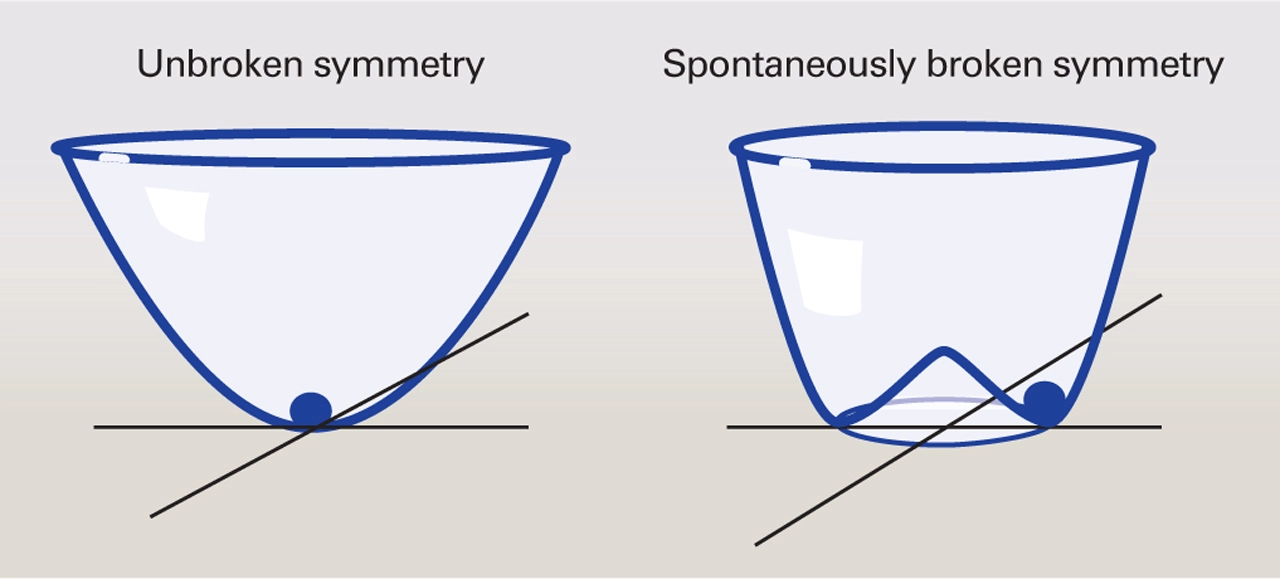
But more than being interesting for its simplicity, this self-interaction of the Higgs underlies a crucial piece of the Standard Model: the story of how particles got their mass. The Standard Model tells us that the reason all fundamental particles have mass is their interaction with the Higgs field. Every particle’s mass is proportional to the strength of the Higgs field. The fact that particles have any mass at all is tied to the fact that the lowest energy state of the Higgs field is at a non-zero value. According to the Standard Model, early in the universe’s history when the temperature were much higher, the Higgs potential had a different shape, with its lowest energy state at field value of zero. At this point all the particles we know about were massless. As the universe cooled the shape of the Higgs potential morphed into a ‘wine bottle’ shape, and the Higgs field moved into the new minimum at non-zero value where it sits today. The symmetry of the initial state, in which the Higgs was at the center of its potential, was ‘spontaneously broken’  as its new minimum, at a location away from the center, breaks the rotation symmetry of the potential. Spontaneous symmetry breaking is a very deep theoretical idea that shows up not just in particle physics but in exotic phases of matter as well (eg superconductors). 

A diagram showing the ‘unbroken’ Higgs potential in the very early universe (left) and the ‘wine bottle’ shape it has today (right). When the Higgs at the center of its potential it has a rotational symmetry, there are no preferred directions. But once it finds it new minimum that symmetry is broken. The Higgs now sits at a particular field value away from the center and a preferred direction exists in the system. 

This fantastical story of how particle’s gained their masses, one of the crown jewels of the Standard Model, has not yet been confirmed experimentally. So far we have studied the Higgs’s interactions with other particles, and started to confirm the story that it couples to particles in proportion to their mass. But to confirm this story of symmetry breaking we will to need to study the shape of the Higgs’s potential, which we can probe only through its self-interactions. Many theories of physics beyond the Standard Model, particularly those that attempt explain how the universe ended up with so much matter and very little anti-matter, predict modifications to the shape of this potential, further strengthening the importance of this measurement.

Unfortunately observing the Higgs interacting with itself and thus measuring the shape of its potential will be no easy feat. The key way to observe the Higgs’s self-interaction is to look for a single Higgs boson splitting into two. Unfortunately in the Standard Model additional processes that can produce two Higgs bosons quantum mechanically interfere with the Higgs self interaction process which produces two Higgs bosons, leading to a reduced production rate. It is expected that a Higgs boson scattering off itself occurs around 1000 times less often than the already rare processes which produce a single Higgs boson.  A few years ago it was projected that by the end of the LHC’s run (with 20 times more data collected than is available today), we may barely be able to observe the Higgs’s self-interaction by combining data from both the major experiments at the LHC (ATLAS and CMS).

Fortunately, thanks to sophisticated new data analysis techniques, LHC experimentalists are currently significantly outpacing the projected sensitivity. In particular, powerful new machine learning methods have allowed physicists to cut away background events mimicking the di-Higgs signal much more than was previously thought possible. Because each of the two Higgs bosons can decay in a variety of ways, the best sensitivity will be obtained by combining multiple different ‘channels’ targeting different decay modes. It is therefore going to take a village of experimentalists each working hard to improve the sensitivity in various different channels to produce the final measurement. However with the current data set, the sensitivity is still a factor of a few away from the Standard Model prediction. Any signs of this process are only expected to come after the LHC gets an upgrade to its collision rate a few years from now.

Limit plots on HH production in various different decay modes.
Current experimental limits on the simultaneous production of two Higgs bosons, a process sensitive to the Higgs’s self-interaction, from ATLAS (left) and CMS (right). The predicted rate from the Standard Model is shown in red in each plot while the current sensitivity is shown with the black lines. This process is searched for in a variety of different decay modes of the Higgs (various rows on each plot). The combined sensitivity across all decay modes for each experiment allows them currently to rule out the production of two Higgs bosons at 3-4 times the rate predicted by the Standard Model. With more data collected both experiments will gain sensitivity to the range predicted by the Standard Model.

While experimentalists will work as hard as they can to study this process at the LHC, to perform a precision measurement of it, and really confirm the ‘wine bottle’ shape of the potential, its likely a new collider will be needed. Studying this process in detail is one of the main motivations to build a new high energy collider, with the current leading candidates being an even bigger proton-proton collider to succeed the LHC or a new type of high energy muon collider.

Various pictorial representations of the uncertainty on the Higgs potential shape.
A depiction of our current uncertainty on the shape of the Higgs potential (center), our expected uncertainty at the end of the LHC (top right) and the projected uncertainty a new muon collider could achieve (bottom right). The Standard Model expectation is the tan line and the brown band shows the experimental uncertainty. Adapted from Nathaniel Craig’s talkhere

The quest to study nature’s simplest interaction will likely span several decades. But this long journey gives particle physicists a roadmap for the future, and a treasure worth traveling great lengths for.

Read More:

CERN Courier Interview with Nima Arkani-Hamed on the future of Particle Physics on the importance of the Higgs’s self-coupling

Wikipedia Article and Lecture Notes on Spontaneous symmetry breaking

Recent ATLAS Measurements of the Higgs Self Coupling

MuseRAG++ Boosts Multi-Modal Virtual Museum Interactions

3 June 2026 at 06:20

In an era where digital transformation is reshaping the way we experience culture and history, a groundbreaking advancement has emerged at the intersection of artificial intelligence, virtual reality, and museum studies. The recent introduction of MuseRAG++, a deep retrieval-augmented generation framework, is poised to revolutionize semantic interaction and multi-modal reasoning within virtual museum environments. Developed by Y. Hu and detailed in a 2026 publication in Scientific Reports, this technology harnesses cutting-edge AI methodologies to create immersive, highly interactive, and intellectually rich virtual museum experiences that go far beyond traditional digital archives or 3D reconstructions.

At the heart of MuseRAG++ is the integration of retrieval-augmented generation (RAG) with deep learning architectures that enable an AI system to seamlessly combine vast repositories of knowledge with real-time generative capabilities. This allows virtual museum visitors to engage with content in unprecedented ways—posing complex questions about artifacts, artworks, or exhibits and receiving nuanced, contextually informed responses. The framework fundamentally shifts the paradigm of user interaction from passive consumption to an active, semantically-rich conversation with the virtual environment, thus enhancing visitors’ understanding and appreciation of cultural heritage.

One remarkable aspect of MuseRAG++ is its capacity for multi-modal reasoning, which means it can synthesize information across various data types including text, images, audio, and spatial metadata. This multi-faceted approach is vital for virtual museums where artifacts are not merely static objects but carry layers of historical, cultural, and aesthetic significance embedded across different senses and representations. By jointly interpreting these diverse data streams, the framework ensures that the AI can generate responses and narratives that are coherent and deeply aligned with the semantic meanings embedded in the museum exhibits.

The technical sophistication of MuseRAG++ lies in its dual use of retrieval mechanisms and generative neural networks. Retrieval components work by fetching relevant knowledge from large databases, which are then fed into generative models that construct coherent and contextually appropriate explanations or stories. This combination addresses a significant challenge in AI-driven museum interactions—how to balance factual accuracy with narrative richness. While purely generative AI might produce convincing but factually dubious content, MuseRAG++’s retrieval augmentation grounds its output in verified sources, maintaining both educational integrity and engagement.

Virtual museums have long struggled with enabling meaningful semantic interaction. Prior virtual museum implementations typically present users with digitized images, videos, or VR walkthroughs that provide information in static formats. MuseRAG++ transforms this passive information delivery into an exploratory dialogue where users can inquire about an artifact’s provenance, artistic techniques, historical significance, or the broader cultural context. This is achieved through natural language processing techniques that interpret user queries not at face value but in their full semantic complexity, recognizing subtleties like metaphor, inference, and thematic associations.

In practical terms, when a visitor pauses in front of a virtual painting, they might ask the system not only about the artist but also about the symbolism behind certain motifs or the socio-political climate during the painting’s creation. The MuseRAG++ framework processes these layered questions and generates responses that integrate visual evidence (the painting’s features), textual data (curatorial notes and academic papers), and audio descriptions to offer a rich, multidisciplinary narrative. This synergistic, multi-modal understanding sets a new standard for AI-enabled educational technologies in the cultural sector.

Moreover, MuseRAG++ has demonstrated remarkable adaptability across different types of museums—from art galleries and historical archives to science museums and natural history collections. Its architecture is designed to accommodate domain-specific knowledge bases, allowing curators and researchers to customize the retrieval databases to suit their institution’s unique collections and interpretive goals. This adaptability ensures that the technology can be widely deployed without requiring prohibitive retraining or reengineering, a critical factor for real-world adoption.

Another pivotal contribution of the MuseRAG++ project is its emphasis on user-centric design. The framework’s interface supports naturalistic conversational engagement, encouraging users to explore museum content through queries, comments, and even speculative questions. By supporting these forms of interaction, MuseRAG++ enhances user motivation, curiosity, and long-term retention of knowledge. Early trials have shown that visitors interacting with MuseRAG++ report a higher sense of connection with exhibits and a more profound intellectual engagement compared to conventional virtual tours.

The underlying data architecture tackles one of the biggest challenges in AI-enhanced museums—information overload. Museums hold enormous data in diverse formats, from catalog metadata and multimedia resources to scholarly annotations. MuseRAG++ employs efficient indexing and retrieval algorithms, ensuring that relevant data is surfaced quickly and accurately. Coupled with deep generative models that don’t simply regurgitate facts but weave them into compelling narratives, this approach achieves an ideal balance between breadth and depth of information.

Importantly, MuseRAG++ advances not only the visitor experience but also curatorial practices. For museum professionals, the system provides tools for augmenting exhibit narratives and experimenting with interpretive frameworks before deploying them to the public. The capacity to simulate visitor queries and tailor responses dynamically supports an iterative process of knowledge presentation, helping curators test which explanations resonate best or highlight underexplored exhibit facets.

The integration of multi-modal reasoning also supports new forms of accessibility. MuseRAG++ has been designed with inclusivity in mind, enabling the generation of descriptions and narratives that accommodate diverse sensory and cognitive needs. For instance, visually impaired users can benefit from richly detailed audio explanations that fuse visual, textual, and contextual information. This ability to bridge sensory modalities promises to democratize access to cultural heritage, making virtual museums not just a technological novelty but a platform for equitable knowledge dissemination.

From a technical perspective, the MuseRAG++ framework builds on transformers, attention mechanisms, and multi-modal embeddings. The retrieval module leverages state-of-the-art vector search techniques to locate semantically related documents, while the generative core is a fine-tuned large language model equipped to integrate multi-modal inputs. This sophisticated pipeline is designed for scalability and real-time responsiveness, ensuring smooth, conversational interactions even under heavy user demand.

Looking ahead, MuseRAG++ provides a foundational scaffold for future innovations in digital heritage. Researchers envision incorporating augmented reality features that blend AI-generated narratives with in-situ museum visits, as well as advancing emotional reasoning capabilities enabling empathetic interactions with cultural artifacts. The rich semantic interaction enabled by this system unlocks transformative potential not only for educational institutions but also for tourism, preservation efforts, and public engagement with history and art on a global scale.

In sum, Y. Hu’s MuseRAG++ signals a new epoch for virtual museums. By marrying deep retrieval-augmented generation with multi-modal semantic reasoning, it transcends traditional limits of digital cultural heritage, offering immersive, intellectually stimulating, and user-centered experiences. As cultural institutions increasingly embrace technology to engage audiences, MuseRAG++ stands out as an exemplar of how AI can enrich human understanding and appreciation of our shared artistic and historical legacy.

This landmark framework paves the way for museums to evolve from static repositories into dynamic, interactive spaces where knowledge is not only displayed but co-created through dialogue. The synergistic use of generative AI and knowledge retrieval points to a future where artificial intelligence serves as a sophisticated cultural mediator, deepening connections between people and the treasures of their past.

As MuseRAG++ continues to develop and gain adoption worldwide, its influence will expand beyond virtual galleries into educational platforms, research environments, and broader cultural applications. This research not only represents a technological breakthrough but also a cultural milestone, harnessing AI’s power to unlock new dimensions of semantic understanding and multi-modal interaction in the digital age.


Subject of Research:
Deep retrieval-augmented generation framework for enhanced semantic interaction and multi-modal reasoning in virtual museums.

Article Title:
MuseRAG++: a deep retrieval-augmented generation framework for semantic interaction and multi-modal reasoning in virtual museums.

Article References:
Hu, Y. MuseRAG++: a deep retrieval-augmented generation framework for semantic interaction and multi-modal reasoning in virtual museums. Sci Rep (2026). https://doi.org/10.1038/s41598-026-55700-9

Image Credits:
AI Generated

Ötzi and His Microbiome: Exploring a 5,300-Year-Old Human-Microbial Connection

3 June 2026 at 03:01

In the heart of the Alpine glaciers lies an extraordinary archive of prehistoric biology—Ötzi the Iceman. Preserved for over 5,000 years at a steady -6°C and nearly 99% relative humidity, Ötzi’s remarkably intact body has long fascinated scientists exploring ancient human life. Recently, a team of researchers unveiled groundbreaking discoveries about the diverse microorganisms that have endured within and around this ancient mummy, shedding light on microbial evolution, preservation, and potential biotechnological applications.

Through a sophisticated combination of genetic sampling and microbiological analysis, the researchers succeeded in distinguishing microbial species that existed within Ötzi during his lifetime from those that colonized him after death. Samples were meticulously collected from both the mummy’s external environment—ice and meltwater inside his refrigeration chamber—and internal tissues, including preserved samples of intestinal tissue and stomach contents. Swab samples augmented these data to create a comprehensive microbial profile, tracing both ancient and modern microbial communities.

The study revealed genetic material from bacteria consistent with Ötzi’s original gut flora, tightly linking his microbiome to those of early human populations. This microbiota composition diverges markedly from that seen in modern industrialized societies, where such bacteria are rare or absent. This remarkable preservation offers an unprecedented glimpse into the microbial ecosystems inhabited by humans during the Copper Age, highlighting evolutionary trajectories and host-microbe relationships dating back millennia.

A particularly surprising discovery emerged from the analysis of yeasts inhabiting Ötzi’s skin, stomach contents, and internal meltwater. These yeasts are highly specialized and extant cold-adapted species, genetically related to strains found in the extreme environments of Antarctica. This affiliation strongly suggests that these microorganisms originated from the glacial setting surrounding Ötzi and have survived, likely in a dormant state, throughout his frozen journey across thousands of years.

What is equally fascinating is the presence of both heavily degraded, ancient DNA and well-preserved modern DNA within these yeasts. This duality indicates that the microbial environment surrounding Ötzi is not static but dynamic—continuously shaped by conditions within the preservation chamber. Frank Maixner, director of the Institute for Mummy Studies at Eurac Research, underscores this by describing Ötzi as more than a lifeless relic; instead, it is a living biological system wherein these yeasts persist and evolve under current conservation parameters.

Furthermore, the study casts new light on how past conservation efforts have inadvertently influenced microbial ecology on the mummy’s surface. For example, phenol, an antifungal agent applied to Ötzi after his discovery in 1991, appears to have selected for yeasts genetically equipped to metabolize phenol. This adaptation suggests that human interventions, even those aimed at preservation, can lead to ecological shifts favoring resilient microbial populations capable of exploiting introduced chemical compounds.

Mohamed S. Sarhan, the study’s lead microbiologist, affirms the unique nature of Ötzi’s microbiome, emphasizing its composition of ancient and newly introduced microbes. Such a complex microbiome challenges traditional notions that ancient microbial life inevitably succumbs to decomposition or becomes fully replaced over time. Instead, Ötzi provides a living laboratory where microbial continuity and evolution can be observed under stable preservation conditions.

Elisabeth Vallazza, director of the South Tyrol Museum of Archaeology, whose institution oversees the Iceman’s conservation, emphasizes the critical role of ongoing microbiological monitoring to safeguard against damage. Although conditions in the refrigeration chamber are currently stable, the researchers highlight that sustained efforts and further studies remain essential to ensure this invaluable specimen lasts for future generations to study and marvel at.

Marco Samadelli, an expert in conservation and a co-author of the research, notes that glacial mummies represent complex biological systems preserved in environments that are not yet fully understood. This investigation enriches existing knowledge about glacial preservation by identifying microbial processes and interactions that affect long-term biological conservation. Understanding these factors is crucial for improving preservation protocols globally.

Beyond its historical and archaeological importance, the discovery of cold-adapted yeasts associated with Ötzi opens promising new avenues for biotechnology. Microorganisms that can perform metabolic functions at low temperatures are highly desirable for energy-efficient industrial processes, such as low-temperature fermentation, which save resources and reduce environmental impact. These extremophile yeasts could serve as models or sources for developing novel bio-catalytic processes.

This detailed microbiome study of the Iceman also contributes to broader microbiological science by juxtaposing ancient human microbiomes with those resulting from modern interventions and environmental changes. The intermingling of age-old microbes with contemporary species paints a complex picture of microbial persistence and adaptability that extends far beyond the mummy itself, informing research into ancient diseases, human evolution, and microbiome-environment interactions.

In essence, Ötzi’s frozen microbiome is a testament to persistence and change, a biological time capsule that simultaneously preserves a microbial community from 5,000 years ago while reflecting thousands of years of environmental influence and recent conservation efforts. This unique interplay offers an unparalleled opportunity to deepen our understanding of life at the microscopic level over archaeological time scales.

The research was published in the esteemed journal Microbiome on June 3, 2026. By integrating multidisciplinary approaches involving molecular biology, archaeology, microbiology, and conservation science, this study underscores the potential hidden within ancient remains to revolutionize biotechnology and biological conservation strategies going forward.


Subject of Research: Human tissue samples

Article Title: The Iceman’s microbiome: unveiling millennia of microbial diversity and continuity

News Publication Date: 3-Jun-2026

Web References: 10.1186/s40168-026-02417-6

Image Credits: South Tyrol Museum of Archaeology/Eurac Research/Marion Lafogler

Keywords: Human microbiota, Human remains, Yeast strains, Human gut microbiota

Phage Sponge Proteins Diversify to Block Host Immunity

2 June 2026 at 21:41

In a remarkable advance at the frontline of microbial warfare, researchers have unveiled new dimensions in the strategy viruses employ to evade the sophisticated immune defenses of their bacterial hosts. The study, recently published in Nature Microbiology, highlights the unappreciated functional diversity of phage-encoded “sponge” proteins that neutralize bacterial immune signaling molecules. These sponge proteins act as molecular decoys that absorb and sequester crucial immune messengers, effectively nullifying the host bacteria’s defensive alarms and facilitating viral infection success.

Bacteria are not passive targets; they deploy intricate immune systems that rely on small signaling molecules to orchestrate complex antiviral responses. Cyclic oligonucleotide-based anti-phage signaling systems (CBASS), Thoeris, and Pycsar are among the best characterized in bacterial antiviral immunity. These systems produce specific cyclic nucleotide signals that trigger defense cascades to thwart the invading phages. However, phages have evolved proteins that “sponge up” these signals, effectively dampening the host’s immune activation before it can become lethal.

Before this study, three families of such sponge proteins—Acb2, Tad1, and Tad2—were known but their full range of activity and evolutionary diversity remained obscured. The new research breaks new ground by systematically examining 84 proteins representing the phylogenetic spectrum of these sponge families for their ability to target seven distinct immune signals from CBASS, Thoeris, and Pycsar systems. This comprehensive approach revealed novel binding specificities and expanded the known functional repertoire of these viral suppressors.

Previously, Acb2 proteins were only documented to counter CBASS signals. The researchers discovered variants of Acb2 capable of binding 3′cADPR, an immune messenger associated with Thoeris defense, thereby broadening the known spectrum of Acb2 activity. This finding reshapes the paradigm around Acb2 function, underscoring the remarkable versatility and adaptability of phage sponge proteins in neutralizing diverse bacterial immune outputs.

Beyond Acb2, the study uncovered entirely new sponge proteins with the ability to inhibit Pycsar and type IV Thoeris immunity by selectively binding cyclic UMP (cUMP) and N7-cADPR respectively, two signaling molecules previously unrecognized as sponge protein targets. This discovery reveals that phage evasion tactics extend into previously unknown signaling landscapes, suggesting evolutionary pressure to counteract every viable bacterial defense mechanism.

The molecular insights gained through crystallography and structural modeling shed light on the precise amino acid architectures that confer selective binding to these distinct cyclic nucleotides. These analyses illustrated how subtle variations in the protein folds create pockets finely tuned to capture specific immune signals, explaining how one family of sponges can diversify its target range without losing high-affinity binding. This structural understanding promises to inform the rational design of new antiviral tools and synthetic biology applications.

Phage sponge proteins exemplify nature’s ingenuity in biological conflict. By mimicking or capturing bacterial immune signals, phages undermine the communication necessary to mount a coordinated defense, effectively throwing a molecular wrench into the bacterial alarm system. Given the escalating interest in bacteriophages as complementary agents to antibiotics, understanding these immune-suppressing proteins poses both a challenge and an opportunity for future therapeutic development.

Intriguingly, the breadth of immune signals targeted signals the existence of more extensive and nuanced bacterial-phage arms races than previously appreciated. Where bacteria diversify their signaling molecules to enhance immune detection, phages reciprocally evolve versatile sponges tuned to their host’s specific signal repertoires. This co-evolution highlights a biochemical dialogue critical in microbiomes and infectious disease scenarios.

Furthermore, this research hints at the potential modularity of sponge proteins, which could be harnessed or engineered as molecular “sponges” to selectively bind nucleotides of interest outside immune contexts—such as in biotechnology, synthetic biosensors, or even therapeutic delivery systems. The detailed elucidation of their binding motifs opens the door to customized sponge proteins adapted for novel applications.

The study’s methodological rigor, utilizing a combination of biochemical assays, phylogenetic analyses, and high-resolution crystal structures, sets a new standard for comprehensive functional characterization of phage immune inhibitors. This integrated approach not only catalogs known and new sponge proteins but also pioneers an investigative blueprint applicable to other host-pathogen molecular interactions.

Critically, this discovery revises our understanding of bacterial immune evasion, illustrating the multiplicity and sophistication of phage counter-defense. It suggests a reevaluation of the co-evolutionary dynamics in microbial ecosystems and stresses the importance of considering these mechanisms in developing bacteriophage-based therapeutic strategies to circumvent bacterial resistance.

In sum, the functional diversification of phage sponge proteins as demonstrated in this landmark study dramatically deepens our grasp of microbial immune evasion. It exposes previously uncharted territory in the molecular chess game played between bacteria and their viral predators, illuminating both fundamental biology and translational frontiers. The expanding catalog of sponge proteins and their unique binding specificities is a critical reservoir for understanding microbial immunity and exploiting its vulnerabilities.

As the landscape of phage therapy and synthetic biology blurs, the insights from this research spotlight phages not merely as pathogens or tools, but as molecular engineers deft at subverting immune language. Their sponges, now more fully mapped and mechanistically understood, offer blueprints for manipulating cellular signaling pathways with precision—a molecular legerdemain with transformative potential.

Looking ahead, the challenge will be to unravel how these sponge proteins operate in complex microbiomes, where multiple bacterial species and phage types coexist, and to explore potential synergies or antagonisms among diverse sponge families. The groundwork laid here provides a crucial platform for such investigations, as well as for improving phage-based biocontrol strategies critical in medicine, agriculture, and environmental management.

Ultimately, the revelation that phage-encoded sponge proteins are multifunctional guardians against bacterial immune signaling is a testament to the complexity and elegance of microbial interactions. By outwitting the immune sentinels of bacteria, these phages carve out niches to proliferate, shaping microbial community dynamics and influencing evolutionary trajectories across Earth’s biosphere.


Subject of Research:
Diversity and functionality of phage-encoded sponge proteins targeting bacterial cyclic nucleotide immune signals.

Article Title:
Functional diversity of phage sponge proteins that sequester host immune signals.

Article References:
Hadary, R., Chang, R.B., Béchon, N. et al. Functional diversity of phage sponge proteins that sequester host immune signals. Nat Microbiol (2026). https://doi.org/10.1038/s41564-026-02352-0

Image Credits:
AI Generated

DOI:
https://doi.org/10.1038/s41564-026-02352-0

Muon g−2 calculation sets precision record and backs the Standard Model

26 May 2026 at 14:14

The most precise calculation of the muon’s anomalous magnetic moment to date has put to rest the possibility of that property revealing new physics beyond the Standard Model – at least for now. The new result, from an international team of physicists, was obtained using a new method to calculate this anomaly that is based on lattice quantum chromodynamics (QCD).

In the Standard Model (SM) of particle physics, which is currently our best theory of the fundamental forces of nature (barring gravity), the muon is an elementary particle. It belongs to the same family (of quarks and leptons) as the electron, but is more than 200 times heavier. The muon interacts with other SM particles via two of the fundamental forces – electromagnetism and the weak force.

Quarks and leptons all possess a magnetic moment that comes from their intrinsic angular momentum, or spin, and quantum theory posits that this magnetic moment is related to the spin by the “g-factor”. This quantity was originally calculated to be equal to exactly two for both the electron and muon.

Experiments over the last 50 years have detected minute deviations from this number, however. This difference, of roughly 0.1 %, is known as the “anomalous g-factor”, aµ = (g – 2)/2, and it comes from so-called radiative corrections – the continuous emission and re-absorption of short-lived “virtual particles” by electrons and muons.

Measuring such discrepancies is very important for physicists because the g-factor could point to the existence of other particles – both known and as-yet undiscovered – so hinting at physics beyond the SM. They can do this thanks to the muon. Since this particle is so heavy compared to the electron, the impact of virtual particles acting on it is significantly greater. This enhanced sensitivity means that measuring the muon g−2 is better for searching for new physics than the electron g−2.

Difficult measurements and calculations

The problem is that such calculations are not easy – all the more so because the muon’s magnetic moment also receives contributions from the strong force as well as the electromagnetic and weak interactions (even though the muon does not itself partake in strong interactions). These strong contributions come from the muon interacting with the photon, which in turn interacts with quarks that then themselves interact via the gluon — the mediator of the strong-force.

The strong force (which is responsible for binding quarks into protons, neutrons and other hadrons) is notoriously difficult to integrate into theoretical calculations, however, because it is so strong.

In the new work, the researchers overcame this problem using lattice QCD of the most uncertain theoretical contribution to the muon g−2 – the “leading-order hadronic vacuum polarization” (LO-HVP), which has been traditionally determined using experimental data. Lattice QCD, they explain, is a computational technique that simulates the strong force on supercomputers by dividing space-time into a fine grid or lattice of small cells. The equations of the strong interaction are then solved on this lattice.

To reach the level of precision required to calculate the muon g−2, the researchers improved on their previous lattice calculation using finer grids and also combined it with experimental data in the very long-distance interaction region. This hybrid approach dramatically reduced errors, so allowing for the most precise value of the muon magnetic moment ever.

“Our result together with the other contributions yields a prediction that combines three interactions (the electromagnetic, weak and strong forces), each of which require vastly different theoretical tools, into a single calculation that differs from the recent experimental measurement of aμ by only 0.5 standard deviations,” says Kalman Szabo of Penn State University in the US, who is a lead researcher on the team. “This provides a notable validation of the Standard Model to 11 digits.”

The original goal in their latest work, he explains, was to have an unambiguous and ab initio pure theoretical work to calculate the magnetic moment of the muon. “When we started, there were very strong signs that there was a tension between experiment and theory in this quantity, which would mean the presence of a new interaction.”

No tension and no new interaction

“Confirming this tension would have been – with some bias from our side – the ‘fundamental discovery of the century’”, he says. “In the end, however, our study shows that there is no tension. Thus, we did not find the new interaction but proved that quantum theory holds with an unprecedented accuracy.”

The result does not mean that new physics has been ruled out, however, he adds. Future experiments and calculations will help clarify the picture, but for now, the Standard Model holds strong.

“We now have a beautiful proof of quantum field theory and this gives credibility to any further work based on this theory,” he tells Physics World. “The accuracy is astonishing, which gives hope to answer other questions related to the strong interaction with similar or even better accuracies.

“Indeed, other groups are now racing to try to validate (or refute) our result, something that can only beneficial for the advance of our field in general.”

The research is described in Nature.

The post Muon g−2 calculation sets precision record and backs the Standard Model appeared first on Physics World.

Physicists confirm proton radius is smaller than we thought

20 May 2026 at 09:00

After more than 15 years of conflicting results, two independent measurements appear to have settled the debate over the charge radius of the proton. The new measurements, which are the most precise to date and are based on protons in normal atoms, suggest that the radius is 0.8406 femtometres (10-15 m) – very close to the measured value that initiated the controversy back in 2010.

Charge radius is a measure of how far the electric charge of a particle extends into space. In protons, researchers have two main ways of measuring it. The first is by scattering electrons from hydrogen atoms, which consist of a single proton bound to an electron. The second is by analysing the Lamb shift, which slightly modifies the gap between energy levels of the hydrogen atom and arises from interactions between the electron and proton. According to the theory of quantum electrodynamics (QED), these interactions will be slightly different for electrons occupying different energy levels, so the resulting energy shift depends, in part, on the radius of the proton.

For many years, the accepted value of the proton radius – based on measurements by several groups around the world – was around 0.876 femtometres (fm). Then, in 2010, a team led by physicist Randolf Pohl at the Max Planck Institute of Quantum Optics (MPQ) in Garching, Germany performed a new measurement using muonic hydrogen. In this quasi-atomic system, the electron is replaced by its much heavier cousin, the muon. Muons are more tightly bound to the nucleus and therefore have a much higher probability of being very near – or indeed within – the proton. This makes their Lamb shift much more dependent on the proton’s radius.

Based on their measurement of the photon energy required to drive the 2S-2P transition in muonic hydrogen, Pohl and colleagues calculated that the proton’s radius was 0.8418 fm with an uncertainty of 0.0007 fm. This value disagreed substantially with previous measurements and was well outside the error bars of earlier results.

Physicists found this concerning because it implied that either QED theory had been misapplied or that the Standard Model of particle physics was somehow lacking. These concerns increased as subsequent measurements (on normal as well as muonic atoms) by various other groups produced some results that agreed with the 2010 finding, but also others that did not.

New measurements also yield a radius of about 0.84 fm

Both new studies involved placing hydrogen atoms in a vacuum and using laser light to control and measure transitions between different electron energy levels. In one of the studies, Thomas Udem and colleagues at MPQ measured the 2S-6P transition in atomic hydrogen with a precision 2.5 times higher than previous measurements, reaching the five sigma (5𝜎) threshold commonly used as a benchmark in the field. Thanks to this precision, they were able to test the Standard Model’s predictions to 0.7 parts per trillion (ppt) and the bound-state QED corrections to 0.5 parts per million (ppm).

The 2S-6P transition involves a single photon, which means it has fewer systematic corrections than the more commonly probed two-photon resonances. “Lower systematic corrections lower the possibility of making errors in those corrections,” notes MPQ team member Lothar Maisenbacher.

The downside is that the linewidth of the transition is very large compared to the precision the team needed to reach, but Maisenbacher says they were able to overcome this. “We succeeded in finding the centre of the resonance at 1 part in 15 000 of its width, which is (as far as we know) a world record for laser spectroscopy,” he tells Physics World.

The other work, by Dylan Yost and colleagues at the Colorado State University in the US, involved measuring three two-photon transitions (in 2S-ns, with n being between 8 and 10) that had not previously been studied for this purpose. Yost describes these transitions as “nice” because they are intrinsically narrow. “Generally speaking, narrower lines can be measured more precisely,” he explains. “This has us very excited that we may be able to really push our technique to higher precision with some modest additional technical improvements.”

The Colorado State researchers say that the three measurements they made were “very precise and agreed very well with each other”. By combining these results, they produced the most precise values for the proton radius to date based on two-photon spectroscopy, complementing the one-photon method used in the MPQ group’s 2S-6P measurement.

“Our new measurement, together with the new result from the Garching group and the muonic hydrogen measurements, are now the most precise spectroscopic measurements of the proton radius and all show extremely good agreement,” says Yost. “Personally, I find it remarkable that the theorists working on the required bound-state QED calculations have been able to make such accurate and reliable predictions and that these predictions have now been tested and show agreement at the parts-per-trillion level.”

The most precise spectroscopic measurements of the proton radius

According to Meisenbacher, the 2010 muonic result has now been thoroughly tested, and the proton radius puzzle has been resolved in a way that suggests that both the Standard Model and QED theory remain valid. “Our result also confirms that muonic spectroscopy is a powerful tool for studying nuclear properties,” he says. “Indeed, the community is working on extending it to heavier atoms.”

Both groups now want to repeat their measurements in atomic deuterium, where the nucleus contains a neutron as well as a proton. A similar discrepancy exists in this nuclear charge radius and measuring it precisely could reveal a hitherto undetected interaction between the electron and the neutron that is not included in the Standard Model.

The post Physicists confirm proton radius is smaller than we thought appeared first on Physics World.

Physicists spot signs of an atom-like system bound by the strong force alone

14 May 2026 at 09:00

Signs of an exotic atom-like system made up of a neutral meson bound to an atomic nucleus via the strong interaction have emerged in experimental data from two international collaborations. If confirmed, this hitherto unobserved system could shed light on the origins of hadron masses and provide new insights into the fundamental symmetries of quantum chromodynamics in nuclear matter.

The strong interaction is one of the four fundamental forces of nature, alongside gravity, electromagnetism and the weak interaction. It is responsible for binding quarks into hadrons, which are three-quark particles such as protons and neutrons, and for holding protons and neutrons together within atomic nuclei. Electrically neutral mesons – short-lived particles made up of a quark and an antiquark – are likewise subject to the strong interaction, which can bind them to atomic nuclei in a way that is conceptually similar to an electron bound to a nucleus by the electromagnetic force.

Studying these meson-based nuclear systems is important because it helps us better understand the properties of the strong interaction, says study co-leader Yoshiki Tanaka of RIKEN in Japan. The eta prime meson, η′, is particularly interesting, Tanaka adds, because its relatively large mass cannot be explained by a simple quark model. “This U(1) problem, as it known, was raised as long ago as the 1970s by the physicist Steven Weinberg,” he notes.

Direct experimental access to the 𝜂′-meson mass in nuclei

Modern theories attribute the η′ meson’s large mass to the presence of chiral symmetry breaking in quantum chromodynamics, which is the fundamental theory of the strong force. These theories predict that this mass should be reduced in a nuclear system, and this is what Tanaka and colleagues set out to test.

“Spectroscopy studies of 𝜂′-mesic nuclei provide direct experimental access to the 𝜂′-meson mass in nuclei and offer a unique opportunity to investigate the underlying mechanisms of how the mass of hadrons comes about,” he explains.

In the team’s study, a beam of protons strikes a ¹²C atomic nucleus at near-relativistic speeds and removes a neutron from it. This neutron, together with a proton, forms a deuteron that propagates away in a forward direction, leaving behind a nucleus of ¹¹C in a highly energetic state. It is this excess energy that gives rise to an 𝜂′-meson.

WASA experiment
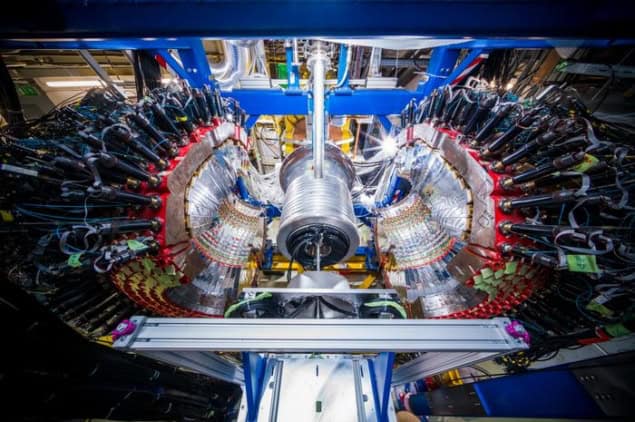
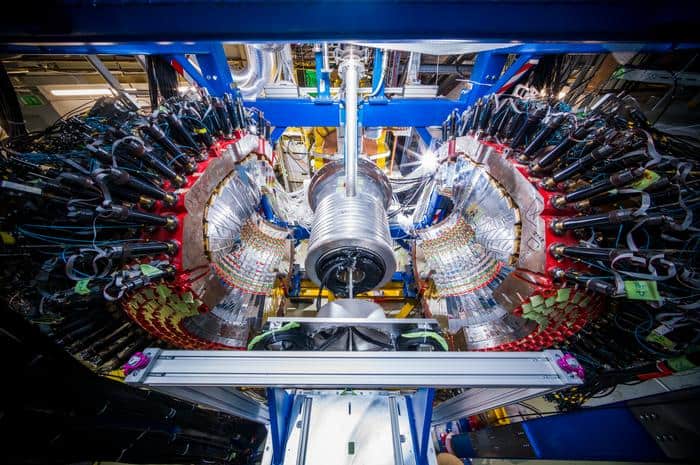
The experimental setup WASA in maintenance position. (Courtesy: J. Hosan, GSI/FAIR)

In rare cases, the researchers explain, the meson then binds to the ¹¹C nucleus, forming an 𝜂′-mesic nuclear system. But because these events are so rare, they are hard to find. “One of the major challenges we encountered in the work was the very large amount of background events we registered during our measurements,” Tanaka recalls. “These were about 100 to 1000 times higher than the signal events.”

The researchers overcame this problem by developing a new experiment that allows them to efficiently select signal events associated with the formation of 𝜂′-mesic nuclei by “tagging” the particles they decay into. This enabled them to measure not only the forward-travelling deuteron, but also the decay products of the short-lived 𝜂′-mesic nuclear state.

The researchers say that their results, which they describe in Physical Review Letters, indicate that the 𝜂′-meson mass drops by about 60 MeV in nuclear matter. “This result qualitatively supports the theoretical scenario [that attributes] the origin of the 𝜂′-meson mass to chiral symmetry breaking together with the dynamics of gluons (massless particles that mediate the strong nuclear force) in general,” Tanaka says.

Members of the team, which also includes researchers from the η-PRiME Collaboration and the Super Fragment Separator Experiment Collaboration, together with physicists from Justus Liebig University Giessen in Germany with their working groups GSI/FAIR, say they are now planning follow-up experiments to confirm that they have indeed observed 𝜂′-mesic nuclei. “We also aim to increase the significance to the 5σ level, which is required to firmly establish the discovery on new quantum states in particle and nuclear physics,” Tanaka says.

The post Physicists spot signs of an atom-like system bound by the strong force alone appeared first on Physics World.

New W boson mass measurement agrees with Standard Model predictions

8 May 2026 at 09:00

Physicists have determined the mass of the W boson with the highest precision yet by analysing more than a billion proton collision events at CERN’s Large Hadron Collider (LHC). The new result confirms a prediction from the Standard Model of particle physics while refuting a comparably precise measurement made by Fermilab’s CDF Collaboration in 2022. This is significant because the older measurement, which used data from the defunct Tevatron collider, differed from the Standard Model’s predictions by seven standard deviations, suggesting that the W boson might be far heavier than the model allows.

The W boson is one of two elementary particles that acts as a carrier for the weak force (the other is the Z boson). As one of the four fundamental forces in nature, the weak force is what allows protons to change into neutrons (and vice versa), making it the driving factor behind radioactive decay and nuclear fusion. Precise measurements of the W and Z boson basses are therefore important for understanding these processes as well as for testing the Standard Model.

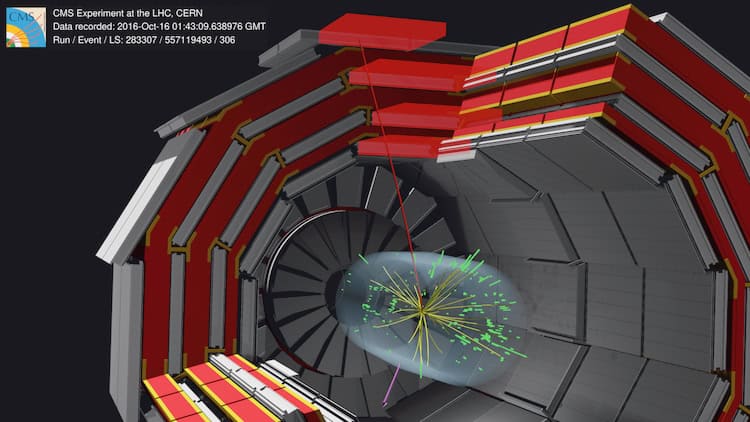
Diagram of the CMS detector during a detection event
Particles incoming: An event picture showing how the researchers present their recordings digitally to illustrate the detector readings. (Courtesy: C Paus)

While physicists have measured the mass of the Z boson to an extremely high precision of 22 ppm (or 2.0 MeV), measuring the mass of the W boson with the same exactitude has proven more difficult. The main hurdle is that the W boson cannot easily be detected in colliders such as the LHC because it decays almost instantly. Scientists can look for its decay products instead, but that, too, is awkward. In one important channel, for example, it decays into a neutrino and a muon – and neutrinos are even more elusive than W bosons.

A fading mystery

In the new work, CERN’s Compact Muon Solenoid (CMS) Collaboration studied more than a billion proton collision events produced at the LHC in 2016. Amongst these, they identified 100 million as producing a W boson that decayed into a neutrino and a muon.

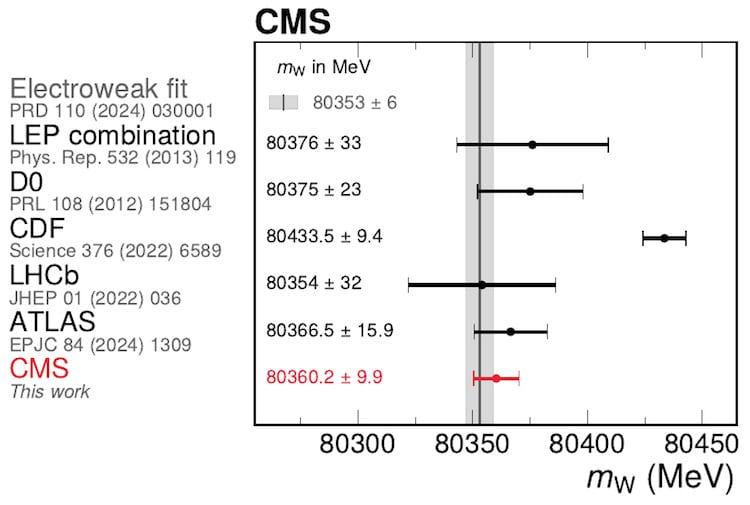
A comparison of the most recent W boson mass result split by experiments (LEP is four experiments combined). Courtesy: C Paus

By analysing these events and simulating all the possible scenarios that could produce them, they measured the mass of the W boson to be 80360.2 ± 9.9 MeV. This is significantly less than the CDF Collaboration’s measurement, but it agrees with other previous experiments. Importantly, it also lies within the range the Standard Model predicts, leaving the CDF result – the most precise measurement before this one – looking like an outlier.

“If you take the CDF measurement at face value, you would say there must be new physics beyond the Standard Model,” says Christoph Paus, a physicist at the Massachusetts Institute of Technology (MIT) in the US and one of the lead investigators of the CMS Collaboration. “And of course, that was the big mystery.”

Now that the new, even more precise measurement agrees well with predicted values for the W boson mass, that mystery is fading, Paus tells Physics World.

Some physicists may find this disappointing. However, study lead author Kenneth Long, who was a senior postdoc in MIT’s Laboratory for Nuclear Science at the time and has since moved to a research position in Lyon, France, says the new result is “just a huge relief to be honest” and “a strong confirmation that we can trust the Standard Model”.

A starting point for precision measurements

To obtain their result, the CMS researchers needed to measure the momentum of the muon and use it to infer the W boson’s mass. This is possible for two reasons. The first is that in the W’s rest frame, its decay energy is shared roughly equally between its two daughter particles (the muon and the neutrino). The second is that muons are charged leptons, and the strong magnetic field inside the CMS detector makes them travel in a path whose curvature is a function of their momentum.

“The momentum is different to the mass, of course, but is strongly correlated with it,” explains Paus. “The challenge is therefore to track the path of the muon and every possible interaction it could have with other particles and its surroundings to estimate a value for its initial momentum.”

The CMS experiment had long planned on doing such a measurement, but it took a while to set up. Now that the measurement is complete, Paus, whose MIT group joined the W boson mass analysis effort in earnest at the end of 2020, describes it as an important starting point for the collaboration. He explains that the result proves it’s possible to measure the W boson in what he calls a “high pile-up environment”, meaning one where many proton-proton collisions overlap in a single recording, without using the Z boson mass as a calibration (as was previously done in analyses at hadron colliders). “It has put the CMS experiment finally on the map for an electroweak precision measurement of this kind,” he says.

The CMS researchers are now collaborating with experimentalist colleagues at CERN’s ATLAS and LHCb detectors, as well as their theorist partners, in hopes of setting a new standard in electroweak precision physics. Their measurement is published in Nature.

The post New W boson mass measurement agrees with Standard Model predictions appeared first on Physics World.

Gap in neutrino energy spectrum raises questions about cosmic environments

7 May 2026 at 09:00

A new analysis of data from the IceCube Neutrino Observatory suggests that the energy spectrum of cosmic neutrinos is more complex than was previously thought. Whereas a previous study found that the energies of these ubiquitous, nearly massless particles follow a simple power law distribution, the latest analysis reveals a knee-like bend in the spectrum at around 30 TeV. The discovery could help astrophysicists better understand where cosmic neutrinos come from and what objects and processes in the universe are producing them.

Neutrinos are subatomic particles that are around a million times less massive than electrons. They are known to come in (at least) three different “flavours” – electron, muon and tau – but they have no electrical charge, and they interact with matter only rarely, via the weak nuclear force and gravity. This means they can travel vast distances through the universe without being deflected by magnetic fields or absorbed by interstellar material along the way.

Astrophysicists think cosmic neutrinos are produced in collisions between high-energy cosmic rays and other particles. Since cosmic rays are accelerated by a range of astrophysical sources – including gamma-ray bursts, active galactic nuclei powered by supermassive black holes, and other extreme cosmic processes – the neutrino spectrum is a way of gleaning information about where these sources are and how they work.

The catch is that because neutrinos interact so weakly, they must be studied using detectors with a very large volume. For this reason, neutrino scientists often use natural structures such as deep water or expanses of ice to support their detectors. These locations also have the advantage of being shielded from muons, cosmic rays and other sources of background noise.

Measuring neutrinos since 2010

The 5000 optical sensors that make up the IceCube observatory are suspended within a cubic kilometre of Antarctic ice. They are designed to detect the telltale flashes of visible and ultraviolet light that occur whenever a neutrino interacts with a molecule of ice. During these rare detection events, the neutrino either leaves behind an elongated track or produces a “cascade” in which its energy is contained in a small, spherical volume inside the ice.

IceCube’s detectors have been operating since 2010 and the earliest data they produced suggested that the energies of the detected neutrinos followed a single falling power law distribution. Researchers were initially pleased with this result because it agreed with simple models that related cosmic neutrinos to cosmic rays, says Aswathi Balagopal V, a postdoctoral researcher at the University of Wisconsin, US, and a member of the IceCube collaboration. These models suggested that cosmic ray acceleration takes place exclusively in so-called shock environments where collision events produce neutrinos.

In the new work, Balagopal V and colleagues performed two different, independent, types of analysis on more than 10 years’ worth of neutrino observations in the 1 TeV to 10 PeV range. The first analysis involved measuring a sample of neutrino cascades and a sample of neutrino tracks in the detector. The team then combined the results of both sets of measurements to characterize the neutrino spectrum.

The second analysis used a new event sample consisting of neutrinos with “interaction vertices” inside the detector. “This sample therefore contains neutrinos of all flavours,” explains Balagopal V, “and we performed a fit to the energy spectrum using these events.”

Both analyses arrived at the same conclusion, rejecting a single power law distribution with a confidence of more than 4𝜎 (the usual maximum confidence being 5𝜎). The best fit for the data was instead a broken power law, with the spectrum of neutrino energies falling more steeply at higher energies than at energies below around 30 TeV, Balagopal V tells Physics World.

“This implies that there are fewer lower energy neutrinos when compared to what one would obtain with a simple extrapolation of the prediction from higher energies,” she says. “This changing shape of the spectrum can indicate several things: either a changing population of cosmic neutrino sources; or a change in their production mechanism.” If cosmic neutrinos come from more than one kind of astrophysical source, she adds, then each type may be accelerating cosmic rays in a different way.

A final option, Balagopal V notes, is that some theories suggest that interactions with dark matter can also produce such a spectral feature. “With these measurements, we have opened up the possibility of discoveries in any of these directions,” she says. “With more detailed analyses, we could identify if there are additional features in the energy spectrum and we are already analysing new IceCube data to this end.”

The post Gap in neutrino energy spectrum raises questions about cosmic environments appeared first on Physics World.

❌