PlayStation used its most recent State of Play showcase to make it clear where its focus is. After a series of costly live-service stumbles, it's getting back to focusing on premium, narrative-driven, single-player games. That statement was made clear with how it started and ended the hourlong show.
The showcase began with an extended look at gameplay from Marvel's Wolverine, the new superhero title from Insomniac Games. Over seven minutes of bloody action, Logan sliced and diced his way through a bunch of baddies as he tried to rescue some captured mutants, briefly teaming up with Jean Grey for some help taking them down. Insomniac is well …
At Microsoft's annual Build conference on Tuesday, the company announced a slew of new or expanded AI initiatives, including a super app, in-house reasoning models, a cybersecurity tool, and OpenClaw-esque AI agents. All this news added up to a clear message: Microsoft is positioned to be one of the biggest players in AI, and it's finally acting like it.
For years, Microsoft's AI business leaned hard on its early and exclusive partnership with OpenAI. But the drama-filled marriage slowly devolved into a situationship, and the pair effectively separated in late April (though Microsoft is still OpenAI's primary cloud partner - for now). This …
Nanoleaf has made a name for itself by developing smart color-changing LED lighting products, including wall panels, TV mirroring, and display cases. | Image: Nanoleaf
Smart lighting company Nanoleaf has been acquired by OneRobotics, the parent company of SwitchBot. In an exclusive interview with The Verge, Nanoleaf CEO Gimmy Chu says the company will remain independent and that he and his cofounder and COO, Christian Yan, will continue to run it. "Nothing is changing operationally," says Chu, adding that there are plans for product integrations between the two smart home companies.
The sale, which Chu characterized as "more of a merger," will provide Nanoleaf with significant resources, including a cash infusion that will, among other things, help the company grow its team at its Toronto headquarters. I …
In the face of widespread backlash to the AI data center buildout throughout the US, Google is touting its efforts to minimize the environmental impact by actually increasing water for local communities.
The company laid out five commitments around water use in a new blog post published Wednesday, including a goal to replenish more water than it uses at its data centers by 2030. Google also said it will invest in local water infrastructure, identify alternative water sources to power its facilities, and be transparent about its water use overall.
"We're just one of dozens of players in the space," Google's global head of infrastructure a …
The anthropic principle posits that the universe’s physical constants are fine-tuned for life, which is a problem for big bang cosmology. On the Genesis Science Network we discuss the theoretical proposal of a test of the anthropic principle via a proposed ultralight axionic dark-matter particle.
Extraterrestrial life has been searched for without success, and now a new method is suggested. I participated in an interview on the David Rives Genesis Science Report about this new search method, which examines similarities among clustered planets, suggesting terraforming has occurred.
On the Friday before Memorial Day, on the eve of a long weekend, the Trump administration announced that it was further gutting legal immigration. The Department of Homeland Security didn't use this language. "This policy allows our immigration system to function as the law intended instead of incentivizing loopholes," the agency said on X. "The era of abusing our nation's immigration system is over." A press release from US Citizenship and Immigration Services, the agency that handles legal immigration, provided few details. Following the Trump playbook, DHS seemingly intended to bury this news by announcing it at a time that hardly anyone …
Some of the sets’ props are drawn directly from the games, others are more… unexpected.
When Lego announced its tech-packed Smart Bricks at CES, we were impressed by the potential - enough to give it our Best in Show award. But when the first Star Wars sets actually launched in March, we were less enamored. All that promise of clever interaction and creative play ultimately boiled down to a few voice barks and flashing lights, with the smartest features we'd seen at CES nowhere to be found.
Today, Lego announced the second generation, with 12 new sets launching this summer, promising Pokémon play and some of the smarts we'd been missing. After a few hours training and battling with the new sets this morning, it's clear the Sm …
Nvidia's announcement that it's getting into the consumer laptop chip space with RTX Spark is huge. Apple has proved for years that Arm-based chips can perform incredibly well while also delivering great battery life - at least on the Mac. In the Windows world, performance hasn't fully matched up under Qualcomm chips, mostly in the graphics department. There's clearly still untapped potential, and Nvidia seems to be promising to deliver it.
This could be Windows' moment to blow us away with a new generation of supremely capable chips, much like Apple's back in 2020, with the introduction of the M1. But why does this launch feel simultaneous …
Google's new "24/7" AI agent, Gemini Spark, can be shockingly good at doing things on your behalf. But I'm not sure it's worth the financial cost and potential privacy tradeoffs.
The company gave me access to Spark last week. Google advertises Spark as an AI agent that can take on tasks and work on them in the background - even tasks that have multiple steps - allowing you to put your phone down or walk away from your computer. It also advertises at the very topof the Spark website that it's "always under your direction," that "you choose to turn it on," and that "it's designed to check with you before taking major actions." Given the moun …
Microsoft is heading to San Francisco this week in a bid to win back developers at its Build conference. I've been attending Build since the days when Microsoft called it the Professional Developers Conference, and I can't remember a more pivotal moment. As Microsoft continues to reshuffle its entire business around AI, it's moving Build into a smaller, more intimate venue. Trust in Windows and GitHub is at an all-time low, and this is Microsoft's chance to reconnect with developers and outline the future.
Sources tell me that we'll hear about new AI models in Windows, a new reasoning model from Microsoft AI, and a Copilot "super app." But …
That all makes it a somewhat awkward time for Summer Game Fest, a weeklong spectacle of events that kicks off on Tuesday. Splashy announcements won't do much to stem the negative sentiment around the industry. But given the challenging state of console gaming in particular, both Microsoft and Sony have an oppo …
Over the past several years, Microsoft has largely managed to withstand populist calls to break up Big Tech while peers faced sweeping lawsuits. But a probe by the Federal Trade Commission suggests that grace period could be nearing an end.
Earlier this year, Bloomberg outlined the contents of civil investigative demands (CIDs) - similar to a subpoena - the FTC sent to at least half a dozen companies that compete with Microsoft. New details obtained by The Verge further reveal the FTC's interests, suggesting the agency is particularly concerned with potentially exclusionary behavior around Microsoft's Azure cloud services, as well as its ro …
Welcome to Edition 8.43 of the Rocket Report! A disclaimer: No one yet fully appreciates the ramifications of Blue Origin's New Glenn rocket explosion Thursday night on its launch pad at Cape Canaveral, Florida. What we know as of this writing is that much of Blue's sole orbital-class launch pad has been destroyed, and the New Glenn rocket will be grounded for an extended period of time. It is too soon for any hot takes, at least until the Sun rises at the Cape on Friday morning. One thing I am sure of is that we will be writing about this event for weeks, months, and years to come.
As always, we welcome reader submissions. If you don't want to miss an issue, please subscribe using the box below (the form will not appear on AMP-enabled versions of the site). Each report will include information on small-, medium-, and heavy-lift rockets, as well as a quick look ahead at the next three launches on the calendar.
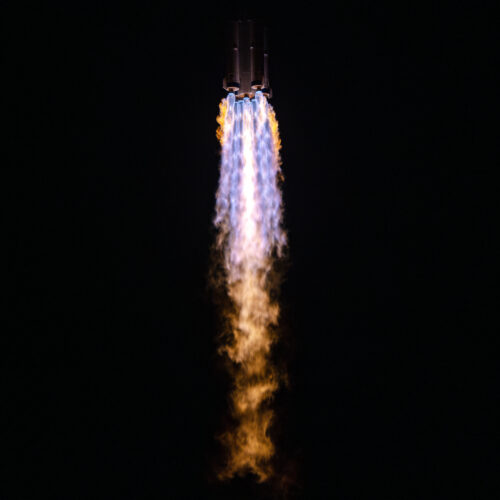
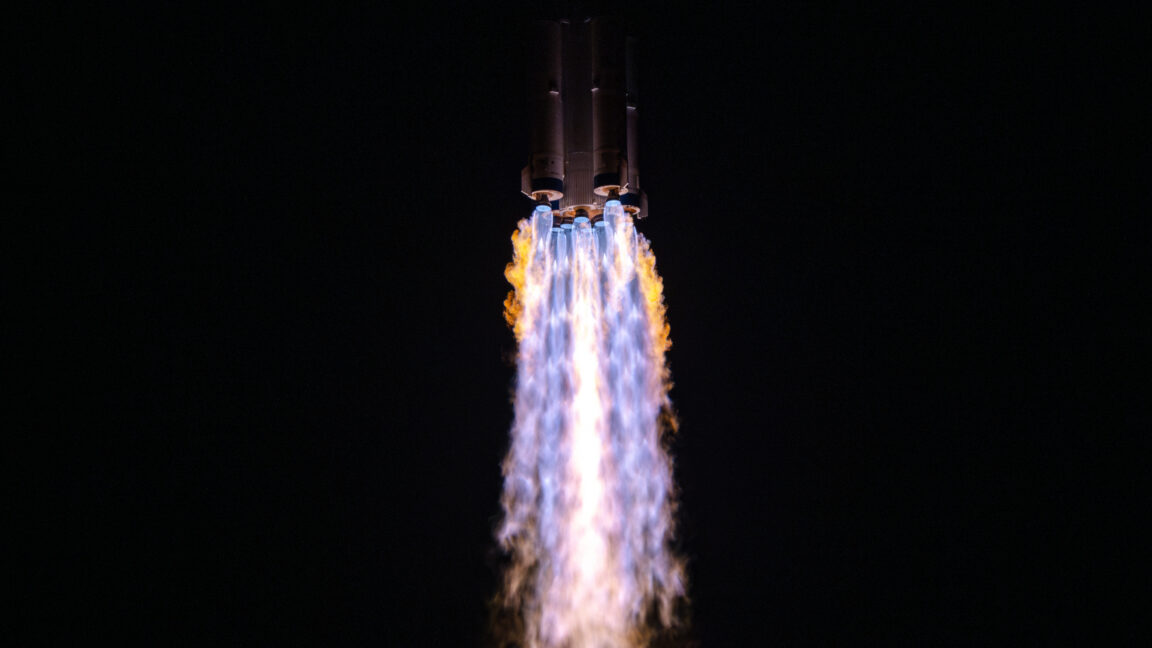
Charting China's contribution to space junk. There's a problem with the drastic uptick in Chinese space launches over the last decade. China appears to be ignoring long-established norms about disposing of the upper stages of rockets, Ars reports. These are the parts of the vehicle that separate from the first stage of a rocket and push a satellite or spacecraft into orbit. In the early decades of spaceflight, launch operators routinely left upper stages in orbit after they released their payloads. But most launch companies today reserve enough propellant in their rockets to remove them from orbit to avoid the risk of spent upper stages becoming a source of space debris. But China is not following this trend. There has been striking growth in China’s rocket body mass. In the past five years, the mass of Chinese rocket bodies in long-lived orbits has risen from less than 100 metric tons to 252, according to a new analysis by Space Domain Awareness expert Jim Shell.
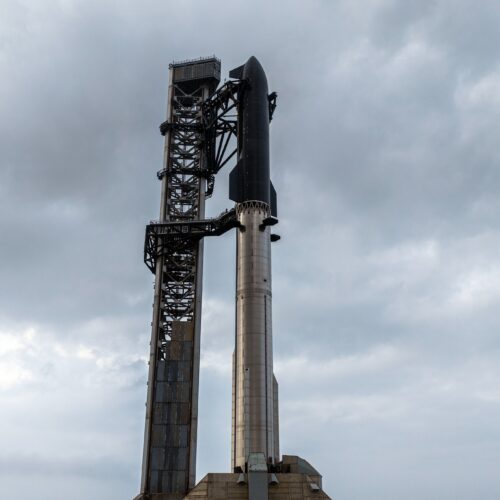
Welcome to Edition 8.42 of the Rocket Report! SpaceX nearly launched its Starship rocket on Thursday amid much pomp and circumstance in South Texas, only to be foiled by a ground system issue. Such delays are to be expected, with almost entirely new hardware on both the rocket and the ground side of things. The company will try again as soon as Friday evening, and as we discuss in this week's report, the stakes are quite high for SpaceX and much of the rest of the US spaceflight enterprise.
As always, we welcome reader submissions, and if you don't want to miss an issue, please subscribe using the box below (the form will not appear on AMP-enabled versions of the site). Each report will include information on small-, medium-, and heavy-lift rockets as well as a quick look ahead at the next three launches on the calendar.
Firefly expands Central Texas footprint. Firefly Aerospace on Tuesday announced that it has moved into a new headquarters, expanded its cleanroom space, and added an innovation lab to support its growing workforce and accelerate spacecraft production. The expansion includes two new buildings adjacent to Firefly’s existing spacecraft facility in Cedar Park, Texas, enabling a single campus with 144,000 total square feet for spacecraft assembly and testing, mission control, avionics and component production, engineering, and business operations.
Earlier this month, I finally achieved the elusive goal I had set for myself in Bungie's Marathon. I collected six of the game's rarest items, allowing me to attempt and then successfully clear the raid-style Compiler boss. I felt a massive weight lift off my shoulders - nearly 185 hours of playtime and I had managed to complete Marathon's pinnacle activity. A day later, I took my first break from the game.
I had been playing Marathon virtually every day since it launched in March, and I needed to put it down. Treating a Bungie game like it's a grueling second job is nothing new. Certainly not for me or the many fellow Destiny players that …
Welcome to Edition 8.43 of the Rocket Report! A disclaimer: No one yet fully appreciates the ramifications of Blue Origin's New Glenn rocket explosion Thursday night on its launch pad at Cape Canaveral, Florida. What we know as of this writing is that much of Blue's sole orbital-class launch pad has been destroyed, and the New Glenn rocket will be grounded for an extended period of time. It is too soon for any hot takes, at least until the Sun rises at the Cape on Friday morning. One thing I am sure of is that we will be writing about this event for weeks, months, and years to come.
As always, we welcome reader submissions. If you don't want to miss an issue, please subscribe using the box below (the form will not appear on AMP-enabled versions of the site). Each report will include information on small-, medium-, and heavy-lift rockets, as well as a quick look ahead at the next three launches on the calendar.
Charting China's contribution to space junk. There's a problem with the drastic uptick in Chinese space launches over the last decade. China appears to be ignoring long-established norms about disposing of the upper stages of rockets, Ars reports. These are the parts of the vehicle that separate from the first stage of a rocket and push a satellite or spacecraft into orbit. In the early decades of spaceflight, launch operators routinely left upper stages in orbit after they released their payloads. But most launch companies today reserve enough propellant in their rockets to remove them from orbit to avoid the risk of spent upper stages becoming a source of space debris. But China is not following this trend. There has been striking growth in China’s rocket body mass. In the past five years, the mass of Chinese rocket bodies in long-lived orbits has risen from less than 100 metric tons to 252, according to a new analysis by Space Domain Awareness expert Jim Shell.
Welcome to Edition 8.43 of the Rocket Report! A disclaimer: No one yet fully appreciates the ramifications of Blue Origin's New Glenn rocket explosion Thursday night on its launch pad at Cape Canaveral, Florida. What we know as of this writing is that much of Blue's sole orbital-class launch pad has been destroyed, and the New Glenn rocket will be grounded for an extended period of time. It is too soon for any hot takes, at least until the Sun rises at the Cape on Friday morning. One thing I am sure of is that we will be writing about this event for weeks, months, and years to come.
As always, we welcome reader submissions. If you don't want to miss an issue, please subscribe using the box below (the form will not appear on AMP-enabled versions of the site). Each report will include information on small-, medium-, and heavy-lift rockets, as well as a quick look ahead at the next three launches on the calendar.
Charting China's contribution to space junk. There's a problem with the drastic uptick in Chinese space launches over the last decade. China appears to be ignoring long-established norms about disposing of the upper stages of rockets, Ars reports. These are the parts of the vehicle that separate from the first stage of a rocket and push a satellite or spacecraft into orbit. In the early decades of spaceflight, launch operators routinely left upper stages in orbit after they released their payloads. But most launch companies today reserve enough propellant in their rockets to remove them from orbit to avoid the risk of spent upper stages becoming a source of space debris. But China is not following this trend. There has been striking growth in China’s rocket body mass. In the past five years, the mass of Chinese rocket bodies in long-lived orbits has risen from less than 100 metric tons to 252, according to a new analysis by Space Domain Awareness expert Jim Shell.

 Login
Login