Reading view

A Single Jawbone From Egypt Is Changing How Scientists Think About Ape Origins


For much of the past century, fossils from East Africa have shaped our understanding of ape evolution. Now, a jawbone found in the Egyptian desert adds a new dimension to that story.

A team from Mansoura University and the University of Southern California has described a new species, Masripithecus moghraensis, in a study that appeared in the journal Science. The fossil of a lower jaw found at the Wadi Moghra site in northern Egypt, the researchers say, is the first clear evidence of an ape fossil in North Africa. Dating to 17 to 18 million years ago, it predates the known dispersal of early apes into Europe and Asia by at least a million years. This may indicate that early ape evolution extended further north than previously thought.

“We spent five years searching for this kind of fossil because, when we look closely at the early ape family tree, it becomes clear that something is missing — and North Africa holds that missing piece,” said Hesham Sallam, paleontologist at Mansoura University and senior author of the study.

A Jaw That Changes the Map

The fossil is of a lower jaw with several distinctive features. Masripithecus had large canine and premolar teeth, as well as molars with rounded, textured surfaces and a robust jaw. No other ape from the same time period shows this combination of features. According to the researchers, these traits indicate a flexible diet based mainly on fruit, with some harder foods like nuts and seeds. This adaptability would have been important in northern Africa, with increasing seasonal variation in the climate.

Masripithecus stands out among East African apes of similar age by its anatomy. Its place in the ape family tree is even more significant. By combining fossil features and geological data with DNA from living apes, the team found that Masripithecus appears closer to the lineage that eventually gave rise to modern apes than any previously known Early Miocene species.

“It is well known that the fossil record of hominoids in Africa is geographically very biased,” said David Alba, a paleontologist at the University of Barcelona, in an interview with National Geographic. “It is also known that they were present in Saudi Arabia sometime later, so finding them in northern Africa by this time is important, but not totally unexpected.”

A Corridor Between Worlds

This discovery is important for both geography and anatomy. During the Early Miocene, the African and Arabian plates were moving closer to Asia. At times, lower sea levels reduced marine barriers and opened a corridor through northern Africa and the Middle East. The team’s analysis supports the idea that this region played an important role in the early evolution of living apes. This shifts the focus of ape evolution. East Africa, once seen as the main center of ape origins, may have been more of a peripheral branch.

Erik Seiffert, co-author and paleontologist at the University of Southern California, said the discovery changed his own thinking. “For my entire career, I considered it probable that the common ancestor of all living apes lived in or around East Africa. But this new discovery, and our new and novel analyses of hominoid phylogeny and biogeography, now strongly challenge that idea.”

The genus name Masripithecus combines the Arabic word Masr (for Egypt) with the Greek píthēkos, meaning ‘ape’. The species name is a reference to Wadi Moghra, where the remains were found. The researchers expect that more fossils will be found as fieldwork continues in the region. For now, this discovery shows that important parts of evolutionary history may still be hidden in areas yet to be fully explored.

Austin Burgess is a writer and researcher with a background in sales, marketing, and data analytics. He holds an MBA, a Bachelor of Science in Business Administration, and a data analytics certification. His work focuses on breaking scientific developments, with an emphasis on emerging biology, cognitive neuroscience, and archaeological discoveries.
  •  

Newly Discovered “Witch Croc” Reveals Dinosaur-Like Evolution in the Triassic


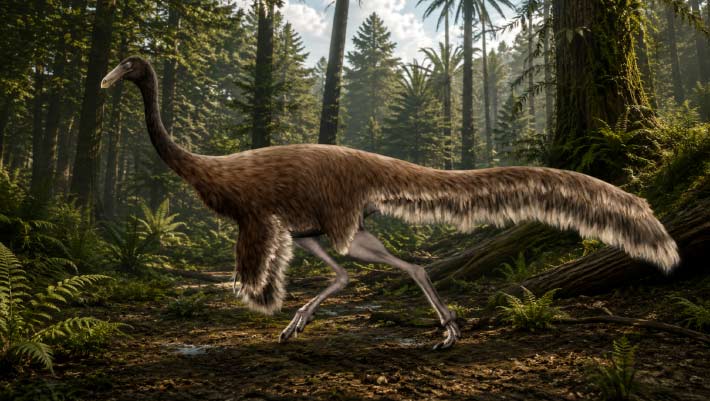
A newly described fossil from Ghost Ranch, New Mexico, belongs to the crocodile family tree, but unlike most crocodile-line archosaurs, it walked on two legs, had small arms, and a toothless beak. 

Researchers from the Natural History Museum of Los Angeles County and collaborating institutions described the species Labrujasuchus expectatus in the Journal of Vertebrate Paleontology. This animal belongs to Shuvosauridae, a rare group of ancient crocodile relatives that independently evolved body structures similar to those of bipedal, ostrich-like dinosaurs.

Those dinosaurs evolved much later within a separate lineage. Only a small number of shuvosaur species have been identified to date.

The Triassic Era

The Triassic period, which took place about 252 to 201 million years ago, was a time of accelerated evolutionary change. Many major animal lineages began to vary during this period, leading to a range of unusual forms. Along with shuvosaurs, this period saw the rise of lagerpetids, bipedal relatives of dinosaurs whose lineage eventually gave rise to pterosaurs, and Drepanosaurus, a tree-dwelling reptile with a sloth-like claw and a tail that could grasp surroundings. Labrujasuchus lived among this diverse group of animals.

“We see a lot of the successful strategies for modern animals and non-avian dinosaurs first arise in the Triassic, and shuvosaurs are a great example of that convergent evolution,” said Dr. Alan Turner, lead author on the paper. “Bipedalism is certainly a unique path for crocodile relatives to take, but it’s a path well-trod by dinosaurs and later birds. It obviously worked for these animals.”

The Expected Discovery

The name Labrujasuchus expectatus reflects both the location and the circumstances of its discovery. The genus name comes from ‘Ranchos de los Brujos,’ the old Spanish name for Ghost Ranch, combined with the Greek word suchus for ‘crocodile.’ The species name expectatus is Latin for ‘expected,’ referring to the expectation that this specimen would be found in this area.

Previous discoveries at Ghost Ranch included similar species from both earlier and later Triassic periods. The presence of an evolutionary link between them was expected, and L. expectatus helps fill a gap in the fossil record.

“Finding one shuvosaur from earlier in the Triassic and one from later meant that we paleontologists knew there were probably more from in-between waiting to be discovered and described,” said Dr. Nate Smith, Gretchen Augustyn Director and Curator of the NHMLAC Dinosaur Institute. “We wanted to highlight how the fossil record works.”

Smith also explained the “haunted” history behind the site’s name. Local legend holds that ranchers called the land ‘Ranch of the Witches’ to discourage visitors and protect the cattle operations of the Archuleta brothers. The researchers chose to honor this aspect of regional history with the name they chose.

20 Years at Ghost Ranch

This discovery marks a milestone for the ongoing excavation project at Ghost Ranch, which enters its twentieth year this summer. The site, known internationally through Georgia O’Keeffe’s paintings of its red and ochre badlands, contains four active quarries and has produced some of the most well-preserved Triassic fossils. In 1947, paleontologist Edwin H. Colbert documented more than a thousand well-preserved skeletons of a small Triassic dinosaur known as Coelophysis at this location.

The excavation at Hayden Quarry, where L. expectatus was found, is part of this ongoing project. Each summer, teams of paleontologists and volunteers excavate the site, and each season brings new discoveries, sometimes confirming what researchers already anticipated. The researchers note that long gaps in the species fossil record indicate much of the group’s evolutionary history is still unknown. More “Witch Crocs” may still be out there.

Austin Burgess is a writer and researcher with a background in sales, marketing, and data analytics. He holds an MBA, a Bachelor of Science in Business Administration, and a data analytics certification. His work focuses on breaking scientific developments, with an emphasis on emerging biology, cognitive neuroscience, and archaeological discoveries.
  •  

New Species of Fossil Axolotl Unearthed in Mexico

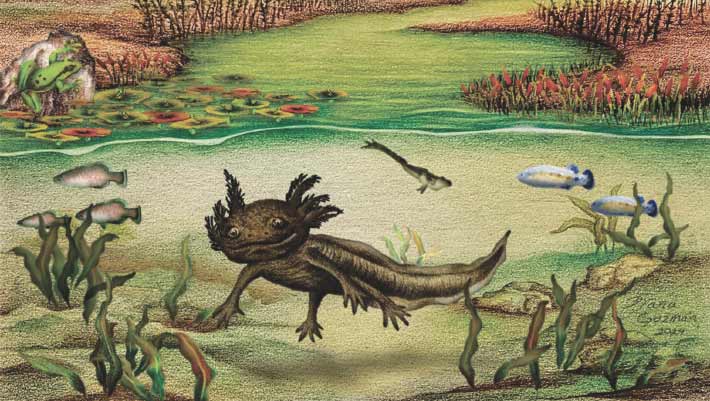
Reconstruction of the Santa María Amajac paleolake during the Late Pliocene; the paleobiodiveristy of the paleolake included microvertebrates such as the ambystomatid salamander Ambystoma quetzalcoatli, Paleocharacodon guzmanae and Goodea-like fishes, anurans and numerous species of terrestrial and aquatic plants such as Nymphaea sp., Scirpus sp., Typha sp. Image credit: Diana Guzmán-Madrid.

Paleontologists have identified a new species of the axolotl genus Ambystoma from several fossilized specimens found deep in the rocky outcrops of the Mexican state of Hidalgo.

The post New Species of Fossil Axolotl Unearthed in Mexico appeared first on Sci.News: Breaking Science News.

  •  

Paleontologists Identify New Hyaenodont Species in Pakistan

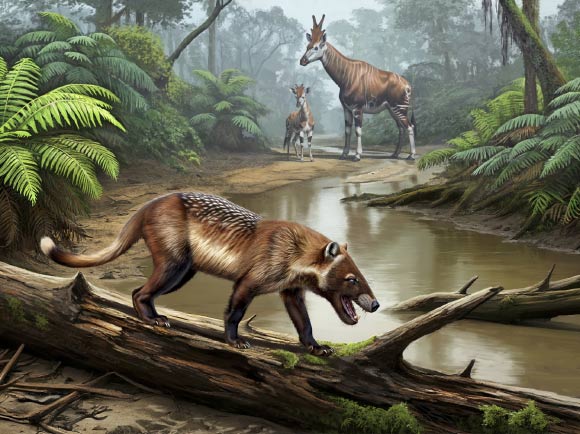
Metapterodon anari. Image credit: Steven Jasinski / SergeyAtrox1.

Paleontologists have recovered the fossilized remains of three hyaenodont species, including one previously unknown to science, from Miocene sediments in Pakistan.

The post Paleontologists Identify New Hyaenodont Species in Pakistan appeared first on Sci.News: Breaking Science News.

  •  

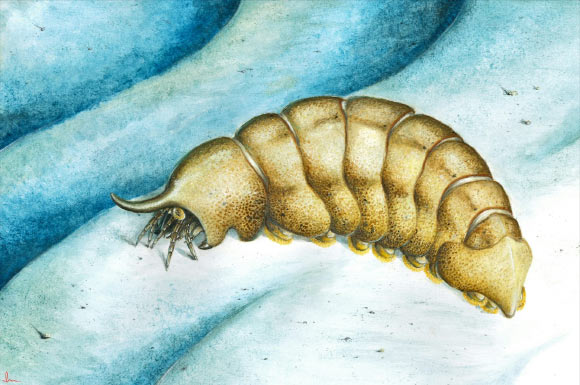
490-Million-Year-Old Arthropod Fossil Fills Puzzling Gap in Fossil Record

Life reconstruction of Magnicornaspis garwoodi. Image credit: Thomas Turner.

A new species of corcoraniid arthropod that lived during the Furongian epoch, between 497 and 487 million years ago, has been identified from an exceptionally preserved specimen found near Québec, Canada.

The post 490-Million-Year-Old Arthropod Fossil Fills Puzzling Gap in Fossil Record appeared first on Sci.News: Breaking Science News.

  •  

New Dinosaur Species from Argentina May Have Specialized in Catching Fish

Life reconstruction of Kank australis. Image credit: Gabriel Díaz Yantén.

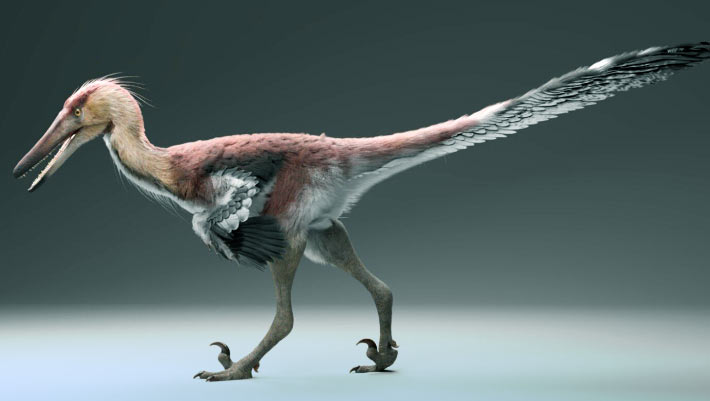
Paleontologists in Argentina have identified a previously unknown species of unenlagiid dinosaur that stalked freshwater wetlands during the Late Cretaceous epoch, adding to evidence that some dinosaurs specialized in catching fish.

The post New Dinosaur Species from Argentina May Have Specialized in Catching Fish appeared first on Sci.News: Breaking Science News.

  •  

Fungi Bloomed Twice around End-Cretaceous Mass Extinction

The end-Cretaceous mass extinction was marked by both the Chicxulub asteroid impact and the ongoing eruptions of the Deccan Traps volcanoes.

By studying fungal microfossils in 66-million-year-old rock samples from the Denver Basin in Colorado, Johns Hopkins University microbiologists have confirmed that the dinosaur-killing asteroid impact triggered a worldwide fungal takeover, and uncovered a second, previously unknown ecological crisis just before it.

The post Fungi Bloomed Twice around End-Cretaceous Mass Extinction appeared first on Sci.News: Breaking Science News.

  •  

Cretaceous Bird from China Had Pair of Tail Feathers Twice as Long as Its Body

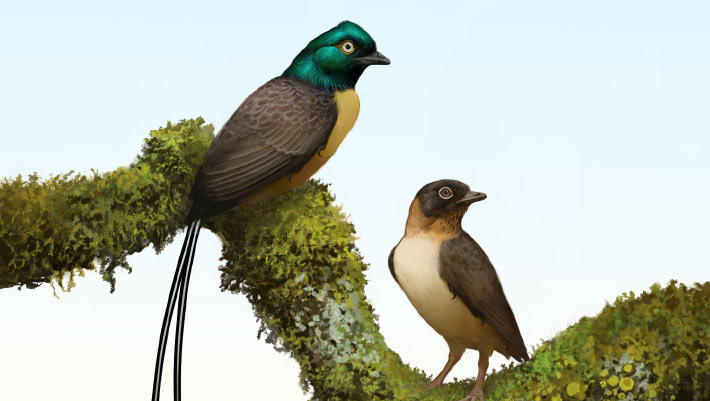
Plumadraco bankoorum is a new bohaiornithid enantiornithine bird with a pair of exceptionally long rectrices. Image credit: Ville Sinkkonen.

Named Plumadraco bankoorum, the newly-described species of enantiornithine bird lived in what is now northeastern China during the Cretaceous period, roughly 121 million years ago.

The post Cretaceous Bird from China Had Pair of Tail Feathers Twice as Long as Its Body appeared first on Sci.News: Breaking Science News.

  •  

Toothless, Bipedal Crocodile Relative Lived in New Mexico 212 Million Years Ago

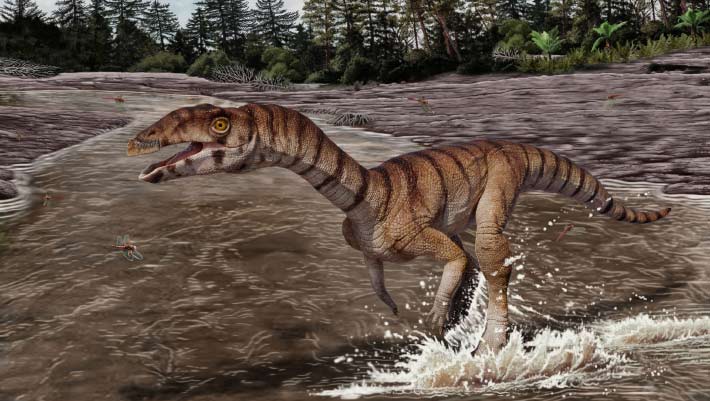
Labrujasuchus expectatus navigated the world on two legs with tiny arms and a toothless mouth tipped in a beak. Image credit: Jorge Gonzalez / NHMLAC Dinosaur Institute.

Paleontologists have described a new species of bipedal shuvosaurid archosaur from New Mexico, shedding light on a group of creatures that roamed North America during the Triassic period, more than 200 million years ago.

The post Toothless, Bipedal Crocodile Relative Lived in New Mexico 212 Million Years Ago appeared first on Sci.News: Breaking Science News.

  •  

Study: Early Complex Life Forms Were Bottom-Dwellers

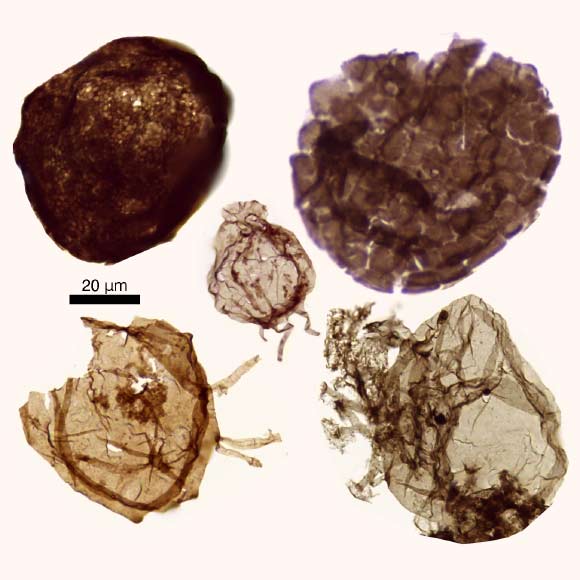
Fossil eukaryotes from Northern Territory, Australia. Image credit: Lechte et al., doi: 10.1038/s41586-026-10533-4.

Analyzing 1.75-billion-year-old microfossils from ancient Australian seabeds, paleontologists say ancient eukaryotes -- the ancestors of every plant, animal and fungus -- huddled in oxygenated seafloor patches for over a billion years before breaking free into open water.

The post Study: Early Complex Life Forms Were Bottom-Dwellers appeared first on Sci.News: Breaking Science News.

  •  

Rare Ostrich-Like Dinosaur Fossil Found on Canadian Island

Life restoration of Quipalong henanesnsis, an ornithomimosaurian dinosaur that lived in what is now China during the Maastrichtian age of the Late Cretaceous, between 72 and 67 million years ago. Image credit: PaleoNeolitic / Sci.News.

Paleontologists in Canada say they have recovered a dinosaur tail vertebra from 75- to 80-million-year-old marine rocks on a small island off the coast of British Columbia, providing the clearest evidence yet that bird-like ornithomimosaurs once roamed the ancient Pacific coastline of North America.

The post Rare Ostrich-Like Dinosaur Fossil Found on Canadian Island appeared first on Sci.News: Breaking Science News.

  •  

83-Million-Year-Old Crocodile Lizard Fossil Unearthed in France

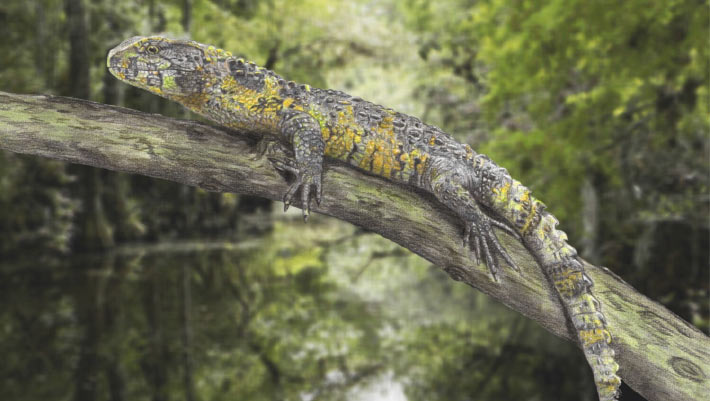
Paleoartistic reconstruction of Acutodon villeveyracensis, the oldest known member of the pan-shinisaur lineage ever found in Europe. Image credit: Olivier Jansen.

Paleontologists have identified a new genus and species of pan-shinisaur lizard from a partial upper jaw discovered in southern France, pushing the presence of its lineage in Europe back by at least 30 million years.

The post 83-Million-Year-Old Crocodile Lizard Fossil Unearthed in France appeared first on Sci.News: Breaking Science News.

  •  
❌