Profound changes are ahead for online advertising. At the recent Google Marketing Live event, the tech giant outlined expanded artificial intelligence systems for digital ads.
The $135 share price means Elon Musk’s rocket maker is poised to exceed the 2019 initial public offering of Saudi Aramco in both valuation and money raised.
Jess Asato was portrayed wearing a bikini in Grok-generated images after she criticised creation of such non-consensual pictures
A Labour MP has taken legal action against Elon Musk’s xAI company after saying its Grok tool helped a user produce fake sexualised pictures of her, part of a wave of such images that flooded the social media platform X earlier this year.
Jess Asato, the MP for Lowestoft, said in January that seeing herself portrayed by the AI tool as wearing a bikini without her consent was “violating”.
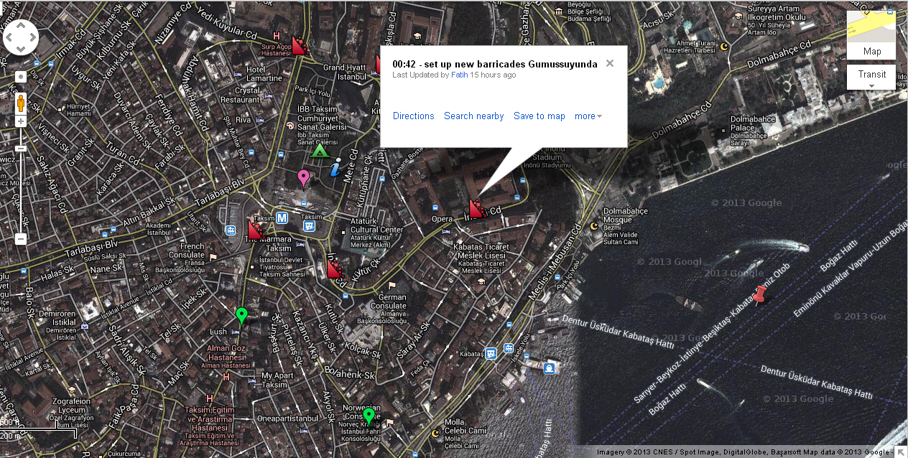
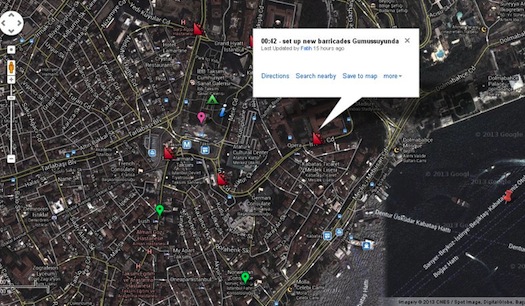
Consider it civilian reconnaissance. Protesters in Turkey are using Google Maps to track police movement, plot out barricades, and rally together.
Created Saturday, the map of Istanbul Police Movements centers on Taksim square, the heart of recent (and ongoing) protests against the Prime Minister Recep Tayyip Erdogan’s government. It began last week with trees and a barracks. Erdogan’s government plans to renovate an Ottoman barracks, a structure dating back at least a century, near the square. To get construction equipment to the barracks, officials wanted to raze trees from the nearby Gezi Park. Protesters prevented this, demonstrating in defense of the green space for over a week. Since then, protests expanded, evolving into a critique of the current ruling party.
Mapping protests and police response in real-time is a relatively new phenomena. In 2010, students protesting in London used a Google Map to track police action, documenting riot vans and helicopters moving against the protesters. But some features of the Turkish protests are straight out of Les Misérables, or indeed any number of historical protests. Barricades keep vehicles, police, and even horses away from the protesters, take time to tear down, and protect against thrown objects or gunfire, should the police response turn violent. In centuries past, governments brought in armies to quell protesters, and used cannons to knock down barricades. Paris, the site of so many protests, even underwent a major urban redesign with wider streets to make barricades more difficult.
In addition to the red triangle markers of barricades, here are some features of the map:
A green tent to mark the heart of Taksim Square
Road warnings in green, letting people know which one are open and which are blocked
Pink tags for groups announcing who they are and where they are protesting
Light blue flags for police locations and reported movements
Warnings of police tracking servers online, confusingly under light blue as well.
General rallying cries, slogans, and mottos from protesters are marked with house symbol
Notably absent? Sensitive information, like the location and identity of specific individuals, like volunteer doctors. In the jargon of secrecy, that’s called good Operational Security. In plain talk, it’s just common sense.
Accolgono al loro interno portafoglio, smartphone, chiavi e molto altro, proteggendolo da urti e pioggia: 10 borse per muoverti in città agilmente e senza pesi
A shocking new report shows that 8 out of 15 popular mobile browsers harvest your location data, with Microsoft Edge and Aloha sharing precise tracking details with third parties. Here is how to keep your daily routine private.
Particle physics is the epitome of ‘big science’. To answer our most fundamental questions out about physics requires world class experiments that push the limits of whats technologically possible. Such incredible sophisticated experiments, like those at the LHC, require bigfacilities to make them possible, bigcollaborations to run them, big project planning to make dreams of new facilities a reality, and committees with big acronyms to decide what to build.
Enter the Particle Physics Project Prioritization Panel (aka P5) which is tasked with assessing the landscape of future projects and laying out a roadmap for the future of the field in the US. And because these large projects are inevitably an international endeavor, the report they released last week has a large impact on the global direction of the field. The report lays out a vision for the next decade of neutrino physics, cosmology, dark matter searches and future colliders.
P5 follows the community-wide brainstorming effort known as the Snowmass Process in which researchers from all areas of particle physics laid out a vision for the future. The Snowmass process led to a particle physics ‘wish list’, consisting of all the projects and research particle physicists would be excited to work on. The P5 process is the hard part, when this incredibly exciting and diverse research program has to be made to fit within realistic budget scenarios. Advocates for different projects and research areas had to make a case of what science their project could achieve and a detailed estimate of the costs. The panel then takes in all this input and makes a set of recommendations of how the budget should be allocated, what should projects be realized and what hopes are dashed. Though the panel only produces a set of recommendations, they are used quite extensively by the Department of Energy which actually allocates funding. If your favorite project is not endorsed by the report, its very unlikely to be funded.
The P5 report also created an awesome graphic that contains symbolism for the different aspects of the plan. The left side depicts oscillating neutrinos and the shape of the Higgs potential. The right side depicts dark matter and the large scale structure of the universe. The central ball of light is supposed to represent discoveries of the unknown. Source
Particle physics is an incredibly diverse field, covering sub-atomic to cosmic scales, so recommendations are divided up into several different areas. In this post I’ll cover the panel’s recommendations for neutrino physics and the cosmic frontier. Future colliders, perhaps the spiciest topic, will be covered in a follow up post.
The Future of Neutrino Physics
For those in the neutrino physics community all eyes were on the panels recommendations regarding the Deep Underground Neutrino Experiment (DUNE). DUNE is the US’s flagship particle physics experiment for the coming decade and aims to be the definitive worldwide neutrino experiment in the years to come. A high powered beam of neutrinos will be produced at Fermilab and sent 800 miles through the earth’s crust towards several large detectors placed in a mine in South Dakota. Its a much bigger project than previous neutrino experiments, unifying essentially the entire US community into a single collaboration.
DUNE is setup to produce world leading measurements of neutrino oscillations, the property by which neutrinos produced in one ‘flavor state’, (eg an electron-neutrino) gradually changes its state with sinusoidal probability (eg into a muon neutrino) as it propagates through space. This oscillation is made possible by a simple quantum mechanical weirdness: neutrino’s flavor state, whether it couples to electrons muons or taus, is not the same as its mass state. Neutrinos of a definite mass are therefore a mixture of the different flavors and visa versa.
Detailed measurements of this oscillation are the best way we know to determine several key neutrino properties. DUNE aims to finally pin down two crucial neutrino properties: their ‘mass ordering’, which will solidify how the different neutrino flavors and measured mass differences all fit together, and their ‘CP-violation’ which specifies whether neutrinos and their anti-matter counterparts behave the same or not. DUNE’s main competitor is the Hyper-Kamiokande experiment in Japan, another next-generation neutrino experiment with similar goals.
A depiction of the DUNE experiment. A high intensity proton beam at Fermilab is used to create a concentrated beam of neutrinos which are then sent through 800 miles of the Earth’s crust towards detectors placed deep underground South Dakota. Source
Construction of the DUNE experiment has been ongoing for several years and unfortunately has not been going quite as well as hoped. It has faced significant schedule delays and cost overruns. DUNE is now not expected to start taking data until 2031, significantly behind Hyper-Kamiokande’s projected 2027 start. These delays may lead to Hyper-K making these definitive neutrino measurements years before DUNE, which would be a significant blow to the experiment’s impact. This left many DUNE collaborators worried about its broad support from the community.
It came as a relief then when P5 report re-affirmed the strong science case for DUNE, calling it the “ultimate long baseline” neutrino experiment. The report strongly endorsed the completion of the first phase of DUNE. However, it recommended a pared-down version of its upgrade, advocating for an earlier beam upgrade in lieu of additional detectors. This re-imagined upgrade will still achieve the core physics goals of the original proposal with a significant cost savings. With this report, and news that the beleaguered underground cavern construction in South Dakota is now 90% complete, was certainly welcome holiday news to the neutrino community. This is also sets up a decade-long race between DUNE and Hyper-K to be the first to measure these key neutrino properties.
Cosmic Implications
While we normally think of particle physics as focused on the behavior of sub-atomic particles, its really about the study of fundamental forces and laws, no matter the method. This means that telescopes to study the oldest light in the universe, the Cosmic Microwave Background (CMB), fall into the same budget category as giant accelerators studying sub-atomic particles. Though the experiments in these two areas look very different, the questions they seek to answer are cross-cutting. Understanding how particles interact at very high energies helps us understand the earliest moments of the universe, when such particles were all interacting in a hot dense plasma. Likewise, by studying the these early moments of the universe and its large-scale evolution can tell us about what kinds of particles and forces are influencing its dynamics. When asking fundamental questions about the universe, one needs both the sharpest microscopes and the grandest panoramas possible.
The most prominent example of this blending of the smallest and largest scales in particle physics is dark matter. Some of our best evidence for dark matter comes analyzing the cosmic microwave background to determine how the primordial plasma behaved. These studies showed that some type of ‘cold’, matter that doesn’t interact with light, aka dark matter, was necessary to form the first clumps that eventually seeded the formation of galaxies. Without it, the universe would be much more soup-y and structureless than what we see to today.
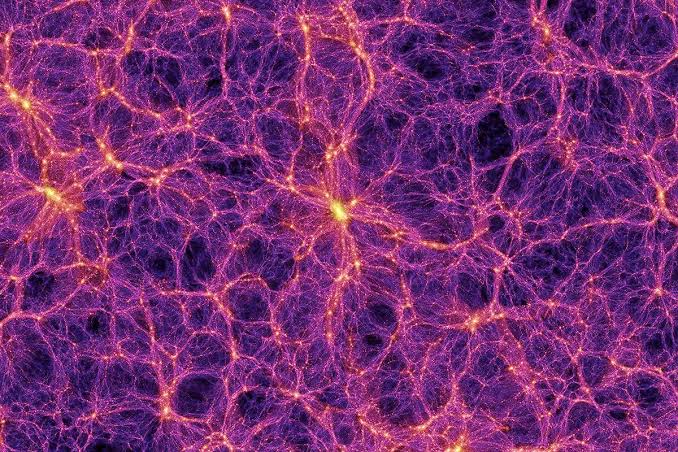
The “cosmic web” galaxy clusters from the Millenium simulation. Measuring and understanding this web can tell us a lot about the fundamental constituents of the universe. Source
To determine what dark matter is then requires an attack from two fronts: design experiments here on earth attempting directly detect it, and further study its cosmic implications to look for more clues as to its properties.
The panel recommended next generation telescopes to study the CMB as a top priority. The so called ‘Stage 4’ CMB experiment would deploy telescopes in both the south pole and Chile’s Atacama desert to better characterize sources of atmospheric noise. The CMB has been studied extensively before, but the increased precision of CMS-S4 could shed light on mysteries like dark energy, dark matter, inflation, and the recent Hubble Tension. Given the past fruitfulness of these efforts, I think few doubted the science case for such a next generation experiment.
A mockup of one of the CMS-S4 telescopes which will be based in the Chilean desert. Note the person for scale on the right (source)
The P5 report recommended a suite of new dark matter experiments in the next decade, including the ‘ultimate’ liquid Xenon based dark matter search. Such an experiment would follow in the footsteps of massive noble gas experiments like LZ and XENONnT which have been hunting for a favored type of dark matter called WIMP’s for the last few decades. These experiments essentially build giant vats of liquid Xenon, carefully shield from any sources of external radiation, and look for signs of dark matter particles bumping into any of the Xenon atoms. The larger the vat of Xenon, the higher chance a dark matter particle will bump into something. Current generation experiments have ~7 tons of Xenon, and the next generation experiment would be even larger. The next generation aims to reach the so called ‘neutrino floor’, the point as which the experiments would be sensitive enough to observe astrophysical neutrinos bumping into the Xenon. Such neutrino interactions would look extremely similar to those of dark matter, and thus represent an unavoidable background which would signal the ultimate sensitivity of this type of experiment. WIMP’s could still be hiding in a basement below this neutrino floor, but finding them would be exceedingly difficult.
A photo of the current XENONnT experiment. This pristine cavity is then filled with liquid Xenon and closely monitored for signs of dark matter particles bumping into one of the Xenon atoms. Credit: XENON Collaboration
WIMP’s are not the only dark matter candidates in town, and recent years have also seen an explosion of interest in the broad range of dark matter possibilities, with axions being a prominent example. Other kinds of dark matter could have very different properties than WIMPs and have had much fewer dedicated experiments to search for them. There is ‘low hanging fruit’ to pluck in the way of relatively cheap experiments which can achieve world-leading sensitivity. Previously, these ‘table top’ sized experiments had a notoriously difficult time obtaining funding, as they were often crowded out of the budgets by the massive flagship projects. However, small experiments can be crucial to ensuring our best chance of dark matter discovery, as they fill in the blinds pots missed by the big projects.
The panel therefore recommended creating a new pool of funding set aside for these smaller scale projects. Allowing these smaller scale projects to flourish is important for the vibrancy and scientific diversity of the field, as the centralization of ‘big science’ projects can sometimes lead to unhealthy side effects. This specific recommendation also mirrors a broader trend of the report: to attempt to rebalance the budget portfolio to be spread more evenly and less dominated by the large projects.
A pie chart comparing the budget porfolio in 2023 (left) versus the projected budget in 2033 (right). Currently most of the budget is being taken up by the accelerator upgrades and cavern construction of DUNE, with some amount for the LHC upgrades. But by 2033 the panel recommends a much more equitable balance between different research area.
What Didn’t Make It
Any report like this comes with some tough choices. Budget realities mean not all projects can be funded. Besides the pairing down of some of DUNE’s upgrades, one of the biggest areas that was recommended against were ‘accessory experiments at the LHC’. In particular, MATHUSULA and the Forward Physics Facility were two experiments that proposed to build additional detectors near already existing LHC collision points to look for particles that may be missed by the current experiments. By building new detectors hundreds of meters away from the collision point, shielded by concrete and the earth, they can obtained unique sensitivity to ‘long lived’ particles capable of traversing such distances. These experiments would follow in the footsteps of the current FASER experiment, which is already producing impressive results.
While FASER found success as a relatively ‘cheap’ experiment, reusing detector components from and situating itself in a beam tunnel, these new proposals were asking for quite a bit more. The scale of these detectors would have required new caverns to be built, significantly increasing the cost. Given the cost and specialized purpose of these detectors, the panel recommended against their construction. These collaborations may now try to find ways to pare down their proposal so they can apply to the new small project portfolio.
Another major decision by the panel was to recommend against hosting a new Higgs factor collider in the US. But that will discussed more in a future post.
Conclusions
The P5 panel was faced with a difficult task, the total cost of all projects they were presented with was three times the budget. But they were able to craft a plan that continues the work of the previous decade, addresses current shortcomings and lays out an inspiring vision for the future. So far the community seems to be strongly rallying behind it. At time of writing, over 2700 community members from undergraduates to senior researchers have signed a petition endorsing the panels recommendations. This strong show of support will be key for turning these recommendations into actual funding, and hopefully lobbying congress to even increase funding so that more of this vision can be realized.
For those interested the full report as well as executive summaries of different areas can be found on the P5 website. Members of the US particle physics community are also encouraged to sign the petition endorsing the recommendations here.
And stayed tuned for part 2 of our coverage which will discuss the implications of the report on future colliders!
È finalmente disponibile all’acquisto l’ultima generazione di action cam GoPro: caratteristiche, utilizzi e tutto quello che c’è da sapere sulla nuova gamma
Google must allow news sites to opt out of having their online content scraped to feed AI overviews and other artificial intelligence services and features for British users, regulators said Wednesday.
With rivals racing to market to raise ‘eye-popping sums’, the spotlight is now on the AI sector’s one-time ‘poster child’
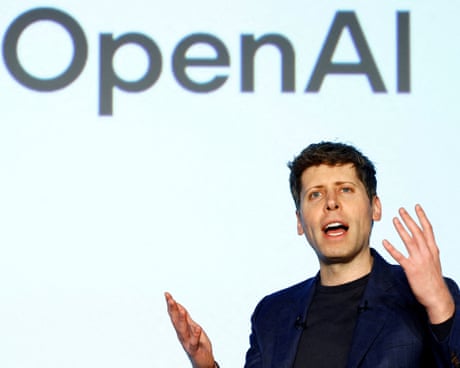
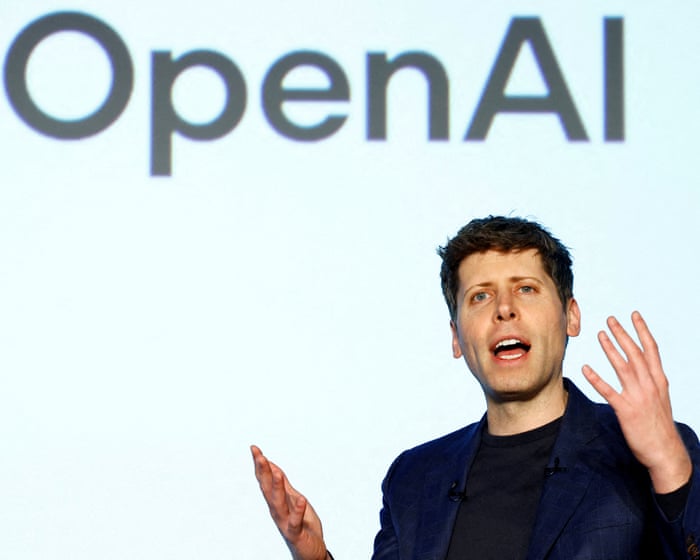
A year is a long time in AI. Just 12 months ago, Sam Altman was predicting his company OpenAI would build a super intelligence and fundamentally remake society. Now the boss of the ChatGPT developer is walking back those ideas after failing to make money from ads and erotic chatbots.
Meanwhile, rivals are storming ahead with plans to expand and go public on the stock market, in what is widely expected to be a season of record-setting initial public offerings (IPOs).
A groundbreaking observational study conducted by researchers at Tufts University’s Food is Medicine Institute and the Gerald J. and Dorothy R. Friedman School of Nutrition Science and Policy sheds new light on the health implications of ultra-processed food consumption. Published in the American Journal of Public Health, this comprehensive analysis spanning nearly two decades raises pressing concerns about how the industrial processing of foods, beyond mere nutritional content, substantially impacts cardiometabolic health and mortality risks.
Ultra-processed foods have become a dominant feature of the American dietary landscape, accounting for over half of the caloric intake among adults and an even higher proportion among children. These foods typically include ingredients and additives rarely found in home cooking, such as emulsifiers, preservatives, and artificial flavors, which alter the original food matrix. While prior research has linked heavy consumption of ultra-processed foods with obesity, diabetes, and cardiovascular disease, the novel aspect of this investigation was to disentangle whether these risks arise solely from poor nutritional profiles—high in saturated fats, sugars, and sodium—or if the processing itself independently contributes to adverse health outcomes.
To address this, the researchers leveraged data from the National Health and Nutrition Examination Survey (NHANES) covering ten consecutive cycles from 1999 to 2018. Participants’ dietary intake was assessed using rigorous 24-hour recall interviews, which were then classified according to a standardized framework categorizing foods by processing level. The analysis was further refined by applying an established diet quality scoring system that evaluates the overall healthfulness of foods consumed, enabling a meticulous adjustment for nutritional quality in the statistical models.
Findings indicated that for every 10 percent increase in caloric intake from ultra-processed foods, participants exhibited significantly worsened cardiometabolic markers. These included elevated body mass index, impaired glycemic control, higher systolic and diastolic blood pressure, and unfavorable lipid profiles characterized by increased LDL cholesterol and decreased HDL cholesterol. Crucially, these associations persisted even after controlling for diet quality and nutrient content, underscoring that factors linked to food processing extend beyond traditional nutritional parameters.
The mechanistic underpinnings proposed involve structural and biochemical alterations incurred during industrial processing. Ultraprocessed products often lose beneficial bioactive compounds such as polyphenols and fiber due to refinement steps. Moreover, the cellular matrix of whole foods is disrupted, potentially affecting digestion and nutrient absorption kinetics. Added synthetic chemicals and additives may interfere with metabolic regulation or promote chronic low-grade inflammation. Additionally, exposure to packaging-derived contaminants introduces another vector of health risk not captured by nutrient-based assessments.
The implications of this study emphasize the urgent need for revising public health policies to incorporate the dimension of food processing when evaluating dietary risks. Traditional nutrition guidelines predominantly focus on macronutrients and micronutrients without sufficient consideration of how food manufacturing practices impact the human body. Dariush Mozaffarian, a cardiologist and the study’s senior author, highlights that a multi-pronged approach is essential, including regulatory measures to define ultra-processed foods, labeling requirements, additive restrictions, and reforms in institutional food provision such as school meal programs.
The research also identifies structural and socioeconomic barriers that limit access to fresh and minimally processed foods as critical obstacles in addressing dietary health disparities. Food deserts, affordability issues, and marketing pressures disproportionately affect vulnerable populations, amplifying the burden of diseases linked to ultra-processed food consumption. Hence, interventions must integrate policy, community, and individual levels to foster environments conducive to healthier eating patterns.
Co-author and undergraduate biology student Juna Hatta-Langedyk comments on the scale of the challenge: understanding the health impacts of ultra-processed foods is vital due to their substantial role in contemporary diets. By parsing out the independent effect of processing, this research lays the groundwork for targeted strategies to mitigate chronic disease risks beyond conventional nutrient reduction frameworks.
While the study presents compelling evidence, it acknowledges inherent limitations typical of observational research, including potential residual confounding and reliance on self-reported dietary data. Nevertheless, the strength of associations across diverse population subgroups reinforces the robustness of the findings. Future experimental and mechanistic studies are called for to further elucidate causal pathways and identify specific additives or processing methods that may be especially detrimental.
The study’s support by prominent entities such as the National Heart, Lung, and Blood Institute and the American Diabetes Association underscores the public health significance of these findings. As ultra-processed food consumption remains entrenched and growing globally, the scientific community, policymakers, and public health practitioners must collaborate to translate these insights into effective, equitable nutritional policies.
This investigation not only challenges traditional paradigms of nutritional evaluation but also invites a paradigm shift towards holistic food system reform. Recognizing food processing as a critical dimension of diet-health relationships can catalyze innovative approaches to combatting the global epidemic of cardiometabolic disease and premature mortality. The intersection of food science, nutrition, and public health is poised for transformative advances influenced by this pivotal research.
Subject of Research: People
Article Title: Ultra-Processed Food vs. Diet Quality in Relation to Cardiometabolic Health and All-Cause Mortality: NHANES 1999-2018
News Publication Date: 3-Jun-2026
Web References: https://doi.org/10.2105/AJPH.2026.308499
Image Credits: Imani Khayaam for Tufts University
Keywords: Nutrition, Food additives, Human health, Cardiovascular disorders, Diabetes

 Login
Login