Normal view

Acridine Compound Binds VEGF, Cuts CAM Vascularization

3 June 2026 at 21:38

In a groundbreaking advance that merges cutting-edge computational biochemistry with innovative biological experimentation, researchers have unveiled a promising acridine-derived small molecule capable of modulating vascular endothelial growth factor (VEGF) activity. This novel compound demonstrates a profound influence on angiogenesis, as evidenced by its remarkable capacity to reduce vascularization in the chick chorioallantoic membrane (CAM) model, a well-established in vivo system for studying blood vessel formation. The implications of this discovery ripple through the realms of cancer therapy, ocular diseases, and other pathological states driven by aberrant blood vessel growth.

VEGF holds a pivotal role as a signal protein that stimulates the formation of blood vessels during both normal physiological processes and pathological conditions such as tumor growth and retinopathies. Therapeutic strategies targeting VEGF have seen extensive development, yet limitations including drug resistance and side effects demand new molecular candidates. The recent study leverages sophisticated in silico methodologies—molecular docking, dynamic simulations, and binding affinity calculations—to identify and characterize a small molecule from the acridine chemical family that interacts intimately with VEGF, subtly altering its bioactivity.

The choice to explore acridine derivatives stems from their chemical versatility and known biological activities. These planar, heterocyclic compounds have historically been employed in medicinal chemistry, often displaying anti-cancer and anti-microbial properties. In the context of VEGF inhibition, the planar structure offers a potential to engage in pi-stacking and hydrogen bonding with amino acid residues critical for VEGF receptor binding, thereby competitively or allosterically modulating function.

In silico predictions yielded compelling data: molecular docking revealed a high-affinity binding site where the acridine derivative securely associates with VEGF, primarily through hydrophobic interactions augmented by selective hydrogen bonds. Such computational insights not only illuminate the structural basis of interaction but also guide the rational design of derivatives with enhanced specificity and potency.

Transitioning from computational work to biological relevance, the study employed the CAM assay to empirically evaluate the vascular inhibitory effects of the acridine molecule. The CAM, a highly vascularized extra-embryonic membrane of the developing chick embryo, serves as an indispensable model for angiogenesis owing to its accessibility, rapid growth, and close resemblance to mammalian vascular development. Application of the small molecule resulted in a discernible reduction of new blood vessel formation, validating the computational hypothesis and underscoring the therapeutic potential of the compound.

This synchronized approach—combining in silico modeling with in vivo CAM assays—represents a paradigm shift in drug discovery, optimizing resource efficiency while enhancing predictive accuracy. Moreover, the decrease in CAM vascularization indicates a direct functional impact on endothelial cells, potentially via inhibition of VEGF signaling pathways that govern endothelial proliferation, migration, and survival.

Understanding how this acridine-derived molecule impacts VEGF at the molecular level could redefine therapeutic strategies against diseases characterized by pathological angiogenesis. Tumors exploit VEGF-mediated angiogenesis to secure their nutrient supply, enabling metastasis and growth. Inhibitors that can selectively disrupt VEGF without off-target toxicity could offer a renaissance in anticancer treatment, overcoming resistance mechanisms that curtail current therapies.

In addition to oncology, proliferative diabetic retinopathy and age-related macular degeneration represent clinical arenas where VEGF modulation has transformed patient outcomes. Yet, current anti-VEGF agents often require frequent administration and pose risks including intraocular inflammation. A novel small molecule capable of sustained or enhanced efficacy may alleviate these burdens, improving patient compliance and safety profiles.

Furthermore, the pharmacokinetic properties intrinsic to acridine derivatives might facilitate advantageous drug delivery, including tissue penetration and cellular uptake, attributes vital for clinical translation. The planar aromaticity and modifiable side chains open avenues for chemical optimization, aiming to refine solubility, stability, and target selectivity.

The integration of advanced molecular simulations with experimental verification also sets a precedent for future small-molecule discovery. The ability to virtually screen vast compound libraries for VEGF interaction prior to costly biological assays accelerates the pipeline from concept to candidate. Such methodologies promise to expand the arsenal of antiangiogenic agents, potentially uncovering molecules that act synergistically or via novel mechanisms.

Notably, the research reinforces the significance of interdisciplinary collaboration, merging computational chemistry, molecular biology, pharmacology, and developmental biology. This multifaceted strategy enhances confidence in findings and facilitates a comprehensive understanding of small molecule–protein dynamics and their biological ramifications.

The study’s revelations extend an invitation to the broader scientific community to explore acridine derivatives’ potential beyond VEGF inhibition. With structural adaptability and diverse bioactivity profiles, these compounds may address other molecular targets implicated in inflammatory, infectious, or neurodegenerative diseases, where angiogenesis or protein–ligand interactions are pivotal.

As this acridine-based compound progresses towards clinical evaluation, it will be critical to scrutinize toxicological profiles, metabolic stability, off-target effects, and effective dosing regimens. The translational journey necessitates balancing efficacy with patient safety, a formidable yet attainable goal given the compound’s targeted action and promising preliminary data.

In conclusion, the synergistic study that couples in silico molecular modeling with the CAM assay sets a milestone in angiogenesis research. The identification of a small molecule that associates specifically with VEGF and demonstrates tangible reductions in vascularization heralds a new chapter in targeted therapeutic development. By refining our molecular toolbox against angiogenic diseases, this work not only expands scientific horizons but also holds promise for improving countless lives affected by disorders of vascular dysregulation.


Subject of Research: Interaction of an acridine-derived small molecule with VEGF to inhibit angiogenesis.

Article Title: Acridine-derived small molecule associates with VEGF and is linked to reduced CAM vascularization: a combined in silico and CAM study.

Article References:
Karmakar, S., Moulik, S., Ghosh, S. et al. Acridine-derived small molecule associates with VEGF and is linked to reduced CAM vascularization: a combined in silico and CAM study. BMC Pharmacol Toxicol (2026). https://doi.org/10.1186/s40360-026-01148-6

Image Credits: AI Generated

Did CMS discover an unexpected quasiparticle? New search observes what looks to be ‘toponium’

15 April 2025 at 00:04

While searching for new Higgs bosons the CMS experiment at the Large Hadron Collider (LHC) may have just found a surprise. They have observed an excess of events that look to be a new particle, and are reporting high statistical evidence for their claim. The only question is what exactly is this new particle?

The search was initially designed to look for new, heavier, versions of the Higgs boson decaying to a top quark and an anti-top quark. Its well known that the Higgs boson of the Standard Model, discovered jointly by ATLAS and CMS in 2012, underlies the mechanism which gives all fundamental particles their masses. The Higgs boson itself interacts with particles in proportion to their mass, preferring heavier particles over lighter ones. It therefore interacts the most strongly with the heaviest known fundamental particle, the top quark, which has a mass of ~173 GeV. The Higgs boson itself only has a bass of 125 GeV, meaning conservation of energy dictates it can’t decay into a top quark-antiquark pair.

However many theories of physics beyond the the Standard Model predict additional Higgs bosons, heavier cousins of the current one. If these new heavy Higgs bosons had a mass larger than 350 GeV, they would likely decay to a top quark-antiquark pair quite often. CMS therefore was analyzed its data searching for this signature, hoping to find signs of a new Higgs boson. To do so, they had scrutinize very carefully the known production of top quark-antiquark pairs, which are produced copiously at the LHC from other processes. If a new particle was being produced and decaying to top quarks, the mass of the new particle would give the top quarks a characteristic energy. One key sign of a new particle would therefore be an excess of top quark-antiquark events at a particular energy, corresponding to the mass of the new particle. 

When CMS scrutinized their data looking for such an excess they found one. But curiously right ~350 GeV, the minimum energy required to produce the top quark-antiquark pair. It would be quite the coincidence for a new particle to show up right at this minimum threshold, which made CMS consider alternative possibilities.


A comparison of the observed CMS data and their estimate of backgrounds as a function of the invariant mass of the top quark antiquark system. CMS observes an excess of events at ~350 GeV, which is well fit with a toponium model (red line).

 One unorthodox explanation that seems to fit the bill is ‘toponium’, a short lived bound state of the top quark-antiquark pair is being formed. Toponium would be the heaviest version of ‘quarkonia’ we have seen, bound states of quark antiquark pairs that form bound states similar to atoms. We have observed and measured quarkonia states of the other quarks for decades, however it was long thought that the top quark, whose large mass causes it to decay in just 10^(-25) seconds, would decay too quickly to create observable bound state effects at a hadron collider. Toponium production would happen most often if the top quarks were produced just at the energy threshold, such that they don’t any extra energy. These low energy top quarks would spend more time close to each other than normal, rather than immediately flying away, so they could have time to briefly form a toponium state before decaying. However, once small hints of intriguing excesses started appearing in LHC analyses, updated calculations in the last few years suggested that perhaps such an effect could be observable.

These calculations are approximate, and more work is still being done to refine them. But the preliminary predictions they give for the properties of toponium seem to match well with what CMS is seeing, both in terms of the rate of toponium production and the quantum properties of the toponium state (spin and parity).

Still CMS is being cautious before claiming a discovery of toponium. They claim observation of an ‘excess at the top quark pair production threshold’ which is consistent with toponium. However given the limited present data and incomplete theoretical models of toponium, they cannot rule out that the excess they are seeing is coming from a new Higgs-like particle.

CMS measurement of the cross section of the two different hypothetical particles
CMS measurement tries to disentangle the quantum properties of the observed excess. The x-axis shows the estimated rate of production a ‘pseudoscalar’ particle producing the excess. The y-axis shows a similar estimate for a ‘scalar’ particle. The allowed region for the scalar still includes zero, while the zero pseudoscalar hypothesis is clearly excluded at larger than 5 standard deviations.

Further work will be needed to develop improved theoretical models of toponium, and detailed studies from CMS assessing the properties of their observed excess. The excess will also need confirmation from CMS’s rival LHC experiment, ATLAS, to ensure it has not merely made a mistake in its analysis.

However, the smart money would say this very likely looks like toponium. Which, while not signaling the long sought overthrow of the standard model, would be an unexpected and cool surprise from the LHC. Understanding the properties of this previously-thought-impossible quasiparticle will spawn much fruitful research in the years to come. Physicists love a surprise!

Paper:

“Observation of a pseudoscalar excess at the top quark pair production threshold” https://arxiv.org/abs/2503.22382

Additional CMS Paper considering Heavy-Higgs interpretation “Search for heavy pseudoscalar and scalar bosons decaying to top quark pairs in proton-proton collisions

Read more

CERN Courier “CMS observes top–antitop excess

Symmetry Magazine “Don’t call it toponium

Discloure: The author is a member of the CMS collaboration but did not directly work on this analysis

Erratum 4/15/2025 : The article was updated to clarify that in the theory literature prior to the LHC toponium was thought possible to form, just that it was thought to be too small an effect to be observable. The article previously incorrectly stated it had been previously thought impossible to form

What comes after the LHC? – The P5 Report & Future Colliders

25 January 2024 at 15:58

This is the second part of our coverage of the P5 report and its implications for particle physics. To read the first part, click here

One of the thorniest questions in particle physics is ‘What comes after the LHC?’. This was one of the areas people were most uncertain what the P5 report would say. Globally, the field is trying to decide what to do once the LHC winds down in ~2040 While the LHC is scheduled to get an upgrade in the latter half of the decade and run until the end of the 2030’s, the field must start planning now for what comes next. For better or worse, big smash-y things seem to capture a lot of public interest, so the debate over what large collider project to build has gotten heated. Even Elon Musk is tweeting (X-ing?) memes about it.

Famously, the US’s last large accelerator project, the Superconducting Super Collider (SSC), was cancelled in the ’90s partway through its construction. The LHC’s construction itself often faced perilous funding situations, and required a CERN to make the unprecedented move of taking a loan to pay for its construction. So no one takes for granted that future large collider projects will ultimately come to fruition.

Desert or Discovery?

When debating what comes next, dashed hopes of LHC discoveries are top of mind. The LHC experiments were primarily designed to search for the Higgs boson, which they successfully found in 2012. However, many had predicted (perhaps over-confidently) it would also discover a slew of other particles, like those from supersymmetry or those heralding extra-dimensions of spacetime. These predictions stemmed from a favored principle of nature called ‘naturalness’ which argued additional particles nearby in energy to the Higgs were needed to keep its mass at a reasonable value. While there is still much LHC data to analyze, many searches for these particles have been performed so far and no signs of these particles have been seen.

These null results led to some soul-searching within particle physics. The motivations behind the ‘naturalness’ principle that said the Higgs had to be accompanied by other particles has been questioned within the field, and in New York Times op-eds.

No one questions that deep mysteries like the origins of dark matter, matter anti-matter asymmetry, and neutrino masses, remain. But with the Higgs filling in the last piece of the Standard Model, some worry that answers to these questions in the form of new particles may only exist at energy scales entirely out of the reach of human technology. If true, future colliders would have no hope of

A diagram of the particles of the Standard Model laid out as a function of energy. The LHC and other experiments have probed up to around 10^3 GeV, and found all the particles of the Standard Model. Some worry new particles may only exist at the extremely high energies of the Planck or GUT energy scales. This would imply a large large ‘desert’ in energy, many orders of magnitude in which no new particles exist. Figure adapted from here

The situation being faced now is qualitatively different than the pre-LHC era. Prior to the LHC turning on, ‘no lose theorems’, based on the mathematical consistency of the Standard Model, meant that it had to discover the Higgs or some other new particle like it. This made the justification for its construction as bullet-proof as one can get in science; a guaranteed Nobel prize discovery. But now with the last piece of the Standard Model filled in, there are no more free wins; guarantees of the Standard Model’s breakdown don’t occur until energy scales we would need solar-system sized colliders to probe. Now, like all other fields of science, we cannot predict what discoveries we may find with future collider experiments.

Still, optimists hope, and have their reasons to believe, that nature may not be so unkind as to hide its secrets behind walls so far outside our ability to climb. There are compelling models of dark matter that live just outside the energy reach of the LHC, and predict rates too low for direct detection experiments, but would be definitely discovered or ruled out by high energy colliders. The nature of the ‘phase transition’ that occurred in the very early universe, which may explain the prevalence of matter over anti-matter, can also be answered. There are also a slew of experimentalhints‘, all of which have significant question marks, but could point to new particles within the reach of a future collider.

Many also just advocate for building a future machine to study nature itself, with less emphasis on discovering new particles. They argue that even if we only further confirm the Standard Model, it is a worthwhile endeavor. Though we calculate Standard Model predictions for high energies, unless they are tested in a future collider we will not ‘know’ how if nature actually works like this until we test it in those regimes. They argue this is a fundamental part of the scientific process, and should not be abandoned so easily. Chief among the untested predictions are those surrounding the Higgs boson. The Higgs is a central somewhat mysterious piece of the Standard Model but is difficult to measure precisely in the noisy environment of the LHC. Future colliders would allow us to study it with much better precision, and verify whether it behaves as the Standard Model predicts or not.

Projects

These theoretical debates directly inform what colliders are being proposed and what their scientific case is.

Many are advocating for a “Higgs factory”, a collider of based on clean electron-positron collisions that could be used to study the Higgs in much more detail than the messy proton collisions of the LHC. Such a machine would be sensitive to subtle deviations of Higgs behavior from Standard Model predictions. Such deviations could come from the quantum effects of heavy, yet-undiscovered particles interacting with the Higgs. However, to determine what particles are causing those deviations, its likely one would need a new ‘discovery’ machine which has high enough energy to produce them.

Among the Higgs factory options are the International Linear Collider, a proposed 20km linear machine which would be hosted in Japan. ILC designs have been ‘ready to go’ for the last 10 years but the Japanese government has repeated waffled on whether to approve the project. Sitting in limbo for this long has led to many being pessimistic about the projects future, but certainly many in the global community would be ecstatic to work on such a machine if it was approved.

Designs for the ILC have been ready for nearly a decade, but its unclear if it will receive the greenlight from the Japanese government. Image source

Alternatively, some in the US have proposed building a linear collider based on a ‘cool copper’ cavities (C3) rather than the standard super conducting ones. These copper cavities can achieve more acceleration per meter than the standard super conducting ones, meaning a linear Higgs factory could be constructed with a reduced 8km footprint. A more compact design can significantly cut down on infrastructure costs that governments usually don’t like to use their science funding on. Advocates had proposed it as a cost-effective Higgs factory option, whose small footprint means it could potentially hosted in the US.

The Future-Circular-Collider (FCC), CERN’s successor to the LHC, would kill both birds with one extremely long stone. Similar to the progression from LEP to the LHC, this new proposed 90km collider would run as Higgs factory using electron-positron collisions starting in 2045 before eventually switching to a ~90 TeV proton-proton collider starting in ~2075.

An image of the proposed FCC overlayed on a map of the French/Swiss border
Designs for the massive 90km FCC ring surrounding Geneva

Such a machine would undoubtably answer many of the important questions in particle physics, however many have concerns about the huge infrastructure costs needed to dig such a massive tunnel and the extremely long timescale before direct discoveries could be made. Most of the current field would not be around 50 years from now to see what such a machine finds. The Future-Circular-Collider (FCC), CERN’s successor to the LHC, would kill both birds with one extremely long stone. Similar to the progression from LEP to the LHC, this new proposed 90km collider would run as Higgs factory using electron-positron collisions starting in 2045 before eventually switching to a ~90 TeV proton-proton collider starting in ~2075. Such a machine would undoubtably answer many of the important questions in particle physics, however many have concerns about the extremely long timescale before direct discoveries could be made. Most of the current field would not be around 50 years from now to see what such a machine finds. The FCC is also facing competition as Chinese physicists have proposed a very similar design (CEPC) which could potentially start construction much earlier.

During the snowmass process many in the US starting pushing for an ambitious alternative. They advocated a new type of machine that collides muons, the heavier cousin of electrons. A muon collider could reach the high energies of a discovery machine while also maintaining a clean environment that Higgs measurements can be performed in. However, muons are unstable, and collecting enough of them into formation to form a beam before they decay is a difficult task which has not been done before. The group of dedicated enthusiasts designed t-shirts and Twitter memes to capture the excitement of the community. While everyone agrees such a machine would be amazing, the key technologies necessary for such a collider are less developed than those of electron-positron and proton colliders. However, if the necessary technological hurdles could be overcome, such a machine could turn on decades before the planned proton-proton run of the FCC. It can also presents a much more compact design, at only 10km circumfrence, roughly three times smaller than the LHC. Advocates are particularly excited that this would allow it to be built within the site of Fermilab, the US’s flagship particle physics lab, which would represent a return to collider prominence for the US.

A proposed design for a muon collider. It relies on ambitious new technologies, but could potentially deliver similar physics to the FCC decades sooner and with a ten times smaller footprint. Source

Deliberation & Decision

This plethora of collider options, each coming with a very different vision of the field in 25 years time led to many contentious debates in the community. The extremely long timescales of these projects led to discussions of human lifespans, mortality and legacy being much more being much more prominent than usual scientific discourse.

Ultimately the P5 recommendation walked a fine line through these issues. Their most definitive decision was to recommend against a Higgs factor being hosted in the US, a significant blow to C3 advocates. The panel did recommend US support for any international Higgs factories which come to fruition, at a level ‘commensurate’ with US support for the LHC. What exactly ‘comensurate’ means in this context I’m sure will be debated in the coming years.

However, the big story to many was the panel’s endorsement of the muon collider’s vision. While recognizing the scientific hurdles that would need to be overcome, they called the possibility of muon collider hosted in the US a scientific ‘muon shot‘, that would reap huge gains. They therefore recommended funding for R&D towards they key technological hurdles that need to be addressed.

Because the situation is unclear on both the muon front and international Higgs factory plans, they recommended a follow up panel to convene later this decade when key aspects have clarified. While nothing was decided, many in the muon collider community took the report as a huge positive sign. While just a few years ago many dismissed talk of such a collider as fantastical, now a real path towards its construction has been laid down.

Hitoshi Murayama, chair of the P5 committee, cuts into a ‘Shoot for the Muon’ cake next to a smiling Lia Merminga, the director of Fermilab. Source

While the P5 report is only one step along the path to a future collider, it was an important one. Eyes will now turn towards reports from the different collider advocates. CERN’s FCC ‘feasibility study’, updates around the CEPC and, the International Muon Collider Collaboration detailed design report are all expected in the next few years. These reports will set up the showdown later this decade where concrete funding decisions will be made.

For those interested the full report as well as executive summaries of different areas can be found on the P5 website. Members of the US particle physics community are also encouraged to sign the petition endorsing the recommendations here.

The P5 Report & The Future of Particle Physics (Part 1)

3 January 2024 at 20:21

Particle physics is the epitome of ‘big science’. To answer our most fundamental questions out about physics requires world class experiments that push the limits of whats technologically possible. Such incredible sophisticated experiments, like those at the LHC, require big facilities to make them possible,  big collaborations to run them, big project planning to make dreams of new facilities a reality, and committees with big acronyms to decide what to build.

Enter the Particle Physics Project Prioritization Panel (aka P5) which is tasked with assessing the landscape of future projects and laying out a roadmap for the future of the field in the US. And because these large projects are inevitably an international endeavor, the report they released last week has a large impact on the global direction of the field. The report lays out a vision for the next decade of neutrino physics, cosmology, dark matter searches and future colliders. 

P5 follows the community-wide brainstorming effort known as the Snowmass Process in which researchers from all areas of particle physics laid out a vision for the future. The Snowmass process led to a particle physics ‘wish list’, consisting of all the projects and research particle physicists would be excited to work on. The P5 process is the hard part, when this incredibly exciting and diverse research program has to be made to fit within realistic budget scenarios. Advocates for different projects and research areas had to make a case of what science their project could achieve and a detailed estimate of the costs. The panel then takes in all this input and makes a set of recommendations of how the budget should be allocated, what should projects be realized and what hopes are dashed. Though the panel only produces a set of recommendations, they are used quite extensively by the Department of Energy which actually allocates funding. If your favorite project is not endorsed by the report, its very unlikely to be funded. 

An computer generate graphic showing two sprays of particles being injected from a single center point
The P5 report also created an awesome graphic that contains symbolism for the different aspects of the plan. The left  side depicts oscillating neutrinos and the shape of the Higgs potential. The right side depicts dark matter and the large scale structure of the universe. The central ball of light is supposed to represent discoveries of the unknown. Source

Particle physics is an incredibly diverse field, covering sub-atomic to cosmic scales, so recommendations are divided up into several different areas. In this post I’ll cover the panel’s recommendations for neutrino physics and the cosmic frontier. Future colliders, perhaps the spiciest topic, will be covered in a follow up post.

The Future of Neutrino Physics

For those in the neutrino physics community all eyes were on the panels recommendations regarding the Deep Underground Neutrino Experiment (DUNE). DUNE is the US’s flagship particle physics experiment for the coming decade and aims to be the definitive worldwide neutrino experiment in the years to come. A high powered beam of neutrinos will be produced at Fermilab and sent 800 miles through the earth’s crust towards several large detectors placed in a mine in South Dakota. Its a much bigger project than previous neutrino experiments, unifying essentially the entire US community into a single collaboration.

DUNE is setup to produce world leading measurements of neutrino oscillations, the property by which neutrinos produced in one ‘flavor state’, (eg an electron-neutrino) gradually changes its state with sinusoidal probability (eg into a muon neutrino) as it propagates through space. This oscillation is made possible by a simple quantum mechanical weirdness: neutrino’s flavor state, whether it couples to electrons muons or taus, is not the same as its mass state. Neutrinos of a definite mass are therefore a mixture of the different flavors and visa versa.

Detailed measurements of this oscillation are the best way we know to determine several key neutrino properties. DUNE aims to finally pin down two crucial neutrino properties: their ‘mass ordering’, which will solidify how the different neutrino flavors and measured mass differences all fit together, and their ‘CP-violation’ which specifies whether neutrinos and their anti-matter counterparts behave the same or not. DUNE’s main competitor is the Hyper-Kamiokande experiment in Japan, another next-generation neutrino experiment with similar goals.

A depiction of the DUNE experiment. A high intensity proton beam at Fermilab is used to create a concentrated beam of neutrinos which are then sent through 800 miles of the Earth’s crust towards detectors placed deep underground South Dakota. Source

Construction of the DUNE experiment has been ongoing for several years and unfortunately has not been going quite as well as hoped. It has faced significant schedule delays and cost overruns. DUNE is now not expected to start taking data until 2031, significantly behind Hyper-Kamiokande’s projected 2027 start. These delays may lead to Hyper-K making these definitive neutrino measurements years before DUNE, which would be a significant blow to the experiment’s impact. This left many DUNE collaborators worried about its broad support from the community.

It came as a relief then when P5 report re-affirmed the strong science case for DUNE, calling it the “ultimate long baseline” neutrino experiment. The report strongly endorsed the completion of the first phase of DUNE. However, it recommended a pared-down version of its upgrade, advocating for an earlier beam upgrade in lieu of additional detectors. This re-imagined upgrade will still achieve the core physics goals of the original proposal with a significant cost savings. With this report, and news that the beleaguered underground cavern construction in South Dakota is now 90% complete, was certainly welcome holiday news to the neutrino community. This is also sets up a decade-long race between DUNE and Hyper-K to be the first to measure these key neutrino properties.

Cosmic Implications

While we normally think of particle physics as focused on the behavior of sub-atomic particles, its really about the study of fundamental forces and laws, no matter the method. This means that telescopes to study the oldest light in the universe, the Cosmic Microwave Background (CMB), fall into the same budget category as giant accelerators studying sub-atomic particles. Though the experiments in these two areas look very different, the questions they seek to answer are cross-cutting. Understanding how particles interact at very high energies helps us understand the earliest moments of the universe, when such particles were all interacting in a hot dense plasma. Likewise, by studying the these early moments of the universe and its large-scale evolution can tell us about what kinds of particles and forces are influencing its dynamics. When asking fundamental questions about the universe, one needs both the sharpest microscopes and the grandest panoramas possible.

The most prominent example of this blending of the smallest and largest scales in particle physics is dark matter. Some of our best evidence for dark matter comes analyzing the cosmic microwave background to determine how the primordial plasma behaved. These studies showed that some type of ‘cold’, matter that doesn’t interact with light, aka dark matter, was necessary to form the first clumps that eventually seeded the formation of galaxies. Without it, the universe would be much more soup-y and structureless than what we see to today.

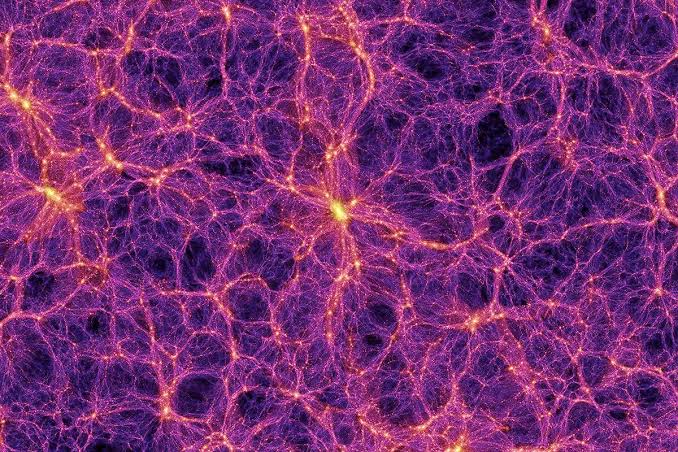
The “cosmic web” galaxy clusters from the Millenium simulation. Measuring and understanding this web can tell us a lot about the fundamental constituents of the universe. Source

To determine what dark matter is then requires an attack from two fronts: design experiments here on earth attempting directly detect it, and further study its cosmic implications to look for more clues as to its properties.

The panel recommended next generation telescopes to study the CMB as a top priority. The so called ‘Stage 4’ CMB experiment would deploy telescopes in both the south pole and Chile’s Atacama desert to better characterize sources of atmospheric noise. The CMB has been studied extensively before, but the increased precision of CMS-S4 could shed light on mysteries like dark energy, dark matter, inflation, and the recent Hubble Tension. Given the past fruitfulness of these efforts, I think few doubted the science case for such a next generation experiment.

A mockup of one of the CMS-S4 telescopes which will be based in the Chilean desert. Note the person for scale on the right (source)

The P5 report recommended a suite of new dark matter experiments in the next decade, including the ‘ultimate’ liquid Xenon based dark matter search. Such an experiment would follow in the footsteps of massive noble gas experiments like LZ and XENONnT which have been hunting for a favored type of dark matter called WIMP’s for the last few decades. These experiments essentially build giant vats of liquid Xenon, carefully shield from any sources of external radiation, and look for signs of dark matter particles bumping into any of the Xenon atoms. The larger the vat of Xenon, the higher chance a dark matter particle will bump into something. Current generation experiments have ~7 tons of Xenon, and the next generation experiment would be even larger. The next generation aims to reach the so called ‘neutrino floor’, the point as which the experiments would be sensitive enough to observe astrophysical neutrinos bumping into the Xenon. Such neutrino interactions would look extremely similar to those of dark matter, and thus represent an unavoidable background which would signal the ultimate sensitivity of this type of experiment. WIMP’s could still be hiding in a basement below this neutrino floor, but finding them would be exceedingly difficult.

A photo of the current XENONnT experiment. This pristine cavity is then filled with liquid Xenon and closely monitored for signs of dark matter particles bumping into one of the Xenon atoms. Credit: XENON Collaboration

WIMP’s are not the only dark matter candidates in town, and recent years have also seen an explosion of interest in the broad range of dark matter possibilities, with axions being a prominent example. Other kinds of dark matter could have very different properties than WIMPs and have had much fewer dedicated experiments to search for them. There is ‘low hanging fruit’ to pluck in the way of relatively cheap experiments which can achieve world-leading sensitivity. Previously, these ‘table top’ sized experiments had a notoriously difficult time obtaining funding, as they were often crowded out of the budgets by the massive flagship projects. However, small experiments can be crucial to ensuring our best chance of dark matter discovery, as they fill in the blinds pots missed by the big projects.

The panel therefore recommended creating a new pool of funding set aside for these smaller scale projects. Allowing these smaller scale projects to flourish is important for the vibrancy and scientific diversity of the field, as the centralization of ‘big science’ projects can sometimes lead to unhealthy side effects. This specific recommendation also mirrors a broader trend of the report: to attempt to rebalance the budget portfolio to be spread more evenly and less dominated by the large projects.

A pie chart comparing the budget porfolio in 2023 (left) versus the projected budget in 2033 (right). Currently most of the budget is being taken up by the accelerator upgrades and cavern construction of DUNE, with some amount for the LHC upgrades. But by 2033 the panel recommends a much more equitable balance between different research area.

What Didn’t Make It

Any report like this comes with some tough choices. Budget realities mean not all projects can be funded. Besides the pairing down of some of DUNE’s upgrades, one of the biggest areas that was recommended against were ‘accessory experiments at the LHC’. In particular, MATHUSULA and the Forward Physics Facility were two experiments that proposed to build additional detectors near already existing LHC collision points to look for particles that may be missed by the current experiments. By building new detectors hundreds of meters away from the collision point, shielded by concrete and the earth, they can obtained unique sensitivity to ‘long lived’ particles capable of traversing such distances. These experiments would follow in the footsteps of the current FASER experiment, which is already producing impressive results.

While FASER found success as a relatively ‘cheap’ experiment, reusing detector components from and situating itself in a beam tunnel, these new proposals were asking for quite a bit more. The scale of these detectors would have required new caverns to be built, significantly increasing the cost. Given the cost and specialized purpose of these detectors, the panel recommended against their construction. These collaborations may now try to find ways to pare down their proposal so they can apply to the new small project portfolio.

Another major decision by the panel was to recommend against hosting a new Higgs factor collider in the US. But that will discussed more in a future post.

Conclusions

The P5 panel was faced with a difficult task, the total cost of all projects they were presented with was three times the budget. But they were able to craft a plan that continues the work of the previous decade, addresses current shortcomings and lays out an inspiring vision for the future. So far the community seems to be strongly rallying behind it. At time of writing, over 2700 community members from undergraduates to senior researchers have signed a petition endorsing the panels recommendations. This strong show of support will be key for turning these recommendations into actual funding, and hopefully lobbying congress to even increase funding so that more of this vision can be realized.

For those interested the full report as well as executive summaries of different areas can be found on the P5 website. Members of the US particle physics community are also encouraged to sign the petition endorsing the recommendations here.

And stayed tuned for part 2 of our coverage which will discuss the implications of the report on future colliders!

Moriond 2023 Recap

17 April 2023 at 16:16

Every year since 1966,  particle physicists have gathered in the Alps to unveil and discuss their most important results of the year (and to ski). This year I had the privilege to attend the Moriond QCD session so I thought I would post a recap here. It was a packed agenda spanning 6 days of talks, and featured a lot of great results over many different areas of particle physics, so I’ll have to stick to the highlights here.

FASER Observes First Collider Neutrinos

Perhaps the most exciting result of Moriond came from the FASER experiment, a small detector recently installed in the LHC tunnel downstream from the ATLAS collision point. They announced the first ever observation of neutrinos produced in a collider. Neutrinos are produced all the time in LHC collisions, but because they very rarely interact, and current experiments were not designed to look for them, no one had ever actually observed them in a detector until now. Based on data collected during collisions from last year, FASER observed 153 candidate neutrino events, with a negligible amount of predicted backgrounds; an unmistakable observation.

Black image showing colorful tracks left by particles produced in a neutrino interaction
A neutrino candidate in the FASER emulsion detector. Source

This first observation opens the door for studying the copious high energy neutrinos produced in colliders, which sit in an energy range currently unprobed by other neutrino experiments. The FASER experiment is still very new, so expect more exciting results from them as they continue to analyze their data. A first search for dark photons was also released which should continue to improve with more luminosity. On the neutrino side, they have yet to release full results based on data from their emulsion detector which will allow them to study electron and tau neutrinos in addition to the muon neutrinos this first result is based on.

New ATLAS and CMS Results

The biggest result from the general purpose LHC experiments was ATLAS and CMS both announcing that they have observed the simultaneous production of 4 top quarks. This is one of the rarest Standard Model processes ever observed, occurring a thousand times less frequently than a Higgs being produced. Now that it has been observed the two experiments will use Run-3 data to study the process in more detail in order to look for signs of new physics.

Event displays from ATLAS and CMS showing the signature of 4 top events in their respective detectors
Candidate 4 top events from ATLAS (left) and CMS (right).

ATLAS also unveiled an updated measurement of the mass of the W boson. Since CDF announced its measurement last year, and found a value in tension with the Standard Model at ~7-sigma, further W mass measurements have become very important. This ATLAS result was actually a reanalysis of their previous measurement, with improved PDF’s and statistical methods. Though still not as precise as the CDF measurement, these improvements shrunk their errors slightly (from 19 to 16 MeV).  The ATLAS measurement reports a value of the W mass in very good agreement with the Standard Model, and approximately 4-sigma in tension with the CDF value. These measurements are very complex, and work is going to be needed to clarify the situation.

CMS had an intriguing excess (2.8-sigma global) in a search for a Higgs-like particle decaying into an electron and muon. This kind of ‘flavor violating’ decay would be a clear indication of physics beyond the Standard Model. Unfortunately it does not seem like ATLAS has any similar excess in their data.

Status of Flavor Anomalies

At the end of 2022, LHCb announced that the golden channel of the flavor anomalies, the R(K) anomaly, had gone away upon further analysis. Many of the flavor physics talks at Moriond seemed to be dealing with this aftermath.

Of the remaining flavor anomalies, R(D), a ratio describing the decay rates of B mesons in final states with D mesons and taus versus D mesons plus muons or electrons, has still been attracting interest. LHCb unveiled a new measurement that focused on hadronically taus and found a value that agreed with the Standard Model prediction. However this new measurement had larger error bars than others so it only brought down the world average slightly. The deviation currently sits at around 3-sigma.

A summary plot showing all the measurements of R(D) and R(D*). The newest LHCb measurement is shown in the red band / error bar on the left. The world average still shows a 3-sigma deviation to the SM prediction

An interesting theory talk pointed out that essentially any new physics which would produce a deviation in R(D) should also produce a deviation in another lepton flavor ratio, R(Λc), because it features the same b->clv transition. However LHCb’s recent measurement of R(Λc) actually found a small deviation in the opposite direction as R(D). The two results are only incompatible at the ~1.5-sigma level for now, but it’s something to continue to keep an eye on if you are following the flavor anomaly saga.

It was nice to see that the newish Belle II experiment is now producing some very nice physics results. The highlight of which was a world-best measurement of the mass of the tau lepton. Look out for more nice Belle II results as they ramp up their luminosity, and hopefully they can weigh in on the R(D) anomaly soon.

A fit to the invariant mass the visible decay products of the tau lepton, used to determine its intrinsic mass. An impressive show of precision from Belle II

Theory Pushes for Precision

The focus of much of the theory talks was about trying to advance our precision in predictions of standard model physics. This ‘bread and butter’ physics is sometimes overlooked in scientific press, but is an absolutely crucial part of the particle physics ecosystem. As experiments reach better and better precision, improved theory calculations are required to accurately model backgrounds, predict signals, and have precise standard model predictions to compare to so that deviations can be spotted. Nice results in this area included evidence for an intrinsic amount of charm quarks inside the proton from the NNPDF collaboration, very precise extraction of CKM matrix elements by using lattice QCD, and two different proposals for dealing with tricky aspects regarding the ‘flavor’ of QCD jets.

Final Thoughts

Those were all the results that stuck out to me. But this is of course a very biased sampling! I am not qualified enough to point out the highlights of the heavy ion sessions or much of the theory presentations. For a more comprehensive overview, I recommend checking out the slides for the excellent experimental and theoretical summary talks. Additionally there was the Moriond Electroweak conference that happened the week before the QCD one, which covers many of the same topics but includes neutrino physics results and dark matter direct detection. Overall it was a very enjoyable conference and really showcased the vibrancy of the field!

The Search for Simplicity : The Higgs Boson’s Self Coupling

13 March 2023 at 15:17

When students first learn quantum field theory, the mathematical language the underpins the behavior of elementary particles, they start with the simplest possible interaction you can write down : a particle with no spin and no charge scattering off another copy of itself. One then eventually moves on to the more complicated interactions that describe the behavior of fundamental particles of the Standard Model. They may quickly forget this simplified interaction as a unrealistic toy example, greatly simplified compared to the complexity the real world. Though most interactions that underpin particle physics are indeed quite a bit more complicated, nature does hold a special place for simplicity. This barebones interaction is predicted to occur in exactly one scenario : a Higgs boson scattering off itself. And one of the next big targets for particle physics is to try and observe it.

A feynman diagram consisting of two dotted lines coming merging together to form a single line.
A Feynman diagram of the simplest possible interaction in quantum field theory, a spin-zero particle interacting with itself.

The Higgs is the only particle without spin in the Standard Model, and the only one that doesn’t carry any type of charge. So even though particles such as gluons can interact with other gluons, its never two of the same kind of gluons (the two interacting gluons will always carry different color charges). The Higgs is the only one that can have this ‘simplest’ form of self-interaction. Prominent theorist Nima Arkani-Hamed has said that the thought of observing this “simplest possible interaction in nature gives [him] goosebumps“.

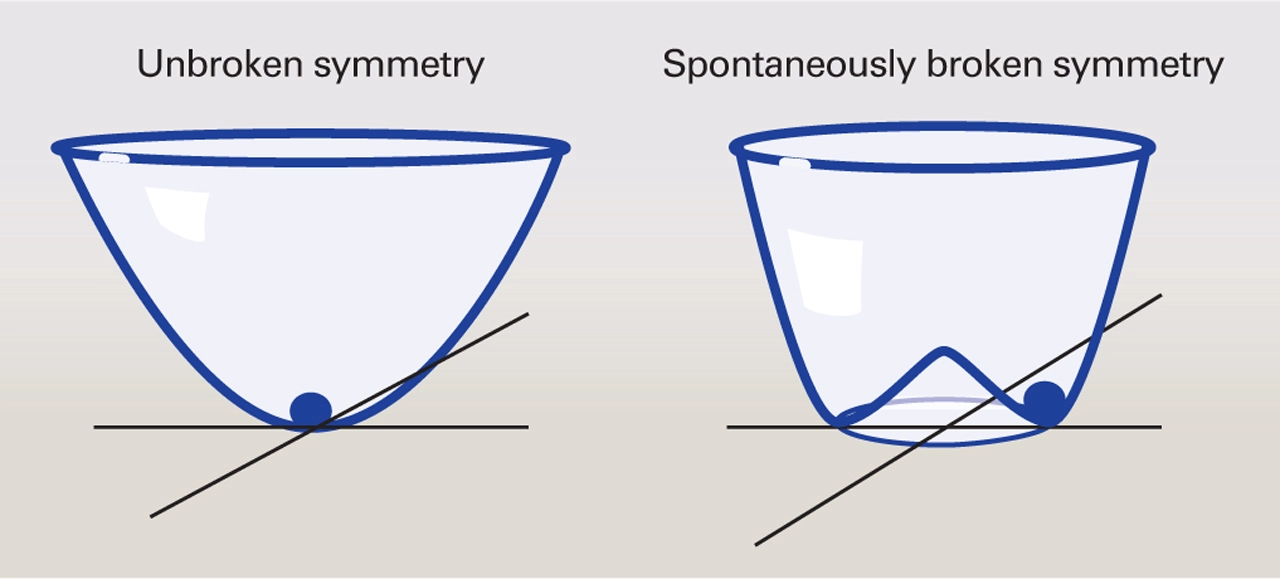
But more than being interesting for its simplicity, this self-interaction of the Higgs underlies a crucial piece of the Standard Model: the story of how particles got their mass. The Standard Model tells us that the reason all fundamental particles have mass is their interaction with the Higgs field. Every particle’s mass is proportional to the strength of the Higgs field. The fact that particles have any mass at all is tied to the fact that the lowest energy state of the Higgs field is at a non-zero value. According to the Standard Model, early in the universe’s history when the temperature were much higher, the Higgs potential had a different shape, with its lowest energy state at field value of zero. At this point all the particles we know about were massless. As the universe cooled the shape of the Higgs potential morphed into a ‘wine bottle’ shape, and the Higgs field moved into the new minimum at non-zero value where it sits today. The symmetry of the initial state, in which the Higgs was at the center of its potential, was ‘spontaneously broken’  as its new minimum, at a location away from the center, breaks the rotation symmetry of the potential. Spontaneous symmetry breaking is a very deep theoretical idea that shows up not just in particle physics but in exotic phases of matter as well (eg superconductors). 

A diagram showing the ‘unbroken’ Higgs potential in the very early universe (left) and the ‘wine bottle’ shape it has today (right). When the Higgs at the center of its potential it has a rotational symmetry, there are no preferred directions. But once it finds it new minimum that symmetry is broken. The Higgs now sits at a particular field value away from the center and a preferred direction exists in the system. 

This fantastical story of how particle’s gained their masses, one of the crown jewels of the Standard Model, has not yet been confirmed experimentally. So far we have studied the Higgs’s interactions with other particles, and started to confirm the story that it couples to particles in proportion to their mass. But to confirm this story of symmetry breaking we will to need to study the shape of the Higgs’s potential, which we can probe only through its self-interactions. Many theories of physics beyond the Standard Model, particularly those that attempt explain how the universe ended up with so much matter and very little anti-matter, predict modifications to the shape of this potential, further strengthening the importance of this measurement.

Unfortunately observing the Higgs interacting with itself and thus measuring the shape of its potential will be no easy feat. The key way to observe the Higgs’s self-interaction is to look for a single Higgs boson splitting into two. Unfortunately in the Standard Model additional processes that can produce two Higgs bosons quantum mechanically interfere with the Higgs self interaction process which produces two Higgs bosons, leading to a reduced production rate. It is expected that a Higgs boson scattering off itself occurs around 1000 times less often than the already rare processes which produce a single Higgs boson.  A few years ago it was projected that by the end of the LHC’s run (with 20 times more data collected than is available today), we may barely be able to observe the Higgs’s self-interaction by combining data from both the major experiments at the LHC (ATLAS and CMS).

Fortunately, thanks to sophisticated new data analysis techniques, LHC experimentalists are currently significantly outpacing the projected sensitivity. In particular, powerful new machine learning methods have allowed physicists to cut away background events mimicking the di-Higgs signal much more than was previously thought possible. Because each of the two Higgs bosons can decay in a variety of ways, the best sensitivity will be obtained by combining multiple different ‘channels’ targeting different decay modes. It is therefore going to take a village of experimentalists each working hard to improve the sensitivity in various different channels to produce the final measurement. However with the current data set, the sensitivity is still a factor of a few away from the Standard Model prediction. Any signs of this process are only expected to come after the LHC gets an upgrade to its collision rate a few years from now.

Limit plots on HH production in various different decay modes.
Current experimental limits on the simultaneous production of two Higgs bosons, a process sensitive to the Higgs’s self-interaction, from ATLAS (left) and CMS (right). The predicted rate from the Standard Model is shown in red in each plot while the current sensitivity is shown with the black lines. This process is searched for in a variety of different decay modes of the Higgs (various rows on each plot). The combined sensitivity across all decay modes for each experiment allows them currently to rule out the production of two Higgs bosons at 3-4 times the rate predicted by the Standard Model. With more data collected both experiments will gain sensitivity to the range predicted by the Standard Model.

While experimentalists will work as hard as they can to study this process at the LHC, to perform a precision measurement of it, and really confirm the ‘wine bottle’ shape of the potential, its likely a new collider will be needed. Studying this process in detail is one of the main motivations to build a new high energy collider, with the current leading candidates being an even bigger proton-proton collider to succeed the LHC or a new type of high energy muon collider.

Various pictorial representations of the uncertainty on the Higgs potential shape.
A depiction of our current uncertainty on the shape of the Higgs potential (center), our expected uncertainty at the end of the LHC (top right) and the projected uncertainty a new muon collider could achieve (bottom right). The Standard Model expectation is the tan line and the brown band shows the experimental uncertainty. Adapted from Nathaniel Craig’s talkhere

The quest to study nature’s simplest interaction will likely span several decades. But this long journey gives particle physicists a roadmap for the future, and a treasure worth traveling great lengths for.

Read More:

CERN Courier Interview with Nima Arkani-Hamed on the future of Particle Physics on the importance of the Higgs’s self-coupling

Wikipedia Article and Lecture Notes on Spontaneous symmetry breaking

Recent ATLAS Measurements of the Higgs Self Coupling

LHCb’s Xmas Letdown : The R(K) Anomaly Fades Away

6 January 2023 at 18:41

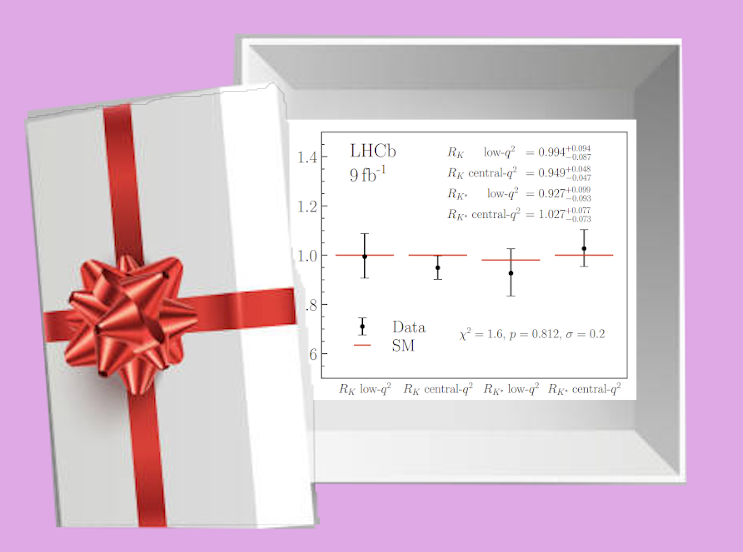
Just before the 2022 holiday season LHCb announced it was giving the particle physics community a highly anticipated holiday present : an updated measurement of the lepton flavor universality ratio R(K).  Unfortunately when the wrapping paper was removed and the measurement revealed,  the entire particle physics community let out a collective groan. It was not shiny new-physics-toy we had all hoped for, but another pair of standard-model-socks.

A picture of an opened present with a plot of LHCb's measurement photoshopped on.
A disappointing present from LHCb, their recent measurement of R(K) (black points and error bars) showed very good agreement with the standard model prediction (red line).

The particle physics community is by now very used to standard-model-socks, receiving hundreds of pairs each year from various experiments all over the world. But this time there had be reasons to hope for more. Previous measurements of R(K) from LHCb had been showing evidence of a violation one of the standard model’s predictions (lepton flavor universality), making this triumph of the standard model sting much worse than most.

R(K) is the ratio of how often a B-meson (a bound state of a b-quark) decays into final states with a kaon (a bound state of an s-quark) plus two electrons vs final states with a kaon plus two muons. In the standard model there is a (somewhat mysterious) principle called lepton flavor universality which means that muons are just heavier versions of electrons. This principle implies B-mesons decays should produce electrons and muons equally and R(K) should be one. 

But previous measurements from LHCb had found R(K) to be less than one, with around 3σ of statistical evidence. Other LHCb measurements of B-mesons decays had also been showing similar hints of lepton flavor universality violation. This consistent pattern of deviations had not yet reached the significance required to claim a discovery. But it had led a good amount of physicists to become #cautiouslyexcited that there may be a new particle around, possibly interacting preferentially with muons and b-quarks, that was causing the deviation. Several hundred papers were written outlining possibilities of what particles could cause these deviations, checking whether their existence was constrained by other measurements, and suggesting additional measurements and experiments that could rule out or discover the various possibilities. 

Feynman diagrams of the relevant b to sll transition in the Standard Model (top) and two scenarios of new particles (bottom)
Feynman diagrams showing the decay of a b quark into a strange quark and two leptons in the Standard Model (top). Two scenarios of new particles which could alter how often such an interaction occurs are shown in the bottom row: a new gauge boson (bottom left) and a leptoquark (bottom right).

This had all led to a considerable amount of anticipation for these updated results from LHCb. They were slated to be their final word on the anomaly using their full dataset collected during LHC’s 2nd running period of 2016-2018. Unfortunately what LHCb had discovered in this latest analysis was that they had made a mistake in their previous measurements.

There were additional backgrounds in their electron signal region which had not been previously accounted for. These backgrounds came from decays of B-mesons into pions or kaons which can be mistakenly identified as electrons. Backgrounds from mis-identification are always difficult to model with simulation, and because they are also coming from decays of B-mesons they produce similar peaks in their data as the sought after signal. Both these factors combined to make it hard to spot they were missing. Without accounting for these backgrounds it made it seem like there was more electron signal being produced than expected, leading to R(K) being below one. In this latest measurement LHCb found a way to estimate these backgrounds using other parts of their data. Once they were accounted for, the measurements of R(K) no longer showed any deviations, all agreed with one within uncertainties.

Plots showing two of the signal regions of for the electron channel measurements. The previously unaccounted for backgrounds are shown in lime green and the measured signal contribution is shown in red. These backgrounds have a peak overlapping with that of the signal, making it hard to spot that they were missing.

It is important to mention here that data analysis in particle physics is hard. As we attempt to test the limits of the standard model we are often stretching the limits of our experimental capabilities and mistakes do happen. It is commendable that the LHCb collaboration was able to find this issue and correct the record for the rest of the community. Still, some may be a tad frustrated that the checks which were used to find these missing backgrounds were not done earlier given the high profile nature of these measurements (their previous result claimed ‘evidence’ of new physics and was published in Nature).

Though the R(K) anomaly has faded away, the related set of anomalies that were thought to be part of a coherent picture (including another leptonic branching ratio R(D) and an angular analysis of the same B meson decay in to muons) still remain for now. Though most of these additional anomalies involve significantly larger uncertainties on the Standard Model predictions than R(K) did, and are therefore less ‘clean’ indications of new physics.

Besides these ‘flavor anomalies’ other hints of new physics remain, including measurements of the muon’s magnetic moment, the measured mass of the W boson and others. Though certainly none of these are slam dunk, as they each causes for skepticism.

So as we begin 2023, with a great deal of fresh LHC data expected to be delivered, particle physicists once again begin our seemingly Sisyphean task : to find evidence physics beyond the standard model. We know its out there, but nature is under no obligation to make it easy for us.

Paper: Test of lepton universality in b→sℓ+ℓ− decays (arXiv link)

Authors: LHCb Collaboration

Read More:

Excellent twitter thread summarizing the history of the R(K) saga

A related, still discrepant, flavor anomaly from LHCb

The W Mass Anomaly

The LHC is on turning on again! What does that mean?

5 July 2022 at 18:20

Deep underground, on the border between Switzerland and France, the Large Hadron Collider (LHC) is starting back up again after a 4 year hiatus. Today, July 5th, the LHC had its first full energy collisions since 2018.  Whenever the LHC is running is exciting enough on its own, but this new run of data taking will also feature several upgrades to the LHC itself as well as the several different experiments that make use of its collisions. The physics world will be watching to see if the data from this new run confirms any of the interesting anomalies seen in previous datasets or reveals any other unexpected discoveries. 

New and Improved

During the multi-year shutdown the LHC itself has been upgraded. Noticably the energy of the colliding beams has been increased, from 13 TeV to 13.6 TeV. Besides breaking its own record for the highest energy collisions every produced, this 5% increase to the LHC’s energy will give a boost to searches looking for very rare high energy phenomena. The rate of collisions the LHC produces is also expected to be roughly 50% higher  previous maximum achieved in previous runs. At the end of this three year run it is expected that the experiments will have collected twice as much data as the previous two runs combined. 

The experiments have also been busy upgrading their detectors to take full advantage of this new round of collisions.

The ALICE experiment had the most substantial upgrade. It features a new silicon inner tracker, an upgraded time projection chamber, a new forward muon detector, a new triggering system and an improved data processing system. These upgrades will help in its study of exotic phase of matter called the quark gluon plasma, a hot dense soup of nuclear material present in the early universe. 


A diagram showing the various upgrades to the ALICE detector (source)

ATLAS and CMS, the two ‘general purpose’ experiments at the LHC, had a few upgrades as well. ATLAS replaced their ‘small wheel’ detector used to measure the momentum of muons. CMS replaced the inner most part its inner tracker, and installed a new GEM detector to measure muons close to the beamline. Both experiments also upgraded their software and data collection systems (triggers) in order to be more sensitive to the signatures of potential exotic particles that may have been missed in previous runs. 

The new ATLAS ‘small wheel’ being lowered into place. (source)

The LHCb experiment, which specializes in studying the properties of the bottom quark, also had major upgrades during the shutdown. LHCb installed a new Vertex Locator closer to the beam line and upgraded their tracking and particle identification system. It also fully revamped its trigger system to run entirely on GPU’s. These upgrades should allow them to collect 5 times the amount of data over the next two runs as they did over the first two. 

Run 3 will also feature a new smaller scale experiment, FASER, which will study neutrinos produced in the LHC and search for long-lived new particles

What will we learn?

One of the main goals in particle physics now is direct experimental evidence of a phenomena unexplained by the Standard Model. While very successful in many respects, the Standard Model leaves several mysteries unexplained such as the nature of dark matter, the imbalance of matter over anti-matter, and the origin of neutrino’s mass. All of these are questions many hope that the LHC can help answer.

Much of the excitement for Run-3 of the LHC will be on whether the additional data can confirm some of the deviations from the Standard Model which have been seen in previous runs.

One very hot topic in particle physics right now are a series of ‘flavor anomalies‘ seen by the LHCb experiment in previous LHC runs. These anomalies are deviations from the Standard Model predictions of how often certain rare decays of the b quarks should occur. With their dataset so far, LHCb has not yet had enough data to pass the high statistical threshold required in particle physics to claim a discovery. But if these anomalies are real, Run-3 should provide enough data to claim a discovery.

A summary of the various measurements making up the ‘flavor anomalies’. The blue lines and error bars indicate the measurements and their uncertainties. The yellow line and error bars indicates the standard model predictions and their uncertainties. Source

There are also a decent number ‘excesses’, potential signals of new particles being produced in LHC collisions, that have been seen by the ATLAS and CMS collaborations. The statistical significance of these excesses are all still quite low, and many such excesses have gone away with more data. But if one or more of these excesses was confirmed in the Run-3 dataset it would be a massive discovery.

While all of these anomalies are gamble, this new dataset will also certainly be used to measure various known entities with better precision, improving our understanding of nature no matter what. Our understanding of the Higgs boson, the top quark, rare decays of the bottom quark, rare standard model processes, the dynamics of the quark gluon plasma and many other areas will no doubt improve from this additional data.

In addition to these ‘known’ anomalies and measurements, whenever an experiment starts up again there is also the possibility of something entirely unexpected showing up. Perhaps one of the upgrades performed will allow the detection of something entirely new, unseen in previous runs. Perhaps FASER will see signals of long-lived particles missed by the other experiments. Or perhaps the data from the main experiments will be analyzed in a new way, revealing evidence of a new particle which had been missed up until now.

No matter what happens, the world of particle physics is a more exciting place when the LHC is running. So lets all cheers to that!

Read More:

CERN Run-3 Press Event / Livestream Recording “Join us for the first collisions for physics at 13.6 TeV!

Symmetry Magazine “What’s new for LHC Run 3?

CERN Courier “New data strengthens RK flavour anomaly

Fan-Shaped East Antarctic Basin Formed by Rotation

3 June 2026 at 12:38

A groundbreaking tectonic model has emerged from the depths of East Antarctica’s frozen landscape, revealing a colossal rotational extension process that shaped a striking handheld-fan-shaped structural feature beneath the ice. This vast subglacial basin province, meticulously reconstructed by geoscientists, offers compelling evidence of continental-scale deformation that redefined East Antarctica’s crustal architecture. The implications of this discovery reverberate beyond geological curiosity, stirring fresh insights into the ancient tectonic forces that sculpted one of the planet’s most enigmatic continents and linking these subterranean transformations to the dynamics of Gondwana’s fragmentation.

At the heart of this tectonic revelation lies a single, continent-wide mechanism dominated by rotational extension—an earth-shaping process that not only dramatically reworked pre-existing structures but also set in motion subsequent geological phenomena of monumental scale. This model suggests that the rotational extension instigated a complex reconfiguration of East Antarctic lithosphere, fundamentally influencing the geological evolution of critical mountain ranges, including the Gamburtsev and Transantarctic Mountains. The resulting deformation and segmentation within these ranges underpin the formation of conjugate continental margins, which form a semi-circular pattern between Antarctica and Australia, illuminating previously obscure steps in the precursory tectonic stages leading up to the ultimate breakup of Gondwana.

One of the most intriguing aspects of this tectonic scenario concerns the spatial coincidence between the fan-shaped province’s pivot point and the Euler poles inferred for the extension between East and West Antarctica after approximately 34 million years ago. Although there remains uncertainty surrounding the precise location of these rotational poles, the close alignment raises provocative questions about the stability of deformation centers over geological time scales. This alignment further suggests a potential causal link bridging intraplate deformation mechanisms with the broader plate tectonic motions that characterized the region during late Cenozoic rifting and continental evolution.

Remarkably, this fan-like rotational deformation appears confined exclusively to the Antarctic lithosphere. Detailed analyses fail to identify any continuation of these features into the adjacent Australian continent, signaling a previously unrecognized intraplate deformation zone within East Antarctica. This discovery holds profound implications for reconciling longstanding inconsistencies in tectonic reconstructions, particularly in refining the fit between the Australian and Antarctic continental margins. Identifying this localized deformation zone may illuminate why some plate reconstructions have documented unusually broad crustal overlaps and difficult-to-explain mismatches across conjugate basement terranes and major fault systems.

Beyond its tectonic significance, this rotational extension model profoundly informs our understanding of the East Antarctic Ice Sheet’s origins and dynamic behaviour. Initiated approximately 34 million years ago, the ice sheet’s evolution intersects the geological fabric sculpted by the extensional forces operating beneath it. The subglacial basins forming the handheld-fan-like structure influence not only the basal topography but also the dynamic feedback mechanisms governing ice sheet retreat and advance. Due to ongoing subsidence and cooling of the crust following extension, many of these basin floors lie near or below modern mean sea level, engendering conditions that likely amplify the ice sheet’s sensitivity and vulnerability to climatic perturbations.

Topographically, the segmentation of major mountain ranges in East Antarctica via a network of east-west oriented circular shear belts has played a pivotal role in directing glacial pathways. Shear zones along these belts create structural weaknesses exploited by massive outlet glaciers such as Byrd, Beardmore, Nimrod, David, Priestley, and Tucker. These glaciers have incised profound troughs into the mountains, driving further isostatic uplift of the peaks and perpetuating a cycle of tectonic and glacial interaction. This dynamic interplay exemplifies how ancient tectonic architecture continues to govern present-day cryospheric and geomorphological processes in Antarctica’s interior.

Similarly, the prominent fan-shaped boundary system oriented roughly north-south within the East Antarctic subglacial basin province appears intimately linked to the positions of some of the continent’s most significant outlet glaciers on its coastal margins. Totten, Vanderford, Denman, Frost, and Amery glaciers align closely with major basin boundaries, suggesting that structural geology fundamentally controls glacial drainage patterns. This tectonic-ice sheet interface underscores the critical role geological processes dating back more than 150 million years play in determining the contemporary ice sheet’s behaviour and its response to environmental change.

From a broader geodynamic perspective, the existence of this rotational extension province challenges conventional interpretations of East Antarctica’s lithospheric rigidity. Instead of behaving as a monolithic block, the continent’s eastern sector underwent profound internal distortion and segmentation, contesting previous models that invoked more homogeneous deformation. This nuanced understanding demands re-evaluation of geodynamic models that couple onshore structural features with offshore fracture zone studies, highlighting the complementary roles of both deep and shallow earth processes in continent-scale reorganization.

Moreover, the timeframe of deformation pinned to the EAFBP coincides intriguingly with marked geological shifts at the Paleogene-Neogene boundary. This temporal intersection accentuates the role of tectonics in modulating the environmental context for large-scale ice sheet nucleation and persistence. The established relationship provides a unique opportunity to integrate tectonic forcing into climate and cryosphere models, potentially refining predictions of ice sheet behaviour within a warming world.

Delineating the rotational extension process also sheds light on the segmentation observed within the Transantarctic Mountains and the West Antarctic Rift System. These structural discontinuities reveal how the continent’s lithosphere accommodated strain over millions of years, via curved shear belts and fault zones demarcating discrete tectonic blocks. Such segmentation arguably fostered localized uplift and subsidence patterns, influencing sediment deposition regimes and geomorphological evolution throughout the continent’s interior.

Perhaps most strikingly, this in-depth investigation emphasizes the enduring influence of early Mesozoic tectonics on shaping Antarctica’s geological framework, long after the initial stages of Gondwana’s breakup. By identifying a singular large-scale rotational extension event as a formative agent, this model unites seemingly disparate observations—from subglacial basin geometry to mountain range uplift—into a cohesive tectonic narrative. This unified perspective provides a valuable blueprint for reinterpreting the continent’s evolutionary trajectory and contextualizing its role within global plate tectonics.

The pioneering interdisciplinary approach harnessed to unravel this subglacial province integrates geophysical imaging, structural geology, and tectonic reconstruction techniques. Detailed gravity anomaly mapping and seismic reflection profiles provide unprecedented subsurface illumination, enabling researchers to differentiate subtle deformation patterns beneath kilometers of ice. The resulting dataset affords unparalleled clarity into the three-dimensional architecture of East Antarctica’s crust, setting a benchmark for future Antarctic geoscience research.

In conclusion, this discovery of a fan-shaped rotational extension province unveils an overlooked GPS of tectonic activity underpinning the East Antarctic lithosphere. It highlights the dynamic and evolving nature of continental interiors, traditionally considered tectonically inert. As our understanding deepens, so too does the appreciation for how ancient geological forces continue to wield influence over ice dynamics, mountain formation, and continental fragmentation—processes that shape Earth both past and present.

The identification of this rotational extension province opens new avenues for refining plate reconstructions involving Antarctica and Australia. It simultaneously challenges simplifications inherent in previous models, advocating for nuanced treatments of intraplate deformation zones. This progression promises enhanced geological models capable of incorporating the intricate interplay of forces molding Earth’s least accessible continental frontier.

Ultimately, these insights carry profound ramifications for predicting Antarctica’s future amid climate change. Given the pivotal role tectonic features play in modulating ice sheet sensitivity and stability, understanding their genesis and evolution becomes crucial for anticipating responses to accelerating global warming. This research thus exemplifies the vital synergy between geological sciences and cryospheric studies essential for informed stewardship of polar environments.


Subject of Research: The formation and tectonic evolution of a fan-shaped subglacial basin province in East Antarctica driven by rotational extension.

Article Title: A fan-shaped subglacial basin province in East Antarctica formed by rotational extension.

Article References:
Armadillo, E., Rizzello, D., Balbi, P. et al. A fan-shaped subglacial basin province in East Antarctica formed by rotational extension. Nat. Geosci. (2026). https://doi.org/10.1038/s41561-026-01991-6

Image Credits: AI Generated

DOI: https://doi.org/10.1038/s41561-026-01991-6

Keywords: East Antarctica, rotational extension, subglacial basins, tectonic deformation, Gondwana breakup, ice sheet dynamics, Transantarctic Mountains, Gamburtsev Mountains, intraplate deformation, East Antarctic Ice Sheet, plate reconstructions, lithospheric segmentation, continental rifting, conjugate margins

Dual Swin Transformer Advances Necrotizing Enterocolitis Diagnosis

3 June 2026 at 08:05

In the ever-evolving field of pediatric medicine, necrotizing enterocolitis (NEC) represents one of the most formidable challenges clinicians face in neonatal intensive care units. This devastating intestinal disease primarily affects premature infants, often leading to severe complications or even mortality if not diagnosed and treated promptly. Despite advances in neonatal care, the diagnosis and prediction of the need for surgical intervention in NEC remain mired in uncertainty due to the subtle, variable nature of early signs and limited current diagnostic tools. Scientists and clinicians alike have long sought innovative ways to improve early identification and prognosis to optimize outcomes for these vulnerable patients.

In a groundbreaking development announced this June, a team of researchers led by Wang, Jin, Cai, and colleagues have unveiled a cutting-edge artificial intelligence model that harnesses the power of multimodal data to improve NEC diagnostic accuracy and surgical risk prediction. Published in Pediatric Research, this new approach leverages a dual swin transformer architecture—the first of its kind applied to this specific clinical problem—blending diverse patient data inputs to provide a transparent, interpretable decision-support system. This innovation not only promises to revolutionize how NEC is understood and managed but also sets a new standard for AI’s role in complex clinical decision-making.

Necrotizing enterocolitis is characterized by inflammation and necrosis of the infant’s intestine, the pathogenesis of which remains incompletely understood but is believed to involve a complex interplay of intestinal immaturity, microbial imbalance, and systemic inflammatory responses. Early symptoms such as feeding intolerance, abdominal distension, and bloody stools are often nonspecific, leading to diagnostic ambiguity. Current diagnostic methodologies rely heavily on clinical examination combined with radiographic imaging, which may delay recognition of severe disease requiring urgent surgery. Consequently, there is an urgent need for more sensitive and specific predictive tools to guide timely interventions which can preserve bowel function and improve survival.

The dual swin transformer model introduced by the authors capitalizes on recent advances in machine learning and neural network architectures rooted in natural language processing and computer vision. Swin transformers are hierarchical vision transformers designed to efficiently capture local and global context within medical images and tabular clinical data. By integrating radiologic images with patient-specific clinical metrics—such as laboratory values and vital signs—this dual model concurrently processes and synthesizes multiple modalities. This multimodal fusion enables the AI to discern subtle patterns indicative of disease onset and progression that are often imperceptible to human observers.

Importantly, the model was developed with interpretability at its core. In the current landscape of AI in healthcare, “black box” systems can engender clinician skepticism due to a lack of transparency regarding decision rationale. By employing attention mechanisms and visualization strategies, the model highlights key features driving its predictions. For example, it can indicate which segments of radiographic images or particular blood test trends raised suspicion for NEC or increased the likelihood of surgical necessity. This transparency enhances clinical trust and facilitates a collaborative human-machine diagnostic workflow rather than a replacement of clinical judgment.

The researchers trained and validated the model on a robust dataset comprising hundreds of neonates from multiple tertiary centers, ensuring diverse representation across gestational ages and clinical presentations. The dataset included serial abdominal ultrasound and X-ray imaging paired with longitudinal clinical data capturing inflammatory markers, feeding regimens, and hemodynamic parameters. Such comprehensive data collection was decisive in enabling the model not only to achieve high accuracy rates but also to adapt dynamically to temporal changes reflective of NEC progression. Their results demonstrated significant improvements over traditional scoring systems and single-modality AI tools.

Beyond diagnostic accuracy, the study explored the model’s ability to predict which infants would likely require surgical intervention. NEC surgery typically involves resection of necrotic bowel segments, a procedure associated with considerable risk and long-term complications such as short bowel syndrome. Early prediction of surgical need can enhance resource allocation, optimize timing of consultation with pediatric surgeons, and potentially improve postoperative outcomes. The dual swin transformer demonstrated remarkable prowess in stratifying patients by surgical risk, outperforming established clinical predictors by a wide margin and thus holding potential to reshape surgical decision-making paradigms.

Moreover, the translational potential of this technology is significant. The model’s architecture allows for seamless integration into existing hospital information systems and picture archiving and communication systems (PACS), paving the way for real-time clinical deployment. Its modularity also provides adaptability to other neonatal and pediatric disease contexts characterized by multimodal diagnostic complexity, such as congenital heart diseases or sepsis. This flexibility marks an important step toward personalized medicine driven by AI-enhanced precision diagnostics tailored to the needs of critically ill infants.

However, the authors acknowledge several challenges ahead. The generalizability of the model to different healthcare settings, especially those with limited imaging resources, requires further investigation. Additionally, ensuring data privacy and addressing ethical concerns related to AI-driven decisions in vulnerable populations remains paramount. Prospective clinical trials are needed to validate efficacy and safety in routine practice, alongside strategies to train frontline clinicians in interpreting and effectively incorporating AI output into patient care.

The implications of this research extend beyond NEC, highlighting the transformative role of next-generation AI architectures in neonatal intensive care. By bridging the gap between complex multimodal data and actionable clinical insights, such models have the potential to fundamentally enhance early diagnosis, risk stratification, and outcome prediction across a spectrum of neonatal diseases. The collaborative, transparent design philosophy championed by Wang and colleagues exemplifies the future of AI in medicine—one that empowers human clinicians with unprecedented analytic power while ensuring accountability and interpretability.

As the field of pediatric research embraces AI innovations like the dual swin transformer, the promise of improving survival and quality of life for the most fragile patients comes into sharper focus. This confluence of advanced computational techniques with clinical expertise heralds a new era of neonatal care, offering hope to countless families facing the terrifying specter of NEC. By accelerating timely diagnosis and guiding precise surgical decision-making, this technology stands poised to save lives and reduce the burdens of one of neonatal medicine’s most urgent challenges.

In summary, the dual swin transformer model represents a seminal advancement in applying artificial intelligence to the complex problem of necrotizing enterocolitis diagnosis and surgical prediction. Combining sophisticated multimodal data integration with interpretability, it outperforms existing methods while fostering clinician trust. Continued refinement and validation promise to unlock its full clinical potential, signaling a paradigm shift in how AI supports neonatal critical care.

With this landmark study published in Pediatric Research, Wang, Jin, Cai, and their team have undoubtedly charted a new course for marrying AI innovation with frontline neonatal medicine. The coming years will reveal the extent to which models like theirs become integral to NICU practice, but the trajectory is clear—machine learning and biomedical science are converging to confront NEC with previously unattainable precision and foresight, forever altering the landscape of infant healthcare.


Subject of Research:
Development of an interpretable multimodal artificial intelligence model for the diagnosis and surgical prediction of necrotizing enterocolitis (NEC) in neonates.

Article Title:
Dual swin transformer for assisting in the diagnosis and surgical prediction of necrotizing enterocolitis.

Article References:
Wang, C., Jin, J., Cai, L. et al. Dual swin transformer for assisting in the diagnosis and surgical prediction of necrotizing enterocolitis. Pediatr Res (2026). https://doi.org/10.1038/s41390-026-05145-7

Image Credits: AI Generated

DOI: 10.1038/s41390-026-05145-7

Sulodexide Reduces Neonatal Sepsis Lung Injury

2 June 2026 at 23:57

In a groundbreaking new study published in Pediatric Research, researchers have unveiled promising evidence that sulodexide, a well-established antithrombotic agent, may significantly mitigate lung injury caused by sepsis in neonatal rats. This compelling discovery centers on the modulation of the tumor necrosis factor-alpha (TNF-α) pathway, a pivotal mediator in inflammatory processes. The implications for neonatal care and the broader understanding of sepsis-induced pulmonary complications are profound, heralding a potential shift in therapeutic strategies for one of the most vulnerable patient populations.

Sepsis remains one of the leading causes of morbidity and mortality in neonates worldwide, often precipitating acute lung injury (ALI) through complex inflammatory cascades. The pathophysiology of sepsis-induced lung injury involves an acute and dysregulated immune response, which leads to alveolar damage, vascular permeability, and eventual respiratory failure. Central to this inflammatory milieu is TNF-α, a cytokine extensively studied for its role in promoting inflammation and tissue damage during septic events. Efforts to modulate TNF-α signaling have been ongoing, yet effective and safe therapeutic interventions tailored for neonates have remained elusive until now.

The research team, led by Xie, Song, and Deng, employed a meticulously controlled experimental model utilizing neonatal rats subjected to sepsis induction. They administered sulodexide and monitored a battery of pulmonary function parameters, histological markers, and biochemical assays to assess lung injury and inflammation. Their findings were striking: sulodexide treatment markedly attenuated the severity of lung injury, as evidenced by reduced alveolar damage, diminished inflammatory cell infiltration, and lower levels of TNF-α expression in pulmonary tissues. These outcomes collectively suggest that sulodexide fulfills a dual role, acting both as an anticoagulant and an anti-inflammatory agent in the setting of neonatal sepsis.

At a mechanistic level, the study delves deep into the signaling cascades influenced by sulodexide administration. TNF-α, which drives the recruitment and activation of neutrophils and macrophages, appears to be directly modulated by sulodexide, which subsequently decreases downstream inflammatory mediators such as interleukins and chemokines. This modulation effectively dampens the cytokine storm known to exacerbate tissue injury in septic lungs. The research also highlights sulodexide’s ability to preserve endothelial integrity, preventing the leakage of plasma components into alveolar spaces—a hallmark of acute lung injury.

What makes this study particularly compelling is its relevance to the neonatal immune system, which differs significantly from adults in both its composition and responsiveness. Neonatal immunity is characterized by a heightened vulnerability to both infectious insults and inflammatory injury, necessitating cautious but innovative therapeutic approaches. Sulodexide’s profile, characterized by a relatively favorable safety margin due to its longstanding clinical use in vascular disorders, positions it as an attractive candidate for repurposing in neonatal sepsis management.

Furthermore, the study’s rigorous approach provides a robust framework for future translational research. By integrating histopathological examination with molecular assays, it paints a comprehensive picture of how sulodexide’s anti-inflammatory effects unfold at the cellular level. Notably, the attenuation of TNF-α signaling reduces the expression of adhesion molecules, potentially limiting the recruitment of leukocytes that perpetuate lung damage. These insights deepen our understanding of the critical checkpoints in sepsis-induced lung injury and highlight novel targets for intervention.

The implications of these findings extend beyond the confines of neonatal care. Sepsis-induced lung injury remains a challenging clinical entity in adults as well, and the possibility of sulodexide serving as a multi-faceted therapeutic agent sparks broader interest. Given its existing approval and well-known pharmacodynamics, sulodexide could enter clinical trials relatively swiftly, expediting the bench-to-bedside transition that so often hampers the advent of new treatments.

Critically, the research acknowledges the complexity of sepsis as a systemic syndrome and the myriad factors influencing its progression. While the TNF-α pathway is a major driver of pathogenesis, the multifactorial nature of sepsis-induced organ injury necessitates a combinatorial therapeutic perspective. Thus, sulodexide might be optimally used in conjunction with other interventions, such as antibiotics, supportive respiratory therapies, or immunomodulators, to achieve maximal benefit.

The study also raises important questions regarding dosing, timing, and long-term safety of sulodexide in neonatal subjects. Future investigations must clarify these parameters to ensure that translational application does not compromise the delicate balance of neonatal physiology. Moreover, an evaluation of sulodexide’s effect on systemic coagulation in septic neonates will be crucial, as the risk of bleeding remains a significant clinical concern in this population.

Beyond therapeutic considerations, this research enriches the scientific community’s understanding of neonatal sepsis pathogenesis. The elucidation of how sulodexide interrupts the TNF-α-driven inflammatory cycle offers valuable insights into the molecular choreography underpinning lung injury. It underscores the potential for revisiting established drugs within new pathological contexts, a strategy that accelerates innovation while leveraging existing safety data.

As the medical community grapples with rising rates of antimicrobial resistance and the persistent challenge of sepsis management, findings such as those presented by Xie et al. highlight the importance of targeting host responses rather than pathogens alone. Modifying the inflammatory environment to prevent tissue injury emerges as a promising avenue to improve outcomes, especially in neonates where pathogen clearance strategies must be delicately balanced.

The prospect of sulodexide as a therapeutic agent in neonatal sepsis-induced lung injury introduces a beacon of hope. Its dual anticoagulant and anti-inflammatory properties, combined with its modulatory effect on crucial cytokine pathways, position it within an elite cadre of drugs with the potential to transform neonatal intensive care practices. With further research and clinical validation, sulodexide could revolutionize the management of a condition long viewed as intractable.

This study is a testament to the power of integrative biomedical research bridging pharmacology, neonatology, and immunology. It exemplifies how deep mechanistic insights can drive the repurposing of old drugs, offering new life-saving therapies for vulnerable populations. As such, it invites a reexamination of both scientific dogma and clinical praxis surrounding neonatal sepsis.

The potential public health impact of such interventions cannot be overstated. Improvements in neonatal survival translate to reduced healthcare burdens and better quality of life for countless families globally. Recognizing and harnessing the molecular underpinnings of diseases like sepsis-induced lung injury is imperative for ushering in a new era of personalized and precision medicine.

In summary, the study convincingly demonstrates that sulodexide attenuates sepsis-induced lung injury in neonatal rats primarily via modulation of the TNF-α signaling pathway. This revelation offers a novel therapeutic avenue that warrants expedited clinical exploration. It stands as a beacon in neonatal medicine, promising enhanced outcomes through targeted, mechanism-based intervention.


Subject of Research: Sulodexide’s therapeutic effects on sepsis-induced lung injury in neonatal rats, focusing on the TNF-α inflammatory pathway.

Article Title: Sulodexide attenuates sepsis-induced lung injury in neonatal rats via TNF-α pathway.

Article References:
Xie, L., Song, M., Deng, Z. et al. Sulodexide attenuates sepsis-induced lung injury in neonatal rats via TNF-α pathway. Pediatr Res (2026). https://doi.org/10.1038/s41390-026-05067-4

Image Credits: AI Generated

DOI: 02 June 2026

Mayo Clinic and Microsoft Join Forces to Create Cutting-Edge AI Model Revolutionizing Healthcare

2 June 2026 at 23:35

In a groundbreaking announcement that promises to reshape the landscape of healthcare technology, the esteemed Mayo Clinic and global tech giant Microsoft have embarked on a strategic collaboration to develop a frontier artificial intelligence model meticulously designed for healthcare applications. This partnership unites Mayo Clinic’s unparalleled medical expertise, extensive de-identified clinical health data, and deep longitudinal patient insights with Microsoft’s cutting-edge AI frameworks, cloud infrastructure, and superintelligence capabilities. Together, they aspire to create an AI system that transcends the limitations of general-purpose models, delivering advanced clinical reasoning and transformational healthcare outcomes at scale.

The core objective of this endeavor is to engineer a healthcare-specific AI model that integrates the complexity and nuance of medical knowledge with real-world clinical data to enable earlier detection of diseases, tailor personalized treatment regimens, and ultimately enhance patient prognosis. Unlike conventional AI models primarily trained on generic datasets lacking clinical context, this frontier AI model will synthesize diverse streams of clinical information over time—such as laboratory results, imaging, medical histories, and longitudinal health trajectories—facilitating a more holistic understanding of patient health and evolving conditions.

From a technical standpoint, Microsoft’s Azure Foundry will serve as the global deployment platform, providing scalable and secure API access for healthcare organizations worldwide. This architecture ensures that the model can be leveraged effectively in varied clinical settings while maintaining rigorous adherence to privacy, security, and data governance standards established by Mayo Clinic. The deliberate choice for Mayo Clinic to retain ownership of the AI model underscores their commitment to patient trust, safety, and ethical stewardship of medical data—addressing ongoing concerns surrounding AI transparency and accountability.

The collaboration leverages the strengths of both institutions: Mayo Clinic’s pioneering Mayo Clinic Platform, which has, over the past seven years, catalyzed healthcare innovation through a safe and patient-centric framework for de-identified data aggregation, combined with Microsoft’s leadership in AI engineering and cloud technology. This fusion enables not only the construction of an advanced AI system but also its rigorous validation, continuous refinement, and adaptation through real-world clinical feedback loops at Mayo Clinic’s trusted environment.

Clinical integration of AI poses unique complexities absent from other domains, requiring deep contextual understanding of disease pathophysiology, evolving standards of care, and ethical principles governing patient interactions. This frontier model is purpose-built to address these challenges, integrating clinical guidelines, evidence-based research, and longitudinal patient monitoring to support clinicians in complex diagnostic and therapeutic decision-making. By facilitating earlier and more precise interventions, the model promises to reduce diagnostic errors, delay disease progression, and personalize care pathways with unprecedented granularity.

Mustafa Suleyman, CEO of Microsoft AI, encapsulated the transformative potential of this collaboration by emphasizing the advent of “frontier medical intelligence” that merges high-fidelity clinical insights with scalable AI computation. This strategic partnership harnesses domain expertise alongside AI to transcend conventional healthcare barriers while accelerating innovation trajectories that could revolutionize patient outcomes on a global scale.

Moreover, the AI model’s deployment in Mayo Clinic’s clinical environment enables iterative learning—continuously refining through clinician feedback, outcome tracking, and updated medical knowledge. This dynamic adaptation mechanism is critical to address evolving disease patterns, emerging clinical evidence, and variability across patient populations, solidifying the model’s robustness and reliability.

Ethical AI stewardship remains a cornerstone of this project, with strict measures implemented to protect patient privacy and ensure data de-identification. Governance protocols encompass data provenance, auditability, bias mitigation, and transparent algorithms, aligning with regulatory frameworks and fostering trust among clinicians and patients alike. These principles are paramount to ensuring AI’s responsible integration into sensitive healthcare ecosystems.

The technological backbone also involves sophisticated natural language processing, computer vision, and multimodal data fusion techniques to process unstructured clinical notes, medical imaging, genomic data, and real-time monitoring signals. By empowering the AI model to comprehend complex data modalities and clinical narratives, the partnership unlocks nuanced predictive analytics and actionable insights that were previously unattainable.

This initiative arrives at a crucial juncture, as the healthcare sector grapples with escalating complexity, rising chronic disease burdens, and global resource constraints. The infusion of frontier AI models capable of augmenting human expertise offers a path toward scalable, efficient, and personalized healthcare delivery—enabling clinicians to navigate massive data volumes with enhanced precision and timeliness.

In sum, the collaboration between Mayo Clinic and Microsoft marks an epoch-making convergence of medical science and AI innovation. By fundamentally reinventing how clinical data is leveraged and integrated, this frontier model holds immense promise to revolutionize diagnostics, therapies, and patient-centric care pathways—potentially setting a new standard in healthcare intelligence for decades to come.

Subject of Research: Healthcare-focused frontier artificial intelligence model development
Article Title: Mayo Clinic and Microsoft Collaborate to Develop Frontier AI Model Tailored for Healthcare
News Publication Date: Not provided
Web References:
– https://www.mayoclinic.org/
– https://www.microsoft.com/
References: Not provided
Image Credits: Not provided

Keywords
Frontier AI, healthcare AI, clinical data integration, personalized medicine, medical AI model, Mayo Clinic Platform, Microsoft AI, healthcare innovation, clinical decision support, ethical AI, patient privacy, medical data stewardship, AI validation, AI deployment

❌