Normal view

Microsoft's Project Solara is an Android OS designed for agents instead of apps

2 June 2026 at 21:47

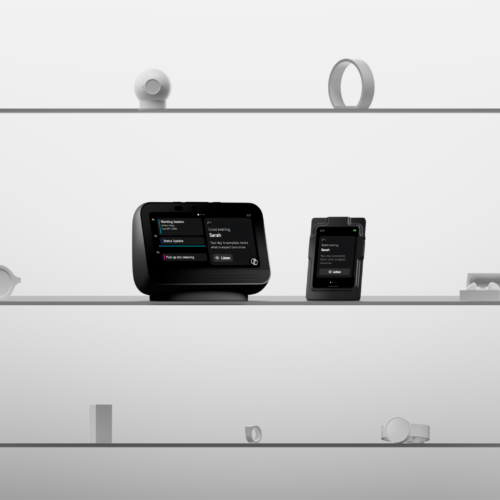
Microsoft has been deeply committed to the growth of generative AI technology in recent years through its now-fragmented partnership with OpenAI. At Build 2026, the company remains all-in on AI, and it's looking toward the future with a new software platform. The new Android-based OS is called Project Solara, and Microsoft says Solara is designed to run agents instead of apps.

Project Solara is not something you'll have to worry about killing your apps anytime soon. It's limited to a few pieces of concept hardware and software that are awaiting the magical agents of the future. The vision is for Solara to run on myriad specialized devices with interfaces generated on the spot, and it's all powered by the explosive intelligence of models that Microsoft and others insist will soon exist.

According to Microsoft, Solara is a chip-to-cloud platform intended to free agents from reliance on single interfaces. Much of Microsoft's messaging around AI is speculative and self-serving, but the company rightly points out that new computing form factors have always required specialization, and that process is complex and expensive. The shift to mobile computing, for example, tripped Microsoft up multiple times as it fell behind on app availability, security, and long-term support.

Read full article

Comments

© Microsoft

Mathematicians warn of AI threats to profession as industry encroaches

2 June 2026 at 19:19

Mathematicians warned against rising tech industry influence in a declaration describing the many challenges that AI poses to mathematics research. The timing of the declaration comes two weeks after OpenAI publicized one of its AI models as having disproved an 80-year-old mathematical conjecture in geometry.

The declaration was developed by a working group of 16 researchers over eight months following a conference held at Leiden University in the Netherlands in September 2025. Published on June 2, 2026, the resulting Leiden Declaration on Artificial Intelligence and Mathematics has been endorsed by the International Mathematical Union—the international non-governmental organization that hosts conferences and oversees the most prestigious prizes in mathematics such as the Fields Medal.

“Mathematicians should find it quite striking that tech companies are suddenly interested in their work,” said Kevin Buzzard, a mathematician at Imperial College London, in a statement. “The Leiden Declaration is a well-thought-through response to what is currently happening, as AI continues to disrupt this space.”

Read full article

Comments

© Kenishirotie via iStock / Getty Images

Microsoft unveils Scout, an autonomous AI agent built on OpenClaw

Microsoft has developed a new AI agent that can run autonomously around the clock to complete tasks across Microsoft 365 applications.

Microsoft Scout, unveiled at the company’s Build event Tuesday, is a new type of always-on agent based on the OpenClaw agent framework that Microsoft calls “autopilots.”

These act on a user’s behalf with their own governed Entra identity, Omar Shahine, corporate vice president at Microsoft, said in a blog post.

“Autopilots stay active in the background, understand how work gets done across your apps and systems, and take action without needing to be prompted each time,” said Shahine, a Microsoft veteran who recently announced he is leading a new team to bring OpenClaw-based personal assistants to Microsoft 365 apps.

Microsoft Scout connects to apps such as Teams, Outlook, OneDrive, and SharePoint, and accesses data from chat, email, calendar, and contacts. Accessed via Teams, it can also interact with a user’s browser and with external apps via model context protocol (MCP). The tool functions across cloud, desktop, and the web.

Shahine said Scout can reduce mundane tasks that office workers face, such as coordinating and scheduling meeting times with colleagues, or blocking times in a user’s calendar based on upcoming work commitments. “It can also spot risks, like stalled decisions, so you can address them before they become blockers,” he said.

It’s available as an “experimental release” to customers of the company’s Frontier program, Microsoft said, and will require Intune policy configuration and “opt-in attestation.”

Scout is the latest in a range of agentic tools available in Microsoft 365 apps, including Agent Mode, where users can interact with Microsoft 365 Copilot inside apps such as Word and Excel to create content, and Copilot Cowork — Microsoft’s version of Anthropic’s Claude Cowork agent that can complete tasks independently.

Despite the company’s big AI push, Microsoft has struggled to convince businesses that Microsoft 365 Copilot is worth the additional cost; it’s advertised at $30 per user each month for large businesses. Around 3% of Microsoft 365 customers pay for the add-on subscription, the company said in January, with 15 million paid users. (Microsoft announced last month that that figure has now risen to 20 million.)

It’s not clear whether Scout will be included in Microsoft 365 Copilot subscriptions or charged separately. Microsoft did not immediately provide additional details about pricing.

The launch follows Google’s recent announcement of Spark, an autonomous agent that runs within the Google Workspace application suite. Spark can also be considered a response to the launch of OpenClaw last year, initially under the name “Clawdbot.”

OpenClaw has drawn scrutiny due to apparent security flaws, but Microsoft promises Scout is built with “enterprise-grade security and controls, so it can be trusted in your organization from day one.”

For organizations that have already deployed Microsoft 365 Copilot, Scout doesn’t introduce entirely new data risks, said Jeff Pollard, vice president and principal analyst at Forrester. But it “amplifies whatever data governance problems already exist. The difference this time: instead of surfacing sensitive data to users, it can potentially act on it.

“That makes it an active risk in terms of day to day operations,” Pollard said.

Potential security concerns echo those for AI agents and are exacerbated with personal agents such as Scout: amplified data exposure (since agents can interact with data and use tools autonomously); agent manipulation or prompt injection; unexpected actions, such as using tools or acting in ways that aren’t supposed to be allowed; and observability gaps related to understanding user and agent intent and the explainability of actions.

“However, these tools exist because they make AI far more useful for individuals, so security leaders can’t draw a line in the sand and say “no.” They have to adapt and figure out how to secure them,” said Pollard.

As with most new workplace technologies, Pollard expects adoption to start with “power users” who design and develop the use cases for the agent that can then expand more widely across users.

He warned that the accuracy of tools such as Microsoft Scout can fall short of user expectations. “LLM agents still struggle with goal alignment, multi-step reasoning drifts, and tool misuse,” he said. “Users aren’t always great at explaining what they want and LLM agents aren’t always great at providing what was requested. That’s a continuing problem.”

Android phones will soon be able to detect spoofed calls and impersonation scams

2 June 2026 at 19:00

We're expecting Android 17 to begin rolling out later this month, but first, Google has a batch of updates for the wider Android device ecosystem. As usual, some of the new features are limited to specific devices, and others require using Google's apps. But if you don't mind the latter, you can get automated protection from the growing threat of deepfake phone scams.

According to Google, "impersonation fraud" is one of the most common types of financial scams. The FTC tracked almost $3 billion in losses from such scams during 2024, and the improvements in AI voice cloning tools more recently are making the schemes easier to pull off. The voice models are becoming so capable that it can be difficult to identify a fake caller even when an AI is imitating someone you talk to every day.

Google's solution is an expansion of the system it debuted last month for verified financial calls. Now, a similar feature will work with anyone in your contacts. Many of the most effective deepfake scams involve spoofing a contact's number, which makes the call look more legitimate when your phone lights up. Victims of these scams are then greeted by an accurate re-creation of the person's voice spinning a yarn that involves an urgent need for cash.

Read full article

Comments

© Ryan Whitwam

Android phones will soon be able to detect spoofed calls and impersonation scams

2 June 2026 at 19:00

We're expecting Android 17 to begin rolling out later this month, but first, Google has a batch of updates for the wider Android device ecosystem. As usual, some of the new features are limited to specific devices, and others require using Google's apps. But if you don't mind the latter, you can get automated protection from the growing threat of deepfake phone scams.

According to Google, "impersonation fraud" is one of the most common types of financial scams. The FTC tracked almost $3 billion in losses from such scams during 2024, and the improvements in AI voice cloning tools more recently are making the schemes easier to pull off. The voice models are becoming so capable that it can be difficult to identify a fake caller even when an AI is imitating someone you talk to every day.

Google's solution is an expansion of the system it debuted last month for verified financial calls. Now, a similar feature will work with anyone in your contacts. Many of the most effective deepfake scams involve spoofing a contact's number, which makes the call look more legitimate when your phone lights up. Victims of these scams are then greeted by an accurate re-creation of the person's voice spinning a yarn that involves an urgent need for cash.

Read full article

Comments

© Ryan Whitwam

Android phones will soon be able to detect spoofed calls and impersonation scams

2 June 2026 at 19:00

We're expecting Android 17 to begin rolling out later this month, but first, Google has a batch of updates for the wider Android device ecosystem. As usual, some of the new features are limited to specific devices, and others require using Google's apps. But if you don't mind the latter, you can get automated protection from the growing threat of deepfake phone scams.

According to Google, "impersonation fraud" is one of the most common types of financial scams. The FTC tracked almost $3 billion in losses from such scams during 2024, and the improvements in AI voice cloning tools more recently are making the schemes easier to pull off. The voice models are becoming so capable that it can be difficult to identify a fake caller even when an AI is imitating someone you talk to every day.

Google's solution is an expansion of the system it debuted last month for verified financial calls. Now, a similar feature will work with anyone in your contacts. Many of the most effective deepfake scams involve spoofing a contact's number, which makes the call look more legitimate when your phone lights up. Victims of these scams are then greeted by an accurate re-creation of the person's voice spinning a yarn that involves an urgent need for cash.

Read full article

Comments

© Ryan Whitwam

Android phones will soon be able to detect spoofed calls and impersonation scams

2 June 2026 at 19:00

We're expecting Android 17 to begin rolling out later this month, but first, Google has a batch of updates for the wider Android device ecosystem. As usual, some of the new features are limited to specific devices, and others require using Google's apps. But if you don't mind the latter, you can get automated protection from the growing threat of deepfake phone scams.

According to Google, "impersonation fraud" is one of the most common types of financial scams. The FTC tracked almost $3 billion in losses from such scams during 2024, and the improvements in AI voice cloning tools more recently are making the schemes easier to pull off. The voice models are becoming so capable that it can be difficult to identify a fake caller even when an AI is imitating someone you talk to every day.

Google's solution is an expansion of the system it debuted last month for verified financial calls. Now, a similar feature will work with anyone in your contacts. Many of the most effective deepfake scams involve spoofing a contact's number, which makes the call look more legitimate when your phone lights up. Victims of these scams are then greeted by an accurate re-creation of the person's voice spinning a yarn that involves an urgent need for cash.

Read full article

Comments

© Ryan Whitwam

Building Gods from Silicon | A Modern Parable

13 May 2026 at 06:14
The rapid growth of data centers and the pursuit of artificial general intelligence (AGI) by global elites is driven by the desire to create man’s own god, using a massive assemblage of Silicon chips. But the creation of true intelligence requires an infinite knowledge base, which humans cannot create.

The Race for Artificial General Intelligence and the Coming of the Lawless One

27 October 2025 at 10:27
The emergence of a Artificial General Intelligence (AGI) may be soon claimed to have occurred and even demonstrated by one of these AI superclusters. It may be heralded as the arrival of a super intelligence, more intelligent than all mankind who deserves to be worshipped as a god, a god of human creation.

Emergence | Is it the Answer to Artificial Sentient Life?

26 October 2025 at 02:44
The ongoing competition to create artificial intelligence involves massive investments by major companies in developing supercomputers with extensive GPU capacities. However, true sentient intelligence cannot emerge merely from advanced technology, as intelligence is the product of divine creation, not a result of computational complexity alone.

Can AI Ever Be Sentient?

John McCarthy, a significant figure in artificial intelligence, coined the term during the 1956 Dartmouth conference, aiming to develop machines that could simulate human intelligence. He proposed key aspects of AI, questioning its potential sentience. I argue that true sentience originates from a divine Creator, not from machines.

Will We Still Need Humans? According to Bill Gates “Not For Most Things.”

7 February 2025 at 06:11
Bill Gates, on the Jimmy Fallon show, predicted that AI will significantly reduce the need for humans. Gates acknowledged some human activities would remain, like enjoying sports, yet emphasized that tasks such as production and agriculture will increasingly rely on AI, suggesting a potential global depopulation mindset.

Now You Gotta Buy a Second Computer Just for Your AI Agent, Nvidia Declares

2 June 2026 at 16:43

While gamers beg for cheaper GPUs, and consumers at large yearn for affordable devices amid constant chip shortages, Nvidia is giving the people what they really want: laptops primarily designed for running AI agents.

On Monday, CEO Jensen Huang unveiled a new family of consumer PC chips, called the RTX Spark, designed for handling intense AI workloads. It’s a CPU and GPU rolled into one — like the processors that power modern Macbooks — and will be used in a new line of Windows computers that are “purpose-built for personal agents,” to use the wording of a company release.

Huang did not shy away from grand proclamations. At the annual Nvidia GTC event in Taiwan, he claimed RTX Spark was “the most efficient PC chip ever built,” extolled the new agent-focused design as “reinventing the personal computer,” and claimed that an RTX Spark PC “literally runs everything the world has ever created.”

“Plus, it now runs agents,” he added.

Audacious statements are par for the course for AI companies, but the pivot towards providing the hardware for personal agents raises heaps of questions. How big is the market for these laptops, and will they age like milk if agents go out of fashion?

Based on what Nvidia is teasing, they won’t be cheap. Mark Aevermann, Nvidia’s senior director of product development, said that the PCs will target “creators, AI developers and gamers” and will be priced at the premium end of the market, per The Wall Street Journal. The epic specs of the flagship version of its chip bear that out, boasting 20 CPU cores, 6,144 GPU cores, and 128 gigabytes of unified memory. All this power enables it to run AI agents with 120 billion parameters, Nvidia claims.

You can bet that a laptop with such a powerful chip will cost several thousand dollars at the very least, though Nvidia says it will offer cheaper, less powerful versions. And while AI agents are popular, especially in coding professions, it remains dubious just how many power users are out there demanding beefy machines to run AI models locally. 

Nonetheless, Huang imagines that in ten years, consumers will have “AI supercomputers in your house, running agents and assistants” connected to everything from your TV, security cameras, to dishwashers, per the Financial Times.

Skepticism may abound, but Huang’s has seemingly got all the major Windows PC manufacturers on board — to wit, Asus, Dell, Lenovo, HP, and MSI. Microsoft is also joining the pack by launching a new RTX Spark laptop called the Surface Laptop Ultra.

If there’s another takeaway, it’s that running AI agents is getting awfully expensive. Companies and individual developers are finding themselves stuck with exorbitant usage fees from using agentic tools like Claude Code. And perhaps that’s not surprising, since the preferred way to use them is to run multiple at a time in the background, each handling separate tasks. But now, if you want to be among the truly AI agent elite who walk around with their laptops half open, you should spend even more than you already do — on an Nvidia one.

More on AI: Neighbors Horrified by Data Center Twice the Size of Manhattan

The post Now You Gotta Buy a Second Computer Just for Your AI Agent, Nvidia Declares appeared first on Futurism.

❌