Normal view

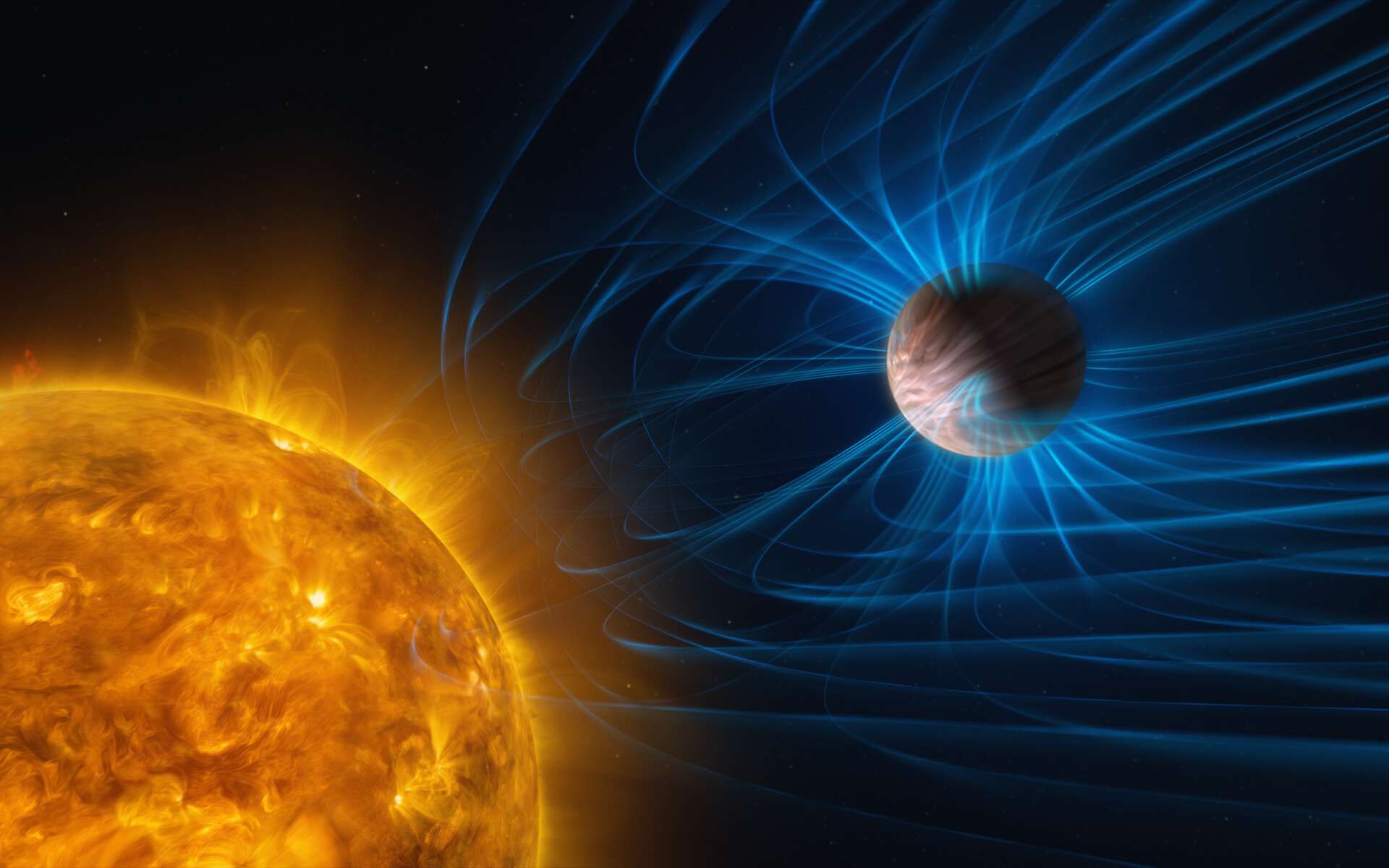
La preuve la plus solide à ce jour d’un bouclier magnétique autour d’exoplanètes

Les planétologues savent que le champ magnétique terrestre influence notre atmosphère de manière complexe. On pense qu'il pourrait parfois constituer un élément clé pour rendre des exoplanètes habitables. Mais sommes-nous certains qu'elles peuvent parfois posséder des champs magnétiques, au...

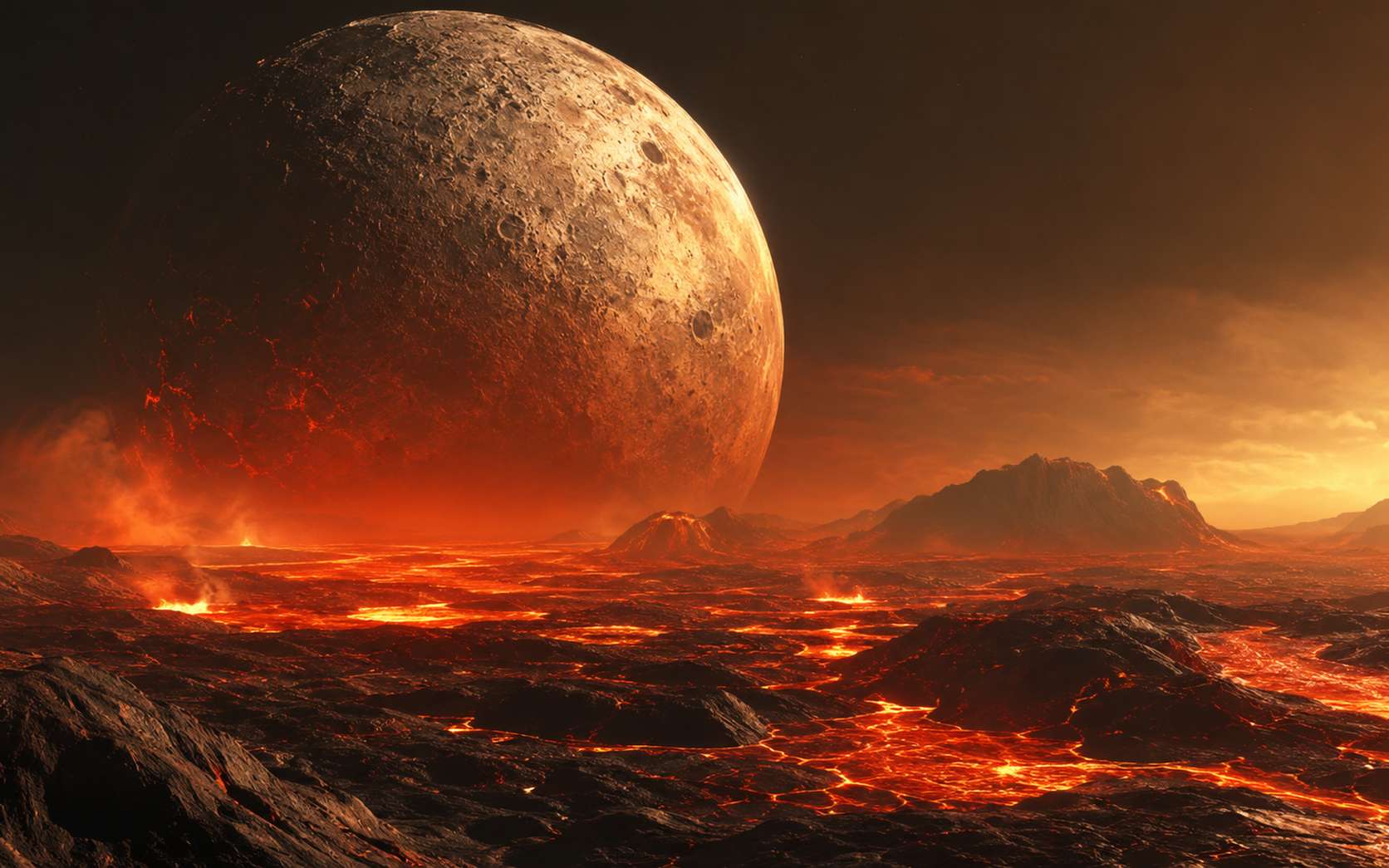
Quand la Lune était géante dans le ciel, elle aurait maintenu la Terre en enfer… et préparé la vie

Il y a 4,5 milliards d’années, la Terre n’avait rien d’un monde habitable : recouverte d’un océan de magma et enveloppée d’une atmosphère étouffante, elle était pourtant déjà le théâtre de processus essentiels à l’émergence de la vie. Une nouvelle étude montre que la jeune Lune, en exerçant...

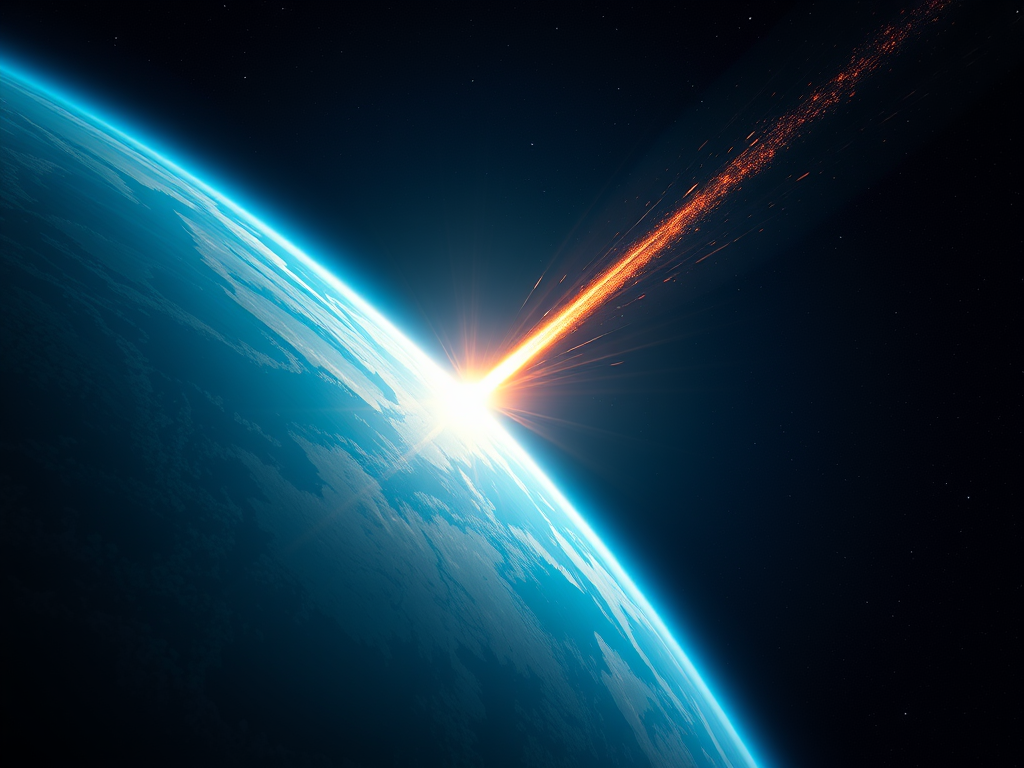
Earth’s Atmosphere: A Shield by Design

13 February 2025 at 23:24
The Earth's atmosphere, though thin, protects against meteors and asteroids, causing most to burn up upon entry. Significant impacts, like the Vredefort and Chicxulub craters, demonstrate catastrophic events, which occurred during or just after the Genesis Flood, highlighting a biblical perspective on geological history.

Scientists Have Confirmed a “Completely Unexpected” Martian Discovery with Help from NASA’s ‘MAVEN’ Mission Data

20 May 2026 at 17:34

NASA scientists say observations of an unusual phenomenon in the atmosphere of Mars have been confirmed, according to findings detailed in a new study.

The unexpected discovery was made possible with data from the American space agency’s Mars Atmosphere and Volatile Evolution (MAVEN) mission.

This story begins in 2023, when something very unexpected turned up in MAVEN data: NASA scientists observed what appeared to be an atmospheric effect known to occur here on Earth but never seen in Mars’ comparatively thinner atmosphere.

Based on data collected with MAVEN’s suite of instruments, the phenomenon—known as the Zwan-Wolf effect—occurs when charged particles end up being projected out of magnetic structures that atmospheric scientists call flux tubes. The resulting effect, which has been known to occur here on Earth for several decades, is beneficial because it is associated with the deflection of the solar wind around the planet.

“Very Interesting Wiggles”

For researchers like Christopher Fowler, the discovery of anything comparable to this odd atmospheric quirk anyplace other than Earth would have been the last thing he expected to find.

However, that’s precisely what occurred as he began digging into the MAVEN data.

“When investigating the data, I all of a sudden noticed some very interesting wiggles,” Fowler recently said.

As a research assistant professor at West Virginia University in Morgantown, Fowler was admittedly perplexed by what he discovered.

“I would never have guessed it would be this effect,” he said, “since it’s never been seen in a planetary atmosphere before.”

Now, Fowler is the lead author of the recent study that helped confirm its presence in the Martian atmosphere.

An Unlikely Discovery 

One reason the discovery seemed so unlikely is the thinness of the Martian atmosphere compared to Earth’s. Mars lacks the global magnetic field our planet has, which significantly influences how solar winds and other space weather phenomena impact the planet.

Despite such conditions, confirmation of the Zwan-Wolf effect within a particle-rich region of the Martian atmosphere below 200 kilometers revealed that these charged particles were being squeezed in the same way as flux tubes do in our atmosphere, thereby spreading these charged bits of matter throughout the Red Planet’s atmosphere.

According to the team’s findings, they now believe that the Martian magnetosphere, which often changes with solar weather, likely indicates that the Zwan-Wolf effect is constantly at work in the planet’s atmosphere.

However, the effect is mostly undetectable by MAVEN’s instruments. That wasn’t the case in 2023, when space weather events recorded at that time appear to have amplified the effect enough that the NASA spacecraft’s sensors were able to observe it for the first time.

A Martian Swan-Wolf Effect is Confirmed

Still, the initial information the MAVEN team obtained was subtle. Fowler says it amounted to little more than a few notable fluctuations in magnetic field measurements, collected as MAVEN passed through the Martian atmosphere.

Taking a closer look at these “interesting” readings revealed an unexpected surprise, which they ultimately determined to be the same Zwan-Wolf effect known from decades-old studies of Earth’s atmosphere.

“No one expected that this effect could even occur in the atmosphere,” Fowler said of the discovery.

Although the presence of this effect is well-characterized on Earth, understanding its dynamics in Mars’ atmosphere could provide meaningful insights into the forces that drive it elsewhere, including unmagnetized regions like those surrounding planet Venus and moons like Titan.

Additionally, the team believes their work could help to better characterize the changes induced by space weather events and how they can thereby alter the environment on planets like Mars.

“That’s what makes this even more exciting,” Fowler added. “It introduces interesting physics that we haven’t yet explored and a new way the Sun and space weather can change the dynamics in the Martian atmosphere.”

The team’s new study, “Detection of Zwan-Wolf effect in the ionosphere of Mars,” appeared in Nature Communications on May 18, 2026.

Micah Hanks is the Editor-in-Chief and Co-Founder of The Debrief. A longtime reporter on science, defense, and technology with a focus on space and astronomy, he can be reached at micah@thedebrief.org. Follow him on X @MicahHanks, and at micahhanks.com.

Earth May Be Seeding Venus With Life, According to New Research

30 May 2026 at 22:39
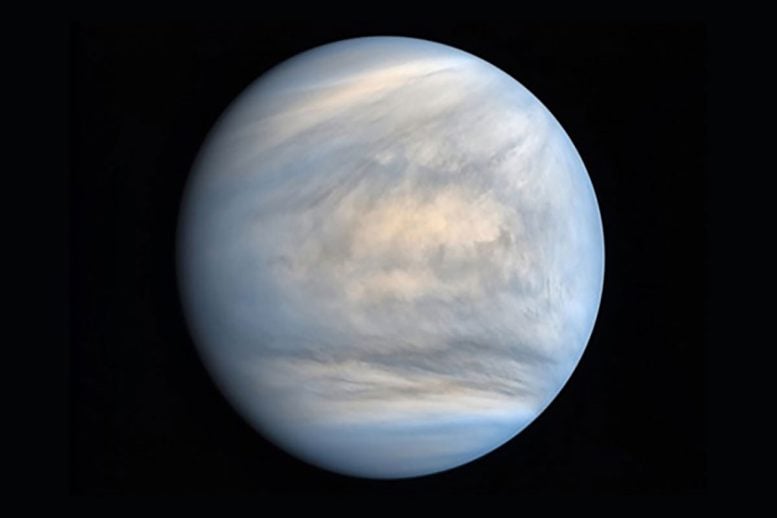
Venus Cloud Layers in UltravioletModels suggest that impact-ejected material from Earth could reach Venus’ clouds and potentially survive there briefly. Panspermia is the idea that life, or the ingredients needed for life, can move through space on asteroids, comets, and other objects. If life’s building blocks appear on one planet, a powerful impact could blast material from its surface [...]

Webb Detects Methane in Atmosphere of Exo-Saturn TOI-199b

25 May 2026 at 19:16
An artist’s rendition of the ultrahot Jupiter TOI-1518b and its parent star. Image credit: Sci-News.com.

Using spectral data from the Near-Infrared Spectrograph (NIRSpec) onboard the NASA/ESA/CSA James Webb Space Telescope, astronomers analyzed the atmosphere of TOI-199b, a distant Saturn-mass world that is neither frozen nor scorching hot.

The post Webb Detects Methane in Atmosphere of Exo-Saturn TOI-199b appeared first on Sci.News: Breaking Science News.

Pollen dispersion study offers hope for hay fever sufferers

7 April 2026 at 10:30
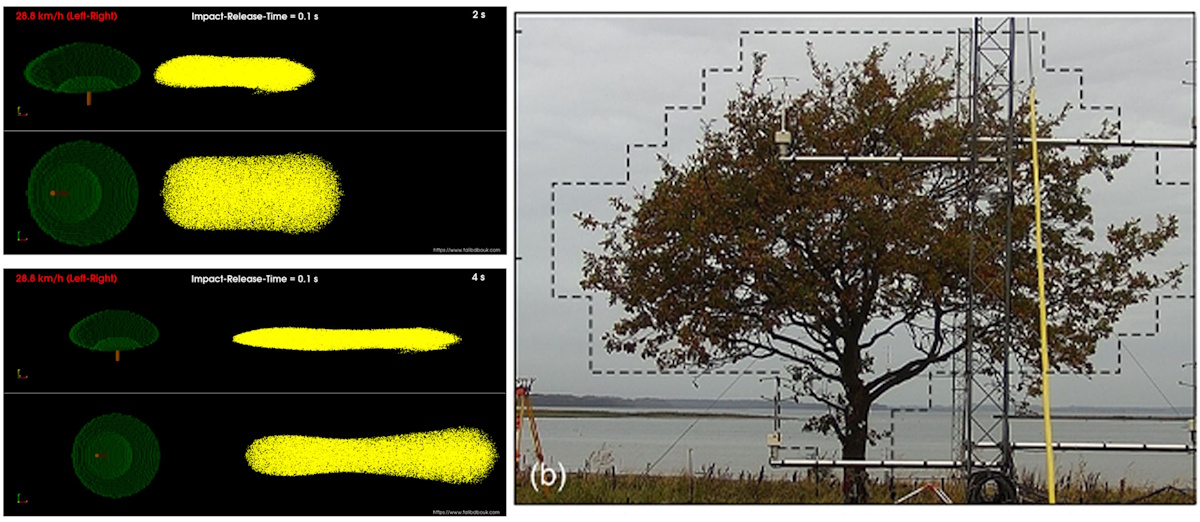
Oak tree and simulated pollen dispersion
Exploring wind-driven pollen transport Simulating the detachment and dispersion of pollen around an oak tree. (Courtesy: Dbouk et al.)

Researchers in France have developed a novel method to investigate how pollen is dispersed from trees when the wind blows – paving the way for new approaches to urban planning that could help alleviate the symptoms of seasonal hay fever.

A project team headed up at the University of Rouen Normandy has discovered for the first time that different trees can exhibit different local dynamics for the transport of pollen grains – for example, when pollen is dispersed by wind – and that that this behaviour depends on the local detachment force of pollen grains occurring at the scale of each flower inside the tree.

As part of the project, outlined in the paper Flow and plants: On the dispersion of wind-induced tree pollen, published in Physics in Fluids, the researchers developed an innovative direct-forcing porous immersed boundary method (DF-PIBM) to explore the wind-driven pollen dispersion and transport phenomena from green trees.

“The research investigates, through advanced physics-based modelling and simulations, the impact of tree types and their interaction with wind on the local dispersion of pollen grains in the surrounding environment,” says lead author Talib Dbouk, a researcher in the CORIA Lab, CNRS, at the University of Rouen Normandy.

As Dbouk explains, the team’s approach involved the use of a range of advanced computational fluid dynamics (CFD) modelling and simulation techniques to solve the local air flow around and within the trees, taking into account the interaction between the air flow and the pollen grains in and/or on the tree flowers.

“The DF-PIBM is an advanced numerical technique developed in order to accurately solve the local resistance of a tree to wind by assuming the tree leaves lead to the fact that a tree can [act] as a porous medium, where the local porosity inside the tree will depend on its leaf area density,” he adds.

According to Dbouk, this method was “derived, implemented and validated in an in-house CFD code”, first by testing different flow configurations around and within porous spherical particles – and then by extending and applying it to different types and structures of trees.

A digital twin

In Dbouk’s view, the key advantage of using DF-PIBM compared with other approaches is that it allows researchers to accurately solve the local air flow velocity and the local pressure inside the tree.

“DF-PIBM has a number of current and potential applications – including prediction of the behaviour of airborne pollen grains and support for future applications involving vegetation–flow interactions in urban settings,” he says. “The currently developed DF-PIBM allows us to accurately predict all the phenomena of the detachment, dispersion, resuspension and local transport of airborne pollen grains when emitted from a green space – for example, trees and grass – and thus any vegetation zones inside urban environments under different weather conditions.”

Meanwhile, co-author Julien Reveillon confirms that the next steps for the research team will involve the integration of all its physics-based models into a new advanced digital twin of the Rouen-Normandy Metropolitan region in Normandy, France.

“This is with the intention of developing a new advanced multi-risk assessment digital platform that can help our local public authorities in their future territorial management and planning strategies – for example, to better anticipate and fight climate change phenomena, especially those related to local heat islands and aero-allergens like pollen, in addition to environmental pollution of air, water and soil,” he says.

“Moreover, huge efforts are also [being] made in order to develop and integrate advanced models related to predicting and simulating airborne pollutant particle dispersion in our region, for example those related to emissions from both natural fires and industrial accident fires,” co-author Béatrice Patte-Rouland tells Physics World.

The post Pollen dispersion study offers hope for hay fever sufferers appeared first on Physics World.

❌