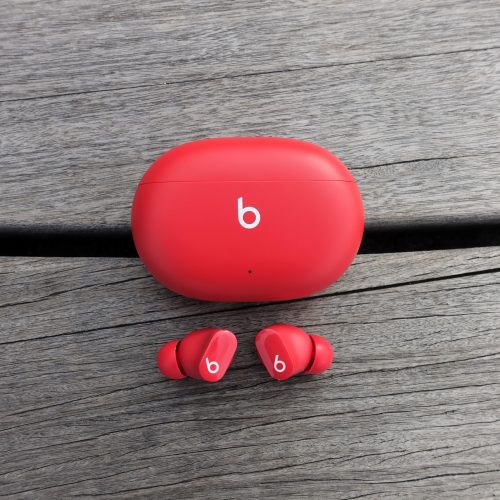
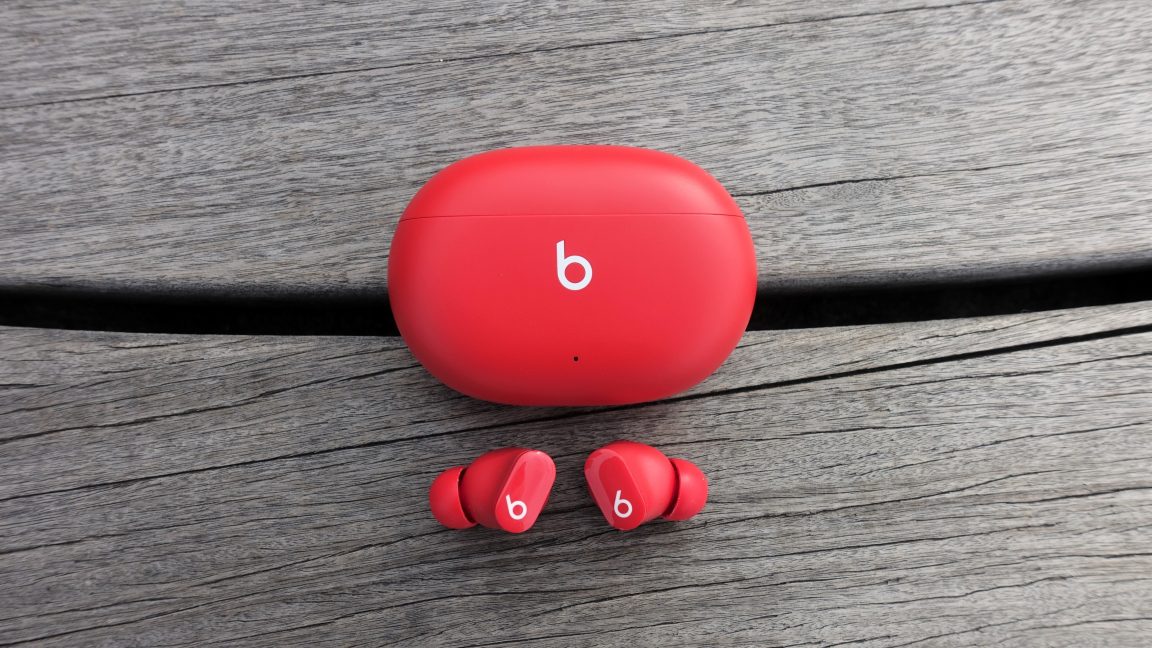
Apple has updated its Beats Studio Buds wireless earbuds to patch a high-severity vulnerability that could be exploited by nearby hackers to eavesdrop on users.
The vulnerability, CVE-2025-20701, allowed improper authentication in the firmware running on the Bluetooth-related chips, enabling people within signal range to impersonate devices that had previously been paired with the earbuds. The researchers demonstrated this in a series of end-to-end attacks that allowed them to eavesdrop on conversations or sounds within earshot of the phone microphone.
Apple joins the patch party
“Impact: An attacker within Bluetooth range may be able to listen through the microphone of a device which is not yet paired and actively seeking pair requests,” Apple said in a Tuesday security advisory. The fix is contained in Beats Firmware Update 1B211, which is delivered automatically while headphones are paired with and within Bluetooth range of a user’s iPhone, iPad, or Mac. Users can check their firmware version by going to Settings on their device, navigating to Bluetooth, and tapping the info button next to the headphones.
Even small asteroids lead complex lives. During its flyby of the asteroid Donaldjohanson last year, NASA’s Lucy spacecraft revealed the asteroid to be a wobbly, peanut-shaped body that has undergone a lot of activity in its relatively short history. Formed as fragments coalesced after a violent collision 155 million years ago, the asteroid was transformed by the small but inexorable force of the Sun’s radiation, all while retaining signs of the brief presence of liquid water in its distant past.
Zooming through the main asteroid belt toward one of the Jupiter Trojan asteroid groups, the Lucy spacecraft collected the first close-up images and other data at Donaldjohanson on April 20, 2025, as it passed 650 miles away from the asteroid. The data revealed that, instead of spinning simply around one axis like most other asteroids and planets, Donaldjohanson has a more complicated two-axis rotation. Scientists also saw Donaldjohanson’s peanut shape and the craters and ridges on its surface.
A timelapse video made from images taken by NASA’s Lucy spacecraft as it approached the asteroid Donaldjohanson on April 20, 2025. The L’LORRI (Lucy Long Range Reconnaissance Imager) instrument, the spacecraft’s high-resolution black-and-white imager, collected these images over two hours as the spacecraft rapidly closed in on the asteroid from an initial separation of more than 58,000 miles (93,000 km), until the spacecraft passed a mere 650 miles (1000 km) from the 5-mile- (8 km-) wide asteroid.
NASA/Goddard/SwRI/JHU-APL
Lucy’s encounter with the asteroid was planned as a dress rehearsal for the spacecraft and mission team before its primary asteroid encounters, which begin with Lucy’s flyby of the Trojan asteroid Eurybates on Aug. 12, 2027. The instruments performed as expected, and, as a bonus, scientists got a rare opportunity to study a previously unexplored asteroid up close and to compare it to two asteroids with similar compositions but different histories: Bennu, the target of NASA’s OSIRIS-REx sample-return mission, and Ryugu, the site of JAXA’s (Japan Aerospace Exploration Agency) Hayabusa2 sample-return mission.
With Earth-based telescopes, observers saw fluctuations in the light Donaldjohanson reflects, regular patterns of peaks and valleys, typical of an elongated object rotating once every 10.5 Earth days. But Lucy’s data revealed another pattern: Donaldjohanson appears to be rotating like a wobbly top. Paper authors reported that the asteroid rotates end-over-end once every 10.5 Earth days, and wobbles back and forth around its long axis once every 26.5 days.
The asteroid Donaldjohanson is shown slowly rotating in a tumbling, non-principal axis motion, with its angular momentum vector and rotation axes indicated. The surface is colored by gravity slope, which measures the angle between the local surface and the direction of gravity. Higher values (warmer colors) indicate steeper terrain relative to the local gravitational pull. Regions with limited stereo image coverage have been masked out where the shape model is less well constrained.
Kel Elkins/NASA’s Science Visualization Studio/DLR
Peanut shape
While the Earth-based observations hinted at Donaldjohanson’s elongated shape, the Lucy flyby revealed a “bilobate” structure: two lobes connected by a neck, like a peanut. These lobes are likely two fragments from an asteroid collision that gently came together afterward by their mutual gravity.
Donaldjohanson likely rotated at least 10 times faster when it formed, having slowed to its current rate in the last 20 to 60 million years, the team estimates. As it slowed, the balance between the centrifugal force pushing things apart and gravity pulling things together changed and loose rocky material slid down slopes creating the worn-down appearance of many craters, as the flyby images showed.
The paper’s authors say that the asteroid’s slowing rotation is likely caused by a subtle consequence of solar heating known as the YORP effect. Each part of the asteroid’s Sun-warmed surface radiates heat away as infrared light, and that radiation imparts a tiny recoil force to the surface. Because the asteroid’s shape isn’t symmetric, this results in a net torque, or twist, that can change the asteroid’s rotation. Thus, YORP can slow asteroid spins down or speed them up, as in the case of Bennu (once every four hours) and Ryugu (once about every seven hours), which both likely used to rotate much slower than they do today.
Fleeting water
As it passed by Donaldjohanson at 30,000 mph, Lucy recorded the signatures of iron-rich clay minerals on the surface. These clays must have formed in the distant past with the help of liquid water. However, the exposure must have been brief, Lucy scientists concluded, because iron in clays tends to be replaced with other elements, such as magnesium, as water lingers.
Indeed, scientists saw magnesium-rich clays at Bennu and Ryugu, which suggested prolonged water exposure, perhaps lasting millions of years, when they were still part of larger asteroids.
This difference in water exposure history, and other characteristics, may mean that the parent bodies of these asteroids formed at different times or in different regions of the solar system before relocating to the main belt.
Compare, contrast
Donaldjohanson is thought to be made from rocky remnants of a larger, carbon- and water-rich asteroid that collided with another object in the main asteroid belt. Bennu and Ryugu are thought to have formed in the same way and in the same region.
But Donaldjohanson is different. At 155 million years old, it is much younger than Bennu and Ryugu, which formed 1 to 2 billion years ago. Donaldjohanson also has remained in the asteroid belt since birth, while its wandering cousins migrated into orbits around the Sun that bring them close to Earth’s orbit about once a year (which made them perfect close targets for sample return missions).
During its April 20, 2025, encounter with the main-belt asteroid Donaldjohanson, NASA’s Lucy spacecraft discovered evidence for iron-rich clays on the surface using its infrared spectrometer. These clays, which are similar to those found in carbon-rich meteorites such as QUE 97990, indicate that water was briefly present in the asteroid during the distant past.
NASA/Goddard/SwRI/Dan Gallagher
“It’s helpful for scientists to compare Donaldjohanson with asteroids like Bennu and Ryugu, which are seemingly similar asteroids, because every subtle difference is another clue to our origin story,” said Simone Marchi, Lucy deputy principal investigator and lead author of the study at the Boulder, Colorado, office of the Southwest Research Institute.
“Once we start learning more about the Trojans, a completely different population of space rocks with very different histories, our understanding of solar system formation is destined to be challenged,” said Marchi.
Named after a fossilized skeleton of a human ancestor discovered in Ethiopia in 1974, NASA’s Lucy will be the first mission to explore Jupiter’s Trojan asteroids, a population of well-preserved space rocks that formed early in our solar system’s history and could help scientists understand how the planets formed and moved around before settling in their current configuration.
Lucy’s principal investigator is based out of the Boulder, Colorado, branch of Southwest Research Institute, headquartered in San Antonio. NASA’s Goddard Space Flight Center in Greenbelt, Maryland, provides overall mission management, systems engineering, and safety and mission assurance. Lockheed Martin Space in Littleton, Colorado, built the spacecraft. Lucy is the 13th mission in NASA’s Discovery Program. NASA’s Marshall Space Flight Center in Huntsville, Alabama, manages the Discovery Program for the agency’s Science Mission Directorate in Washington.
For more information on NASA’s Lucy mission, visit:
Zooming through the main asteroid belt toward one of the Jupiter Trojan asteroid groups, the Lucy spacecraft collected the first close-up images and other data at Donaldjohanson on April 20, 2025, as it passed 650 miles away from the asteroid. The data revealed that, instead of spinning simply around one axis like most other asteroids and planets, Donaldjohanson has a more complicated two-axis rotation. Scientists also saw Donaldjohanson’s peanut shape and the craters and ridges on its surface.
Remote Scottish islands turned tiny wrens into giant birds that may be evolving into new species. Tiny wrens living on remote Scottish islands are providing scientists with a rare look at how evolution can reshape animals in isolated environments. A new study led by researchers at the University of Birmingham found that several island populations [...]
Ne cherchez plus l'offre tablette de l'année. Rakuten casse les prix avec le pack Xiaomi Redmi Pad 2 Pro et ses accessoires essentiels. Le rapport qualité-prix est tout simplement inédit.
As summer road trips begin and rainy weather arrives, many drivers may encounter one of the most dangerous situations on the road: hydroplaning. This happens when a layer of water builds up between a vehicle’s tires and the road surface, causing the tires to lose grip. In severe cases, drivers can temporarily lose steering and […]
In this episode of Space Minds, David Ariosto talks with Mike Kincaid, president and chief executive of the Challenger Center. They discuss the space workforce pipeline and the center’s role […]
Pour moins de 230 euros, Rakuten propose le Xiaomi Redmi Note 15 Pro dans une version particulièrement bien équipée. Avec ses 256 Go de stockage, ses 8 Go de RAM et sa compatibilité 5G, il offre une expérience fluide tout en laissant une large place aux photos, vidéos et applications.
These keyboards stand alone. Complex. | Photo: Antonio G. Di Benedetto / The Verge
Anime collaborations are everywhere, from Gundam watches and Naruto nights at Major League ballparks to justaboutanythingEvangelion. But these Ghost in the Shell keyboards from Iqunix are some of the coolest examples I've seen of anime-inspired everyday tech. They look sick and they type and play great. At $249 they're a hefty upcharge over the regular $169 version, but that's still a decent price for such excellent build quality and unique designs.
The standard Iqunix EV63 that the Ghost in the Shell Edition is based on is a 65-percent Hall effect keyboard aimed at gamers. It's got a compact layout, an 8,000Hz polling rate, and ultra-se …
An experimental vaccine could help stop fentanyl and future designer-drug variants before they can trigger a deadly overdose. Fentanyl has become one of the deadliest drugs in the United States, with fentanyl and related synthetic opioid variants now claiming more lives each year than car crashes and gun violence combined. When taken in excessive amounts, [...]
Scientists are exploring a fascinating idea: some of the brilliant stellar explosions seen across the universe may have been triggered by tiny black holes formed shortly after the Big Bang. A new study led by researchers at the State University of New York Polytechnic Institute (SUNY Poly) suggests that these mysterious objects, called primordial black […]
Around 66 million years ago, an asteroid wiped out 75% of the species on Earth. This event caused the extinction of all dinosaurs except birds, referred to as non-avian dinosaurs. However, an open question in paleontology is whether the dinosaurs were already declining before the asteroid hit. Many scientists think that around 5 to 10 million years before the extinction event, dinosaurs became less biologically diverse across America, making them more prone to extinction.
To investigate this hypothesis, scientists recently revisited fossils in a rock layer from the end of the dinosaur era that previous researchers had incorrectly dated. The bulk of the fossils from this period had previously been collected from a different section of rocks called the Hell Creek Formation in Montana. These researchers studied a rock layer in New Mexico that is exposed to the surface, known as the Naashoibito Member. It’s approximately 30 meters (about 100 feet) thick and formed from ancient river sediments.
To determine when the Naashoibito Member formed, the scientists measured the decay of radioactive elements within its mineral grains over time, a technique called radiometric dating. The scientist reasoned that these mineral grains must have crystallized before being transported and incorporated into the Naashoibito Member, so their youngest ages should provide a maximum depositional age.
They determined the ages of 1,046 crystals of the mineral feldspar from 2 dinosaur-bearing rock layers in the Naashoibito Member. Based on these ages, the researchers found that a sandstone within 5 meters (about 16 feet) of the lowest boundary of the Naashoibito Member must be younger than 66.9 million years old. They found that the other layer, which is around 3.5 meters (11 feet) from the base of the lowest boundary, must be younger than 66.4 million years old. These age ranges indicated that the sandstone contains dinosaur fossils formed 400,000 years before their extinction.
Next, the researchers measured the direction of magnetic minerals inside the rocks, using a practice called magnetostratigraphy. The direction of these minerals indicates where Earth’s magnetic field was pointing at that time. Scientists have shown that the Earth’s magnetic field has flipped multiple times over Earth’s history, so they can use these magnetic signals to create a timescale for when the sediments formed.
The researchers wanted to determine whether the magnetic minerals were lined up in a direction like today, called normal polarity, or the opposite, called reverse polarity. The researchers found one rock layer with normal polarity at the base of the Naashoibito Member, and one with reverse polarity in the upper part of the Naashoibito Member. These magnetic field directions lined up with 2 known polarity intervals over a timeline that matched the feldspar dates. Together, these data demonstrated that the Naashoibito Member formed at the end of the dinosaur era, around the same time as the Hell Creek Formation.
Next, the researchers wanted to test whether non-avian dinosaurs maintained their diversity across different regions of Western North America during this time period. They compared fossil patterns from locations across North America using statistical grouping methods that determine how similar or different their environments were. They found that temperature, rather than geographical location alone, was the best predictor of diversity at the extinction event.
The team concluded that a diverse population of Naashoibito dinosaurs lived at around the same time as the Hell Creek dinosaurs. Earlier scientists surmised that dinosaurs were already on the decline because they studied the colder northern regions, where diversity was lower. However, these results suggest that warmer conditions in the south still supported diverse dinosaur populations. Together, this evidence suggests that dinosaurs were still diverse and thriving 66 million years ago, and that their extinction was indeed a result of the asteroid impact.
Payer un abonnement tous les mois pour utiliser un VPN n’attire pas forcément tout le monde. Beaucoup d’utilisateurs cherchent aujourd’hui une solution plus souple. Une offre gratuite, un plan sans engagement ou une version limitée peuvent suffire pour protéger ses données sur internet, regarder...
Les frites croustillantes n'ont pas dit leur dernier mot. Avant le Prime Day, Amazon fait chuter le prix de la Ninja Air Fryer Max Pro sous les 100 euros. Avec sa capacité de 6,2 litres, ses 6 fonctions de cuisson et ses 2 000 W de puissance, cet air fryer populaire s'invite dans les cuisines...
En 2026, la RTX 5070 est la carte de référence pour les joueurs exigeants : elle fait tourner tous les grands titres en 1440p Ultra avec le ray tracing activé, sans compromis sur la fluidité. En dessous, la RTX 5060 couvre largement les jeux compétitifs et les AAA modérés en 1080p-1440p....
Les beaux jours sont de retour et l’envie de se détendre en extérieur se fait sentir. Le spa gonflable Bestway Lay-Z-Spa Acapulco permet justement de profiter de séances de relaxation à domicile, tout en bénéficiant actuellement d’une remise de près de 60 euros chez Cdiscount. Une offre qui...
À Rocamadour, sur le causse de Gramat, des magots vivent en liberté au cœur d’une forêt préservée. Sans cages ni vitres, les visiteurs évoluent à pas feutrés parmi ces macaques de Barbarie, observant de près une espèce menacée. Une expérience rare, qui invite à porter un autre regard sur la...
Dreame figure désormais parmi les marques les plus populaires sur le marché des aspirateurs-balais. Son catalogue regroupe des appareils adaptés à différents usages et budgets. Mais vers quel modèle faut-il se tourner aujourd'hui ?
L’Asteroid Day rassemble chaque année chercheurs, passionnés d’astronomie et curieux autour des enjeux liés aux objets célestes. Mais l’événement dépasse désormais largement les conférences physiques : une grande partie des échanges se déroule en ligne, entre retransmissions, forums spécialisés...

 Login