 Login

Replit’s CEO says the future of work is the ‘self-driving company’
Replit CEO Amjad Masad envisions a future of “self-driving companies,” where AI agents handle day-to-day tasks and people focus on higher-level decisions.

What’s the weirdest thing you learned this week? Well, whatever it is, we promise you’ll have an even weirder answer if you listen to PopSci’s hit podcast. The Weirdest Thing I Learned This Week hits Spotify, YouTube, Apple, and everywhere else you listen to podcasts every-other Wednesday morning. It’s your new favorite source for the strangest science-adjacent facts, figures, and Wikipedia spirals the editors of Popular Science can muster. If you like the stories in this post, we guarantee you’ll love the show.
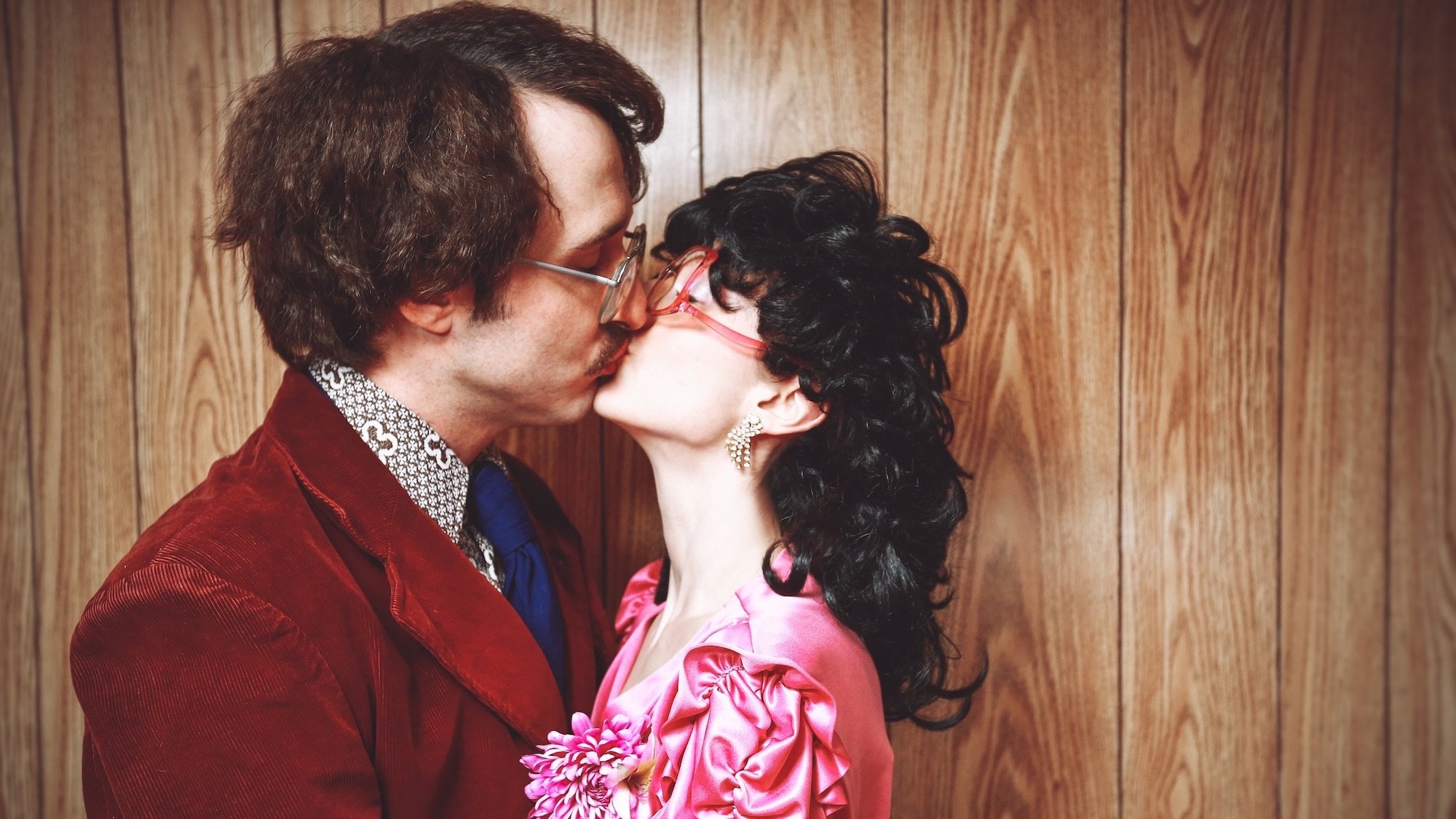
This year’s Ig Nobel Prize in biomechanics went to researchers trying to answer a surprisingly complicated question: what’s a kiss? Their definition—”non-agonistic interactions involving directed, intraspecific, oral-oral contact with some movement of the lips/mouthparts and no food transfer”—was concocted to exclude such exchanges as ants feeding each other with their mouths, bees and birds vomiting at one another, and fish that fight by smashing their open jaws together.
Defining a kiss might seem like a silly scientific endeavor, but it was a crucial first step for their research. Once they had definite criteria for a kiss in place, they went looking for that specific behavior in research about all sorts of primates. By mapping the appearance of kissing the same way they might map any other evolutionary adaptation, they came up with an estimation of how far back the trait could have evolved. The number they landed on is some 20+ million years.
Listen to this week’s episode to hear more about the 2026 Ig Nobel winners, and to learn why kissing is such a mysterious—and unique—human behavior.
Featuring Riley Black
This week’s episode features special guest Riley Black. Her new book, Tyrant Lizard Queen: The Love, Life, and Terror of Earth’s Greatest Carnivore, comes out later this month.
For her guest spot on this week’s Weirdest Thing, Riley decided to tell us all about the fastest—and perhaps fattest—cat in North America.
For decades, paleontologists thought that an extinct cat called Miracinonyx evolved into a cheetah-like springer specifically to chase down North America’s speedy pronghorns. It was a tidy, romantic story of predator and prey evolving together in lockstep until one had gone extinct; it explained why pronghorns were so dang fast, too. But Riley always found the story a little fishy, and she wasn’t the only one: in 2023, researchers noted that these American cats had forearm bones more suited for grasping prey (cougar-style) than for running super fast (like a cheetah).
New research has put another nail in the coffin of the “American cheetah.” For starters, their fossils were found as far north as the Yukon—where they wouldn’t have had any pronghorns to hunt. And based on their DNA, the researchers say, they’re much more closely related to modern pumas. They also had a unique diet: according to isotope analysis, the researchers think the Yukon-dwelling cats feasted on salmon. That leaves us with one big question: what were pronghorns running from?
Featuring Amanda Reed
Old friend-of-the-pod Amanda came back to join us this week. She took us on a tour of mausoleum history.
Walk into Pittsburgh’s Allegheny Cemetery, and you’ll find it hard to miss the sphinxes. They’ve got ample bosoms, appropriative headdresses, and nothing whatsoever to do with actual Egyptian funeral traditions. They’re actually monuments to the fortune (and ego) of the late industrialist Emil Winter.
Emil, who got to move into these fancy digs in 1941, was not unique in desiring such an opulent postmortem dwelling. In fact, he decided to have it built after seeing a similar one by the same architect: the Woolworth family mausoleum in New York City.
Listen to this week’s episode to learn more about humanity’s enduring desire to build fancy houses for the deceased.
The post Why did kissing evolve? If we want to find out, we’ve got to decide what counts as a kiss first. appeared first on Popular Science.
New terms let Meta crawl sites tied to business users and use the content to train its products, widening rights ad buyers had already granted.
The post Meta’s New Terms Expand Crawling Rights Beyond Advertisers appeared first on Search Engine Journal.
Waterfalls play an essential role in river development and landscape evolution. Researchers are particularly interested in how abrupt changes in the steepness of a river channel, also called knickpoints, develop. Knickpoints vary in size and can be as small as your index finger or as large as Niagara Falls. Researchers from Virginia hypothesized that waterfalls, a type of knickpoint, can influence erosion when a river channel is cut into solid rock, called bedrock.
The researchers wondered whether fractures and other pre-existing weaknesses can influence how water removes rock slabs from a river channel, via an erosional process called plucking. Fractures can form in many different orientations, but the researchers focused on 3. Imagine a flat tabletop that represents a riverbed. Fractures that are parallel to the flat tabletop are called horizontal fractures. If you tip the table so the low end points downstream, that’s the direction of downstream-dipping fractures. If you tip the table so the low end points upstream, that’s the direction of upstream-dipping fractures.
First, the researchers tested how fracture orientation changed erosion before an established knickpoint. They used a man-made channel, called a flume, to simulate a natural river system. To set up the experiment, they glued layers of small tiles about the size of an adult’s thumbnail to a plastic frame and put it in the flume. Then, they placed a layer of unglued tiles upstream of the knickpoint.
To begin the experiment, the researchers incrementally increased the amount of water flowing through the flume every 5 minutes until they reached a maximum flow or all the loose tiles were “eroded.” They considered a tile to be “eroded” once it was transported over the knickpoint and downstream. The researchers measured the water depth at a fixed point upstream of the knickpoint, the number of tiles eroded through plucking, and the volume of water. They repeated this 8 times for each fracture orientation.
The team found differences in the amount and timing of erosion between the 3 orientations. In particular, they saw that erosion began at lower water speeds for horizontal beds than for tilted beds. Based on the observed erosion rates, they concluded that horizontal beds are the most susceptible to erosion, while upstream-dipping beds are the most resistant, and downstream-dipping beds fall between the 2.
The researchers then tested how a knickpoint would develop and influence water flow if all of the tiles were unglued and free to move. They individually stacked almost 5,000 unglued tiles across the channel. Before starting the experiment, they filled the flume slowly with water to submerge all of the tiles without moving them. Then, they increased the water’s speed to start erosion. Instead of collecting measurements as they did in the first experiment, the researchers filmed this experiment and observed how the knickpoint shape changed and how plucking occurred.
The researchers observed that the plucked tiles in this experiment formed piles downstream of the knickpoint in a process known as armoring. This armor of tiles, which represents loose rocks near a waterfall in a natural setting, prevents erosion of the underlying river bed. Only when the water transports the armor downstream can it erode the bedrock and develop a knickpoint.
Unlike the first experiment, researchers found no differences in erosion between fracture orientations in this experiment, but did observe differences in armoring. They found that upstream-dipping beds had the least armoring because water quickly transported piles of tiles near the waterfall downstream. Downstream-dipping beds had the most armoring, and their eroded tiles took longer to move downstream.
The team concluded that waterfalls will erode at different rates based on their fracture orientation and armoring processes. The orientation of bedrock fractures also impacts the shape of the waterfall and the river channel around it. So the next time you see a large waterfall, consider that it may have started as a small fracture the size of your thumbnail.
The post Bedrock fractures shape waterfalls appeared first on Sciworthy.
The viruses that gave rise to SARS-CoV-2 have been circulating in horseshoe bats and related mammals across Asia for millennia, and most of them have never spilled over into people. Yet a small number of these bat sarbecoviruses clearly can infect humans, as the COVID-19 pandemic demonstrated. A central question for pandemic preparedness has therefore been whether scientists can look at the properties of a newly discovered bat coronavirus and make an evidence-based judgement about how dangerous it might be. A new study published in PLOS Biology suggests that one measurable property, the breadth of species whose ACE2 receptor a virus can use, may be a surprisingly informative signal, predicting not only which animals a virus can infect but also how closely related it is to SARS-CoV-2 in the eyes of the human immune system.
Sarbecoviruses, the subgenus of coronaviruses that includes SARS-CoV and SARS-CoV-2, attach to their host cells through the receptor-binding domain, or RBD, of the Spike protein. This domain grips the angiotensin-converting enzyme 2 receptor, ACE2, on the surface of host cells, and it is also the principal target of neutralising antibodies. That dual role creates an intimate link between host range and antigenicity: the same molecular surface that determines which species’ receptors a virus can engage also determines how well antibodies raised against one virus recognise another. The research team, led by scientists at The Pirbright Institute together with collaborators including researchers at King’s College London, set out to map that relationship systematically across a diverse collection of bat sarbecoviruses.
The experimental strategy combined three complementary approaches. First, the researchers used binding assays to test whether the Spike proteins of different sarbecoviruses could attach to ACE2 proteins from a wide panel of mammalian species. Second, they used pseudotype-entry assays, in which harmless lentiviral particles are decorated with each coronavirus Spike protein, to test whether receptor binding actually translates into cell entry. Third, they measured how sera from SARS-CoV-2 convalescent individuals and monoclonal antibodies from vaccinated people who had experienced breakthrough infections neutralised the different viruses. By running the same viruses through all three assays, the team could directly correlate receptor usage with antigenic behaviour.
The results revealed a striking pattern. Sarbecoviruses in clade 1, the group that contains SARS-CoV-2 itself and the BANAL viruses isolated from bats in Laos, tended to be generalists. Their Spike proteins could productively engage ACE2 receptors from many different bat species, indicating that they are not finely tuned to a single host. In contrast, viruses from clade 3, exemplified by RhGB07, and clade 5, exemplified by Rc-o319, behaved as specialists, using a much narrower range of ACE2 receptors. Rc-o319, which was previously known to be unable to use human ACE2 efficiently, fits this specialist profile, whereas the BANAL viruses, which can use human ACE2, sit firmly in the generalist camp alongside SARS-CoV-2.
To understand the structural basis of this specialism, the team solved a novel structure of the RhGB07 Spike protein. The structure allowed them to identify specific residues within the RBD that are associated with the restricted receptor usage of this clade 3 virus. These residues presumably shape the receptor-binding interface in ways that favour particular bat ACE2 variants while excluding others. Such structural insights are valuable because they point to the molecular features that distinguish viruses capable of flexible receptor engagement from those locked into narrow host ranges, and they may help predict the properties of newly discovered sarbecoviruses from sequence data alone.
When the researchers extended their receptor panel beyond bats to include more diverse mammalian ACE2 proteins, the generalist phenotype largely held. Clade 1 viruses could bind and enter cells expressing ACE2 from humans, non-human primates, livestock, and rodents, as well as from species considered potential intermediate reservoir hosts, such as civets, raccoon dogs, and pangolins. This is significant because intermediate hosts are thought to have played a role in previous coronavirus spillovers, including the emergence of SARS-CoV in 2002. A virus that can already use the receptors of many species faces fewer barriers on the path from bat to human. The specialist viruses, by contrast, showed wider phenotypic diversity across this expanded panel, with RhGB07 exhibiting a more idiosyncratic pattern of receptor usage that did not simply mirror its bat-host profile.
The study also examined how SARS-CoV-2’s ongoing evolution in humans has changed its receptor preferences. Comparing variants that have emerged during the pandemic, the researchers found an expanding and, in some cases, shifting pattern of generalism, particularly for Omicron and its many sub-lineages. Omicron’s Spike has accumulated numerous mutations in the RBD, and these changes appear to have broadened or reconfigured the range of ACE2 molecules the virus can engage. This observation underscores that receptor usage is not a fixed property of a virus but a dynamic trait that can evolve under immune pressure and changing transmission landscapes, with potential consequences for which animal species might serve as new reservoirs for human-derived variants.
The antigenic side of the analysis produced equally important findings. When convalescent sera from people who had recovered from COVID-19 were tested against the panel of bat sarbecoviruses, clade 1 viruses, being phylogenetically closest to SARS-CoV-2, were antigenically the most similar. There was robust evidence for cross-neutralisation of these viruses, meaning that immunity generated against SARS-CoV-2 offers meaningful protection against its closest bat relatives. Importantly, however, the team also found evidence for limited cross-neutralisation across the entire subgenus, suggesting that even the more distantly related specialist viruses are not completely invisible to immunity primed by SARS-CoV-2 infection. This graded pattern of cross-reactivity maps closely onto the phylogenetic and receptor-usage relationships the researchers had established.
Using monoclonal antibodies derived from COVID-19 vaccinees who subsequently experienced breakthrough infections, the researchers were able to pinpoint which classes of antibody epitopes are responsible for the broader neutralisation observed across the sarbecovirus panel. Because antibodies recognise specific structural features of the RBD, identifying the epitope classes that mediate cross-neutralisation provides a rational basis for designing vaccines and therapeutics with deliberately broad coverage. Antibodies directed against more conserved features of the receptor-binding interface, rather than those specific to SARS-CoV-2’s particular configuration, appear to underpin the wider neutralising activity.
Taken together, the study delivers a unifying message: generalist ACE2 usage, phylogenetic proximity to SARS-CoV-2, and antigenic similarity travel together. A bat sarbecovirus that can flexibly use receptors from many mammalian species is likely to be a close relative of SARS-CoV-2 and likely to be partially neutralised by existing human immunity. This constellation of traits offers surveillance teams a practical framework for triage. When a new sarbecovirus is discovered, characterising its receptor-binding breadth through binding and pseudotype assays could provide an early, laboratory-based assessment of both its zoonotic potential and the degree to which current vaccines and antibodies might protect against it. As bat habitats are disturbed and human-wildlife interfaces expand, such tools for distinguishing the generalists from the specialists among the thousands of circulating bat coronaviruses could prove essential for anticipating, and perhaps preventing, the next spillover.
Subject of Research: ACE2 receptor usage breadth as a predictor of host range and antigenic relatedness across bat sarbecoviruses
Article Title: Breadth of ACE2 receptor usage predicts host range and antigenic relatedness across bat sarbecoviruses
Article References: Thakur, N., Newman, J., Ni, D., Seow, J., Hay, A. L., Lee, Y., Upadhyay, A., Ekundayo, B. E., Hammond, J. A., Peacock, T. P., Lau, K., Doores, K. J., & Bailey, D. (2026). Breadth of ACE2 receptor usage predicts host range and antigenic relatedness across bat sarbecoviruses. PLOS Biology, 24(10), e3003944. https://doi.org/10.1371/journal.pbio.3003944
Image Credits: AI Generated
DOI: 10.1371/journal.pbio.3003944
Keywords: sarbecoviruses, ACE2, SARS-CoV-2, host range, receptor-binding domain, antigenicity, cross-neutralisation, bat coronaviruses, zoonotic spillover, Omicron, monoclonal antibodies, pseudotype assays



Meet Hilary Cremin: the Cambridge Professor of Education (yes, the one who appointed Jason Arday) who wants to abolish all secondary schools because they're "fascist", among other mad ideas, says Dr Nicholas Tate.
The post Meet Hilary Cremin: The Cambridge Professor of Education Who Wants to Abolish Secondary Schools, Among Other Mad Ideas appeared first on The Daily Sceptic.
First-year university students in Northampton are being asked to complete a race equality course as part of their induction, with requirements to write about "white privilege" and how to "improve anti-racist practice".
The post University Asks Freshers to Write About “White Privilege” appeared first on The Daily Sceptic.
