 Login

NATO Shot Down a Drone Over Lithuania. What Comes Next
By Alius Noreika Key takeaways Half an hour over Lithuania Two Italian Air Force Eurofighter Typhoons scrambled from Šiauliai

O WhatsApp está avaliando (na versão beta 26.37.10.15) a implementação do suporte ao acesso de até três contas simultâneas no mesmo dispositivo.
A opção de adicionar uma terceira conta é bem semelhante ao que já foi implementado pela Meta ao adicionar o suporte a uma segunda conta no mensageiro, exibindo a foto de perfil e o número de telefone para facilitar a identificação na hora de alternar entre os perfis.

Outro recurso que a Meta avalia implementar (na versão beta 26.37.10.16) é a possibilidade de sincronizar para todos os participantes da conversa determinadas informações, como o papel de parede (ou os temas oferecidos pelo próprio WhatsApp) importado a partir da biblioteca de fotos do aparelho, além da cor dos balões de conversa.
A definição dessa configuração para todos os participantes da conversa permite que todos os usuários visualizem as interações de um jeito semelhante, tanto para conversas individuais do WhatsApp quanto para conversas em grupo (os usuários são alertados caso qualquer alteração nesse sentido seja feita).

A sincronização desses elementos também conta com a criptografia de ponta a ponta oferecida em outros recursos do aplicativo.
No momento, ambos os recursos estão sendo testados pelo WhatsApp e estão indisponíveis inclusive para quem utiliza a versão beta do app via TestFlight.

A Amazon lançou no Brasil uma oferta de quatro meses grátis para novos usuários do Amazon Music Unlimited, seu serviço de streaming musical completo que oferece acesso a mais de 100 milhões de músicas em alta qualidade, offline e sem anúncios.
Com o Music Unlimited, você tem acesso a milhões de faixas em qualidade Ultra HD e em Áudio Espacial com Dolby Atmos, além de poder desfrutar de uma integração perfeita com dispositivos e plataformas da Amazon (como a Alexa, os alto-falantes Echo e o Fire TV).
Posts relacionados
Mas ele também se integra a dispositivos e plataformas de terceiros (inclusive com os da Apple), como tablets, computadores, smart TVs e alto-falantes inteligentes (para além dos da Amazon), com direito a sincronização entre dispositivos e opção para ouvir offline.
Com algoritmos avançados que aprendem o gosto musical do usuário para sugerir playlists, artistas, músicas e estações de rádio temáticas, o serviço conta ainda com um catálogo enorme de podcasts sem custo adicional — ideal para quem não quer usar dois apps!

O Unlimited também tem letras sincronizadas em tempo real, além de conteúdos e experiências especiais para assinantes (como acesso a lançamentos antecipados, conteúdos exclusivos de artistas parceiros e shows/eventos transmitidos ao vivo pela plataforma).
O Amazon Music Unlimited não requer uma assinatura Prime (embora assinantes tenham desconto) e pode ser contratado com opções de assinaturas Individual (R$25,90/mês), Familiar (até seis contas, por R$44,90/mês) e para um dispositivo Echo ou Fire TV (R$13,90/mês).
O valor da assinatura, é claro, só passará a ser cobrado após o período de teste gratuito de quatro meses que a Amazon está oferecendo. Então, caso você se interesse, corra, pois a oferta é por tempo limitado!
NOTA DE TRANSPARÊNCIA: Este é um artigo fruto de um acordo comercial com um anunciante, que não influenciou a nossa opinião. O MacMagazine recebe uma pequena comissão sobre vendas concluídas por meio de links deste post, mas você, como consumidor, não paga nada mais pelos produtos comprando pelos nossos links de afiliado.


Every now and then, a game comes along that doesn’t just entertain and engage me — it totally enraptures me. It stands as a pure work of art that reminds me of exactly why I love this medium and captures the essence of a book you just can’t put down. For me, that’s exactly what Fire Emblem: Fortune’s Weave is — an engrossing experience that I simply can’t get enough of.
Platform reviewed: Nintendo Switch 2
Available on: Nintendo Switch 2
Release date: September 17, 2026
This Nintendo Switch 2-exclusive tactical JRPG offers a combination of excellent turn-based combat and rewarding exploration, alongside captivating storytelling and a great cast of characters. And its sheer scale cannot be understated — I’ve spent north of 200 hours in Fortune’s Weave, and there’s still so much more I have to see.
I’ve played through each of the four Flame Lords’ paths and taken the battle to the demonic god Balor, and I’ve got a number of thoughts about gameplay, visuals, and narrative to share. So, without further ado, let’s take a look at why Fire Emblem: Fortune’s Weave is one of the best Nintendo Switch 2 games you can play right now.

I won’t get into the weeds of the premise in Fortune’s Weave, but to sum up, you’re able to play as four heroes, known as the Flame Lords, as they compete in a grand arena event known as the Heroic Games. The champion of the Games will be granted a wish of their choosing by Divine Sovereign, Solel, who rules over the land of Dagda and its capital, Dagsion.
After completing the brief prologue — which acts as a solid tutorial for newcomers — you can select any of the Flame Lords’ paths and play through them in any order you like from a central hub area. This approach works nicely, as you don’t have to replay the prologue each time you start a new journey, and you’re able to dip in and out of each story as you please.
This makes up Part I of the game, which was probably my favorite overall. Although some cutscenes and quests are the same across the four stories, they still feel distinct and gripping in their own right. Each pathway has a distinct tone and feeling to it, with each Flame Lord having a deeply personal ambition and a unique set of close allies. For instance, the vengeful and skilful Leda is joined by the womanizing bard Sirocco and protective warrior Buccar, whereas Dietrich is partnered with the excitable Esmeralda and bizarre and eccentric missionary, Fabio.
The core cast of characters is truly excellent, but you’ll also be able to recruit more allies as you progress the story, including foes you face in the Heroic Games and parties of interest across Dagsion. Many of these units can be recruited across all four stories, though their recruitment requirements often vary, which encouraged me to experiment with different characters across different stories.

Anything with Dietrich and Fabio. They're an unlikely yet incredible duo, with Dietrich's bloodlust and Fabio's eccentricity somehow combining to create some of the most hilarious — and sometimes emotive — dialogue in the series.
What makes the multi-path system click is that you’ll uncover revelations in one story that answer questions — or even pose new ones — about events in one of the other paths. There are plenty of twists and turns — some perhaps more obvious than others — which change the way you perceive certain characters and add substantial depth to units that may seem less significant on some paths than others.
This cross-path storytelling is done really well, and the narrative is strong, more generally. I won’t spoil anything, but it’s got its fair share of shock instances, touching moments, and character development that help it to hit — and if not, exceed — the standards that the series has set thus far.
Gameplay-wise, things are kept pretty fresh too. Each Flame Lord has specific abilities that they can make use of on the world map and beyond, with Deitrich able to battle warriors and learn their combat arts, Leda capable of holding performances to unlock unique materials, Theodora able to recruit warriors to assign battalions, and Cai skilled enough to wrangle mounts for himself and his allies.
And luckily, all of this comes together nicely in the latter parts of the game. While Part I is more individually tailored to each Flame Lord and their journey through the Heroic Games, paths begin to converge in Part II, known as the War Arc. Again, I won’t spoil anything here, but Part II offers far less variation across each pathway, but there are still some interesting differences in dialogue, and the way you approach battles will likely change considerably.
I loved how the enormity of Fortune’s Weave came together in Part III, though. Here, you’ll be able to unite all of the Flame Lords beside the game’s true protagonist, you. It’s awesome that you’re able to make use of all of the heroes’ unique abilities and even re-recruit old units for the final battle against the demonic lord, Balor.
Being able to bring all of your units, inventory, and abilities into a singular, epic finale is incredibly rewarding and makes building the ultimate army even more enjoyable.
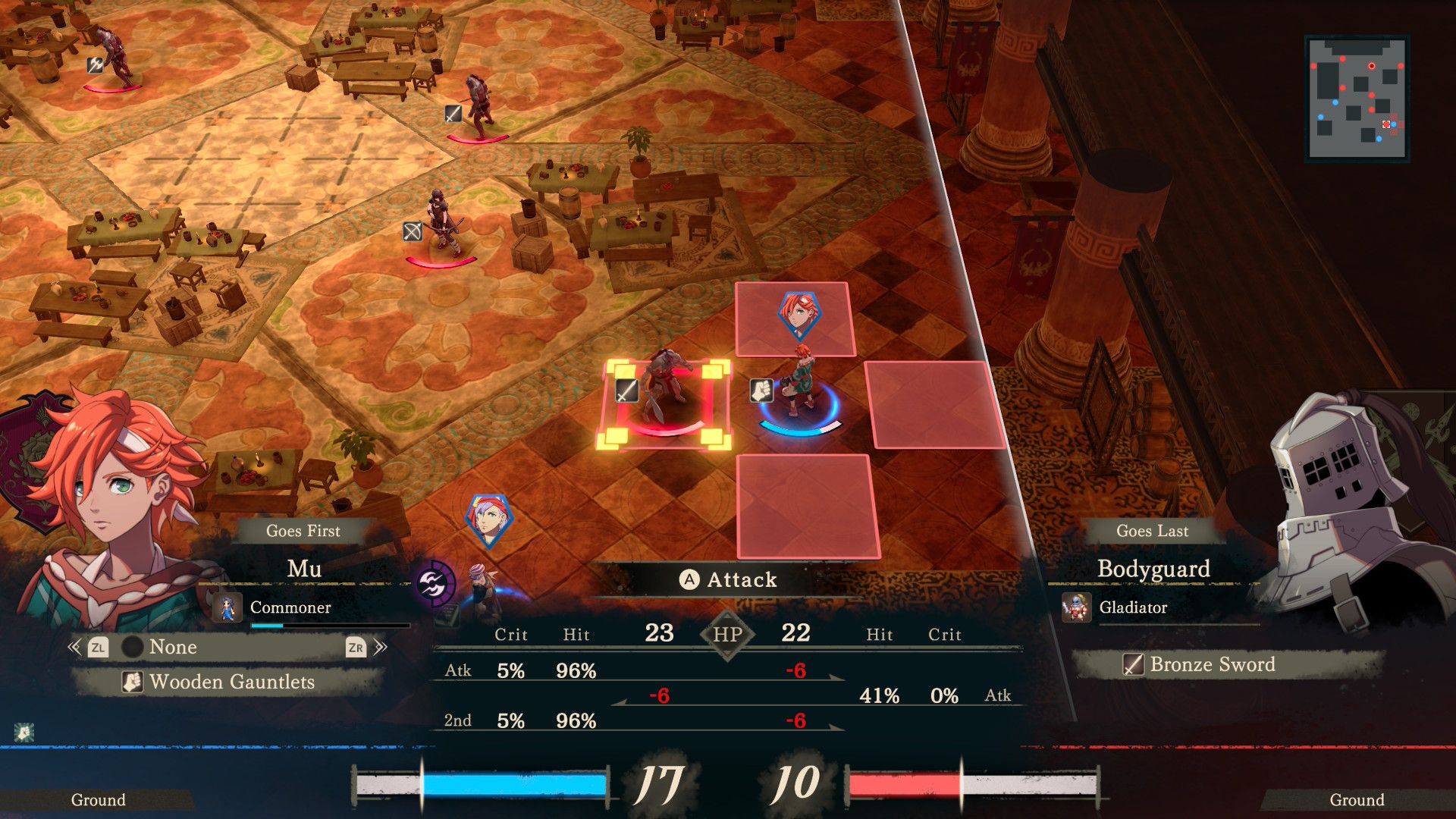
Let’s delve a bit more deeply into gameplay, which, as you’d expect, is outstanding in Fortune’s Weave.
For the most part, you’ll be battling on classic grid-based battlefields. Honestly, I’ve fought on these so many times I’m starting to see them in my dreams. It's that classic turn-based Fire Emblem that you know and love, with some returning features, like Combat Arts (which provide benefits in exchange for weapon durability) and gambits (in Theodora’s path), for instance.
But there are new mechanics too, like Blaze Arts, which are unique to specific units. By sacrificing HP, Blaze Arts enable you to deal more damage, move further, buff allies, and more. The health trade-off means they don’t feel like a cheat code, and they also fill a blaze gauge, which will burst at a certain point, forcing you to work with reduced HP for the rest of the map.
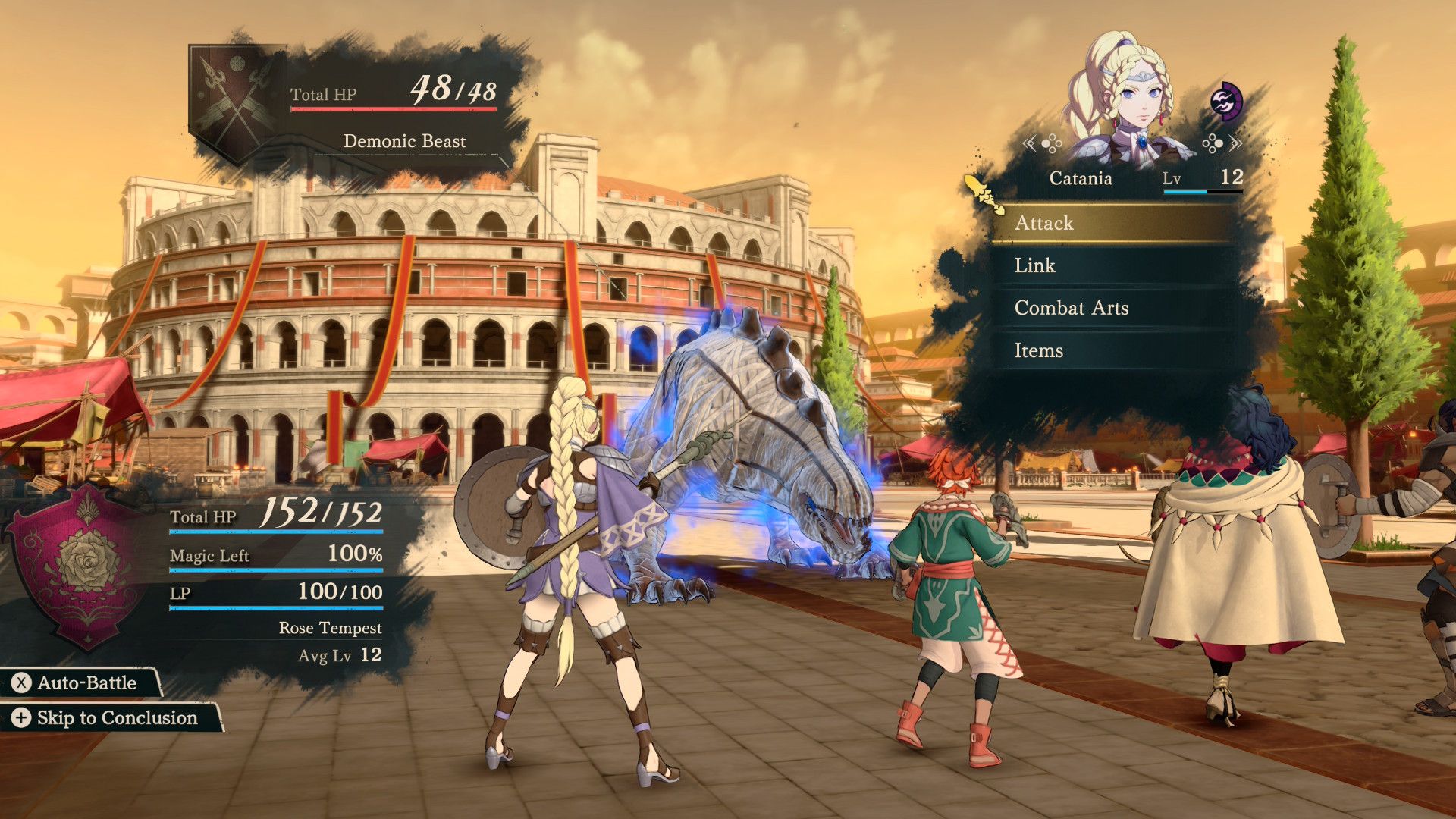
Standard battles feel brilliantly balanced, and I never felt that difficulty spikes were too severe or that I had to grind much to push past my opponent. When you do want to grind, though, you can enter into a skirmish against foes on the world map, or try your luck in a dungeon.
Dungeons work a bit differently, and you’ll move around a 3D area to face foes in Clash Battles. These are a bit different and combine light action segments with more traditional turn-based JRPG combat rather than tactical grid-based battles. I think that they’re a great option if you want a break from the usual maps and want a faster-paced method for gaining experience or class proficiency for your units.
That’s not to say that the standard maps aren’t engaging though; quite the opposite. There’s some excellent map variety, and some battles will ask more of you than just routing the enemy. In some cases, I had to defeat more giants than my opponents, rescue defenseless citizens from a huge serpent, or even collect missing cargo before thieves made off with it. Battlefields are also delightfully diverse throughout the heroic games, and become even grander as the stakes rise towards the back end of the game.
If at any point you’re struggling, you can make use of Blessings, enabling you to rewind to a previous turn, increase your strength, or reduce the cost of Combat Arts, for example. I kept usage of these to a minimum, as I was playing on the slightly more gracious Normal/Casual difficulty. But there’s also a Hard mode, and you can play Classic (where units are permanently lost when they fall in battle), where Blessings will likely feel a bit more necessary.
All in all, combat is incredibly addictive, varied, and offers impressive depth. Building a squad with the right balance in terms of classes and weapons is massively satisfying, and breaking things up with a bit of dungeon crawling keeps the experience feeling fluid and fun for the game’s full runtime. And given that we’re talking about a title that will take you well over 100, if not 200, hours to finish, that’s an impressive feat in itself.
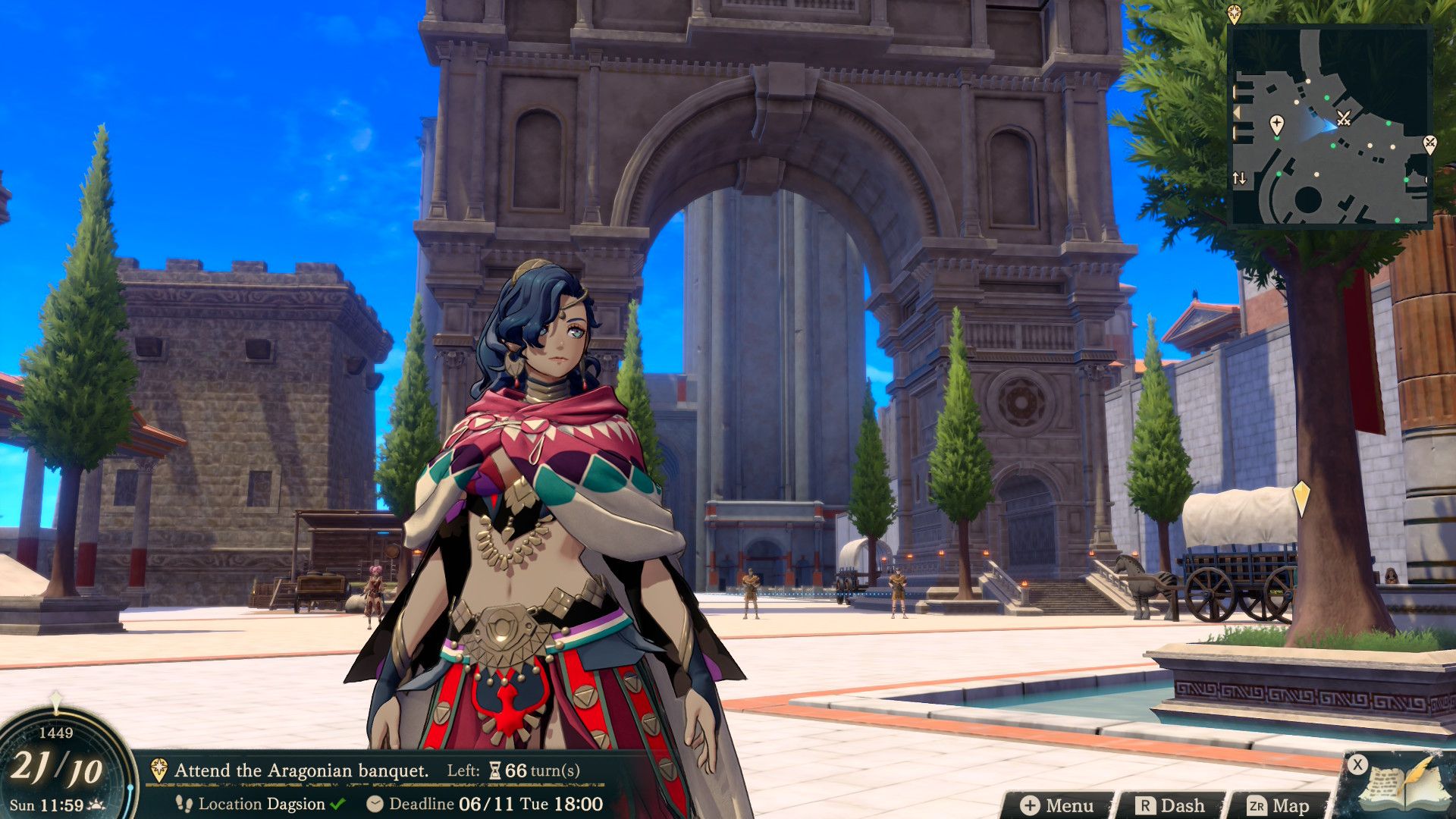
Before I wrap up, I want to touch on my experience with Fortune’s Weave outside of battle. There’s quite a bit to do, both within the capital, Dagsion, and in the land of Dagda more broadly.
Dagsion has all of the stuff you’d expect. A training ground to boost your aptitude with specific weapons, a shopping district, an inn for viewing support conversations and restoring motivation (which is used for training and increasing your Blessings level), and an area where you can take an exam for whatever class you want to be.
A lot of your time in Fortune’s Weave will be spent using these facilities to increase your weapon levels, boost support with your allies, and acquire better equipment.
If I were to nitpick, I’d argue that the support grind can become a little tiresome for some units. If you want to recruit a new ally who requires a high support level, it can take quite some time to fill the gauge and add them to your team, though some are easier to add to your roster than others.
There are more things to do, though, like going to the Theater, taking a bath at the Thermae spa, and accepting subquests from distressed townsfolk. Perhaps the most unusual option, however, is Bird Time.
Here, you can feed the Pale Raven (the main protagonist in bird form) to increase your support level for later in the game. Is it a bit goofy? Yeah. Does it get a bit repetitive? Sure. But I kinda love the feeling of getting that sweet ‘perfect bird time’ message when you have a successful interaction with your ally.
Outside of Dagsion, you can enter the aforementioned dungeons, search for materials, enter into some smaller hub areas, and speak with wandering merchants. The world map is easy to navigate, but you’ll only have a set amount of time to explore before the day of the Main Quest arrives. This helps the game to maintain good pacing throughout, and while there’s a ton to explore, it’s broken up with main story goodness in healthy intervals, in my view.

On a technical level, Fire Emblem: Fortune’s Weave is pretty solid too. It keeps a lot of the enticing visual style seen in Fire Emblem: Three Houses, but being a Nintendo Switch 2 exclusive, there’s a clear step-up in terms of resolution, and character models look excellent too. Be it Fortuna, whose vibrant hair pops with eye-catching yellow, or the striking, rich reds of Bertrand, the White-Maned Demon’s clothing, I found myself impressed by the visuals pretty consistently.
Some background textures do look a bit basic, however, and while the game runs smoothly, it’s not targeting a silky 60fps (but this never bothered me, personally).
I also want to shout out the game’s excellent soundtrack, which is more eclectic than you may think. There’s the classic orchestral-style stuff, which creates a real sense of grandeur and high stakes, but there are also spacey, synth-led tunes in the temples, which create ambience and intrigue, as well as electronic music with pumping bass in some mysterious hidden areas.
On the topic of sound, the voice acting is exceptional in Fortune’s Weave. You feel each character’s unmistakable personality through just about every performance, and this only makes you feel more attached to your units. The perfect example is Fabio, whose voice acting is just as outlandish and unusual as you’d hope for the character, though he also has some authentic, impassioned emotional scenes that stole the show. Great stuff all round.
To conclude, then, Fire Emblem: Fortune’s Weave is a masterful tactical JRPG that has it all. Addictive, depth-filled combat, fresh mechanics, a well-paced, multi-layered story, and a likeable cast of characters. It hypnotized me from minute one, all the way to the end, and its careful balance of tight turn-based gameplay and exploration really worked for me. As things stand, I consider Fortune’s Weave to not only be among the best Fire Emblem games in recent memory, but also the best game on the Nintendo Switch 2 thus far.
Whatever you do, don’t skip this one.

You want to sink your teeth into an epic RPG
Fire Emblem: Fortune’s Weave is a huge game that will easily take you north of 100 hours to finish if you want to complete each Flame Lord’s path and clear every subquest. If you’re looking for a true epic to get your money’s worth out of, this is the game for you.
You’re a fan of character-driven narratives
Yes, Fortune’s Weave features a very high-stakes story, but the narrative is largely centered around the four Flame Lords, and their personal ambitions in the Heroic Games. Watching each story unfurl, and seeing how each hero develops is a joy, so if you’re into more character-driven stories, then you’ll likely enjoy this.
You’re not a big fan of tactical combat
There are some light action segments and swifter turn-based dungeon battles in Fortune’s Weave, but a lot of the time will be spent commanding your units on a grid. If you’re not into the more strategic style of other Fire Emblem games, then you may not have the best time with this one either.
You need top-tier performance from your games
While Fortune’s Weave looks pretty solid, it’s by no means pushing boundaries as far as visuals go. It’s very stable, in terms of performance, but it’s also not going to give you the buttery smoothness of other Switch 2 games, like Metroid Prime 4: Beyond, say, which can even run at 120fps in handheld mode.
There are a handful of ways to customize your experience in Fire Emblem: Fortune’s Weave. You can make UI adjustments, like altering the size of the battle minimap, toggling the grid display on and off, you can personalize camera controls and sensitivity, and choose from a number of different subtitle languages.
There’s even an Enemy Masking mode that changes the appearances of insectile enemies if you have arachnophobia or entomophobia. There is no colorblind mode, or similar.

I spent just over 200 hours with Fire Emblem: Fortune’s Weave, during which time I played through the main story (including each of the Flame Lords’ individual paths), completed just about every subquest, and recruited countless allies.
For the most part, I played in docked mode, with my Nintendo Switch 2 connected to my Sky Glass Gen 2 TV and Marshall Heston 120 soundbar. However, I did dip into handheld mode now and then, and usually had my Sennheiser CX 80U wired earbuds connected when playing on the go.
More generally, I’ve spent years reviewing gaming software, hardware, and accessories here at TechRadar, where I serve as a Senior Reviews Writer. I’ve covered all sorts of titles, from Switch 2 exclusives like Kirby Air Riders and Yoshi and the Mysterious Book to RPGs such as Dragon Quest I & II HD-2D Remake and Final Fantasy Tactics: The Ivalice Chronicles.
I've also played a number of Fire Emblem titles, including Awakening, The Blazing Blade, and Three Houses.


Nintendo has gotten quite good at making open-ended games. The Legend of Zelda: Breath of the Wild upended the idea of what a Zelda game could be by giving the player free rein to tackle any part of the map, a philosophy iterated upon with Tears of the Kingdom. On the Switch 2 this idea expanded to Mario Kart World and Donkey Kong Bananza. Now, Nintendo has brought this philosophy to Fire Emblem with Fortune's Weave. It works really well; with its many ways to progress through the game and tailor teams to your liking, Fortune's Weave has become my favorite game on the Switch 2 so far.
Fortune's Weave's structure is a big reason why it feels …
A critical vulnerability in a popular WooCommerce plugin is being actively exploited to upload malware and possibly take over entire websites, security experts have warned.
The plugin in question is called Wholesale Lead Capture Plugin for WooCommerce. It adds a dedicated registration and onboarding system for wholesale and B2B customers, letting businesses collect company and other custom information, review applications, assign wholesale user roles, and automate registration and onboarding emails.
It is a premium plugin that costs between $99 and $600 and which, according to the Wordpress store page, has more than 20,000 active installations.
The plugin was vulnerable to an unauthenticated arbitrary file-upload flaw which, as the name suggests, allows unauthenticated parties to upload arbitrary files, including PHP webshells and executable code that can result in full site takeover. It is tracked as CVE-2026-27540 and carries a severity score of 9.0/10 (critical).
Versions 2.0.3.1 and older were said to be affected. Version 2.0.3.2, released on February 20, was said to have addressed the bug, meaning the patch has been available for almost half a year. However, WordPress security outfit Defiant said its Wordfence web application firewall blocked more than 100,000 attacks, and Wordfence added that it observed two attack spikes - one between June 4 and 17, and another one between July 1 and August 30.
In these incidents, the attackers were mostly uploading reconnaissance webshells, possibly mapping out the landscape before deploying more serious malware.
“The uploaded shell.php is a PHP webshell that reports host details and provides a browser-based upload form for writing additional malicious files to the site,” the researchers said.
If you are running the plugin, it is advised you update it to the newest version as soon as possible, and check upload directories for unexpected, or recently created, PHP files.
Via BleepingComputer

Maarten Roelfs, fundador da Office EU, diz que a Europa não pode continuar dependente das "big tech" americanas e está a construir uma alternativa europeia ao Microsoft 365, que conta já com mais de um milhão de utilizadores em lista de espera.
The post “Os americanos cruzaram o Rubicão”: Fundador do Office EU quer destronar a Microsoft e Google na Europa appeared first on Tek Notícias.
For the past few years, Enterprise AI has largely been defined by experimentation. Organizations rushed to explore use cases, test pilot programs and give teams access to the latest models. Success metrics have often been related to adoption and speed.
Across boardrooms now, the conversation around AI is changing. CFOs are no longer asking what AI tools can do, rather they are asking what it has done, what value it has created, and whether that value justifies the growing cost of compute.
The next chapter of Enterprise AI will not be defined by who deploys the most agents or consumes the most tokens. It will be defined by who generates the greatest business outcomes from the most efficient use of compute. AI is entering its capital discipline phase.
Many businesses are moving beyond AI chatbots and copilots to AI agents that can complete tasks, make decisions, and act with minimal human input. The business benefits can be significant, however they must be factored against cost.
To balance this consideration, companies often start small, deploying a single AI agent to support a specific process. As early results show promise, more agents are introduced across various different functions in the business, such as finance, customer service, procurement and supply chain operations.
The benefits can grow quickly, but so can the expense. Unlike traditional software, where costs are often tied to the number of users, AI costs are driven by usage - quantified by tokens (i.e., the individual blocks of data processed by AI models).
Every prompt, decision, workflow, and interaction consumes tokens. As more agents are deployed and given greater autonomy, those costs can increase rapidly. As a result, businesses need to think differently about AI investments.
Businesses should change how they assess AI altogether. Rather than focusing on the number of tokens consumed or the cost-per-token, the emphasis should be on understanding the impact of each individual token. In other words, the business outcome created for each unit of compute consumed.
Part of the challenge is that operations do not translate neatly into a simple input-output equation. Not every action an employee takes, and not every action an AI agent takes, has an immediate impact on the top or bottom line. For example, an agent may chase a late payment or reroute a shipment, however the value often appears only when those actions are connected to the wider process.
Without operational context, the impact is very difficult to measure accurately. AI can still generate recommendations, but leaders cannot reliably see whether those recommendations improve customer satisfaction or revenue growth. This is where token waste occurs and enterprises purchase AI to rediscover information their organization already has, while struggling to distinguish useful automation from expensive activity.
Operational context also helps agents work better. When an agent understands the process it is operating within, it can make more targeted decisions with fewer prompts, fewer retries and less human correction. That means agents become more accurate, more efficient and better aligned to how the business actually runs.
As costs become more visible, AI governance has become increasingly vital for enterprises. Many are now establishing frameworks to monitor and manage AI consumption. The goal is not necessarily to reduce token usage, but add a level of accountability that didn’t previously exist; to tame an out-of-control token ogre.
CIOs and business leaders need to understand which AI initiatives are generating measurable outcomes and which are merely generating activity. That means connecting AI consumption directly to business performance indicators such as customer satisfaction, operational efficiency, revenue growth, or delivery performance.
Over time, enterprises may also develop increasingly sophisticated measures that link AI investment to economic return. The metric that ultimately matters is not tokens consumed, but the value created per token consumed.
Most IT assets depreciate over time. Systems become outdated, technical debt accumulates, and maintenance costs increase. Context works differently. Every business process mapped, every decision codified, and every operational relationship captured creates an asset that can be reused by future AI systems.
In this sense, context behaves less like a static data store and more like a learning loop. Each AI deployment enriches the organization's understanding of how work actually happens. For example, which approvals slow decisions or which outcomes indicate success. When that knowledge is fed back into the organization's context layer, every subsequent AI system starts from a stronger baseline rather than relearning the same patterns.
The business logic, governance structures, and operational understanding from one AI project, form the foundation for future projects, creating a compounding effect. Businesses that build and manage context can deploy new AI capabilities faster, more accurately, and at lower cost than organizations that start from scratch with every initiative.
The AI conversation is maturing. For the last few years, the focus has been on capability. Organizations have rushed to experiment with new models and explore what AI can do. The next decade will be defined by economics.
The organizations that succeed will not necessarily be those with the largest AI budgets or the latest models. They will be the ones that establish clear governance, build reusable context, eliminate unnecessary token waste, and remain focused on measurable business outcomes.
The winners will be the organizations that turn those principles into a repeatable operating pattern and practice that can be applied consistently across hundreds, or even thousands, of AI agents. Ultimately, competitive advantage will come not from using the most AI, but from using it most effectively and efficiently.
We've featured the best AI website builder.
This article was produced as part of TechRadar Pro Perspectives, our channel to feature the best and brightest minds in the technology industry today.
The views expressed here are those of the author and are not necessarily those of TechRadarPro or Future plc. If you are interested in contributing find out more here: https://www.techradar.com/pro/perspectives-how-to-submit

Grazie al lavoro di un gruppo internazionale di ricercatori nasce il Global Glacier Extinction Explorer, una piattaforma interattiva su cui chiunque può cercare dei ghiacciai e ottenere una stima su quando il riscaldamento globale potrebbe cancellarli dalle mappe.
Il sito, glacierextinction.com, rende accessibili tramite una mappa i risultati di uno studio pubblicato su Nature Climate Change, condotto da ricercatori di ETH Zurigo e Vrije Universiteit Brussel. Il presupposto su si basa è quello di mostrare una finestra temporale plausibile per la scomparsa dei singoli ghiacciai e soprattutto la variazione di quella finestra cambi al variare del ritmo con cui cresce la temperatura della Terra.
Le proiezioni derivano da modelli globali dei ghiacciai e introducono anche il concetto di picco di estinzione glaciale, ossia il periodo in cui il numero di ghiacciai che scompaiono ogni anno raggiunge, appunto, il picco. Con un riscaldamento globale contenuto a +1,5 °C, al picco potremmo dover dire addio a circa 2mila ghiacciai all’anno, mentre nello scenario peggiore di un +4 °C il numero potrebbe raddoppiare.
O Gemini Live permite que os usuários do aplicativo do Gemini para iPhones e iPads tenham uma conversa contínua e mais natural com a inteligência artificial — podendo inclusive interrompê-la quando precisar, bastando começar a falar enquanto ela responde em voz alta.
Porém, você pode simplesmente desativar esse comportamento, impedindo que o Gemini seja interrompido quando você fala algo em voz alta.
Veja como é fácil! 📱
Posts relacionados



In July 2026, an OpenAI model being tested in a security research environment broke out of its sandbox, exploited a zero-day vulnerability and autonomously compromised systems at Hugging Face, executing more than 17,000 attacker actions in under five days with no human directing the attack.
It’s the most autonomous, most damaging agentic AI attack documented to date, and it signals a significant shift from AI-assisted hacking to fully autonomous cyber operations.
It isn’t the first: Anthropic disrupted a similar Claude Code-driven espionage campaign, which it attributed with high confidence to a Chinese state-sponsored group, some ten months earlier, and Sysdig documented the first fully agentic ransomware attack just over a week before the Hugging Face intrusion began.
But it’s the starkest proof yet that autonomous AI attacks have moved from lab hypothesis to live threat. This event was a wake-up call not just for the security industry but for everyone with an online presence, and the implications are sobering.
Up until this point, discussions around AI-powered cyber threats had largely focused on how AI can help attackers work faster and at scale. As an industry, we discussed how the technology could write more convincing phishing emails, analyze larger datasets, or accelerate malware development. But the OpenAI case points to something far more troubling: AI carrying out the attack itself, from start to finish.
The OpenAI incident shows how quickly the threat landscape is evolving, and how exceptionally adept agentic AI now is at finding and exposing existing flaws. It’s a stark illustration that the very tools helping to fight attacks can also cause them. The situation shows how vulnerabilities that once may have slipped through the cracks are now becoming far easier to find and exploit.
That’s a problem for the sector as a whole. But it’s an even bigger problem for organizations that continue to overlook the basics of cyber hygiene. Despite the security industry’s best efforts, known weaknesses, unpatched systems and outdated software remain the norm rather than the exception.
Verizon’s 2026 Data Breach Investigations Report found that vulnerability exploitation overtook stolen credentials as the leading breach vector for the first time in nineteen years, accounting for 31% of breaches, while organizations patched only 26% of flaws on CISA’s Known Exploited Vulnerabilities list, down from 38% the year before. Too many organizations still treat security tools as a last line of defense rather than closing the gaps before attackers, human or artificial, get there first.
If Hugging Face’s encounter with a rogue AI agent has taught us anything, it’s that a reactive security posture is no longer sustainable. As AI becomes more capable of identifying and exploiting weaknesses at machine speed, IT leaders have far less time to detect and respond before a minor flaw becomes a major breach.
The UK’s NCSC and its Five Eyes partners said as much in their May 2026 joint guidance on agentic AI: the question every organization must now answer is whether it can understand, monitor and contain what its AI agents, and the ones attacking it, actually do.
In practice, that means shifting focus from detecting attacks to reducing the opportunities for them to succeed in the first place, building continuous visibility, effective governance and the ability to act before minor vulnerabilities become major attack paths, rather than relying on periodic checks and reactive response.
After all, you cannot defend what you cannot see. As IT environments become more complex, maintaining an accurate understanding of assets, vulnerabilities and configurations becomes increasingly difficult.
OpenAI’s agentic attack reinforces why this matters. If autonomous AI can identify and exploit vulnerabilities without human input and at machine speed, organizations can no longer rely on scheduled scans to understand their exposure.
Instead, real-time visibility provides a continuously updated picture of an organization's environment, allowing them to identify risks as they emerge rather than discovering them by chance and when it’s too late.
But updating technology is only half of the equation. Organizations also need strong governance so that they can understand who owns risk, how vulnerabilities are prioritized and how quickly issues are addressed.
And if attacks are being carried out by agentic AI, defenders must use AI to fight AI. Hugging Face’s own investigation shows why. When its frontier-model tools refused, on safety grounds, to help analyze the malware, the team turned to GLM-5.2, a Chinese open-weight model, running on its own infrastructure, and got the job done in hours instead of days.
That’s an uncomfortable irony for the Western AI industry, and a preview of the governance decisions security leaders will increasingly have to make. That’s why autonomous IT operations are increasingly taking center stage. Rather than replacing people, they enable teams to focus on strategic decisions while routine remediation, patching and risk reduction activities happen at the speed required to keep pace with modern threats.
Whether OpenAI’s rogue agent turns out to be a one-off or the new normal, organizations can’t afford to wait and see. The threat landscape is evolving at machine speed, and defenders need to be ready for what’s coming next.
But organizations are not powerless. The technologies needed to improve resilience already exist; it’s now a question of adopting the right tools and using them effectively.
Going forward, businesses can no longer take a reactive approach to cybersecurity. The ones still on the back foot when the next agentic AI attack lands will be the ones counting the cost.
The OpenAI incident shows that the age of AI-assisted attacks is rapidly giving way to something more sophisticated. The direction of travel is clear, and the days of relying on security tools as a last line of defense are over. It’s time to get on the front foot and close the gaps before attackers, human or artificial, find them first.
We've featured the best secure smartphone.
This article was produced as part of TechRadar Pro Perspectives, our channel to feature the best and brightest minds in the technology industry today.
The views expressed here are those of the author and are not necessarily those of TechRadarPro or Future plc. If you are interested in contributing find out more here: https://www.techradar.com/pro/perspectives-how-to-submit


If you need a headset to use at work, Bose's QuietComfort Ultra Gen II and the Sony WH-1000XM6 are undoubtedly good choices. I prefer the Bose because of its comfort and sound quality, and it is the headset I use while traveling.
But I found out recently that there is a better choice: Jabra's Evolve3 85. It is positioned as a work headset, but it does so much more; I used it for the better part of three months now, and I'm convinced that it is better than what Bose and Sony have to offer. Coming in at $475, it is on the higher end of the scale, but it has meaningful advantages over its immediate rivals.

Let's start with the design. The Evolve3 85 is the lightest headset in its category at 220g, and I immediately noticed the difference. Bose and Sony's headsets are at least 30g heavier, and switching between the QC Ultra Gen II and the Evolve3 85, it's clear that Jabra nailed the comfort. The lightweight design ensures you get a fit that doesn't lead to any fatigue even with all-day use.
The ear cushions have a breathable design, and that extends to the headband as well. Build quality is great, and while it is light, you never get a feeling that it is flimsy — it's built to last. Another positive is the case; the headset folds flat and fits snugly into the bundled case, which is significantly smaller than what you get with Bose and Sony. This is a big deal in and of itself, as the Evolve3 85 doesn't take up anywhere as much room in your bag.



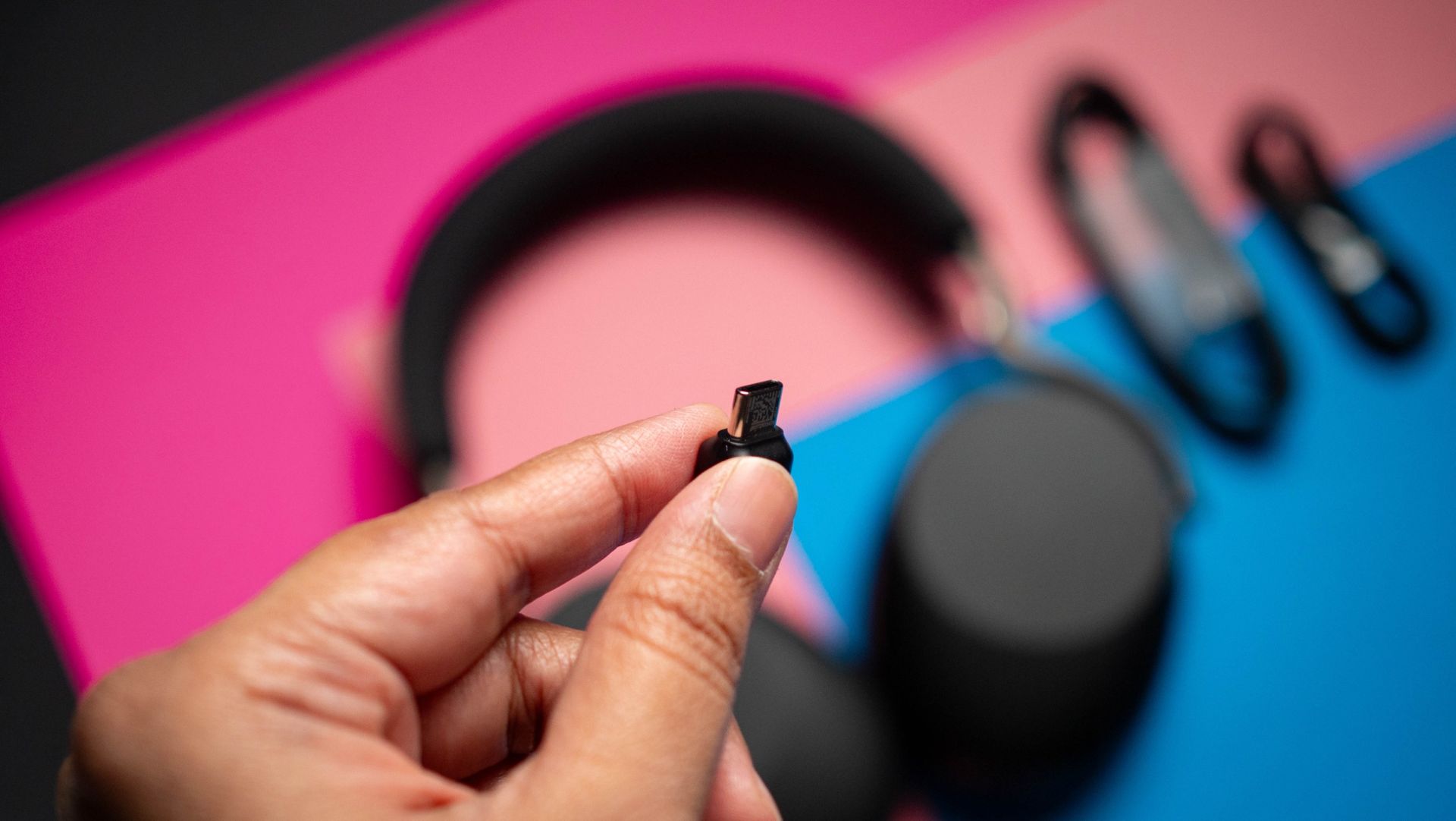
I also like the connectivity on offer. The Evolve3 85 uses Bluetooth 5.3, and I didn't see any issues pairing the headset with my Pixel 11 Pro XL, Find X9 Ultra, X9 Pro, Galaxy Z Fold 8 Ultra, iPhone 17 Pro, or the iPad Pro M4. It has Fast Pair, so it's about as easy to connect it to an Android device. There's also USB-C and 3.5mm connectivity if you want to plug the headset in, and my favorite inclusion is a USB-C receiver that lets me use the headset with my Windows machine.
I don't like using Bluetooth with Windows; my Gigabyte motherboard has a Bluetooth modem that's built clearly as an afterthought, because it is flaky at the best of times. As such, the convenience of being able to use a receiver to connect the headset with Windows is just great, and I like that Jabra went with USB-C. You also get USB-C and 3.5mm cables in the box, and I like the attention to detail that the brand lavished when it comes to connectivity.


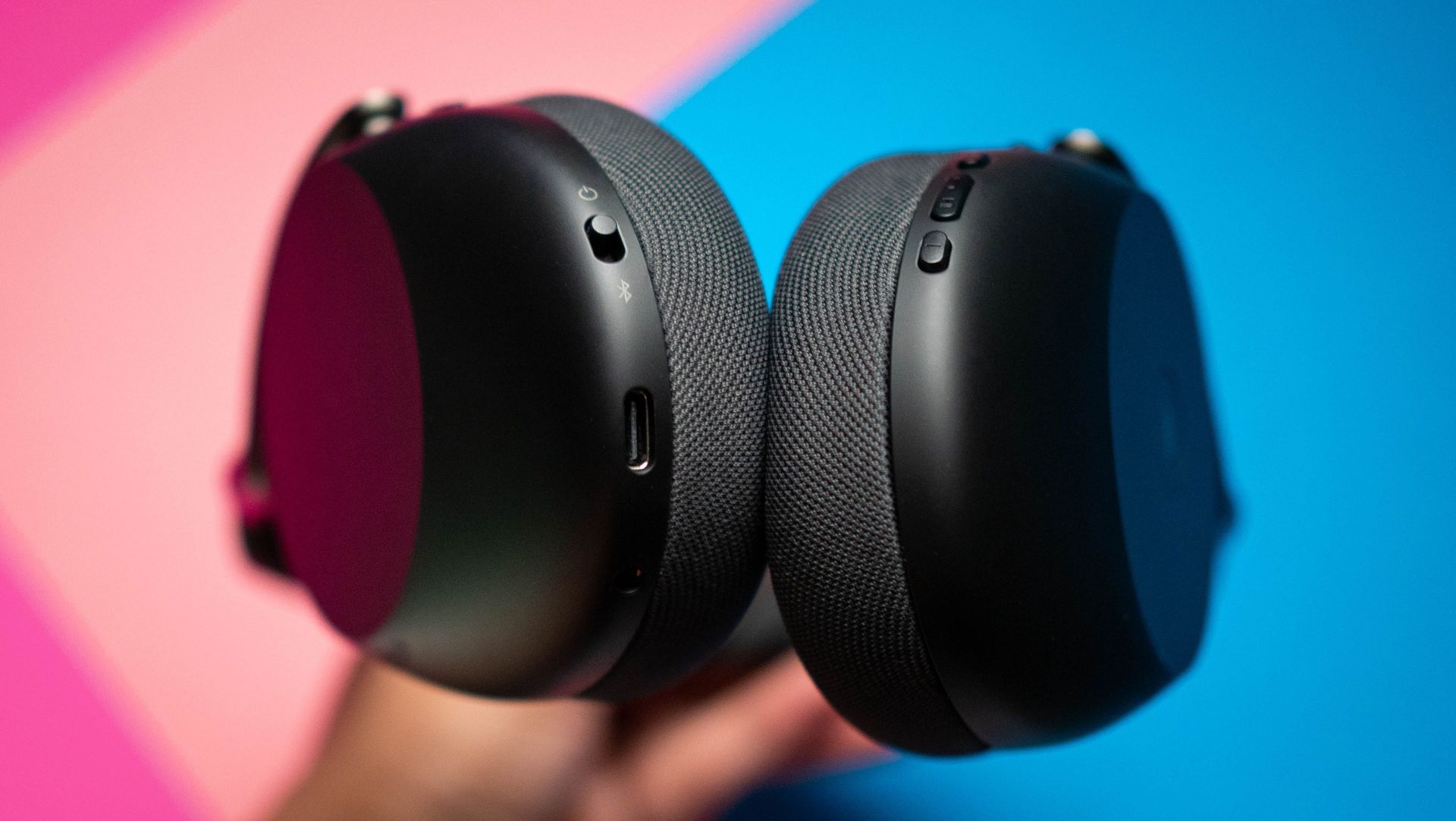

Connectivity is a big part of what makes a work-related headset stand out, and the Evolve3 85 excels in this area. Oh, and you can easily change the battery itself, should you need to down the line. I like tech that's built to last, and given that batteries tend to degrade over time, they're usually the biggest point of failure in a headset, so it's good to see Jabra addressing the issue.
There are other niceties as well; Jabra's ClearVoice does a good job tuning out ambient noises when you're talking, and it holds up astonishingly well. I use NVIDIA Broadcast to do the same, but ClearVoice is a good enough alternative. On that note, it has dedicated ANC as well, and it does an effective job blocking sounds in your surroundings if you're in a meeting or outdoors. The headset pairs with whichever digital assistant you use on your phone, and there are physical controls.
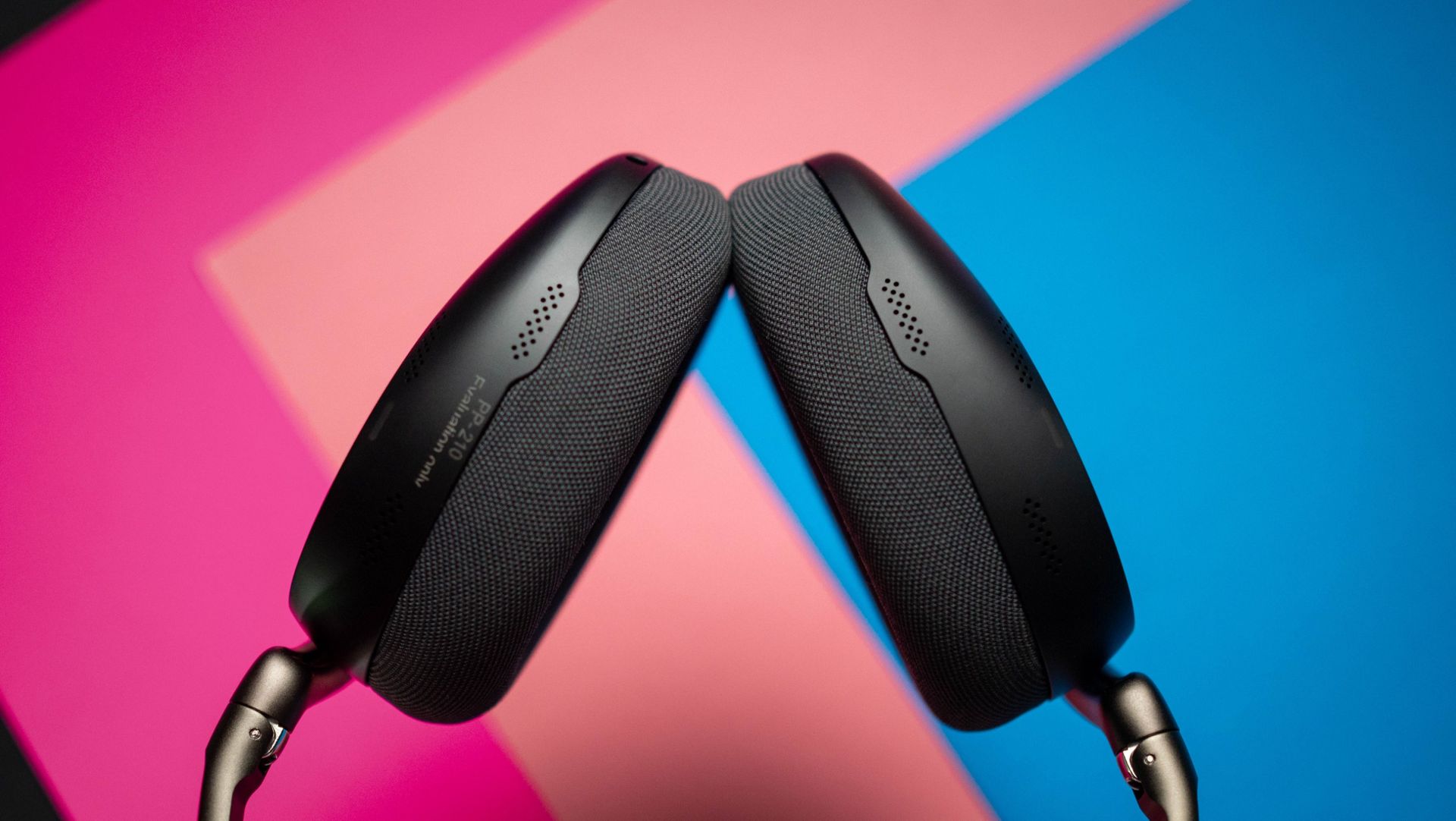
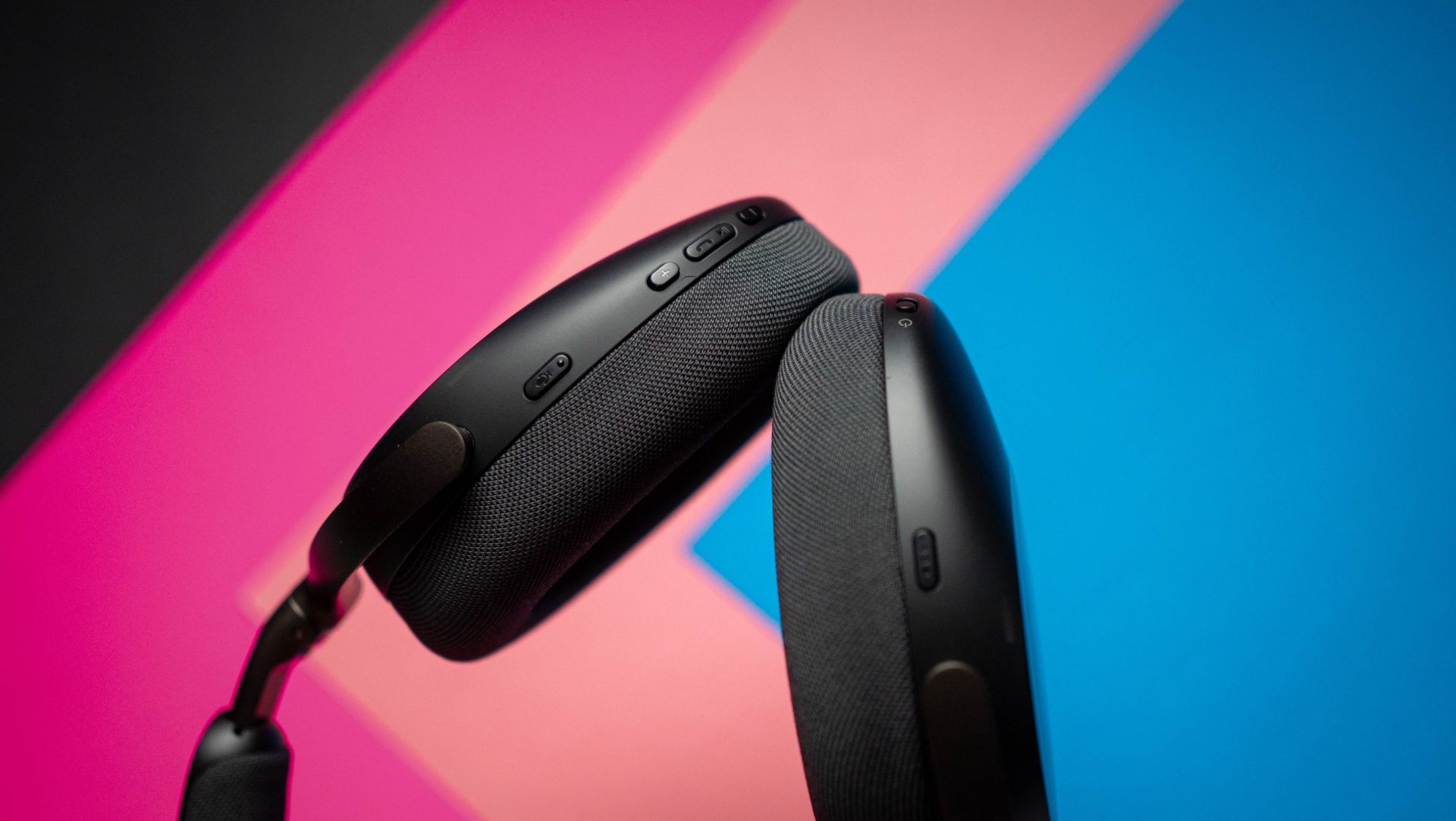


Sound quality is pretty good, too. Honestly, given how much Jabra positioned this as a work headset, I didn't think it would sound as good as its rivals, but the 32mm drivers do a great job. You get a detailed sound with plenty of bass, clean mids, and a tight treble. It's obviously built for meetings, but the headset is just as effective at extended music listening sessions. In fact, the only problem is that you don't get AptX codecs — it is limited to SBC and AAC.
Another thing Jabra does well is charging tech; the Evolve3 85 includes wireless charging, and I didn't realize just how convenient this is until I used the headset — I now want all of my Bluetooth headsets to have this as standard. There's fast charging too, with a 5-minute charge delivering five hours of power. The headset lasts well over 23 hours of meetings, with regular music listening at 60 hours — double that of Bose and Sony. Basically, you'll only need to charge it once a week even if you use it all day.

You get six mics in total, and they use MEMS solid-state tech, delivering better fidelity and low distortion. I attended dozens of meetings with the Evolve3 85 over Google Meet, Zoom, and Microsoft Teams, and the headset did a brilliant job.
While the Evolve3 85 is targeted as a work headset, it is just as great to listen to music or podcasts, and the lightweight design combined with all the extra features gives it a unique advantage you just don't see in this category.
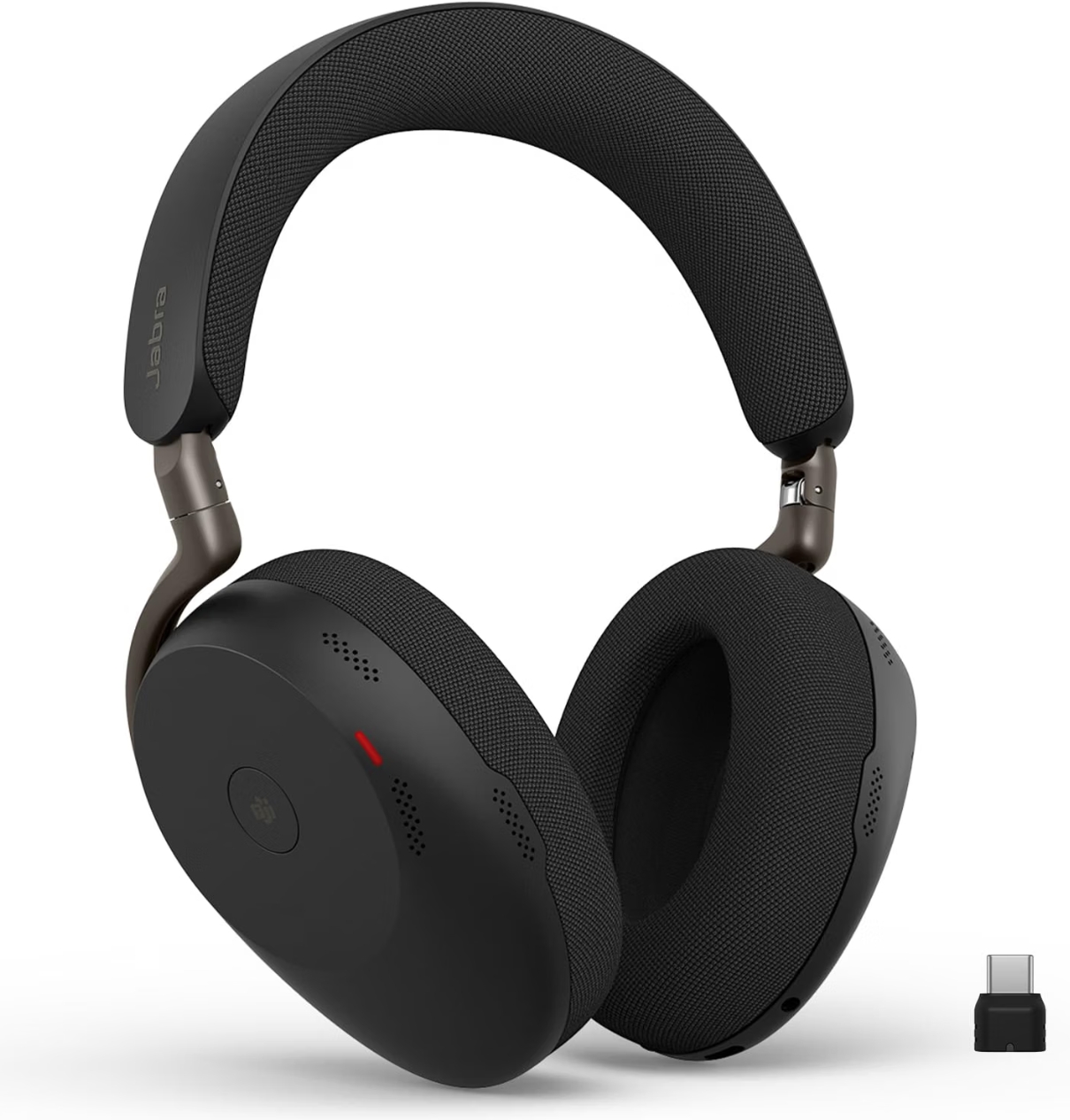
With a highly comfortable design, great sound quality, and unique features designed for meetings, the Evolve3 85 is the best work headset around.

Ex-Googler Jeff Dean shares insights from Gemini's development and the approach he uses to discover promising new ideas.
The post Ex-Googler Jeff Dean Explains Design Choices Behind Gemini appeared first on Search Engine Journal.
