❌

Reading view

Summary of all the Audio Apps available for OSX

So, a lot of musicians are moving to the Mac for their production needs. Whether you are a guitarist, drummer, singer/songwriter, Synth or MIDI enthusiast, engineer, or you just like to have a little bit of a jam now and again, there is an app for you.

DAW = Digital audio Workstation
Plug in = an virtual instrument or effect, that can be added to the program
MIDI = Musical Instrument Digital Interface
DSP = Digital Signal Processing
"ReWire" = Propellerhead's Software for integrating two...

Read more
  •  

‘You notice the quiet’: Lorde and Little Simz to star at festival run on green power

A zero-emission compact hydrogen power plant will drive the two stages at Clifton Down in Bristol

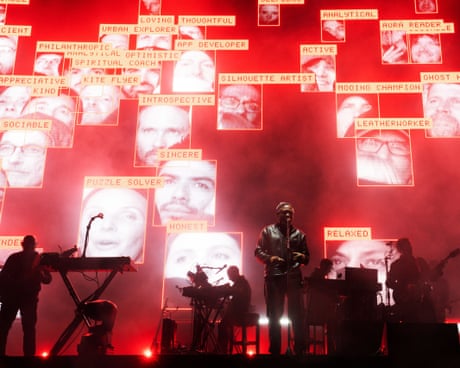
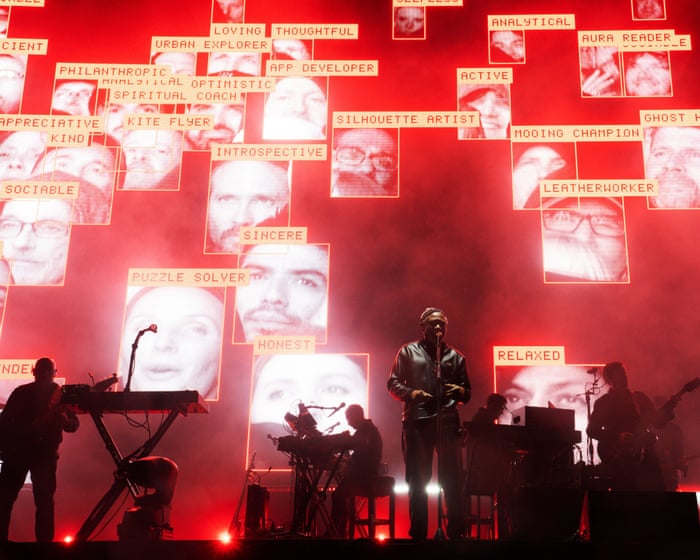
When Lorde, Little Simz and Wet Leg stride on to stages in Bristol this weekend, they will not only be entertaining tens of thousands of festivalgoers but taking part in what is being billed as a world-first clean power project.

The two stages at Forwards festival on Clifton Down are being driven almost entirely by green power – a combination of hydrogen and mobile batteries charged with sustainable energy.

Continue reading...

© Photograph: Kristian Buus/In Pictures/Getty Images

© Photograph: Kristian Buus/In Pictures/Getty Images

© Photograph: Kristian Buus/In Pictures/Getty Images

  •  

Yellowstone Has a 150-Year-Old Sonic Mystery—and Scientists Still Aren’t Sure What Causes It

For more than a century, visitors to America’s beloved Yellowstone National Park have reported odd, fleeting sounds that seem to center on the famous park’s largest lakes.

With descriptions that range from a noise resembling the steady humming of bees to distant “music” or bells, or even the vibration of metal cables, the park has a surprisingly deep history involving these odd sounds—one that extends all the way back to before the massive tract of land officially became America’s first national park.

Over time, several natural explanations have been proposed for the phenomenon, although the exact cause behind Yellowstone’s ethereal lake music has never been established.

Strange Sounds Over Yellowstone’s Lakes

Historical accounts describing this sonic mystery generally focus on reports from near Yellowstone Lake and Shoshone Lake. According to Lee Whittlesey, now a retired Professional Historian who worked at Yellowstone National Park for 16 years, written descriptions of the park’s strange sounds extend back at least to the late 19th century.

Among the earliest and most detailed accounts appeared in engineer Hiram M. Chittenden’s 1895 book The Yellowstone National Park: Historical and Descriptive. “A most singular and interesting acoustic phenomenon of this region, although rarely noticed by tourists, is the occurrence of strange and indefinable overhead sounds,” Chittenden wrote at the time. “They have long been noted by explorers, but only in the vicinity of Shoshone and Yellowstone Lakes.”

Often occurring most often in the mornings, Chittenden noted that the sounds were usually fleeting, and compared them to “the ringing of telegraph wires or the humming of a swarm of bees.”

An even earlier account was documented in 1892 by Edwin Linton, who reportedly heard a combination of sounds resembling wind moving through treetops, distant bells, and the buzzing of insects. A description provided by one member of his party described the phenomenon as “a twisting sort of yow-yow vibration,” while Elwood Hofer, the party’s guide on this occasion, reportedly called it “the most mysterious sound heard among the mountains.”

The following year, a similar account was logged by scientist S.A. Forbes, who described hearing a vibrating, harp-like “clang” that, not unlike Linton’s account, seemed to originate from around the nearby treetops. At times, the sound also seemed to resemble the murmuring of “faintly heard voices answering each other overhead.”

“It begins softly in the remote distance,” Forbes wrote, adding that the sound increased gradually as it drew nearer, producing increasingly pronounced pulses as it approached, then gradually faded away just as it appeared.

Chittenden was sufficiently impressed by the reports to speculate that in another place and era, such sounds might have inspired “superstitious reverence or dread.”

“No rational explanation has ever been advanced for this remarkable phenomenon,” he wrote.

A Mystery Older Than Yellowstone National Park

One of the oldest known accounts of unusual sounds in the area predates Yellowstone’s formal establishment as a U.S. national park.

In 1871, Geologist Frank H. Bradley participated in the Hayden Geological Survey, a federally funded expedition which played a crucial role in the park’s history, as its findings helped persuade Congress to formally decide on protecting Yellowstone the following year.

While conducting fieldwork with the expedition, Bradley recalled hearing “a curious sound” that he characterized as being “between a whistle and a horse whine” one morning as his party prepared breakfast.

“The sound increased in force,” Bradley wrote, “and it now became evident that gusts of wind were passing through the air above us, though the pines did not as yet indicate the least motion in the lower atmosphere.”

What Causes Yellowstone’s Mysterious Sounds?

By the early decades of the 20th century, potential explanations for the phenomenon were being put forward by researchers.

In 1930, one brief account that appeared in Popular Science entertained the possibility that seismic activity could be the driving force behind the noises. In 1937, Yellowstone Ranger and Naturalist Neil Miner offered a different theory: an atmospheric explanation, which resulted from “horizontally moving whirlpools of air” that he said descended from some of the park’s nearby mountain peaks.

The unusual sounds long associated with Yellowstone may not be entirely unique to the park, however. For at least as long as visitors to the park have reported strange sonic experiences, reports of mysterious booming, rumblings, unusual humming or buzzing, whistling, and sounds compared to music have been reported at locations around the world, sometimes inspiring colorful names such as New York’s “Seneca Guns” and other similar variants.

While Yellowstone’s own brand of peculiar sounds seems to belong somewhere in this broader family of natural acoustic phenomena, their specific cause remains elusive, even more than 150 years after Bradley first recorded them.

In a landscape already famous for geysers, earthquakes, hot springs, and a vast volcanic system that may someday erupt again, it is easy to see how the unexplained, music-like sounds associated with Yellowstone’s lakes add a unique and mysterious footnote to the natural history of America’s oldest national park.

Micah Hanks is the Editor-in-Chief and Co-Founder of The Debrief. A longtime reporter on science, defense, and technology with a focus on space and astronomy, he can be reached at micah@thedebrief.org. Follow him on X @MicahHanks, and at micahhanks.com.

  •  

Apple Music to Launch Labels on AI “Songs”

Ethan Millman, writing for The Hollywood Reporter:

Apple Music will soon launch labels on songs created with artificial intelligence, the company said in an email sent out to industry partners on Thursday.

In the email, obtained by The Hollywood Reporter, the streaming service said that AI music labels will come “later this year,” though Apple Music didn’t disclose a specific launch date.

The new labels come months after Apple Music launched transparency tags back in March, available for record labels and music distributors to disclose when content uploaded was “materially generated using AI.”

Good. As much as I enjoy working and tinkering with AI, AI “music” falls squarely in the category of AI implementations I do not understand and cannot even be remotely interested in. Perhaps I’m old-fashioned, but what’s the point of listening to “music” performed by something you can’t see live on a stage, or that you know has never lived a real life? (Obviously we can’t see The Beatles or Beethoven perform live today, but we know they were real humans with real motivations behind their work.)

If you ask me, AI music shouldn’t even be allowed on streaming services, but I suppose it’s too late to fix that problem by now. Hopefully Apple will also include a system-level toggle to permanently hide AI “music” from Apple Music’s UI, too.

  •  

Jungle Shot 11 Music Videos in Four Days with Apple Creator Studio

Source: [Apple](https://apps.apple.com/us/story/id6788556021).

Source: Apple.

Today, Jungle released their fifth studio album, Sunshine. Alongside the release, Apple published a look at how the band used Apple Creator Studio to film 11 music videos in just four days, an impressive feat no matter the technology used.


Source:
Apple.

The band’s toolbox included Logic Pro, Final Cut Pro, and Pixelmator Pro to capture the series of signature one-shot take videos. According to the App Store feature on the band’s process, Logic Pro was where the entire album was produced. The app’s Varispeed feature was also used to shift the tempo of songs while maintaining pitch as they shot the videos.

Final Cut Pro’s Magnetic Mask was used to composite footage quickly. Jungle’s Tom McFarland told Apple:

Final Cut Pro is like a magic sword. There’s one shot for the track ‘Romeo II,’ where the camera accidentally caught some of the lighting rig. With five clicks, the editor was able to paint it out. It just automatically knows.

Pixelmator Pro on the iPad with an Apple Pencil and Mac enabled the band’s team to add artwork and posters to the final product, too.

But of all the quotes from the band, J Lloyd’s comment really struck a chord with me:

We didn’t have to worry about the tech. We could just focus on getting the design right. I could pick up the iPad between takes and keep sketching on Pixelmator Pro, and it all just worked.

I love apps, or I wouldn’t write about them every day, but what I love even more is the creativity they enable. Getting a glimpse of how one of my favorite bands uses some of the same tools I do was a treat.

  •  

MacVoices #26224: Live! – The Samsung Card, Users Stay With iPhone, and AI Escapes

The panel explores Samsung’s entry into the credit card market, why iPhone owners continue to resist switching to Android, and the growing influence of AI across technology and society. Discussion ranges from AI escaping coding sandboxes and solving long-standing mathematical problems to AI-generated music and the impact of European Union regulations on innovation, competition, consumer […]

💾

  •  

MacVoices #26221: Max Mellman Introduces ‘I Love A Piano’

At Macstock 2026, Max Mellman showed off his his iPhone app, I Love a Piano. Max explains how the app stands out through realistic haptic feedback, intuitive navigation, portrait and landscape support, and a design that encourages exploration instead of intimidation. Chuck and Max also discuss his inspiration, teaching carrer, future iPad support, and broader […]

💾

  •  

MacVoices #26193: Live! – What Apple Wants From John Prosser, The 20 Most-Streamed Artists, and A New Merch Store!

The launch of a new MacVoices merch store kicks off this session, including product choices, embroidery options, and listener-requested items. Chuck Joiner, David Ginsburg, Eric Bolden, Ben Roethig, Marty Jencius, Jim Rea, Jeff Gamet, and Guy Serle discussion then turn to Apple’s lawsuit involving Jon Prosser, the default judgment being set aside, and what Apple may hope to gain through discovery. The group closes by reacting to Apple Music’s most-streamed artists list and how streaming reflects changing musical demographics.

💾

  •  

MacVoices #26189: NAB – Epidemic Sound Talks on Copyright, Creators, and Licensing

At NAB in Las Vegas, Alex Mavlios of Epidemic Sound explains how the company licenses music by acquiring full rights from artists, then offering secure usage across podcasts, video, social media, broadcast, and film. He addresses copyright risks, monetized content, artist royalties, pricing from creator plans to enterprise licenses, and why perpetual licensing helps creators avoid future rights disputes. 

💾

  •  

An altar with pyramidal copper bells found in Bolivia reveals the power of sacred sounds in the Inca Empire

Atop an ancient grain storage building, in a settlement of the local Yampara elite, archaeologists Sonia Alconini and Walter Sánchez-Canedo have uncovered an exceptional find: a set of six copper bells folded into a pyramidal shape, deposited as a ritual offering more than five centuries ago, during the expansion of the Inca Empire through the […]

  •  

Spotify says it won’t recommend music from ‘AI Personas’

An image showing the AI persona badge on Spotify

Spotify will soon label AI artists and remove their music from your recommendations. The change, which will start rolling out in mid-September, means you'll see an "AI Persona" badge on an artist's profile across the app if they do "not represent a real person."

The music streaming platform will allow artists to disclose that they're an AI persona starting today, but it won't rely solely on self-identification. Spotify says it will use human review and AI tools to determine whether someone's profile, including their name and image, "appears to represent photorealistic AI-generated identities." If Spotify determines that an artist's identity …

Read the full story at The Verge.

  •  

App Record Picker ajuda você a colecionar álbuns e decidir qual ouvir

Embora tenham perdido muito espaço com os CDs e posteriormente com as músicas digitais e o streaming, os vinis ainda são bastante apreciados por colecionadores mundo afora — e eu diria até mesmo que se tornaram a mídia física mais relevante culturalmente falando.

O Record Picker é um app projetado justamente pra quem ainda curte manter sua coleção de discos físicos. Ele conta com recursos alimentados por inteligência artificial para ajudar os usuários a decidir o que e quando ouvir, com base em métricas como humor, data, etc.

Entre os modos mais interessantes de escolha de um álbum estão o Random (que sorteia um disco aleatoriamente, mas pode dar mais peso para os menos ouvidos) e o Mood (que permite descrever seu estado no momento para que o app escolha um entre a coleção do usuário).

Também há um recurso chamado “Disco do dia”, que permite relacionar a coleção do usuário a notícias musicais, aniversários de lançamento, shows próximos e a discos relançados em determinada data — o que permite ao app sugerir um disco por dia com um contexto especial.

Record Picker

Apesar do foco em vinis, o app também permite cadastrar CDs (inclusive por código de barras, com dados do MusicBrainz e do Discogs), bem como cria gráficos detalhados que relacionam obras, gravações, artistas e edições para facilitar (e muito) a descoberta de informações.

Com versões para iPhone, iPad, Apple Watch e Mac (que funciona como uma central para a coleção), o app usa os modelos da Apple Intelligence para fornecer seus recursos inteligentes, tudo no próprio dispositivo — sem conta ou qualquer anúncio/rastreamento.

O Record Picker permite armazenar até 100 discos gratuitamente. Para uma biblioteca maior, é necessário adquirir o app por uma compra única de R$60. Até o dia 22 de agosto, está rolando um desafio para quem quiser adquirir o software gratuitamente.

  •  

Brain Activity Reveals the Melodies That People Imagine

Researchers believe they've found evidence that brain signals reveal the pitches of notes in imagined musical melodies, reports Medical Express: Study participants were 10 epilepsy patients with electrodes on the surfaces of their brains for clinical monitoring. Participants quietly listened to the first bars of children's tunes, then imagined the melodies of subsequent bars before humming their imagined melodies. Brain activity from the patients carried information about relative pitches within the imagined melodies. Combining note-level pitch predictions over time allowed the research team to recreate melodic changes that reflected the structure of the imagined songs... "The model we created decodes relative pitch classes — such as do, re, mi, fa, sol, and la — rather than exact, absolute pitches," [said tudy co-lead Jii Kwon of Seoul National University]. "This is useful because people often recognize melodies by the relationships between notes, even when the same melody is played in a different key."

Read more of this story at Slashdot.

  •  

Musician and entrepreneur Tom Vek is building a digital music player, but don’t call it retro

Musician Tom Vek taking a selfie with his Sleevenote music player.
Tom, we can’t see your face. | Image: Tom Vek

Tom Vek burst onto the scene in 2005 with his album We Have Sound, which garnered a solid 7.6 from the tastemakers of the day over at Pitchfork. His undeniably catchy brand of dancy indietronica landed him an appearance on The OC and placement on the Grand Theft Auto IV soundtrack. His follow-up, Leisure Seizure, had a lengthy gestation period, but arrived in 2011 to similar success, reaching No. 79 on the UK charts.

Vek has continued to release music at regular intervals over the last 15 years, dropping Newer Symbols in 2022. But in 2020 he started toying with this idea he had for a music player called Sleevenote. Inspired by viny …

Read the full story at The Verge.

  •  
❌