Login

Epigenetics and the Arts Lover
Here is yet another clue about how we are both spiritual and physical beings. The two realms are connected in mysterious and remarkable ways.


Neanderthals vanished roughly 42,000 years ago, but a piece of their biology appears to be quietly at work in some people today, according to a new study led by scientists from the Max Planck Institute for Evolutionary Anthropology.
The post Neanderthal Gene Still Shapes Muscle and Jaws in Some Living Humans appeared first on Sci.News: Breaking Science News.
A lot of the AI work in biology has been focused on designing proteins. That's partly because proteins do most of the business of life, catalyzing the interesting chemistry and structuring cells. So, figuring out how to make a new protein can mean directly tinkering with biochemistry, providing new and potentially useful functions.
Since the genetic code provides a layer of abstraction between DNA and proteins, it wasn't obvious what a model trained on DNA could do. Yet people went ahead and made a large genome model, and it turned out to be able to output DNA sequences that could encode functional proteins in bacteria and mimic the gene structures found in complex cells. Now, those same models have been used to output the genomes of viruses that infect bacteria.
This isn't science fiction—all the viruses the models created are closely related to an existing virus. But they do have some distinct features that would be challenging to evolve. And the researchers who did the work, based at Stanford University, suggest we may want to start thinking now about preparing for the potential that someone could develop a related AI that can design a virus that targets vertebrates.
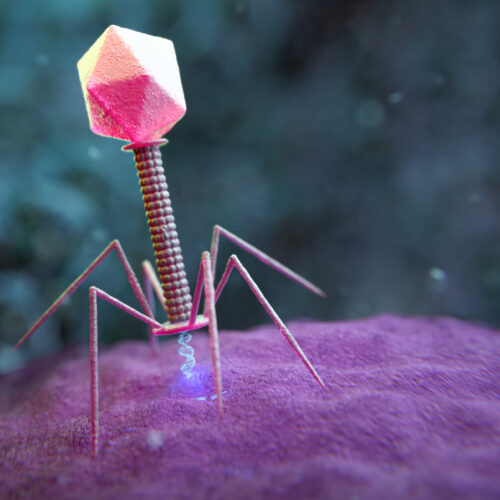
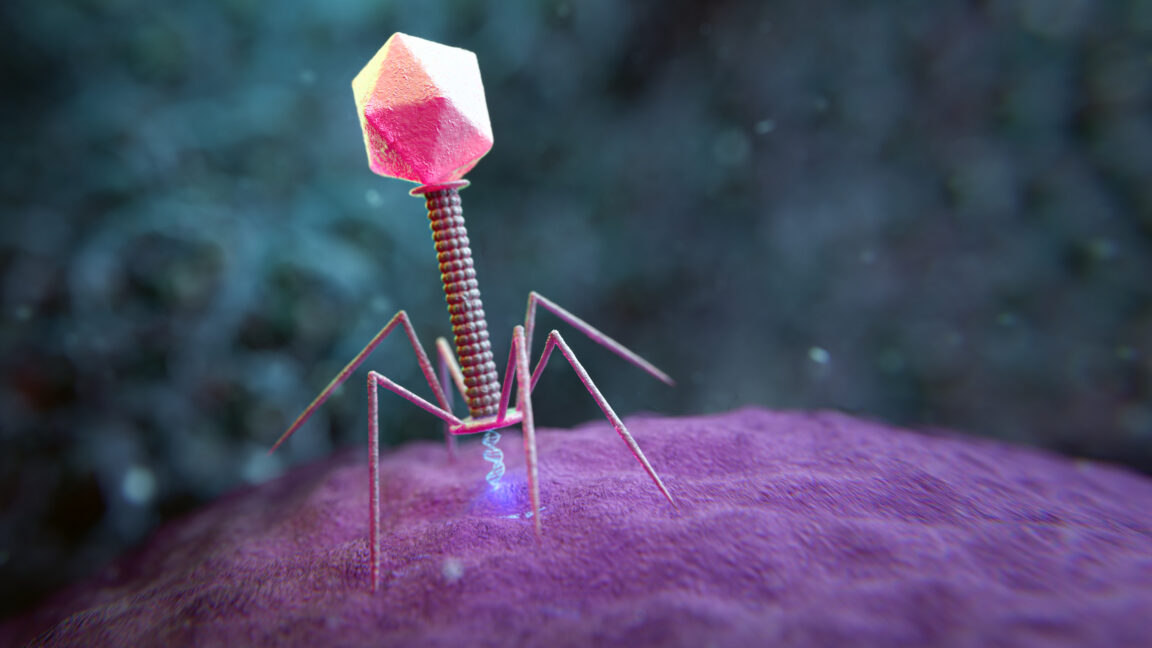
© THOM LEACH / SCIENCE PHOTO LIBRARY

More than 150 years after Charles Darwin first wondered whether certain sticky-leaved Saxifraga plants might be secretly carnivorous, Kunming Institute of Botany researcher Tao Deng and colleagues say they have finally confirmed it.
The post Scientists Add Unlikely New Member to World’s Carnivorous Plants appeared first on Sci.News: Breaking Science News.

New research led by the University of California, Berkeley reveals that beyond Neanderthals and Denisovans, humans interbred with two mysterious ‘ghost’ lineages: one in Africa more than 50,000 years ago, another in Eurasia over 1.7 million years ago.
The post Scientists Find Traces of Two Unknown Archaic Hominins in Human DNA appeared first on Sci.News: Breaking Science News.

A large British study spanning more than 70 years has found that people who experience chronic money struggles over their working lives show measurable declines in memory and processing speed by their 50s, along with signs of accelerated brain shrinkage decades later.
The post Decades of Financial Hardship Linked to Faster Brain Aging appeared first on Sci.News: Breaking Science News.

Researchers have identified and formally described a new species of the African monkey genus Colobus living in the remote interior of the Democratic Republic of Congo, marking only the fifth new monkey species found on the continent in the past 75 years.
The post Scientists Discover New Monkey Species in Democratic Republic of Congo appeared first on Sci.News: Breaking Science News.
 A new long-read DNA test improves rare disease diagnosis, replaces multiple existing tests, and could become the preferred global standard for genetic diagnostics. A new DNA test is providing a far more detailed view of the genome than current standard diagnostic methods, helping doctors identify rare genetic disorders more often. The test can replace up [...]
 Researchers found the people of Near Oceania carry some of the oldest human genetics.

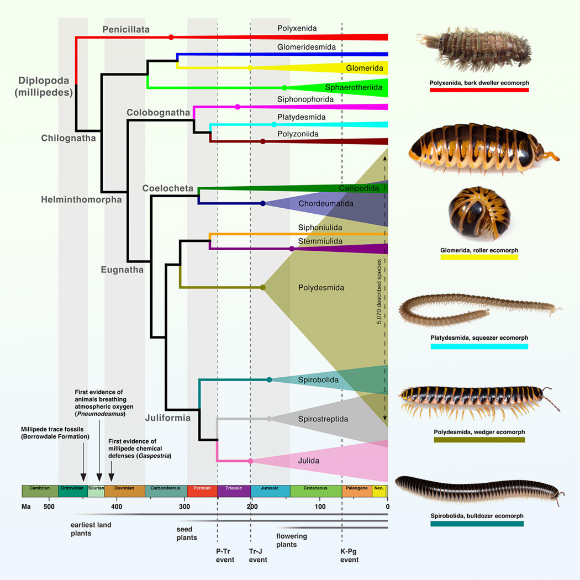
Two elusive groups of millipedes, Siphoniulida and Siphonocryptida, were the last missing pieces in the evolutionary history of Earth’s oldest land animals, according to a team of entomologists led by Virginia Tech.
The post Entomologists Reconstruct Evolutionary History of Millipedes appeared first on Sci.News: Breaking Science News.
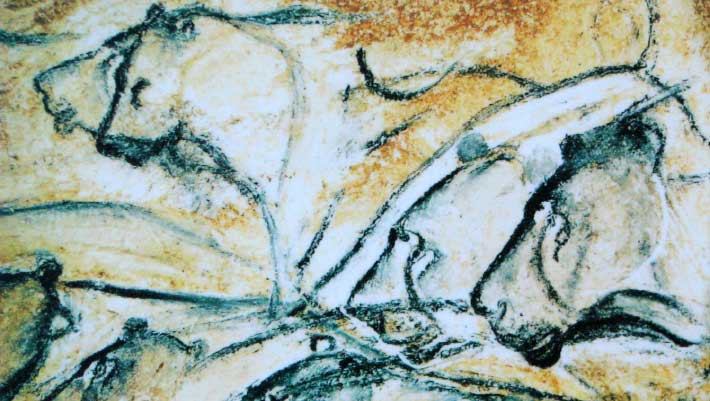
The extinct Eurasian cave lion (Panthera spelaea) and today’s African and Asian lions (Panthera leo) belong to separate evolutionary lineages that diverged roughly 1.7 million years ago -- far earlier than previously thought, according to an analysis of 12 cave lion genomes spanning more than 100,000 years.
The post Study: Cave Lions were Distinct Species that Occasionally Bred with Ancestors of Today’s Lions appeared first on Sci.News: Breaking Science News.
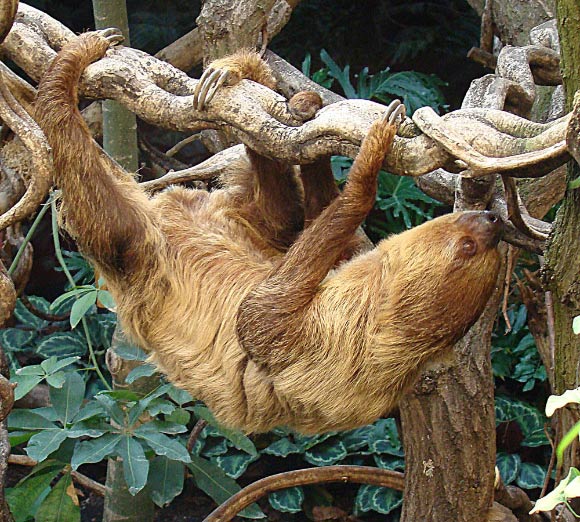
In new research, scientists sequenced and analyzed chromosome-level genomes of the Linnaeus’s two-toed sloth (Choloepus didactylus) and the southern anteater (Tamandua tetradactyla).
The post Secret to Sloths’ Slow Life May Lie in Ancient ‘Jumping Genes’ appeared first on Sci.News: Breaking Science News.
The mystery of the Greenland shark’s incredible longevity may finally be unraveling, as a team of international researchers has completed the first comprehensive genome map of the creature.
Native to the cold waters between Greenland, Iceland, and Canada, Greenland sharks boast one of the longest vertebrate lifespans on Earth, approaching 400 years. In a recent paper published in the Proceedings of the National Academy of Sciences, researchers led by Shigeharu Kinoshita of the University of Tokyo have identified some of the genetic basis of that extraordinary lifespan, which they say future researchers may exploit to treat cancer and age-related illnesses.
As genetic sequencing technology has improved and costs have fallen, there has been a major increase in the number of sequences from long-lived species for comparative analysis. Discoveries have included identifying increases in genes related to the immune system and growth hormone receptors in rockfish and bat species noted for their longevity.
With an entire lifecycle in slow motion, Greenland sharks’ longevity can be traced to their prolonged development: they take 150 years to reach sexual maturity, growing only 1 centimeter per year. Despite being one of the slowest swimmers in the ocean, the species undertakes large-scale migrations spanning over 1,000 kilometers.
Large genome sizes, like those of the Greenland shark, pose enormous mapping challenges, full of many repetitive sequences. Despite their importance for management and conservation, few whale and shark species have been sequenced due to the difficulty involved. To fill data gaps in the genetic causes of longevity, aquatic species evolution, and the risks of biodiversity loss, the team chose the Greenland shark as their subject.
The University of Tokyo-led team mapped roughly 5.9 billion DNA base pairs, accounting for 96.7% of the shark’s genome. Among the discoveries were the identification of specific genetic features likely related to the Greenland shark’s longevity.
In their paper, they wrote of discovering “genetic traits associated with cancer, immune response function, genome stability, and cardiac function, deep-sea adaptations, and population size dynamics,” in the new research.
One of the most crucial of these traits is how the shark appears to mitigate the genetic strain that contributes to aging by stabilizing the building blocks of chromosomes. Chromatin is a structure consisting of DNA, RNA, and proteins, which makes up chromosomes.
In the Greenland shark, the histone H1.0 protein, which binds DNA in chromatin, undergoes an amino acid substitution that may enhance stability and reduce the effects of aging.
Another genetic tool aiding the shark’s longevity is the presence of 59 copies of the FTH1b gene, which researchers discovered on pseudochromosome 33, far above the number seen in other shark or fish species. This helps regulate ferroptosis, a form of programmed cell death, thereby mitigating cell damage. Since the gene controls iron storage and ferroptosis is iron-dependent, the researchers say this multiplication of FTH1b could prevent oxidative cell damage.
Beyond those specific expressions, researchers also found expansion of entire gene families associated with DNA repair, immune functions, and cancer resistance.
Although limited to a single species, the research does advance general understanding of the genetic factors involved in extended lifespans. However, it will be up to future researchers to identify how this new information can be applied to human concerns.
The paper, “The Greenland Shark Genome: Insights into Lifespan Extremes and Population Dynamics,” appeared in Earth and Planetary Science Letters on May 19, 2026.
Ryan Whalen covers science and technology for The Debrief. He holds an MA in History and a Master of Library and Information Science with a certificate in Data Science. He can be contacted at ryan@thedebrief.org, and follow him on Twitter @mdntwvlf.
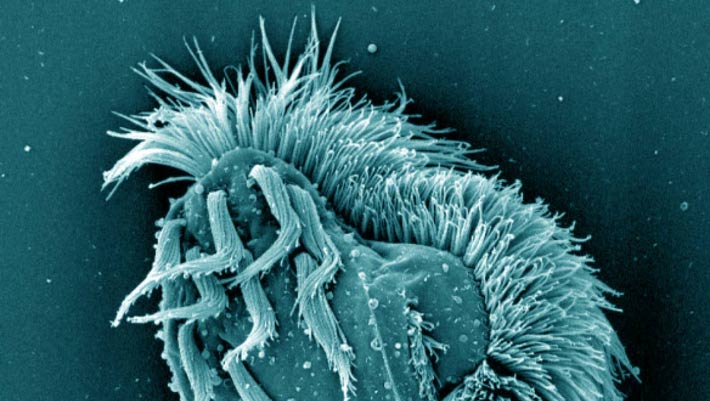
Euplotes gigatrox, a new species of ciliate collected from a seawater filtration system on the Caribbean Island of Curaçao, can transform into a cannibalistic ‘supergiant,’ raising new questions about the complexity of life at the microscopic scale.
The post When Food Runs Short, This Single-Celled Organism Turns into Giant Cannibal to Survive appeared first on Sci.News: Breaking Science News.